2027 Best Online Bachelor's in Data Analytics With Career-Focused Data Projects

Co-Founder and Chief Data Scientist
Facing a career pivot or advancement in data analytics often hinges on demonstrating applied skills through portfolio-ready projects, yet many online bachelor's programs emphasize theory over hands-on experience. This creates a barrier for professionals aiming to quickly prove job-relevant competencies. Enrollment strategies also matter: recent data from the National Center for Education Statistics show that nearly 45% of online learners are adults balancing work and family, demanding programs that offer both flexibility and meaningful experiential learning. Choosing programs that integrate career-focused data projects can streamline access to valuable opportunities and ease transitions into competitive roles.
This article evaluates the best online bachelor's in data analytics programs that deliver practical, project-based learning tailored for workforce readiness, helping students navigate the tradeoffs between flexibility, rigor, and career-impactful outcomes.
Key Things You Should Know
- Degree programs integrating career-focused projects reduce skill gaps by 27%, according to the National Center for Education Statistics, accelerating entry into roles requiring advanced data modeling over purely theoretical learning.
- Employers increasingly prize portfolios built on applied analytics tasks, with 62% of hiring managers citing project complexity as a decisive factor, shifting recruitment toward candidates demonstrating practical problem-solving.
- Programs with embedded real-world datasets extend completion times by an average of 15%, per the Council on Higher Education, impacting cost-efficiency and demanding strategic planning for working professionals balancing upskilling and income security.
What is an online bachelor's in data analytics and how does it work?
Online bachelor's degree in data analytics programs must be evaluated for their ability to deliver tangible skills employers demand rather than just theoretical knowledge. These degrees integrate statistical analysis, programming languages like Python or SQL, and database management into project-based coursework that mirrors real-world challenges. For example, a graduate might create predictive supply chain models or develop dashboards that enhance patient care decisions.
How online data analytics bachelor's degrees work in practice involves navigating asynchronous and synchronous learning formats, which require disciplined self-management and dependable access to specialized software. This setup is favorable for working professionals but can limit those lacking consistent technology resources. Critical competencies include proficient data-cleaning pipelines and demonstrable experience with applied visualization tools, which employers increasingly prioritize.
Professionals with effective data visualization skills command an average salary premium of $20,522 more annually compared to peers without such capabilities, reflecting a marketplace emphasis on actionable insights rather than raw data alone. Students should thoroughly examine whether programs offer capstone projects or internships to build a portfolio that evidences practical application.
Ultimately, choosing an online degree should balance curriculum rigor, hands-on project exposure, and alignment with recognized workforce standards. For those exploring related technical fields, consider online degrees in computer science as complementary or alternative pathways.
How do online data analytics bachelor's programs compare to campus-based options?
Choosing between an online data analytics bachelor's degree vs campus programs hinges on the practical demands of career-focused projects in online data analytics degrees and the surrounding ecosystem that supports skill application. Campus formats generally provide scaffolding through structured teamwork, direct faculty oversight, and access to physical infrastructure like research labs and internships embedded within local industries. For example, a finance student on campus might engage with a university-sponsored trading lab to test predictive algorithms on live market data, an experience difficult to replicate fully in virtual environments.
Online programs emphasize flexibility, allowing working professionals to integrate upskilling with current employment-a decisive advantage amid the projected $57 billion surge in global spending on data analytics tools by 2025 (Statista). However, these programs often depend on virtual labs and simulated projects, which may restrict hands-on exposure to hardware or ecosystems relevant in sectors like healthcare analytics or manufacturing.
Employer recognition frequently favors graduates with tangible project experience and networking forged through campus resources, creating a practical gap online learners must proactively bridge by securing external internships or independent portfolio projects. Hybrid models attempt to reconcile these gaps by combining online coursework with periodic on-site engagement.
For those assessing options, tuition costs and schedule convenience should be weighed alongside access to career advising and employer-demanded competencies. Prospective students may also explore pathways such as an AI degree to complement data analytics foundations in emerging tech niches.
Which accredited schools offer the best online bachelor's in data analytics?
Employers in data analytics prioritize graduates who demonstrate immediate, applicable skills rather than solely theoretical knowledge. Top accredited online bachelor's in data analytics programs at institutions like Arizona State University and Southern New Hampshire University emphasize immersive projects using real-world datasets and tools such as Python and Tableau. These programs often include live case studies and internships, reflecting employer demands for practical readiness in roles across finance, healthcare, and marketing analytics.
Choosing among the best online bachelor's degrees in data analytics from accredited schools means balancing program flexibility with the discipline required for asynchronous learning formats, critical for working professionals. Accreditation by recognized bodies like the Higher Learning Commission ensures rigor and eligibility for federal aid-important factors in assessing program reliability and value.
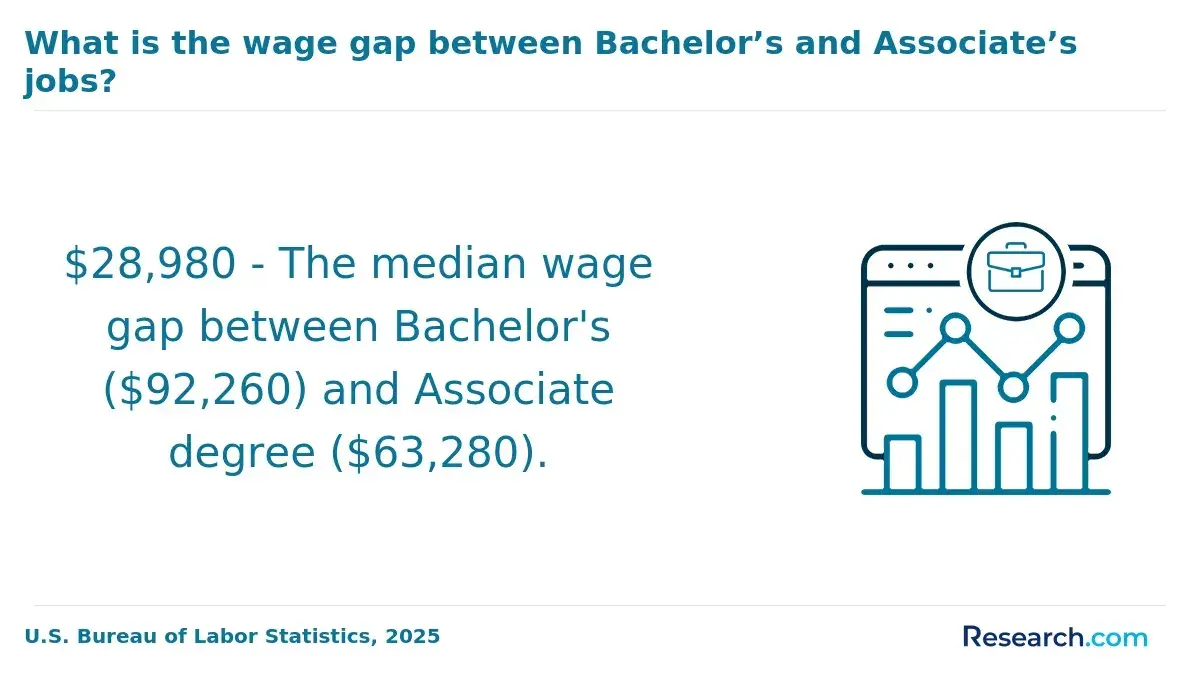
The U.S. Bureau of Labor Statistics reports a median wage of $103,470 for bachelor's-level data analyst roles, about 71% higher than the overall median, underscoring the tangible returns of programs aligned with workforce needs. While robust industry connections and internships can accelerate job placement, students should weigh the challenges of self-motivation in remote settings against the potential advantage of real-time instructor interaction.
Prospective students seeking strategic career pivots should review comprehensive comparisons, including programs focused on career outcomes and skill applicability. Resources highlighting the best medical coding online programs may offer additional context on flexible health-related analytics pathways.
- Top accredited online bachelor's in data analytics programs emphasize project-based learning with current technologies.
- Best online bachelor's degrees in data analytics from accredited schools ensure industry-recognized accreditation and real-world experience.
What courses and hands-on data projects are included in these online programs?
Online bachelor's in data analytics curriculum with practical projects emphasize applied skills that meet the real-time expectations of employers. Core coursework typically includes Python and R programming, SQL database management, statistics, machine learning fundamentals, and business intelligence. Nearly 91% of U.S. employers now require integrated data skills across roles, confirming the need for students to master tools relevant to diverse industry applications.
Career-focused data analytics projects in online degree programs commonly simulate workplace challenges: for example, analyzing large datasets to reveal retail customer behaviors, optimizing supply chain logistics through forecasting, or predicting patient outcomes using health records. These projects go beyond theory, demanding systems thinking and iterative problem-solving that prepare graduates for immediate on-the-job contribution.
Communicating complex data insights to non-technical stakeholders is a critical competency built through targeted assignments and team-based capstone projects. Students learn to translate analytics into actionable recommendations within business, finance, or policy environments. However, practical program participation often hinges on adequate computing resources and proactive time management, as project tasks can be resource-intensive and complex.
Prospective students should assess program technical demands carefully to avoid resource bottlenecks that impede learning. For those exploring related fields or cross-discipline options, the accredited online animal science degree offers an alternative career path and may present different logistical considerations than data analytics.
Visit accredited online animal science degree for detailed cost and program structures outside data analytics.
What are the typical admission requirements for an online data analytics bachelor's?
Admission into online bachelor's programs in data analytics demands more than credentials; it requires demonstrated quantitative readiness and relevant preparatory experience aligned with employer expectations for immediate technical aptitude. Most institutions expect a high school diploma or GED and a GPA between 2.5 and 3.0, alongside transcripts confirming math competencies, including algebra and statistics. Standardized tests like the SAT or ACT may be required, but exemptions often apply for students with prior college credits or pertinent work history.
The practical consequences of these requirements become clear when professionals pivot careers. For example, a marketing analyst entering data analytics without substantial math preparation will likely face extended remediation, delaying workforce readiness and weakening initial performance. Transfer credits in STEM subjects provide a tangible advantage, shortening time to degree and reducing tuition costs.
Applicants strengthen their candidacy by supplying evidence of applied skills through projects, certifications, or relevant professional experience. Personal statements are scrutinized for alignment with concrete career objectives and the program's technical focus rather than general interest.
Financially, data analytics degrees offered online have a notable cost efficiency. According to NCES, average annual tuition for nonprofit institutions stands at $11,406, about 31% lower than on-campus rates of $16,647. This cost difference affects budgeting and return on investment calculations, particularly for students balancing employment and education.
How long does it take to finish an online data analytics bachelor's and what does it cost?
Choosing an online bachelor's degree in data analytics demands balancing time, cost, and practical career outcomes. Typically, full-time students complete these programs in four years, though accelerated options can reduce this to two or three years if transfer credits and year-round courses are leveraged. This time compression often suits career changers needing rapid re-skilling, but risks sacrificing depth or work-study balance.
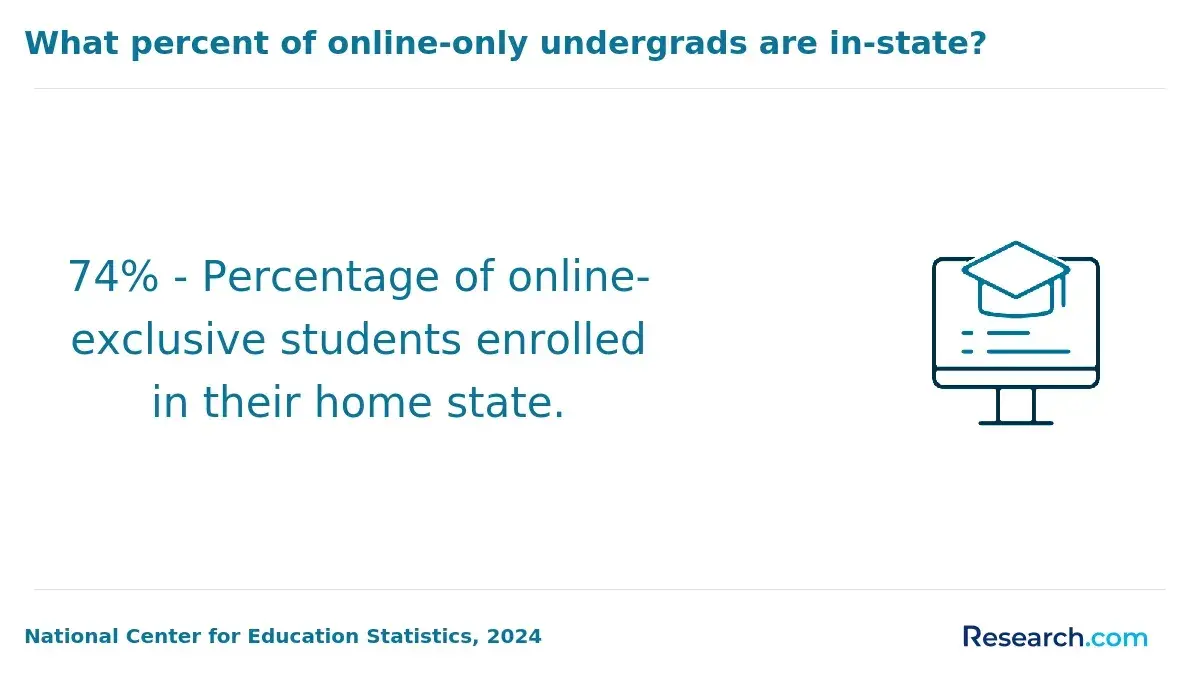
Cost differences reflect institutional and residency variables: public in-state tuition averages $10,000 to $15,000 annually, while private and out-of-state tuition may surpass $30,000 per year. Additional mandatory fees for technology and exam proctoring typically add several hundred dollars yearly.
Employment prospects in the field align with strong labor market growth projections, with the U.S. Bureau of Labor Statistics forecasting a 35% increase in roles for computer and information research scientists from 2024 to 2034. Median wages around $112,120 reveal a robust ROI for graduates who engage in applied projects that resonate with employer needs in sectors like healthcare, finance, or manufacturing analytics.
Working professionals should weigh part-time enrollment strategies that accommodate job demands but extend program duration, creating opportunity costs in delayed advancement. Verifying if curricula include experiential learning aligned to specific industry requirements is critical for translating education into measurable employability gains.
What data analytics jobs can you get with an online bachelor's degree?
Employers increasingly prioritize candidates who present practical, hands-on experience over those with solely theoretical academic backgrounds. Graduates with an online bachelor's degree in data analytics typically qualify for entry-level roles such as data analyst, business intelligence analyst, or junior data engineer, but hiring decisions often hinge on portfolios demonstrating applied skills rather than just the degree itself.
Real-world hiring data from the Burning Glass Institute reports that 58% of U.S. employers in 2024 accepted candidates without prior work experience if they showcased relevant project work alongside their degree. This confirms that students must strategically integrate industry-relevant projects-such as comprehensive data cleaning to visualization pipelines for supply chain or healthcare analytics-to stand out in competitive pools.
Positions differ in operational focus: healthcare data analysts analyze patient trends to improve care protocols, while analysts in retail focus on sales forecasting and inventory optimization. Business intelligence analysts must translate complex datasets into actionable executive summaries, and junior data engineers build robust data pipelines requiring combined analytical and software engineering skills.
The lack of direct networking in fully remote programs remains a tradeoff for flexibility. Candidates should offset this limitation through active engagement in virtual industry groups or conferences. Employers look for adaptive problem-solving aptitude reflected in portfolios tailored to specific domains, which enhances employability immediately after graduation.
What salary ranges and earning potential can graduates in data analytics expect?
Graduates holding an online bachelor's in data analytics, much like those with a blockchain degree, face a wide salary range shaped by industry, geography, and employer scale. Entry-level salaries typically fall between $60,000 and $80,000, but specialization and location can sharply affect this starting point. For example, an analyst starting in retail analytics within a mid-sized city might earn close to $60,000 with incremental growth, whereas applying advanced machine learning skills at a financial firm in major metropolitan areas like New York can push earnings above $100,000 within five years.
Job market expansion for data analyst roles outpaces the general labor force, with a reported 28% growth from 2022 to 2024, reflecting strong demand driven by the need for hands-on skills in predictive modeling and tools such as Python, SQL, and Tableau. Employers prioritize portfolios demonstrating applied problem-solving over theoretical knowledge, penalizing candidates who lack real-world project experience in practical salary offers and advancement opportunities.
Sector differences also impact earning trajectories: government and healthcare tend to provide lower initial salaries but offer steadier growth, while technology and finance compensate with higher premiums to attract talent amid intense competition. Additionally, acquiring industry certifications and domain-specific knowledge post-graduation significantly enhances compensation potential.
- Practical ability to convert data insights into actionable strategies heavily influences salary outcomes.
- Regional cost-of-living factors should inform compensation expectations.
- Job seekers benefit most from applied project experience embedded within curriculum or early career roles.
What is the job outlook for data analysts and related data careers?
Data analyst roles vary significantly across sectors and locations, affecting wage potential and hiring criteria more than most candidates anticipate. For instance, employers in California, New York, and Washington offer mean annual wages ranging from about $136,000 to $144,000, reflecting concentrated demands in tech, finance, and healthcare hubs. However, these higher salaries also come with increased living costs and stiffer competition.
Hands-on experience with project-based data cleaning, visualization, and statistical modeling consistently outweighs theoretical knowledge when employers evaluate candidates. In retail or marketing, data analysts with integrated machine learning project exposure can improve product positioning and customer targeting more effectively than those lacking applied skills. Conversely, sectors like healthcare and government prioritize regulatory compliance expertise alongside analytics, imposing a continuous learning burden on professionals.
Geographic and sector-specific considerations are essential for practical career planning. Midwestern and Southern markets often present more accessible entry points but with lower salaries and slower job growth. Students and professionals who embed internships and cross-disciplinary projects into their programs position themselves better for job market alignment.
Key hiring factors include:
- Practical experience with advanced analytics projects
- Ability to communicate actionable insights rapidly
- Compliance knowledge for regulated industries
- Strategic alignment with regional labor market characteristics
How can you evaluate and choose a reputable online data analytics program?
Choosing an online data analytics program requires more than checking credentials; it demands assessing how well the curriculum matches tangible employer expectations. Regional accreditation ensures academic quality, but programmatic accreditation, such as from ABET, signals up-to-date, industry-relevant coursework. Core applied skills in Python, SQL, machine learning, and data visualization must be present, as these directly impact job readiness.
Consider how programs incorporate career-focused projects, internships, or capstone experiences. For example, healthcare analytics roles benefit from data work on patient outcomes, while financial data analysis demands modeling and risk assessment skills. These practical elements often distinguish candidates in competitive fields.
Quantitative metrics like graduation rates and job placement reveal ROI patterns-72% of U.S. adults completing online STEM or data-related degrees reported positive returns within five years per Gallup-Strada data. Yet, programs with strong employer ties typically outperform in post-graduation outcomes.
Evaluate format flexibility and support services. Balancing work and study hinges on access to advising, mentoring, and advanced learning platforms that foster collaboration. Lower-cost options might reduce debt but can present tradeoffs in employer recognition and alumni network influence.
Finally, differentiate offerings by how they align with your target role. Pivoting into marketing analytics requires coursework centered on customer segmentation and A/B testing, whereas supply chain analysis demands predictive modeling expertise. Without significant hands-on experience, theoretical knowledge alone rarely satisfies hiring criteria.
Other Things You Should Know About Data Analytics
Prioritize mastering core analytical concepts over just specific tools because technology constantly evolves in data analytics. Employers value candidates who understand underlying statistical methods, data modeling, and problem-solving frameworks that can adapt beyond current software. Tool proficiency is important but secondary; focus on programs that integrate both conceptual foundations and practical tool use.
Employers expect graduates to demonstrate applied skills through career-relevant projects, which increases program workload compared to purely theoretical courses. Many online programs require complex capstone or portfolio projects that simulate real business problems, demanding substantial time investment. Prospective students should weigh their availability and seek programs emphasizing project quality and employer-aligned outcomes rather than just credit accumulation.
Online degrees can match traditional degrees if the program offers rigorous curriculum and recognized accreditation. However, some employers still prefer candidates with on-campus experience due to perceived networking and collaborative advantages. To mitigate limitations, choose online programs with strong industry partnerships, internship options, and career services that emphasize building real-world connections.
Yes. Many 2027 online data analytics bachelor's programs require a 3 to 6 credit capstone in the final year. Students usually build a portfolio project using Python, SQL, Tableau, or Power BI, and some programs also require an employer-style case study or practicum evaluation.
References
- 10 Tips for Choosing the Right Online Data Analyst Course https://dataanalysismastery.com/2024/06/07/10-tips-for-choosing-the-right-online-data-analyst-course/
- Data Analyst Salaries https://www.mastersindatascience.org/careers/data-analyst/salary/
- 7 Data Analytics Careers That Are in High Demand, and How to Stand Out https://www.bentley.edu/news/7-data-analytics-careers-are-high-demand-and-how-stand-out
- Data Analysis Courses | Online Courses for All Levels | DataCamp https://www.datacamp.com/category/data-analysis
- Data Analyst jobs in the United States https://www.dataanalyst.com/
- Top 15 Free Data Analytics Courses for 2026 (with Certificates) https://skyvia.com/blog/best-free-data-analytics-courses/
- Online Bachelor's in Data Analytics / Data Science Programs https://www.onlineeducation.com/analytics/bachelors-in-data-analytics-programs
- What do you learn in a bachelor's in data analytics? | edX https://www.edx.org/resources/what-do-you-learn-in-a-bachelors-in-data-analytics
- Data Analyst Job Outlook 2026: Growth, Salaries & Career Guide https://skillifysolutions.com/blogs/data-science/data-analyst-job-outlook/
- Bachelor of Science in Data Analytics Online Degree Program https://www.montreat.edu/online/data-analytics/