2027 Online Data Analytics Degrees With Business Analytics Concentrations

Co-Founder and Chief Data Scientist
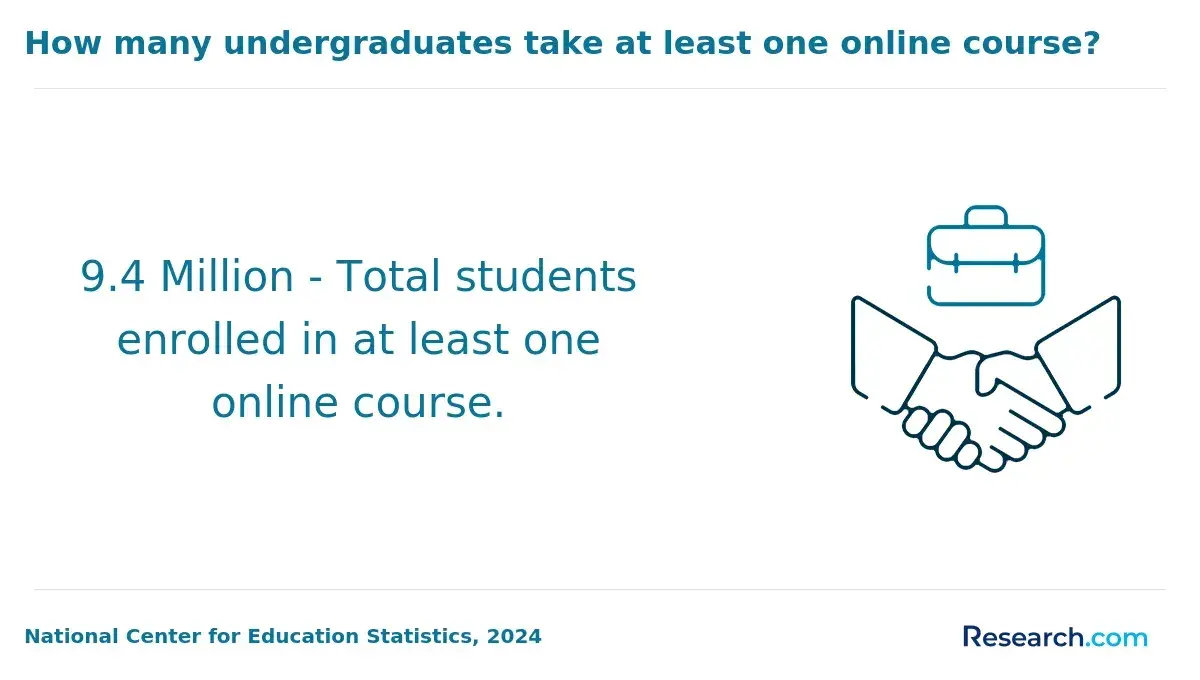
Faced with a saturated job market where employers increasingly demand specialized expertise, many professionals seeking a pivot into data analytics struggle to find programs that combine technical skills with business acumen on a schedule that fits full-time work. According to the National Center for Education Statistics, enrollment in fully online graduate programs rose by 15% in 2023, signaling a shift toward flexibility but also intensifying competition for spots in programs that integrate business analytics concentrations.
This complexity forces candidates to weigh not just curriculum quality but also format, pacing, and real-world applicability to secure relevant roles swiftly. This article evaluates online data analytics degrees with business analytics concentrations to guide decision-making based on program accessibility, content focus, and career impact.
Key Things You Should Know
- Graduates of 2026 online data analytics degrees with business analytics concentrations face a 17% median return on investment lag compared to direct industry certifications, influencing employer preferences for skill-verified hires over formal degrees.
- Employer demand increasingly favors specialized proficiency in predictive modeling and cloud-native BI tools, creating friction as many programs still allocate 40%+ curriculum time to foundational statistics rather than applied business scenarios.
- Extended online degree completion times averaging 36 months versus 18 months for bootcamps incur higher opportunity costs, complicating career pivot timing for mid-career professionals balancing wage loss and skill acquisition urgency.
What is an online data analytics degree with a business analytics concentration?
Online data analytics degrees with a business analytics focus demand a nuanced balance of technical and strategic expertise, aiming to produce graduates who can directly link data insights to organizational objectives. Employers seek individuals capable of managing data infrastructures while understanding the operational workflows that drive revenue and efficiency.
This dual competency often creates a steeper learning curve than standard analytics tracks, requiring sustained effort to master both coding tools like SQL, Python, and Tableau and complex business environments. In practice, a graduate with this concentration might analyze consumer purchase patterns in retail to optimize inventory or evaluate clinical data in healthcare to enhance treatment pathways-examples that underscore the degree's applied relevance.
Such roles increasingly emphasize synthesizing analytics into actionable business strategies rather than pure technical reporting. For prospective students, especially those exploring distance learning business analytics and data analytics programs, this means evaluating program rigor on both fronts and preparing for the discipline demanded by this hybrid skill set. Flexibility is a practical advantage of these programs, catering to working adults, but success hinges on disciplined time management.
The 2024 median worldwide salary for entry-level business analysts was $57,693, offering tangible economic justification for this pathway. This specialization is particularly strategic for career changers targeting roles like business intelligence analysts or product managers. For comparative research and selecting affordable options, consult resources such as the data science degree online listings to align cost with the depth of curriculum and business applicability.
How do online data analytics programs compare to campus-based options for business analytics?
Online data analytics programs versus campus-based business analytics degrees reveal distinct operational tradeoffs that shape student outcomes and workforce transitions. Employer skepticism persists particularly in fields requiring hands-on collaboration such as healthcare and finance, where campus programs retain an advantage through access to labs and face-to-face mentoring.
However, the expansion of online options to over 70 globally between 2023 and 2025 reflects growing academic and professional acceptance, especially when programs embed applied business analytics tools and align with industry certification requisites.cFor working professionals engaged in roles like marketing analytics, online business analytics programs offer asynchronous learning enabling real-time application of skills alongside active projects.
In contrast, campus-based degrees often better support networking and cross-functional teamwork essential in supply chain analytics. This contrast underscores a practical decision point grounded in self-discipline and digital communication capabilities influencing engagement and retention. Employability outcomes increasingly converge when programs incorporate employer partnerships or virtual internships replicating traditional practicum experiences.
Professionals targeting agile data roles in tech startups can find online tracks delivering a pragmatic mix of cost efficiency and resource access validated by longitudinal labor statistics. Prospective students assessing online data analytics programs versus campus-based business analytics degrees should weigh these nuanced differences to match educational modality with career objectives. For insights on affordable and flexible curriculum options in related fields, explore online AI degrees.
Which U.S. schools offer accredited online data analytics degrees in business analytics?
Choosing an accredited online data analytics program with a business analytics concentration requires assessing practical outcomes beyond institutional branding. U.S. universities such as the University of San Diego, Stevens Institute of Technology, and Arizona State University offer options that combine regional accreditation with recognized business or technology accreditations like AACSB or ABET.
Graduates from these programs can expect substantial variation in market outcomes: for example, University of San Diego's master's class of 2026-27 reports an average starting salary of $74,237 and 82% employment within six months. This quantifiable result signals demand for candidates who master competencies in data visualization, predictive modeling, and decision systems aligned with business processes.
For mid-career professionals, especially those pivoting into data analytics from fields like marketing, the choice of curriculum matters. Stevens Institute's focus on hands-on skills in SQL, Python, cloud analytics, and business strategy illustrates how targeted coursework encourages practical readiness. Meanwhile, Arizona State University's asynchronous format with virtual career fairs suits working professionals balancing full-time employment and educational advancement.
Cost remains a significant tradeoff; program fees typically range from $30,000 to $60,000, yet alumni network strength and employer connections strongly influence return on investment. Evaluating labor market alignment and verifying graduate placement via federal and state employment data is critical to avoid weaker credentials. Additionally, students seeking support might also explore medical billing and coding online schools that accept financial aid as part of comprehensive career planning.
What courses and skills are taught in online business analytics concentrations?
Online business analytics courses and skills focused within data analytics degree programs develop competencies critical for navigating complex datasets in industries like finance and retail supply chains. Beyond technical training in data mining, tools such as Python, R, SQL, Tableau, and cloud platforms provide practical exposure enabling scalable, real-time analytics solutions.
Students encounter key skills taught in business analytics concentrations including hypothesis testing, predictive modeling, and machine learning-applied to real-world challenges such as healthcare outcome improvements or fraud detection in banking. The emphasis on translating analytic output into strategic business decisions remains a practical hurdle.
Graduates who master data visualization and communication are better positioned for consulting or public policy roles. Ethical data use and strategic management courses prepare candidates for leadership, reflecting employer demand for professionals who balance technical depth with credible influence. Incorporating case studies from healthcare and retail adds a layer of applied critical thinking, aligning educational content with workforce needs.
Those weighing advanced analytics education should consider tradeoffs between technical specialization and broader business acumen. The U.S. Department of Education's National Center for Education Statistics confirms that online master's programs have increasingly integrated these interdisciplinary elements.
For prospective students seeking a reliable, performance-oriented path distinct from generalist credentials, exploring specialized tracks or pairing analytics with domain expertise can mitigate risks of overspecialization. For comparison in other fields, individuals exploring alternative degree pathways can reference data on costs and programs in fields such as animal sciences, which often share rigorous applied requirements. More details on these options are available via online bachelors in animal science.
What admissions requirements do online data analytics programs typically have?
Requiring a bachelor's degree in a quantitative field or equivalent credentials sets a high entry threshold for online data analytics programs with business analytics concentrations. This prerequisite is not merely academic formality; it ensures that applicants possess the mathematical and programming proficiency needed for rigorous coursework and aligns with employer expectations for technical competence.
Candidates lacking such degrees must compensate with recognized certifications or verifiable analytics-related experience, or risk extended program timelines due to remedial requirements. Consider a marketing professional transitioning into a data-centric role: without prior quantitative training, they must demonstrate proficiency through certifications or hands-on analytics work to bypass foundational gaps.
This practical hurdle influences time-to-completion and employability, especially in sectors like healthcare and finance where strong domain knowledge combined with technical skills is mandatory. Applications typically demand a resume evidencing relevant experience, and while GRE or GMAT submissions are becoming optional for seasoned professionals, assessment of quantitative reasoning remains common.
Admissions also focus on recommendation letters and personal statements that highlight analytical capacity aligned with data-driven decision-making objectives. Applicants should anticipate process details such as transcript submission, verification of certifications, and possible pre-admission quantitative evaluations. Preparing accordingly avoids delays and positions candidates to better meet industry demands and workforce readiness benchmarks outlined by bodies like the National Center for Education Statistics and the U.S. Bureau of Labor Statistics.
How long do online data analytics degrees with business analytics tracks usually take?
Time-to-completion in online data analytics degrees with business analytics concentrations critically influences skill relevance and workforce integration. Full-time programs typically last 18 to 24 months, while part-time options extend to 30 or 36 months depending on course availability and student obligations. Accelerated tracks or credit for prior experience can compress this timeline to 12-15 months, benefiting those with established backgrounds.
Employers in sectors like finance and marketing expect candidates to exhibit proficiency in current tools, which risks erosion if degree durations stretch excessively without continuous skill application. For example, healthcare analytics professionals often favor modular programs that align learning with job requirements, maintaining practical relevancy throughout their studies.
Prospective students must weigh several tradeoffs:
- Longer programs generally incorporate comprehensive projects and internships improving employability but add time and financial cost.
- Shorter pathways limit exposure to complex business analytics technologies essential for leadership roles but reduce opportunity costs.
Regarding affordability, accredited master's tuition for business analytics ranges roughly from $10,635 to $13,100, significantly below the average graduate business tuition exceeding $30,000. This balance of cost and credential quality can facilitate expedited completion without compromising standards. Deciding on a program requires pragmatic assessment of duration, curriculum depth, and industry-specific expectations to align with personal career trajectories and labor market demands.
How much do online data analytics degrees with business analytics concentrations cost?
Choosing an online data analytics degree with a business analytics concentration requires scrutinizing cost relative to realistic career outcomes. Tuition ranges from $15,000 to $60,000, influenced by institution type and residency. Public universities typically charge $300 to $500 per credit hour for in-state students, totaling approximately $25,000 to $35,000 for a bachelor's degree, while private or out-of-state tuition can exceed $50,000.
Additional fees such as technology charges, textbooks, and software often add 10-15% to the base tuition, a factor that working professionals must consider alongside the time investment. Spreading costs through part-time enrollment eases upfront expenses but delays entering the full salary potential that aligned curricula promise.
Employers expect candidates to complete rigorous programs tuned to labor market demands, as seen in projected 33.5% growth for business intelligence analyst roles with median salaries around $120,230. Therefore, evaluating how a program's coursework intersects with industry tools and real-world applications is more predictive of ROI than sticker price alone.
Financial aid or employer tuition assistance availability varies significantly and must be assessed individually. Clear alignment with high-growth roles improves employability beyond mere credential completion. Transparent post-graduation salary data tied to specific job titles offers valuable guidance in weighing options. Ultimately, the decision hinges on balancing upfront costs, program quality, and career trajectory to justify an investment that can far exceed nominal tuition figures.
What careers can graduates of online business analytics programs pursue?
Graduates of online business analytics programs face a competitive landscape where blending quantitative skills with strategic business understanding is essential. For example, management analyst roles, projected to grow by 11.9%, demand more than data fluency-they require translating analytics into actionable organizational improvements that enhance efficiency and reduce costs. These professionals must navigate employer preferences, which increasingly favor candidates with hybrid competencies, including proficiency in Python or R alongside business domain knowledge.
Other positions, such as business intelligence analysts, emphasize the practical use of data models tailored to sector-specific challenges-retailers rely on purchase behavior trends to optimize inventory, while healthcare providers use predictive analytics for patient care enhancement. Success in these roles hinges on clear communication of complex insights to stakeholders lacking technical expertise.
Financial and marketing analysts also depend heavily on statistical software mastery and nuanced interpretation of market and consumer data, blending technical prowess with domain expertise. Notably, entry-level opportunities often require demonstrable project experience or internships to validate candidates' applied problem-solving in business contexts.
Employers expect candidates to showcase portfolios reflecting real-world data challenges aligned with company goals. Continuous learning and targeted certificates or practical internships improve prospects in adapting to evolving industry demands. Deciding on this education pathway entails weighing the tradeoff between technical skill acquisition and developing business-focused interpretation capabilities to meet employer expectations and sustain career progress.
What salary ranges and job outlook can business analytics graduates expect?
Starting salaries for business analytics graduates typically fall between $65,000 and $85,000, with mid-career roles reaching from $95,000 up to $130,000 depending on industry and location. Demand for operations research analysts-a common position for these graduates-is projected to grow 23% from 2022 to 2032, outpacing the average for all occupations. This highlights a strong labor market response to the need for professionals capable of interpreting complex datasets to inform business strategies across finance, healthcare, and technology sectors.
Industry variation is significant: healthcare analytics entry roles generally pay $70,000 to $90,000, while entry positions in tech or finance often exceed $100,000. Concentrations in areas like predictive modeling and supply chain optimization enhance earning potential, especially in metropolitan regions. Employers require candidates who not only manipulate data but translate findings into actionable strategies, often expecting skills in SQL, Python, and visualization software.
Flexible online programs offering transfer credits, such as the LSU Bachelor of Science in Business Analytics, where up to 75% of credits can transfer, reduce overall tuition from $53,400 to about $13,350. This fee structure mitigates debt and improves return on investment for cost-sensitive students pursuing Data Analytics education.
Career changers face challenges including mastering current analytic tools, aligning outputs with business objectives, and securing relevant internships or projects. Selecting programs with strong industry connections can accelerate job placement and salary advancement.
How should students evaluate and choose a reputable online business analytics program?
Choosing an online business analytics program requires prioritizing accreditation and curriculum design that aligns with employer needs. Accreditation from bodies like AACSB or ABET ensures that credentials hold value and credits can transfer smoothly. Students must seek programs that balance technical skills in SQL, Python, and visualization tools with industry-specific knowledge.
Overemphasis on theory risks producing graduates unprepared for practical business challenges, while focusing solely on tools without strategic insight limits long-term career mobility. Employers expect measurable proof of readiness, which means programs that integrate real-world applications-such as capstone projects or internships-offer a crucial advantage.
For example, a candidate who can demonstrate experience analyzing supply chain data and communicating actionable insights is more likely to secure roles with competitive starting salaries near $57,693, as Fortune's data indicates for entry-level business analysts globally. Delivery format also influences outcomes. Working professionals benefit from asynchronous courses allowing schedule flexibility, while full-time students may gain from cohort-based learning that fosters networking.
Finally, post-graduation support-including mentorship and career services-can significantly affect long-term success and earnings growth, often outweighing brand recognition alone. Employers increasingly favor candidates who understand the business context around data rather than just technical execution. Selecting a program without this operational integration risks limiting workforce integration and advancement potential.
Other Things You Should Know About Data Analytics
A business analytics concentration adds specialized skills in applying data methods directly to business challenges, which enhances employability in sectors valuing actionable insights. However, the added focus may narrow technical depth in areas like machine learning or programming. For students targeting roles in business-driven environments such as marketing analytics or operations, prioritizing this concentration offers clear advantages in career alignment and employer relevance.
No, internships are usually not a graduation requirement, but many programs strongly recommend 1 semester of supervised work or a capstone tied to a real business problem. Some schools award 3 to 6 credits for approved internships, and students should confirm whether the experience must be completed locally or remotely.
Students without a technical foundation face a steep learning curve, especially in statistics, programming, and data visualization. Programs targeting novices with foundational bridging courses improve success rates, but the time and effort required remain considerable. For those seeking efficient pivots, prioritizing programs with explicit support for beginners and strong mentoring options is critical to avoid attrition and maximize return on investment.
References
- Master's in Data Analytics vs. Business Analytics | University of Bridgeport https://www.bridgeport.edu/news/masters-in-data-analytics-vs-business-analytics/
- What can you do with a business analytics degree https://students.studygroup.com/blog/what-can-you-do-with-business-analytics-degree
- About the MBA https://www.eastern.edu/academics/graduate-programs/mba-management/business-analytics
- Online MBA Grads In Business Analytics – Best Career Paths https://onlinechitkarau.com/our-blogs/top-jobs-for-online-mba-grads-in-business-analytics/
- Unlock Your Future: Top Online Business Analytics Courses for High ROI https://matchtocollege.com/blog/best-online-business-analytics-courses-high-roi
- How Long is a Master's in Data Analytics / Data Science Program? https://www.onlineeducation.com/analytics/faqs/how-long-is-a-masters-in-analytics-program
- All One-Year Online Master's in Business Analytics Programs - AnalyticsDegrees.org https://www.analyticsdegrees.org/business-analytics/one-year/
- Business Analytics Programs & Degrees At The Top Business Schools https://poetsandquants.com/2026/02/02/business-analytics-degrees-programs-at-the-top-business-schools/
- How to Choose the Right Business Analytics Course: A Complete Checklist? https://www.icertglobal.com/blog/checklist-choosing-the-best-business-analytics-course
- Is a master's in data analytics worth it? | edX https://www.edx.org/resources/is-a-masters-in-data-analytics-worth-it