2027 Online Data Analytics Degrees With Financial Analytics Career Alignment

Co-Founder and Chief Data Scientist
Facing a rapidly evolving finance sector, professionals aiming to specialize in financial analytics must navigate a crowded marketplace of online degrees that vary widely in curriculum relevance and employer recognition. According to the National Center for Education Statistics, enrollment in fully online graduate programs surged over 45% since 2020, signaling increased accessibility but also intensified competition among offerings.
This surge challenges learners to discern programs that truly align with workplace expectations for skills like predictive modeling and risk management rather than generic data skills. This article evaluates current online data analytics degrees with a direct focus on financial analytics career alignment, guiding strategic choices that optimize practical outcomes and career mobility.
Key Things You Should Know
- Online data analytics degrees with financial analytics alignment yield median salaries 18% above general analytics roles but require specialized SQL and Python competencies, limiting shortcut options for mid-career pivots, per 2025 BLS workforce data.
- Employers emphasize hands-on experience with financial risk models and regulatory compliance frameworks more than broad analytics certification, reflecting an 11% hiring premium reported by the CFA Institute's 2024 hiring survey.
- Median program costs rose 9% in 2024, extending average completion timelines by 20%, creating significant opportunity costs for full-time professionals seeking swift upskilling within the financial analytics subfield.
What is an online data analytics degree with a financial analytics focus?
Choosing an online data analytics degree with financial analytics specialization requires balancing broad analytical competencies against sector-specific financial expertise. Employers demand graduates fluent in statistical modeling, machine learning, and data visualization, but with the added ability to interpret complex financial instruments within regulatory contexts.
For professionals aiming to pivot into finance or deepen domain skills, such programs provide targeted practical tools relevant to roles like investment analysts who use predictive models to optimize asset allocations and manage credit risk. Conversely, compliance officers apply similar technical skills to detect fraud and uphold regulatory standards.
Graduates face a competitive labor market where finance-fluent analytic talent is increasingly valuable. For instance, financial analysts earned a median annual wage of $101,910 in 2024 with projected job growth of 6% through 2034, positioning this specialization as a strategic investment. Students must assess curriculum depth, cost, and employer networks when selecting the best online financial analytics programs in data analytics.
Because most coursework is asynchronous, online degrees suit working adults balancing full-time employment, though students should seek internships or projects focused on financial data to offset limited mentorship opportunities. This tradeoff between flexibility and hands-on experience impacts readiness for real-world challenges. Those considering advanced study pathways might explore options like an online PhD data science to further differentiate in specialized roles requiring research-driven analytics capabilities.
How do online data analytics programs compare with campus-based options for finance careers?
Tradeoffs between online data analytics degrees versus traditional campus programs for finance careers center on access to experiential learning and professional networks. While online courses deliver comparable technical rigor, campus programs often integrate internships and collaborations with local financial institutions, a decisive advantage for roles demanding hands-on experience such as portfolio optimization or financial risk modeling.
Employers prioritize practical skills in SQL, Python, and Tableau, but recruitment pipelines tend to favor candidates emerging from campus settings with verifiable projects and direct employer contacts. Financial analytics career outcomes from online data analytics education require students to actively seek external internships or develop robust portfolios to offset weaker informal recruitment channels.
An example: an early-career professional targeting quantitative roles in commercial banking benefits substantially from campus-facilitated internships, whereas seasoned analysts pivoting through online degrees might rely on targeted certifications and self-directed projects to demonstrate competencies.
Demand forecasts from the U.S. Bureau of Labor Statistics indicate a 21% growth in operations research analyst roles through 2034, intensifying competition and elevating the importance of relevant experience regardless of delivery mode. Decision-making must weigh geographic mobility, career stage, and the capacity to generate practical credentials, understanding that online options trade networking and hands-on exposure for flexibility.
For individuals weighing advanced academic options to deepen technical expertise, referencing resources like online PhD artificial intelligence pathways helps contextualize the balance between flexibility and immersion in rigorous, research-intensive environments.
Which accredited U.S. schools offer online data analytics degrees aligned with financial analytics?
Online data analytics degrees aligned with financial analytics offer targeted skills that extend beyond generic analysis, addressing employer demands for nuanced understanding of capital markets and financial instruments. Accredited online data analytics degree programs in the U.S. with financial analytics focus integrate core data techniques with financial modeling and risk assessment, preparing students for roles like financial analyst and credit risk analyst that rely on practical financial data experience.
For example, the University of Illinois Urbana-Champaign's program emphasizes statistical theory and programming rigor, suitable for quantitatively intensive positions, while Southern New Hampshire University embeds finance applications more broadly within its curriculum. Tradeoffs among programs include balancing depth of financial theory against accelerated completion.
Some schools like Arizona State University combine applied analytics with business strategy to equip students for decision-making in financial services, which may better serve professionals seeking practical scope over theoretical depth. Graduates using tools such as Python, R, and SQL to analyze real-world financial datasets tend to meet employer expectations more effectively.
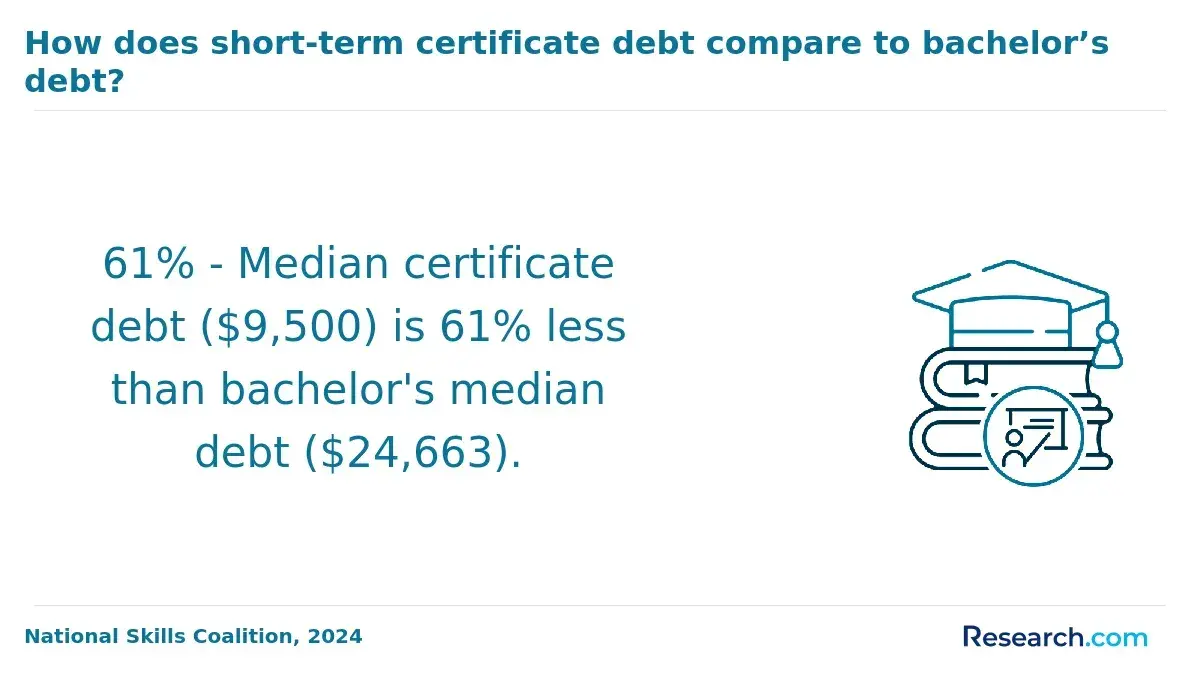
Data from JobPolaris (2024 ROI analysis) points to a median salary of $55,693 within four years post-graduation, exceeding typical student debt levels around $24,750, highlighting favorable financial returns when pursuing top U.S. universities offering financial analytics aligned online data analytics degrees. Prospective students evaluating paths to pivot or advance strategically should also consider related fields; resources for the best medical assistant programs exemplify alternate healthcare pathways with financial aid options worthy of comparison in terms of cost, duration, and labor demand.
What admissions requirements and prerequisites do online financial data analytics programs have?
Admission into online financial data analytics programs often hinges on more than a bachelor's degree; foundational coursework in mathematics, statistics, and finance or economics shapes early academic readiness. Prerequisites for financial data analytics degrees must be carefully evaluated, especially for candidates transitioning from non-quantitative fields, since bridge courses can extend time to completion and add financial strain.
Work experience in finance, accounting, or technology can mitigate gaps and is increasingly weighted alongside academic records. Standardized test requirements have relaxed, with many programs waiving the GRE or GMAT, targeting skills and professional accomplishments instead. However, competitive programs sometimes still require these scores to benchmark quantitative reasoning.
Letters of recommendation emphasize demonstrated analytical ability and tangible professional impact, criteria that align closely with employer expectations for candidate readiness. Cost considerations are pivotal: online MBA programs focusing on data analytics can start near $13,950, a fraction of the $30,000-$60,000 typical for on-campus equivalents.
This price differential improves accessibility but may influence perceived rigor in hiring contexts. Applicants should anticipate rigorous vetting of technical and quantitative skills, particularly for roles in financial risk management or investment analysis. Clear documentation of prior learning and work history expedites admission and signals job-market preparedness. A thorough evaluation of admissions criteria for an best library science programs illustrates broader trends in program selectivity and workforce alignment across data-intensive disciplines.
What core courses and technical skills are taught in financial data analytics degree curricula?
Advanced financial data analytics programs integrate finance, statistics, and machine learning to meet rising employer demand for automated decision tools in complex markets. Core study areas such as econometrics and risk management develop the foundational skills essential for navigating volatility and regulatory constraints. Yet, candidates must recognize that proficiency with programming languages like Python, R, and SQL is non-negotiable for handling large-scale financial datasets effectively.
Machine learning applications in these curricula are not academic abstractions but directly target practical financial operations like credit scoring, fraud detection, and portfolio optimization. For example, applying time series analysis to forecast asset prices is a skill relied on heavily by hedge funds and investment banks.
Students pursuing specialization in blockchain analytics or high-frequency trading algorithms face significant tradeoffs-these niche areas require both deep technical expertise and familiarity with rapidly evolving market infrastructures. Data visualization tools such as Tableau and Power BI are included to bridge a persistent communication gap, enabling financial analysts to translate sophisticated models into actionable recommendations for non-technical stakeholders.
Given regulatory compliance challenges and data integration complexities in real-world projects, these skills are critical. Employers value this interdisciplinary skill set demonstrably: master's-level machine learning engineer roles in finance command salaries from $105,000 to $170,000, illustrating a premium on these competencies in 2024, as noted by Alvernia University.
How long do online financial data analytics degrees take and what do they cost?
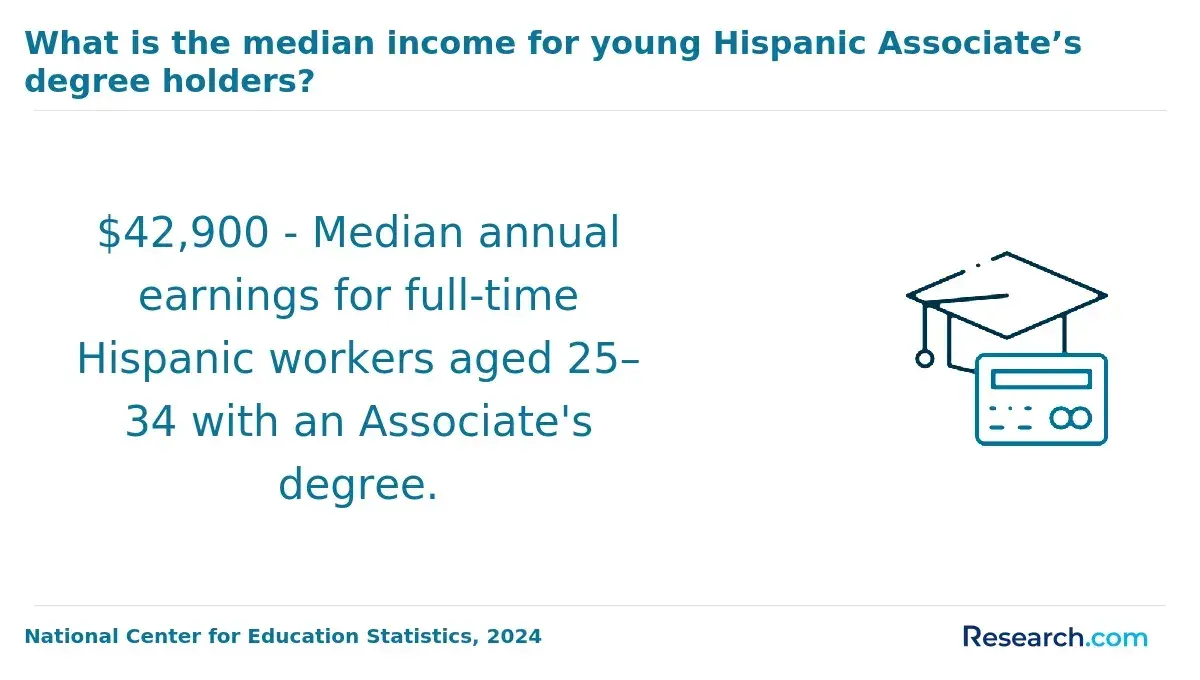
Choosing between bachelor's and master's degrees in online financial data analytics hinges on tradeoffs in time, cost, and workforce readiness. Bachelor's programs typically require 3 to 4 years part-time, matching the pace of working professionals balancing jobs, whereas accelerated master's degrees can be completed in 12 to 24 months if prior related education exists.
This difference matters significantly for career changers: those without an undergraduate foundation in analytics face longer timelines with bachelor's degrees, while master's paths offer faster market entry but often at higher tuition rates. Financially, bachelor's degrees at public online universities usually cost between $20,000 and $40,000 total, based on per-credit pricing of $300 to $600.
Master's programs range from $15,000 to over $70,000, influenced by institution type and specialization. Working students must weigh these figures against potential lost income during study and employer expectations prioritizing degree completion as a baseline for hiring.
Key considerations include:
- Longer bachelor's paths offer foundational depth but delay earning potential.
- Accelerated master's degrees reduce time investment yet require upfront resources and prior coursework.
- Employers predominantly seek candidates with completed formal degrees; partial credentials rarely suffice.
This analysis integrates data from Zippia reported by Coursera, 2024, emphasizing the real-world implications of program duration and cost on employability for those targeting roles like financial analysts.
What finance-focused data analytics careers can graduates pursue, and in which industries?
Graduates from online data analytics programs with a financial analytics concentration often face a competitive labor market that demands both technical precision and domain-specific insight. Positions such as financial data analyst, risk analyst, or quantitative analyst require advanced proficiency in statistical software, SQL, and Python, alongside keen financial acumen.
For example, a quantitative analyst at an investment firm might design algorithmic trading models reacting to market fluctuations, whereas a risk analyst in insurance focuses on credit risk exposure and loss forecasting. Industries with the most demand include banking, investment management, fintech, and corporate finance, each emphasizing distinct skill subsets.
Employers expect graduates to produce actionable insights that influence profitability and risk management, which means graduates must balance acquiring sophisticated modeling, dashboard development, and regulatory reporting skills with effective communication to non-technical stakeholders. Prospective students should weigh tuition costs-ranging from $465 to $479 per credit hour, totaling approximately $13,950 for an MBA-level program-from providers such as University of Southern Indiana Online and Southern Illinois University Edwardsville Online.
This investment merits careful evaluation against realistic salary improvements and competitor profiles, including traditional business backgrounds supplemented by analytics certifications. Emerging financial sectors like fintech further require knowledge of blockchain analytics and alternative data sources, demanding continuous skill adaptation beyond conventional financial frameworks.
What salary ranges and earning potential exist in financial data analytics roles?
Financial data analytics roles command varying salaries heavily influenced by specialization, industry, and experience, with median earnings typically starting near $85,000 and reaching beyond $125,000 annually. For instance, management analysts, often a target position for those merging financial expertise with data analytics skills, had a median salary of $101,190 alongside a projected job growth of 9% over a decade, according to the U.S. Bureau of Labor Statistics via Johnson & Wales University Online.
This growth signals persistent demand for professionals who can translate complex data into actionable financial strategies. Starting salaries for entry-level financial analysts usually range from $60,000 to $75,000 in corporate finance or banking sectors; however, those who quickly adopt financial modeling and tools such as SQL and Python often progress to FP&A manager or risk analyst roles, where salaries exceed $100,000 within three to five years.
Risk analysts in insurance or investment sectors specifically benefit from their capacity to quantify and mitigate risks, earning between $90,000 and $130,000. Industries such as manufacturing or energy offer premium pay for FP&A professionals due to the critical nature of budget planning impacted by complex supply chains and capital investments.
Prospective students should weigh how integrating hands-on analytics with foundational financial theory opens access to resilient sectors like healthcare and technology finance, which align economic stability with expanding analytics needs. Key considerations include:
- Mastering advanced Excel, Python, and SQL aligned with business acumen.
- Targeting industries with stable or growing employment outlooks.
- Understanding that analytical proficiency alone is insufficient without financial context.
- Recognizing the tradeoff between broad finance roles and specialized analytics positions.
What certifications and professional designations support a financial data analytics career?
The choice of credential in financial data analytics profoundly shapes career pathways and employability, reflecting distinct tradeoffs between specialization, time investment, and immediate workforce relevance. The Certified Financial Analyst (CFA) designation commands respect for its comprehensive mastery of investment analysis and portfolio management, yet its multi-year commitment delays entry or pivot for many candidates.
Conversely, the Certified Analytics Professional (CAP) credential offers quicker accessibility, emphasizing hands-on application of analytic methods, but requires demonstrable project experience-favoring those already embedded in analytics roles. Financial institutions increasingly demand hybrid credentials that combine domain-specific certifications such as CFA or Financial Risk Manager (FRM) with technical proficiencies verified through CAP or programming expertise.
The FRM, with its quantitative risk focus, distinguishes candidates needing to navigate regulatory complexity, a growing priority as firms expand analytic teams under compliance pressures. Practical implications include:
- CFA suits professionals targeting investment or corporate finance sectors who can afford a long-term qualification timeline.
- CAP is more suitable for analytics practitioners seeking validation of methodological skills within a condensed timeframe.
- FRM aligns with roles emphasizing risk analytics, particularly in regulatory or institutional contexts.
For those balancing rapid role transitions with the need for recognized credentials, a blended strategy incorporating technical software skills alongside domain certifications often meets employer standards more effectively than isolated credentials. Employment projections from the U.S. Bureau of Labor Statistics highlight a 36% growth in data scientist roles through 2031, illustrating substantial demand for validated analytic competence paired with financial expertise.
How can students evaluate and choose a reputable online data analytics program for finance?
Programs in online data analytics for finance must prioritize accreditation and curriculum specificity to ensure graduate market viability. Accreditation from recognized regional or national bodies signals educational legitimacy and employer trust. A curriculum narrowly focused on generic analytics tools without targeted financial applications risks limiting candidate appeal, especially as automation and AI reshape financial roles with projected growth rates between 6% and 21% through 2034, per Johnson & Wales University Online data.
The gap between program claims and tangible graduate outcomes is critical. Prospective students should require evidence of employment rates and salary ranges, with median financial analyst salaries approaching $90,000 to $100,000 serving as key benchmarks. Programs lacking this transparency may indicate misalignment with current financial sector demands or weaker industry connections.
For those switching careers-such as a risk analyst shifting from insurance to banking-programs offering asynchronous flexibility must still provide direct application opportunities in finance-specific analytics. Access to active faculty involved in financial AI research enriches this applied learning, ensuring skills match employer expectations for handling large datasets, automated data pipelines, and model validation.
- Verify that the curriculum integrates advanced statistical software plus machine learning models tailored to risk assessment.
- Confirm the availability of real-world projects reflecting credit risk analysis versus outdated, generic datasets.
- Assess platform robustness and technical support given the technical complexity of data-driven finance roles.
Other Things You Should Know About Data Analytics
Online data analytics programs vary widely in the level of practical experience they provide. Those with integrated projects using real financial datasets or partnerships with financial firms offer stronger preparation for employer expectations. Programs lacking these components may leave graduates underprepared for hands-on tasks like predictive modeling or risk analysis, which are crucial in finance roles. Prioritize programs that embed applied finance analytics projects or capstones to ensure your skills translate directly to workplace demands.
Specialized financial analytics courses deepen domain knowledge but narrow your skillset, which may limit flexibility in broader data analytics roles outside finance. In contrast, broader training can make you more adaptable but less competitive for niche roles requiring advanced financial modeling expertise. For career advancement within finance specifically, programs with focused financial analytics content offer greater value. If your goal is cross-industry mobility, balance is essential, with a core in general analytics and selective advanced finance modules.
An aligned program should include Excel, SQL, Tableau, Python, and often Power BI for financial reporting and forecasting. For finance roles, look for coverage of financial modeling, risk analysis, and database querying, plus a capstone that uses real market or budget data.
Employer acceptance of online data analytics degrees depends on program reputation, curriculum rigor, and demonstrable skills rather than delivery mode alone. Graduates from programs with accredited, finance-focused curricula and strong project portfolios stand on equal footing with traditional degree holders. However, some employers remain cautious about pedigree and prefer candidates with internships or prior finance experience alongside their degree. To maximize employability, prioritize programs with recognized accreditation, industry ties, and opportunities to build relevant work products.
References
- School of IT/Big Data Analytics - INTERNATIONAL EUROPEAN UNIVERSITY, POLAND | EUROPE | STUDY IN POLAND | STUDY IN EUROPE | MBBS | GENERAL MEDICINE | BUSINESS | ENGINEERING | IT | EUROPE https://ieu.com.pl/european-school-of-it-home/school-of-it-big-data-analytics/
- MSc in Financial Data Science https://www.smurfitschool.ie/programmes/masters/mscinfinancialdatascience/curriculumlearning/
- What does a Financial Data Analyst do? https://www.cfainstitute.org/programs/cfa-program/careers/financial-data-analyst
- Financial Analytics M.S. https://manhattan.edu/academics/programs/financial-analytics-ms
- Exploring Careers at the Intersection of Data Science and Finance https://blog.udallas.edu/tower-thoughts/exploring-careers-at-the-intersection-of-data-science-and-finance
- How to Choose a Data Analyst Course and Certification? - Toronto Innovation College https://torontoinnovationcollege.ca/how-to-choose-a-data-analyst-course-and-certification/
- The Top 10 Data Analytics Careers For 2025: Skills, Salaries & Career Prospects | DataCamp https://www.datacamp.com/blog/top-ten-analytics-careers
- 10 Best Data Analytics Programs 2026: Beginner to Advanced https://skillifysolutions.com/blogs/data-analytics/best-data-analytics-programs/
- All Schools with Financial Analytics Degrees - AnalyticsDegrees.org https://www.analyticsdegrees.org/specialties/financial-analytics/
- Career Opportunities After Graduation in Finance & Analytics https://www.talentskillsvarsity.com/blog/top-career-opportunities-after-graduation-in-finance-analytics/