2027 Best Online Data Analytics Programs for Professionals Moving From Operations Into Analytics Roles

Co-Founder and Chief Data Scientist
Transitioning from operations management into data analytics roles requires mastering technical skills often absent in traditional operational training, yet employers increasingly demand proficiency in data-driven decision-making. A 2024 National Center for Education Statistics report reveals a 35% surge in online data science enrollments among working adults, signaling growing recognition that flexible, career-oriented programs are essential for mid-career professionals juggling job demands and skill acquisition.
This shift highlights a critical decision point: choosing programs that balance accessibility, practical curriculum, and industry relevance without excessive time or financial burdens. This article identifies top online data analytics programs tailored for professionals navigating this career pivot, analyzing how they address these challenges effectively.
Key Things You Should Know
- Programs under 12 months reduce opportunity costs but often limit exposure to advanced statistical modeling, hindering long-term role advancement in analytics-heavy operations environments per National Center for Education Statistics 2024.
- Employers prioritize candidates demonstrating proficiency in Python and SQL over mere certification, reflecting a 38% higher hiring rate for those with demonstrable coding skills according to LinkedIn Workforce Report 2024.
- High tuition premiums for top-ranked programs create a return on investment tradeoff, with Bureau of Labor Statistics data showing median analyst salaries rising only 4% annually, challenging rapid payback for professionals transitioning from operations.
What is data analytics and how does it build on operations experience?
Operations experience deepens the value of data analytics by embedding domain-specific insight into raw analysis, critical for resolving nuanced business challenges. For example, an operations manager in manufacturing who applies analytics to supply chain metrics can detect subtle bottlenecks affecting production efficiency-something purely technical analysts often miss. The demand for such hybrid roles is evidenced by the U.S. Bureau of Labor Statistics projecting a 23% growth in operations research analyst jobs from 2022 to 2032, highlighting a market preference for professionals who bridge operations expertise with data skills.
Data analytics benefits for operations professionals manifest through technical capabilities layered atop operational knowledge, including data cleaning, predictive modeling, and dashboard creation. Yet, candidates face hurdles such as acquiring programming skills (Python, R), mastering SQL, and navigating visualization tools like Tableau or Power BI. Developing analytical thinking beyond operational intuition remains an essential transition challenge.
Employers prioritize candidates who can not only process data but transform insights into actionable strategies comprehensible to operations teams and leadership. Practical program selection should focus on applied business contexts that simulate real datasets aligned with operational realities. This approach improves workforce integration and outcome relevance.
Those evaluating educational pathways should consider programs offering a balance of rigor and relevance. For professionals interested in accelerated routes, exploring online degrees in computer science may provide complementary technical foundation opportunities supporting this strategic pivot.
How operations experience enhances data analytics skills is reflected in the ability to interpret data through an operational lens, making analyses pragmatic rather than abstract.
How do online data analytics programs support professionals transitioning from operations roles?
Transitioning from operations to data analytics demands mastery of technical skills that extend beyond typical management abilities. Online data analytics programs designed for professionals moving from operations into data analytics programs tend to prioritize SQL, Python, and data visualization, alongside foundational statistical reasoning. Such training enables learners to manage complex datasets and automate reporting processes-critical for creating predictive insights that directly improve business functions. For instance, an operations manager in retail might apply demand forecasting models learned online to streamline supply chain decisions.
Quantitative literacy gaps common in operations roles are addressed through coursework covering probability, regression, and introductory machine learning. This rigor is essential for formulating actionable analyses that influence strategy rather than merely support daily tasks. Given that employers increasingly expect measurable impact, programs often require project-based portfolios demonstrating improvements in areas like operational bottlenecks or resource allocation.
Flexibility in online formats helps working professionals balance ongoing job responsibilities while acquiring these new skills without significant career disruption. However, this pathway entails a steep learning curve and demands hands-on experience beyond lectures. Successful learners engage with case studies and capstone projects that simulate cross-functional teamwork in sectors ranging from manufacturing to healthcare operations.
Those exploring online data analytics courses for operations to analytics career transition should also consider broader AI-related interdisciplinary credentials. For example, a bachelor applied artificial intelligence may provide complementary competencies relevant to predictive modeling and automation, expanding employability in an evolving workforce landscape.
Which online data analytics degrees and certificates are best for working professionals?
Data analytics credentials must be chosen with an eye toward their practical application and alignment with job demands rather than simply their credential value. For working professionals, especially operations specialists, the best online data analytics degrees for operations professionals deliver hands-on experience in SQL, Python, and statistical methods tailored to real industry problems. This pragmatic approach matters because the Gallup and Amazon Web Services report on advanced data skills finds a 47% salary premium for those able to apply analytics effectively in their roles.
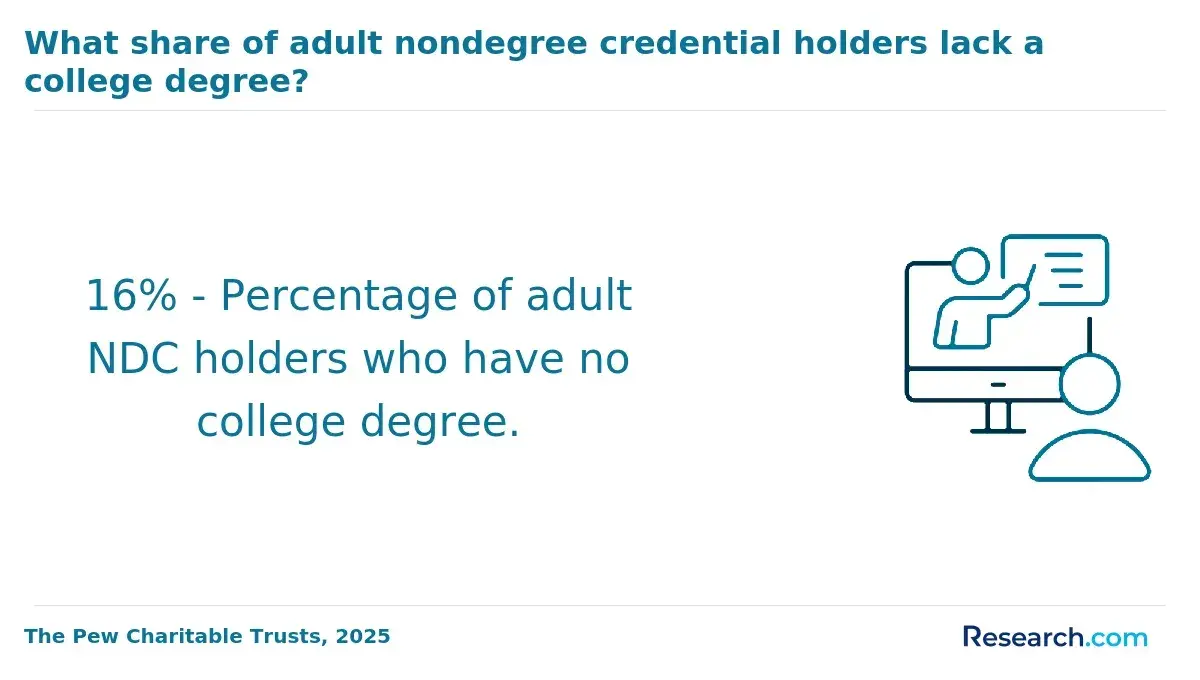
Shorter certificates or micro-credentials offer focused skill upgrades for mid-career employees not ready to commit to a full degree, but degrees provide conceptual depth needed for leadership or cross-functional movement. Choosing a program requires assessing industry relevance, virtual lab availability, and career service support:
- Curriculum aligned to specific industry data tools-healthcare analytics differs substantially from retail or supply chain.
- Virtual labs for practicing coding and data manipulation without exposing proprietary systems.
- Robust alumni networks and career services that enhance placement prospects within or beyond current employers.
For instance, an operations manager in healthcare should prioritize programs featuring healthcare analytics and privacy-compliant data training, while supply chain analysts benefit more from programs emphasizing predictive modeling tuned to logistics challenges. Carefully aligning coursework with immediate job context avoids credential inflation that stalls career progress, despite clear employer demand.
Professionals exploring transitions to roles such as AI trainers can also consult resources like AI training jobs for insight into allied career pathways where data analytics skills serve as a foundation.
Online data analytics certificates for working professionals offer a focused route to skill enhancement within an active career, whereas comprehensive degrees better serve those targeting strategic pivots or managerial growth requiring broader frameworks.
What accreditation should online data analytics programs have in the United States?
Regional accreditation recognized by the U.S. Department of Education, such as from the Higher Learning Commission or Middle States Commission on Higher Education, is the definitive benchmark for evaluating accredited online data analytics programs in the United States. This distinction affects more than just academic credibility: employers scrutinize it to assess whether a candidate's education aligns with rigorous standards of faculty expertise, curriculum relevance, and institutional stability. For professionals pivoting from operational roles without formal analytics backgrounds, this accreditation often dictates job market viability.
Consider a healthcare operations manager pursuing analytics credentials: completing a program lacking recognized accreditation can severely limit acceptance by hospital analytics leadership, impeding career transition despite similar coursework. In contrast, programs with top recognized accreditation for data analytics online courses USA often facilitate smoother credit transfers, access to federal financial aid, and alignment with certification pathways like CAP (Certified Analytics Professional).
Employers rely on these accreditations as practical filters amid 82% worldwide planning to hire business analytics and data analytics graduates, according to the Graduate Management Admission Council Corporate Recruiters Survey 2024. When programs claim industry alignment without formal accreditation, candidates risk investing in substandard education that fails to equip them for data-driven decision making in complex environments.
Choosing truly accredited online data analytics programs in the United States also correlates with enhanced professional networks and job placement support-elements critical for long-term advancement rather than short-term credential gathering. For those evaluating educational pathways balanced between market demand and operational realities, accreditation is an indispensable decision factor.
For further insight into well-structured online degree options, consider reviewing the best exercise science degree online programs as a benchmark of program rigor and delivery standards.
How do online data analytics programs compare to campus-based options for flexibility and outcomes?
Flexibility is the primary advantage online data analytics programs hold over campus-based options, especially for operations professionals balancing irregular shifts or demanding roles. For example, employees in healthcare logistics can progress without pausing their work, accessing coursework asynchronously-a necessity given 24/7 operational needs. This adaptability aligns with labor market trends, where hybrid operations-analytics roles expanded by 57% according to the Burning Glass Institute's 2024 job posting data.
Campus programs tend to offer stronger immediate networking and on-site career support, which can shorten job searches. However, their fixed schedules and location requirements often exclude learners juggling family or full-time work. Online formats attempt to replicate these benefits via virtual mentorship and collaboration tools, but results vary significantly depending on program design and student engagement.
Employers increasingly seek candidates demonstrating applied proficiency through project-based work tied to real business challenges. Online offerings frequently embed industry-standard software and datasets relevant to sectors like supply chain optimization, while campus programs may emphasize theoretical knowledge more heavily. Choosing between them requires weighing factors such as self-motivation, technological readiness, and the need for structured supervision.
Cost differences also matter: online pathways often have lower tuition and related expenses, broadening access for professionals aiming to pivot within tight budgets. Decision-makers should prioritize formats that align with personal learning styles and workplace realities.
What core courses and technical skills are taught in online data analytics programs?
Employers increasingly expect candidates transitioning from operations into analytics roles to demonstrate proficiency in foundational technical skills such as SQL, Python, and R, emphasizing practical capacity to manipulate data for real-world problem solving. For example, interpreting supply chain KPIs or customer service metrics requires not just theoretical knowledge but fluency in extracting and automating insights from raw data. Programs focusing mainly on theory with limited hands-on experience risk leaving students unprepared for these operational demands.
Visualization skills, particularly in Tableau and Power BI, directly affect a professional's ability to translate complex datasets into clear dashboards that provide actionable insights for manufacturing, retail, or healthcare stakeholders. These tools are essential for communication across teams, not merely for data presentation.
Machine learning content, including regression and classification, provides a competitive edge in automating operations like inventory forecasting or churn prediction. However, the time commitment often required for these advanced topics may outweigh their immediate return for individuals seeking quicker career pivots.
Data cleaning and wrangling dominate practical curricula, mirroring workforce realities where operational data arrives incomplete or noisy. Programs incorporating hands-on projects with imperfect data better prepare learners for the daily challenges they will encounter.
According to Coursera's Global Skills Report 2024, those completing data analytics certificates see a median salary increase of 23% within 12 months, with the most significant gains among professionals moving from operational or administrative roles. This underscores the direct market return on technical proficiency combined with operational context.
What are typical admission requirements for online data analytics programs for adult learners?
Admission to online data analytics programs often hinges on a candidate's mix of academic foundation and professional experience, reflecting employer demand for both theory and applied skills. Most require a bachelor's degree, preferably in fields that foster quantitative reasoning such as business, engineering, or computer science. Transcripts typically must show proficiency in mathematics or programming-calculus, linear algebra, and introductory coding are common expectations. Candidates from operational roles without strong quantitative backgrounds face enrollment barriers, frequently needing prerequisite coursework offered in flexible formats.
Work experience is a decisive factor, with many programs expecting two to five years in roles involving data interpretation or process improvement, signaling practical readiness. For example, a logistics manager lacking formal analytics education might compensate with a purpose statement detailing technical exposure and data-driven outcomes from their job. Although standardized tests like the GRE are less frequently required, letters of recommendation remain critical to authenticate analytical and problem-solving abilities demonstrated at work.
Cost considerations also shape enrollment decisions. According to National Center for Education Statistics 2024 data, online master's in analytics programs at public universities cost 27-35% less in-state than on-campus equivalents, mainly by eliminating housing and additional fees. This price differential especially benefits working professionals balancing employment and education but demands careful weighing of remote learning's challenges versus potential flexibility gains.
- Minimum bachelor's degree in quantitative or related fields
- 2-5 years relevant professional experience preferred
- Transcripts demonstrating math or programming proficiency
- Possible prerequisite coursework for non-quantitative backgrounds
- Less frequent GRE requirements but emphasis on recommendation letters
How long do online data analytics programs take, and what do they cost?
Project-based analytics experience remains the crucial differentiator for professionals shifting into analytics roles from operational backgrounds. Programs lasting 6 to 9 months, such as certificates and professional development courses, generally focus on targeted skills and applied assignments that align with employer demand for verifiable work portfolios. Conversely, extended part-time master's or advanced certificate programs spanning 12 to 18 months provide stronger theoretical foundations and broader competencies but require significant time and financial commitment.
Cost is a decisive factor: online certificates typically range between $3,000 and $10,000, often with bootcamp-style options demanding full-time focus, which many working professionals cannot afford. More comprehensive part-time graduate programs can exceed $40,000, reflecting their depth and prestige yet posing practical constraints for mid-career candidates. Candidates should also evaluate options involving employer tuition assistance or income-share agreements to ease upfront costs.
Consider an operations manager in manufacturing targeting supply chain analytics. Short programs offer fast transitions but may limit strategic depth, while longer programs build credentials suited for leadership but delay return on investment. Balancing program length, cost, and the ability to develop demonstrable project portfolios is essential since employers prioritize applied analytics outcomes over coursework alone, as confirmed by the Society for Human Resource Management's data showing 69% of employers value project experience.
What analytics job roles, salaries, and career paths can operations professionals pursue?
Operations professionals transitioning into analytics roles face nuanced tradeoffs between domain familiarity and technical skill acquisition. Business analysts earn $70,000 to $95,000 by linking IT with business needs, while data analysts start around $65,000 to $90,000 focusing on dataset interpretation. Process and operations analysts, earning up to $100,000, emphasize workflow and supply chain efficiency respectively. These roles demand distinct competencies, making targeted skill development essential.
For example, a manufacturing operations manager moving into an operations analyst role must swiftly build proficiency in SQL, Python, and visualization tools. Conversely, retail operations professionals targeting business analyst positions benefit more from strengthening communication and requirements-gathering capabilities alongside analytics. Employers prioritize demonstrable experience through projects or certifications over formal credentials alone.
Online master's graduates in analytics demonstrate nearly equal full-time employment and starting salaries compared to on-campus peers, validating online study's viability for working adults balancing schedules. Still, the challenge remains in managing the learning curve while securing practical experience.
Long-term advancement often requires bridging analytics expertise with leadership capabilities in roles like Analytics Manager. Continuous upskilling and cross-functional exposure become vital as employers increasingly expect applied analytics coupled with strategic business insight.
Which industry certifications and tools matter most for data analytics career advancement?
Employers increasingly demand practical skill validation in SQL, Python, and Tableau rather than generic certificates. Certifications like Microsoft Certified: Data Analyst Associate and Google Data Analytics Professional Certificate offer recognizable benchmarks, but their true value depends on demonstrated applied experience. For instance, manufacturing analysts leverage SQL to query complex production data for efficiency improvements, while retail specialists create Tableau dashboards to track shifting sales patterns in real time.
Deciding which credentials to pursue requires weighing time and financial investment against immediate workplace relevance, especially since many employers prioritize verified credentials when quantitative data drives business decisions. Operations managers targeting healthcare analytics roles, for example, should prioritize Python scripting alongside healthcare data standards and cloud fluency in AWS or Azure to remain competitive.
Layering certifications with relevant project work can mitigate the hurdles faced by those without an analytics background. According to LinkedIn's Future of Work Report 2024, professionals with three or more analytics skills increase their chance of pivoting into data analytics by 40% within two years, highlighting the importance of breadth in technical competencies.
Tradeoffs include cost and time versus practical learning velocity. On-the-job training may accelerate familiarity, but certifications establish trust in hiring processes, particularly where analytical rigor influences outcomes directly.
Other Things You Should Know About Data Analytics
Project-based learning and capstones simulate workplace problems, testing students' ability to apply theoretical knowledge to messy, incomplete data. Programs emphasizing real datasets and collaborative work better prepare students for analytics roles involving cross-functional teamwork and stakeholder communication. Candidates should prioritize programs that require multi-step projects with tangible outputs, as this experience directly correlates with higher employer confidence and job performance post-graduation.
Certificate programs offer targeted skill upgrades with shorter completion times, appealing to those seeking a quicker pivot without leaving the workforce. However, degree programs provide a deeper, broader foundation valued by employers for strategic analytics roles and often include more comprehensive career support. For sustained career advancement beyond entry-level analytics roles, professionals should prioritize degree programs despite the greater time commitment and cost.
Many online data analytics programs require 120 to 300 supervised practicum hours, or a capstone built from an employer-style dataset. These requirements are common in 2027 because they show applied skills in SQL, Python, dashboards, and data cleaning, which employers expect from candidates moving out of operations.
References
- Harnessing Data Analytics for Operational Decision-Making https://www.adaptiveus.com/blog/data-analytics-for-operational-decision-making/
- Best Data Analytics Certifications to Boost Your Career – Dataquest https://www.dataquest.io/blog/best-data-analytics-certifications/
- The Case for Online Learning: A Data Review https://www.rize.education/blog/demand-for-online-learning
- What is operational analytics? https://www.databricks.com/blog/what-is-operational-analytics
- Online Data Analytics Courses | University of Phoenix https://www.phoenix.edu/online-courses/data-analytics.html
- Which Certification Is Best for Data Analytics? | CompTIA Blog https://www.comptia.org/en/blog/best-data-analytics-certifications/
- How long does it take to become a data analyst? https://www.analyticsmentor.io/how-long-does-it-take-to-become-a-data-analyst
- Choosing the right certifications for data analytics and data science - Spiceworks https://www.spiceworks.com/it-careers/choosing-the-right-certifications-for-data-analytics/
- 10 Best Data Analytics Programs 2026: Beginner to Advanced https://skillifysolutions.com/blogs/data-analytics/best-data-analytics-programs/
- A Comprehensive Guide to Operational Analytics https://www.striim.com/blog/comprehensive-guide-operational-analytics/