2027 First Analytics Roles for IT Professionals Moving Into Business Analytics

Co-Founder and Chief Data Scientist
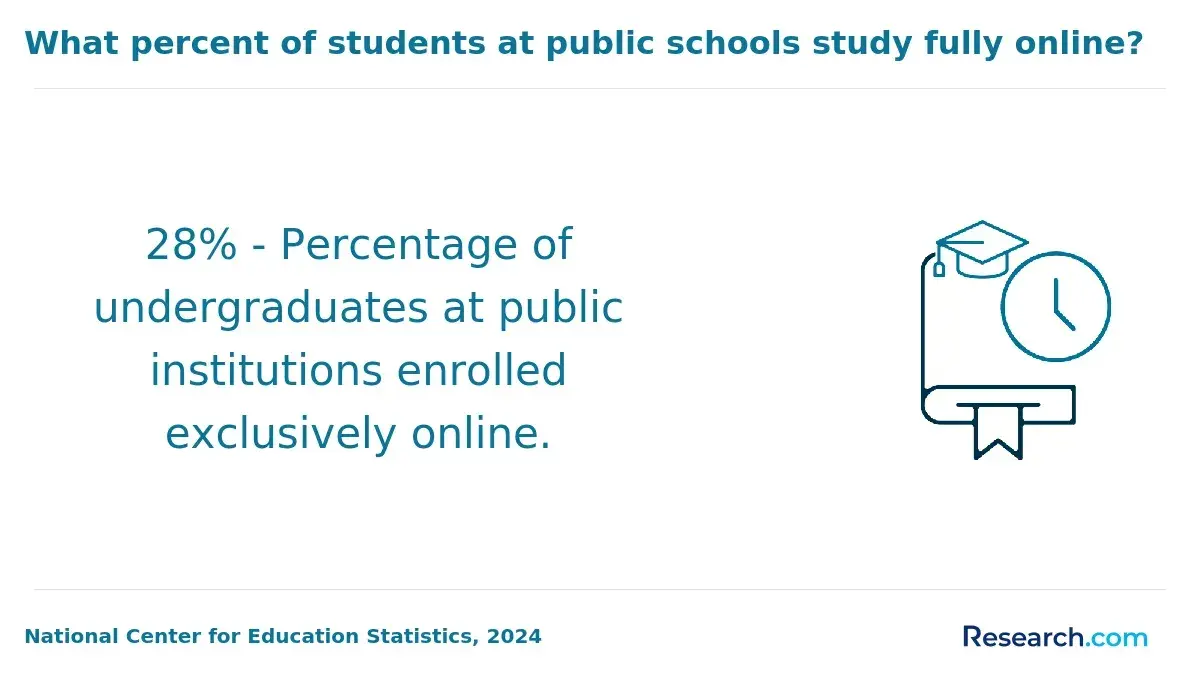
IT professionals shifting toward business analytics often face a bottleneck: securing their first role without prior direct experience. Employers require demonstrated skills in data manipulation and business context, yet traditional routes like full-time degrees can disrupt income and incur significant opportunity costs. The National Center for Education Statistics reports a 12% rise in adult enrollment in flexible, mostly online programs since 2023, signaling a shift toward modular, accessible education models that better accommodate working learners.
Understanding how to leverage these evolving pathways effectively can make the difference between stalled pivot attempts and landing roles that build a sustainable analytics career. This article outlines practical entry points and educational strategies to bridge the gap from IT to business analytics roles.
Key Things You Should Know
- U.S. BLS projects 23% growth for business analytics roles by 2030, but IT professionals often face a 6- to 12-month gap mastering domain-specific tools like Tableau and SQL, delaying career pivots.
- Employers prioritize candidates with hybrid IT-business fluency, evident as 68% of analytics hires in Deloitte's 2024 survey require formal training in cross-functional communication, increasing credential pressure.
- Certificate programs average $3,500-$5,000 with a 40% completion rate, revealing a cost-timing tradeoff where accelerated paths risk skill gaps employers flag, while extended study delays job market entry.
What are the best first analytics job roles for IT professionals transitioning into business analytics?
Entry points into business analytics for IT professionals typically leverage existing technical skills while requiring a pivot toward data interpretation and stakeholder communication. Roles like data analyst, business intelligence (BI) analyst, and reporting analyst provide viable transitions by blending SQL competence, data visualization, and domain-specific reporting. For instance, a network administrator shifting into retail analytics can apply data extraction expertise to optimize sales dashboards and enhance inventory restocking.
The best entry-level analytics roles for IT professionals tend to emphasize practical querying and foundational statistics, often utilizing tools such as Excel, Python, or R without demanding extensive predictive modeling experience. BI analysts particularly suit IT staff familiar with enterprise data infrastructures and ETL workflows, managing dashboards sourced from data warehouses.
By 2025, with 73% of organizations relying primarily on data and analytics for decisions-up from 56% in 2021-hybrid IT-business roles are increasingly in demand. However, bridging technical skills with business acumen and storytelling remains necessary. Structured learning paths focusing on case studies and applied projects improve the interpretability of analytics outcomes, which employers value over purely technical prowess.
Top business analytics job titles for IT career transitions often require adapting from system-centric to outcome-driven thinking and developing fluency in business language. Positions offering mentorship or rotational opportunities enhance employability and long-term growth. For professionals exploring educational options to support such pivots, pursuing a master of data science online can provide targeted skill development aligned with these workforce demands.
What skills do IT professionals need to move successfully into entry-level business analytics roles?
IT professionals shifting into entry-level business analytics roles quickly realize that technical skills alone are insufficient for meeting employer expectations. Proficiency in SQL, Excel, and Python is a baseline, but applying these tools within industry-specific contexts-such as retail for customer segmentation or healthcare for compliance metrics-is what distinguishes successful candidates. This focus on interpreting analytical outputs to influence strategic decision-making reflects a core challenge of essential skills for IT professionals transitioning into business analytics roles.
Employers often cite communication gaps where technically trained hires struggle to translate data insights into actionable business strategies. Structured, practical training incorporating sector-specific case studies or internships helps bridge this divide. Developing foundational knowledge of business processes and supply chain or marketing concepts improves integration within cross-functional teams and accelerates impact.
According to a 2024 SAS survey, 62% of analytics managers report IT-background candidates achieve full productivity within six months, in contrast with 41% for non-technical hires. Emphasizing analytics frameworks atop IT expertise thus confers a measurable competitive edge in early performance. Key competencies for entry-level business analytics jobs in IT include:
- Statistical methods targeted to business questions over generic math knowledge
- Visualization mastery using platforms like Tableau or Power BI
- Understanding governance and quality assurance, especially in regulated sectors
- Applying critical thinking to differentiate correlation from causation
- Engaging effectively with stakeholders across disciplines
This transition also demands adapting to less-defined problems and shorter feedback loops compared to typical IT projects, requiring deliberate experiential learning and mentoring focused on business outcomes rather than technical delivery alone. Those exploring pathways to this field should consider additional specialized programs-a cryptocurrency university may offer relevant models for integrating emerging technical skills within evolving business frameworks.
What degree or certificate programs prepare IT workers for starter roles in business analytics?
Entry-level business analytics roles require more than technical aptitude; they demand integration of analytics with business context and communication skills. IT degree programs for business analytics roles that blend foundational subjects in statistics, predictive modeling, and data visualization with targeted industry applications offer crucial advantages. For instance, transitioning into healthcare analytics is smoother when programs include healthcare data standards alongside core analytics methods.
Certificate courses for entry-level business analytics jobs tend to focus on proficiency in SQL, Excel, Python, and Tableau, aligning with employer expectations for starter roles. Yet, these credentials may lack the interdisciplinary exposure necessary to navigate data governance, privacy, and stakeholder communication challenges effectively.
Workforce data from the University of the Cumberlands' 2024 career overview projects management analyst jobs to grow 10% and market research analyst positions by 13% over a decade, indicating sustained demand for analytics professionals who combine analytical thinking with business fluency rather than purely technical expertise.
Prospective students and professionals should carefully weigh programs emphasizing hands-on analytics projects and cross-functional business knowledge against purely technical certificates. Navigating real-world business contexts and addressing complex data issues requires more than software skills alone.
Those exploring foundational credentials can also consider the best accredited medical billing and coding schools online as a related training path that offers specialized, practical health data skills aligned with certain analytics roles in healthcare settings.
How do online business analytics programs compare to campus-based options for IT professionals?
When comparing how online business analytics programs compare to campus-based courses for IT professionals, the decision often hinges on the balance between flexibility and experiential depth. Campus-based courses provide structured environments with direct instructor interaction, collaborative labs, and on-site recruiting events, which align closely with employer expectations in advanced statistical methods and data storytelling-skills essential for sectors like finance or healthcare analytics.
Conversely, online business analytics programs offer working professionals the ability to learn on their own schedule, which suits those constrained by time or geography. However, the tradeoff includes limited access to immediate peer networking and hands-on project experiences, requiring learners to proactively seek local internships or meetups to build relevant connections. This dynamic shapes the practical timeline for transitioning into analytics roles.
Benefits of online versus campus-based business analytics education for IT career transition are most pronounced for remote or full-time employees lacking metropolitan proximity. While online curricula emphasize core technical skills such as SQL and dashboarding-adequate for entry-level positions in areas like retail or digital marketing-they may limit advancement without supplementary experiential learning.
Coursera's 2024 Data Analysis Career Roadmap reports median data analyst salaries around $76,000, with senior roles exceeding $100,000 in the U.S., underscoring the financial incentive for IT professionals shifting fields. Choosing the right format depends on professional context, readiness to engage in external networking, and career goals within the competitive analytics job market.
For detailed cost considerations, see online animal science programs as a resource for understanding tuition dynamics of online education.
Which accredited U.S. schools offer strong business analytics programs for career-changing IT professionals?
Transitioning from IT roles into business analytics demands programs that balance technical mastery with strategic business acumen, especially as employers expect fluency in databases, programming, and decision frameworks. Carnegie Mellon University's Heinz College and the University of Texas at Austin's McCombs School of Business offer accredited pathways aligned with this profile, evidenced by graduates often securing positions with median starting salaries exceeding $110,000. This aligns closely with DataCamp's 2026 Analytics Careers report, highlighting a $116,000 average annual salary for U.S. business intelligence analysts, underscoring the financial stakes involved in educational choices for mid-career pivots.
For IT professionals targeting leadership roles, Northwestern University's Kellogg School of Management integrates strong business analytics components within its MS in Management Studies, addressing sector-specific pressures in healthcare and finance where rapid, compliant insights are mandatory. Meanwhile, the University of Virginia's Executive Master of Science in business analytics caters to working professionals via flexible, part-time formats combined with practical corporate projects, reducing resume gaps and accelerating employability.
Choosing between accelerated programs and those emphasizing theoretical depth should consider practical outcomes such as embedded internships or cohort composition, which affect peer learning and recruiter perception. Given that employers seek immediate application of analytics skills, programs bridging classroom theory with real-world exigencies offer a more direct return on investment in a labor market where starting salaries benchmarked at $116,000 set expectations for tangible performance post-graduation.
What core courses should IT professionals expect in business analytics certificate and degree programs?
Effective business analytics education for IT professionals demands targeted technical and applied skills rather than broad, theoretical coverage. Core coursework in probability and inferential statistics builds the quantitative foundation necessary for interpreting complex datasets and testing hypotheses within finance, healthcare, or retail contexts. Practical mastery of SQL and database management is indispensable, as extracting and manipulating large structured datasets is often overlooked in conventional IT training yet central to analytics roles.
Programming proficiency in Python or R is non-negotiable for advanced analytics tasks such as predictive modeling and automation. Supplementing this with expertise in visualization platforms like Tableau or Power BI bridges technical analyses with business communication, a skill set increasingly sought by employers requiring cross-functional collaboration. Applied instruction in machine learning and big data technologies aligns with workforce demands where rapid data volume and velocity strain traditional IT infrastructure.
Integrating project-based learning focused on industry-specific analytics applications enhances readiness for the nuanced expectations of digital product analytics roles. Such practical exposure mitigates risks of prolonged adjustment periods in new positions. The 2025 iQuanta business analytics careers report corroborates these priorities, indicating typical entry salaries of $75,000 to $100,000 in US digital and product analytics jobs-significantly above many conventional IT support roles-reflecting market valuation of technical-business integration.
What are typical admission requirements for business analytics programs aimed at working IT professionals?
Admission standards for business analytics programs aimed at IT professionals hinge on demonstrating solid quantitative skills and relevant technical experience rather than simply holding a degree. While a bachelor's degree is a baseline, degrees in STEM fields such as computer science or engineering ease entry, given their alignment with program demands. Candidates must substantiate proficiency in statistics, programming, or database management either through coursework or work experience, addressing workforce expectations for operational roles.
Programs generally favor applicants with 2 to 5 years of IT or technical work, prioritizing backgrounds involving data manipulation, software development, or infrastructure. For working professionals, articulating tangible project outcomes or leadership in technology initiatives often weighs more than fresh academic credentials. Submitting writing samples and detailed resumes can offset standardized testing, which is increasingly waived for seasoned candidates.
Flexible formats-including part-time and hybrid options-reflect industry recognition of the need for educational pathways compatible with ongoing professional obligations. This flexibility is also a practical filter in admissions, signaling candidate commitment potential.
Employment projections for operations research analysts indicate a 25% growth from 2020 to 2030, confirming the importance of selecting programs that effectively integrate IT expertise with business analytics competencies to meet evolving role requirements.
How long do business analytics programs for IT professionals take, and what do they cost?
Business analytics programs for IT professionals often require balancing time, cost, and career objectives, with certificates typically lasting six months and master's degrees up to two years. Certificate-level courses, priced between $5,000 and $10,000, focus on technical skills like SQL or Tableau and offer fast reentry into the workforce but limit advancement into leadership roles due to narrower curriculum scope.
Longer, more expensive graduate programs exceeding $25,000 provide deeper expertise in predictive modeling and strategic data management, which are valued for managerial positions commanding median salaries above $95,000, according to the University of the Cumberlands' 2024 business analytics career paths guide. These programs often incorporate project-based learning and leadership development that meet employer expectations in regulated industries.
Consider, for example, an IT systems administrator moving into healthcare analytics: rapid technical training alone may not suffice without acquiring context-specific business acumen and communication skills critical for influencing decisions in a highly regulated sector. Choosing between a quick certificate and a comprehensive master's involves weighing delayed earnings against long-term value and the complexity of targeted roles.
Successful program selection hinges on realistic assessment of existing experience, time availability, and industry requirements rather than simply opting for the least costly or fastest path. Employers prioritize accredited, project-oriented credentials aligning closely with job responsibilities over generic credentials.
What are starting salaries and long-term earnings for IT professionals in early-career analytics roles?
Entry-level salaries for IT professionals shifting into early-career data analytics roles typically range from $65,000 to $85,000 annually, with significant variation based on geography and role specificity. For example, positions like Junior Data Analyst in regions with moderate living costs start near $65,000, while highly competitive markets such as California or New York can offer starting salaries exceeding $80,000 due to demand and local expenses. Remote and hybrid work models have broadened access to higher-paying roles, with a notable share of California-based analytics positions now offering such flexibility, enabling candidates to bypass relocation hurdles.
Career progression within data analytics heavily depends on specialization and ongoing skill acquisition. Mid-level roles in sectors like healthcare, finance, and technology command average salaries between $95,000 and $130,000, but those who combine analytics expertise with domain-specific knowledge, such as healthcare compliance and software, may reach above $120,000 within five to seven years. Conversely, professionals who rely solely on generalist skills without targeted certifications often face slower wage growth.
Advancement into managerial or data scientist roles typically pushes compensation beyond $140,000, contingent on mastery of statistical methods, programming languages such as Python and R, and familiarity with data visualization and cloud technologies. This progression requires deliberate upskilling and a strategic balance between leveraging existing IT experience and acquiring deep analytics expertise, reflecting differing employer expectations across industries.
What is the job outlook for IT professionals moving into business and data analytics careers?
Transitioning from IT to business and data analytics demands more than technical skills; it requires integrating domain-specific business knowledge to meet employer expectations. Positions such as a systems engineer moving into healthcare analytics must navigate regulatory environments and clinical processes, while a retail analyst needs insights into consumer behavior and supply chains. This blend of capabilities directly affects employability and salary trajectories.
Entry-level salaries for analytics roles in the U.S. start near $70,000, with senior positions like lead data scientist commanding upwards of $150,000, according to SAS's 2026 Business Analytics Career Path guide. These figures indicate that while initial investments in training and upskilling can be significant, the financial payoff aligns with the ability to apply analytical tools in contextually relevant ways.
Successful career pivots prioritize practical familiarity with analytics software, programming languages, and data visualization platforms, alongside industry-specific expertise. Employers increasingly seek candidates who can develop data models aligned with strategic business objectives, not just IT infrastructure.
Students and professionals evaluating this path should weigh the time and cost of acquiring hybrid skills against the market advantage gained. Without combining technical competence with business acumen, the transition may stall despite strong underlying IT experience.
Other Things You Should Know About Data Analytics
Most entry-level business analytics roles expect solid SQL for joins, aggregations, and filtering, plus one dashboard tool such as Power BI or Tableau. Employers also look for Excel, basic data cleaning, and the ability to explain trends clearly to non-technical teams.
Early-career IT professionals should prioritize depth in 2-3 core analytics tools that align with their industry's standard software rather than spreading efforts thin across many platforms. Deep expertise accelerates task efficiency and distinguishes candidates in competitive hiring pools. Broad tool knowledge adds marketability but only becomes valuable after foundational skills are solid. Start with tools used in real business contexts, then expand toolkit strategically based on employer demand.
Certifications can validate baseline knowledge but rarely substitute for proven project experience that shows analytical reasoning and business impact. IT professionals should pursue certifications that require demonstrated application rather than exams alone. To advance beyond entry-level roles, prioritize building a portfolio of real analytics work that includes data cleaning, visualization, and interpretation. Certifications serve best as supplements to confirm skills already tested in practice.
References
- Master of Science in Business Analytics https://www.ceu.edu/academics/degrees/ms-business-analytics
- Entry-Level Jobs in Business Analytics: Best Opportunities for Freshers in 2026? https://skillcureacademy.com/blogs/entry-level-jobs-in-business-analytics/
- Business Analyst Training: What You Need to Know https://www.dice.com/career-advice/business-analyst-training-what-you-need-to-know
- Admission requirements for Business Analytics & Artificial Intelligence https://en.itu.dk/Programmes/MSc-Programmes/Applying-to-a-MSc-programme/Admission-requirements-BAAI
- Why You Should Consider a Career in Data Analytics https://www.emeris.ac.za/blogs/why-start-a-career-in-data-analytics
- Business Analytics: Is It The Career For You? – EU Business School https://www.euruni.edu/blog/business-analytics-is-it-the-career-for-you/
- Study Business Analytics in the USA | Study in the USA https://www.studyusa.com/en/field-of-study/359/business-analytics
- Business Analytics Job Market Report (UK) - Jun 2026 https://www.learningpeople.com/uk/career-insights/job-market-insights/business-analytics/
- Business Analytics: How Long Does it Take to Learn? https://blog.nobledesktop.com/learn/business-analytics/how-long-does-it-take-to-learn-business-analytics
- Brit College of Engineering & Technology (BCET) - Advanced Professional Certificate in Business Analytics & Data Science with R&D https://bcet.uk/course/advanced-professional-certificate-in-business-analytics-with-r-d