2027 Online Data Analytics Degrees With Predictive Analytics Concentrations

Co-Founder and Chief Data Scientist
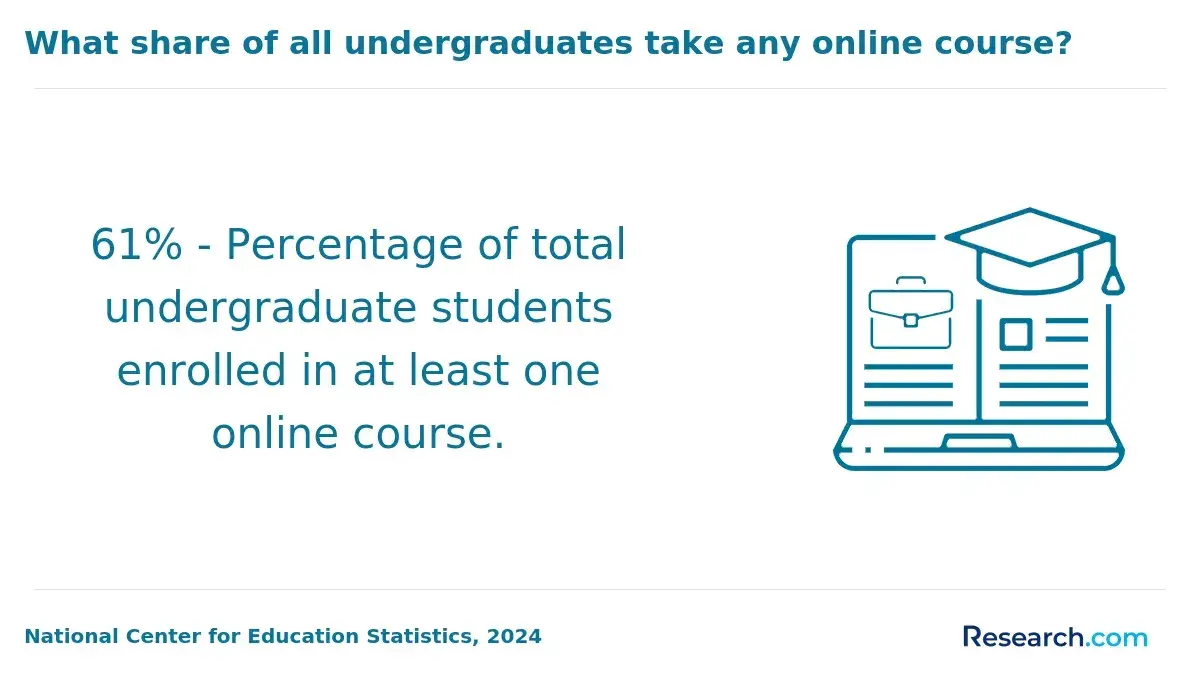
Facing rapidly evolving business environments, professionals struggle to anticipate market shifts and consumer behaviors without advanced predictive modeling skills. Compounding this challenge, balancing ongoing employment and education remains difficult; nearly 60% of online degree enrollees in 2024 are adult learners prioritizing flexibility, according to the National Center for Education Statistics. This trend signals a shift towards program structures accommodating part-time and remote study, crucial for timely skill acquisition in predictive analytics. However, discerning which online degrees offer rigorous, industry-aligned predictive analytics concentrations requires nuanced evaluation. This article assesses the current landscape of online data analytics degrees emphasizing predictive analytics to guide strategic enrollment and career advancement decisions.
Key Things You Should Know
- Employers ranked predictive analytics proficiency as a top 25% skill for data analyst roles in 2024, pressuring graduates to demonstrate applied machine learning alongside traditional statistics to win competitive roles.
- Programs with integrated cloud-computing modules reduce skill gaps by 30%, addressing workforce demands but increasing tuition by 15% on average, forcing tradeoffs between cost and comprehensive employability.
- Median time-to-completion for online degrees rose from 18 to 24 months between 2022 and 2024 due to added specialization courses, delaying workforce entry and impacting return-on-investment calculations for career pivots.
What is an online data analytics degree with a predictive analytics concentration?
Specializing in predictive analytics within online data analytics degree programs addresses a sharply growing market segment, where demand for professionals rose 36% from 2022 to 2024. This specialization requires mastering statistical and machine learning methods to generate actionable forecasts that influence operations across diverse fields. For example, in healthcare, predictive models optimize patient admission schedules to reduce staffing costs without compromising care.
Graduates face a curriculum that integrates probability, regression, time series forecasting, and machine learning, often supplemented by data engineering essentials. Successfully navigating this technical rigor while applying practical tools reflects a necessary balance; programs focused solely on theory leave students less prepared for employer expectations emphasizing end-to-end data workflows and real-world problem-solving.
Working professionals exploring an online data analytics degree programs with predictive analytics focus must weigh program accreditation, data science faculty expertise, and options for internships or capstone projects featuring current datasets. These elements directly impact employability and skill relevance in a competitive job market. Employers increasingly prioritize candidates proficient with industry-standard tools and verified certifications, which contribute to higher advertised salaries tied to this specialization.
Given the investment required, prospective students should research and compare offerings thoroughly. Resources such as masters in data science online can provide comparative data on program affordability and outcomes to inform these decisions.
How do online predictive analytics concentrations compare to campus-based programs?
Choosing between online predictive analytics degree programs vs campus-based options hinges on access to experiential learning that directly influences employability. Campus-based concentrations typically provide hands-on opportunities through in-person labs, internships, and projects with local industries such as finance or healthcare, which foster immediate application of skills in real-world contexts. In contrast, students pursuing a comparison of online and traditional predictive analytics concentrations face the challenge of independently sourcing remote internships or applied projects, demanding higher self-discipline and networking to compensate for the lack of physical immersion.
Employers prioritize practical capabilities with industry tools alongside analytical problem-solving in settings like supply chain forecasting or customer behavior modeling. While campus programs embed these through partnerships, online curricula substitute with virtual labs and simulations whose effectiveness depends heavily on student initiative and program design. Nevertheless, online pathways uniquely benefit working professionals who must balance income and flexibility but must also consider potential constraints in networking and hands-on exposure.
The U.S. Bureau of Labor Statistics projects 35% growth in data science and analytics roles from 2022 to 2032, increasing the premium on demonstrable applied skills over theory alone. Prospective students should carefully assess whether an online format's flexibility and cost savings align with their ability to secure experiential learning and meet employer expectations. For those researching alternatives, the AI degree market provides a related lens on accessible, career-focused program options.
Which U.S. schools offer accredited online data analytics degrees in predictive analytics?
Data analytics professionals targeting roles with predictive analytics expertise contend with a critical tradeoff between specialized skills and program accessibility. Accredited U.S. schools like Syracuse University, University of Cincinnati, and Dakota State University feature online data analytics degrees with predictive analytics concentrations that integrate practical machine learning and advanced statistical methods directly applicable to sectors such as healthcare, finance, supply chain, and marketing. For example, Syracuse's program highlights healthcare-focused predictive applications, reflecting employer demands for domain-specific proficiency.
While all meet regional or national accreditation and Quality Matters standards, differences in curriculum depth and practicum emphasis influence employability. University of Cincinnati's pathway prioritizes business analytics with predictive tools for supply chain optimization, whereas Dakota State leans toward applied experience with real-world datasets-an important factor for students seeking immediate workplace readiness.
Graduates pursuing these U.S. accredited online data analytics degrees with predictive analytics concentrations align with Robert Half's 2024 Salary Guide, where enhanced predictive modeling and machine learning mastery correlate with earnings up to $126,250. This salary range reflects market demand for graduates who balance theoretical knowledge with applied technical skills.
Prospective candidates should also weigh program length, costs, and specialization focus against their career objectives. Those balancing data analytics pivot with other work commitments might explore related fields and cross-certifications, such as online medical billing and coding, offering alternative data-centric career paths. These considerations underscore the strategic value in choosing a pathway aligned with specific workforce needs and personal circumstances.
What courses and skills are taught in predictive analytics concentration curricula?
Predictive analytics coursework demands practical mastery of statistical modeling and machine learning techniques with direct application to sectors like finance, healthcare, and retail. For instance, time series analysis is standard for financial forecasting, while classification algorithms support fraud detection in banking-a particular workforce expectation that graduates must meet. Proficiency in programming languages such as Python and R, along with tools like SQL and Apache Spark, positions candidates to handle large datasets and implement scalable predictive solutions in dynamic environments such as e-commerce personalization. This kind of hands-on capability aligns closely with employer calls for skills in experimental design and model validation to continuously assess and refine deployed algorithms.
Beyond technical skills, an online data analytics degree concentration in predictive modeling emphasizes ethical considerations regarding data bias and regulatory compliance, which are crucial for roles in regulated industries and government sectors. Feature engineering and data preprocessing are core components, essential for ensuring model accuracy in practical scenarios like manufacturing defect prediction or social media sentiment analysis. Cloud deployment experience further distinguishes graduates focused on real-time data applications and operational scalability.
Financially, programs like Maryville University's online MBA incorporating predictive analytics charge $714 per credit, totaling approximately $27,846. Such costs require students to balance the program's comprehensive curriculum against return on investment, which depends heavily on their target industry and how they leverage acquired skills. Those considering a strategic pivot should also review comparative online offerings-for example, the WGU vs Chamberlain analysis-despite the focus being different fields, it models detailed program comparison approaches relevant in evaluating credentials.
What are typical admission requirements for online data analytics bachelor's and master's programs?
Admission for online data analytics bachelor's programs prioritizes demonstrated academic readiness, often requiring a high school diploma with coursework in mathematics and statistics. Minimum GPAs typically range from 2.5 to 3.0, though more selective programs may expect higher achievement or standardized test scores, despite many adopting test-optional policies. While professional experience is rarely mandatory, it can enhance applications for nontraditional students pivoting careers. Additional requirements may include letters of recommendation or personal statements assessing candidates' motivation and communication skills.
Master's programs with a predictive analytics focus demand a relevant bachelor's degree, commonly in statistics, computer science, economics, or engineering. Successful applicants must evidence strong quantitative skills through transcripts in calculus, linear algebra, programming, and statistics, usually maintaining a GPA of 3.0 or above. GRE scores are sometimes required but are frequently waived for candidates with significant work experience or prior graduate study. A resume and statement of purpose outlining career objectives aligned with predictive analytics are standard, with some programs requesting letters of recommendation to verify analytical aptitude.
Meeting these prerequisites is critical because specialized analytics MBAs, including predictive analytics tracks, often correlate with tangible salary improvements-median increases around 43% within three years postgraduation according to recent data. This reflects employer demand for candidates who can manage complex technical tasks impacting sectors such as finance, healthcare, and technology. Prospective students should weigh the academic rigor and application components against their current skills and career goals to ensure their investment aligns with long-term professional outcomes.
How long do online data analytics degrees with predictive analytics tracks usually take?
The timeline for completing online data analytics degrees with predictive analytics focuses typically ranges from 18 to 24 months full-time, extending to 30-36 months for part-time learners balancing work. Compressed formats demand intensive effort rarely sustainable alongside full-time employment. Practical mastery through projects and statistical modeling exercises often dictates pacing more than credit hours alone.
Most programs require 30 to 36 credit hours, generally spread over 10 to 12 courses lasting 8 to 12 weeks each. Prospective students must balance institutional scheduling flexibility against sector-specific urgency-fields like finance or healthcare emphasize rapid application of predictive capabilities to anticipate trends and outcomes.
Employers value deep skills in machine learning, data mining, and statistical modeling, as a 2024 Deloitte survey reports 74% of enterprises rely on predictive analytics strategically, with 57% planning workforce expansion. This underscores the tradeoff between speed and expertise: rushing risks underdeveloped competencies that hurt employability.
Working professionals benefit from options accommodating night or weekend study and asynchronous content, mitigating burnout while maintaining steady progress. Choosing the right tempo affects career pivot viability since foundational gaps can impede performance in data-driven roles. Candidates must weigh time commitment, employer expectations, and long-term skill acquisition within their unique work-life context.
What do online data analytics degrees with predictive analytics concentrations cost?
Data analytics degrees with predictive analytics specializations vary widely in cost, ranging roughly from $15,000 to $45,000 for full programs. This variance hinges on factors like institution type and selectivity. Public universities offer more affordable in-state tuition, often $300 to $500 per credit, while private schools may exceed $1,200 per credit. However, cost alone should not drive decisions. Professionals pivoting mid-career into finance or healthcare analytics, for instance, may justify higher tuition if the program aligns with industry certifications and delivers skills employers prioritize.
Beyond tuition, additional expenses such as software licenses or cloud computing fees of $500 to $1,500 annually can significantly affect net outlay. Financial aid and employer tuition reimbursement heavily impact affordability but require upfront navigation. Accelerated or certificate paths may shorten credential timelines but could increase per-credit costs, influencing both total investment and time-to-employment.
Employers increasingly demand applied predictive analytics capabilities demonstrated through real-world projects and industry partnerships. Hence, programs embedding these elements provide tangible advantages despite premium pricing. Conversely, budget-conscious students might prefer public or hybrid models but should plan for supplementary certifications to remain competitive in a saturated labor market.
- Assess programs not only by sticker price but also by quality of applied training and employer recognition.
- Factor in recurring technology fees when calculating total program costs.
- Consider time-to-completion tradeoffs between accelerated and standard pacing options.
What jobs can graduates of predictive analytics-focused data analytics programs pursue?
Graduates of predictive analytics programs must navigate a job market demanding not only technical proficiency in statistical modeling and languages like Python or R but also practical domain knowledge to create actionable business value. For instance, a predictive modeler in retail uses sales and consumer data to optimize inventory management and pricing, directly affecting profit margins. In healthcare, predictive analytics inform patient flow and personalized care strategies, while finance professionals leverage these skills to assess credit risk and detect fraud under complex regulatory conditions.
Employers emphasize experience in deploying models at scale and interpreting outputs for interdisciplinary teams, which often requires communication skills beyond raw technical ability. Career prospects extend internationally, yet prospective students should weigh program costs-Curtin University's AUD $37,484 annual fee exemplifies high tuition-and the ROI relative to starting salaries that vary significantly by geography and sector, typically ranging from $70,000 to over $100,000 in the U.S.
Challenges include maintaining expertise amid rapidly evolving tools and addressing organizational data quality issues that can undermine model accuracy. Graduates often need ongoing professional development, including certifications in cloud computing or big data platforms, to remain competitive. This pathway suits those prepared to invest continuously in skill updates and practical integration of predictive analytics within operational workflows.
What salary ranges and job outlook can predictive analytics specialists expect?
Salary potential for predictive analytics specialists in the U.S. hinges heavily on practical expertise and industry alignment rather than academic credentials alone. Entry-level roles range from $70,000 to $90,000 annually, but professionals with more than five years of relevant experience or advanced degrees focusing on predictive analytics often command between $110,000 and $130,000. Finance, healthcare, and technology sectors lead in compensation due to their reliance on predictive models-such as healthcare's use of analytics to lower patient readmission rates, which translates directly into budget increases and higher salaries.
Strong demand exists across industries, reflected in a projected 20% growth rate for data-related jobs through 2032 by the U.S. Bureau of Labor Statistics. Yet, supply shortages remain, despite 200+ global universities offering related programs, as noted in a Crayon Data survey. This gap elevates the value of curricula that emphasize hands-on predictive modeling, real datasets, and internships in targeted industries.
Employers prioritize candidates able to convert complex statistics into clear business strategies. Without this practical proficiency, even advanced degrees may not accelerate career trajectory. Cross-functional knowledge-integrating predictive analytics with supply chain or marketing domains-can further push salaries upwards. Conversely, smaller companies might offer lower starting pay but provide broader analytical scopes useful for building versatile skills during early career phases.
Prospective students should critically assess programs for strong industry connections and real-world training rather than purely theoretical focus to navigate this competitive and evolving labor market effectively.
How can students evaluate and choose a reputable online predictive analytics program?
Choosing an online predictive analytics program requires scrutiny beyond surface appeal, focusing on accreditation, curriculum specificity, and transparent graduate outcomes. Accreditation by recognized bodies assures employers the program meets rigorous academic and industry standards, which directly impacts employment prospects. Equally important is assessing whether the curriculum includes hands-on work with tools like Python, R, or SAS and emphasizes predictive modeling techniques that align with current hiring demands.
For instance, a healthcare professional transitioning into predictive analytics benefits more from a program focused on clinical data applications and real-world internships than a generic analytics course. Practical industry alignment through capstone projects or internships amplifies employability by providing applied experience.
When evaluating educational formats, short-form programs such as certificates and bootcamps offer accelerated entry into the workforce and may provide job guarantees, yet they often lack depth compared to degree pathways. This tradeoff matters for professionals weighing immediate employment against comprehensive theoretical grounding.
Students should also consider if programs facilitate recognized credentials like CAP or CAIA, which influence advancement opportunities in government and corporate sectors. Transparent reporting of graduation rates, job placements, and median salaries is a key differentiator, with programs reporting, for example, 90% placement within six months providing clearer evidence of post-completion success.
Other Things You Should Know About Data Analytics
In 2027, work experience is not usually a prerequisite for enrolling in an online data analytics degree with a predictive analytics concentration. However, some programs may value prior experience for applicants seeking to enhance their practical understanding and facilitate more advanced coursework.
Employers increasingly accept accredited online degrees, especially when the curriculum includes hands-on projects and relevant software skills like Python, R, and SQL. However, graduates should prioritize programs offering practical capstones or internships, as these elements provide demonstrable experience valued by recruiters. Without applied components, online graduates may face skepticism regarding their ability to execute predictive analytics in complex environments.
Most programs require college algebra, statistics, and sometimes introductory calculus before upper-level predictive analytics courses. Applicants may also need a minimum 2.5 to 3.0 GPA and placement into credit-bearing math if they have not completed the prerequisite sequence.
Students targeting roles specifically in forecasting, customer behavior modeling, or risk assessment should prioritize programs with a concentrated predictive analytics curriculum for deeper skill specialization. Broader data analytics programs might suit those seeking flexibility across multiple analytics domains but often provide less mastery of predictive techniques. The choice impacts employability and the ability to contribute to data-driven decision-making in specialized fields.
References
- Predictive Analytics: An Introductory Overview - Data Science Blogs https://www.datascienceinstitute.net/ai-data-science-blog/predictive-analytics-an-introductory-overview
- Data Analytics course | Le Wagon https://www.lewagon.com/data-analytics-course
- Big Data and the Study of Data Analytics in College https://newmanu.edu/nth-degree/big-data-and-the-study-of-data-analytics-in-college
- Best Online Master's in Data Analytics Programs - AnalyticsDegrees.org https://www.analyticsdegrees.org/data-analytics/online-masters/
- Master's in data analytics jobs | edX | edX https://www.edx.org/resources/what-can-you-do-with-a-masters-in-data-analytics
- Predictive analytics to prevent dropout in online courses https://www.dyndevice.com/en/news/predictive-analytics-to-prevent-dropout-in-online-courses-ELN-2196/
- Data Analytics Master’s Programs: What Do They Want in Applicants? https://blog.accepted.com/data-analytics-masters-programs-what-do-they-want-in-applicants/
- Big Data on Campus https://www.educationnext.org/big-data-on-campus-putting-predictive-analytics-to-the-test/
- Predictive Analytics Specialist Salary: Current Rates and What to Expect - datacolab blog https://datacolab.co.uk/predictive-analytics-specialist-salary/
- Career Paths in Data Analytics: Everything You Need to Know https://blog.herzing.ca/career-paths-in-data-analytics