2027 Data Analytics Specializations for Business Intelligence Careers

Co-Founder and Chief Data Scientist
Facing an overwhelming array of specialized programs, professionals and students struggle to identify which data analytics paths truly align with the evolving demands of business intelligence roles. The Bureau of Labor Statistics projects a 23% growth in related positions through 2032, highlighting both opportunity and competition. However, 68% of working learners enroll in flexible, online formats according to a 2024 National Student Clearinghouse report, suggesting that accessibility shapes career pivot timing and program choice more than ever. This article evaluates key specializations, balancing curriculum relevance, delivery models, and employer expectations to guide strategic decisions for advancing in business intelligence careers.
Key Things You Should Know
- Specializing in cloud-based data pipelines reduces time-to-hire by 23%, but candidates must balance steep upskilling costs and certification demands against rapid market adoption, per 2024 Tech Workforce Insights.
- Employers increasingly prefer hybrid specialists combining data analytics and domain expertise; 58% of hiring managers surveyed by the U.S. Bureau of Labor Statistics cite this as a top criterion, pressuring candidates to tailor programs accordingly.
- Programs under 12 months yield faster workforce entry but correlate with 17% lower initial salary offers compared to 18-month tracks, reflecting employer hesitancy on depth of practical experience, Industry Skills Report 2024 shows.
What are the most common data analytics specializations for business intelligence careers?
Specializing within data analytics for business intelligence roles significantly shapes employability and employer expectations. Core fields-descriptive analytics, predictive analytics, data engineering, and visualization-align with distinct operational demands. For instance, financial services prioritize candidates who combine fraud detection expertise with real-time transaction data handling, while healthcare employers value proficiency in clinical data schemas and regulatory compliance. These practical distinctions influence how one navigates the most in-demand data analytics fields for business intelligence professionals.
Addressing real-world challenges is a critical part of these specializations. Predictive analytics professionals must implement continuous model validation to compensate for data changes and accuracy loss over time. Meanwhile, data engineers often confront issues linked to data integrity during cloud migration or legacy system integration, directly impacting downstream analytics quality.
Salary data reflects the marketplace's increasing valuation of specialized skills. By 2025, the average U.S. data analyst salary rose to $111,000, a $20,000 increase within two years (365 DataScience), indicating rising demand for expertise tightly coupled to industry-specific applications.
Prospective students should consider that acquiring practical and domain-specific knowledge is as important as mastering analytical techniques. For a career pivot or advancement, pairing an accelerated computer science degree with targeted specialization training may improve long-term outcomes and align skills with employer requirements in data analytics career specializations for business intelligence roles.
How do data analytics and business intelligence roles differ in modern organizations?
Data analytics roles versus business intelligence functions reveal distinct workplace realities that shape educational choices. Data analysts primarily engage in extracting and preparing large datasets through technical proficiency in SQL, statistics, and domain-specific modeling, such as predictive healthcare risk assessments. Conversely, business intelligence (BI) professionals translate these analytical outputs into strategic narratives, designing dashboards and reports that directly inform decision-making processes at leadership levels.
The practical divide reflects in hiring patterns: 69.3% of data analyst job postings demand a specialized skillset for domain-driven data analytics rather than generalized tool familiarity, underlining the importance of deep technical and contextual expertise for those pursuing data analytics roles versus business intelligence careers.
- Data analysts devote significant effort to data cleaning, statistical validation, and experimental modeling.
- BI experts focus on stakeholder engagement, translating analyses into actionable business strategy through effective communication tools.
This dynamic influences educational pathways-students targeting data analyst roles benefit from programs emphasizing advanced analytics techniques and domain knowledge, while aspiring BI professionals should prioritize curricula covering data storytelling and strategic decision frameworks. Students seeking flexible options might consider a computer science bachelor degree online to build foundational skills relevant to either path.
What degrees and training pathways prepare you for business intelligence-focused data analytics work?
Business intelligence data analytics degree programs directly targeting BI roles integrate quantitative methods with applied business expertise, emphasizing SQL, Python, and visualization tools like Tableau or Power BI. These programs often include critical skills such as ETL processes, dashboard development, and reporting automation, providing immediate workplace relevance. However, the choice between a bachelor's degree and graduate education depends on one's career stage and goals.
Graduate degrees, especially master's in business analytics or information systems, focus on strategic applications like data modeling and predictive analytics, preparing candidates for roles requiring interaction with decision-makers. Notably, pursuing a master's demands more time and financial investment compared to accelerated certifications.
Certification pathways serve as practical supplements, particularly when paired with project experience, and are highly relevant for mid-career pivots. For example, retail professionals can bypass longer degree programs by selecting certificates targeting customer data segmentation and visualization skills. Conversely, new graduates with computer science backgrounds should prioritize internships or capstone projects with a BI focus to acquire applied experience.
In 2026, the average U.S. base salary for business intelligence analysts reached $116,000, reflecting market preference for combined technical and business insights. For those evaluating training pathways for business intelligence analytics careers, balancing these options against cost, time, and targeted employability remains essential.
Prospective students can explore aligned educational opportunities in related fields, including the best online medical assistant programs, to understand diverse certificate and degree structures applicable across health and business sectors.
How do online data analytics programs compare with campus-based options for BI careers?
Choosing between online data analytics programs versus campus-based courses for business intelligence careers significantly shapes practical learning and employability outcomes. Campus programs often grant immersive access to advanced BI software and foster direct collaboration through case studies and internships, which are highly valued in sectors emphasizing teamwork and client interaction, such as healthcare and finance. For instance, a business intelligence analyst in retail may gain deeper insight from campus projects simulating complex supply chains, while remote roles in tech might better suit candidates engaged in online courses featuring live coding labs and personalized mentor feedback.
Graduates from both delivery modes must show technical proficiency and industry knowledge; however, campus graduates typically benefit from structured internships and career services connected to local employers. Online learners must actively pursue virtual internships and network remotely, which can impact the speed of job placement and salary negotiation leverage. Given that employment for data scientists-integral to predictive analytics and machine learning within BI-is expected to grow 34% between 2024 and 2034, those evaluating data analytics education should prioritize curriculum relevance and instructor expertise.
Comparing remote and on-campus data analytics education for BI professionals requires assessing one's learning style and career context. Professionals balancing full-time jobs may gain more from asynchronous online programs emphasizing practical tool mastery and portfolio building. Those needing employer engagement and experiential learning may find campus programs indispensable despite logistical challenges. Prospective students can also consider pathways to study exercise science online as a model for flexible, outcome-focused program selection.
What core courses and technical skills are taught in data analytics specializations for BI?
Specializing in data analytics for business intelligence requires balancing technical depth with adaptable problem-solving skills keyed to industry demands. Core training focuses on statistical methods, programming languages such as Python or R, and database querying with SQL, combined with visualization tools like Tableau or Power BI to translate data insights into actionable business strategies.
Critical competencies include managing big data platforms-Hadoop, Spark, and cloud environments-that support scalable pipelines and enable real-time processing. Proficiency in ETL processes and database architectures is essential, especially in sectors like retail and supply chain analytics where disparate data integration drives decision efficiency.
Practical application distinguishes employability; employers prioritize candidates who demonstrate work on real datasets rather than abstract exercises. For instance, specialists versed in cloud analytics and big data engineering report an average annual salary range of ₹12-22 lakh in India by 2025, emphasizing the premium placed on hybrid technical-policy expertise in distributed analytics.
Students must weigh the advantage of specialized software mastery against broader analytical frameworks since business intelligence roles often shift quickly with emerging technologies. Selecting a specialization aligned with specific workforce needs and technical adaptability remains key for sustainable career trajectories.
What admission requirements, prerequisites, and prior experience do BI-focused data analytics programs expect?
Proficiency in foundational quantitative skills-statistics, linear algebra, and programming languages like Python or SQL-is a baseline for business intelligence-focused data analytics programs in 2026. Admission often requires a bachelor's in STEM, economics, or business fields; otherwise, candidates must complete prerequisite coursework, which can delay entry and increase costs.
Practical experience with BI tools such as Tableau or Power BI materially improves a candidate's trajectory. For example, a mid-career professional shifting from sales to a BI analyst role faces a steep learning curve without prior exposure to database querying and report automation, which are critical for managing iterative analytics workflows in retail or finance sectors.
Employers increasingly expect knowledge of big data frameworks like Apache Kafka or Spark, reflecting a market shift toward real-time and streaming analytics. With global BI revenues projected to reach $26.5 billion by 2026, fueled by an 8.4% annual growth rate, programs emphasize competencies that directly enhance job readiness in dynamic data environments.
- Admission criteria favor candidates with demonstrated experience or certifications validating practical skills, easing workforce entry barriers.
- Lacking professional experience often results in significant catch-up during coursework focused on complex data pipelines and dashboard development.
- Specialized skills in streaming analytics differentiate hires in sectors demanding live data feeds.
Applicants without formal BI experience should consider accredited certifications to validate their capabilities objectively. This approach aligns student preparedness with market realities noted by Zion Research via the University of Virginia Data Science Institute, ensuring graduates meet evolving employer standards without compromising employability.
How long do data analytics programs with BI specializations take, and what do they cost?
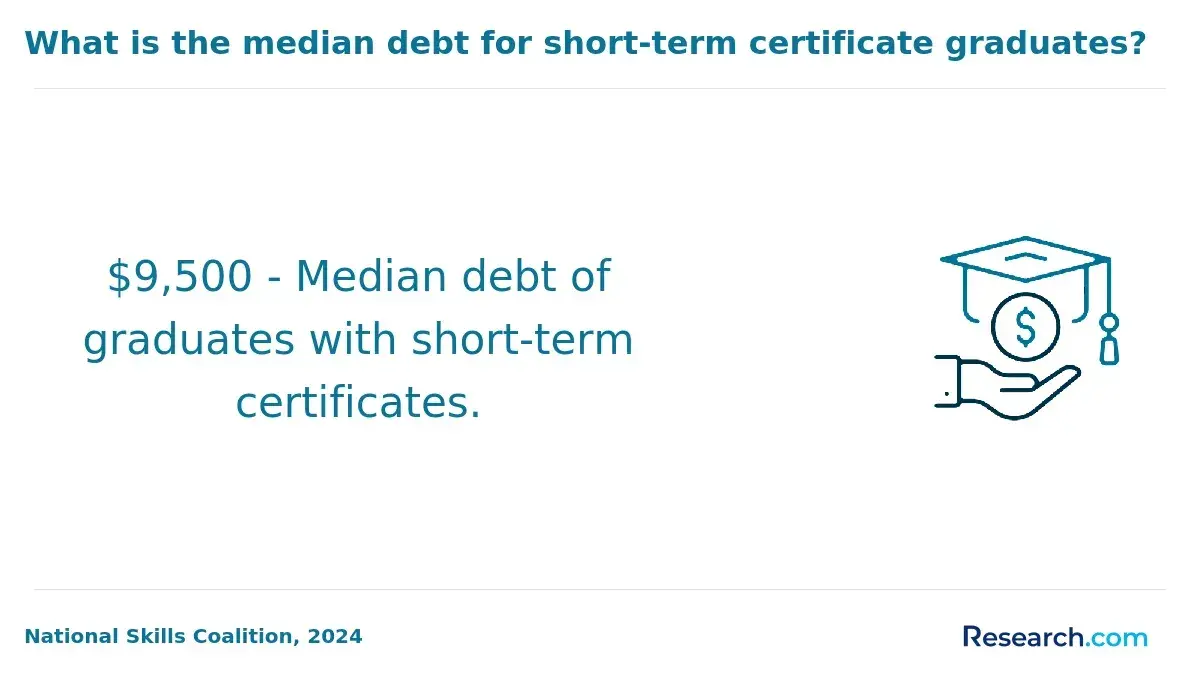
Choosing the right educational pathway in data analytics with a business intelligence focus requires balancing duration, cost, and career objectives against employer expectations. Certificate programs, lasting 6 to 12 months, offer rapid skill acquisition tailored for immediate entry-level application but often lack the depth needed for advanced roles and salary growth. Associate and bachelor's degrees extend from 2 to 4 years, delivering foundational knowledge and development in SQL, visualization, and data modeling that align better with employer demands for project-based experience.
Cost considerations vary widely: certificates run $2,000 to $10,000, associates $6,000 to $15,000, while bachelor's degrees at public institutions typically range from $20,000 to $40,000 for in-state students, with private programs exceeding these amounts. Online options can reduce expenses but shift the burden of self-motivation and sacrifice access to live support.
The tradeoff between quicker entry and long-term potential is significant. For example, marketing analytics teams prioritize advanced segmentation skills achievable through programs over 12 months or longer. Employers often expect these competencies alongside integrated analytics experience, evidenced by senior analyst salaries nearing $140,000 (Pepperdine Graziadio Business School figures). Opportunity costs also factor in: full-time work experience can sometimes substitute formal education but limits gaining comprehensive theoretical understanding.
What business intelligence job titles, industries, and career paths can these specializations lead to?
Specializing in business intelligence can position professionals for roles such as BI analyst, data engineer, or analytics consultant across sectors like finance, healthcare, retail, and manufacturing. In healthcare specifically, BI analysts leverage financial and risk analytics to support cost control, regulatory compliance, and patient outcomes, with salaries averaging around $90,000 according to Pepperdine Graziadio Business School. This compensation corresponds to the advanced skills needed to navigate complex datasets within strict regulatory environments.
Each industry applies BI specializations differently: finance professionals focus on fraud detection and credit risk modeling; manufacturing experts concentrate on supply chain and production optimization. Navigating these sector-specific demands helps candidates align their skills with appropriate roles and salary expectations.
Entry-level jobs often require solid proficiency in SQL, Python, and visualization tools like Power BI or Tableau. Career progression moves toward senior analyst, BI architect, or data strategy lead. However, candidates face real-world challenges such as integrating data from multiple systems and translating algorithmic results into actionable business insights.
Practical success demands ongoing upskilling and strong communication skills to influence diverse stakeholders. Broad analytics literacy alone rarely suffices; effective BI professionals engage deeply with domain-specific problems, balancing technical expertise with business acumen.
What salary ranges and advancement opportunities exist for business intelligence data analysts?
Salary trajectories for business intelligence data analysts reflect a clear divide between industry sectors and skill mastery. Entry-level analysts in the U.S. can expect $65,000 to $85,000, while mid-career professionals earn $90,000 to $120,000, depending heavily on both location and sector. For example, seasoned analysts in finance, healthcare, and technology increasingly secure salaries above $130,000 by leveraging specialized tools and domain expertise that directly impact revenue or cost efficiency.
Advancement requires more than technical skills; cross-functional collaboration, machine learning, and data engineering capabilities become prerequisites to move beyond tactical reporting. A practical scenario involves an analyst transitioning into operations analytics within manufacturing, where integrating IoT data and predictive models justifies compensation in senior salary brackets. Employers value certifications or demonstrable project portfolios that illustrate a business impact rather than purely technical output.
Obstacles to growth often stem from overlapping roles with data scientists and engineers, making it imperative for analysts to clarify unique value propositions. Switching industries can accelerate salary gains but demands targeted reskilling and domain understanding. Leadership experience managing analytics teams or cross-department initiatives typically aligns with compensation exceeding $120,000. Success in salary negotiation hinges on quantifiable contributions and fluency in industry-specific platforms.
UK roles mirror U.S. trends with average salaries around £54,976 in operations analytics, indicating global demand for analytics professionals who can solve complex operational problems (Heriot-Watt University).
Which certifications and accreditation standards matter most for data analytics and BI programs?
Certifications in data analytics and business intelligence carry distinct practical implications depending on career goals and industry focus. The Certified Business Intelligence Professional (CBIP) credential holds substantial value in regulated sectors such as finance and healthcare, where compliance and audit trails are non-negotiable. In contrast, the Google Data Analytics Professional Certificate caters more directly to roles requiring fluency in cloud environments and scalable analytics favored by tech and e-commerce employers.
Employer expectations diverge significantly between platform-specific certifications, like Microsoft Certified: Data Analyst Associate and Tableau Desktop Specialist, and broader analytical credentials. The former confirm operational competence with key BI software but rarely justify strategic or leadership roles. Programs accredited by bodies like INFORMS through the Certified Analytics Professional (CAP) emphasize ethical standards and comprehensive analytical rigor, aligning with consultant or managerial career trajectories.
For mid-career professionals pivoting toward niche domains such as healthcare analytics, pairing an INFORMS CAP credential with domain-specific datasets often yields better salary and role advancement than entry-level visual analytics certifications.
Tradeoffs between entry-level acceleration versus long-term strategic positioning are clear:
- Entry-level certificates can open doors quickly but may cap upward mobility.
- Advanced accreditations demand more investment but align with higher salary benchmarks and leadership potential.
Given that business intelligence analyst salaries average around $111,884 annually in the U.S., credentials that integrate technical proficiency with ethical and business-focused frameworks typically deliver superior ROI over time.
Other Things You Should Know About Data Analytics
Switching specializations mid-program is often limited by curriculum structure and course sequencing. Many programs build foundational skills before branching into focused tracks, so changing focus late can extend completion time and increase costs. Prioritize selecting a specialization aligned with your career goals upfront to avoid disrupting learning momentum and delaying entry into the workforce.
Employer demand directly affects hiring prospects and program relevance; specializations tied to trending business needs, like cloud analytics or AI integration, offer better job placement chances. However, demand shifts rapidly, so choose programs that emphasize transferable skills alongside specialization content. This approach helps manage the risk of skill obsolescence as market priorities evolve.
Most business intelligence tracks expect intermediate SQL plus one major BI platform, usually Power BI, Tableau, or Looker. Employers often also want Excel, data modeling, dashboard design, and basic Python or R for data cleaning. These skills support reporting, KPI tracking, and self-service analytics.
References
- Master of Data Analytics Program (MDA) - UNF https://www.unfc.ca/academics/graduate/master-of-data-analytics
- Business Intelligence – is this a good career path? https://nofluffjobs.com/log/work-in-it/business-intelligence-is-this-a-good-career-path/
- Business intelligence career paths https://www.metabase.com/blog/bi-career-paths
- Business intelligence jobs: what career path can you take with a data degree? https://www.walbrook.ac.uk/subjects/data-science/business-intelligence-jobs-career-path/
- Learn job-ready skills with Google Career Certificates https://grow.google/certificates/data-analytics/
- Best Data Analytics Certifications to Boost Your Career – Dataquest https://www.dataquest.io/blog/best-data-analytics-certifications/
- How Much Do Business Intelligence Analysts Earn? - Code Institute Global https://codeinstitute.net/global/blog/how-much-do-business-intelligence-analysts-earn/
- Business intelligence vs data analytics explained | Key differences between business intelligence and data analytics | Lumenalta https://lumenalta.com/insights/business-intelligence-vs-data-analytics
- Senior Business Intelligence Data Analyst | Prace w DHL https://careers.dhl.com/eu/pl/job/DPDHGLOBALAV359685PLEUEXTERNAL/Senior-Business-Intelligence-Data-Analyst
- MBA in Data Analytics - Top 4 Programs with Required Skills https://www.jobaajlearnings.com/blog/MBA-in-Data-Analytics-Top-4-programs-with-required-skills