2027 Best Online Master's in Data Analytics for Operations Analytics Leadership

Co-Founder and Chief Data Scientist
Mid-career professionals tasked with integrating complex operational datasets often confront a stark challenge: finding advanced education that balances rigorous analytics training with the flexibility needed to maintain full-time responsibilities. The National Center for Education Statistics reports a 25% increase in online graduate enrollment since 2024, signaling a shift where accessibility shapes program selection as much as curriculum quality.
This trend reflects that prospective students prioritize programs facilitating immediate application of analytics skills without sacrificing income or workplace presence. This article evaluates the best online master's in data analytics programs tailored for operations analytics leadership, focusing on structure, career alignment, and enrollment adaptability to assist deliberate program selection.
Key Things You Should Know
- Employers emphasize operational domain expertise combined with data analytics skills; 67% of surveyed operations leadership roles require familiarity with supply chain systems, driving a need for integrated curricula beyond technical analytics alone.
- Programs delivering advanced predictive modeling tailored to operational processes correlate with 15% higher post-graduation salary increases, but students face 20-30% longer completion times due to increased complexity and specialization.
- The US Bureau of Labor Statistics projects 25% job growth in data-related operations roles through 2030, but geographic concentration in 5 metro areas elevates relocation or remote-work adaptability as critical to leveraging degree ROI effectively.
What is an online master's in data analytics for operations analytics leadership?
Data-driven operational leadership demands proficiency beyond technical analytics tools; the capacity to align analytical insights with strategic business objectives creates a critical hiring distinction. An online master's degree in data analytics for operations leadership offers targeted training that integrates statistical modeling, machine learning, and visualization with management skills to oversee analytics initiatives in complex environments.
Employers increasingly expect operational analysts to not only master platforms like SQL and Python but also to contextualize data into actionable strategies that optimize processes in manufacturing, logistics, healthcare, and retail sectors. Graduates face tradeoffs in balancing rigorous data theory with pragmatic constraints, including limited resources and company culture, which influence how recommendations translate into measurable impact under budget.
Prospective students evaluating advanced operations analytics leadership programs online must focus on domain-specific curricula with leadership development rather than general data science tracks. Programs that incorporate real-world projects tied to industry-specific challenges enhance readiness for roles demanding cross-functional team leadership and strategic resource allocation.
Career pivoters from supply chain or quality management benefit from programs that address these nuances, ensuring ROI through faculty engagement, relevant capstone experiences, and cohort collaboration. For detailed comparisons and program options, see master's in data analytics.
How does an online operations analytics leadership degree compare with campus-based programs?
The primary distinction between online operations analytics leadership degree vs campus programs comparison lies in the mode of experiential learning and networking access. Campus programs provide tangible benefits such as on-site lab work, face-to-face collaboration, and access to local internship pipelines. These elements tend to benefit early-career professionals in hands-on fields like manufacturing or logistics where direct operational exposure is essential.
Conversely, online programs offer greater flexibility, allowing working professionals to integrate learning with current roles and apply concepts in real time. This flexibility often translates into tailored projects aligned with industry-specific challenges, such as retail supply chain optimization or healthcare operations data analysis, ultimately fostering practical leadership skills.
Employers generally value degrees from accredited, reputable institutions, yet they remain cautious about the limited spontaneous networking and peer collaboration typical of online learners. To offset these gaps, strategies like active participation in virtual networking events and focused mentorship are vital. Market data support the value of these programs.
For instance, graduates from business and data analytics master's programs see a median starting salary around $115,000 in the U.S., significantly above other business fields. Deciding between formats requires evaluating individual circumstances: technology-sector professionals aiming for ROI through applied learning may prefer online pathways, while those targeting regulatory-heavy or relationship-driven roles might benefit from a campus experience.
For insights on related educational paths, exploring an artificial intelligence degree can further inform strategic specialization.
Which accredited schools offer online master's programs in operations-focused data analytics?
Selecting an accredited online master's program in operations data analytics requires balancing tuition, curriculum relevance, and leadership development against specific career goals. Candidates working in manufacturing or supply chain roles, for instance, often prioritize programs with strong modules in predictive maintenance and real-time inventory management-features that Georgia Tech's online MS in Analytics offers at a notably lower tuition of $10,799.
Conversely, those targeting consulting or strategic leadership positions may opt for more costly programs like Columbia's MS in Applied Analytics ($99,144) or Northwestern's, valuing their expansive alumni networks and leadership focus despite the premium. Practical considerations extend beyond cost and curriculum content to include format flexibility and technology integration.
Schools such as USC, with modular course designs and asynchronous learning options, better accommodate working professionals balancing shifting schedules. Accredited programs that also incorporate career services and operational analytics capstones tend to produce graduates whose applied proficiency aligns with employer expectations for bridging data insights and operational strategy.
These dynamics illustrate how choosing among the best online schools for operations-focused data analytics degrees directly influences long-term employability and salary trajectories. Students who underappreciate the fit between program delivery and workforce demands risk investing in credentials that may not yield measured career mobility.
For professionals also considering related fields, exploring options such as online medical billing and coding programs can offer alternative pathways aligned with administrative data management and operational support roles.
What admission requirements and prerequisites do these online data analytics programs have?
Admission requirements for online data analytics master's programs focused on operations analytics leadership reflect distinct tradeoffs between prior experience and academic readiness. Over 80% of top U.S. programs have eliminated the GRE, prioritizing foundational skills and demonstrated aptitude in quantitative disciplines like mathematics, computer science, or business analytics. Candidates from non-quantitative backgrounds commonly face prerequisite bridge courses in statistics or coding.
Applicants usually submit statements of purpose emphasizing strategic leadership and cross-functional collaboration in operations analytics, alongside letters of recommendation that confirm analytical and project management strengths. Several programs require 2 to 5 years of relevant professional experience to ensure students bring real-world insights to complex data challenges, aligning education with workforce expectations.
A manufacturing manager seeking a pivot into data-driven operations leadership, for example, might encounter substantial preparatory coursework, while professionals with supply chain analytics backgrounds experience fewer entry barriers. Test-optional policies expand access but often shift emphasis to interviews and applied assessments, favoring candidates with verified skills over standardized test performance.
Practical considerations extend to how prior experience influences admissions complexity and time to degree, underscoring the importance of honest self-assessment when navigating prerequisites for operations analytics leadership graduate programs. For prospective students exploring adjacent paths, options like a library science degree online may provide alternative analytical skill sets relevant to data-intensive roles.
What core courses and specializations are included in operations analytics master's curricula?
Master's curricula in operations analytics prioritize quantitative methods and decision analytics that directly influence operational performance, rather than abstract theory. Core classes usually cover statistical modeling, predictive analytics, and optimization, with practical applications such as linear programming and simulation modeling tailored to supply chain and manufacturing industries.
This emphasis prepares students for industries requiring precise operational improvements rather than broader business analytics capabilities. Specializations hone in on domain-specific roles with measurable outcomes. For instance, supply chain analytics equips professionals to manage inventory and forecast demand in sectors like retail or healthcare, where cost reduction and service reliability are critical.
Revenue management training, in contrast, targets industries with dynamic pricing challenges like hospitality and transportation, highlighting different analytical priorities and skills. Technical proficiency in database management (e.g., SQL), big data platforms, and visualization software remains essential, but leadership and project management coursework is equally important. Employers increasingly seek candidates who can translate data insights into actionable business strategies.
With Educations.com listing 274 master's programs in data analytics globally for 2025/2026-a notable increase-candidates must critically evaluate program relevance. Access to real-world labs or capstone projects aligned with operational challenges often distinguishes programs that accelerate professional growth and justify financial investment in times of rising tuition and opportunity costs.
How long do online operations analytics master's programs take and how are they structured?
Choosing an online operations analytics master's program requires balancing program duration, cost, and experiential learning to meet employer expectations for applied skills. Options typically span 12 to 24 months, influenced by full-time or part-time enrollment. For example, a supply chain manager might spread courses over two years focusing on predictive analytics and process optimization, whereas a tech operations analyst could complete an accelerated pathway in less than a year.
Programs generally require 30 to 36 credit hours combining core coursework, electives, and capstones or internships. The delivery often mixes asynchronous lectures with live cohort discussions to simulate workplace problem-solving scenarios in logistics, healthcare operations, or manufacturing settings. Purely asynchronous formats may limit networking and immediate mentorship, which matters when employers prioritize real-world teamwork and communication skills alongside technical aptitude.
Graduation rates and tuition costs vary notably, affecting return on investment. For instance, regionally accredited public universities like UC Berkeley offer tuition near $11,834 annually with a 96% graduation rate, underscoring the tension between accessibility and quality. Prospective students should assess how well programs embed hands-on data analytics experience and recognized certifications relevant to operational leadership roles in industry contexts.
What are typical tuition costs, fees, and funding options for these online degrees?
Tuition for online master's degrees focusing on operations analytics leadership ranges widely from $20,000 to $60,000, with public universities charging $600 to $1,200 per credit hour for in-state students, and private or out-of-state rates often exceeding $1,200. Adding mandatory fees-technology, enrollment, and graduation-pushes total costs closer to $25,000-$65,000, reflecting necessary expenses for remote proctoring, digital resources, and program support.
Funding these programs rarely relies on a single source. Federal loans such as Direct Unsubsidized and Grad PLUS Loans require enrollment status and remain primary options. Employer tuition reimbursement offers significant relief, though it usually demands coursework alignment with the company's business strategy, a consideration given that over 90% of these curricula integrate business objectives as reported by The AI Graduate 2026 "Best Master's in Data Analytics."
Personal savings and private loans must be evaluated carefully for interest and repayment terms. Working professionals face tradeoffs including opportunity costs from reduced work hours or added job responsibilities. For instance, a supply chain manager transitioning to analytics leadership might need employer sponsorship to offset lost wages. Candidates without such support often opt for lower-cost or part-time programs to manage income and education simultaneously.
Beware of additional institution-specific fees such as per-course charges or software licensing linked to advanced analytics tools. Understanding these upfront is essential for realistic budgeting and avoiding surprises, enabling a sustainable career pivot grounded in practical financial planning.
What operations-focused careers can graduates pursue with a master's in data analytics?
Graduates with a master's in data analytics focused on operations enter roles demanding both quantitative rigor and operational insight. Positions such as operations research analysts and analytics managers fill critical gaps in industries like manufacturing, logistics, healthcare, and retail, where efficiency gains translate directly into competitive advantage.
For instance, operations research analysts develop statistical models to resolve supply chain disruptions in real time, addressing challenges heightened by automation and increasingly complex infrastructures. These roles require blending technical expertise with leadership capabilities, as analytics managers guide teams in transforming raw data into actionable business strategies aligned with broader organizational goals.
Effective communication and cross-functional collaboration are as necessary as proficiency in advanced analytical tools. Practical barriers frequently include integrating siloed data systems and overcoming resistance to data-driven changes within organizations. Graduates gain the most traction when enrolled in programs emphasizing applied projects and current industry technologies rather than purely theoretical instruction.
A 2026 salary analysis from TechGuide shows operationally focused data analytics roles have seen approximately 25% growth over five years, often exceeding median salaries of $130,000 in key U.S. markets. This reflects a robust employer demand for professionals who combine analytic depth with operational leadership.
- Key considerations for candidates:
- Balancing technical skill refinement with leadership development
- Targeting sectors with sustained operational complexity like logistics and healthcare
- Prioritizing programs that incorporate hands-on application and industry-relevant tools
What salary ranges and advancement potential exist for operations analytics leaders?
Salaries for operations analytics leaders in the U.S. vary significantly by sector and geography, commonly ranging between $95,000 and $165,000 annually. Tech and financial services firms often place early leadership roles above $140,000, while sectors like manufacturing and logistics start nearer to $95,000-$110,000. The key determinant for advancement lies in the ability to embed analytics insights into operational strategies that generate efficiency and measurable cost savings.
Mid-career professionals who pursue an online master's in data analytics for operations analytics leadership typically experience substantive role changes; over 70% secure promotions or significant assignments within a year, according to Poets&Quants' 2026 report. This underscores the value of applied learning aligned with industry practices rather than purely technical skill acquisition.
Real-world scenarios include a retail operations analyst advancing to director-level roles with a 20-30% pay increase and healthcare professionals leveraging predictive modeling to manage cross-functional teams, often leading to salary increases exceeding $15,000. However, these gains require demonstrating a tangible ROI from analytics, navigating organizational politics, and sustaining skill relevancy amid shifting data infrastructures.
Professionals targeting these leadership roles should prioritize educational programs emphasizing operational impact and analytics integration. The ability to articulate business outcomes from data initiatives during promotion reviews is critical to negotiating higher compensation and sustaining career momentum.
How can students evaluate program quality, accreditation, and industry alignment before enrolling?
For prospective students targeting a career pivot in operations analytics, accreditation from bodies like AACSB or ABET remains the most reliable metric to verify program quality. This credential affects employer recognition, federal aid eligibility, and credit transfer, but it must be supplemented by scrutiny of faculty qualifications, advisory board expertise, and partnerships with industry leaders that enable real-world projects or internships.
Programs disclosing transparent graduate employment outcomes, salary data, and employer feedback provide better insight into post-graduation relevance. A practical example: manufacturers focused on efficiency improvements require curricula emphasizing applied analytics in operational workflows, not merely theoretical statistics. Learners must assess whether program content aligns with specific roles, such as supply chain optimization or predictive analytics, and weigh delivery formats.
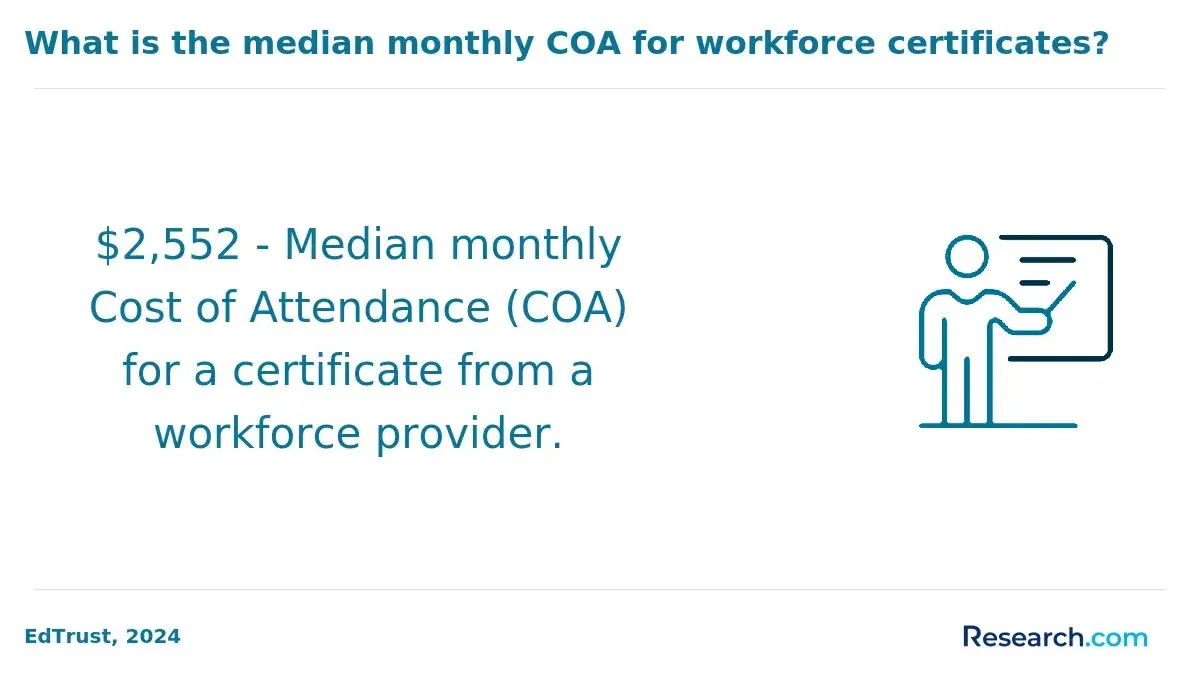
Asynchronous courses offer flexibility but may diminish networking and peer collaboration essential for advancing into leadership. Cost and time investment must be carefully balanced. Short online certificates priced between $1,850 and $2,850 and lasting 8-9 weeks serve as targeted, lower-cost alternatives to master's degrees, especially for professionals needing rapid skill acquisition.
These options can mitigate career pivot timing risks and offer quicker return on investment when compared to 1-2 year degree programs. Finally, confirming that technology platforms match current industry software, and evaluating the strength of alumni networks and mentorship opportunities, are critical for sustained career development post-graduation.
Other Things You Should Know About Data Analytics
Most programs require a bachelor’s degree and at least one college course in statistics, calculus, or programming. Some also expect a minimum GPA, often 3.0, plus GRE scores only if the applicant’s record is weak. Schools may ask for transcripts, a résumé, and a statement of purpose.
Choosing between technically intensive programs and those centered on strategic leadership depends on career goals. If aiming for senior leadership, prioritize programs integrating both technical proficiency and management training, as leaders must interpret analytics outcomes to drive operations decisions. Technical-only tracks may limit advancement to hands-on roles rather than leadership positions.
Employer recognition hinges on program accreditation, reputation, and demonstrated skill alignment with current industry demands. Degrees from regionally accredited institutions with relevant industry ties receive higher regard. Programs lacking clear connections to business analytics applications or omitting experiential learning risk diminishing perceived value among recruiters focused on immediate practical impact.
References
- Online MBA Data Analytics: Leadership in Data | Walbrook https://www.walbrook.ac.uk/degrees/postgraduate/mba-data-analytics/
- How Long is a Master's in Data Analytics / Data Science Program? https://www.onlineeducation.com/analytics/faqs/how-long-is-a-masters-in-analytics-program
- Understanding the Role of Accrediting Agencies in Ensuring Quality Education - Swiss School of Business Research https://ssbr-edu.ch/accreditation/
- Scaling Online Education for State University Systems https://changinghighered.com/scaling-online-education-for-state-university-systems/
- Data Analytics Prerequisites: What to Learn Before Data Analytics https://blog.nobledesktop.com/learn/data-analytics/data-analytics-prerequisites
- Master Operations Online: Your Guide to an MBA in Operations Management https://matchtocollege.com/blog/online-mba-operations-management-master-your-future
- Online Master’s Degree: Data Analytics https://www.umgc.edu/online-degrees/masters/data-analytics
- Master of Data Analytics Program (MDA) - UNF https://www.unfc.ca/academics/graduate/master-of-data-analytics
- Master in Big Data and Analytics https://www.obsbusiness.school/en/masters-online/master-in-big-data-and-analytics
- Online MBA vs Campus MBA Program - Which one to choose https://rcu.education/online-mba-vs-campus-mba-programs/