2027 Online Creative Writing Degrees That Prepare Students for Portfolio-Driven Job Searches

Co-Founder and Chief Data Scientist
Choosing an online creative writing degree is really a career-readiness decision: will the program help you produce publishable work, build a portfolio, and compete for writing jobs? The U.S. Bureau of Labor Statistics reported a 2024 median pay of $72,270 for writers and authors, but outcomes vary widely by industry, skill set, and evidence of work.
This guide is for students comparing online programs, career changers, and working adults who want flexible study. You will learn how degrees differ, what they cost, and how to evaluate portfolio value before enrolling.
Key Things You Should Know
- Online creative writing degrees are most useful when they combine workshop feedback, genre study, publishing practice, and a portfolio or thesis that can be shown to employers, editors, clients, or graduate admissions committees.
- Cost and time vary by credential: certificates may take months, bachelor's degrees commonly require about 120 credits, and master's programs often require 30 to 60 credits; tuition, fees, books, and residency travel can change the real price.
- Career outcomes are not limited to novel writing: graduates often pursue content strategy, copywriting, editing, technical communication, publishing, marketing, communications, education, and freelance work, with salary potential shaped by industry and digital skills.
What is an online creative writing degree and how does it differ from campus programs?
An online creative writing degree is a college credential focused on the practice, craft, revision, and professional presentation of written work. Students usually study fiction, poetry, nonfiction, screenwriting, publishing, editing, rhetoric, literary analysis, and digital writing. The word "online" describes the delivery format, not necessarily a lower academic standard; accredited online programs are typically held to the same institutional quality standards as campus programs.
The biggest difference is how feedback and community happen. Campus programs use in-person workshops, readings, studio time, and faculty office hours. Online programs rely on learning platforms, video meetings, asynchronous peer critiques, annotated drafts, discussion boards, virtual readings, and digital portfolio systems. For working adults, parents, military learners, and students outside major literary hubs, that flexibility can be the main advantage.
The following comparison shows how the two formats usually differ. Use it to decide whether you need schedule flexibility, in-person literary community, or a hybrid model that offers both.
| Factor | Online creative writing degree | Campus creative writing degree |
| Schedule | Often asynchronous or evening-friendly, which helps working students | Usually tied to fixed class times and campus events |
| Workshop experience | Peer critique through discussion boards, video workshops, and shared documents | Real-time workshop discussions and informal peer interaction |
| Portfolio development | Frequently digital-first, with emphasis on online samples and professional presentation | May emphasize print manuscripts, readings, campus publications, and local networking |
| Networking | Depends heavily on faculty access, alumni channels, virtual readings, and internships | Often easier for students who can attend campus literary events regularly |
| Best fit | Self-directed students who need flexibility and can build relationships remotely | Students who want face-to-face mentorship and a daily writing community |
Online study is not automatically easier. Strong programs expect regular drafting, revision, critique, reading, and participation. Students who need external structure should look for synchronous workshops, required advising, cohort models, and clear portfolio milestones.
How do accredited online creative writing programs support portfolio-driven job searches?
Accredited online creative writing programs support portfolio-driven job searches by turning coursework into evidence. Instead of graduating with only a transcript, students should leave with polished writing samples, editorial experience, genre-specific projects, and a clear explanation of how their writing skills solve real communication problems.
A portfolio-driven job search matters because many writing roles are sample-based. Employers, editors, agencies, nonprofits, publishers, and clients often want to see what applicants can produce, revise, and adapt for an audience. A degree can help, but the portfolio often decides whether the applicant gets a closer look.
Strong programs usually build portfolio readiness through several connected supports. Look for evidence that these features are required or consistently available, not just mentioned in marketing materials.
- Workshop-based revision, where students submit drafts, receive critique, revise, and document how the work improved.
- Capstone or thesis projects that produce a substantial manuscript, story collection, script, essay collection, digital publication, or professional writing package.
- Courses in editing, publishing, literary magazines, digital content, grant writing, or professional communication that broaden career options beyond literary publishing.
- Faculty feedback from published writers, editors, screenwriters, content professionals, or scholars with relevant industry experience.
- Career services that help students turn creative samples into targeted materials such as resumes, author bios, cover letters, pitch letters, and freelance profiles.
The practical test is simple: before enrolling, ask the program what portfolio pieces students typically graduate with. If the answer is vague, the program may be more academically interesting than job-search focused.
What types of online creative writing degrees are available and who are they for?
Online creative writing degrees are available at several levels, and the right choice depends on your current education, budget, writing goals, and career target. A student seeking a first degree has different needs than a teacher pursuing graduate study, a marketer adding storytelling skills, or a novelist seeking sustained manuscript mentorship.
This table summarizes common credential types. It can help you avoid overpaying for a degree level that does not match your immediate goal.
| Credential | Typical student | Best use | Potential limitation |
| Undergraduate certificate | Students testing the field or adding writing skills to another major | Short-form skill building in fiction, nonfiction, editing, or digital writing | May not carry the same weight as a degree for roles requiring a bachelor's |
| Associate degree | Students starting college or planning to transfer | General education plus introductory writing and literature courses | Often needs transfer planning to avoid credit loss |
| Bachelor's degree | First-degree students and career changers | Broad preparation for writing, communications, publishing, marketing, and graduate study | May be too broad unless paired with internships and portfolio work |
| Graduate certificate | Professionals with a bachelor's degree | Focused development in creative nonfiction, screenwriting, publishing, or teaching-related areas | Usually narrower than a full master's degree |
| Master of Fine Arts | Advanced writers seeking intensive mentorship | Manuscript development, teaching preparation, literary publishing, and advanced portfolio work | Can be costly and may not be necessary for every writing career |
| Master of Arts | Students interested in literature, rhetoric, writing studies, or academic pathways | Balanced study of writing, analysis, theory, and sometimes pedagogy | May offer less studio writing time than an MFA |
A bachelor's degree makes sense if you need a foundational college credential and want flexibility across writing-adjacent jobs. A certificate may be enough if you already have a degree and need samples or specialized skills. Students comparing graduate routes should examine whether an MFA degree online offers the mentorship, thesis structure, and affordability needed for their goals.
Who should avoid this path? Students who dislike revision, critique, reading-heavy courses, or uncertain freelance markets may be better served by a more structured professional degree. Creative writing can be valuable, but it rewards persistence, feedback tolerance, and the ability to connect writing skills to specific audiences and industries.
What core courses and writing specializations are included in online creative writing programs?
Online creative writing programs usually combine craft courses, literature study, workshops, and professional development. The best curriculum does more than ask students to write; it teaches them how to read as writers, revise with purpose, understand genre conventions, and adapt voice for different audiences.
Common course areas include the following. These are worth comparing because a program's course mix often reveals whether it is primarily literary, professional, digital, or interdisciplinary.
- Creative writing workshop, where students produce drafts and receive structured peer and faculty critique.
- Fiction writing, including character, plot, point of view, scene structure, dialogue, and revision.
- Poetry writing, including form, image, sound, line, rhythm, and contemporary poetic practice.
- Creative nonfiction, including memoir, personal essay, lyric essay, literary journalism, and research-based narrative.
- Screenwriting or dramatic writing, including script format, scene design, dialogue, pacing, and visual storytelling.
- Literature courses, which help students understand literary traditions, genre evolution, and models for craft decisions.
- Editing and publishing, including copyediting, developmental editing, literary magazine work, book publishing, and submission strategies.
- Digital writing, including web content, multimedia storytelling, social platforms, audience analytics, and writing for online publication.
Specializations matter because employers rarely hire "creative writers" in the abstract. They hire people who can write fundable grant narratives, engaging brand copy, clear user education, compelling scripts, persuasive campaigns, or polished editorial content. Students interested in emerging technology should also consider how AI tools affect drafting, editing, ideation, and content workflows; comparing an online artificial intelligence degree can clarify whether they need a full technical credential or simply AI literacy alongside writing expertise.
One common mistake is choosing the most literary-sounding program without checking whether it supports the type of writing you want to do professionally. A poet, a game writer, a content strategist, and a memoirist may all study creative writing, but they need different samples, mentors, and industry exposure.
What are typical admission requirements and application materials for online creative writing degrees?
Admission requirements vary by degree level and institution, but most online creative writing programs evaluate both academic readiness and writing potential. Selective graduate programs may care heavily about the writing sample, while bachelor's programs usually focus more on transcripts and general admissions criteria.
Applicants should prepare materials early because writing samples often take longer to revise than forms or transcripts. The list below shows common requirements and why each one matters.
- Official transcripts, used to verify prior coursework, GPA, completed degrees, and transfer eligibility.
- Writing sample or portfolio, often the most important creative component for MFA, MA, and selective certificate programs.
- Statement of purpose, where applicants explain writing goals, genre interests, faculty fit, and reasons for choosing online study.
- Letters of recommendation, typically from instructors, supervisors, editors, or mentors who can speak to writing ability and discipline.
- Resume or CV, especially useful for graduate applicants, teachers, editors, communications professionals, and career changers.
- Standard application form and fee, with possible fee waivers depending on the school.
- English proficiency documentation, when required for applicants whose prior education was not in English.
Undergraduate applicants should ask how transfer credits are evaluated, whether prior learning credit is available, and how many upper-division writing credits must be completed at the institution. Graduate applicants should ask whether the program admits by genre, whether faculty are available in the applicant's genre, and whether the writing sample should be polished creative work rather than academic analysis.
A practical application sequence can reduce stress and improve quality. Start by identifying your target genre, then revise your strongest work, request feedback from a trusted reader, tailor your statement to each program, and confirm all deadline requirements before submitting.
How long do online creative writing programs take, and what do they cost?
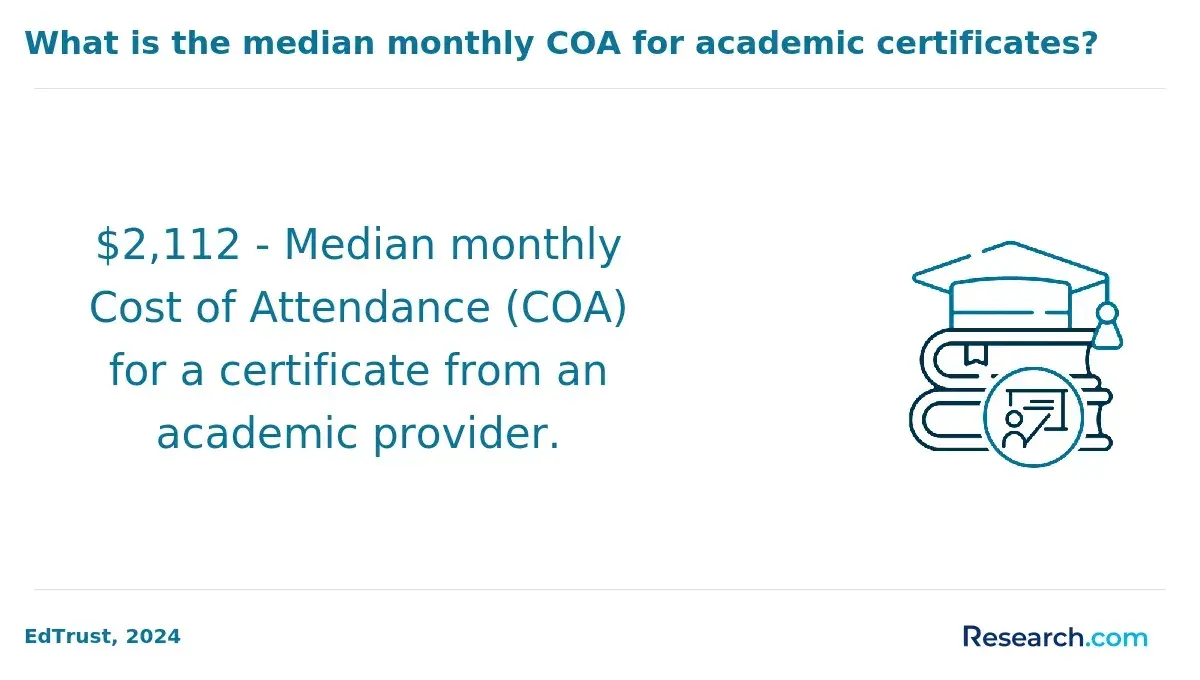
Program length depends on credential level, enrollment status, transfer credits, and whether the program requires a thesis, practicum, residency, or capstone. Full-time students move faster, but part-time study may be more realistic for working adults who need time to write, revise, and maintain income.
Costs also vary widely. The College Board's 2024 pricing data showed average published tuition and fees of $11,610 for in-state students at public four-year colleges and $43,350 at private nonprofit four-year colleges for the 2024-25 academic year. Those figures are not specific to creative writing, but they show why students should compare total cost rather than assuming all online programs are inexpensive.
Typical cost items may include the following:
- Per-credit tuition, which is often the largest expense and may differ for in-state, out-of-state, undergraduate, and graduate students.
- Online course fees, technology fees, graduation fees, portfolio platform costs, or library fees.
- Books, literary journals, software, subscriptions, and required writing or screenwriting tools.
- Residency or campus visit costs, if the program includes low-residency workshops, readings, or intensives.
- Lost income or reduced work hours, especially for students choosing full-time study.
This table gives a planning view of common timelines. Exact requirements should always be confirmed with the school catalog.
| Program type | Common credit range | Typical completion pattern | Best cost-control strategy |
| Certificate | About 12 to 18 credits | Several months to about 1 year | Use it to fill a specific portfolio gap rather than as a broad credential |
| Associate degree | About 60 credits | About 2 years full time | Choose transferable courses if a bachelor's degree is likely |
| Bachelor's degree | About 120 credits | About 4 years full time, less with transfer credit | Maximize transfer credits and compare in-state online tuition |
| Master's degree | About 30 to 60 credits | About 1 to 3 years depending on structure | Compare assistantships, employer aid, scholarships, and residency costs |
To evaluate affordability, calculate net price after grants and scholarships, not just advertised tuition. Also ask whether online students can access the same financial aid, writing center support, library databases, career services, and scholarships as campus students.
What careers can graduates of online creative writing degrees pursue, and in which industries?
Creative writing graduates can pursue literary, commercial, educational, nonprofit, media, and corporate communication roles. The degree is most marketable when paired with a portfolio that shows genre range, audience awareness, editing ability, and comfort with digital publishing tools.
Career options differ in how directly they use creative writing. The table below separates common paths by work setting and the type of portfolio evidence that helps applicants compete.
| Career path | Industries | Typical responsibilities | Useful portfolio evidence |
| Author or literary writer | Publishing, literary magazines, independent publishing | Drafting, revising, submitting, publishing, promoting, and managing author platforms | Stories, poems, essays, manuscript excerpts, publication credits, and author bio |
| Copywriter | Advertising, marketing, ecommerce, agencies, startups | Writing ads, landing pages, email campaigns, product copy, and brand messaging | Campaign samples, headlines, web copy, brand voice examples, and revision notes |
| Content writer or content strategist | Technology, healthcare, education, finance, nonprofits | Planning and writing articles, guides, newsletters, web pages, and audience-focused content | SEO writing samples, editorial calendars, long-form content, and analytics-informed revisions |
| Editor | Publishing, media, corporate communications, education | Developmental editing, copyediting, proofreading, fact-checking, and managing submissions | Before-and-after edits, style sheets, publication work, and editorial letters |
| Technical or instructional writer | Software, manufacturing, healthcare, government contracting | Explaining complex processes, writing documentation, user guides, training materials, and procedures | Clear documentation samples, process explanations, tutorials, and audience analysis |
| Communications specialist | Nonprofits, universities, public agencies, associations, businesses | Writing press releases, speeches, newsletters, donor stories, reports, and public-facing messages | Press materials, impact stories, reports, speeches, and stakeholder-specific writing |
Students aiming for corporate roles should consider adding business, analytics, or project management knowledge. For example, comparing an online business administration degree can help students decide whether they need a broader management credential or a writing degree with business electives.
The most resilient career strategy is to combine creative strengths with practical specialization. A graduate who writes strong essays may find more opportunities by learning grant writing, UX content, healthcare communication, education publishing, or technical documentation than by relying only on literary submissions.
What salary ranges and job outlook can creative writing graduates expect in related fields?
Salary expectations for creative writing graduates depend heavily on role, employer, location, experience, and portfolio strength. The degree itself does not create a single salary path; instead, it can support multiple occupations where writing is a core or adjacent skill.
The U.S. Bureau of Labor Statistics 2024 wage data provides a useful benchmark for related roles. Use these figures as labor-market context, not as a prediction of what any individual graduate will earn.
| Related occupation | 2024 median annual pay | How creative writing skills may apply |
| Writers and authors | $72,270 | Fiction, nonfiction, scripts, books, essays, articles, and other original written work |
| Editors | $75,260 | Revision, structure, style, accuracy, voice, and publication readiness |
| Technical writers | $91,670 | Clear explanation, audience awareness, documentation, and translating complex information |
| Public relations specialists | $69,780 | Storytelling, press materials, speeches, campaigns, and audience-focused messaging |
Job outlook also varies by occupation. BLS projections for 2024 to 2034 show modest growth for writers and authors and technical writers, while some editing roles face pressure from media consolidation and automation. For students, this means a flexible portfolio is safer than a narrow one.
AI is changing entry-level writing work, especially routine content production, summarization, and first-draft generation. That does not eliminate the need for writers, but it raises employer expectations. Graduates who can edit AI-assisted drafts, verify facts, shape voice, interview subject-matter experts, and create original narrative work may be better positioned than those who only produce generic copy.
Students interested in the technical side of this shift may explore a bachelor applied artificial intelligence pathway to understand how AI systems are built and used. For many creative writing students, however, targeted AI literacy, ethics, and workflow training may be enough to strengthen employability without changing majors.
How can students evaluate the quality and accreditation of online creative writing programs?
Accreditation should be one of the first checks in any online degree search. In the U.S., students should generally look for institutions accredited by agencies recognized by the U.S. Department of Education or the Council for Higher Education Accreditation. Institutional accreditation affects credit transfer, federal financial aid eligibility, graduate admissions, and employer confidence.
Quality is broader than accreditation. A program can be accredited and still be a poor fit for your goals if it lacks the right genre faculty, career support, portfolio structure, or student engagement. Before applying, evaluate both legitimacy and career alignment.
Use the following steps to review programs in a practical order. This sequence helps you avoid common mistakes such as choosing by tuition alone or relying only on rankings.
- Verify institutional accreditation through official accreditation databases, not only the school's marketing page.
- Read the current catalog to confirm degree requirements, credit totals, residency rules, thesis expectations, and course rotation.
- Review faculty profiles for genre expertise, publications, editing work, industry experience, and recent student mentorship.
- Ask for examples of capstone, thesis, or portfolio expectations without requesting private student work.
- Confirm whether online students receive writing center access, library services, career advising, internship support, and alumni networking.
- Compare total cost, including fees, residency travel, books, software, and time away from work.
- Ask how transfer credits are evaluated and whether graduate credits can be applied to a later degree.
- Look for transparent student outcomes, but be cautious of salary claims that are not tied to a specific source or occupation.
Red flags include unclear accreditation language, high-pressure enrollment tactics, vague faculty information, no sample curriculum, limited feedback opportunities, and promises of publication or employment. A trustworthy program should be able to explain what students write, how they are mentored, and how their work becomes a professional portfolio.
How do online creative writing students build professional portfolios and gain real-world experience?
Portfolio building should begin in the first term, not after graduation. The strongest online students treat every course as a chance to create, revise, publish, test, or package work for a specific audience. By graduation, they should be able to show both polished creative work and practical writing samples that match their target roles.
Students can build real-world experience through structured and self-directed activities. The goal is not simply to produce more pages; it is to create evidence of range, judgment, reliability, and revision skill.
- Maintain a digital portfolio with separate sections for creative work, professional writing, editing samples, publications, scripts, or multimedia projects.
- Submit work to campus journals, literary magazines, contests, local publications, newsletters, or reputable online outlets that match the student's genre.
- Volunteer for editing, grant writing, communications, or storytelling projects with nonprofits, student organizations, community groups, or small businesses.
- Complete internships in publishing, media, marketing, education, communications, libraries, arts organizations, or digital content teams.
- Create before-and-after revision samples that show how feedback improved structure, clarity, voice, and audience fit.
- Develop a short professional bio, project descriptions, and reflection notes that explain the purpose and audience of each portfolio piece.
- Practice pitching by writing query letters, article pitches, freelance proposals, or cover letters tailored to specific publications or employers.
Online students should also be intentional about relationships. Attend virtual readings, ask faculty specific craft questions, join peer writing groups, participate in alumni events, and request informational interviews with editors or content professionals. Remote learning can build a strong network, but students usually need to be more deliberate than they would be on campus.
A good final portfolio should answer three employer questions quickly: Can this person write well? Can they revise for a purpose? Can they adapt to our audience? If the portfolio does that, the degree becomes easier to translate into interviews, freelance conversations, graduate applications, or publishing opportunities.
Other Things You Should Know About Creative Writing
Yes, an online degree can help you improve craft, revise a manuscript, and learn submission strategies, but publication is never guaranteed. Your persistence, genre fit, editorial feedback, and quality of submissions matter as much as the credential.
Many employers focus more on accreditation, writing samples, experience, and communication skills than on delivery format. The key is choosing an accredited program and graduating with a portfolio that matches the roles you want.
An MFA is commonly preferred or required for many college-level creative writing teaching roles, especially in higher education, but requirements vary by institution. Community workshops, continuing education, tutoring, and private teaching may have more flexible requirements.
In 2027, online creative writing degrees emphasize creating diverse portfolios, including writing samples, digital content, and multimedia projects. Students gain skills like storytelling and editing that align with job market needs, enabling them to showcase their versatility to potential employers through tailored portfolios.
References
- Create Your Best 2025 with These Top MFA Creative Writing Programs https://www.onlinemastersdegrees.org/best-programs/fine-arts-mfa/creative-writing/
- Free Resource: 10 successful pitches https://thefreelancersyear.com/blog/writing-portfolio/
- How Long Does it Take to Get an MFA in Creative Writing? - Aspiring Author https://aspiringauthor.com/how-long-mfa-in-creative-writing/
- 7 Reasons Why Creative Writing Courses Online Are Worth the Investment https://www.interlochen.org/stories/7-reasons-creative-writing-online-worth-investment
- Evaluating Online Education: Key Criteria for Genuine E-Learning Platforms https://elqn.org/evaluating-the-quality-of-online-education-key-criteria/
- Choosing a Creative Writing Course https://www.nawe.co.uk/writing-in-education/writing-at-university/choosing-a-course.html