2027 Best Online Business Administration Degrees for Operations Careers

Co-Founder and Chief Data Scientist
For professionals aiming to move into operations management roles, the challenge often lies in selecting an online business administration program that balances rigorous curriculum with scheduling flexibility. The National Center for Education Statistics reports a 12% surge in online graduate enrollments since 2023, signaling increased competition for programs that accommodate working adults without compromising depth or industry relevance. This trend reveals that prospective students must scrutinize program delivery models, faculty expertise, and employer recognition to avoid time-consuming dead ends. This article systematically compares top online business administration degrees, focusing on their practical fit for operations careers and career mobility strategies.
Key Things You Should Know
- Employers prioritize candidates with operational analytics and supply chain management skills, with 62% of hiring managers citing data fluency as essential, intensifying the need for programs integrating advanced quantitative methods.
- Programs emphasizing certifications like Six Sigma or PMP reduce graduate underemployment by 18%, signaling that alongside degree credentials, targeted industry credentials drive immediate employability in operations roles.
- The average cost escalation of 15% for accredited programs since 2022, coupled with a median completion timeline of 36 months, creates a strategic tradeoff between time-to-market and access to higher-tier employers offering 20% higher starting salaries.
What is an online business administration degree for operations careers?
Specialized online business administration degree programs for operations management careers cultivate skills essential for managing and optimizing complex, data-driven processes in diverse industries. Graduates gain proficiency in interpreting operational data, project management, and cross-functional collaboration-competencies critical when, for example, a retail logistics professional must balance demand variability with cost minimization strategies.
Flexible online business administration courses focused on operations roles often integrate applied case studies and ERP software tools, aligning with employer priorities on actionable expertise rather than purely theoretical knowledge. However, these programs tend to lack in-person networking opportunities, requiring proactive engagement in virtual internships or professional organizations to mitigate this gap.
The U.S. labor market reflects increasing demand for operations research analysts, with a BLS-projected 23% growth rate through 2032. This trajectory signals that credential holders equipped with quantitative analysis and process improvement skills may secure faster employment and career mobility.
Working professionals pursuing these degrees benefit from asynchronous course structures that accommodate ongoing job responsibilities while enhancing relevant competencies aligned with operational challenges.
Evaluating online degrees should focus on curriculum depth, practical integration, and employer recognition to ensure meaningful return on investment in a competitive field. For those weighing program options, resources such as business administration online degree listings provide comparative insights into course offerings and outcomes.
Which accreditation matters for online business administration programs?
Regional accreditation remains the baseline credential that defines legitimate online business administration program accreditation standards, with specialized accreditations like AACSB or ACBSP adding critical value for operations careers. Employers, especially major logistics and supply chain firms, prioritize candidates from institutions holding AACSB accreditation because it signals a rigorous curriculum aligned with current industry demands.
Consider a logistics manager applicant: one possessing a WASC-accredited degree paired with AACSB endorsement will outperform a peer from a non-accredited program, regardless of similar coursework. This disparity stems from employers' reliance on verified credentials to filter applicants early in the hiring process.
The consequence of enrolling in programs lacking regional accreditation is often limited professional mobility, particularly within larger corporations that enforce strict degree legitimacy policies.
Key labor market data reinforce this necessity, with logisticians earning a median wage of $79,400 and top earners surpassing $124,050, paired with an 18% job growth forecast over a decade. Specialized accreditation also reflects exposure to advanced operations management tools and evidence-based decision-making practices valued by hiring managers.
Prospective students should rigorously confirm both regional and specialized accreditations through official sources before committing. Skipping this step risks wasting resources on credentials with constrained recognition, slowing progress in operations-centered roles. Those exploring different but related fields might consult construction management degrees online for alternative pathways.
Online business administration program accreditation standards remain a decisive factor shaping employability and career trajectory in operations management. Regional accreditation for business administration degrees secures foundational credibility, while specialized endorsements enable differentiation in competitive hiring landscapes.
Is an online business administration degree respected by employers?
Employer recognition of an online business administration degree largely depends on accreditation, curriculum rigor, and the graduate's demonstration of applicable skills. For roles in operations, such as manufacturing or logistics management, employers prioritize candidates who translate academic knowledge into practical efficiency and cost-saving improvements. In these sectors, proficiency in project management, supply chain logistics, and process optimization often carries as much weight as the degree's pedigree.
Online business administration degree employer recognition increases when programs integrate real-world case studies, internships, or capstone projects that connect theory with workforce demands. However, in more traditional fields like finance or consulting, a degree's origin still influences hiring decisions, often favoring conventional or prestigious institutions. Candidates can offset this with certifications like Six Sigma or PMP to meet employer expectations more fully.
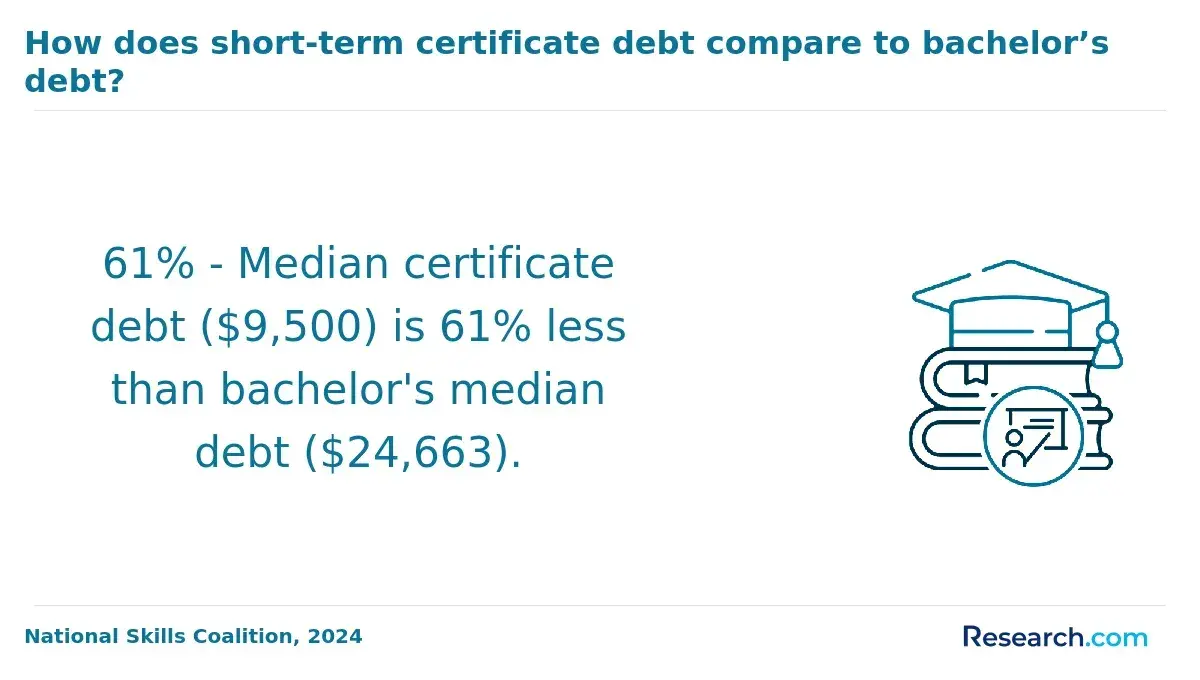
Regarding cost effectiveness, BestColleges reports the average annual tuition and fees for online business administration bachelor's programs at $10,476, with a net price averaging $5,928. Given that U.S. bachelor's degree holders in business earn a median annual income of $65,000, this investment provides tangible returns in employability and income potential, underscoring the value of online business administration degrees in the US job market.
Students pursuing accelerated formats should also consider options such as the accelerated sports management degree online as a reference point for program intensity and career transition speed.
What operations jobs can business administration graduates get?
Graduates pursuing operations management roles for business administration graduates face a distinct set of practical demands that extend beyond traditional management. Positions such as operations manager or supply chain specialist require actionable expertise in process optimization, vendor coordination, and resource allocation. For example, an operations manager in manufacturing must juggle inventory control with production timing to cut downtime effectively, while retail supply chain specialists emphasize demand forecasting and supplier relations to manage stock levels.
Labor market data, including the World Economic Forum's Future of Jobs Report 2025, signals that over 40% of these roles call for advanced skills in operations and supply chain management, which positions graduates for roles demanding both management acumen and technical fluency.
Career opportunities in business administration operations increasingly hinge on proficiency with ERP platforms, data analytics, and navigating regulatory environments. Graduates confronting industry-specific realities-such as patient flow logistics in healthcare or rapid fulfillment challenges in e-commerce-must accommodate diverse operational frameworks.
Additionally, mastering automation and AI applications is not optional but expected by employers seeking efficiency gains. Entry-level roles focus on coordination and analysis with upward mobility tied to measurable process improvements and cost reductions.
Success in these roles depends heavily on managing teams, budgets, and contracts, underscoring the value of strong communication and problem-solving skills alongside technical competencies. Candidates looking to pivot or advance should weigh these operational responsibilities against their own strengths and industry dynamics to make informed educational choices.
Prospective students interested in healthcare operations might explore a HIM degree online as a complementary pathway supporting clinical logistics and compliance expertise.
What courses are in an operations-focused business administration degree?
Operations-focused business administration degrees prioritize skills that directly impact organizational efficiency and adaptability, positioning graduates to manage increasingly complex workflows and supply chains. Beyond theoretical knowledge, students wrestle with practical dilemmas like balancing cost reduction against customer satisfaction, especially in fast-paced sectors such as e-commerce. This real-world tension demands understanding of how supply chain logistics and vendor relations can optimize delivery speed without driving up expenses.
Curricula emphasize quantitative decision-making through business statistics and data analytics, supporting operational choices grounded in measurable outcomes. Familiarity with enterprise resource planning (ERP) systems also equips learners to coordinate large-scale operations in real time. Additionally, risk management training prepares professionals to anticipate and mitigate disruptions, a necessity given today's volatile supply environments.
The inclusion of project management frameworks like Agile and Lean reflects industry demand for leaders who can manage multifaceted initiatives across diverse fields-from manufacturing to healthcare. These skills enable continuous monitoring and improvement of operational KPIs essential for maintaining competitive advantage.
Employment data suggests demand is growing for professionals fluent in operations and supply chain management. However, candidates must weigh the program's intensive quantitative and technical content against their own career goals and learning preferences to ensure a fit with labor market realities. Coursera reports 27% year-over-year growth in online business degrees between 2023 and 2024 focused on operations and supply chain specializations.
What are the admission requirements for online business administration programs?
Admission into undergraduate business administration programs typically requires a high school diploma or GED with official transcripts; however, the increasing adoption of test-optional policies alters standardized testing expectations. Applicants holding prior college credits or an associate degree must provide postsecondary transcripts to verify transfer eligibility and prerequisite completion. Letters of recommendation often focus on leadership and communication skills, reflecting employer preferences for these traits in operations roles.
Graduate admissions demand an accredited bachelor's degree and usually a minimum 3.0 GPA, though significant professional experience or certifications in supply chain or lean operations may provide flexibility. Submitting a detailed resume or CV emphasizing experience in logistics or inventory management aligns applications with labor market demands, especially given projections by the U.S. Bureau of Labor Statistics estimating 62,000 annual openings in supply chain occupations through 2032.
Applicants should craft personal statements that clearly link educational goals with operational management advancement, not just generic academic ambitions. International candidates face additional hurdles such as English proficiency tests (TOEFL, IELTS) and educational equivalency evaluations, which can delay admission. Furthermore, working professionals must carefully assess program delivery models-synchronous versus asynchronous-to avoid conflicts that could hinder timely progression.
Choosing to pursue business administration education requires weighing these application complexities against practical benefits, including the necessity to demonstrate relevant experience for transfer credits or graduate flexibility. Decisions concerning test requirements, recommendation letters, and program format significantly impact employability and workload management during studies.
How long does an online business administration degree take to finish?
Completing an online business administration degree involves a critical tradeoff between program length and workforce readiness, especially for professionals balancing current roles and education. Full-time students typically finish within 3 to 4 years, aligning with traditional bachelor's timelines, but part-time options extend this to 4 to 6 years, which can delay career impact.
Accelerated programs demand intense schedules, compressing coursework into 2 to 2.5 years, but risk burnout and limited assimilation of complex concepts vital in areas like logistics or supply chain management. For instance, a mid-career professional shifting to operations management must weigh whether a longer pacing offers practical application benefits versus the opportunity cost of delayed advancement.
Employers emphasize demonstrated skills and relevant knowledge over simply time-to-degree. BestColleges' 2024 survey reports 77% of graduates secure related employment within 12 months, and 82% note positive career effects, illustrating that curriculum relevance outweighs program duration in hiring decisions.
Choosing program length also influences financial and personal investment: extended studies increase tuition and opportunity costs but may improve subject retention, while faster completion can hinder the depth of operational expertise essential for business administration roles.
How much do online business administration degrees cost?
Employers in operations increasingly require professionals who combine business acumen with specialized operations expertise. A 2024 Association for Supply Chain Management survey found that 74% of employers struggle to locate talent meeting this standard, while 69% favor candidates holding business administration degrees tailored to operational roles. This dynamic significantly raises the return on investment for those who choose programs integrating supply chain or operations coursework.
Online business administration bachelor's degrees vary widely in cost, from approximately $15,000 at public universities for in-state students up to $60,000 at private institutions. Accelerated or competency-based models can reduce total expenses by enabling faster completion, benefiting working professionals seeking to pivot efficiently.
When evaluating these degrees, working students should consider opportunity costs alongside tuition. For example, a mid-career logistics professional investing $40,000 in an online program that emphasizes supply chain strategy and data analytics may justify the expense by closing a significant skills gap otherwise limiting advancement.
Conversely, paying premiums for degrees without these practical focuses risks extended job searches and underemployment.
- Cost ranges reflect institution type, residency, and program structure.
- Financial aid and employer tuition reimbursement may offset costs but often have limits.
- Alignment of curriculum with workforce demands critically affects employability outcomes.
Precise calculation of total investment against expected salary improvements remains essential, especially given the time commitment required alongside balancing current employment.
What salaries do operations careers offer with this degree?
Graduates with an online business administration degree targeting operations roles face a wide salary spectrum shaped by industry, role complexity, and geography. Entry-level positions like operations coordinators typically offer starting salaries near $55,000, but mid-level managers average around $85,000 annually, with senior roles in manufacturing or tech exceeding $110,000. Significant wage differences exist by sector; for example, healthcare operations managers earn roughly $100,000, while retail-focused specialists hover near $65,000.
Many learners pursuing online business administration degrees are midcareer professionals balancing work and studies. This practical dual engagement often delays initial salary bumps but accelerates raises as new skills directly impact job performance. Approximately 61% of these students work full-time, using flexible online programs to pivot without income interruption.
Performance bonuses in operations often add 5-15% of base pay, linked to efficiency or project metrics. Candidates enhancing their degree with certifications like Six Sigma or Lean management commonly see a 10-20% pay increase in competitive markets.
Deciding on this educational path should consider tradeoffs between starting pay and long-term growth potential, the impact of sector-specific demand, and how combining credentials with technical skills can influence lifetime earning trajectories.
How do you choose the best online business administration program?
Operational roles in business administration are rapidly evolving due to advancing automation and analytics, demanding programs that prioritize these competencies. The World Economic Forum's Future of Jobs Report 2025 predicts nearly half of current skills in operations will become obsolete within five years, making integration of AI, data analytics, and automation coursework critical. A manufacturing supply chain manager, for example, must master AI-driven inventory forecasting, while retail logistics coordinators rely on real-time analytics platforms to optimize distribution.
Selecting a program requires scrutiny beyond general management principles. Key factors include:
- Hands-on training in digital supply chain tools, predictive analytics, and automation software rather than passive lectures
- Flexibility to accommodate shift workers or professionals who travel, ensuring remote collaboration skills are developed
- Clear accreditation and measurable graduate outcomes like employment rates in relevant operations roles and salary growth
- Regular curriculum updates guided by industry advisory boards aligned with current labor market demands
Lower-cost degrees that omit advanced technology training may delay professional progress despite initial savings. Conversely, programs emphasizing real-world project work and recognized by employers often justify higher tuition through improved long-term career trajectories. Evaluating employer partnerships and certification opportunities offers additional insight into practical value.
Other Things You Should Know About Business Administration
Balancing a full-time job with an online business administration degree demands strong time-management skills. Programs with asynchronous coursework offer more flexibility, allowing students to complete work outside traditional hours. However, most degrees still require consistent weekly effort and deadlines that can conflict with unpredictable work demands. Prioritize programs that clearly outline workload expectations and offer support services for working students to avoid burnout and ensure steady progress.
Employers accept online business administration degrees increasingly, but leadership roles in operations often require demonstrable soft skills and practical experience beyond the degree. Online programs without live interaction or real-world project opportunities may fall short in developing critical leadership competencies. To improve hiring prospects, prioritize programs with cohort learning, mentorship, or capstone projects that foster teamwork and strategic decision-making.
Program reputation directly impacts recruiter engagement and alumni network strength, which are key for operations career advancement. Convenience can enable completion but should not override quality; a well-ranked program with a demanding schedule may provide better return on investment than an easy-to-finish but lesser-known degree. Prioritize accreditation and employer recognition first, then choose a convenient program within that tier to balance completion feasibility and career impact.
References
- Bachelor of Business Administration in Operations | Walsh - Graduate & Undergraduate Business Degrees https://walshcollege.edu/programs/bachelor-of-business-administration-operations/
- 8 Reasons Why You Should Study Business Administration I CBS https://www.cbs.de/en/blog/why-study-business-administration
- How long is a Business Administration Degree https://henryharvin.ae/blog/how-long-is-a-business-administration-degree/
- Online Business Administration Degrees: A Comprehensive Review https://izrada-web-stranica.com/blog/online_business_admin_degrees.html
- Business in Operations Management (Higher Diploma, L8, 60 ECTS) - TUS https://tus.ie/courses/higher-diploma-in-business-in-operations-management/
- Online Tuition-Free Bachelor's Degree in Business Administration (BBA) https://www.uopeople.edu/programs/online-bachelors/business-administration/
- How Long Does It Take to Get a Business Management Degree? | University of Phoenix https://www.phoenix.edu/blog/how-long-does-it-take-to-get-a-business-management-degree.html
- Operations Manager Career Guide : missions, training, and salary https://www.iscparis.com/en/program/career-guides-operations-manager/
- Coursera https://www.coursera.com/
- Careers in business administration: paths & opportunities https://pathwise.io/careers-in-business-administration/