2027 Business Administration Specializations for Finance-Adjacent Careers

Co-Founder and Chief Data Scientist
Mid-career professionals aiming to shift into finance-adjacent roles often struggle to identify which business administration specializations align best with evolving employer expectations and emerging economic sectors. The challenge intensifies as programs fragment and market demand shifts rapidly, leaving many unsure how to translate their credentials into relevant skill sets.
Recent data from the National Center for Education Statistics reveals a 15% surge in enrollment for online business-related degrees by adult learners since 2022, reflecting a broader move toward flexible, modular learning options that accommodate working schedules.
This article examines key business administration specializations primed for finance-oriented careers, helping readers navigate program choices tailored for strategic career advancement.
Key Things You Should Know
- Data from the U.S. Bureau of Labor Statistics shows finance-adjacent roles integrating advanced analytics drive 23% faster wage growth than pure finance paths, pushing administrators to prioritize quantitative skills despite longer preparatory timelines.
- Employers report 67% higher preference for business administration graduates skilled in cross-disciplinary financial technologies over candidates with generic business credentials, reshaping curricular focus and internship value.
- Median total cost inflation for specialized business administration tracks rose 18% since 2022 per NCES data, forcing candidates to weigh immediate labor market entry against depth of expertise in emerging finance sectors.
What are the best business administration specializations for finance-adjacent careers today?
Identifying the right business administration specializations for finance-adjacent careers in the US requires aligning educational focus with explicit workforce demands and sector-specific nuances. Financial management remains the most direct pathway, with roles like financial managers earning a median wage of $166,050 in 2024 and a projected 16% growth through 2034.
This specialization equips students with budgeting, investment, and capital planning expertise vital across industries from corporate finance to healthcare and government, addressing diverse employer expectations.
Risk management suits those targeting industries such as insurance and banking, where navigating regulatory complexities and market volatility is essential. Its emphasis on compliance, credit risk, and forecasting builds the capacity to preempt financial threats effectively.
Meanwhile, data analytics taps into the expanding need for interpreting large datasets, informing financial decisions, notably within retail and technology sectors. Candidates mastering this specialization offer measurable advantages in business intelligence and resource optimization.
Choosing among these top business administration tracks for finance-adjacent job markets hinges on the intended industry and role. For example, healthcare finance professionals benefit more from risk management due to stringent oversight, whereas corporate roles might prioritize financial modeling and analytics.
Practical issues like internship access and certification routes—such as CFA for finance—also influence outcomes. Graduates with targeted credentials and experience demonstrate superior employability and salary negotiation leverage.
For those weighing program options, exploring an MBA operations management can reveal integrative approaches combining strategic operations with finance-adjacent expertise, broadening career adaptability.
How do finance-adjacent business administration specializations differ from a traditional finance major?
Finance-adjacent business administration specializations prioritize managerial and industry-specific financial skills over the in-depth quantitative focus typical of traditional finance majors. Unlike finance majors, whose curriculum centers on corporate finance, financial modeling, and market theory, these specializations integrate financial knowledge with operational and strategic competencies relevant to sectors such as supply chain, marketing, or human resources.
This fusion creates professionals who interpret financial data within broader business contexts—a skill increasingly valued by employers seeking cross-functional expertise.
Consider a specialization in financial analysis for healthcare management, emphasizing budgeting, cost control, and compliance within tightly regulated environments. This contrasts with the finance major's emphasis on advanced forecasting and portfolio management, often requiring strong mathematical proficiency.
As hiring trends show, roles such as personal financial advisors, projected to grow 19% from 2024 to 2034, favor candidates combining advisory capabilities with business acumen—common strengths of finance-adjacent business administration career paths.
The tradeoffs involved include less mastery of complex financial theory in exchange for versatile employability in roles spanning financial consulting, risk management, and strategic planning. Organizations often prefer specialists who collaborate across departments and handle regulatory or client communication challenges effectively.
Students should weigh these practical realities against their career goals, especially when comparing finance-adjacent business administration specializations to a pure finance major.
For those interested in expanding managerial capabilities with industry relevancy, exploring the best online schools for construction management can offer further insights into specialized business administration pathways.
What degree levels and pathways prepare you for finance-adjacent business roles?
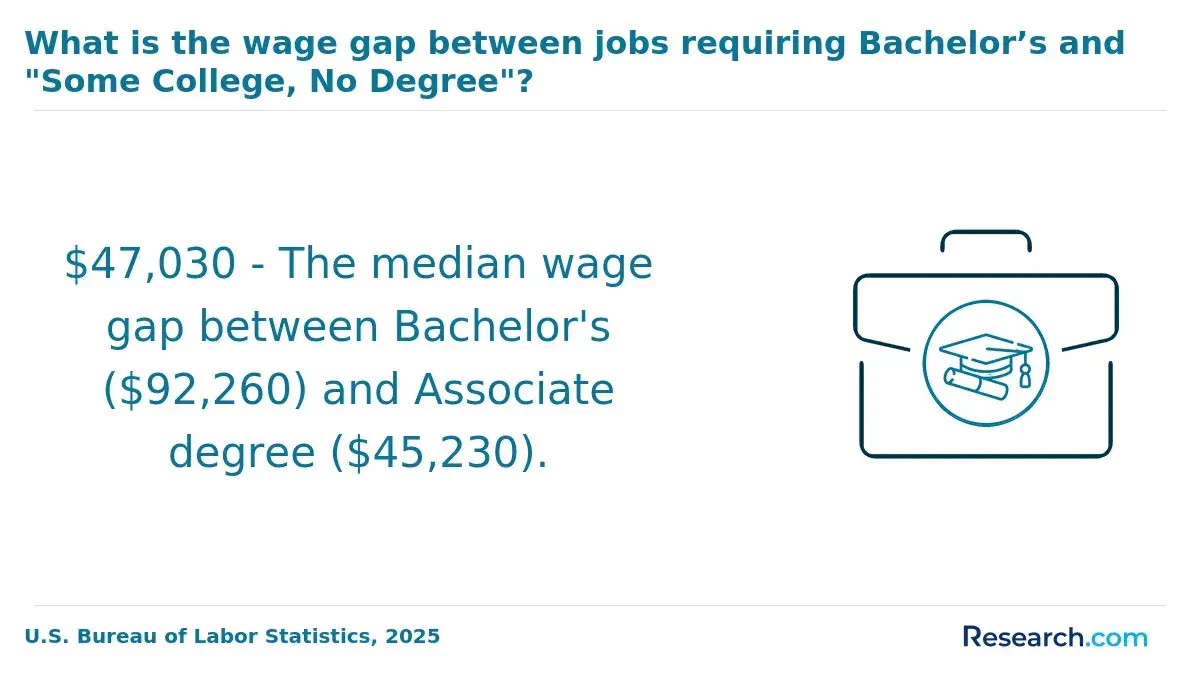
A bachelor's degree in business administration with finance-related focuses remains the baseline credential for entry-level roles such as financial examiners or compliance analysts, especially within banking and insurance sectors. These roles demand proficiency in regulatory frameworks, risk assessment, and data analysis—a foundation typically absent in associate-level programs.
The projected 9% employment growth for financial examiners through 2034 signals sustained market demand for these competencies. Candidates without practical experience, such as internships embedded in undergraduate curricula, often face extended onboarding periods in high-stakes environments.
Advancement into specialized or leadership roles in risk and compliance increasingly hinges on a master's degree, commonly an MBA with finance or risk management concentrations. This graduate-level credential sharpens strategic and regulatory expertise required for mid- to senior-level responsibilities.
However, the time and financial investment of pursuing an MBA necessitates weighing those demands against career goals and immediate employability, especially for working professionals considering flexible options.
Associate degrees tend to open technician or support paths but rarely meet the analytical rigor banks or insurance companies seek for compliance roles. Online and part-time studies expand access but require disciplined self-management to acquire competencies effectively.
Aligning degree levels and specializations with actual job requirements and industry hiring practices is critical when mapping pathways to finance-related business administration careers.
For professionals pursuing an MBA in entrepreneurship online, understanding these practical trade-offs can clarify how that specialization intersects with finance-adjacent business administration roles.
What are the most common finance-adjacent job titles for business administration graduates?
Finance-adjacent business administration careers demand a nuanced blend of core business skills and specialized financial knowledge. Typical job titles for business administration graduates in finance-adjacent roles include financial analyst, budget analyst, risk management specialist, and commercial loan officer. Employers expect proficiency beyond fundamentals—such as advanced Excel and compliance awareness—alongside strong analytical and communication capabilities.
For instance, a financial analyst at a mid-sized company must not only interpret complex financial data but also coordinate budget reviews across departments, balancing strategic insight with interpersonal skills. These roles often serve as entry points, whereas positions like portfolio manager or corporate treasurer require targeted certifications and more extensive industry experience. Competition from candidates holding specialized finance degrees or MBAs can limit negotiation leverage and affect promotion timing.
The labor market outlook is robust: business and financial operations roles are projected to generate roughly 2.1 million openings annually from 2023 to 2033, encompassing both new jobs and replacements. This sustained demand makes specialization in finance analytics and operational decision-making a strategic consideration for students targeting finance-related business administration careers.
Advancing in this domain also frequently involves navigating evolving technologies, including business intelligence platforms and financial modeling software. For professionals seeking to broaden expertise—especially toward executive roles—investigating programs like a doctorate healthcare administration can provide valuable leadership frameworks applicable across sectors.
What salary ranges and growth outlook can you expect in finance-adjacent careers?
Finance-adjacent careers linked to business administration specializations offer salary prospects often ranging from $70,000 to $130,000 annually, influenced by seniority, industry, and location. The broader management, business, and financial occupations group reported an average wage of $113,842, signaling a strong market premium for advanced analytical and leadership competencies.
Market dynamics favor professionals who combine quantitative expertise with strategic insight, such as financial analysts moving into FinTech product management roles, where salaries can surpass $120,000 with experience.
However, entry-level salaries typically start near $65,000, requiring strategic upskilling and certifications like CFA or PMP to reach upper-tier compensation. These credentials introduce short-term delays in earnings but enhance long-term value and employability.
Practical career pivots demand careful consideration of industries with growth and regulatory complexity, such as healthcare finance or sustainable investing. These sectors reward candidates capable of navigating compliance alongside innovation, balancing stability with advancement opportunity. Employers emphasize data analytics, regulatory knowledge, and cross-departmental project management as decisive skills.
Key workforce implications include:
- Salary acceleration contingent on blending financial expertise with technology-oriented roles.
- Certification paths that may slow early earning but yield durable career benefits.
- Industry selection as a critical factor influencing compensation stability and trajectory.
- Demand for adaptable skills across analytics, compliance, and leadership functions.
What core courses and skills do finance-adjacent business administration tracks typically include?
Mastering finance-adjacent business administration requires more than absorbing core financial subjects; it demands developing practical skills attuned to employer expectations. Courses in financial and managerial accounting, corporate finance, and investment analysis provide the quantitative foundation to assess balance sheets, cash flows, and equity valuations essential for roles such as financial consultancy or management analysis. However, these technical competencies must be balanced with strategic judgment and operational understanding.
Soft skills cultivated through organizational behavior and operations management studies—like negotiation and team leadership—directly influence effectiveness in collaborative, cross-functional settings. Legal and ethical training prepares professionals to navigate compliance risks and maintain corporate integrity, which can be decisive in regulated industries.
Employers increasingly expect proficiency in tools such as Excel, SAP, or Bloomberg terminals to support budgeting, forecasting, and financial reporting functions. Real-world scenarios involving decision-making under uncertainty, particularly through case studies, simulate challenges faced in sectors ranging from healthcare to technology.
For example, a management analyst leveraging these combined skills can anticipate economic trends with econometric modeling while guiding clients through regulatory constraints and operational adjustments. This blend of expertise aligns with projected job growth—94,500 new management analyst positions over the coming decade—and a median annual wage of $101,190, emphasizing the value of integrated technical and strategic knowledge in volatile markets.
How do online and on-campus business administration programs compare for these specializations?
The choice between online and on-campus business administration programs specializing in finance-adjacent fields hinges on distinct tradeoffs affecting real-world readiness and network access. On-campus environments provide immersive opportunities such as live case discussions, direct faculty mentorship, and peer collaboration—all critical for developing the swift decision-making and negotiation skills finance employers expect.
Students benefit from streamlined internship placements and immediate, personalized feedback, accelerating portfolio development for high-demand roles with a median wage near $72,910 and projected growth of 58,400 jobs annually through 2034, according to the U.S. Bureau of Labor Statistics.
Conversely, online programs offer unparalleled flexibility for professionals balancing current employment with skill acquisition in project management or financial analysis. Yet, this flexibility requires learners to independently secure internships and cultivate virtual networks to offset limited spontaneous interaction and fewer structured events, which can constrain soft skills essential for functions like risk analysis.
Choosing the right modality depends on career stage and professional commitments. For example, a mid-career individual pivoting into finance may prioritize online study to maintain income and apply emerging skills immediately, whereas someone targeting rapid immersion into finance roles may gain more from on-campus immersion.
Which accreditations matter most for business administration programs with finance-adjacent tracks?
Employers within finance-adjacent sectors repeatedly prioritize candidates holding degrees from AACSB-accredited business administration programs due to their rigorous faculty standards, curriculum relevance, and integration of advanced financial analysis and ethical frameworks.
Graduates from non-accredited programs often struggle to meet mid-level finance or finance-related HR role expectations because these programs typically lack sufficient rigor and exposure to contemporary financial tools.
ACBSP accreditation offers a more applied focus emphasizing teaching effectiveness and practical financial skills that align well with hybrid roles intersecting financial operations and human resources. For example, human resources specialists, projected to grow substantially and earning a median wage above $100,000, benefit from finance literacy embedded within these accredited programs.
Other accreditations like EQUIS cater mainly to international finance tracks and hold limited direct relevance for most U.S.-based career transitions in business administration with a finance orientation. When choosing a program, verifying accreditation ensures the coursework covers practical applications such as budgeting, compliance, and compensation analysis, which employers expect.
Key considerations include:
- AACSB signals employer confidence in graduates' analytical and ethical decision-making skills.
- ACBSP suits professionals targeting applied financial competencies within HR or strategic management.
- Non-accredited programs may limit employability due to perceived academic and practical shortcomings.
How can you choose between overlapping finance-adjacent specializations like analytics or risk management?
Choosing between analytics and risk management within business administration hinges on specific industry demands and the applicant's intended role, rather than general appeal. Analytics revolves around quantitative modeling, programming skills in Python or R, and predictive data techniques vital for sectors like fintech and investment firms.
Conversely, risk management centers on regulatory compliance, credit analysis, and operational risk controls, particularly relevant in banking and insurance where regulatory frameworks like Basel III and Dodd-Frank shape daily responsibilities.
For instance, candidates targeting compliance positions with oversight of financial institutions should lean toward risk management. The U.S. Bureau of Labor Statistics projects a 9% employment growth for financial examiners and related fields from 2024 to 2034, driven by expanding regulatory scrutiny rather than purely analytics-based functions.
Students must assess program content for practical experiences like compliance simulations or large-scale data projects to align with long-term viability. Automation threats loom over analytics roles, while growing regulatory complexity sustains risk management's relevance.
Employers expect analytics candidates to demonstrate coding proficiency and statistical aptitude, whereas risk management applicants must show deep regulatory knowledge and risk evaluation capability.
Are there licenses or certifications that strengthen finance-adjacent business administration careers?
Credentials in finance-adjacent business administration roles convey specialized expertise beyond foundational management skills, but selecting the right certification requires aligning with explicit career contexts and employer expectations. The Certified Management Accountant (CMA) credential, for instance, suits professionals focusing on corporate financial management within traditional business operations, such as manufacturing.
In contrast, the Chartered Financial Analyst (CFA) is essential for roles centered on investment analysis, common in fintech or asset management firms. The Certified Financial Planner (CFP) targets professionals integrating financial planning tasks with broader business administration duties.
The decision to pursue any credential involves balancing significant commitments: exam preparation often demands several hundred study hours and financial outlays ranging roughly from $1,000 to $3,000.
Employers increasingly expect such credentials for advanced finance roles, especially since by 2029, approximately one-third of U.S. jobs in management, business, and financial operations sectors are projected within this ecosystem, per U.S. Bureau of Labor Statistics data summarized by MBA Research.
Business administration professionals should also consider certificates like Project Management Professional (PMP) or Six Sigma if their career trajectories involve operational improvement or process management, diversifying employability while requiring alignment with specific job functions.
Without recognized certifications, candidates often face competitive disadvantages, as employers prioritize verified expertise. Choosing credentials tactically based on target industry and function impacts not only job access but long-term career mobility.
Other Things You Should Know About Business Administration
A business administration degree provides a broad foundation, but finance-adjacent roles often require specialized skills or certifications to stand out. Employers expect proficiency in data analysis, financial modeling, or regulatory knowledge beyond general management training. Prioritize programs that integrate relevant technical electives or support industry-recognized certifications to maximize hiring potential.
In 2027, popular business administration specializations for finance-adjacent careers include Financial Management, Risk Management, Business Analytics, and Investment Banking. These programs equip students with essential skills in areas like financial analysis, risk assessment, and decision-making, tailored for roles in finance and related fields.
An MBA offers advanced strategic frameworks and leadership exposure but may not always improve technical competence for finance-adjacent roles. If your goal is to pivot into analytics, risk management, or financial operations, a targeted undergraduate degree combined with certifications can be more effective early on. Consider an MBA only if you need broader management authority or aim for senior leadership beyond technical specialization.
Employers prioritize candidates who combine academic knowledge with demonstrable experience in finance-related environments. Internships, co-ops, or project-based work that involve financial tools or systems carry more weight than purely theoretical coursework. Seek programs with strong industry partnerships or that embed real-world financial analysis projects to meet these expectations effectively.
References
- 3 Career Paths in Finance With a B.S. in Business Administration - Voices Digital https://www.pacificoaks.edu/voices/business/business-administration-degree-finance-career-paths/
- Ten Types of Business Degree Specializations | AIU https://www.aiuniv.edu/degrees/business/articles/10-types-of-business-degree-specializations-you-can-pursue
- Online MBA Specializations Comparison: Key Differences https://www.onlinecu.in/blog/cu/how-do-online-mba-specializations-compare.php
- How to enter a career in finance https://www.cisi.org/cisiweb2/careers-in-finance/how-to-enter-a-career-in-finance
- How to Choose the Best Specialization for Your Online Degree https://dsuonline.com/resources/blogs/how-to-choose-the-best-specialization-for-your-online-degree/
- How to land a finance job with a bachelor’s degree in business https://www.ibat.ie/blogs/how-to-land-a-finance-job-with-a-bachelors-degree-in-business
- Online MBA Concentrations and Specializations: Master of Business Administration https://www.onlineeducation.com/business/faqs/online-mba-concentrations
- What Is a Finance Degree? Jobs, Skills and Requirements https://www.scu.edu/business/blog/business-concepts/finance-degree/
- Business Analytics vs. Finance: Which Master’s Degree Is Right for You? https://freemannews.tulane.edu/2025/06/09/business-analytics-vs-finance-which-masters-degree-is-right-for-you