2027 Best Online BBA Programs for Administrative Leadership Roles

Co-Founder and Chief Data Scientist
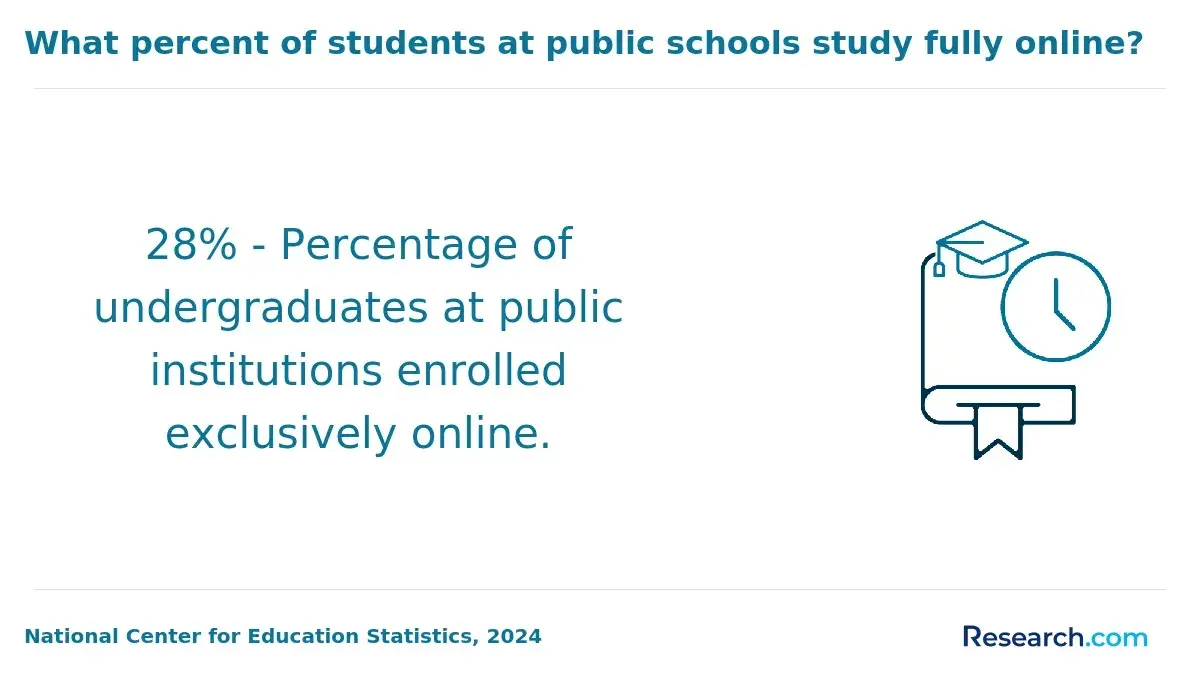
Mid-career professionals pursuing administrative leadership roles often confront rigid program schedules and limited local options, stalling their advancement when juggling job and family demands. A recent National Center for Education Statistics report notes that over 44% of undergraduate students now enroll in at least some online courses, signaling a systemic shift toward flexible learning to accommodate adult learners balancing competing priorities.
This rise in accessibility, however, complicates decisions since not all programs equally match employer expectations for leadership competencies or offer credible, timely credentials. This article carefully evaluates online BBA programs designed to reconcile these competing demands, enabling informed choices for targeted career progression in administrative leadership.
Key Things You Should Know
- Programs emphasizing leadership analytics show 22% higher employer preference in administrative roles, yet demand a steep initial learning curve in data fluency, challenging candidates balancing full-time work and study according to 2024 Bureau of Labor Statistics trends.
- Employers increasingly link practical case-based curricula to 15% better promotion rates within five years, pressuring candidates to favor specialized over generalist courses despite higher tuition costs documented by National Center for Education Statistics.
- Cost and duration variability lead 35% of candidates to delay enrollment; programs under two years sacrifice networking depth, affecting long-term career mobility versus typical four-year tracks, based on 2024 AACSB annual survey data.
What is an online BBA in business administration and how does it prepare graduates for administrative leadership roles?
Graduates pursuing an online BBA in business administration leadership preparation gain a blend of strategic and operational skills critical for administrative leadership positions across industries. This degree equips students with practical expertise in finance, marketing, operations, and organizational management, calibrated to support real-world decision-making and team leadership under pressure. For instance, healthcare administration roles demand proficiency in budgeting and regulatory compliance, while retail management prioritizes supply chain oversight and consumer behavior insights.
BBA programs for administrative leadership success integrate case studies, project management, and communication training, fostering professionals capable of handling complex challenges such as workflow optimization and crisis response. Employers increasingly expect candidates to demonstrate competence in data analysis and technology use, reflecting the growing importance of digital tools and performance metrics in management roles.
Despite a projected 4% growth rate for management occupations from 2024 to 2034, online BBA graduates typically need relevant work experience or internships to overcome employer reservations regarding online credentials. Candidates should prioritize programs offering strong employer connections or mentorship to close this gap. Those exploring accelerated or specialized options might consider an accelerated business management degree to balance time investment and workforce readiness.
How do online BBA programs compare with on-campus options for aspiring administrative leaders?
Choosing between online BBA programs vs on-campus for administrative leadership hinges on distinct tradeoffs in networking, experiential learning, and employer evaluation. Although both formats provide foundational knowledge, management roles with median wages near $122,090 require demonstrated leadership and real-world problem-solving, often better cultivated through in-person interactions and cohort-based mentorship.
For working professionals prioritizing schedule flexibility and immediate skill application, online BBA programs offer a viable route, especially when supplemented by structured internships or participation in industry groups. Yet, these programs typically lack the embedded leadership labs and recruiter engagement prevalent on-campus, which are critical in competitive fields like finance or nonprofit administration.
Key workforce implications include:
- On-campus formats facilitate direct networking with recruiters who value soft skills nurtured through collaboration, enhancing access to higher-tier administrative roles.
- Online programs accommodate career pivots and upskilling without geographic disruption but risk gaps in internship opportunities essential for leadership experience.
- Sector-specific pathways, such as healthcare or manufacturing management, often favor on-campus credentials due to embedded practical projects.
Deciding on format depends on career stage and industry demands; early-career candidates targeting executive tracks gain from on-campus prestige, while mid-career professionals may prioritize accredited online programs balancing faculty engagement and applied curricula. Students exploring flexible options might also investigate specialized construction management degrees online as a parallel path.
Understanding the flexibility and outcomes of online BBA programs for leaders requires factoring in these nuanced but tangible differences in workforce alignment and long-term trajectory.
Which online BBA program features matter most when choosing a path into administrative leadership?
Employers targeting administrative leadership prioritize candidates from AACSB-accredited online BBA programs, as these credentials demonstrate alignment with rigorous academic standards and strategic management expertise. This emphasis reflects the real-world demand for graduates who can navigate complex sectors such as healthcare and technology with proven leadership frameworks.
The best online BBA curriculum for leadership and management roles integrates courses in organizational behavior, strategic decision-making, financial management, and digital leadership tools. Programs that incorporate case-based projects and internships provide students with essential experiential learning, which directly impacts employability. For example, professionals shifting into tech startup management benefit significantly from agile management coursework embedded within the curriculum.
Cost considerations critically influence program accessibility and return on investment. The University of Florida Online's rate of $112 per credit hour for Florida residents in 2025-26 stands out against a national average exceeding $300 per credit hour. Such cost efficiency reduces debt burden, allowing working professionals to pursue leadership trajectories without undue financial strain.
Finally, logistical flexibility-including asynchronous learning, adaptable scheduling, and lenient credit transfer policies-is often decisive for working students seeking uninterrupted progress. Overlooking these factors risks delayed graduation and diminished career momentum.
Working professionals exploring administrative roles may also assess relevant credentials via the best online project management degree options, adding practical value to their leadership portfolio.
What accreditation should online BBA programs have to qualify graduates for management and administrative roles?
Graduating from accredited online BBA programs for management careers profoundly affects employability and credential recognition in competitive sectors. Regional accreditation mandated by the U.S. Department of Education verifies institutional academic standards and is a prerequisite for administrative leadership paths, particularly in industries like manufacturing, IT, and public administration. Specialized accreditations such as AACSB, ACBSP, or IACBE directly influence employer perception, access to certification eligibility (PMP, Lean Six Sigma), and practical skill development-AACSB often aligns with finance and consulting sectors, while ACBSP targets small business and healthcare management.
Employers, especially within federal agencies and Fortune 500 companies, routinely filter candidates based on program accreditation, seeing it as an early indicator of foundational business knowledge and leadership readiness. Graduates from unaccredited programs risk exclusion from key management pipelines or leadership development opportunities. Transfer credit policies also have significant consequences on time and cost. Programs accepting up to 90 transfer credits, like Southern New Hampshire University, enable experienced professionals to accelerate degree completion without redundant coursework, a critical factor for mid-career pivots.
Students should weigh how accreditation impacts networking and career services geared to administrative leadership. Those seeking nontraditional routes might consider compatible credentials and alternate online pathways, including online masters in healthcare management, to expand leadership qualifications in specialized sectors.
Regional accreditation for online BBA degrees in administrative leadership remains a foundational criterion aligning academic quality, practical outcomes, and workforce expectations in shifting business environments.
What courses and specializations in an online BBA best support administrative and operations leadership careers?
Administrative and operations leadership roles demand a practical blend of quantitative and strategic skills, often best acquired through focused courses in strategic management, supply chain logistics, and financial analysis. Operational leaders in sectors like manufacturing and healthcare face direct pressure to enhance efficiency without compromising outcomes, making project management and data-driven decision-making critical.
Graduates must navigate the tradeoffs between developing specialized skills such as human resources management or quality assurance and acquiring broad capabilities in business analytics and budgeting. This balance dictates their ability to impact workforce productivity and align operational practices with corporate objectives. Entrepreneurship-focused studies can further prepare candidates to manage rapid changes and resource constraints typical in startups or digital transformation initiatives.
Cost is a significant consideration: for example, North Carolina Central University Online charges $361 per credit hour for in-state students and $433 for out-of-state, presenting a transparent and workforce-friendly investment. However, candidates should weigh tuition against curriculum relevance, especially programs integrating case studies, software simulations, and internships, which better simulate real-world decision pressures than purely theoretical classes.
What are the typical admission requirements, tuition costs, and financial aid options for online BBA students?
Admission to online BBA programs for administrative leadership roles balances academic benchmarks with practical considerations. Most require a high school diploma or equivalent, a minimum GPA near 2.5 to 3.0, and standardized test scores, though some waive testing for relevant experience or prior college credits. Letters of recommendation and a personal statement assessing leadership capacity and career direction are typical, while transfer students face varied credit acceptance that can significantly affect time to degree.
Tuition variability reflects the institution type and residency, ranging roughly from $200 to $500 per credit at public universities and $400 to $800 or more at private schools. Given a typical online BBA requires about 120 credits, total costs can span from $24,000 to $96,000, making institutional type a critical financial consideration. Competency-based programs like those at Western Governors University allow some students to accelerate and reduce cost by progressing at a personalized pace-data show 65% of WGU business graduates finish in two years or less.
Financing these programs often involves navigating federal aid through FAFSA, institutional scholarships, employer tuition reimbursement, and military benefits. Working students should prioritize low per-credit rates and robust credit transfer policies to prevent extended enrollment, which can raise indirect costs and delay workplace advancement.
How long does it take to complete an online BBA and can students study part time while working?
Employers in sectors such as healthcare administration or nonprofit management typically expect candidates to complete a BBA in administrative leadership within four to six years, balancing timely graduation against demonstrated leadership potential. Part-time study options extend program duration but offer necessary flexibility for working professionals managing 6 to 12 credit hours per semester. This flexibility often involves asynchronous coursework, a key feature for workers with unpredictable schedules or shift work, yet comes with tradeoffs like higher cumulative tuition and delayed access to elevated earning roles.
Industry expectations vary notably: finance firms frequently require degree completion in under five years to maintain competitive candidacy, whereas public agencies may accept longer timelines if paired with robust relevant experience. Prospective students must realistically evaluate workload demands alongside employer pacing preferences.
With 122 accredited BBA programs in administration slated for 2025 in the USA, students must look beyond program availability to assess advising structures and resource access that prevent scheduling bottlenecks and support integration of work experience. Career counseling and networking supports can mitigate slower timeframes typical of part-time paths.
Deciding between full- and part-time enrollment involves weighing immediate financial relief against opportunity costs linked to delayed advancement. Adult learners contemplating career pivots should carefully consider how program pacing aligns with their sector's progression expectations and personal capacity for balancing work-study commitments.
What entry-level and mid-level administrative leadership jobs can you get with an online BBA?
Choosing an online BBA in administrative leadership requires weighing the limited supply of programs against the specific leadership competencies needed for effective mid-level management. Only a handful of fully online BBAs specialize in leadership, narrowing options for students who need focused training in conflict resolution, decision-making, and organizational behavior. This scarcity forces many graduates to seek additional certifications or accumulate practical experience to bridge gaps in leadership adaptability.
Entry-level roles, such as administrative coordinator or operations analyst, depend heavily on organizational skills and basic financial oversight. In contrast, mid-level positions like program manager or operations manager demand more autonomy in staff supervision and strategic planning. For example, a healthcare administrative coordinator must balance compliance and confidentiality while optimizing processes-competencies that extend beyond generic business coursework.
Employers prioritize candidates who combine foundational business acumen with leadership versatility, influencing hiring and promotion timelines. Students should critically evaluate program curricula for leadership depth to avoid delayed advancement and modest compensation growth. Factors to consider include course coverage on:
- Organizational behavior
- Conflict resolution frameworks
- Decision-making models
Assessing these elements shifts the focus from simply earning a degree to preparing for workforce demands that reward proven leadership capacity over theoretical knowledge alone.
What salary ranges and advancement opportunities do business administration graduates see in administrative leadership roles?
Salary outcomes for bachelor's degree holders in business administration vary widely by sector and geography, with starting figures typically between $60,000 and $85,000 and mid-career salaries expanding to $90,000-$130,000. These disparities frequently correspond to the complexity of the employer's organizational scale and the specific industry, such as corporate management versus healthcare administration. Advancement into senior roles usually hinges on acquiring targeted credentials alongside proven strategic management capabilities.
Promotion pathways often follow a clear hierarchy: from first-line manager to department head, then director or vice president. Employers increasingly prioritize candidates who merge operational knowledge with data-driven decision-making and cross-functional collaboration. For instance, graduates with emphasis on project management or organizational behavior within their business administration program may advance faster in technology sectors compared to those with generalized business curricula.
A practical consideration arises from employment data-California State University, Fullerton's online business management graduates boast a 91% in-field employment rate, highlighting the advantage of specialized, outcome-focused programs against broader BBA tracks with lower placement.
Students and working professionals must weigh program content against labor market demands, particularly focusing on digital fluency and regulatory compliance, to avoid skills mismatch or stagnated wages. Effective pathways integrate applied tools and real-world administrative frameworks to ensure credentials translate into measurable employment benefits in competitive job markets.
How can prospective students evaluate and compare online BBA programs to find a reputable, high-ROI option?
Employment outcomes and total cost are decisive factors when selecting an online bba program, as the real returns influence long-term career trajectories more than reputation alone. For instance, Fort Hays State University offers an online bba at $6,806 tuition, ranking among the most affordable nationally-a critical advantage for prospective students aiming to minimize debt while transitioning into administrative leadership roles.
Accreditation from regional agencies like the Higher Learning Commission ensures a program's credibility and employer recognition, which directly impacts graduate competitiveness in recruitment and graduate studies. Program content should align with targeted industries; elective options such as supply chain management or healthcare administration can better position graduates for sector-specific leadership.
Scheduling flexibility and program length matter greatly for working professionals balancing employment and education. Choosing between a more affordable, four-year track versus a costlier accelerated format involves tradeoffs between upfront investment and faster workforce entry.
Robust career services, including internships and employer networks, measurably affect job placement success. Prospective students would also benefit from analyzing verified alumni outcomes using tools like the U.S. Department of Education's College Scorecard and LinkedIn labor market analytics, ensuring that selected programs deliver tangible career impact beyond the diploma.
Other Things You Should Know About Business Administration
The workload in online BBA programs varies but typically requires strong time management skills, especially for working professionals balancing jobs and study. Programs that emphasize interactive projects and group work can add complexity compared to purely lecture-based courses. Prospective students should prioritize programs offering flexible deadlines and asynchronous content to reduce conflict with work hours while maintaining consistent course engagement.
Employer respect for online BBA degrees depends largely on the institution's reputation and accreditation, not solely the delivery format. However, degrees from well-known schools with recognized accreditation have clearer pathways to administrative leadership roles. Candidates should focus on programs with proven alumni outcomes and employer connections rather than assuming all online degrees hold the same weight.
Selecting a leadership-focused BBA program offers targeted skills for administrative roles but may narrow exposure to broader business functions. General business administration programs provide flexibility but require supplementary effort to develop leadership competencies independently. For career pivoters eyeing administrative leadership, prioritizing programs with explicit leadership training and practical management experiences delivers clearer preparation and employer relevance.
References
- Best Online MBA Specializations for Jobs & Career Growth- Chandigarh University https://www.onlinecu.in/blog/cu/which-is-the-best-specialization-in-online-mba-for-jobs.php
- Online BBA vs Offline BBA: Which Path to Choose https://vinuni.edu.vn/online-bba-vs-offline-bba/
- Financial Aid For Online Colleges https://www.affordablecollegesonline.org/financial-aid/financial-aid-for-online-colleges/
- Bachelor of Business Administration (BBA) Online Degree — European Center for Accreditation https://www.ecaonline.eu/landingbachelorsbba
- Discover Your Path to a BBA Degree: A Comprehensive Student Guide https://www.iona.edu/blog/how-to-earn-bba-degree
- Types of Financial Aid for Online Colleges https://www.umassglobal.edu/blog-news/types-financial-aid-online-colleges
- From Associate to BBA Online: Fast, Affordable Paths for Working Adults | IWU https://www.indwes.edu/articles/2025/11/associate-bba-online-fast-affordable-paths-working-adults
- Business Administration Salary: A Guide to Earning Potential https://www.yorkvilleu.ca/blog/business-administration-salary/
- Careers in Business Administration: Roles, Pay, Outlook https://pathwise.io/careers-in-business-administration-2/
- Exploring Admin Jobs: Entry Level to Executive Level Positions https://www.uniccm.com/blog/exploring-admin-jobs-entry-level-to-executive-level-positions