2027 Business Administration Specializations for Operations Careers

Co-Founder and Chief Data Scientist
Facing the challenge of selecting a specialization within business administration that aligns with rapidly evolving operations roles demands more than intuition. With operations management roles growing 13% faster than average for all occupations, according to the U. S. Bureau of Labor Statistics, candidates must weigh program flexibility, employer expectations, and skill relevancy concurrently.
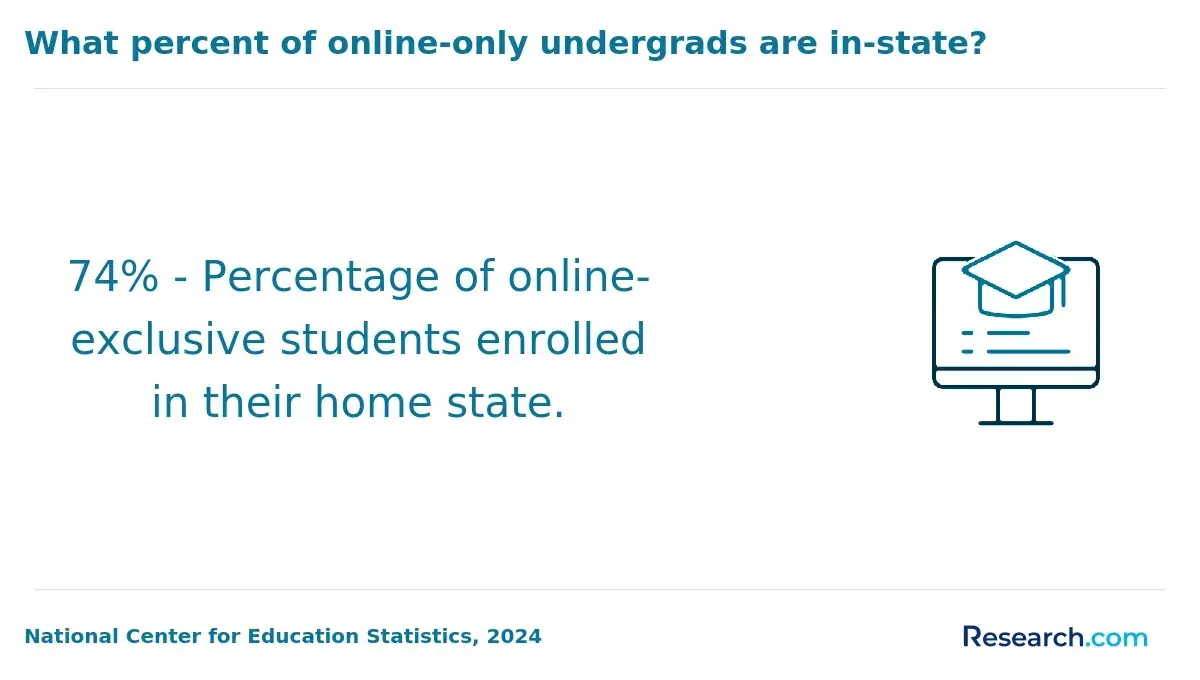
The surge in online program enrollments—up 16% from the previous year per the National Center for Education Statistics—reveals a shift toward accessible learning designed for working adults seeking immediate career impact.
This article examines current specializations tailored for operations careers, evaluating their practical advantages to guide informed program choices that maximize employability and advancement potential.
Key Things You Should Know
- Operations management specialization commands a 15% higher median salary but demands advanced quantitative skills, creating a steep learning curve that filters out candidates lacking strong analytics, per 2024 BLS data.
- Employers in healthcare and manufacturing place growing emphasis on supply chain resilience experts, with 42% of operations roles requiring cross-functional negotiation abilities, complicating hiring and retention.
- Programs with integrated tech certifications reduce job market entry time by six months on average but raise tuition costs by 20%, increasing upfront investment barriers for career switchers, according to the National Center for Education Statistics.
What are the most in-demand business administration specializations for operations-focused careers today?
Operations-focused roles in business administration increasingly require deep specialization rather than broad management generalism. Among the top business administration majors for operations roles, supply chain management stands out due to its integration of AI-driven forecasting and vendor relations, optimizing inventory control in manufacturing.
For instance, firms deploying digital supply chain tools expect candidates who combine quantitative modeling with practical distribution knowledge.
Analytics-driven operations management is paramount in service sectors such as healthcare and retail, where detailed statistical analysis directly informs resource allocation and market responsiveness. Skills in operations research equip candidates to demonstrate measurable efficiency improvements, a decisive factor in hiring.
Financial operations and risk management specialization addresses amplified regulatory demands, particularly in finance-centered organizations, where operational agility must coexist with stringent compliance. Graduates must navigate these dual pressures to reduce organizational risk without impeding workflow.
Projected growth from 2023 to 2033 anticipates 1.7 million new jobs in business and financial fields, with 2.1 million openings annually driven by turnover and retirements. This steady market expansion amplifies the value of targeted technical proficiency alongside general management acumen.
Tradeoffs are evident: an operations manager at a tech startup prioritizes agile project management, while a logistics coordinator at a traditional manufacturer emphasizes regulatory compliance and supplier negotiation. Prospective students examining business administration specializations for operations management careers should align their choice with these distinct employer expectations and operational realities.
For those evaluating pathways, resources such as a business administration degree online offer flexible access to developing these critical competencies.
How does an operations-focused business administration degree differ from a general business degree?
An operations-focused business administration degree offers targeted mastery in process optimization, supply chain logistics, and quality control, diverging from the broader managerial scope of a general business degree. This specialization equips students with practical skills and frameworks, such as Lean Six Sigma and Enterprise Resource Planning (ERP) systems, primed for addressing operational bottlenecks, inventory challenges, and throughput delays.
For instance, an operations graduate in a distribution center might optimize inventory flow using real-time analytics dashboards, a technical focus less emphasized in general business tracks.
From a workforce perspective, the demand for roles in operations management remains robust, with approximately 102,797 combined general and operations manager openings annually, according to data reported by College Raptor. Hiring managers prioritize candidates who exhibit immediate operational expertise paired with leadership capabilities. In contrast, general business graduates often face stiffer competition and require additional training to handle operational complexities effectively.
Choosing specializations within business administration for operations management careers narrows versatility but enhances readiness for mid- to senior-level roles requiring data-driven decision-making and technology integration.
Conversely, general business degrees provide a broader foundation in finance, marketing, and organizational behavior but may delay operational effectiveness in early career stages.
Prospective students exploring specialized pathways might also consider related, structured programs such as construction management degrees which focus more narrowly on project and supply chain coordination within the built environment.
Which business administration specializations best prepare you for supply chain and logistics roles?
Choosing a specialization in business administration impacts role alignment and career viability significantly within supply chain and logistics sectors. Supply chain management, for example, is distinctively aligned with procurement, inventory control, and demand forecasting, equipping graduates to negotiate vendors and implement lean inventory tactics that directly cut costs and improve delivery in manufacturing and retail hubs.
Focusing on operations and logistics management business administration tracks reveals critical differences. Operations management prioritizes process optimization and resource allocation, skills that are indispensable in dynamic environments like e-commerce, where demand fluctuates notably and operational efficiency directly affects customer retention.
Logistics management, by contrast, addresses transportation complexities, emphasizing route optimization and regulatory compliance—key for industries such as pharmaceuticals and automotive facing strict logistical challenges.
Decision-making should also consider industry fit: roles prioritizing distribution planning benefit more from logistics management, while procurement analysts draw more from supply chain expertise.
Median wages reinforce these choices; for instance, business and financial occupations reported a median annual wage of $80,920 in May 2024, considerably outperforming the $49,500 median for all occupations according to the U.S. Bureau of Labor Statistics.
Prospective students should weigh these operational tradeoffs along with educational delivery formats. For those seeking accelerated credentials, 6 month MBA programs can offer a condensed pathway into specialized tracks, though intensive study demands and reduced networking windows are notable considerations.
What operations-related courses and skills do business administration majors typically need?
Operations management courses for business administration majors focus directly on measurable efficiency and decision-making, rather than abstract theory. Employers prioritize candidates who can apply quantitative analysis and process optimization in real settings, such as identifying manufacturing bottlenecks through predictive analytics or forecasting retail inventory demand to minimize costs without stockouts. These skills are central to driving operational outcomes and meeting workforce expectations.
Core coursework typically includes project management, logistics, data analytics, quality control, and practical use of enterprise resource planning (ERP) systems like SAP or Oracle. Mastery of these tools enables students to analyze operational data, manage supplier negotiations, and deliver cost control—a combination employers view as essential for roles demanding both technical and strategic acumen.
Key skills for business administration operations careers also encompass leadership and communication needed to coordinate cross-functional teams and adapt processes to evolving market conditions. Internship and project experience remain critical for validating problem-solving ability beyond classroom theory, often differentiating candidates in a competitive hiring environment.
The wage data for business operations specialists—with median annual earnings around $81,270 and top-tier wages nearing $147,830—reflects market demand for professionals balancing analytical rigor with strategic insight. Majors who bypass applied analytics risk weaker job outcomes despite theoretical knowledge.
For those considering further specialization in healthcare management fields, exploring advanced degrees, programs such as a doctorate of healthcare administration can bridge operational expertise with sector-specific leadership roles.
How do online business administration programs for operations compare with on-campus options?
Employers in industries with complex operations often perceive on-campus business administration credentials as more rigorous due to direct access to faculty and peer collaboration, which enhances problem-solving skills in areas like supply chain management.
However, top-tier online programs have narrowed this gap by incorporating interactive technologies and real-time case studies, making them a viable option for professionals balancing job commitments—such as a mid-career shift into healthcare operations where scheduling flexibility is crucial.
Key practical differences impact outcomes:
- On-campus programs offer face-to-face networking, team projects, and immediate faculty mentorship, critical for informal recruiting channels and skill refinement.
- Online programs demand greater self-discipline and require proactive engagement in virtual industry groups to compensate for limited spontaneous interaction.
- Relocation requirements of on-campus formats pose barriers for many, whereas online learning facilitates job continuity and geographic flexibility.
The 2024 GMAC survey reports a $120,000 median starting salary for MBA graduates, underscoring employer trust when programs maintain accreditation and practical curricula regardless of delivery mode. Still, students must rigorously evaluate program reputation and their capacity to leverage each format's networking strengths.
Ultimately, the choice between online and on-campus business administration programs hinges on aligning format-specific tradeoffs with individual career goals, industry hiring standards, and the realities of professional and personal constraints.
What accreditation and quality standards should operations-focused business administration programs meet?
Accreditation is more than a formality for operations-focused business administration programs; it serves as a practical filter that distinguishes candidates who can directly meet industry demands. Employers in sectors such as manufacturing or logistics prioritize graduates from programs accredited by recognized bodies like AACSB, ACBSP, or IACBE because these credentials verify proficiency in key areas such as supply chain analytics, ERP systems, and lean management practices.
For instance, a manufacturing firm optimizing just-in-time production typically favors candidates with AACSB-backed training, which ensures applied skills and critical thinking rather than theoretical knowledge alone. This alignment with employer needs translates into tangible career benefits, including higher wage potential—reflected in the median management wage of $116,880 versus $48,060 across all occupations—and improved promotion prospects.
Non-accredited programs often lack continuous content updates or industry validation, risking graduates' readiness to handle real-world challenges. Prospective students should also evaluate program delivery standards, such as adherence to Quality Matters for online formats, which affects engagement and learning outcomes for working professionals.
Deciding on a program requires careful assessment of accreditation status, industry hiring preferences, and pathways to certifications like Six Sigma or PMP that operational employers value:
- Verification through AACSB, ACBSP, or IACBE endorsements
- Integration of practical ERP or lean methodologies
- Continuous curriculum review aligned with evolving standards
- Online delivery quality confirmed by standards like Quality Matters
These factors collectively shape employability and salary trajectory for those targeting operational management roles.
What are the admission requirements and typical timelines for completing operations-focused business degrees?
Admission criteria for operations-focused business administration degrees hinge on demonstrated practical skills as much as academic credentials. Undergraduate programs usually require a high school diploma or equivalent, sometimes supplemented by standardized test scores like the SAT or ACT. Master's programs demand a relevant bachelor's degree and between one to three years of professional experience, reflecting employer demand for candidates versed in supply chain or project management software and certifications such as Lean Six Sigma.
Degree timelines vary considerably, affecting working professionals' ability to balance education with employment. Bachelor's degrees take four years full-time, with accelerated tracks shortening this to three years for those with transfer credits or summer courses. Part-time or online formats extend this to five or more years, a significant factor when immediate income must be maintained.
Master's degrees concentrate learning into 12-24 months full-time or up to three years part-time; integrated internships or capstone projects add time but yield direct operational leadership experience.
Consider an operations manager in manufacturing who pursues a master's with supply chain analytics modules over 18 months to quickly strengthen competitive positioning.
Conversely, an office administrator targeting promotion might select a part-time undergraduate path over five years to sustain income and steadily build credentials. With over 19 million U.S. workers in office and administrative roles, aligning education duration with workforce demand and skill acquisition timing directly influences employability and career trajectory.
What entry-level and mid-career jobs can you get with an operations-focused business administration specialization?
Operations-focused specializations in business administration direct students toward defined roles that demand precise technical skills at the entry level and strategic leadership mid-career. Early roles such as operations analyst or supply chain coordinator require managing data flow, optimizing processes, and vendor communications to sustain daily operational efficiency.
For example, a supply chain coordinator in manufacturing ensures timely raw material delivery—any delay can halt production, revealing how tightly these functions connect to business continuity.
Advancing to mid-career positions like operations manager or procurement manager shifts the emphasis toward overseeing broader systems and leading teams. Retail operations managers, for instance, juggle inventory across multiple locations while aligning supply with shifting consumer demand, requiring agility in decision-making and the ability to integrate cross-departmental efforts. This progression reflects a clear tradeoff: early jobs hone analytical detail orientation; later roles demand interpersonal effectiveness and scalable strategic insight.
The U.S. labor market projects that business-related fields will comprise 34% of all jobs in 2029. Despite this, practical success depends on matching educational focus with employer expectations that differ significantly between technical prowess and leadership capacity.
Graduates must recognize that specialization in operations mandates developing a blend of quantitative skills and team management abilities applicable across diverse sectors, including healthcare and logistics, rather than assuming a one-size-fits-all trajectory.
What salary ranges and advancement opportunities exist for operations and supply chain management graduates?
Operations and supply chain management roles in 2026 reflect significant variation in compensation and advancement dependent on specialization, industry, and geography. Entry salaries range from around $65,000 in manufacturing to $75,000 or more in technology-driven firms, with advanced positions such as procurement managers or logistics analysts nearing $115,000. These figures underline the premium employers place on candidates skilled in process optimization and data analytics, especially when these abilities translate into tangible cost reductions.
Promotions often require cross-functional expertise and 7-10 years of experience for top-tier leadership roles, such as operations director or supply chain vice president. Practitioners holding certifications like Six Sigma or APICS experience faster progression, although metropolitan markets can accelerate compensation increases by 10-25% due to concentrated corporate demand.
Employers expect a balance between technical skills and soft competencies like stakeholder coordination and crisis management. For instance, professionals who swiftly integrate ERP system experience and adapt to global supply chain disruptions tend to advance more rapidly.
However, candidates face a tradeoff: early specialization may boost short-term gains but restrict lateral mobility, while broader operational knowledge offers resilience but usually entails longer paths to senior management.
Are professional certifications important for operations careers, and which pair best with these specializations?
Certifications in operations-focused business administration serve as strategic differentiators in a labor market with 16 million management and business occupation roles nationwide. These credentials validate applied skills rather than just academic theory, which employers heavily weigh when vetting candidates for system and process management.
For professionals in manufacturing operations, combining the Certified Supply Chain Professional (CSCP) with a Six Sigma Green Belt aligns tightly with industry requirements for lean, data-driven improvements.
This combination correlates to tangible efficiency gains and cost reductions valued in production and logistics environments. In contrast, operations project managers who integrate Project Management Professional (PMP) and Agile Scrum Master certifications navigate dual methodologies—traditional and iterative—common in tech and consulting sectors where deadlines and adaptive workflows dominate.
- CSCP plus Six Sigma Green Belt targets process optimization and quality metrics favored in manufacturing and supply chain roles.
- PMP and Agile Scrum Master equip candidates to manage projects under both fixed-scope and agile frameworks crucial to technology-driven operations.
Time and financial investment for certifications often range from $1,000 to $3,000, requiring candidates to evaluate their industry's specific expectations. Some fields may prioritize substantial professional experience coupled with a single, recognized certification rather than multiple credentials.
Pairing relevant certifications with an academic specialization in business administration creates a focused portfolio. This approach aids hiring managers' assessment of applicant readiness and enhances competitive positioning for operational leadership roles across sectors.
Other Things You Should Know About Business Administration
Gaining broader knowledge before specializing can provide versatile skills applicable to various roles, while early specialization in operations might quicken entry into niche markets. However, broad expertise can potentially offer better adaptability in evolving job markets.
Practical experience significantly improves hiring prospects in operations roles beyond academic credentials alone. Business administration programs that integrate internships or cooperative education provide access to hands-on learning and industry connections, which directly affect employability and readiness for complex operational challenges. Students should prioritize programs with structured experiential learning components because purely theoretical degrees have weaker outcomes in competitive operations job markets.
Choosing between lean management and quantitative analytics specialization depends on targeted roles and industry sectors. Lean-focused programs emphasize process efficiency and waste reduction, suitable for manufacturing and continuous improvement careers. Quantitative operations programs prepare students for data-driven decision-making and supply chain modeling roles, in demand in logistics and technology firms. Candidates should align their choice with both personal strengths and employer demands in their desired subsector.
Part-time or accelerated formats offer scheduling flexibility but typically increase workload intensity and limit networking opportunities within operations cohorts. These programs can impede deep engagement in complex operational projects or internships, which are critical for mastering practical skills. Students prioritizing career advancement in operations should carefully balance time constraints against the need for comprehensive learning experiences and employer-valued industry exposure.
References
- IACSB International Accreditation Council for Schools of Business http://iacsb.com/Accreditation-Council-of-Higher-Education-Quality-Standards.html
- How Long Does It Take to Get a Business Administration Degree? - Team Academy https://teamacademy.nl/how-long-does-it-take-to-get-a-business-administration-degree/
- Best MBA Specialisation for 2026 | Which MBA Specialisation is Most in Demand? https://lsmt.org.uk/blog/most-in-demand-and-best-mba-specialisation
- 6 BS in Business Skills Employers Seek | University of Bridgeport https://www.bridgeport.edu/news/bs-in-business-administration-skills-employers-seek/
- Online Bachelor's Degree in Business Administration: Your Best Decision | EU Business School https://www.euruni.edu/blog/online-bachelors-degree-in-business-administration-your-best-decision/
- Top 10 Benefits of Professional Certification - Identity Management Institute® https://identitymanagementinstitute.org/top-10-benefits-of-professional-certification/
- Supply Chain Career Paths: What Each Role Actually Leads To https://www.scoperecruiting.com/blog/supply-chain-career-paths
- 7 Good Certifications for Jobs to Boost Your Career in 2025 | Mindmesh Academy https://www.mindmeshacademy.com/blog/articles/good-certifications-for-jobs
- Business Administration vs Business Management in Canada https://www.yorkvilleu.ca/blog/business-administration-and-management/
- Is Business Administration the same as Business Management? https://vinuni.edu.vn/is-business-administration-the-same-as-business-management/