2027 Best Online Bachelor's in Biological Sciences for Medical School or Graduate School Preparation

Co-Founder and Chief Data Scientist
Applicants aiming for medical or graduate school confront a high-stakes challenge: building a competitive academic foundation while managing work, family, or geographic constraints. Traditional in-person programs often lack flexibility, creating significant barriers to timely degree completion and application readiness. Data from the National Center for Education Statistics shows a 12% increase in fully online bachelor's enrollment since 2022, signaling a shift toward accessible, self-paced learning models essential for nontraditional students. Yet, discerning which online biological sciences programs align rigorously with medical school prerequisites and research expectations remains complex. This guide evaluates top online biology bachelor's degrees tailored to meet those specific preparatory demands and practical career transitions.
Key Things You Should Know
- Graduate programs in biological sciences now prioritize research experience over GPA, pressuring students to seek undergraduate labs; this tradeoff delays completion for many, risking higher debt accumulation from extended time-to-degree, per NCES 2024 data.
- Employers in biotech increasingly demand interdisciplinary skills, pushing students toward programs integrating computational biology, yet such curricula reduce deep specialization, potentially diminishing core biological sciences content.
- Rising application volume from online degrees challenges admissions, as AACOM notes 25% growth in med school candidates since 2022; online program access boosts applicant pools but heightens competition and credential scrutiny.
What is an online bachelor's in biological sciences and how does it prepare you for medical or graduate school?
An online bachelor's in biological sciences for medical school preparation demands a strategic evaluation beyond curriculum content. The program's ability to simulate or supplement hands-on laboratory experience differentiates candidates in competitive admissions environments. Prospective students face a critical tradeoff between flexible scheduling and securing meaningful lab practicums, often requiring external coordination to meet professional standards.
This degree path aligns with workforce needs by emphasizing scientific reasoning, research application, and quantitative skills, which are increasingly central in life sciences industries and graduate research roles. Employment and advanced study outcomes reflect this focus-biological science majors had a 41.4% acceptance rate to U.S. medical schools, surpassing both social sciences and health sciences fields. Such data underscores the practical advantage of targeted online biological sciences degree programs that integrate pre-med advising and synchronous lab options.
Working professionals shifting into biomedical sectors can leverage this degree to bridge multidisciplinary skills without interrupting employment. Key considerations include program accreditation and the capacity to fulfill prerequisites in a timely manner. Managing coursework alongside clinical or research commitments remains a challenge requiring disciplined time allocation.
In contrast to general science degrees, an online biological sciences degree prepares you for graduate school by blending theoretical foundations with validated skill development through capstones, internships, or faculty-led research, replicating on-campus experiential learning. For insights on costs and program structures, consult resources such as the online animal science degree guides, which illustrate similar program complexities and financial considerations.
Are online biological sciences bachelor's degrees accepted by medical schools and graduate programs?
Acceptance of online biological sciences degrees by medical schools and graduate programs depends heavily on accreditation and specific curriculum alignment with prerequisite coursework. Essential sciences such as organic chemistry, biochemistry, physics, and biology with validated lab components are typically required. Programs offering hybrid labs or partnerships for practical components better satisfy graduate program requirements for online biological sciences bachelor's applicants. Without rigorous hands-on training-often required in physician assistant or medical school admissions-candidates risk denial despite strong theoretical knowledge.
Students pursuing an online biological sciences bachelor's degree should critically assess whether their program meets these criteria, especially since some schools restrict online credit hours in core science courses or mandate traditional in-person labs. Navigating these nuances requires direct communication with target admissions offices to avoid pitfalls that delay or derail graduate-level enrollment.
The labor market outlook reinforces the pathway's relevance: the U.S. Bureau of Labor Statistics anticipates 20% growth for physician assistants through 2034, creating 39,300 new positions with a median salary above $130,000. However, this demand places a premium on applicants who combine accredited biological sciences degrees with substantive experiential learning.
Finally, students often benefit from supplementing their academic foundation with targeted research or lab work to reinforce application competitiveness. For insight into complementary data-centric opportunities, consider programs like data science masters online to diversify interdisciplinary skills and labor market options.
How do online and on-campus biological sciences programs compare for pre-med and grad school preparation?
On-campus and online biological sciences programs vary sharply in their capacity to deliver essential hands-on laboratory and clinical experiences, a critical distinction for students focused on pre-med preparation. On-campus degrees typically integrate state-of-the-art labs, faculty-mentored research, and clinical partnerships-elements highly valued by employers and graduate schools. In contrast, online biological sciences programs vs on-campus for pre-med preparation often require students to independently secure local internships or hospital shadowing, adding logistical challenges and expense. This disparity affects real-world readiness, particularly for graduate school applicants needing direct patient interaction or biomedical lab proficiency.
Employers and admissions committees accept the equivalence of accredited core curricula but differentiate candidates by demonstrated research and clinical exposure. For students comparing on-campus and online biological sciences degrees for graduate school, the ability to embed these experiences within the program correlates with stronger placement in competitive assistantships or research roles. The U.S. Census Bureau's Current Population Survey highlights a median salary of $70,000 for biology and pre-health graduates aged 25-34, notably above the $60,000 median for all bachelor's holders, underscoring the value of rigorous, experiential education.
Key practical considerations include:
- Confirming that online programs provide verified pathways to clinical and research experience through local affiliates.
- Balancing the extra time and cost online students invest in securing external internships against the integrated opportunities found on campus.
- Assessing how specific regional or specialty employers and admissions officers perceive online credentials.
Students concurrently exploring adjacent technical fields might consult analyses on computer science degrees to better understand affordability and format tradeoffs relevant to STEM career pivots.
What accreditation and institutional quality standards should an online biological sciences program meet?
Choosing an online biological sciences program without established regional accreditation risks non-transferable credits and lost time, especially since over half of new U.S. medical students majored in biological sciences, per AAMC matriculant data. Institutional quality criteria for online biological sciences degrees emphasize federal recognition, which safeguards access to financial aid and ensures academic standards that align with graduate and professional school expectations.
Program outcomes transparency-such as graduation rates and MCAT scores-directly impacts both student decisions and employer confidence. A curriculum missing core scientific courses like organic chemistry, biochemistry, and genetics with lab-based experiences undermines preparedness for medical or graduate school entry. Furthermore, maintaining qualified faculty with terminal degrees and enforcing academic integrity are markers of institutional reliability.
Students balancing employment must verify whether online programs offer flexible synchronous/asynchronous learning modalities combined with sufficient academic advising and career support to minimize withdrawal risks and delays. The absence of these support structures can significantly hinder degree completion timelines, reducing workforce competitiveness.
Prospective students should carefully weigh the tradeoffs of less rigorous programs, which often result in wasted financial and temporal investments. Such programs can derail plans for advanced degrees or related careers where biological sciences remain the predominant starting point. For those considering educational pivots, it is also worth comparing the value proposition of an online library science degree, which can offer alternative career trajectories.
What courses and lab experiences are required in an online biological sciences bachelor's for competitive applications?
Electing an online biological sciences bachelor's program demands careful consideration of its laboratory components, which are non-negotiable for meeting medical school and graduate program prerequisites. While remote coursework can cover molecular biology, genetics, and physiology effectively, in-person labs remain mandatory-often fulfilled through local partnerships or short residencies. This requirement adds logistical friction for working adults or those with family responsibilities, necessitating proximity or travel arrangements to maintain practical skill proficiency.
Foundational coursework typically includes biochemistry, cell biology, organic chemistry, microbiology, and essential statistics for biomedical research literacy. These subjects form the technical backbone not just for academic advancement but for roles in clinical research, pharmaceutical fields, and healthcare diagnostics where employer expectations emphasize both theoretical understanding and lab competence.
For students prioritizing return on investment, accelerated online biology programs can reduce time to degree without substantially lowering cost-the average tuition hovers near traditional in-person rates, about $26,903. This compresses educational timelines but intensifies the challenge of managing onsite lab obligations alongside other commitments.
Key considerations for prospective enrollees include:
- Availability of flexible lab scheduling within 50-100 miles to avoid relocation.
- Balancing accelerated course loads with the hands-on intensity of lab requirements.
- The impact of demonstrated lab skills on competitive admission to medical or graduate schools.
Deciding on an online biological sciences pathway requires weighing these practical tradeoffs carefully to align with career objectives and life circumstances.
What are the typical admission requirements for online biological sciences bachelor's programs?
Admission standards for online biological sciences bachelor's programs reflect an increasing alignment with workforce expectations, emphasizing both foundational STEM preparation and practical readiness. A typical minimum GPA around 2.5 to 3.0 coupled with college-preparatory coursework in biology, chemistry, physics, and mathematics (including algebra and precalculus) signals candidate capability to meet rigorous scientific curricula and subsequent graduate or professional requirements.
Standardized tests such as the SAT or ACT, while often optional, continue to serve as useful predictors in highly selective programs where competition intensifies due to a 65% enrollment surge in recent years. Beyond academic metrics, admissions committees often require a personal statement that clarifies motivation and ability to manage the self-directed demands of online learning, a critical factor for retention in STEM disciplines.
Practical experience in healthcare or research increasingly differentiates applicants, especially those targeting medical or graduate school pathways. For example, involvement in clinical volunteering can provide real-world context that many employers and advanced programs recognize as valuable beyond test scores.
Applicants must also demonstrate proficiency with technical tools necessary for online labs and simulations; insufficient digital readiness can impede progress and delay degree completion.
- Submission of official transcripts verifying prerequisite coursework
- Optional letters of recommendation that may influence close admissions decisions
- Clear articulation of career goals and online learning preparedness through a personal essay
How long do online biological sciences bachelor's programs take and what do they cost?
Online bachelor's degrees in biological sciences demand a careful evaluation of how program design impacts workforce readiness and career flexibility. Completion typically spans four years full-time, requiring 120 to 130 credit hours, but transfer policies and part-time options can significantly alter this timeline. For instance, Arizona State University's BS in Biological Sciences aligns courses directly with MCAT competencies, targeting pre-medical and pre-graduate exam preparation-a strategic choice for those planning medical school but potentially less relevant for students focused solely on research roles.
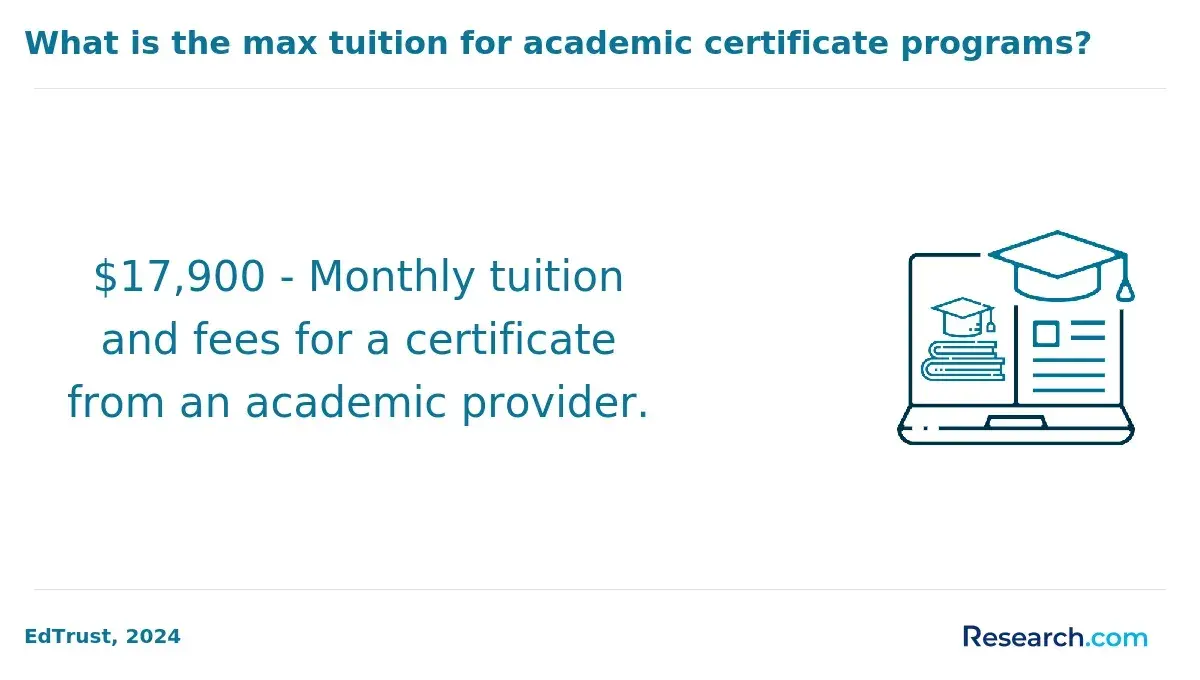
Tuition varies widely from approximately $15,000 to over $50,000 based on institution type and residency, with public universities offering lower in-state rates and private programs often charging premiums in exchange for specialized research opportunities. Additional out-of-pocket expenses like lab kits or proctored exams, which can add several hundred dollars annually, should not be overlooked in total cost planning.
Employers and graduate programs increasingly expect applicants to demonstrate hands-on lab experience and research participation, so selecting a program that integrates virtual or in-person laboratory components substantially affects post-graduate competitiveness. Purely asynchronous lecture-based programs risk leaving students underprepared for practical requirements encountered during interviews or exams.
Working professionals must weigh program length and tuition structure against career trajectory. A healthcare worker pivoting toward research might prioritize accelerated credit accumulation despite higher costs, while cost-sensitive students might choose a longer program with stable in-state tuition. Understanding these tradeoffs shapes financial commitments and professional outcomes.
What medical, research, and science careers can you pursue with this online degree?
Choosing an online bachelor's in biological sciences shapes distinct professional pathways but demands clear planning to navigate workforce realities. Graduates aiming for clinical careers-such as medicine, physician assistant (PA), or physical therapy (PT)-face the necessity of graduate or professional degrees beyond the bachelor's. The foundational biology knowledge supports success in those programs, yet meeting stringent prerequisites and securing relevant clinical experience remain non-negotiable hurdles.
For candidates targeting research roles, opportunities often start in laboratory technician positions or clinical research coordination. Advancement typically requires graduate education focused on technical specialization or leadership as principal investigators. This differs notably from administrative roles in health services management, where combining biological sciences understanding with business acumen opens access to management positions.
According to the U.S. Bureau of Labor Statistics, master's-level health services managers earn a median wage of $121,480 and benefit from a projected 28% job growth rate over the next decade. This employment boost reflects expanding healthcare complexity demanding skilled administrators.
Key considerations for online learners include balancing remote coursework with on-site clinical or laboratory internships and ensuring the program covers necessary prerequisites for graduate study or certification.
- Clinical careers require advanced degrees and rigorous preparatory steps.
- Research pathways often hinge on graduate-level specialization.
- Health services management combines scientific and business skills for high-growth administration roles.
Maintaining awareness of these tradeoffs and workforce expectations supports strategic decision-making for students leveraging a biological sciences degree to achieve targeted, viable career outcomes.
What salary ranges and job outlook can graduates with this degree expect?
Graduates holding a bachelor's degree in biological sciences typically enter entry-level roles such as research assistants, laboratory technicians, or clinical coordinators with starting salaries ranging from $45,000 to $65,000. These positions often require practical laboratory skills and familiarity with digital data tools, which many online programs may not fully provide. As employers prioritize hands-on experience, online graduates must frequently supplement their education through internships or certificates to remain competitive.
The U.S. Bureau of Labor Statistics projects about 6% employment growth through 2032 for life, physical, and social science occupations, driven largely by advances in biotechnology, pharmaceuticals, and healthcare. However, securing higher salary brackets between $70,000 and $100,000 usually demands graduate-level credentials or specialized research expertise, making direct entry to well-compensated roles uncommon immediately after bachelor's completion.
Data from NCES 2023 shows that online biological sciences bachelor's programs enroll over 42% students from underrepresented minorities-higher than the 36% on-campus figure-reflecting broader access but also the potential need for additional mentoring and networking support. Practical career advancement often depends on navigating these institutional supports and overcoming limitations inherent to fully remote studies.
- Starting salaries typically $45,000-$65,000 for entry roles
- Graduate degrees boost earning potential to $70,000-$100,000
- Hands-on experience and certifications crucial for online degree holders
- 6% job growth through 2032 in relevant science fields
- Diversity higher among online program enrollees requiring extra support
How can you choose the best online biological sciences program for your goals and background?
Selecting an online biological sciences program involves critical tradeoffs between curriculum rigor, hands-on experience, and alignment with targeted career outcomes. Programs that thoroughly cover prerequisites like organic chemistry and molecular biology typically yield stronger performance on professional exams (e.g., MCAT, GRE) and provide a foundation for competitive graduate or medical school admission. Without verified local access to clinical or laboratory components, purely remote offerings risk inadequate preparation for essential experiential requirements that most research-driven graduate programs and medical schools mandate.
The healthcare sector projects significant employment growth, with roles such as genetic counselors and medical scientists favoring candidates who possess a robust biological sciences background paired with practical experience. Graduates from programs lacking transparent outcome data or weak employer connections may encounter barriers when entering these specialized fields. For working adults pivoting careers, program flexibility and recognition of prior healthcare credentials are pivotal to balancing education with current obligations.
Faculty expertise should be scrutinized for relevance to intended specialties. For example, those pursuing translational medicine need access to active research mentors in that area. Additionally, students should investigate articulation agreements facilitating streamlined entry into advanced degrees, recognizing that longer programs require delayed workforce entry but may deepen subject mastery.
- Verify accreditation recognized by established bodies to ensure degree credibility.
- Confirm comprehensive prerequisite coverage tailored to specific graduate or professional exam requirements.
- Assess availability of targeted student support services that focus on medical or graduate school preparation.
Other Things You Should Know About Biological Sciences
Online biological sciences programs often face challenges providing hands-on research experiences comparable to on-campus labs. Applicants aiming for competitive graduate or medical schools should prioritize programs that partner with local institutions or offer remote research projects with faculty mentorship. Without substantial research involvement, students risk weaker applications and limited exposure to practical scientific methods.
The limited or simulated lab experience in most online biological sciences programs can leave gaps in practical skills essential for advanced training. Prospective students should assess how programs address this-through intensive summer residencies, local lab internships, or virtual lab modules paired with home kits-and choose options that ensure robust hands-on learning. Practical proficiency impacts not only grad school admissions but also readiness for the demands of medical or research careers.
Flexibility in online programs is crucial for students aiming for medical or graduate school as it allows them to manage studies alongside other commitments. These programs often offer asynchronous courses, enabling students to balance their workload with clinical experience or research opportunities, essential for competitive applications.
Choosing a specialized program with a focus on pre-med, molecular biology, or biochemistry streamlines coursework toward medical or graduate school prerequisites and can enhance subject mastery. However, broader biological sciences degrees offer versatility for alternative science careers if plans shift. For students firmly committed to medical or graduate school, prioritizing specialization reduces redundant coursework and strengthens targeted academic preparation.
References
- What are the best paying jobs for graduates? https://targetjobs.co.uk/careers-advice/career-ideas/what-are-best-paying-jobs-graduates
- Standards for Accreditation - New England Commission Higher Education https://www.neche.org/standards-for-accreditation/
- Medical Science https://www.unthealth.edu/college-of-biomedical-and-translational-sciences/degree-programs/ms-medical-science/ms-in-medical-science.html
- Biological Sciences https://www.ualberta.ca/en/undergraduate-programs/bachelor-of-science-with-major-biological-sciences.html
- Biological Sciences BSc https://www.imperial.ac.uk/study/courses/undergraduate/2027/biological-sciences/
- Are Pre-Med Courses Online a Good Idea? 3 Excellent Reasons to Consider - Prereqcourses https://www.prereqcourses.com/earn-your-pre-med-courses-online/
- Best Medical Research Careers You Can Pursue - American University of Antigua https://www.auamed.org/blog/medical-research-careers/
- The Best Pre-Med Major Isn't Biology. Here's Why | Atlantis https://joinatlantis.com/blog/why-best-premed-major-is-not-biology/
- Career Outlook for College Graduates in 2025 https://www.fastweb.com/student-news/articles/career-outlook-recent-college-graduates
- Best Online Pre-Med Programs: Flexible Pathways to Medical School https://www.scuhs.edu/msms-article/best-online-pre-med-programs-flexible-pathways-to-medical-school/