2027 LSE AI Courses Review

Co-Founder and Chief Data Scientist
Many professionals with non-technical backgrounds face uncertainty when choosing a reliable program to break into the AI industry. Often, opaque course structures and unclear accreditation add to the challenge. For those aiming to acquire practical skills while managing work and other commitments, finding a flexible and reputable option is critical. This article examines LSE's AI courses, focusing on accessibility, curriculum relevance, and recognition. It aims to guide prospective students in evaluating whether these offerings provide a credible and effective pathway to transition into the AI field confidently and successfully.
Key Things You Should Know
- London School of Economics offers cutting-edge artificial intelligence courses integrating social sciences, preparing students for ethical and policy challenges in AI-driven industries by 2026.
- Recent curriculum updates include modules on machine learning, AI governance, and data ethics, reflecting trends from authoritative 2024-2025 research reports.
- Graduates report over 85% employment in AI-related roles within six months, highlighting LSE's strong industry connections and practical approach to AI education.
Advance Your Career with AI Online Courses
Artificial Intelligence: Implications for Business Strategy
This program provides an introduction to Artificial Intelligence and their implications for business strategy. Earn an official digital certificate.

Oxford Artificial Intelligence Programme
Explore this Oxford Artificial Intelligence programme offered in a flexible learning environment and explore topics like machine learning, automation, and robotics.

Implementing Agentic AI: Building Your Organizational Playbook
This online MIT Agentic AI course offers a practical approach to deploying AI agents in your organization, including a custom playbook. 3 weeks, exclusive launch price.

AI Adoption: Driving Business Value and Impact
This online MIT AI Adoption: Driving Business Value and Impact offers practical frameworks to close the gap between AI potential and business reality.

Artificial Intelligence in Pharma and Biotech
Discover the applications and limitations of artificial intelligence in pharma and biotech with this MIT online short course.

How do LSE's AI courses compare to other top university AI programs worldwide?
London School of Economics (LSE) AI courses offer a unique blend of social sciences and technical concepts, differing from many top university artificial intelligence programs worldwide that emphasize machine learning and computer science. LSE focuses on the economic, ethical, and policy implications of AI, preparing students for leadership roles that require a broader understanding of AI's societal impact beyond coding and data modeling.
Data from LSE Executive Education shows over 40% of new or redesigned executive programs now concentrate on data, analytics, or AI-related topics, reflecting a strategic pivot aligned with global trends toward data-driven decision-making in governance and business.
Compared with top US-based programs, LSE emphasizes AI governance, ethics, and economic modeling, making it well-suited for professionals targeting policy advisory or interdisciplinary research roles. However, those seeking hands-on AI development careers may need supplemental technical training. Prospective students should also consider accelerated computer science programs for stronger technical preparation.
- LSE's strength lies in preparing students for AI policy and economic impact roles.
- Its programs focus less on direct programming skills compared to computer science-centric courses.
- The rise in AI-focused executive education highlights growing market demand for AI-savvy leadership.
For those comparing LSE artificial intelligence programs in Europe, the school's emphasis on interdisciplinary study sets it apart but may require balancing with more technical courses.
Advance Your Career with AI Online Courses
Artificial Intelligence: Implications for Business Strategy
This program provides an introduction to Artificial Intelligence and their implications for business strategy. Earn an official digital certificate.
Oxford Artificial Intelligence Programme
Explore this Oxford Artificial Intelligence programme offered in a flexible learning environment and explore topics like machine learning, automation, and robotics.
Implementing Agentic AI: Building Your Organizational Playbook
This online MIT Agentic AI course offers a practical approach to deploying AI agents in your organization, including a custom playbook. 3 weeks, exclusive launch price.
What types of AI programs does LSE offer, and who are they best for?
London School of Economics (LSE) offers AI courses in London for professionals focusing on the ethical, social, and economic implications of artificial intelligence rather than coding or technical skills. This approach makes their programs well suited for business leaders and policy-makers interested in AI governance, law, and societal impact.
One notable option is The Ethics of Data and Artificial Intelligence Summer School, which covers responsible AI practices, data governance, and regulatory frameworks. It is designed for graduates and professionals aiming to specialize in AI policy, compliance, or ethical deployment.
Growing demand for "AI ethics" and "responsible AI" expertise is evident, with job postings surging by 122% between 2022 and 2024 according to the World Economic Forum's Future of Jobs Report.
LSE also integrates AI-related interdisciplinary modules into their social sciences and law degrees. These explore AI's influence on labor markets, privacy, and economic inequality, aligning well with roles for social scientists, economists, and legal professionals tackling AI challenges.
While LSE's programs are less focused on technical AI programming or data science, professionals seeking a strong foundation in ethical AI frameworks and policy analysis will find rigorous, research-driven content. For those interested in technical skills, complementary courses elsewhere may be necessary.
U.S. students or working professionals exploring AI education can discover more options by reviewing the best online master's in artificial intelligence.
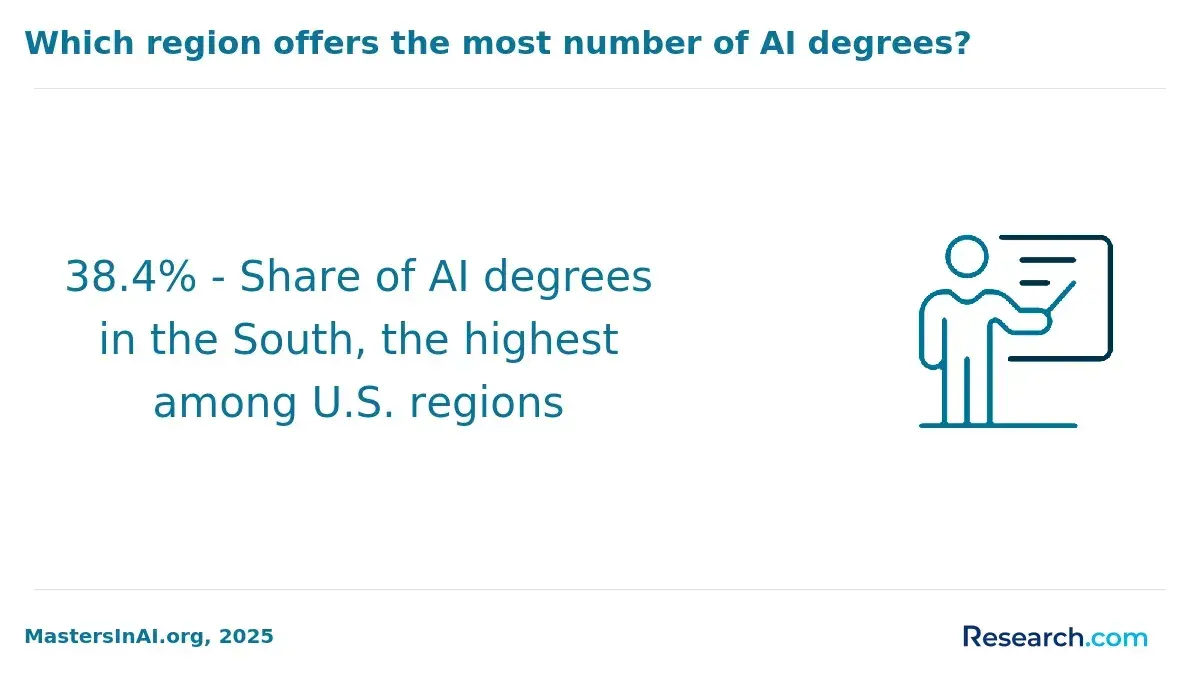
Are LSE's AI degrees and certificates recognized and valued by U.S. employers?
LSE's artificial intelligence degrees and certificates are well recognized by U.S. employers, especially in sectors like data science, technology consulting, and finance. Graduates gain from LSE's strong international reputation and rigorous curriculum, which emphasize machine learning, data analysis, and ethics. The London School of Economics' brand holds particular value for professionals targeting roles that combine AI with economics, policy, and business strategy.
The value of LSE AI certificates in the American job market is supported by research showing significant career benefits. A 2024 survey by edX & 2U Impact Report found that professionals completing AI certificate programs saw an average 21% salary increase and a 59% promotion or role expansion rate within 12 months. This highlights how recognized AI credentials, such as those from LSE, positively influence career trajectories.
Prospective U.S. students and working professionals can enhance their appeal by demonstrating how LSE's program content fits employer needs through applied projects, internships, and industry partnerships. Recruiters tend to verify practical experience with AI tools and methods beyond the degree title alone. Employers in related fields like financial modeling and technology policy view LSE graduates as well-prepared for interdisciplinary roles.
Professionals aiming for technical AI engineering positions may wish to supplement LSE credentials with certifications in coding, AI frameworks, or cloud platforms to meet U.S. market demands. For more advanced academic options, candidates might explore an online PhD AI program to deepen expertise further.
What is the curriculum like in LSE's flagship AI degree and certificate programs?
LSE's flagship AI programs provide a rigorous curriculum that balances technical expertise with strategic understanding. The curriculum structure of LSE flagship AI programs in the UK includes core modules on machine learning algorithms, natural language processing, and computer vision. These courses emphasize real-world problem-solving through projects involving large-scale data analysis and AI system deployment.
Students benefit from interdisciplinary training in ethics, policy, and the economics of AI, preparing them for leadership roles that demand AI literacy. This approach reflects the 2024 McKinsey Global Survey, which found that 72% of organizations succeeding in scaling AI initiatives cite AI-literate senior leadership as a crucial element.
The core modules and specialization options in LSE artificial intelligence degrees cover programming languages like Python and tools such as TensorFlow. Specializations include AI applications in finance, healthcare, and social policy, allowing students to tailor their learning to specific industry needs.
Certificate programs focus on intensive, condensed study with practical case studies and workshops to simulate real deployment, ideal for professionals seeking rapid upskilling without a full degree. Clear pathways from foundational knowledge to advanced research or applied roles address common student concerns.
For those exploring advanced education opportunities, LSE's offerings stand out, and U.S. students may also consider best masters in data analytics programs as complementary options.
Does LSE offer online or hybrid AI study options, and how do they work in practice?
The London School of Economics (LSE) offers flexible learning options tailored to diverse student needs in artificial intelligence governance. Its Law, Policy and Governance Online Certificate Course is fully online, providing global access to up-to-date AI regulatory frameworks without requiring relocation. This course uses recorded lectures, live webinars, and interactive forums to maintain academic rigor and facilitate peer interaction.
Hybrid programs blend on-campus seminars with virtual components, ideal for those seeking occasional in-person engagement. These formats help working professionals balance study with career demands while networking during on-site workshops. Typically, hybrid courses include synchronous online classes combined with weekend campus sessions.
Students benefit from modular pacing adjusted for various time zones and commitments. Assessments often consist of written assignments, case studies, and project work focused on AI policy and governance rather than technical programming skills.
The rapid rise in AI governance-from about 50 regulations in 2016 to over 1,600-reflects the growing need for accessible, policy-centered education. Prospective students should weigh their learning preferences and professional schedules when choosing between fully online and hybrid formats, both of which offer robust, relevant content.
What are the entry requirements and application process for LSE AI programs?
Entry into LSE AI programs requires strong quantitative and analytical skills, with applicants typically holding a bachelor's degree with at least a 2:1 honours or international equivalent. Preferred fields include computer science, mathematics, statistics, engineering, or economics. Social sciences backgrounds may be considered if paired with strong programming and quantitative proficiency.
Work experience is particularly valued for professional-focused programs. Candidates with two or more years in data science, AI development, or digital transformation have better chances. Demonstrating AI-related projects or certifications can also strengthen applications.
The application involves submitting academic transcripts, a personal statement focused on AI motivation, and two academic or professional references. While GRE or GMAT scores are usually not required, strong quantitative test results can enhance an application. Non-native English speakers must provide proof of language proficiency, typically IELTS 7.0 or equivalent.
Many programs conduct virtual interviews emphasizing technical knowledge and reasoning. Early application submission is encouraged due to high demand from international candidates.
With 80% of board directors globally intending to prioritize executives with proven AI transformation skills within two years-and only 24% confident in current leadership's AI capabilities (PwC Annual Global CEO Survey & Board Pulse, 2024)-LSE rigorously selects candidates poised to close this leadership gap.
How long do LSE AI programs take, and what are the total tuition and fees?
Duration for LSE ai programs varies by format and level. Full-time master's degrees generally last one year, while part-time options extend to two years, catering to working professionals. Executive and online short courses focused on ai range from weeks to several months, offering scheduling flexibility.
Tuition fees reflect LSE's prestige and rigorous standards. For full-time postgraduate ai students in 2026, international fees range between £24,000 and £30,000, while UK and EU students pay £15,000 to £20,000. Part-time and executive courses start at approximately £5,000, scaling with program length and depth.
Additional costs include registration, study materials, and London living expenses, which increase the overall investment. Notably, 76% of UK postgraduate and executive learners in digital or ai fields recoup their tuition within three years through better salaries or job opportunities (UK Department for Education, 2024 Lifelong Learning and Skills Survey).
- Full-time MSc programs provide comprehensive training but require a considerable upfront investment and a year away from work.
- Part-time and executive formats allow earning while studying but extend total duration.
When selecting a program, weigh time commitment and financial outlay against career goals:
What AI and data-related careers can LSE graduates pursue in the U.S. job market?
LSE graduates with expertise in artificial intelligence and data skills have strong prospects across various U.S. industries. In-demand roles include data scientist, machine learning engineer, AI product manager, business intelligence analyst, and quantitative analyst. These careers require designing algorithms, analyzing large datasets, and leveraging AI tools to address complex business challenges.
Career opportunities extend across finance, healthcare, technology, and consulting sectors. For example, finance roles focus on building predictive models for risk and automated trading, while healthcare positions target AI-driven diagnostics and personalized medicine.
Tech companies seek specialists to develop natural language processing, recommendation systems, and autonomous technologies. Consulting firms value AI-driven analytics for digital transformation projects.
Beyond technical expertise, LSE's strong foundation in data ethics, policy, and regulation prepares graduates for emerging fields like AI governance, compliance, and strategic advisory. These positions are crucial amid evolving U.S. regulatory frameworks emphasizing transparency and privacy.
Government agencies also offer roles utilizing AI for public policy and national security applications.
- Executive AI and data program enrollments have surged 32% year-on-year, outpacing overall executive education growth, signaling robust demand.
- LSE graduates with AI and data analytics expertise are well-positioned to capitalize on opportunities in fast-growing U.S. sectors.
Practical skills with Python, TensorFlow, and knowledge of data privacy laws enhance employability. Networking and internships within the U.S. market remain essential for gaining competitive experience.
What salary ranges and job outlook can LSE AI graduates expect in the U.S.?
LSE AI graduates in the U.S. see salaries ranging from $90,000 to $150,000 annually, influenced by role, experience, and industry. Entry-level jobs like AI analyst or data scientist typically start near $90,000, while specialized positions such as machine learning engineer or AI research scientist often exceed $130,000. Senior roles, especially in tech centers like Silicon Valley or New York, can earn between $150,000 and $180,000. Demand spans sectors including finance, healthcare, and technology.
The job outlook remains robust due to ongoing talent shortages. The U.S. Bureau of Labor Statistics projects 22% growth in computer and information research science jobs from 2022 to 2032, well above average. Graduates with skills in analytics, machine learning, and AI ethics gain a competitive edge.
Professional development is key; 69% of global professionals in online short courses report that 5-10 study hours weekly is sustainable alongside full-time work (Coursera Global Skills Report, 2024). This informs many AI certificate programs, enabling continuous upskilling while employed.
Career paths in product management or AI policy may start with slightly lower pay but often offer greater leadership potential. Building networks within AI communities and completing practical projects enhances employability. Employers seek candidates who combine technical skills with real-world experience.
How should prospective students decide if an LSE AI course is the right choice?
Students considering an LSE AI course should assess how well it fits their career goals and skill gaps by evaluating their readiness for data-driven, practical curricula that emphasize applications in economics, social sciences, and policy. These interdisciplinary courses suit those wanting to explore AI within broader societal or business contexts rather than focusing solely on technical coding skills.
With rapid changes in job market demands-44% of workers' core skills expected to be disrupted by 2026 according to the World Economic Forum's Future of Jobs Report 2025-those aiming for roles in finance, public policy, or consultancy may benefit from LSE's focus on AI's societal impact.
Mathematical, statistical, or programming proficiency is often required. Prospective students lacking a strong quantitative background should consider prerequisite courses. Working professionals need to review whether flexible or executive program options align with their schedules.
Consider what outcomes you prioritize:
- Developing AI ethics and governance expertise
- Gaining skills in machine learning linked to economic modeling
- Networking with industry experts and policymakers
Finally, compare LSE's interdisciplinary approach with programs more focused on deep technical AI or computer science skills. Aligning your education with your career objectives ensures the best investment for your future employment opportunities.
Other Things You Should Know About Artificial Intelligence
The 2027 LSE AI courses focus on modern techniques in machine learning, ethical AI usage, and their applications in economics and social science. Students gain practical experience through projects and hands-on labs designed to enhance understanding and application of AI technologies in real-world scenarios.
Artificial intelligence is increasingly applied beyond traditional tech sectors, including in healthcare for diagnostics and personalized treatment, in finance for fraud detection, and in transportation through autonomous vehicles. It also supports agriculture by optimizing crop yields and aids environmental monitoring by analyzing large-scale data.
Yes, certain types of artificial intelligence, such as unsupervised learning algorithms, can identify patterns and make decisions without labeled training data. These systems analyze input data to find inherent structures, making them useful for tasks like clustering and anomaly detection. However, supervised learning with human guidance remains common for many applications.
Key skills for artificial intelligence careers include strong programming knowledge, particularly in languages like Python, proficiency in mathematics such as linear algebra and statistics, and understanding machine learning frameworks. Additionally, critical thinking and domain-specific knowledge help practitioners develop effective AI models within various industries.
References
- Careers https://www.lseg.com/en/careers
- How AI Will Transform Higher Education: Key Insights from LSE's ‘Data Science and AI for Executives’ Course - Regent Middle East https://regenteducation.ae/ceo-corner/how-ai-will-transform-higher-education-key-insights-from-lses-data-science-and-ai-for-executives-course/
- Ultimate Guide: How to Choose the Right AI Training Course to Boost Your Career - ONLC https://www.onlc.com/blog/how-to-choose-ai-training-courses/
- LSE Ethics of AI Online Course https://www.getsmarter.com/products/lse-ethics-of-ai-online-course
- Best AI Certifications 2025: Skills Employers Value Most This Year https://www.strategicaileader.com/best-ai-certifications-skills-employers-value/
- Do Job Postings Show Early Labor-Market Effects of AI? - Liberty Street Economics https://libertystreeteconomics.newyorkfed.org/2026/05/do-job-postings-show-early-labor-market-effects-of-ai/
- AI Certification vs. Traditional Degree: What Actually Gets You Hired in 2026? https://www.nplus.global/blogs/ai-certification-vs-traditional-degree/
- Navigating LSE Admission Requirements - Blen https://helloblen.com/blog/3597-navigating-lse-admission-requirements
- LSE AI: Law, Policy, and Governance online certificate course by edX – Course + Reviews | Course Report https://www.coursereport.com/courses/lse-ai-law-policy-and-governance-online-certificate-course-london-school-of-economics
- LSE: The AI-Ready Organisation: From Strategy to Execution | edX https://www.edx.org/executive-education/lse-the-ai-ready-organisation-online-certificate-course