2027 Best Generative AI Courses for Founders and CEOs

Co-Founder and Chief Data Scientist
Founders and CEOs often struggle to integrate generative AI effectively into their business strategies due to a lack of tailored, accessible educational resources. This gap hinders informed decision-making and slows innovation adoption, risking competitive disadvantage. Traditional courses may not fit their schedules or align with their leadership roles, leaving a critical need for flexible, practical learning paths designed specifically for high-level executives. This article reviews top generative AI courses crafted for founders and CEOs, highlighting flexible options that balance accreditation, depth, and applicability, helping leaders confidently leverage AI technologies to drive business growth and stay ahead in evolving markets.
Key Things You Should Know
- Generative AI courses for founders and CEOs focus on practical implementation, helping decision-makers integrate AI technologies to boost innovation and productivity with 65% of companies planning AI adoption by 2026.
- Top programs emphasize ethical AI use and data privacy, addressing rising concerns as 78% of consumers worry about AI-driven data misuse in business decisions.
- Course formats increasingly blend live case studies with asynchronous learning, allowing busy executives to acquire actionable AI skills without extensive time commitment.
Advance Your Career with AI Online Courses
Artificial Intelligence: Implications for Business Strategy
This program provides an introduction to Artificial Intelligence and their implications for business strategy. Earn an official digital certificate.

Oxford Artificial Intelligence Programme
Explore this Oxford Artificial Intelligence programme offered in a flexible learning environment and explore topics like machine learning, automation, and robotics.

Implementing Agentic AI: Building Your Organizational Playbook
This online MIT Agentic AI course offers a practical approach to deploying AI agents in your organization, including a custom playbook. 3 weeks, exclusive launch price.

AI Adoption: Driving Business Value and Impact
This online MIT AI Adoption: Driving Business Value and Impact offers practical frameworks to close the gap between AI potential and business reality.

Artificial Intelligence in Pharma and Biotech
Discover the applications and limitations of artificial intelligence in pharma and biotech with this MIT online short course.

What makes a generative AI course valuable specifically for founders and CEOs?
Generative AI courses tailored for startup founders focus on strategic applications rather than technical details, helping CEOs grasp how AI reshapes business models, drives revenue, and boosts competitive advantage. These programs guide leaders to identify high-impact use cases across customer operations, marketing, sales, software engineering, and R&D, aligning with McKinsey's estimate that generative AI could contribute $2.6-$4.4 trillion annually to the global economy, mainly in these sectors.
CEO-focused artificial intelligence training programs also cover frameworks for evaluating AI investments, managing change, and integrating AI tools into workflows while addressing risks tied to ethics, privacy, and compliance. For example, retail CEOs learn to personalize marketing at scale while safeguarding customer data.
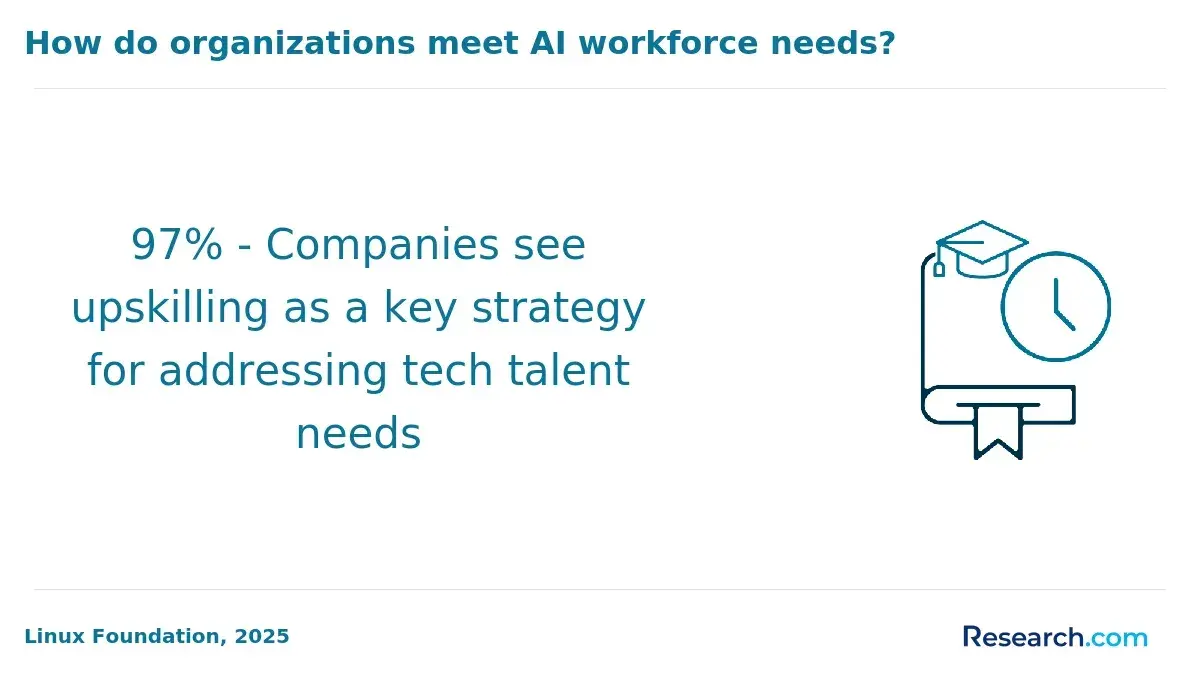
Practical elements such as case studies and AI vendor selection exercises enhance relevance. Founders benefit from modules on fostering AI literacy and cultivating innovation cultures. These courses stress the importance of upskilling talent rather than replacing human capital to adapt to AI's evolving impact on workforce strategies.
Leaders also develop skills to interpret AI outputs and performance metrics to measure ROI and adjust strategies quickly. This agility is essential for ongoing governance and reassessment of AI initiatives as technologies progress. Prospective students can explore career outcomes further by reviewing information on artificial intelligence degree salary.
Advance Your Career with AI Online Courses
Artificial Intelligence: Implications for Business Strategy
This program provides an introduction to Artificial Intelligence and their implications for business strategy. Earn an official digital certificate.
Oxford Artificial Intelligence Programme
Explore this Oxford Artificial Intelligence programme offered in a flexible learning environment and explore topics like machine learning, automation, and robotics.
Implementing Agentic AI: Building Your Organizational Playbook
This online MIT Agentic AI course offers a practical approach to deploying AI agents in your organization, including a custom playbook. 3 weeks, exclusive launch price.
How do generative AI programs for executives differ from standard AI and data science courses?
Generative AI programs designed for executives emphasize strategic understanding and implementation, distinct from standard data science training that focuses mainly on technical skills like algorithm creation and coding. These executive courses highlight how generative AI drives innovation, reshapes product development, and enhances market competitiveness through use cases such as automating customer interactions, personalizing content, and optimizing operational workflows.
Executives gain skills to assess AI readiness, manage cross-functional teams, and align AI investments with business goals. Unlike traditional courses centered on machine learning models and data preprocessing, executive programs cover AI governance, ethics, and regulatory compliance from a leadership perspective, equipping decision-makers to navigate risk and compliance challenges effectively.
The gap between executive AI courses and standard data science training is increasingly urgent as Gartner projects over 80% of enterprises will adopt generative AI applications by 2026, up from less than 5% in recent years. Leaders must understand not only how AI works but how to leverage it for new revenue streams and operational efficiency.
- Focus on AI-driven business strategy and use case evaluation rather than technical model-building.
- Emphasis on leadership skills for managing AI integration and change management.
- Training in AI governance, ethical considerations, and regulatory landscapes.
- Case studies tailored to high-level decision-making and competitive advantage.
Designed for founders and CEOs, these programs provide actionable knowledge for swift and informed AI adoption decisions that technical courses typically do not address.
Prospective students exploring pathways to bolster their AI expertise and engineering credentials might consider a cheap online engineering degree as a complementary option for expanding their skill set.
What types of generative AI courses are best for startup founders and corporate CEOs?
Generative AI courses tailored for startup founders focus on blending technical foundations with executive decision-making frameworks. These programs highlight practical applications like automating workflows, enhancing product innovation, and optimizing customer engagement, equipping leaders to implement AI effectively in their organizations. Executive generative AI training for CEOs often includes modules on AI governance, ethical considerations, and risk management, which are essential since leaders hold accountability for deployment outcomes and regulatory compliance.
Such courses emphasize assessing AI's ROI and scalability through case studies and scenario planning, helping leaders anticipate challenges across diverse environments. Hands-on workshops using tools like large language models and generative design platforms provide practical experience that improves communication with technical teams and informs resource allocation. Additionally, training often covers change management to guide AI adoption within companies.
Given busy executives' schedules, agile learning formats such as part-time or modular courses help maintain depth while allowing flexibility. Certifications that show career and salary advancement add strong incentives. For example, Coursera's learner outcomes survey revealed a 16% median salary increase and a 19% rate of starting a new career within 12 months for those completing AI-focused executive programs.
Prospective students interested in expanding their tech expertise may also explore cybersecurity programs to complement their generative AI knowledge and boost leadership readiness in today's digital landscape.
How should founders and CEOs evaluate the credibility and accreditation of generative AI programs?
Founders and CEOs evaluating generative AI programs should prioritize verified accreditation and demonstrated credibility. Accreditation from recognized bodies such as ABET, AACSB, or relevant industry organizations ensures that courses meet established educational standards. Programs offered by reputable universities or institutions with strong AI research output also indicate solid academic rigor and relevant curriculum quality.
Verification of faculty expertise is essential. Founders should seek programs led by instructors with proven backgrounds in AI research, practical industry experience, or published works specific to generative AI. Credentials like PhDs in computer science or machine learning, leadership roles at AI companies, or contributions to major AI projects boost program credibility.
Program structure plays a vital role in evaluating generative AI program credibility. Comprehensive syllabi combining theoretical foundations with hands-on projects and real-world case studies offer balanced learning. Partnerships with technology companies and access to internships provide valuable industry exposure.
Transparency about outcomes aids assessment. Credible programs supply data on graduate placement, acquired skills, and return on investment. According to PwC's Global CEO Survey, while 70% of CEOs anticipate significant workforce upskilling for generative AI soon, only 28% have implemented scaled programs. This highlights the need to assess whether courses offer scalable, practical upskilling aligned with organizational goals.
Consider peer reviews and third-party rankings from educational platforms or AI bodies. Verified testimonials from leading CEOs or AI specialists provide insights into practical impact. Founders should also examine continuing education options post-completion to support ongoing skill advancement in this evolving field.
Exploring affordable options can help prospective students or professionals seeking AI expertise. For instance, detailed information on computer science degrees can provide additional pathways for building a solid foundation.
What core skills and topics do top generative AI courses for leaders typically cover?
Generative AI courses designed for founders and CEOs focus on equipping leaders with strategic skills to integrate AI effectively into business operations. These programs cover core concepts such as neural networks, natural language processing, and computer vision, emphasizing practical use cases like customer personalization, automated content creation, and predictive analytics. Executives learn to interpret AI outputs responsibly and communicate technical ideas clearly to diverse stakeholders.
Ethics and governance training is critical, addressing risk management, bias mitigation, and compliance challenges. Companies benefit from establishing ethical frameworks for AI deployment to maintain trust and ensure sustainable performance. Leaders also gain insights into managing AI-driven product innovation, overseeing project lifecycles, measuring performance, and fostering cross-team collaboration.
Financial evaluation and strategic planning are essential components, helping executives assess return on investment and navigate data infrastructure needs. Skills like vendor selection and scaling AI initiatives are vital for competitive advantage. Research from MIT Sloan Management Review and BCG highlights that organizations with high AI maturity were 2.5 times more likely to outperform financially than their lagging peers.
Leading programs often include case studies, interactive workshops, and scenario planning. This hands-on approach prepares executives to tackle real-world challenges such as integrating AI with legacy systems and managing workforce transitions effectively.
How do online, hybrid, and in-person generative AI courses compare for busy executives?
Online, hybrid, and in-person generative AI courses each serve busy executives differently. Online programs offer flexibility with self-paced learning through pre-recorded lectures and virtual office hours, ideal for those with irregular schedules. However, these may lack immediate feedback and networking, which are vital for grasping complex AI concepts.
Hybrid courses blend virtual learning with periodic in-person workshops, combining convenience with interactive sessions that foster collaboration and practical strategy development. This format suits executives who can commit to scheduled blocks of time and desire peer interaction. Notably, over 60% of new software startups embed generative AI from day one, highlighting the need for leaders to gain hands-on experience and engage with real-world applications.
In-person courses provide immersive environments with direct access to instructors and peers, facilitating intense skill development and networking. The downside is the higher time commitment and travel demands, often challenging for CEOs with tight calendars.
- Time availability: Online fits irregular schedules; hybrid requires planned engagement.
- Learning preferences: In-person or hybrid benefit those seeking immediate interaction.
- Networking: In-person formats offer deeper connections.
- Skill application urgency: Hybrid or in-person courses often incorporate applied projects for faster integration of generative AI.
Evaluating these factors helps busy founders and executives choose a generative AI course aligned with their strategic goals and operational constraints.
What are typical admissions requirements and time commitments for executive-focused generative AI training?
Executive generative AI training programs prioritize substantial leadership experience over formal academic credentials, commonly requiring 5 to 10 years in managerial or entrepreneurial roles. While a basic understanding of AI concepts and digital tools is advantageous, many programs include foundational prework to prepare participants. Application materials often include resumes, personal statements, or recommendation letters that emphasize candidates' potential to innovate with AI in business contexts.
Time commitments vary according to busy executive schedules. Intensive bootcamps typically demand 10 to 20 hours per week over 4 to 8 weeks, emphasizing practical skills and real-world AI applications. Part-time executive courses usually extend 3 to 6 months with 5 to 8 hours weekly, combining live workshops, asynchronous content, and peer collaboration. Self-paced formats offer flexibility but still require consistent study for meaningful mastery.
Demand for generative AI skills is growing rapidly; LinkedIn's 2024 Future of Work report found a 21-fold increase in jobs requiring such expertise. Moreover, 65% of hiring managers view candidates with AI skills as having a significant advantage, highlighting the competitive edge for executives fluent in this technology.
- Typical admissions require 5-10 years of leadership experience.
- Time commitments range from 5 to 20 hours weekly over 1 to 6 months.
- Prework or basic AI familiarity often enhances readiness.
- Programs combine live and asynchronous formats for flexibility.
- Relevant industry focus maximizes learning effectiveness.
How much do generative AI courses for founders and CEOs cost, and what funding options exist?
The cost of generative AI courses for founders and CEOs in 2026 varies significantly, from free introductory modules to premium executive programs priced between $2,000 and $15,000. The higher-end options are typically offered by established business schools or specialized AI training providers, featuring tailored curricula and mentorship. Mid-tier courses, costing $500 to $2,000, focus on practical AI strategy and leadership skills without deep technical content. Free or low-cost alternatives generally provide foundational knowledge but often lack the business context crucial for top executives.
Funding options include employer sponsorship, professional development budgets, and executive education grants. Many organizations prioritize upskilling their leadership teams in AI, allocating dedicated training funds. Additionally, some platforms provide installment plans or scholarships aimed at founders and emerging CEOs, especially those from underrepresented groups or early-stage startups. Crowdfunding and venture capital-backed education budgets are increasingly common as investors emphasize AI competency.
Data from Accenture's 2024 research emphasizes the strategic risks involved: 63% of executives believe companies failing to scale AI within three years face existential threats, yet only 27% feel their organizations are ready. This gap highlights the urgent need for targeted AI education.
- Expect $2,000-$15,000 for comprehensive executive AI courses.
- Look for scholarships, employer-funded training, or payment plans to mitigate costs.
- Free or low-cost introductory courses serve as useful entry points but rarely cover leadership-specific AI challenges.
How can generative AI education impact a founder's or CEO's career, company strategy, and salary potential?
Generative AI education equips founders and CEOs with essential skills to harness cutting-edge technology for business strategy, operational efficiency, and career growth. Executives knowledgeable in generative AI can pinpoint automation opportunities, optimize workflows, and innovate products or services. According to Goldman Sachs, generative AI could increase global labor productivity by 1.5 percentage points annually over a decade, automating up to 46% of tasks in sectors like finance, technology, and professional services. This highlights the substantial advantage generative AI literacy offers organizations.
Leaders with generative AI expertise can:
- Streamline decision-making through AI-driven market trend and customer data analysis.
- Accelerate product development with AI-generated prototypes, cutting time to market.
- Boost operational efficiency by automating routine tasks and reallocating resources to higher-value activities.
- Drive strategic investment in AI tools that fuel sustainable growth aligned with company goals.
From a career standpoint, AI-competent executives often command higher salaries and secure better funding by scaling tech-driven businesses effectively. Demonstrating generative AI skills via targeted courses can differentiate leaders and open doors to emerging networks and venture capital. Additionally, AI education enables proactive management of regulatory, ethical, and market developments, supporting long-term corporate governance and risk mitigation.
Which industry-recognized certificates or microcredentials in generative AI are most relevant for leaders?
Certificates and microcredentials in generative AI designed for leaders emphasize strategic use, governance, and ethical frameworks rather than technical coding. The Certified AI Leader (CAIL) from the AI Governance Institute highlights AI strategy, risk management, and compliance principles. Similarly, the MIT Sloan Artificial Intelligence: Implications for Business Strategy microcredential guides executives on integrating generative AI into operations and innovation processes. These credentials are practical for CEOs and founders focusing on decision-making.
Programs like Stanford's AI for Business Strategy Certificate and Wharton's AI Fundamentals for Business Leaders include case studies and leadership challenges tailored to AI adoption in enterprises. They help leaders assess AI vendors, lead cross-functional AI efforts, and address risks such as algorithmic bias and data privacy issues.
Deloitte's Board Practices report reveals a notable skills gap: 73% of large-company boards discussed generative AI recently, but only 29% have members with formal AI education. This underscores the urgent need for leaders to obtain certifications validating their expertise and readiness.
Ethical AI and data strategy credentials from the IEEE Center for Responsible AI and the University of Toronto's Ethics of AI and Big Data specialization prepare leaders to ensure responsible AI use aligned with corporate social responsibility.
Other Things You Should Know About Artificial Intelligence
In 2027, top generative AI courses for founders and CEOs include MIT's "AI Strategies for Business Leaders," Stanford's "Leading with AI and Machine Learning," and Coursera's "AI for Business Leaders" by Andrew Ng, providing strategic insights into AI integration.
Artificial intelligence enhances business decision-making by providing data-driven insights, automating routine tasks, and predicting market trends. It enables executives to make faster and more informed decisions by analyzing large data sets that would be impossible to process manually. This can improve efficiency, reduce costs, and identify new opportunities.
Despite its capabilities, artificial intelligence has limitations such as dependence on quality data, lack of contextual understanding, and challenges in handling unpredictable situations. AI models may fail if trained on biased or incomplete data and often struggle with tasks requiring common sense or emotional intelligence. Human oversight remains necessary to manage these limitations effectively.
Artificial intelligence acts as a catalyst for innovation in startups by enabling new products, services, and business models that were previously impractical. It allows startups to optimize processes, customize customer experiences, and explore unexplored markets at a lower cost. AI-powered tools also accelerate research and development cycles, providing a competitive edge.
References
- 12 Best Generative AI Courses of 2026 — Based on Your Profession — Class Central https://www.classcentral.com/report/best-generative-ai-courses/
- Guidance on the Responsible Use of Artificial Intelligence (AI) in Accredited Continuing Education (CE) - ACCME https://accme.org/resource/guidance-on-ai/
- Best AI Certifications for 2025: Future-Proof Your Career in Tech - ONLC https://www.onlc.com/blog/best-ai-certifications-2025/
- The AI Boom In Executive Education: What You Can Study Right Now At The World's Top B-Schools https://poetsandquantsforexecs.com/exec-ed/the-ai-boom-in-executive-education-what-you-can-study-right-now-at-the-worlds-top-b-schools/
- Generative AI and the Future of Work https://www.deloitte.com/us/en/what-we-do/capabilities/applied-artificial-intelligence/articles/generative-ai-and-the-future-of-work.html
- Understanding Gen AI vs Traditional AI in 2025 https://futurense.com/blog/generative-ai-vs-traditional-ai
- Activating AI for business (In French) https://www.hec.edu/en/executive-education/activating-ai-business-french
- The Hidden Costs of GenerativeAI and How to Control Them https://www.truefoundry.com/blog/cost-of-generative-ai
- IMA Publications - Financial News, Reports, Case Studies, & More https://www.imatoday.org/courses/generative-ai-strategies-for-innovation-how-cfos-can-lead-the-charge
- How much does generative AI cost? https://fotc.com/blog/generative-ai-cost/