2027 Best AI Courses for Lending Operations Teams

Co-Founder and Chief Data Scientist
Lending operations teams face increasing demands to enhance decision-making speed and accuracy in a competitive market. Traditional methods struggle to keep pace with growing data complexity and regulatory pressure. Without advanced tools and relevant skills, inefficiencies and errors can escalate costs and delay loan approvals. Upskilling through specialized courses offers a path to integrate artificial intelligence technologies effectively, improving risk assessments and operational workflows.
This article explores the best available AI courses designed to equip lending professionals with practical knowledge and flexible learning options, enabling a seamless transition into the evolving landscape of financial services.
Key Things You Should Know
- AI courses for lending teams focus on automating risk assessment, improving loan approval accuracy by up to 25%, and reducing default rates according to 2025 financial industry reports.
- Programs increasingly emphasize practical skills in machine learning, data ethics, and regulatory compliance, reflecting 2024-2025 fintech trends.
- Enrollment in such courses grew 40% in 2025, driven by demand for AI-literate professionals in U.S. banking and credit sectors.
Advance Your Career with AI Online Courses
Artificial Intelligence: Implications for Business Strategy
This program provides an introduction to Artificial Intelligence and their implications for business strategy. Earn an official digital certificate.

Oxford Artificial Intelligence Programme
Explore this Oxford Artificial Intelligence programme offered in a flexible learning environment and explore topics like machine learning, automation, and robotics.

Implementing Agentic AI: Building Your Organizational Playbook
This online MIT Agentic AI course offers a practical approach to deploying AI agents in your organization, including a custom playbook. 3 weeks, exclusive launch price.

AI Adoption: Driving Business Value and Impact
This online MIT AI Adoption: Driving Business Value and Impact offers practical frameworks to close the gap between AI potential and business reality.

Artificial Intelligence in Pharma and Biotech
Discover the applications and limitations of artificial intelligence in pharma and biotech with this MIT online short course.

What are the best AI courses specifically designed for lending operations professionals?
Lending operations professionals seeking the best AI courses for lending operations professionals should prioritize programs that merge domain-specific insights with practical AI applications. Key subjects include AI-driven credit risk assessment, fraud detection, and process automation. Courses often highlight machine learning techniques, natural language processing for loan document analysis, and AI frameworks customized to lending workflows.
Many top artificial intelligence training for loan processing teams come from university certificates in financial AI and specialized fintech industry programs. Those focused on predictive analytics align well with industry trends, as lenders using AI credit scoring models are projected to reduce non-performing loan ratios by 10-20% in new retail portfolios by 2025, according to Boston Consulting Group.
Quality courses also cover regulatory compliance and ethical AI algorithms, critical for mitigating legal risks and ensuring transparent lending decisions. Hands-on experiences commonly include case studies on automated underwriting, anomaly detection, and integrating AI with loan management systems.
Prospective students should explore programs that provide practical training with AI platforms widely used in financial services. Emphasizing building and validating AI models tailored to credit risk enhances job readiness. Modular course paths focusing on specialized topics like fraud prevention or customer risk profiling offer valuable expertise. For more guidance, individuals may refer to the AI degree resources.
Advance Your Career with AI Online Courses
Artificial Intelligence: Implications for Business Strategy
This program provides an introduction to Artificial Intelligence and their implications for business strategy. Earn an official digital certificate.
Oxford Artificial Intelligence Programme
Explore this Oxford Artificial Intelligence programme offered in a flexible learning environment and explore topics like machine learning, automation, and robotics.
Implementing Agentic AI: Building Your Organizational Playbook
This online MIT Agentic AI course offers a practical approach to deploying AI agents in your organization, including a custom playbook. 3 weeks, exclusive launch price.
How can AI courses improve risk assessment, underwriting, and loan servicing workflows?
AI courses empower lending operations teams to enhance risk assessment by teaching data-driven modeling techniques. Students learn to apply machine learning algorithms that predict borrower default risks with greater accuracy than traditional statistical methods. This improvement leads to faster, more precise credit scoring, reducing manual effort and human error. These ai applications for risk assessment in lending operations are transforming how financial institutions manage risk.
In underwriting and loan servicing automation with AI courses, the emphasis is on automating document analysis using natural language processing. Professionals develop skills to build systems that rapidly extract and evaluate borrower information, speeding up decisions and ensuring consistency. This automation decreases bottlenecks and supports processing large loan volumes without compromising accuracy.
Loan servicing also benefits from AI through automating transaction monitoring and fraud detection. Banks using these AI-driven tools report reductions in card-present fraud losses by up to 70%, while false positives drop by 50% compared to legacy rule-based systems. Training programs teach model deployment, anomaly detection, and increased operational efficiency.
Further, predictive analytics integration enhances portfolio management by forecasting borrower behavior and optimizing collection strategies. Risk managers learn to balance regulatory compliance and customer experience via transparent AI applications. Practical case studies often cover underwriting automation, fraud pattern recognition, and continuous risk monitoring.
For graduates and professionals seeking practical education, courses provide skills in data preprocessing, model validation, and interpreting AI outputs in lending workflows. Those interested in advanced technical education might consider exploring a mechanical engineering online degree to complement their AI expertise.
Which accredited universities and providers offer reputable AI programs for lending teams?
Several accredited universities offering AI programs for lending teams provide specialized training to enhance credit risk assessment and loan underwriting. Carnegie Mellon University's Tepper School of Business features an Online Master of Science in Business Analytics blending data science with lending challenges, ideal for professionals focused on loan decision automation.
Massachusetts Institute of Technology (MIT) delivers the "Machine Learning: From Data to Decisions" professional certificate through MIT Professional Education, emphasizing practical AI uses in finance that help lending teams streamline underwriting and improve accuracy. Similarly, Stanford University's Graduate Certificate in Artificial Intelligence combines core AI principles with real-world applications such as credit decision modeling, supporting teams integrating predictive analytics into lending workflows.
For flexible learning, Coursera partners with the University of Illinois at Urbana-Champaign to offer an "AI in Finance" specialization, covering loan underwriting and risk assessment automation. Professional providers like the American Bankers Association (ABA) focus on compliance and operational effectiveness in their AI and data analytics courses tailored for lenders.
U.S. lenders adopting AI underwriting technology have improved efficiency by shortening loan decision times by 30-50% and increasing approval rates for qualified borrowers by up to 20%, according to the Federal Reserve Bank of Philadelphia.
Those seeking to broaden their expertise can also explore reputable cybersecurity programs that complement AI skills in financial services. Choosing programs from top providers of AI courses for financial lending professionals ensures a practical and data-driven approach to mastering these evolving technologies.
What types of AI learning paths exist for lending staff, analysts, and managers?
AI learning paths tailored for lending staff, analysts, and managers address specific skill sets essential for their roles. Lending staff benefit from AI courses for lending staff career development focusing on AI-powered customer interaction tools like virtual assistants and chatbots. These trainings help streamline loan origination, automate document verification, and improve customer service efficiency, with studies showing up to a 30% reduction in call-center volume and higher customer satisfaction.
Lending operations analysts AI training programs dive deeper into data analytics, machine learning models for credit risk assessment, and predictive analytics. Analysts learn to interpret AI-driven insights to enhance loan portfolio management, fraud detection, and compliance monitoring, ensuring regulatory adherence without raising manual workloads.
Managers engage in strategic AI education paired with operational analytics, covering AI implementation frameworks, change management, and evaluating AI's influence on lending operations. This expertise supports informed decision-making around AI investments and adapting workforces.
Examples include:
- Loan officer courses on AI customer engagement and conversational AI platforms.
- Data science training emphasizing supervised learning and anomaly detection in lending data.
- Executive education on AI governance, ethics, and operational outcomes for credit managers.
For those exploring technology-focused career paths, also consider military friendly online cybersecurity degree programs, which offer valuable skills transferable across sectors including finance and lending.
How do online AI courses for lending compare with on-campus or hybrid options?
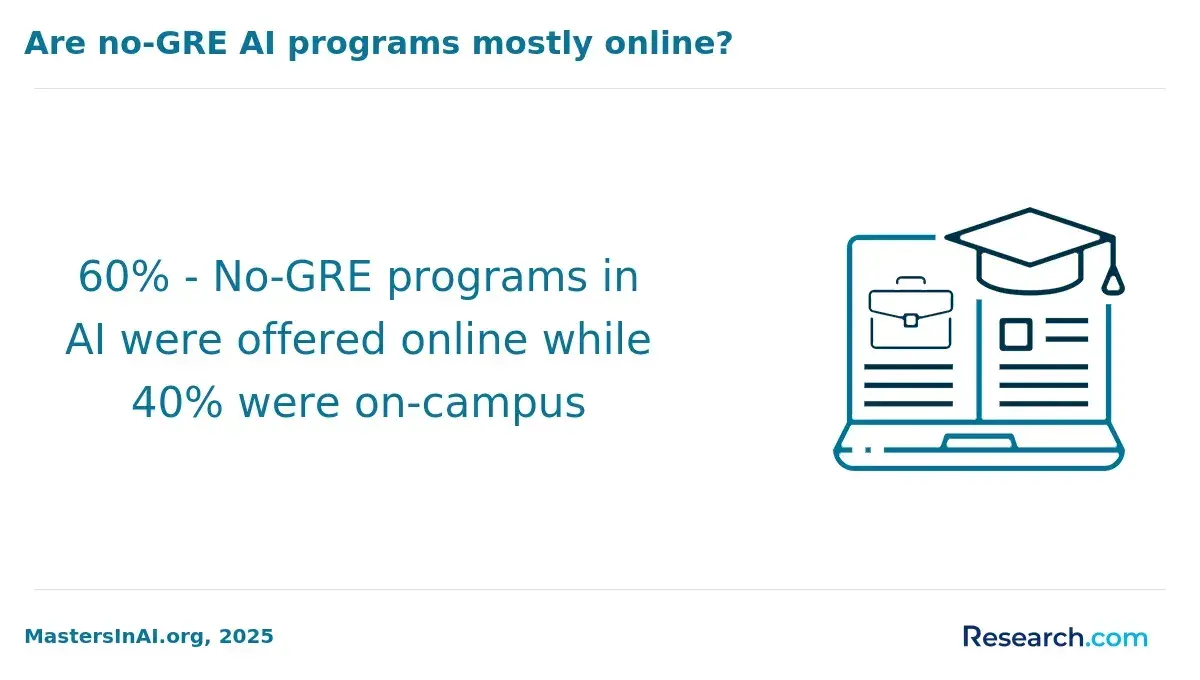
Online AI courses tailored for lending operations teams offer unmatched flexibility and accessibility compared to on-campus or hybrid formats. These programs enable professionals to enhance their skills without disrupting work schedules or relocating, essential in fast-moving lending environments. Many online offerings include real-world case studies and simulations, allowing learners to directly apply AI techniques to credit risk assessment and collections optimization challenges.
On the other hand, on-campus and hybrid courses provide richer direct interaction with instructors and peers, benefiting those who prefer immediate feedback and collaboration. But these formats often require significant time and travel commitment, which can be a barrier for full-time professionals. Hybrid models try to strike a balance but still usually involve some physical presence, making them less convenient than fully online options.
Online AI training for lending teams often integrates the latest industry data. For example, McKinsey & Company reports that AI-optimized collections have improved cure rates on delinquent consumer loans by 15-25% and lowered roll rates by about 10%. This highlights how up-to-date, data-driven online curricula deliver tangible benefits in lending operations. Consider factors like schedule flexibility, desired interaction level, and immediate applicability when choosing a learning mode. Many online courses also offer modular content with ongoing updates that reflect the rapid evolution of lending ai techniques.
What core AI topics and tools should lending operations courses cover in their curriculum?
Lending operations courses in 2026 focus on essential AI topics like supervised and unsupervised learning, natural language processing, and predictive analytics. Mastery of models such as decision trees, neural networks, and ensemble methods is crucial for credit risk evaluation and automating loan approvals. Practical training with tools like Python, TensorFlow, and data visualization libraries helps learners build and interpret models effectively.
Regulatory compliance is emphasized since over 70% of global banks cite model risk management and explainability as key challenges to scaling AI in credit decisioning, a notable increase from about 50% three years ago, according to the IBM Institute for Business Value. Students learn explainability techniques including SHAP and LIME to clarify model decisions for stakeholders and regulators. Courses also cover audit trails and governance frameworks aligned with laws such as the Equal Credit Opportunity Act.
Data quality and preprocessing play a vital role in model performance. Topics include normalization, imputation, and bias mitigation to avoid discriminatory lending outcomes. Fraud detection and anomaly detection algorithms related to transactional data security are also explored.
Integration of AI into loan management systems requires skills in API development and cloud computing platforms like AWS and Azure. Hands-on projects simulating end-to-end lending workflows provide practical experience bridging theory and real-world application.
What are the typical admission requirements, time commitment, and costs for these AI programs?
Admission to AI courses designed for lending operations teams typically requires a bachelor's degree in finance, business, data science, computer science, or related fields. Some programs also welcome candidates with substantial professional experience in lending or banking, especially when combined with foundational skills in programming or statistics. Advanced offerings may ask for prior knowledge in machine learning, Python, or SQL. Applicants usually must submit transcripts, a resume, and sometimes a statement of purpose outlining their interest in AI for lending.
Course durations vary significantly based on format and depth. Certificate programs often last 6 to 12 weeks with an estimated weekly commitment of 5 to 10 hours. More extensive professional development or part-time master's degrees can span several months to two years, requiring 10 to 20 hours per week. Self-paced online courses provide scheduling flexibility but demand strong self-discipline to complete effectively.
What AI-related job roles, promotions, and career pathways can lending professionals pursue?
Lending professionals can advance into various AI-related roles that leverage data science, machine learning, and operational expertise. Key positions include AI credit risk analysts who develop predictive scoring models to evaluate borrower reliability, and fraud detection specialists designing algorithms to identify fraudulent activities. Transitioning to AI product managers involves overseeing AI-driven lending platforms, ensuring models align with business objectives and comply with regulations.
Career progression often moves from business analyst or loan officer roles to technical positions like data engineer or MLOps engineer, who build and maintain AI infrastructure. Data engineers create pipelines processing massive lending datasets, while MLOps engineers deploy and monitor AI models to maintain stable real-time performance.
Financial institutions adopting strong MLOps practices deploy AI models 2-3 times faster and achieve approximately 20% better model stability in credit and fraud use cases, according to Deloitte. This highlights the value of combining data engineering and operational skills in AI model management.
Key skills for career growth include Python, SQL, cloud computing, and model interpretability. Certifications in data engineering and machine learning operations enhance employability. Knowledge of compliance and ethical AI use remains essential for navigating regulatory frameworks effectively.
AI roles frequently intersect with data analytics, compliance, and IT, opening multidisciplinary pathways. Examples include AI governance officers ensuring model transparency and risk managers focused on AI-driven credit decisions. Developing expertise in AI lifecycle management can lead to leadership roles driving lending innovation.
What is the salary impact and job outlook for lending professionals with AI skills?
Lending professionals skilled in artificial intelligence experience notable salary increases and improved career opportunities. Integrating AI into lending automates credit scoring, reduces manual risk assessments, and speeds up loan approvals, making AI-competent workers highly valuable. Industry data shows that lending specialists with AI expertise earn 15% to 25% more than peers without these skills.
Banking executives report significant AI skills gaps within risk and lending teams, driving demand for AI-trained professionals. Financial institutions that implement formal AI training see 1.5 times greater success scaling AI projects, according to EY Global. This underscores how essential AI skills are in modernizing lending operations and digital transformation.
Emerging roles include AI risk analysts, automated loan processors, and data-driven lending strategists, replacing traditional manual underwriting jobs. Lending professionals should focus on expanding skills in:
- AI-based credit risk modeling tools.
- Predictive analytics for loan performance.
- Automation of compliance and regulatory tasks.
Employers prioritize candidates with verified AI competencies, emphasizing ongoing education in this field. Those without AI skills may face challenges competing as the industry evolves rapidly. Mastering AI not only enhances earnings but also ensures career longevity in lending operations.
How should lending leaders evaluate and select AI training for compliance, ethics, and data security?
Lending organizations must implement training programs that integrate compliance, ethics, and data security to reduce regulatory risks and protect borrower information. Effective training addresses evolving regulations, including those from the Consumer Financial Protection Bureau (CFPB) and laws like GLBA and FCRA. These programs should include practical modules on identifying bias in AI models and ensuring transparency in automated decision-making.
Courses should feature case studies on ethical challenges in lending AI systems and provide tools for auditing algorithms to maintain fairness. Interactive exercises on data governance help operational teams manage and safeguard personal financial data properly. A compliance-focused curriculum also emphasizes consequences of non-compliance, such as fines and reputational harm.
Choose training providers aligned with industry standards that offer certifications recognized by financial regulators or professional bodies. Access to continual updates is crucial to keep pace with dynamic AI regulations. Additionally, evaluating a program's ability to measure outcomes aligned with operational goals is important. PwC reports that banks investing in targeted AI reskilling for frontline and risk staff achieved an 8-12% reduction in credit operating costs and a 3-5 percentage point improvement in cost-to-income ratios within two years, highlighting clear ROI potential.
Consider these selection steps:
- Request detailed syllabi demonstrating compliance and ethical considerations.
- Verify instructor expertise in financial regulation and AI ethics.
- Check availability of hands-on labs and scenario-based learning.
- Confirm data privacy training specifically tailored for financial institutions.
Other Things You Should Know About Artificial Intelligence
In 2027, top AI courses for lending operations teams include "AI for Financial Services" by Coursera, "FinTech AI" by edX, "Robust AI in Lending" from LinkedIn Learning, and "Machine Learning for Credit Risk" from Udacity. These courses focus on practical AI applications tailored to the lending industry.
Artificial intelligence systems in lending must comply with strict data privacy regulations like the GDPR and CCPA. AI tools typically anonymize or encrypt sensitive borrower information to prevent unauthorized access. Proper data governance and secure data handling processes are essential to maintain trust and avoid legal penalties.
Yes, AI systems can be designed to quickly adapt to regulatory changes through updates in their algorithms and workflows. Machine learning models can be retrained with new compliance data to ensure ongoing adherence. However, human oversight remains important to interpret complex legal requirements and guide AI adjustments.
Integrating artificial intelligence in lending operations poses challenges such as data quality issues, resistance to change among staff, and the technical complexity of AI tools. Organizations need to invest in training and infrastructure to support smooth integration. Additionally, continuous monitoring is necessary to maintain AI effectiveness over time.
References
- Underwriting Automation with AI Agents: Dynamic Risk Assessment - Accelirate https://www.accelirate.com/underwriting-automation-ai-agents/
- Artificial Intelligence (AI) for Lending in 2026 https://www.scnsoft.com/lending/artificial-intelligence
- Best AI Courses for Finance & Business Professionals (2026) https://www.wallstreetprep.com/knowledge/best-ai-courses-for-finance-business-professionals/
- AI Underwriting: Transforming Risk Assessment in the Digital Age | Balance https://www.getbalance.com/ai-underwriting/
- What is AI compliance and how to implement it https://www.oneadvanced.com/resources/what-is-ai-compliance-and-how-to-implement-it/
- Artificial Intelligence (AI) Ethics, Regulations & Compliance Training Course https://glomacs.com/training-course/artificial-intelligence-ai-ethics-regulations-compliance
- Artificial Intelligence in Finance: 9 AI Courses to Build Your Skills https://xledger.com/blog/artificial-intelligence-in-finance-9-ai-courses-to-build-your-skills/
- AI Underwriting in 2026: How Insurers and Lenders Use AI to Transform Risk Assessment and Pricing | Luca https://ask-luca.com/blogs/ai-underwriting
- 9 essential steps to prepare your lending operations for AI integration - Carrington Labs https://www.carringtonlabs.com/blog/9-essential-steps-to-prepare-your-lending-operations-for-ai-integration
- The Top 10 AI-Powered Learning Platforms in 2026 https://360learning.com/blog/ai-learning-platforms/