2027 Best AI Courses for CFOs With Certificates

Co-Founder and Chief Data Scientist
Chief financial officers face increasing pressure to integrate artificial intelligence into their workflows without formal training in the field. This knowledge gap can hinder strategic decision-making and slow digital transformation efforts. CFOs must quickly gain relevant technical skills and certification to collaborate effectively with data scientists and tech teams. Navigating numerous course options with varying credibility adds another layer of complexity. This article evaluates the best AI courses designed specifically for CFOs, highlighting programs that offer practical certification and flexible learning formats. It aims to guide finance leaders toward the most effective educational investments for advancing their artificial intelligence competence.
Key Things You Should Know
- AI courses for CFOs in 2026 emphasize practical financial modeling and strategic decision-making using AI, reflecting a 40% growth in demand for AI-savvy finance professionals since 2024.
- Certified programs from accredited institutions offer specialized skills in AI-driven risk management, enhancing CFOs' ability to leverage predictive analytics for better forecasting and compliance.
- Integration of AI ethics and data privacy in course curricula ensures CFOs remain compliant with evolving US regulations while maximizing AI's value in financial leadership roles.
Advance Your Career with AI Online Courses
Artificial Intelligence: Implications for Business Strategy
This program provides an introduction to Artificial Intelligence and their implications for business strategy. Earn an official digital certificate.

Oxford Artificial Intelligence Programme
Explore this Oxford Artificial Intelligence programme offered in a flexible learning environment and explore topics like machine learning, automation, and robotics.

Implementing Agentic AI: Building Your Organizational Playbook
This online MIT Agentic AI course offers a practical approach to deploying AI agents in your organization, including a custom playbook. 3 weeks, exclusive launch price.

AI Adoption: Driving Business Value and Impact
This online MIT AI Adoption: Driving Business Value and Impact offers practical frameworks to close the gap between AI potential and business reality.

Artificial Intelligence in Pharma and Biotech
Discover the applications and limitations of artificial intelligence in pharma and biotech with this MIT online short course.

What are the best AI courses for CFOs with certificates?
The best certified courses in artificial intelligence for CFOs emphasize practical skills like AI-driven financial modeling, data analytics, and automating risk management. Executive programs from leading business schools and flexible options from online platforms offer finance-focused AI curricula that cater to working professionals. For instance, the Wharton School's AI for Business Strategy certificate integrates case studies demonstrating AI's use in budgeting and forecasting, directly applicable to CFO roles.
Top AI training programs with certificates for CFO professionals also include MIT's Artificial Intelligence: Implications for Business Strategy, which covers AI's impact on finance functions with recognized certification. These courses focus on deploying AI tools that improve decision-making efficiency, a key capability as 76% of CFOs anticipate AI and advanced analytics will transform finance organizations in the near future (Deloitte).
Online platforms such as Coursera and edX provide targeted certificates like "AI for Finance" from the University of Michigan, which cover algorithmic trading and fraud detection. These options allow CFOs to advance their expertise without committing to full-time study.
Effective AI training addresses CFO-specific challenges, including integrating AI with ERP systems and ensuring compliance with regulatory standards. Modules covering ethical AI use and data privacy strengthen CFOs' leadership in technology governance.
For those pursuing AI mastery in finance, combining core AI knowledge with finance applications builds credibility and supports strategic digital transformation initiatives. Prospective students and professionals can explore the data science major ranking to identify affordable programs that align with these goals.
Advance Your Career with AI Online Courses
Artificial Intelligence: Implications for Business Strategy
This program provides an introduction to Artificial Intelligence and their implications for business strategy. Earn an official digital certificate.
Oxford Artificial Intelligence Programme
Explore this Oxford Artificial Intelligence programme offered in a flexible learning environment and explore topics like machine learning, automation, and robotics.
Implementing Agentic AI: Building Your Organizational Playbook
This online MIT Agentic AI course offers a practical approach to deploying AI agents in your organization, including a custom playbook. 3 weeks, exclusive launch price.
What AI skills do CFOs need for finance leadership?
CFOs must develop specific AI skills for finance leadership roles to lead finance functions effectively. Core competencies include understanding machine learning models that support predictive analytics, which enable accurate forecasting of revenue and risks. Familiarity with natural language processing (NLP) tools helps automate financial reporting and extract insights from unstructured data such as contracts or market news. Equally important is proficiency in data governance and ethical AI use to ensure compliance and risk mitigation when deploying AI systems.
Financial decision-making with artificial intelligence increasingly relies on AI-driven decision support systems. CFOs need technical knowledge and critical interpretation skills to integrate algorithmic recommendations into strategic planning. They should also oversee AI project management to align technology capabilities with business objectives while managing vendor relationships.
Practical experience with AI software platforms like Python for finance or AI-enhanced ERP tools empowers CFOs to collaborate effectively with data science teams. Understanding AI's limitations is crucial; a 2024 Gartner survey reported 61% of AI initiatives in finance failed due to insufficient skills and training.
- Interpreting predictive analytics for cash flow and risk management
- Utilizing automation in compliance and audit processes
- Managing AI ethics, bias, and data privacy concerns
- Communicating AI insights clearly to stakeholders
- Implementing continuous learning to stay current with evolving AI tools
Developing these skills positions CFOs as strategic leaders in AI-driven finance transformation. Those interested in advancing their expertise can explore affordable options, such as an online artificial intelligence degree.
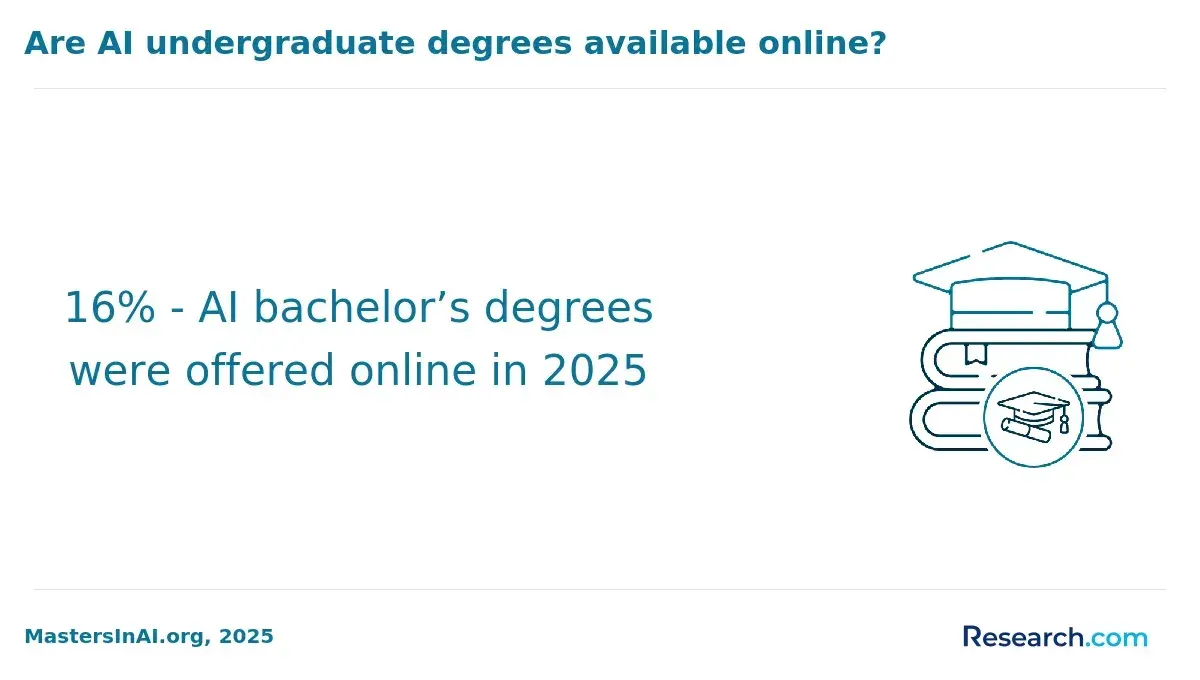
Which certificate formats work best for CFOs, online or in person?
For CFOs, the best online certificate formats offer flexibility and accessibility that in-person certificate programs for CFOs in artificial intelligence often cannot match. Self-paced online programs allow busy financial executives to balance learning with demanding schedules without needing to travel or pause work commitments. Many top-tier AI courses aimed at CFOs combine asynchronous modules with live virtual sessions, offering direct interaction with instructors alongside convenient access.
In contrast, in-person options may provide stronger networking opportunities through face-to-face engagement, which can be valuable for relationship-building in AI initiatives. However, these programs typically require longer time commitments away from the office and incur higher expenses related to travel and lodging, which can be significant obstacles for CFOs with tight schedules.
Data from MIT Sloan's 2024 Executive Education learner outcomes report highlights that 81% of senior leaders completing AI strategy programs led new AI initiatives within a year. This emphasizes that outcome-driven online programs with practical content can be equally or more effective for CFOs seeking impactful knowledge without logistical challenges.
Online certificates featuring real-world case studies, strategic frameworks, and interactive AI simulations support CFOs in quickly applying new concepts to leadership roles. Many CFOs focused on specialized competency development, such as AI strategy formulation or ethical implementation, find these online options naturally aligned with their professional goals.
For those exploring broader options in technology education, a video game development degree may also provide insights into innovative digital learning methods.
What topics do AI courses for CFOs usually cover?
AI courses for CFOs cover a variety of topics focused on integrating AI tools into financial planning, analysis, and decision-making. Key areas include machine learning techniques for CFO decision making, such as forecasting and predictive analytics to improve budgeting accuracy, alongside process automation for routine finance tasks like accounts reconciliation. Participants gain practical skills in data interpretation and model evaluation to oversee AI-driven financial systems effectively.
Natural language processing (NLP) is another critical focus, automating financial reporting and extracting insights from unstructured data like earnings call transcripts or market news. These courses often include risk management applications, emphasizing fraud detection and anomaly identification within financial datasets.
CFOs are also trained in ethical AI implementation, focusing on governance frameworks and regulatory compliance. This prepares finance leaders to manage AI adoption responsibly, balancing innovation with accuracy and transparency.
Hands-on training typically involves working with real-world financial datasets to experience AI's impact on workflow efficiency directly. For instance, over 70% of participants in Wall Street Prep's Columbia Business School-affiliated AI in Business & Finance Certificate survey reported measurable cycle-time reductions in budgeting and forecasting processes within six months.
Course options may also cover industry-specific AI applications and advanced modules on AI strategy formulation. CFOs learn to integrate AI outputs with existing financial systems seamlessly to enhance business intelligence and decision-making.
Prospective students interested in combining AI knowledge with finance might also explore related fields through programs such as a computer science bachelor degree online, broadening their technical expertise for evolving financial technologies.
What admission requirements do AI certificate programs for CFOs have?
Admission to AI certificate programs designed for CFOs typically requires a bachelor's degree in finance, business administration, economics, or related fields, along with relevant professional experience. Many programs seek candidates with several years in financial leadership to ensure they can effectively apply AI within corporate finance.
Mathematical skills, particularly in statistics and data analysis, are commonly necessary. Evidence of these skills may be requested through transcripts or prerequisite courses. Some programs require basic knowledge of programming languages like Python or R but often provide introductory modules to support those without technical backgrounds.
Standardized tests such as the GRE or GMAT are rarely mandatory but may be requested by some university-affiliated providers. Additional application components often include a statement of purpose or professional recommendations to assess career motivation and alignment.
Admission committees favor candidates ready to leverage AI tools for improving financial forecasting, risk assessment, and decision-making. For instance, graduates from Cornell's eCornell AI in Finance certificate program have seen an average 14% boost in forecast accuracy within a year, highlighting the value of relevant finance expertise combined with AI knowledge.
Prospective students should review program-specific prerequisites carefully and consider bridging courses to address any gaps in technical or domain knowledge.
How long do AI certificate programs for CFOs take to finish?
AI certificate programs designed for CFOs vary from 6 weeks to 6 months, depending on course intensity, provider, and delivery format. Leading programs such as those by the Corporate Finance Institute (CFI), the Institute of Management Accountants (IMA), and major tech vendors offer flexible pacing to accommodate busy finance professionals. Shorter certificates usually include 20 to 40 hours of asynchronous content, allowing part-time study alongside work. More extensive certifications can exceed 150 hours, featuring practical projects and finance-focused case studies.
Choosing the right program length depends on learning objectives. For foundational AI skills and quick upskilling, a 1-3 month certificate like CFI's AI for Finance Specialization is effective. For advanced mastery involving hands-on exercises or vendor-specific tools, 4-6 month courses are preferred. Results from CFI's 2024 learner survey show 63% of graduates use AI daily in finance workflows within three months post-completion, up from 18% pre-enrollment-demonstrating these programs' practical impact.
CFOs should also seek programs offering modular content or micro-credentials for better schedule integration and flexibility. Employer-supported cohort enrollments can enhance peer learning while balancing duration. Evaluating course intensity, content relevance, and available time is essential to ensure meaningful skill application and timely certification completion.
How much do AI certificates for CFOs cost?
AI certificates for CFOs vary widely in cost, typically ranging from under $500 to over $5,000. Entry-level programs, often offered by universities or platforms like Coursera and edX, generally charge between $300 and $1,200. These courses cover foundational topics such as data analytics, machine learning applications in finance, and ethical AI use.
More advanced certificates from business schools or specialized AI institutes can cost $2,000 to $5,000 or more. These programs focus on AI strategy, automation in financial reporting, and risk modeling, providing CFOs with tools to apply AI directly to financial decision-making.
Executive education programs sometimes include AI credentials within broader data science or digital transformation curricula, which can increase overall expenses but add valuable context. Additional costs may include study materials, software licenses, or optional workshops, especially for working professionals.
Choosing the right certificate depends on career goals:
- Shorter, affordable courses are ideal for quick upskilling and may offer digital badges.
- Premium programs suit those aiming to lead AI integration with practical implementation projects.
LinkedIn's 2024 Workplace Learning Report highlights that professionals with AI certificates receive 29% more recruiter InMails within six months, underscoring the career benefits of certification.
Which certifications matter most for CFOs studying AI?
CFOs focusing on artificial intelligence certifications should seek programs that blend technical skills with business strategy. Leading certifications, such as the Certified AI Practitioner (CAIP), emphasize both machine learning applications and financial data analytics, which are crucial for managing AI-driven finance functions effectively.
Programs like the MIT Sloan Artificial Intelligence: Implications for Business Strategy offer strategic insights that help CFOs align AI initiatives with corporate goals, highlighting decision-making over coding skills. Certifications covering ethical AI usage, regulatory compliance, and data security are also vital, reflecting CFOs' roles in governance and risk management. For example, the AI Governance and Ethics Certificate equips professionals to handle AI-related risks.
Considering time constraints, CFOs benefit from modular and flexible courses that deliver depth without overwhelming schedules. PwC's 2024 Global Workforce Hopes and Fears Survey shows that many employees invest significant weekly hours in AI learning and expect employer-supported training.
Key qualities for the best AI certifications for CFOs include:
- Integrating AI technology with financial strategy
- Addressing governance, compliance, and ethical risks
- Providing flexible, time-efficient learning formats
- Focusing on interpreting AI insights for leadership decisions
What jobs use AI skills after CFO certificate training?
Jobs utilizing AI skills after completing CFO certificate training encompass a wide range of strategic and operational roles both within finance and beyond. CFOs with AI expertise often progress to positions like AI finance strategist, where they build models that enhance budgeting, forecasting, and risk management using machine learning algorithms. They may also serve as AI-driven financial analysts, automating data analysis and spotting investment patterns more efficiently than manual approaches.
Finance transformation leaders leverage AI to lead enterprise-wide digital upgrades, improving decision-making accuracy and operational efficiency. Additionally, CFOs with AI knowledge frequently take on roles as AI governance and compliance officers, ensuring AI tools comply with regulatory standards and ethical frameworks-a critical responsibility given the scrutiny around AI use in finance.
Other roles include AI project managers in finance technology, who act as liaisons between technical teams and executives. Financial data scientists in corporate finance teams apply AI techniques to derive actionable insights from complex datasets, requiring a blend of financial expertise and technical AI skills.
According to McKinsey's 2024 State of AI in the Enterprise report, 44% of companies fail to scale AI projects beyond pilots due to a "lack of in-house AI skills." This highlights the increasing demand for CFOs and finance professionals well-versed in AI to lead successful implementations. CFO certificate courses offering practical AI training prepare professionals to meet this demand and address common challenges such as project misalignment and skill shortages.
How do you choose a reputable AI certificate program for CFOs?
Evaluating an AI certificate program for CFOs involves focusing on criteria specific to finance leadership. Prioritize programs tailored to finance functions such as financial forecasting, risk management, and audit automation, ensuring content addresses challenges unique to corporate finance rather than broad AI topics.
Accreditation from recognized business schools or finance industry bodies signals quality and employer recognition. Confirm that the program is endorsed by reputable institutions to guarantee rigorous curricula.
Practical experience is essential. Look for programs with case studies, simulations, and projects that apply AI tools to real financial data and scenarios. Completion certificates should reflect this hands-on learning approach.
Faculty expertise combining finance and data science or AI deepens the learning experience. Investigate instructors' published research and consulting credentials relevant to finance-related AI applications.
Ongoing community support post-certification is valuable. According to KPMG's Global CEO Outlook, 70% of CEOs emphasize continuous AI upskilling through peer networks rather than one-off courses. Programs offering active alumni groups or forums help CFOs stay current with evolving AI tools.
Flexibility remains critical; self-paced or hybrid formats allow CFOs to balance leadership demands and learning schedules effectively.
Other Things You Should Know About Artificial Intelligence
Artificial Intelligence is reshaping CFO responsibilities by automating routine data processing and enhancing predictive financial analytics. This allows CFOs to focus more on strategic decision-making and risk management. AI tools help identify patterns and anomalies in financial data, improving accuracy and operational efficiency.
In 2027, CFOs looking to enhance their AI skills should consider courses such as "MIT Sloan's Artificial Intelligence: Implications for Business Strategy" and "Stanford’s Artificial Intelligence: Principles and Techniques." Both courses offer certificates and cover key AI strategies relevant to financial leaders.
Yes, AI courses provide CFOs with critical skills that align with evolving business technologies, increasing their value in the job market. Mastery of AI concepts helps CFOs lead digital transformation initiatives and make data-informed decisions. This often results in expanded leadership roles and higher earning potential.
Key challenges include data quality issues, integration complexity with existing systems, and the need for interdisciplinary collaboration. CFOs must also address ethical considerations and regulatory compliance when deploying AI. Overcoming these obstacles requires both technical understanding and change management skills.
References
- The Modern CFO: 6 In-Demand Skills in the Era of AI | Paro - Professional Business Finance and Accounting Solutions https://paro.ai/blog/modern-cfo/
- 16 Artificial Intelligence Career Paths https://www.calmu.edu/news/artificial-intelligence-career-paths
- The Future of Corporate Finance Leadership: Skills for Controllers and CFOs - Controllers Council https://controllerscouncil.org/the-future-of-corporate-finance-leadership-skills-for-controllers-and-cfos/
- Finance | UCLA Extension https://www.uclaextension.edu/accounting-finance/finance/certificate/finance
- New Datarails Research: One in Three Finance Jobs Now Requires AI Skills, Up from One in Four Just a Year Ago https://www.prnewswire.com/news-releases/new-datarails-research-one-in-three-finance-jobs-now-requires-ai-skills-up-from-one-in-four-just-a-year-ago-302723202.html
- Artificial Intelligence in Finance: 9 AI Courses to Build Your Skills https://xledger.com/blog/artificial-intelligence-in-finance-9-ai-courses-to-build-your-skills/
- Essential AI Training Curriculum for Finance Teams: A CFO's 90-Day Guide https://everworker.ai/blog/ai_training_curriculum_for_finance_teams_cfo_guide
- Insight https://www.css-tec.com/top-7-in-demand-ai-jobs-transforming-finance-how-other-industries-are-adapting/
- CFO Courses & Training - The CFO Show Podcast https://thecfoshowpodcast.com/blog/best-cfo-training-courses
- CFO Training Programs: A Structured Guide for 2026 | CLFI https://clfi.co.uk/career/cfo-training-programs-uk-online-guide/