2027 Best Agentic AI Courses for Document Processing Teams

Co-Founder and Chief Data Scientist
Document processing teams often struggle to keep pace with rapidly evolving technologies while managing large volumes of complex data. Manual workflows lead to errors, increased costs, and slowed project timelines. Integrating agentic AI can automate key tasks, improve accuracy, and enhance team productivity, but team members need effective training to leverage these tools fully.
Identifying the best agentic AI courses tailored for document processing roles becomes critical for organizations aiming to stay competitive. This article examines top agentic AI courses designed to equip document processing professionals with practical skills to successfully implement and manage AI-powered solutions.
Key Things You Should Know
- Agentic AI courses for document processing emphasize practical skills in automating data extraction, improving accuracy by over 40% compared to traditional methods.
- By 2025, the demand for AI-literate document processing professionals is expected to grow 35%, driven by increased adoption across finance, healthcare, and legal sectors.
- Leading courses integrate hands-on projects using the latest NLP and computer vision technologies, aligning with industry needs for AI-driven document automation.
Advance Your Career with AI Online Courses
Artificial Intelligence: Implications for Business Strategy
This program provides an introduction to Artificial Intelligence and their implications for business strategy. Earn an official digital certificate.

Oxford Artificial Intelligence Programme
Explore this Oxford Artificial Intelligence programme offered in a flexible learning environment and explore topics like machine learning, automation, and robotics.

Implementing Agentic AI: Building Your Organizational Playbook
This online MIT Agentic AI course offers a practical approach to deploying AI agents in your organization, including a custom playbook. 3 weeks, exclusive launch price.

AI Adoption: Driving Business Value and Impact
This online MIT AI Adoption: Driving Business Value and Impact offers practical frameworks to close the gap between AI potential and business reality.

Artificial Intelligence in Pharma and Biotech
Discover the applications and limitations of artificial intelligence in pharma and biotech with this MIT online short course.

What is agentic AI for document processing, and why are specialized courses valuable?
Agentic AI applications for document processing teams focus on autonomous systems capable of interpreting, understanding, and acting on unstructured documents like contracts, invoices, and PDFs without continuous human oversight. These systems use natural language processing, machine learning, and decision-making algorithms to automate tasks such as data extraction, classification, and validation.
Specialized agentic AI training courses for document automation are essential for professionals aiming to develop and manage these advanced tools. These courses cover multiple AI subfields, including computer vision and cognitive automation, and address real-world challenges like noisy or incomplete data through error detection and correction techniques.
With an expected 65% of enterprise data being unstructured by 2025, demand for advanced document AI is rapidly increasing. Skilled professionals in this field help improve accuracy, reduce manual workloads, and speed up decision-making processes in sectors like finance and healthcare, where compliance with data privacy regulations is critical.
Prospective learners should look for programs offering hands-on projects using real document datasets, exposure to popular AI frameworks, and training in monitoring autonomous agents to ensure reliability and scalability in production. Those pursuing a degree in AI can significantly enhance their career prospects by specializing in these areas.
Advance Your Career with AI Online Courses
Artificial Intelligence: Implications for Business Strategy
This program provides an introduction to Artificial Intelligence and their implications for business strategy. Earn an official digital certificate.
Oxford Artificial Intelligence Programme
Explore this Oxford Artificial Intelligence programme offered in a flexible learning environment and explore topics like machine learning, automation, and robotics.
Implementing Agentic AI: Building Your Organizational Playbook
This online MIT Agentic AI course offers a practical approach to deploying AI agents in your organization, including a custom playbook. 3 weeks, exclusive launch price.
What skills and roles do agentic AI document processing courses prepare professionals for?
Agentic AI document processing professional skills focus on automating and optimizing how unstructured data-such as contracts, invoices, and customer communications-is transformed into actionable digital information. These programs emphasize mastery of intelligent document processing (IDP) systems, natural language processing (NLP), machine learning integration, and workflow orchestration. Graduates develop analytical and technical expertise that enables them to build AI-driven solutions, reducing manual data entry errors by up to 70% and cutting document processing times by half.
Roles and expertise developed by agentic AI courses include AI system developers, data scientists specializing in document analytics, and business analysts enhancing automated workflows. Professionals also gain skills in designing document classification algorithms, validating model accuracy, ensuring regulatory compliance, and managing human-in-the-loop quality controls.
The intelligent document processing market is projected to grow from $1.9 billion to more than $8 billion by 2030, reflecting an annual growth rate around 25%. This expansion highlights strong ROI potential and increasing demand for professionals capable of driving digital transformation within finance, healthcare, legal, and government sectors.
These courses also cover scaling AI workflows and integrating them with enterprise resource planning systems, addressing complex real-world challenges faced by document processing teams. For professionals seeking broader technical credentials, pairing agentic AI training with a mechanical engineer degree can offer diverse career pathways in advanced technology fields.
How do leading agentic AI courses for document processing teams differ and compare?
Leading agentic AI document processing course comparisons reveal significant variation in curriculum focus, technical depth, and practical application. Some programs center on foundational machine learning and natural language processing (NLP) techniques tailored for automating text extraction and classification tasks. Others emphasize integration with enterprise document management systems to support workflow automation and scalable deployment. For instance, courses focused on NLP model fine-tuning train students to optimize pre-built transformer models for different document types, while systems-oriented programs cover end-to-end solutions like data ingestion, error handling, and human-in-the-loop feedback.
Hands-on experience is another key differentiator. Some courses offer real-world projects involving datasets such as invoices, contracts, or medical records, enabling learners to develop and test extraction pipelines. Others lean more heavily on theoretical instruction and case studies, which may not suit professionals seeking immediate job-ready skills. Advanced programs introduce agentic automation frameworks, where software autonomously decides the next processing step or requests clarification, closely mimicking human document analysts. This approach supports rapid adaptation to evolving document formats and exceptions.
Pricing and course length vary widely, influencing accessibility for working professionals. Short bootcamps typically cost less but provide limited depth, whereas multi-month certifications deliver comprehensive skills at a higher price point. Given that 73% of organizations worldwide used or piloted intelligent document processing by 2024, up from 52% in 2022 according to Deloitte, selecting a course aligned with current industry demands enhances career relevance.
When choosing from leading agentic AI training programs for document teams, prospective students should align options with their team's needs-whether prioritizing model development, system integration, or autonomous automation. Candidates are encouraged to pursue courses that validate their practical expertise through project portfolios or recognized certifications. For those considering related fields, exploring a cybersecurity online degree may offer complementary career opportunities.
What degree paths, certificates, or bootcamps support careers in AI document processing?
Degree programs in AI for document management often include computer science, data science, and information systems. These fields provide essential skills in machine learning, natural language processing, and automation, which are crucial for intelligent document workflows. Within these degree paths, specialized courses may cover optical character recognition (OCR), text analytics, and robotic process automation (RPA), directly applicable to AI document processing certification programs.
Professional certificates targeting AI document processing roles commonly emphasize applied machine learning and automation technologies. Certificates in AI programming, document AI tools, or data engineering from reputable providers help build practical expertise. For example, a certificate focusing on robotic process automation combined with NLP can improve job prospects significantly.
Bootcamps offer intensive, hands-on training designed to quickly bridge skill gaps. Many include modules dedicated to AI-powered document processing, such as data ingestion, annotation, and workflow automation. These short-term programs suit working professionals seeking rapid upskilling and typically feature project-driven curricula that reflect real-world challenges.
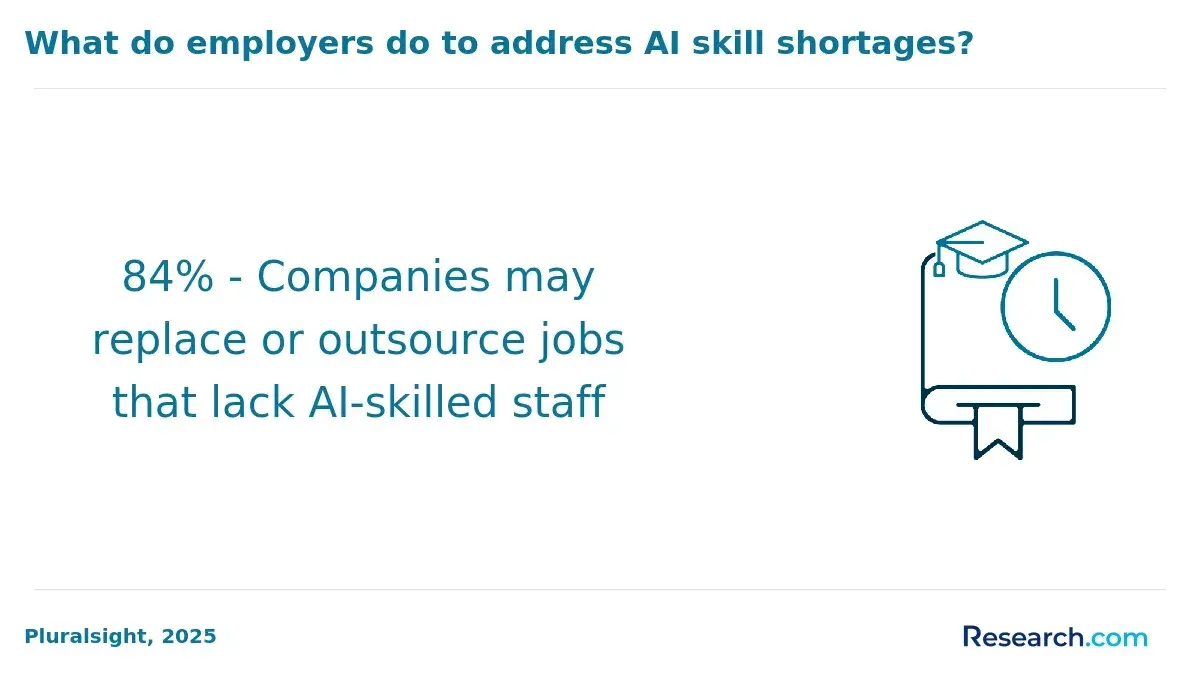
A 2024 workforce study found 76% of organizations report moderate-to-severe skills gaps in AI and automation roles, especially in applied areas like document workflow automation (World Economic Forum - Future of Jobs). Prospective learners should assess programs for hands-on tool exposure, industry ties, and alignment with AI-driven document automation standards. Combining degrees with certificates or bootcamps can increase career readiness. For insights on how to advance in the field, consider exploring how to become an AI trainer with no experience.
How should teams evaluate online vs. campus-based agentic AI programs for document work?
Teams deciding between online and campus-based agentic AI programs for document processing should focus on practical results and career alignment. Online programs provide flexibility and often quicker completion, which suits working professionals or teams with busy schedules. They tend to offer access to a wider range of instructors and courses emphasizing current AI tools and document automation frameworks.
In contrast, campus-based programs deliver immersive, hands-on experiences with direct faculty interaction, labs, and peer collaboration-crucial for mastering advanced agentic AI techniques in document workflows. Key considerations include:
- Curriculum relevance: Ensure coverage of advanced topics like natural language processing, automated document classification, and agentic workflow integration.
- Project and lab access: Campus programs often provide richer onsite labs and collaboration; online options must offer virtual labs with real-world datasets.
- Networking potential: In-person environments enable organic faculty and industry connections, supporting job placements and internships.
- Cost-effectiveness: Online courses reduce relocation and incidental expenses while delivering comparable content.
With median total compensation for AI and machine learning engineers in the U.S. around $300,000 (Levels.fyi), investing in quality agentic AI education is essential. Teams should evaluate which study mode best supports skill acquisition and fits budget and operational needs to capitalize on lucrative career opportunities.
What core curriculum and hands-on projects do quality agentic AI courses include?
Agentic AI courses designed for document processing teams cover critical areas such as machine learning fundamentals, natural language processing (NLP), optical character recognition (OCR), and workflow automation. These courses focus on integrating these technologies to develop intelligent document processing (IDP) systems that significantly reduce manual effort and errors.
Hands-on projects are vital, involving tasks like automating invoice processing, extracting data from unstructured sources, and implementing AI-enhanced validation layers. Learners work with real-world datasets to train models for entity recognition, classification, and normalization. Case studies illustrate applications in finance, healthcare, and logistics industries.
Practical challenges addressed include managing noisy data, optimizing model performance, and maintaining data privacy. Collaborative group projects simulate AI agent workflows, enabling systems to identify document types, trigger downstream tasks, and learn from administrator feedback. This experience strengthens skills in agent orchestration and continuous learning for scalable deployments.
Research from McKinsey & Company shows enterprises using intelligent document processing achieve a 35-50% reduction in manual handling time and up to 60% fewer processing errors, emphasizing the importance of these skills.
Courses often include modules on project management, ethical AI use, and regulatory compliance to prepare professionals for responsible implementation and governance of agentic AI systems.
What admission requirements and recommended backgrounds exist for these AI programs?
Admission requirements for agentic AI courses focused on document processing teams generally include a bachelor's degree in computer science, data science, or related STEM fields. Candidates with skills in machine learning, natural language processing, or software engineering are especially competitive due to their direct relevance to AI-powered document analysis.
Many programs expect proficiency in programming languages such as Python or Java, alongside experience with AI frameworks like TensorFlow or PyTorch. Executive or professional certificates often require practical experience in AI deployment or managing data pipelines, ensuring participants can handle complex scenarios effectively.
Recommended knowledge areas include document workflows, OCR technology, and data annotation practices. These prepare students to optimize AI systems that analyze invoices, contracts, and forms. Leading document AI tools now achieve over 95% field-level accuracy on intricate forms, surpassing traditional OCR-plus-rules methods by more than 20 percentage points (IDC). Hands-on experience with these tools is strongly advised for success.
Applicants without formal AI training can compensate with backgrounds in business analysis, process automation, or IT but should complete foundational AI courses first. Basic understanding of statistics and linear algebra is also recommended to grasp algorithmic concepts. Some programs offer prerequisite modules for skill-building before specialization. Employers aiming to upskill document teams value problem-solving ability, data annotation experience, and knowledge of AI pipeline challenges-key for effective agentic AI integration in real-world document workflows.
How long do agentic AI courses take, and what tuition and employer costs are typical?
Agentic AI courses designed for document processing professionals typically span 4 to 12 weeks, depending on the program's depth and intensity. Shorter courses of about one month emphasize foundational skills and practical tool use, while longer programs, up to three months, cover advanced automation methods, workflow integration, and AI ethics. Modular course formats help working professionals balance training with job responsibilities effectively.
The tuition for these courses varies considerably. Entry-level online classes or certificate programs generally cost between $1,000 and $3,500, whereas advanced or university-affiliated training can range from $5,000 to $12,000. Employers often invest in bulk licensing or corporate partnerships to train entire teams, which includes tuition and indirect costs like employee time off and software fees.
Research highlights the tangible benefits of such training. A Forrester automation report estimates document-heavy process automation reduces costs by 30-40% and boosts throughput by 200-300%, particularly in finance and insurance back-office roles. These efficiency gains justify employer investments by increasing speed and reducing errors.
When selecting agentic AI courses, consider:
- Course duration aligned with career plans.
- Tuition fees weighed against expected job efficiency improvements.
- Availability of employer funding or reimbursement.
- Content tailored to sectors like finance or insurance.
Courses that combine theoretical understanding with hands-on labs typically deliver the most immediate value in the workplace, enabling learners to acquire relevant skills without excessive financial or time burdens.
What salaries, career advancement, and job outlook can AI document specialists expect?
AI document specialists command competitive salaries reflecting their pivotal role in automating document workflows. Entry-level positions start near $75,000 annually, while mid-career professionals earn $95,000 to $120,000. Senior roles, especially those with leadership or architect duties, often exceed $140,000. These salaries align with the widespread adoption of low-code and no-code AI platforms by over 80% of major enterprises, according to Gartner.
Career growth is strong, with specialists advancing to roles like AI project manager, automation consultant, or AI solutions architect. Mastery of agentic AI tools and workflow optimization enhances promotion chances. Specialization in compliance, security, or sectors like healthcare and finance further improves prospects.
Job demand remains robust in industries such as banking, insurance, legal services, and government agencies as they modernize document processing. Professionals skilled in machine learning, natural language processing, and low-code platforms are especially sought after.
Building expertise across automation technologies and maintaining certifications on key AI platforms increases employability and salary potential. Hands-on experience with real datasets and managing cross-functional projects also contribute to career advancement.
Are there industry certifications or standards for agentic AI and document automation skills?
Emerging certifications specifically target agentic AI and document automation skills, reflecting growing market demand. These credentials validate practical expertise in automating document-heavy workflows, boosting career opportunities and team efficiency in industries reliant on document processing.
Key certifications include the Certified Intelligent Automation Professional (CIAP) and credentials from the International Association of Artificial Intelligence Professionals (IAAI). These programs stress proficiency in agentic AI concepts, robotic process automation, natural language processing, and the latest data governance compliance requirements. The combination of technical skills with regulatory understanding is vital for securely managing sensitive document data.
Standards bodies such as the Institute of Electrical and Electronics Engineers (IEEE) and the Object Management Group (OMG) develop frameworks for trustworthy AI, which influence certification standards. Their work prioritizes transparency, fairness, and security-key aspects for enterprise document automation.
Practical competencies often include:
Economic forecasts estimate AI-driven automation of knowledge work could add $2.6-$4.4 trillion annually to global GDP by 2030, highlighting the value of certified agentic AI skills for professionals in document-intensive sectors.
Other Things You Should Know About Artificial Intelligence
The best 2027 courses for agentic AI in document processing cover topics like automating data extraction and ensuring compliance. Standouts include those offered by IBM's Watson AI, Google's AI Skills Academy, and specialist courses by Coursera that focus on real-world AI application in documentation.
While artificial intelligence can automate many repetitive tasks in document processing, it is unlikely to fully replace human workers. Humans are still essential for overseeing AI decisions, handling complex exceptions, and ensuring ethical considerations. AI serves best as a tool that enhances human efficiency rather than a complete substitute.
Key challenges include data quality issues, integration complexity with legacy systems, and resistance from staff unfamiliar with AI technologies. Ensuring accurate OCR (optical character recognition) and natural language understanding requires ongoing tuning. Training employees and maintaining AI model updates are critical for successful adoption.
Bias in AI models can lead to inaccurate or unfair outcomes in document classification or data extraction, especially if training data is unrepresentative. This may impact decision-making in critical applications like financial or legal document handling. Continuous monitoring and diverse training datasets are necessary to mitigate bias and improve reliability.
References
- The 5 Best AI Engineering Bootcamps in 2026 - tripleten.com/blog https://tripleten.com/blog/posts/best-ai-engineering-bootcamps
- Choosing between AI agents and traditional automation: A Practical Guide for Business Leaders | Straive https://www.straive.com/blogs/ai-agents-vs-traditional-automation-which-is-better-for-businesses/
- Top AI Certificate Programs for Career Advancement https://www.lenovo.com/gb/en/glossary/ai-certificate-programs/
- 5 AI Agents Every University Needs: Practical Applications That Work https://www.eklavvya.com/blog/ai-agents-education/
- Agentic AI for Small and Medium-sized Enterprises - CFTE https://courses.cfte.education/agentic-ai-for-small-and-medium-sized-enterprises/
- AI Job Growth Statistics 2026: Jobs, Skills, and Wages https://www.index.dev/blog/ai-job-growth-statistics
- Top Document Processing Software for 2026: The Rise of Agentic AI https://www.llamaindex.ai/insights/best-document-processing-software
- Top 20 Predictions from Experts on AI Job Loss https://aimultiple.com/ai-job-loss
- Agentic AI Course with Advanced Training and Certification https://www.edureka.co/agentic-ai-training-course
- Agentic AI Platform Comparison: Top 5 Enterprise Tools 2026 https://ezintegrations.ai/agentic-ai-platform-comparison/