2027 The Chicago School Online Degree Costs Compared: Which Programs Are Most Affordable?

Co-Founder and Chief Data Scientist
A prospective student exploring online degrees at The Chicago School faces a maze of tuition rates, hidden fees, and program variations that complicate budgeting decisions. Nationwide, institutions report an average of 15% additional fees on top of listed online tuition, inflating total costs in ways many students do not anticipate. This discrepancy challenges students seeking transparency and realistic financial planning, especially as federal data links program-level debt-to-earnings ratios closely with post-graduation economic outcomes.
Evaluating which online program offers true affordability means looking beyond sticker prices to include digital fees, financial aid impact, and long-term return on investment. This article compares The Chicago School's online degree costs across its programs, spotlighting those that deliver the best balance of cost, quality, and career relevance for informed student choices.
Key Points About The Chicago School Online Degree Costs and Affordability
- The Chicago School's total tuition for online degrees averages $47,948, excluding additional mandatory expenses like books and supplies, which increase the true cost of attendance and affect students' budgeting decisions.
- Tuition rates vary by program type, with business and healthcare programs charging higher per-credit fees than liberal arts, reflecting market demand and resource intensity, which impacts program affordability and return on investment.
- Online learners may access limited financial aid and program-specific discounts, but must account for residency fee differentials and overall cost structures when comparing affordability across available distance education options.
How Much Does an Online Degree Cost at The Chicago School?
The Chicago School's online tuition reflects a mid-to-high range among private nonprofit institutions, with bachelor's programs costing between $750 and $900 per credit and graduate programs exceeding $1,100 per credit. This pricing places it above many public universities but aligns with specialized institutions that emphasize clinical training and professional accreditation.
Compared to public or online-focused nonprofits, The Chicago School's lack of residency-based cost differences favors remote learners equally. However, transfer-credit policies and financial aid vary widely by program, affecting net affordability. For a working professional weighing an MBA or master's in psychology, the total investment includes fees and potential employer reimbursement; value depends on program flexibility, credential recognition, and support services, which remain competitive here.
IPEDS data reveals online asynchronous programs like those at The Chicago School see 8% less annual tuition inflation than synchronous formats, indicating more stable future costs. When balanced against strong accreditation and practical occupational outcomes, the tuition level, despite its upfront expense, is justified by its long-term return on investment and career marketability within health and social sciences fields.
Which Online Degree Programs at The Chicago School Are the Most Affordable?
Online bachelor's degree programs in psychology and counseling at The Chicago School stand out as the most affordable, with tuition around $710 per credit hour. Their credit requirements typically range from 120 to 126 hours, which helps minimize total costs compared to graduate degree programs that may have higher per-credit rates and longer completion pathways.
Associate or foundational certificate options, while rarer, generally demand the lowest upfront commitment. However, these are less prominent in The Chicago School's offerings, which focus mainly on advanced degrees. Financial aid and institutional discounts can reduce net costs, but these vary depending on eligibility and cannot be assumed in cost comparisons without careful individual assessment.
A recent UPCEA study emphasizes that tuition below $750 per credit hour remains a critical threshold for affordability in high-demand fields like psychology. The Chicago School's pricing aligns well with this benchmark, meaning these undergraduate programs compare favorably to similar online offerings. Still, prospective students must look beyond tuition and consider factors such as transfer credit policies, online fees, and residency requirements, which can all affect overall affordability.
Budget-conscious learners should balance low sticker prices against the program's reputation, quality of student support, flexibility, and employment outcomes. Choosing a cheaper program that lacks accreditation or relevant curriculum may undercut long-term career prospects, making a moderate investment in a well-rounded program potentially more cost-effective over time.
How Do Online Bachelor's, Master's, and Doctoral Program Costs Compare at The Chicago School?
The Chicago School's online degree costs show clear stratification by level, influencing affordability and practical budgeting for students. Bachelor's programs feature a lower per-credit tuition baseline, making them the most accessible option upfront. Graduate programs, including master's and doctoral levels, carry higher tuition rates and additional fees that significantly impact total program investment. These cost structures require prospective students to evaluate program length, credit load, and mandatory fees to find the best fit. The following points summarize key cost factors shaping affordability for different online degrees at The Chicago School.
- Undergraduate Tuition Simplicity:The Chicago School charges a relatively low flat rate per credit for online bachelor's programs. This approach limits unexpected expenses and benefits students aiming for predictable costs while prioritizing foundational academic offerings.
- Master's Program Cost Variability:Master's tuition per credit is higher due to specialized courses and faculty expertise. Additional practicum or internship fees commonly apply, which increase total expenses. Students in these programs should anticipate these variable costs when assessing affordability for an online master degree.
- Doctoral Program Expense Complexity:Doctoral tuition carries the highest per-credit rates and includes mandatory residencies plus professional fees. These elements elevate total costs beyond credit charges and primarily affect doctoral candidates needing immersive, in-person components despite overall lower credit requirements.
- Graduate vs. Undergraduate Pricing Gap:Data from the National Center for Education Statistics shows graduate online tuition averages 30% to 50% higher per credit than undergraduate rates at private institutions, including The Chicago School. This gap reflects the academic rigor and resources devoted to advanced credentials, which may justify higher prices in competitive fields.
- Financial Aid and Time-to-Degree Tradeoffs:Graduate students often have access to more substantial financial aid but face longer program durations and credit demands. This can offset aid benefits with increased overall costs and delayed workforce entry, particularly in doctoral programs requiring extended residencies and comprehensive exams.
Therefore, affordable online degree programs at The Chicago School vary substantially by level, with affordability best assessed by combining tuition, additional fees, and expected career returns. Students must weigh these factors carefully against their career goals to navigate the financial and practical demands of online education.
What Is the Cost Per Credit Hour for Online Programs at The Chicago School?
The Chicago School's online tuition reflects a tiered structure that emphasizes degree level and specialized program content as primary cost drivers. Tuition commonly runs lower for undergraduate courses and climbs significantly for graduate programs, mirroring broader trends in the online education market. For students weighing cost against outcome, this tiering can affect program affordability and time-to-degree, especially since fees are added per credit hour regardless of residency or credit load. Analyzing these factors helps clarify where The Chicago School stands compared to national norms and highlights practical decision points for prospective students.
Below is a summary of key categories and their associated cost details to better understand which online degrees or enrollment scenarios might offer the best value.
- Undergraduate Online Tuition: At about $892 per credit hour, undergraduate rates are moderately priced considering national averages. These rates suit students who can maintain full-time status to keep overall costs predictable despite mandatory fees around $50 to $75.
- Graduate Online Programs: Graduate tuition approaches $1,300 per credit hour. This premium reflects advanced content and credentialing. It is suitable for those prioritizing specialized skills but requires careful budget planning due to higher cumulative expenses.
- Residency Impact: Residency status has minimal effect on tuition since The Chicago School applies a uniform pricing model for online students. This benefits out-of-state learners facing typically higher rates elsewhere.
- Part-Time Enrollment: Per-credit costs remain constant regardless of enrollment intensity, but stretching the program may increase overall cost through extended fee accumulation and opportunity costs.
- National Cost Benchmarks: Online per-credit costs nationally average from $600 to $1,200, with competency-based education models offering potentially lower prices and quicker credit accumulation. The Chicago School's online tuition sits at the higher end, suggesting students should weigh overall program length and career outcomes closely when comparing options, including readily available online degrees.
The average net price for students attending The Chicago School contextualizes how these factors translate into financial impact. Net price comparisons of The Chicago School online programs reveal that despite higher sticker prices for graduate credit, the uniform fee structure and national parity of tuition create a consistent but sometimes costly investment. This upfront expense demands balancing with career goals and program efficacy to identify truly affordable paths.
What Additional Fees and Expenses Should Online Students Expect at The Chicago School?
The true affordability of an online degree at The Chicago School extends well beyond tuition. Additional fees and incidental expenses materially influence the total cost burden and can reshape program choice, especially for students balancing tight budgets or employer tuition support. For instance, a student pursuing a specialized degree may face mandatory fees exceeding $500 just in administrative costs, tipping the real investment significantly above sticker price. Planning early for these costs is critical, as they often cannot be waived or reduced. Below are key additional fees and expenses that online students should account for when evaluating program affordability.
- Technology Fees: Averaging around $300 annually, these fees cover access to online platforms, essential software licenses, and technical support. This cost is consistent across programs and typically unavoidable, though it is relatively modest compared to other fees.
- Graduation Fees: Charged at program completion, these fees vary by degree and cover administrative processing and diploma issuance. Students should budget for this expense well in advance since skipping it can delay graduation certification.
- Program-Specific Administrative Fees: Some specialized degrees impose extra administrative charges, which can reach over $500. These fees fund additional services or compliance requirements unique to those programs and usually cannot be circumvented.
- Books and Supplies: The Chicago School estimates approximately $1,200 for materials, including textbooks. Due to a 7.5% inflation in digital materials pricing noted by the National Student Clearinghouse, costs can rise annually. Opting for digital textbooks may reduce physical shipping but does not fully offset price hikes.
- Proctored Exam Costs: Many online courses require proctored exams, costing between $50 and $100 per test depending on the vendor. Students should factor in these fees as recurring exam expenses that might apply unexpectedly, particularly in credentialing-heavy programs.
Does The Chicago School Offer Financial Aid, Scholarships, and Tuition Discounts for Online Students?
The Chicago School provides multiple financial aid options for online students, including FAFSA-based grants, institutional scholarships, military benefits, employer tuition reimbursement, and transfer credits. Online learners generally qualify for similar support as on-campus students, though eligibility depends on enrollment status and program type. The school does not widely promote specific tuition discounts for online programs.
Out-of-pocket costs differ greatly based on whether students attend full- or part-time and their residency status. For example, a working professional using employer tuition reimbursement combined with institutional scholarships can significantly reduce their debt. In contrast, part-time students with limited financial aid may face higher upfront expenses despite smaller course loads.
A recent study from the National Student Clearinghouse shows an 8% nationwide rise in online tuition discounts, reflecting increased employer sponsorship and competitive pressures. This trend highlights the importance of understanding employer policies, especially for students at The Chicago School who want to leverage tuition assistance alongside traditional aid.
Applicants should verify eligibility requirements, application deadlines, and renewal criteria for scholarships and grants. Calculating total net price after aid, rather than relying on sticker price, clarifies true affordability and prevents unexpected financial stress during enrollment decisions.
One online graduate shared, "I almost dropped out because the software licensing fee wasn't in the brochure and caught me off guard. I managed to piece together employer tuition aid plus a scholarship after deadlines, but it meant juggling paperwork while working full-time. It felt like a relief when all the costs finally lined up with what I had budgeted."
Do In-State and Out-of-State Students Pay Different Online Tuition Rates at The Chicago School?
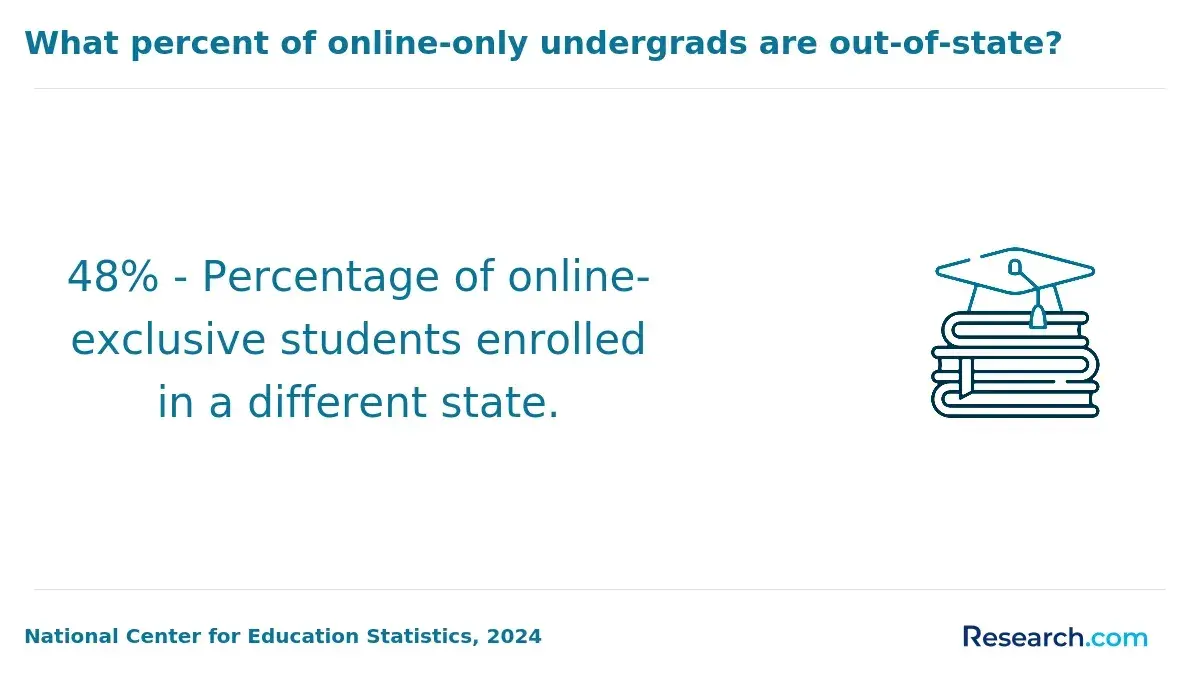
In contrast to many universities that apply different rates for in-state and out-of-state online learners, The Chicago School charges a flat-rate tuition for all online students. This means residency does not influence the $47,948 total tuition cost across online programs, simplifying budget planning regardless of geographic location. Such a policy benefits both local and nonresident students by eliminating out-of-state premiums often seen elsewhere.
This uniform rate can help military members and working adults who may relocate or have employer tuition benefits by providing consistent costs without residency restrictions. However, affordability depends on additional fees, required credits, and transfer credit acceptance, which vary by program. Compared to many public institutions where out-of-state rates inflate expenses, The Chicago School offers a more predictable tuition model, potentially lowering the total financial burden for students facing geographic mobility.
Recent analysis of data from the State Authorization Reciprocity Agreement shows a broader trend of declining nonresident online tuition premiums as schools adopt flat pricing to remain competitive nationally. This trend supports The Chicago School's structure as a practical choice for those focused on stable tuition charges without residency-based cost fluctuations.
Prospective enrollees should verify residency policies, mandatory fees, and eligibility for aid, since about 53% of students receive financial help that can significantly reduce costs. Understanding these factors and the total program expenses remains essential before committing. For those seeking affordable pathways, exploring the cheapest online bachelor's degree options may also supplement financial planning efforts.
How Does The Chicago School Compare to Other Universities for Online Degree Affordability?
Comparing the overall value of The Chicago School's online degrees against other universities requires weighing tuition patterns, financial aid, and career relevance together rather than in isolation. While public institutions often provide lower sticker prices for in-state students, The Chicago School's private status results in higher upfront tuition. However, its broader financial aid reach, with 53% of students receiving assistance, partly offsets these costs. Unlike many public universities, residency does not heavily skew tuition, reducing the out-of-state penalty for remote learners. These factors interact with employer expectations and credit recognition to shape total affordability and investment return. The following points highlight critical considerations for assessing how The Chicago School compares financially and practically to peer online programs.
- Financial Aid Penetration: Over half of students benefit from financial aid, a larger share than some competitors. This helps reduce net costs significantly, though actual aid levels vary individually. High aid availability can make a more expensive tuition sticker manageable for qualifying students.
- Tuition vs. Public Alternatives: As a private nonprofit, The Chicago School generally charges higher tuition than public universities, which may offer lower in-state rates. This affects total cost but may be balanced by program specialization and career alignment not found in cheaper options.
- Residency Policy Impact: Unlike public universities with steep out-of-state surcharges, The Chicago School's flat or nearly uniform tuition regardless of residency simplifies budgeting for non-local students and veterans.
- Credit Transfer Flexibility: Transfer policies affect affordability by limiting redundant payments. The Chicago School's approach here varies by program, influencing how quickly transfer students can lower degree costs.
- Career Outcome Relevance: The school's niche programs can align closely with certain employer sectors. While upfront costs are higher, the potential for specialized credentials may support stronger mid-term return on investment.
- Market Tuition Trends: A 2024 study from the National Center for Education Statistics found private nonprofit online universities typically charge about 40% more than public counterparts, confirming The Chicago School's expected cost premium in the current marketplace.
- Program Pacing Adaptability: Flexibility to accelerate or slow progress shapes total price paid and time out of the workforce. The Chicago School offers variable pacing options, with mixed affordability effects depending on the student's capacity to study rapidly.
A graduate who completed an online degree at The Chicago School shared, "Before committing, I compared a few regional public universities and was drawn to The Chicago School's specialized counseling program despite the higher tuition. I almost dropped out because the software licensing fee wasn't clearly listed in the brochure, which hit my budget unexpectedly. But the financial aid offer helped me push through. Once working in my new role, I realized employers valued the specific training here more than the lower-cost degrees. Still, the upfront costs and extra fees made me second-guess a few times, especially balancing family expenses." This reflection underscores the importance of reviewing detailed costs and expected career benefits before enrolling.
Which Online Degrees at The Chicago School Offer the Best Value for Money?
Online degrees at The Chicago School that best balance affordability, academic rigor, flexibility, and career payoff include those with shorter credit requirements and reasonable tuition costs. These elements directly influence the total time and money invested in education while impacting long-term employability. For example, a prospective student working full-time might prefer programs allowing credit transfers and accelerated pacing to reduce interruption and debt. This list summarizes key value factors in The Chicago School's offerings and economic outcomes.
- General Psychology Salary Benchmark: Graduates earn a median salary of $35,500, with an earnings-to-debt ratio of 2.84x, suggesting moderate return that suits students prioritizing lower upfront costs over rapid income growth.
- Credit Transfer Flexibility: Programs permitting extensive transfer credits help reduce time and tuition expenses, benefiting students with prior coursework or certifications who want to minimize debt.
- Program Length and Cost: Shorter online degree programs reduce total expenses and risk of income loss during study, appealing to those balancing work and education demands.
- Graduate Degree Investment: While online graduate degrees at The Chicago School require more tuition and time, their closer alignment with licensure or certifications enhances career advancement potential for healthcare and counseling fields.
- Financial Aid Access: Availability of robust aid packages and support services improves affordability and completion rates, especially for students from underserved backgrounds facing economic challenges.
- Long-Term ROI Thresholds: According to recent U.S. Department of Education data, programs with earnings-to-debt ratios exceeding 3x yield stronger financial returns, highlighting the need to carefully evaluate specialized paths within The Chicago School to exceed this benchmark.
- Flexible Online Degree Options: Prospective students may benefit from exploring a self paced bachelor's degree option that maximizes scheduling adaptability without sacrificing quality or affordability.
What Is the Return on Investment of an Online Degree From The Chicago School?
The Chicago School online degree ROI analysis shows a positive return, with graduates earning nearly three times their debt at a median salary of $56,899. This upfront expense reflects tuition, fees, and program length. In practical terms, an accelerated undergraduate with prior credits reduces time and debt, enhancing the financial payoff compared to a traditional format.
Advanced degrees typically offer higher lifetime earnings but require more investment and longer completion times. According to a Georgetown CEW study, distance learners with graduate degrees see a higher net present value in lifetime earnings than those holding only undergraduate degrees, underscoring the value of advanced credentials earned remotely.
Cross-comparing The Chicago School's debt-to-income and wage-premium metrics with peer programs reveals modest advantages in career momentum and affordability within select majors. However, the final decision to enroll hinges on personal financial aid eligibility and employment sector demand.
Prospective students seeking an one year degree for seniors may find that affordable online degrees in Chicago from The Chicago School provide a viable balance of cost, time, and career outcomes suitable for diverse workforce needs.
What Do Graduates Say About the Cost and Value of The Chicago School Online Degrees?
- Isabella: "When I first explored The Chicago School's online programs, I was struck by how the advertised tuition per credit could be misleading without factoring in mandatory fees and the cost of textbooks. I ended up choosing a program that allowed me to transfer several credits from my previous college, which significantly lowered my total degree cost. The flexibility to enroll part-time and the quality of academic support made the slightly higher fees worthwhile, and ultimately, my online degree helped me secure a position in my field within months of graduation."
- Ethan: "I approached my decision with a very analytical mindset, carefully comparing the cost per credit, program length, and residency requirements across different online degree options at The Chicago School. I realized that the shortest program wasn't always the cheapest once you included all fees and course sequencing constraints. Financial aid options were a crucial factor for me, and I found that The Chicago School's accreditation and career services boosted the value of my investment. Earning my degree online was challenging but flexible, enabling me to transition smoothly back into a full-time career."
- Morgan: "At first, I focused mainly on tuition rates when comparing online programs at The Chicago School, but I learned that transfer credit policies and mandatory fees played a bigger role in the overall affordability than I expected. The ability to progress at my own pace without residency requirements provided me with both time and financial efficiency, and the program's reputation clearly opened doors in the job market. Looking back, the cost comparison was a great starting point, but the nuanced factors like support services and program outcomes really shaped my decision and success."
Other Things You Should Know About The Chicago School Degrees
Many online programs at The Chicago School utilize an accelerated term format, allowing students to complete courses faster than traditional semester systems. This compressed pacing can reduce indirect costs like time away from work, but it demands consistent weekly commitment, which might not suit everyone's schedule. Students should weigh whether they can maintain the necessary intensity to avoid extending their time in the program, as longer enrollment often increases total expenses due to ongoing fees and lost income opportunity.
For students uncertain about full program commitment, starting with a certificate can be a lower-risk financial decision, offering focused skill development at a reduced cost. However, credits earned in some certificates may not fully transfer toward a degree, potentially increasing total cost if the student later pursues full degree enrollment. Prioritizing certificates that explicitly articulate transfer pathways can optimize affordability while preserving educational and career flexibility.
Because employer tuition assistance often covers only part of the costs and may have restrictions on eligible programs, students need to assess how The Chicago School's online degrees align with their employer's policies. It is generally advisable to verify in advance which programs qualify and whether short-term accelerated formats may affect reimbursement timelines. This practical verification can prevent unexpected out-of-pocket expenses that undermine the perceived affordability of the online degree.
References
- Important Terms for Paying and Saving for Education Simplified https://illinoistreasurer.gov/home/individuals/college-savings/key-terms-for-understanding-education-costs/
- Return on Investment For an Online Psychology Degree https://www.onlinepsychologydegrees.com/articles/return-on-investment-for-an-online-psychology-degree/
- Average Cost of a Master's Degree: 2025 Analysis https://educationdata.org/average-cost-of-a-masters-degree
- 2025 Most Affordable Online Colleges & Degrees https://www.onlineu.com/most-affordable-colleges
- The Chicago School at Los Angeles - Cost & Financial Aid https://www.meetyourclass.com/thechicagoschool-losangeles/cost
- Top 10 Online Colleges and Degrees in Chicago, IL https://www.greatvaluecolleges.net/by-city/online-colleges-chicago/
- Basics of In-State vs. Out-of-State Tuition – Nationwide https://www.nationwide.com/lc/resources/personal-finance/articles/in-state-out-state-tuition
- CSBG Scholarship Program https://www.chicago.gov/fss/scholarship
- The Chicago School at Chicago — Earnings, Cost & Fit Score https://www.decidemycampus.com/schools/143978
- Does College Pay Off? A Comprehensive Return On Investment Analysis - FREOPP https://freopp.org/whitepapers/does-college-pay-off-a-comprehensive-return-on-investment-analysis/