2027 Is Johns Hopkins University's Online MA in Nonprofit Management - Project Management, Evaluation, and Leadership Worth It? What Students Should Know

Co-Founder and Chief Data Scientist
Deciding on an online MA in Nonprofit Management - Project Management, Evaluation, and Leadership program often involves balancing career ambitions with practical constraints like time and cost. With online nonprofit management enrollments projected to rise alongside a 15% increase in demand for qualified project managers in the social sector from the U. S. Bureau of Labor Statistics, students must assess if Johns Hopkins University's approach aligns with evolving employer expectations and leadership competencies.
For those weighing rigorous project evaluation skills against flexible learning formats, understanding program outcomes and real-world applicability is critical. This article explores these considerations to clarify whether this program meets diverse student goals and industry demands.
Key Points About Johns Hopkins University's Online MA in Nonprofit Management - Project Management, Evaluation, and Leadership Program
- Johns Hopkins University's selective admissions, with an 8% acceptance rate, reflect rigorous academic expectations that may limit access but ensure a cohort with strong professional potential.
- The program's graduates excel in nonprofit leadership and project management roles, aligning with top employers' demand for expertise in evaluation and strategic impact measurement.
- Although tuition totals $80,778, graduates' median salary of $87,555 yields an earnings to debt ratio of 8.54x, indicating substantial long-term financial return on investment.
What makes Johns Hopkins University's online MA in Nonprofit Management - Project Management, Evaluation, and Leadership program stand out?
The value of Johns Hopkins University's online MA in Nonprofit Management - Project Management, Evaluation, and Leadership lies in how it balances academic rigor with practical application tailored for distinct student needs. Career professionals seeking flexibility benefit from its asynchronous format combined with interactive elements like live webinars, which support skill development without sacrificing work commitments. Conversely, those aiming for leadership roles in nonprofits will find the integrated curriculum-covering project management, evaluation, and strategic leadership-offers a comprehensive toolkit designed specifically for sector challenges, unlike generic management degrees.
What distinguishes this program is its strategic alignment with nonprofit operational realities, not just theory. Graduates gain expertise in managing projects efficiently while also understanding how to measure and communicate impact, a critical compétence in nonprofit funding and accountability. The 95% graduation rate signals strong student support and curriculum effectiveness, supported by a large faculty and extensive university resources. For students weighing options, the program's focused approach and Johns Hopkins University's reputation may justify the investment if their career goals depend on nuanced leadership and evaluation skills specific to nonprofit environments.
Is it difficult to get admitted to Johns Hopkins University's online MA in Nonprofit Management - Project Management, Evaluation, and Leadership program?
Admission to a master's program in nonprofit management typically has moderate competitiveness, with many institutions valuing practical experience and leadership potential over purely academic metrics. However, the Johns Hopkins University online MA in Nonprofit Management - Project Management, Evaluation, and Leadership program presents a substantially higher barrier to entry compared to general market standards, reflecting its selective nature and the institution's broader prestige.
Johns Hopkins University's acceptance rate for this program stands at a stringent 8%, admitting only 2,943 of 38,926 applicants. This level of selectivity implies applicants must be prepared for a rigorous evaluation process. Candidates generally need to demonstrate strong standardized test scores-SAT verbal ranges from 750 to 780 and math 780 to 800, or ACT scores between 34 and 56-indicating thorough preparation beyond typical nonprofit management program requirements. The high volume of applications and limited seats create a competitive admission environment that often forces candidates to weigh the opportunity cost of investing time and resources into a process with low odds of acceptance.
One graduate shared that their application experience hinged on precise timing and careful coordination of test scores and recommendation letters. "I submitted my application right before the deadline after re-taking my SAT to improve my verbal score," they recall. The anxiety of waiting nearly two months for a decision, coupled with the need to align work commitments around this uncertainty, shaped their strategic approach to applying. This reflects how admission to Johns Hopkins' program requires not only strong credentials but also adaptability and persistence during a tightly contested process.
How does the curriculum of Johns Hopkins University's online MA in Nonprofit Management - Project Management, Evaluation, and Leadership program stay aligned with current industry trends?
Aligning an online ma in nonprofit management - project management, evaluation, and leadership curriculum with current nonprofit sector demands requires balancing technical skills and strategic insight-a balance Johns Hopkins University appears to address thoughtfully. Employers in this space prioritize candidates who not only understand project workflows but can also apply rigorous evaluation to improve program outcomes. For example, a nonprofit aiming to reduce homelessness will emphasize staff who can measure impact quantitatively while managing complex partnerships. Below are key curricular features that underline how this program keeps pace with industry standards:
- Data-driven Evaluation: The program's focus on quantitative and qualitative analysis equips students with practical techniques for evidence-based decision-making. This matches a growing sector-wide expectation for leaders who can substantiate program success through measurable indicators rather than anecdotal evidence.
- Applied Project Management: Incorporating hands-on project management training means graduates gain experience mirroring real nonprofit operational challenges, such as resource allocation under tight budgets or timeline adjustments amid shifting stakeholder needs.
- Leadership and Ethics: Emphasizing adaptive leadership and ethical considerations prepares students to navigate leadership roles with integrity, a necessity given the complex social missions nonprofits pursue and the scrutiny from donors and boards.
Integrating these elements responds directly to the evolving field, where practical skills in management and evaluation coexist with the need for strategic vision. This reflects the broader trend of nonprofit leadership programs adapting to workforce needs, where measurable impact and ethical oversight are non-negotiable. Those considering this degree should weigh how these competencies align with career objectives in an increasingly competitive environment emphasizing outcomes. For insights on selecting fields aligned with future demands, refer to resources on best majors for the future.
How much does Johns Hopkins University's online MA in Nonprofit Management - Project Management, Evaluation, and Leadership program cost?
Tuition and fees for Johns Hopkins University's online MA in Nonprofit Management - Project Management, Evaluation, and Leadership program hover around $63,340, with total annual costs including books, supplies, and living expenses reaching approximately $80,778. Students should factor in that Johns Hopkins does not charge separate technology fees for online learners, nor does it offer a flat in-state tuition rate regardless of location, meaning online tuition can closely resemble standard graduate rates. This is a significant consideration for candidates budgeting their education, especially those comparing on-campus versus online costs.
Financial aid can materially affect the net price, but it varies considerably. While 67% of undergraduates at Johns Hopkins receive aid averaging $54,088, graduate support is less transparent, with institutional grants and corporate tuition reimbursement often contingent on specific eligibility criteria or employer relationships. Prospective students should evaluate these aid sources carefully against their personal circumstances and employer benefits to realistically gauge affordability in relation to the full tuition load of the nonprofit management master's tuition at this university.
When placed against the broader landscape, Johns Hopkins' pricing is higher than many comparable MA programs focusing on nonprofit management, project management, evaluation, and leadership nationally. This premium reflects the institution's reputation and faculty, but students must weigh this against anticipated career returns and regional demand for nonprofit leadership skills. For applicants seeking more cost-effective alternatives, exploring options like an associate's degree online or other programs with lower tuition may be a step-wise approach to building credentials.
Choosing this degree involves considering both return on investment and practical career pathways tied to nonprofit sectors. Employers often value an advanced degree from a recognized institution but also weigh experience and demonstrated project management skills. Hence, the decision to pursue Johns Hopkins University nonprofit management master's tuition rates requires balancing upfront costs with long-term advancement opportunities in a competitive nonprofit job market.
What are the admission requirements for Johns Hopkins University's online MA in Nonprofit Management - Project Management, Evaluation, and Leadership program?
Successfully gaining admission to Johns Hopkins University's online MA in Nonprofit Management - Project Management, Evaluation, and Leadership requires navigating several stringent criteria that reflect its selective nature and academic rigor. Prospective students should assess these requirements carefully, as the demands extend beyond minimum qualifications and shape who can realistically benefit from the program. The following key conditions outline the expectations applicants must meet.
- Educational Background: Applicants need to have completed high school or hold a GED credential, with a secondary school record available. While a college-preparatory curriculum is recommended, the program evaluates academic readiness beyond just formal prerequisites.
- Standardized Testing: Submission of SAT or ACT scores is typically expected, with competitive verbal and math benchmarks indicative of the program's selectivity. This requirement signals that the admissions committee values strong foundational skills in verbal and quantitative reasoning.
- English Proficiency: Non-native speakers must provide valid TOEFL scores demonstrating adequate English language skills, which are critical for handling graduate-level coursework and communicating effectively in professional nonprofit contexts.
- Supplemental Materials: Letters of recommendation and personal statements or resumes accompany the application to provide insight into the candidate's competencies, experience, and motivation-factors that test scores alone cannot capture.
- Credit Transfer Policies: Transfer students can apply credits for prior work, predominantly in fall admissions. However, they must verify detailed institutional policies on credit acceptance, such as maximum transferable credits and grade requirements, to avoid surprises that could delay program completion.
What is the ROI of attending Johns Hopkins University's online MA in Nonprofit Management - Project Management, Evaluation, and Leadership program?
The financial return on investment for pursuing the online MA in nonprofit management - project management, evaluation, and leadership at Johns Hopkins University hinges on balancing significant upfront costs against stable post-graduation earnings in a competitive nonprofit sector. The annual cost of approximately $80,778 closely mirrors expenses typical for well-regarded on-campus programs, which necessitates careful financial planning, especially for candidates without access to substantial scholarships or employer tuition support.
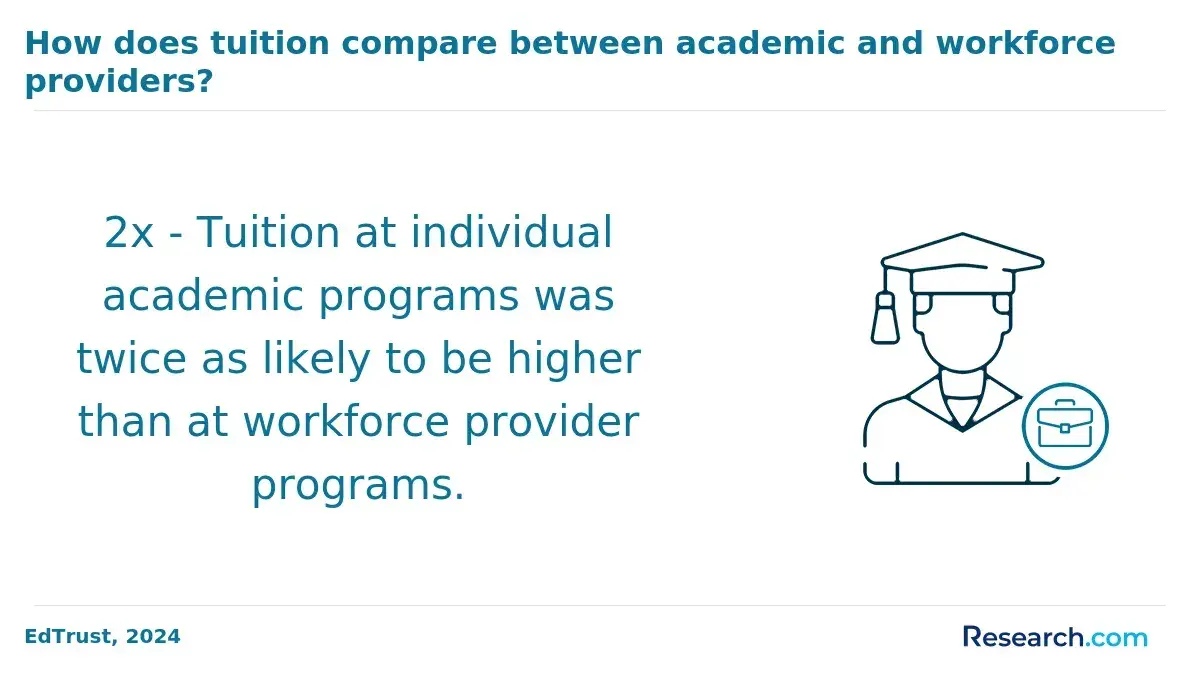
Graduates reporting median starting salaries near $87,555 suggest that entering this field through Johns Hopkins University provides a salary premium over many nonprofit management roles where earnings are often modest initially. The persistently stable median salary a decade post-graduation indicates limited volatility but also highlights the importance of experiential growth and network leverage for salary progression. The relatively low median debt of $10,250 after graduation improves the earnings-to-debt ratio to about 8.54x, a favorable indicator compared with many other graduate programs.
However, ROI can vary widely depending on a student's ability to minimize debt and tap into Johns Hopkins' network connections with governmental and philanthropic organizations. Those who secure scholarships or move into project leadership roles quickly will see higher returns. Without such factors, the high overall cost could reduce the comparative advantage, especially against nonprofit sector roles that do not require advanced degrees or where leadership pathways emerge through experience rather than formal education.
Is there a high student satisfaction for Johns Hopkins University's online MA in Nonprofit Management - Project Management, Evaluation, and Leadership program?
Student satisfaction with Johns Hopkins University's online MA in Nonprofit Management - Project Management, Evaluation, and Leadership program tends to hinge on its balance of academic rigor and practical flexibility. For professionals juggling demanding jobs and personal responsibilities, the program's well-supported structure can mitigate burnout risks common in graduate education. Its high graduation rate reflects more than persistence; it points to effective institutional support that aligns with real-world constraints.
The program's culture emphasizes collaboration through online mentoring and student-led groups, which helps build networks essential for nonprofit leadership roles. However, satisfaction can be tempered by the intensity of coursework, often described by students as challenging but manageable due to the program's adaptable pacing. This balance supports learners who cannot commit to full-time study while maintaining career momentum, though the demanding workload requires a certain level of self-discipline.
Johns Hopkins backs this degree with substantial faculty resources, enhancing the personalized attention available despite the program's size. This resource intensity plays a crucial role in student retention and perceived value, especially compared to programs with less robust infrastructure. Students weighing this program should consider their capacity to engage deeply while benefiting from an environment designed to foster both rigorous scholarship and peer connection.
One graduate recounted initially hesitating to enroll, concerned about managing her nonprofit job and family commitments simultaneously. She found the mentoring initiatives critical to staying motivated and that faculty responsiveness helped her navigate complex projects without feeling isolated. While the workload was taxing at times, she appreciated the program's structure allowing her to apply concepts directly to her workplace challenges, giving her a tangible return on investment and a reasoned confidence in her decision to persist.
How does Johns Hopkins University help online MA in Nonprofit Management - Project Management, Evaluation, and Leadership graduates secure employment?
Schools play a critical role in a graduate's ability to secure employment, especially within specialized fields like nonprofit management, where networking and targeted job resources can directly impact outcomes. Data indicates that graduates from institutions offering active career support and alumni engagement have a 36% higher chance of securing relevant roles within six months of graduation, demonstrating the tangible effect of institutional backing on employment prospects. Given this context, Johns Hopkins University's online MA in Nonprofit Management - Project Management, Evaluation, and Leadership program incorporates several features designed to facilitate student entry into competitive nonprofit management positions. Below are some key resources that specifically support employment outcomes for Johns Hopkins University MA in Nonprofit Management graduates:
- Virtual Career Fairs: These events connect students directly with nonprofit employers and sector-specific recruiters, enabling real-time engagement that often leads to interviews or job offers before graduation.
- Resume and Interview Workshops: Online sessions focus on crafting sector-tailored resumes and mastering nonprofit interview dynamics, increasing a candidate's competitive edge in a niche job market.
- Dedicated Job Portal: A specialized platform regularly updates with nonprofit job listings emphasizing project management and evaluation skills, streamlining the job search process for graduates.
- Alumni Mentorship Network: Access to a large, active alumni community allows current students to receive guidance and referrals, which research shows can be pivotal since about 70% of positions are attained through collegiate connections.
These supports reflect the practical importance of combining academic credentials with strategic career resources, particularly for students weighing the value of an online degree. Recognizing such institutional contributions is vital for assessing how degree programs like Johns Hopkins University's align with real-world nonprofit workforce demands. Those exploring related pathways can also compare options by reviewing degrees for stay at home moms that balance career flexibility and employment readiness.
What are the career outcomes for recent graduates of Johns Hopkins University's online MA in Nonprofit Management - Project Management, Evaluation, and Leadership?
The career outcomes for graduates of Johns Hopkins university's online MA in nonprofit management - project management, evaluation, and leadership reveal practical advantages and tradeoffs essential for weighing the program's value. Alumni often secure positions that require oversight of projects and strategic initiatives, placing them in roles with higher responsibility compared to general nonprofit roles. However, salary expectations vary significantly by role and sector, so understanding these differences is key for prospective students weighing the program's return on investment. This program's focus on leadership and evaluation typically leads to better compensation than some related academic fields, reflecting the increasing demand for professionals who can measure outcomes and guide organizational effectiveness. The following examples illustrate typical positions and their relevant workforce implications.
- Nonprofit Program Manager: Managing diverse nonprofit activities, these professionals coordinate initiatives and oversee project development. Salaries vary widely but generally reflect mid-level management pay scales within the nonprofit sector.
- Evaluation Specialist: Focused on assessing program effectiveness and impact, evaluation specialists help organizations improve operations and justify funding. Pay aligns with behavioral sciences earning ranges, typically between $17,000 and $34,000.
- Project Coordinator: This role supports project execution and logistics within nonprofit contexts. Compensation often falls into lower-to-mid nonprofit sector salaries, offering entry-level managerial experience.
- Leadership Consultant: Graduates who pursue leadership consultancy leverage skills in strategic planning and organizational change, commanding salaries akin to international relations or political science professionals, approximately $52,000 to $57,000.
Given the diverse career trajectories post-graduation, those seeking to advance after an online MA in nonprofit project management should consider the operational realities of each role, including geographic and sectoral salary disparities. Students interested in employment opportunities at institutions recognized as military friendly universities online may find additional support systems enhancing their academic and career progression.
How do I know if Johns Hopkins University's online MA in Nonprofit Management - Project Management, Evaluation, and Leadership program is the right fit for my goals?
Determining if Johns Hopkins University's online MA in Nonprofit Management - Project Management, Evaluation, and Leadership program aligns with your goals requires weighing several interdependent factors, as the program's value is closely tied to individual academic and professional objectives. For example, a mid-career nonprofit professional seeking to pivot into leadership roles may prioritize different program features than someone entering the sector with a focus on project evaluation. Assessing suitability also involves practical tradeoffs around time, cost, and learning format. This complexity makes it critical to evaluate specific criteria when deciding if this MA program fits your career path. Consider the following points:
- Curriculum Alignment: Focus on whether the program's emphasis on nonprofit project management, evaluation methods, and leadership skills directly supports your professional development objectives. Clarify how the coursework complements your experience and career aspirations.
- Delivery Format And Flexibility: Since the program is fully online, assess your capacity for self-directed, remote learning and balancing responsibilities. Some students thrive in digital settings, while others may struggle without in-person interaction.
- Support And Resources: Evaluate access to faculty expertise, networking opportunities, and career services. The presence or absence of these elements can significantly influence your educational experience and job market readiness.
- Reputation And Outcomes: Consider how alumni success within the nonprofit sector and employer recognition of the degree might impact your long-term career trajectory in leadership or specialized project roles.
- Financial Investment Vs. Return: Compare tuition costs against expected salary improvements and personal financial capacity. Balancing cost with potential economic benefits is essential for informed decision-making.
Deciding whether the Johns Hopkins University online MA in Nonprofit Management - Project Management, Evaluation, and Leadership is the right fit for your career goals demands nuanced reflection on these areas. For those exploring quick certifications that pay well, ensure the program's depth and timeline meet your needs rather than opting for shortcuts that may offer faster but less comprehensive credentials.
What Graduates Say About Johns Hopkins University's Online MA in Nonprofit Management - Project Management, Evaluation, and Leadership Program
- Aubrey: "Studying at Johns Hopkins University gave me a structured framework in project management that was immediately applicable to my nonprofit work. The MA in Nonprofit Management - Project Management, Evaluation, and Leadership program emphasized real-world evaluation techniques, which proved crucial when employers asked for tangible evidence of skills rather than just degrees. While the program increased my capability and confidence, I found that in job interviews, showcasing a portfolio and relevant internship experience became more important than the degree alone."
- Phoebe: "The flexibility of Johns Hopkins University's online MA in Nonprofit Management - Project Management, Evaluation, and Leadership allowed me to transition careers smoothly without pausing my income. After graduating, I noticed a lot of my peers focused on licensure, but within the nonprofit sector, practical leadership and evaluation skills opened doors faster than certification did. The program's focus on leadership prepared me for remote work positions, which has been vital as many organizations shift to hybrid models."
- Mariah: "Reflecting on my time at Johns Hopkins University, the MA in Nonprofit Management - Project Management, Evaluation, and Leadership was challenging, particularly balancing theory with practical application. While it didn't immediately guarantee a salary bump, the leadership training helped me pivot into evaluation roles that weren't previously accessible. I quickly learned that advancement required combining the degree with on-the-ground experience, as many nonprofit employers still prioritize demonstrated impact over academic credentials."
Other Things You Should Know About Degrees
The MA in Nonprofit Management - Project Management, Evaluation, and Leadership at Johns Hopkins University is designed for working professionals, but it remains rigorous with weekly assignments and project deadlines. While the asynchronous format offers flexibility, students should anticipate dedicating significant time outside standard work hours, which may impact personal or family commitments. Prospective students with demanding schedules should realistically assess their capacity for balancing coursework intensity before enrolling.
Although the program is fully online, it integrates real-world project evaluations and leadership case studies, which enhance practical skills. However, in-person networking opportunities are limited compared to on-campus programs, potentially affecting relationship-building with peers or faculty. For those prioritizing robust professional networks, supplementing the program with external nonprofit or project management communities is advisable.
Students in the program can choose from a diverse array of electives to tailor their education to their career goals, allowing for customization in areas like fundraising, financial management, or humanitarian aid, enhancing the depth and breadth of their expertise.
The master's program demands a longer commitment and offers broader theoretical and practical coverage than most certificates, making it more suitable for candidates aiming for senior leadership roles. However, for professionals focused on gaining targeted skills in a shorter timeframe, a certificate might deliver quicker, more focused upskilling. Thus, prioritizing the MA is optimal if long-term career advancement and comprehensive skill integration are key, while a certificate better suits immediate skill acquisition.
References
- Core Certificate Program - Institute for Nonprofit Practice https://www.nonprofitpractice.org/programs/core-certificate-program/
- On-Line Certificate in Nonprofit Management at Johns Hopkins University - Organization https://www.idealist.org/en/nonprofit/e291dff289a541529776de65195c2845-on-line-certificate-in-nonprofit-management-at-johns-hopkins-university-washington
- Johns Hopkins University (JHU) https://www.princetonreview.com/college/johns-hopkins-university-1022939
- Nonprofit Management and Leadership https://www.albany.edu/rockefeller/programs/cgs-nonprofit-management-and-leadership