2027 Cheapest Online Degrees at Florida Institute of Technology

Co-Founder and Chief Data Scientist
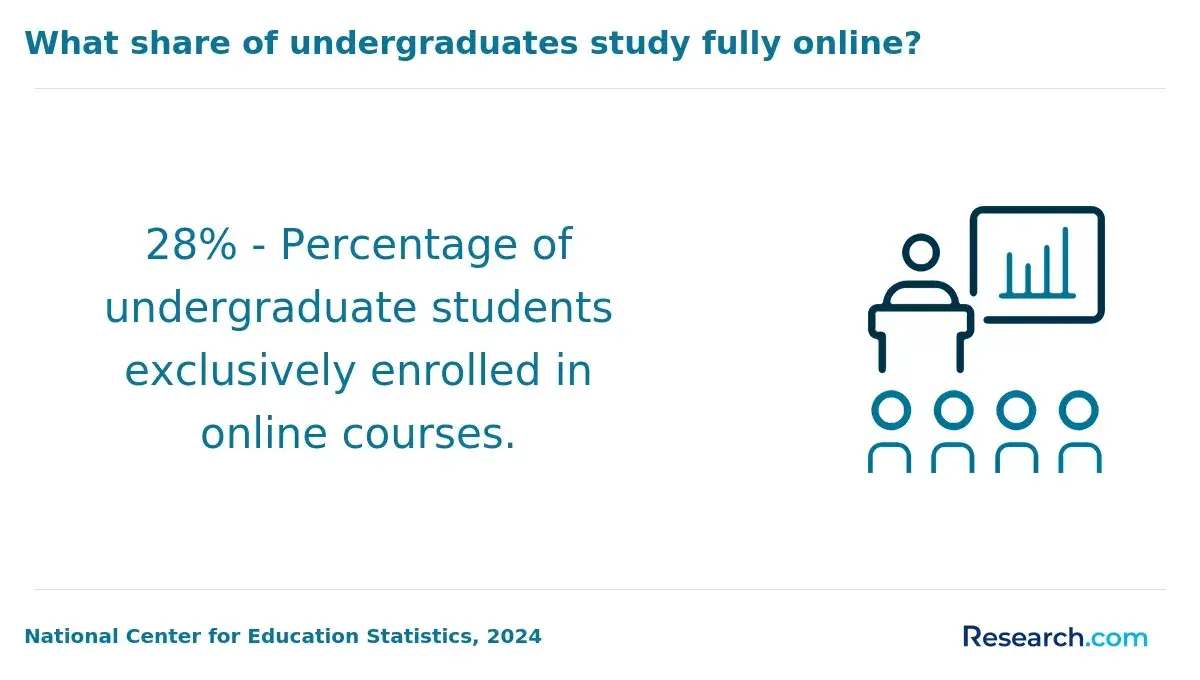
Finding affordable online degree programs in the U.S. has become more complex as tuition rates fluctuate and student debt surges. Remote enrollment now accounts for over 40% of college students nationwide, reflecting growing demand for flexible, cost-effective education options. This trend highlights the challenge of balancing quality with affordability when selecting a program that fits one's budget and career goals.
Florida Institute of Technology offers a range of online degrees that may align with these needs. Prospective students should carefully assess the school's tuition against the return on investment and labor market outcomes for each program. This article will analyze the cheapest online degrees available at Florida Institute of Technology and provide insight to help students make informed decisions about enrolling there.
Key Points About the Cheapest Online Degrees at Florida Institute of Technology
- The total tuition cost for online degrees at Florida Institute of Technology is $65,900, placing it above average in cost relative to other online programs but reflecting investment in specialized STEM and business fields.
- Affordable programs focus on targeted STEM and business disciplines, aligning curricula with workforce needs for students prioritizing applied skills and relevant qualifications.
- Graduates demonstrate an earnings to debt ratio of 1.60x, indicating manageable debt versus income prospects, which suggests that financial returns often validate the tuition expense for many enrolled students.
Why is Florida Institute of Technology emerging as a top choice for cost-effective online education?
Florida Institute of Technology stands out as a strategic choice for cost-conscious students based on quantifiable return on investment and reliable financial support. Graduates often face the challenge of balancing education costs with future earnings; the institution's earnings to debt ratio of 1.60x signals that graduates tend to earn 60% more than the debt they incur. This metric highlights a practical economic advantage not commonly seen among similar online degree providers. As remote enrollment saturation exceeds 50% nationwide according to recent NCES data, student preference is shifting sharply toward affordable programs with clear financial outcomes, positioning Florida Institute of Technology favorably amid evolving market demand.
Key factors contributing to its prominence include the institution's consistent financial aid coverage, enabling students to effectively reduce upfront costs. Additionally, stable retention rates suggest students find sufficient academic and support resources to persist through degree completion. The following points detail core reasons why it appeals specifically to budget-minded online learners.
- Comprehensive financial aid availability: With 100% of undergraduates receiving financial assistance averaging $24,420 per student, this significantly lowers total costs, allowing online learners to minimize reliance on high-interest loans.
- Positive earnings to debt ratio: Graduates typically earn substantially more than their education debt, providing a measurable economic return that informs responsible borrowing and long-term career planning.
- Program alignment with market needs: Curricula are designed to meet employer expectations and evolving industry demands, reducing the risk of credential obsolescence and enhancing employability.
- Stable student retention rates: Consistent retention signals adequate academic engagement and support, which helps optimize time to degree and prevents additional expenses related to dropout or transfer.
After completing a Bachelor of Science in Information Technology online, one graduate described the decision as cautious but vital. Initially hesitant because of personal finances, they leveraged the institution's full financial aid package and avoided private loans. "I was able to finish my degree with almost no debt," the graduate recalls, "which took a huge weight off my shoulders.
Knowing many peers left school owing tens of thousands made me realize how important the school's aid was." This relief allowed them to focus on job applications immediately without financial distraction, demonstrating the real-world impact of cost-effective education options at Florida Institute of Technology.
What is the current base cost of online programs at Florida Institute of Technology?
The current base tuition rate for online programs at Florida Institute of Technology averages around $650 per credit, a figure generally consistent with many private technical institutions but higher than public online options. This rate does not fully capture the total cost as many online students face additional fees for technology and course delivery infrastructure.
Beyond tuition, these supplemental fees can significantly influence the affordable online degree costs at Florida Institute of Technology, especially for students who budget tightly. Total expenses reported for on-campus students reach $65,900, but online learners often avoid room and board costs, reducing overall outlays. Understanding these components helps in evaluating real value compared to other schools that may have more variable online pricing.
Recent national studies on tuition disparities show many institutions have adopted differential pricing, inflating online learner costs well beyond base tuition. Florida Institute of Technology has maintained relatively stable rates, offering a degree of predictability amid typical inflation in higher education pricing trends. This stability is important for students balancing cost and access.
Prospective online students should also consider long-term return on investment by comparing programs and outcomes. Resources like online masters programs rankings provide critical context for selecting credentials with meaningful employer recognition in competitive fields.
Does Florida Institute of Technology offer flat-rate tuition for out-of-state distance learners?
The average out-of-state tuition for distance learners at Florida Institute of Technology exceeds in-state rates, pushing the total cost of attendance significantly higher for non-resident students. This disparity affects affordability and can alter decisions for career-focused individuals weighing long-term investments versus educational quality.
Unlike institutions that employ state reciprocity or flat-rate tuition policies for online learners, Florida Institute of Technology maintains traditional residency-based pricing. State-specific waivers or regional agreements that might lower tuition elsewhere are absent, leaving remote out-of-state students responsible for the full non-resident premium.
Nationally, only 27% of public universities offer broad out-of-state tuition waivers for online students, reflecting a limited trend toward geographic cost equalization. Florida Institute of Technology's approach aligns with this norm but contrasts with institutions using flat-rate models to attract diverse remote applicants.
For example, an out-of-state professional seeking a data science master's online may face paying thousands more per credit hour at Florida Institute of Technology than at comparable schools with flat-rate tuition. This earnings-to-debt ratio impact is critical when evaluating return on investment and long-term career mobility.
Which online bachelor's degrees at Florida Institute of Technology offer the lowest total tuition?
Students aiming for the lowest total tuition at Florida Institute of Technology must balance upfront costs with long-term financial outcomes. Choosing a degree with lower per-credit rates may reduce immediate expenses but might not minimize debt burden over time. A practical case can be seen in comparing humanities and technical disciplines, where the former typically hold about a 15% lower tuition baseline nationally but often lead to less favorable debt-to-income ratios post-graduation.
The latest data indicates that approximately 45% of undergraduate students are now enrolled remotely nationwide, reflecting a strong shift toward flexible and cost-conscious education delivery. Below are some of the most economical online bachelor's degree options offered by Florida Institute of Technology, focusing on their tuition-saving benefits and program design.
Cheapest online bachelor's degrees at Florida Institute of Technology include:
- Bachelor of Science in Psychology: Offered at $525 per credit, this program's use of open educational resources limits textbook costs. Its fully online curriculum suits students seeking a budget-friendly humanities track, though long-term financial return may vary.
- Information Technology: Priced at $540 per credit, this technical program integrates digital materials to reduce fees. Its structured online format prepares students for in-demand IT roles, often yielding better debt-to-income ratios than many humanities paths.
- Business Administration: With tuition around $550 per credit, this program combines cost-effective courseware with practical business training, designed for students wanting a flexible, economically sound degree that balances cost with employability.
- Biology: At $545 per credit, this science degree involves some additional lab fees but remains relatively affordable due to the use of open-source resources. It appeals to those targeting careers requiring solid STEM credentials without excessive tuition expenses.
- Computer Science: The highest among these at $560 per credit, this program justifies the cost with a rigorous curriculum and strong outcomes. Graduates often achieve superior debt repayment capabilities, aligning with data that STEM remote programs outperform humanities in long-term financial returns.
Prospective students assessing the lowest total tuition bachelor's programs at Florida Institute of Technology should weigh these tuition rates against career earnings potential. For those focused on the highest paying jobs, investing slightly more in a technical program may deliver better financial stability post-graduation than selecting a cheaper program with lower market demand.
What are the most affordable online master's degree programs at Florida Institute of Technology?
Florida Institute of Technology offers online master's programs that balance competitive tuition with flexible delivery, making them viable for cost-conscious adults who cannot afford extended campus visits. Compared with many private technology-focused universities, FIT's per-credit rates, ranging roughly from $700 to $850, position its offerings as some of the most affordable when measured against direct and ancillary costs.
A working professional weighing whether to pursue an advanced degree in information technology might save thousands in travel and accommodation through FIT's limited or no on-campus residency requirement while gaining credentials that increase earning potential. The following list highlights several programs demonstrating this affordability and strategic career impact.
- Master's in Information Technology: This program features a low per-credit tuition integrated with course material fees, providing financial predictability. Delivered predominantly online, it caters to professionals aiming to accelerate salary growth without incurring excessive upfront debt from mandatory campus stays.
- Master's in Cybersecurity: Offering the same cost-saving structure, this degree uses asynchronous online learning to accommodate working schedules. A focus on specialized security skills addresses employer demand while mitigating hidden costs linked to travel and materials.
- Master's in Project Management: With FIT's online delivery, students benefit from flexible pacing and minimal residency requirements. The clear tuition framework supports those planning to leverage the credential for salary increases without the burden of escalating debt.
- Master's in Engineering Management: The program's online format and bundled fee model reduce unexpected expenses. Professionals in engineering fields can enhance leadership qualifications while managing educational costs effectively.
- Master's in Organizational Leadership: Designed to be accessible online with low enforced residency, this degree assists students in advancing to higher management roles with transparent tuition rates supporting cost control during study.
National data suggests that individuals with graduate degrees earn around 25% more median income across industries, a critical factor for many considering advanced education. However, recent findings also reveal that rising graduate debt-to-income ratios pose risks to financial stability after program completion, emphasizing the importance of affordable options like those at Florida Institute of Technology. Prospective students referencing affordable masters degrees should weigh these economic realities alongside program relevance and flexibility to ensure sound long-term investment value.
Such cautious evaluation aligns with selecting from the best value online graduate programs Florida Institute of Technology offers, merging cost efficiency with practical online delivery to meet diverse learner needs without compromising career advancement potential.
Are digital course materials at Florida Institute of Technology expensive?
Online students must budget for course materials and supplies in addition to tuition, as these costs can significantly affect overall affordability. At Florida Institute of Technology, the average expense for digital course materials is around $1,200 annually. These fees generally include essential resources needed to complete courses effectively. Below are key types of digital materials Florida Institute of Technology students typically encounter:
- Electronic Textbooks: Digital versions of required books that replace traditional print editions. These often provide interactive features but can still cost several hundred dollars per semester, matching national trends where textbook prices have risen steadily.
- Specialized Software Licenses: Programs like MATLAB and AutoCAD are mandatory for certain STEM courses. Licensing fees can add hundreds to a student's budget, reflecting the demand for industry-standard tools students must master for workforce readiness.
- Online Access Codes: Codes for platforms such as Pearson or McGraw-Hill grant access to assignments and supplementary content. These usually cost between $50 and $150 per course and are non-transferable, adding recurring expenses for students.
- Virtual Lab Simulations: Some science and engineering courses require paid lab simulations that replace physical labs. These simulations streamline access but add to overall digital material costs, sometimes reaching over $100 per lab session.
According to a recent study, national online digital material costs average about $1,350 annually, slightly above Florida Institute of Technology's figure. This gap highlights how localized program requirements and software usage influence real-world expenses. Students weighing their options should consider these material costs alongside tuition since employers expect proficiency with these tools as a baseline skill.
Does Florida Institute of Technology offer accelerated term options for online students?
Florida Institute of Technology maintains a traditional semester-based calendar without dedicated accelerated term options such as 5-week or 7-week schedules for online students. This standard timeline typically extends degree completion over multiple full semesters, limiting opportunities for faster progression.
Without accelerated terms, tuition costs likely follow the conventional semester billing cycle rather than a per-credit or subscription model. For example, a student unable to fast-track may incur repeated semester fees, increasing total expenses to the noted $65,900. Conversely, accelerated scheduling at other institutions can reduce auxiliary fees by compressing coursework into fewer billing periods, offering potential cost savings.
Nationally, schools adopting 5- to 8-week accelerated formats report up to 15% higher retention and completion rates by shortening time-to-degree, an advantage not currently reflected in Florida Institute of Technology's program delivery. This slower pace can affect both employability timing and overall educational ROI for students eager to enter the workforce swiftly.
Students weighing their options must consider that Florida Institute of Technology's lack of condensed terms could delay graduation and prolong financial commitments compared to more flexible, speed-oriented online programs available elsewhere. The tradeoff involves balancing scheduling convenience, affordability, and employer-aligned credential timeliness.
Can online students Florida Institute of Technology transfer credits to reduce tuition costs?
Florida Institute of Technology allows online students to transfer up to 64 credit hours, reducing the usual 120-credit degree load by more than half. This results in a potential immediate tuition savings of roughly half the total $65,900 cost, offering a significant financial advantage for transfer students.
However, tuition savings vary depending on the presence and scope of articulation agreements. FIT lacks extensive block-transfer deals with local colleges, requiring students to verify credit applicability individually. Credits from ACE recommendations, CLEP, and DSST exams also influence savings, but consistent prior learning assessments depend on accreditation and institutional policies.
Accreditation plays a crucial role in credit transfer eligibility since employers and institutions often prefer recognized credentials. Students whose prior coursework comes from regionally accredited institutions typically experience smoother credit acceptance, helping maintain graduation timelines and job market readiness.
National data shows over 38% of undergraduates transfer credits during their careers, highlighting that strategic credit transfers can greatly improve affordability and timely degree completion. These dynamics underscore the practical importance of early and detailed credit evaluation at FIT for prospective online students.
One FIT online graduate shared that transferring credits from a community college saved her nearly two years and substantial tuition, though she had initial concerns about which credits would count. "I hesitated at first because I wasn't sure if my military training and CLEP exams would fit their criteria," she says. "Ultimately, carefully working with advisors helped me secure maximum credit transfer, which felt like a huge relief given the cost pressures."
What financial aid options are available to online students at Florida Institute of Technology?
To manage the financial commitment at Florida Institute of Technology, online students benefit from a diverse set of aid options that can substantially decrease tuition expenses. For example, a transfer student seeking a STEM degree might combine the Transfer Student Grant with the STEM Innovation Grant to reduce total costs significantly. The main financial aid programs target specific groups based on academic achievement, program enrollment, or military affiliation. The following outlines principal financial aid options available to online learners at Florida Institute of Technology.
- Presidential Scholarship: Awarded to high-achieving students, this scholarship can cover up to 50% of tuition fees. Eligibility hinges on strong academic performance and is aimed at encouraging excellence in online studies.
- STEM Innovation Grant: Intended for students enrolled in science and technology fields, this grant provides $10,000 to support education costs, recognizing the growing demand in these industries.
- Transfer Student Grant: Designed for eligible transfer applicants, this grant offers $5,000 to ease the transition financially and incentivize academic continuation at Florida Institute of Technology.
- Online Excellence Award: Based on academic merit in online coursework, this award grants up to $7,500, supporting sustained performance in remote learning environments.
- Veterans Grant: Aimed at military-affiliated students, this grant varies in coverage based on eligibility criteria tied to service status and helps offset educational expenses.
According to a 2024 study from the National Center for Education Statistics, although student debt remains a substantial burden nationally, increasingly students rely on targeted grants and scholarships to avoid borrowing. This trend underscores the importance of leveraging merit-based aid to reduce debt when pursuing online degrees.
Students evaluating financial aid options for online students at Florida Institute of Technology must consider how these funds align with program costs and expected career outcomes. Combining aid programs with a clear understanding of program value is crucial for making cost-effective decisions related to online degrees.
How do you know if the affordable online programs at Florida Institute of Technology are worth it?
Determining whether affordable online programs at Florida Institute of Technology are worth it depends on several core indicators beyond just low tuition. For example, a graduate earning a median starting salary of $67,475 in Computer Science clearly gains a more financially viable outcome than one in Biology making $25,174. Such disparities highlight the importance of program choice when assessing return on investment (ROI). One must also consider factors like graduation rates and evolving labor market demands.
Recent workforce trends indicate that graduates who maintain student debt at or below 1.5 times their starting salary within five years experience more stable, long-term financial security. This shift emphasizes the need to evaluate both cost and realistic earnings potentials carefully, especially when considering affordable programs. The Florida Institute of Technology, with a completion rate of 65%, fits this profile better for STEM fields but shows weaker ROI in lower-paid majors. Below are key criteria to evaluate the value and practical worth of online degrees from Florida Institute of Technology.
- Median Alumni Salary: Reflects expected earnings after graduation. High STEM salaries at Florida Institute of Technology suggest better financial outcomes compared to disciplines with median earnings below $30,000.
- Graduation Rate: Indicates program completion likelihood. A 65% rate here signals potential challenges that could delay career entry and affect long-term ROI.
- Program Alignment with Job Market: Degrees in rapidly growing fields like Computer Science align better with employer demand and increase employability prospects.
- Debt-to-Income Ratio: Evaluates financial burden relative to salary. Graduates maintaining a debt-to-income milestone below 1.5 times starting salary fare better in career stability nationally.
- Accreditation and Credential Recognition: Ensures the degree holds credibility among employers. Confirm that Florida Institute of Technology's programs maintain proper accreditation and relevance.
- Industry Relevance: Disciplines adapting to evolving workforce needs provide longer-term value. Florida Institute of Technology's online programs in STEM fields tend to meet this criterion better.
- Educational Flexibility and Competency: Availability of competency based masters offers practical, skills-focused pathways that can accelerate employability and career progress.
What Graduates Say About the Cheapest Online Degrees at Florida Institute of Technology
- Chloe: "Enrolling in an online program at Florida Institute of Technology was a calculated decision based largely on cost and flexibility. While the initial tuition rates were competitively low compared to similar programs, I encountered unexpected fees related to digital platform access that slightly offset the upfront savings. Nevertheless, avoiding traditional expenses like commuting and on-campus housing made the overall investment more manageable, allowing me to focus on coursework without financial strain. After graduating, the practical skills and recognized credential helped me secure a role faster than I anticipated, making the trade-offs worthwhile in my professional journey."
- Hope: "Choosing the cheapest online degree option at Florida Institute of Technology felt like a practical path amid tight budget constraints, but the experience wasn't without its challenges. The program's structure offered useful flexibility, which I needed while working full-time, yet some technical distractions and occasional platform glitches hinted at underappreciated digital infrastructure costs. However, I genuinely appreciated the financial relief from not having to pay for housing or commute as that saved me several thousand dollars annually. In hindsight, the degree has reliably contributed to measurable salary growth and new career opportunities, affirming that the investment was sound, even if not entirely seamless."
- Eva: "As someone who compared several programs before committing, Florida Institute of Technology's online degree struck a balance between affordability and accessibility, though the lowest sticker price wasn't the full story. I had to carefully budget for hidden digital fees tied to course materials and tech requirements, which nudged the total cost up unexpectedly. Still, bypassing relocation and daily travel costs gave me substantial real-world financial relief. The degree's direct application in my daily work tasks and the credential's market recognition have positively impacted my career trajectory, but I remain mindful that price alone isn't the only factor when evaluating online education's true value."
Other Things You Should Know About Florida Institute of Technology Degrees
In 2027, the Florida Institute of Technology offers a Bachelor of Science in Computer Information Systems as one of its most affordable online degrees. It combines cost-effectiveness with a robust curriculum, preparing students for dynamic roles in the tech industry.
Florida Institute of Technology has built solid recognition in STEM fields, but some employers still prefer traditional campus experience for certain roles. Graduates from the cheapest online programs may face scrutiny in highly competitive job markets where face-to-face interaction and internships weigh heavily. It is advisable to supplement the online degree with relevant certifications or practical work experience to enhance employer perception and job readiness.
Students should focus on programs that align closely with their career goals while considering course format and support services. Programs with strong industry ties or experiential components, even in an online setting, generally provide better practical preparation. Prioritize degrees offering flexible scheduling, access to career resources, and aligned skill development over just the lowest tuition, as this balance can impact long-term employability more significantly.
Support services such as academic advising, tutoring, and career counseling are critical, especially in the cheapest online programs where students often juggle work and study. Limited access or generic support can increase the risk of attrition or delays in graduation. Prospective students should verify the availability and responsiveness of these resources, as robust support directly correlates with better retention and completion outcomes in an online setting.
References
- 10 Most Popular Online Colleges in Florida | UoPeople https://www.uopeople.edu/blog/10-most-popular-online-colleges-in-florida/
- Florida Institute of Technology Tuition and Financial Aid https://www.prepscholar.com/sat/s/colleges/Florida-Institute-of-Technology-tuition-financial-aid
- Financial Aid https://www.sf-institute.com/financial-aid
- Florida Institute of Technology (Florida Tech) https://www.princetonreview.com/college/florida-institute-technology-1023516
- Understanding Fees and Financial Aid for International Students at Florida Institute of Technology https://www.hellouni.org/blogs/study-abroad/understanding-fees-and-financial-aid-for-international-students-at-florida-institute-of-technology/
- Find Course Materials | Florida Institute of Technology Official Bookstore https://fit.bncollege.com/course-material/course-finder
- Florida Zero Textbook Cost Indicator | Definition https://dlss.flvc.org/zero-textbook-cost-definition
- Florida Institute of Technology http://collegetransfer.org/FloridaInstituteOfTechnology/TransferProfile/tabid/145/Default.aspx