2027 Benedictine University Online Degree Costs Compared: Which Programs Are Most Affordable?

Co-Founder and Chief Data Scientist
Choosing an online degree at Benedictine University requires more than comparing sticker prices. Many prospective students face confusion from variable tuition rates, hidden digital fees, and program-specific expenses that can dramatically affect overall affordability. Nationally, average online tuition and fees increased by 3.8%, outpacing many traditional campus programs, which complicates the decision for students balancing cost against career goals.
This article analyzes tuition structures and total costs across Benedictine University's online offerings. It highlights which programs deliver the best financial value and clarifies where additional fees and aid impact net costs. The goal is to equip students with a clear, data-driven framework to choose the most affordable option aligned with their long-term employment prospects and investment returns.
Key Points About Benedictine University Online Degree Costs and Affordability
- Benedictine University's total tuition for online degrees is $55,046, but total cost of attendance including books and supplies is $46,548, reflecting financial metrics that incorporate non-tuition expenses influencing affordability assessments.
- Tuition rates vary by program area, with business and healthcare degrees charging higher per-credit fees than liberal arts, signaling resource intensity and market demand impact on program-specific price structures.
- Students must evaluate tuition tiers alongside financial aid and residency fee options to balance upfront costs with long-term career value when selecting the most cost-effective online degree path.
How Much Does an Online Degree Cost at Benedictine University?
Benedictine University's online degree costs reflect a middle ground between expensive private institutions and lower-cost public universities. Its undergraduate tuition stands near $800 per credit hour, while graduate rates exceed $900. Unlike many peers, Benedictine charges similar rates for asynchronous, synchronous, and hybrid courses, which limits savings potential on flexible online options.
For a working adult pursuing nursing or business degrees online, affordability hinges on credit transfer policies and term fees ranging from $100 to $300. Financial aid and military or alumni discounts can substantially lower net expenses. However, the 3.2% annual rise in online tuition nationwide signals growing cost pressure, underscoring the importance of accelerated, low-credit paths recognized by employers.
Compared to fully online nonprofits or public universities, Benedictine offers strong accreditation and career-focused curricula that justify its upfront costs through better employment outcomes.
Students valuing access to robust academic support and flexible pacing will find the price reasonable but should weigh added fees and limited asynchronous discounts against alternatives emphasizing lower total net price.
Which Online Degree Programs at Benedictine University Are the Most Affordable?
The most affordable online degree programs at Benedictine University appear within the undergraduate business and education departments. These programs generally charge around $530 per credit hour, below the $600 national average for comparable online curricula identified by UPCEA. For students completing a standard 120-credit bachelor's degree, this means a predictable tuition commitment near $63,600 before fees and aid.
Certificate or associate pathways are less common online but reduce total expenses through fewer credits, offering faster, lower-cost completion options. Additional fees typically add between $1,200 and $2,000, but tuition discounts and institutional financial aid can substantially lower out-of-pocket costs.
For example, a budget-conscious learner pursuing business management may trade expansive specialization for affordability and steady tuition rates.
Cost should not be the sole factor in choosing a program. While business and education have lower sticker prices, their practical value hinges on alignment with employer expectations and regional job markets. Education programs often closely tie to licensure requirements, whereas business degrees emphasize general management skills, affecting long-term career relevance.
Students must weigh tuition alongside flexibility, support services, and realistic employment outcomes in their field. Affordability in isolation risks overlooking critical factors like transferable credits or the readiness a program provides to meet evolving workforce demands in an increasingly skills-focused economy.
How Do Online Bachelor's, Master's, and Doctoral Program Costs Compare at Benedictine University?
Online degree costs at Benedictine University reflect distinct pricing tiers that align with degree complexity and credit requirements. Bachelor's programs offer a relatively affordable per-credit tuition of approximately $535, resulting in a base tuition near $64,200 for the typical 120-credit degree. In contrast, master's programs, with tuition around $735 per credit hour and fewer credits needed, fall between $22,050 and $26,460 in total tuition but may include additional professional fees.
Doctoral program costs exceed $1,000 per credit and often surpass $48,000 total due to higher credit loads and extra expenses like residencies. These differences demonstrate how each degree level demands unique financial planning based on program length, fees, and specialization.
The following list details key cost factors impacting affordability at Benedictine University for online learners.
- Bachelor's Program Tuition: The lower per-credit rate of $535 makes bachelor's degrees more accessible for students prioritizing cost-efficiency. However, the total credit requirement of 120 credits creates a substantial overall tuition commitment that fits broad career entry but may necessitate further education in specialized fields.
- Master's Program Pricing: Higher per-credit fees at $735 reflect advanced coursework and faculty involvement. Total tuition remains moderate due to shorter credit demands but can increase with added professional fees, making these programs suited to career changers or those seeking targeted skill upgrades.
- Doctoral Program Expenses: Doctoral studies command the highest tuition per credit, often exceeding $1,000, with total costs above $48,000. Additional fees for comprehensive exams and residencies increase financial burden, which must be justified by the specialized career outcomes doctoral degrees aim to deliver.
- Required Fees and Residency: Fees beyond tuition, including mandatory residencies for some programs, significantly affect total program costs. Students balancing work and study should assess these when comparing affordability, as these requirements vary widely by degree level and specialization.
- Financial Aid Impact: Undergraduate students benefit from diverse scholarships and grants that offset base tuition costs. Graduate learners largely depend on loans or employer tuition assistance, which influences net affordability and long-term debt, a crucial factor in evaluating program value.
Recent data from the Journal of Distance Education Finance highlights a national trend where graduate online tuition averages 37% higher than undergraduate rates, underlining the price premium for advanced qualifications. This pricing stratification aligns with Benedictine University's online degree costs and underscores the need to carefully weigh upfront expenses against anticipated professional benefits.
For prospective students, understanding these cost structures and evaluating the top degrees for the future in context is essential for informed decision-making.
What Is the Cost Per Credit Hour for Online Programs at Benedictine University?
The tuition per credit hour for online programs at Benedictine University reflects a balance between program quality and cost, with variations that matter significantly depending on degree level and discipline. For example, a working professional pursuing a graduate business degree should anticipate higher tuition than an undergraduate student aiming to complete general education requirements.
Comparing Benedictine's rates to national baselines reveals important considerations for prospective students determining value and affordability.
The following points highlight key cost distinctions across online programs, fees, and student scenarios.
- Undergraduate Online Courses: The base tuition is around $615 per credit hour. This rate applies broadly to full-time and part-time students, but required technology and service fees of roughly $65 per credit hour add to the total cost. This program suits students who prioritize flexible pacing without residency cost differences.
- Graduate-Level Programs: Tuition rises to approximately $760 per credit hour, reflecting more advanced coursework and specialized instruction. These costs suit professionals investing in skill upgrades but must weigh the upfront expense against expected career returns and financial aid availability.
- Education and Business Specializations: Certain programs include adjusted fees tied to curriculum demands. For instance, a graduate education student faces slightly varied pricing due to enrollment caps that maintain class quality yet affect budget planning.
- Residency-Independent Tuition: Benedictine applies uniform pricing for fully online students irrespective of location. This approach aligns with the national trend toward simplifying costs for remote learners, removing geographic cost barriers and simplifying budgeting.
- National Tuition Context: The average national online undergraduate tuition per credit hour sits near $493, making Benedictine's rates moderately higher. According to the CHLOE 6 report, this premium is often justified by enhanced student services and smaller classes, yet students must consider the total average net price to attend Benedictine University when evaluating affordability alongside career goals.
Understanding the average net price to attend Benedictine University helps clarify typical out-of-pocket cost for Benedictine University students beyond sticker tuition. Students pursuing fields listed among the highest paying college majors should weigh these tuition commitments against potential long-term earnings and debt management.
What Additional Fees and Expenses Should Online Students Expect at Benedictine University?
Online students at Benedictine University face several fees beyond tuition that substantially impact the true affordability of their degrees. For example, a working adult pursuing an MBA may find technology fees and digital textbook inflation add unexpected monthly costs, challenging tight budgets. Understanding these secondary expenses is critical for realistic financial planning.
The following five key fees and expenses illustrate the additional financial layers students must navigate.
- Technology Fees: These mandatory fees support the university's online platform and digital learning tools. Charged every term, technology fees can be the largest non-tuition cost for online learners but are generally unavoidable. Budgeting for these fees upfront helps prevent surprises late in the program.
- Books and Supplies: Averaging $2,056, these costs reflect physical and digital materials required per program. Digital textbook prices have been rising about 8.4% annually, outpacing traditional formats, which can steadily increase the overall expense over multi-year degrees.
- Graduation Fees: Charged once upon completion, these fixed fees cover administrative expenses related to degree conferral and ceremonies. They cannot be skipped but are relatively modest compared to other charges.
- Proctored Exam Fees: Online exams sometimes require paid proctoring services billed per session. Students taking multiple courses or exams must factor these potentially recurring fees into their budget since they often fall outside tuition and are not always disclosed upfront.
- Residency or Travel Costs: Some programs require brief on-campus residencies or orientation sessions. These obligations can generate travel and lodging expenses, which detract from the convenience and cost savings typically associated with fully online learning.
Does Benedictine University Offer Financial Aid, Scholarships, and Tuition Discounts for Online Students?
Benedictine University provides substantial financial aid options for online students, including institutional scholarships, FAFSA-based federal and state aid, military benefits, employer tuition reimbursement, and some program-specific funding. Online learners access these on par with campus students, though eligibility hinges on FAFSA completion, residency, and enrollment intensity.
These aid sources critically impact net costs but vary by student profile. For instance, an active-duty service member may combine military benefits with employer tuition reimbursement, drastically cutting expenses. Conversely, a part-time online student without those external supports might see less aid, making out-of-pocket costs notably higher.
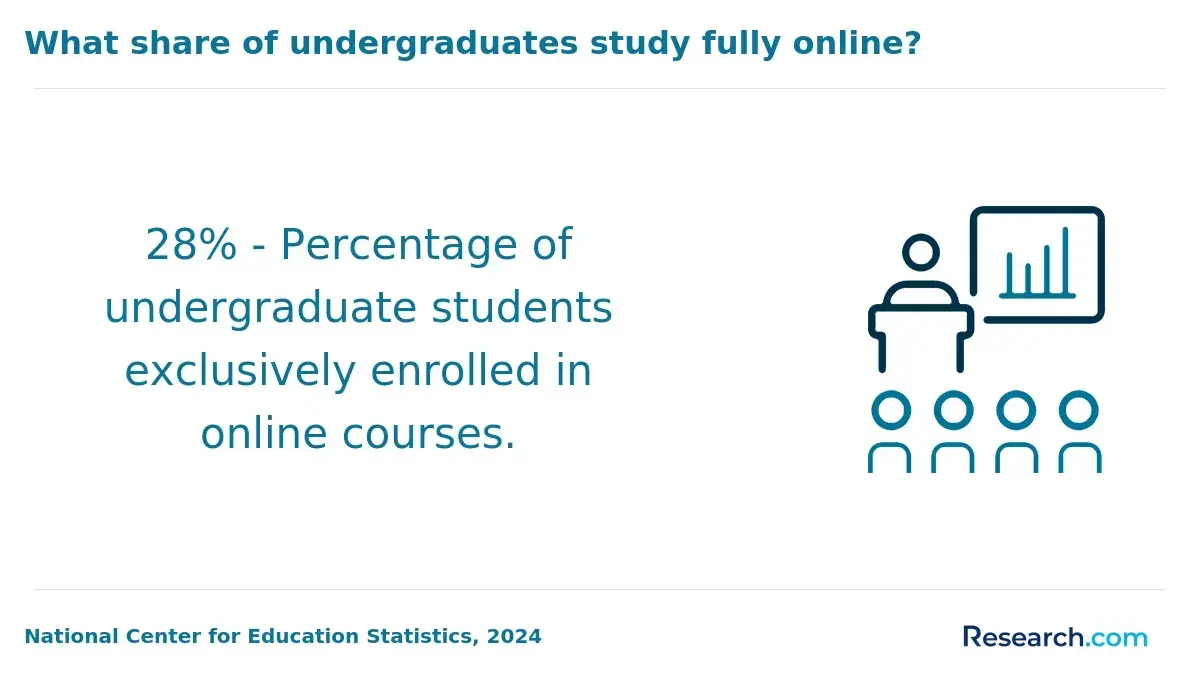
A 2024 report from the National Center for Education Statistics notes a 12% rise in Pell Grant use among distance learners, reflecting broader access to federal funds nationally. This trend enhances affordability for many online students, yet it requires careful navigation of completion and renewal rules to sustain benefit levels throughout the program.
Prospective students should verify deadlines, aid renewal conditions, program-specific scholarship criteria, and total net price before committing. This diligence helps avoid unexpected expenses and enables realistic budgeting for both tuition and ancillary fees, crucial to evaluating overall value and return on investment.
Do In-State and Out-of-State Students Pay Different Online Tuition Rates at Benedictine University?
Benedictine University charges the same tuition rate to all online students regardless of residency status, with a flat total tuition cost of $55,046 for online degree completion. This eliminates the usual in-state versus out-of-state online tuition differential that many institutions enforce, simplifying budgeting for prospective students focused on total program expenses. This approach is especially relevant for students comparing Benedictine University online tuition rates by residency amid the varied pricing models found in higher education today.
Residency-based tuition premiums persist at nearly 72% of institutions, according to a 2024 IPEDS report, making Benedictine's model an exception. This benefits nonresident learners, including working adults and veterans, by avoiding a non-resident surcharge common in public universities.
However, final costs can vary due to transfer credits, mandatory fees, and tuition discounts specific to military or employer partnerships. Nearly 94% of Benedictine online students receive financial aid, which can markedly reduce the net expense and influence affordability comparisons with other private or nonprofit options.
Prospective students evaluating in-state vs out-of-state online tuition Benedictine University policies should consider all enrollment variables. While residency does not affect the sticker price, hidden fees and aid eligibility affect net costs and the return on investment for various demographics. Those with transfer credits or military benefits may find particular value here.
Before enrolling, confirm residency rules and total cost components. Consult resources like the cheapest online bachelor's degree rankings to benchmark Benedictine's costs versus alternatives. This diligence ensures an informed decision aligned with career goals and financial realities.
How Does Benedictine University Compare to Other Universities for Online Degree Affordability?
Comparing Benedictine University's online degree affordability to other institutions reveals a mix of consistent financial aid support and a distinctive flat-rate tuition model that alters typical cost expectations. While its sticker price may initially appear higher than many public universities, the fact that 94% of students receive financial aid shifts the actual net price downward, creating a more competitive position for many students.
This model particularly benefits out-of-state or transfer students, who often face surcharges elsewhere. The following points highlight key factors shaping Benedictine's place in the online education cost landscape and how these influence its overall value relative to peer schools.
- Financial Aid Penetration: Benedictine's high aid rate reduces effective costs for most enrollees, contrasting sharply with some private nonprofits that offer less comprehensive assistance. This enhances affordability despite nominally higher tuition.
- Flat Tuition Structure: Applying a single rate regardless of residency removes complexity and unexpected out-of-state premiums. This setup can yield savings for non-resident students who would pay extra at many public institutions.
- Private Nonprofit Cost Premium: Benedictine's tuition typically exceeds public online program averages, reflecting a nationwide trend where private nonprofit online degrees cost about 25% more after aid, according to recent national research. Recognizing this premium is critical for weighing long-term ROI.
- Targeted Student Discounts: Initiatives aimed at military and adult-working students provide tailored financial benefits, improving access for groups often disadvantaged by rigid pricing or credit policies.
- Program Credit Load Flexibility: Degree options that require fewer credits or accelerated courses can substantially lower total expenses, an advantage Benedictine offers which supports quicker workforce entry.
- Career Outcome Considerations: Given the price premium, the return depends heavily on program relevance and career prospects. Prospective students should weigh Benedictine's net costs against expected employability and salary trajectories.
Which Online Degrees at Benedictine University Offer the Best Value for Money?
Online degrees at Benedictine University delivering the best balance of affordability, academic quality, flexibility, and career payoff tend to be in nursing and business fields. These areas offer strong post-graduate salary prospects relative to total program costs and manageable credit requirements. Transfer-credit policies and accessible student support enhance program flexibility and can reduce time to completion, improving overall value for money.
For students weighing cost against career outcomes, the following points outline key distinctions between programs.
- Registered Nursing Salary: Graduates earn an average salary of $72,536, which supports a robust earnings-to-debt ratio of 2.82x, making this program well-suited for students focused on long-term financial return despite higher upfront tuition and credit demands.
- Accounting Mid-Career Earnings: With average earnings around $50,256, this degree balances moderate tuition with practical business skills, appealing to students aiming for corporate roles or financial careers.
- Flexible Credit Transfer: Benedictine's transfer-credit options help reduce total program length and expenses, benefiting returning students or those with prior college experience seeking affordable degree completion.
- Health/Medical Prep Limitations: Fields like Health/Medical Preparatory offer lower alumni salaries near $16,440, indicating a weaker alignment between cost and career earnings for cost-conscious learners prioritizing ROI.
- Business Administration Payoff: Earning approximately $43,279, this program provides steady salary potential with generally shorter credit requirements, fitting students desiring broader management roles in various sectors.
- Student Support Services: Enhanced academic and financial aid services improve cost-effectiveness, especially important for longer programs where maintaining enrollment can control final expenses and reduce debt.
- Low Salary Limits in Biology: Despite more affordable tuition, Biology graduates face average earnings of $26,167, making this choice optimal only for students seeking education-driven careers rather than immediate financial gains.
Recent College Scorecard findings emphasize that degree programs merging moderate tuition with relevant career pathways and strong student support often deliver the best ROI for online learners. Those focused on sustainable career returns at Benedictine University may find nursing and business options offer affordable, durable choices amid increasing demand across healthcare and corporate sectors.
For an expanded view of high-value online degrees, reviewing the most in demand master's degrees provides additional context. Affordable Benedictine University online degree options rely on understanding these tradeoffs between cost, credit load, and post-graduate salary prospects to identify true value for money.
What Is the Return on Investment of an Online Degree From Benedictine University?
The return on investment of an online degree from Benedictine University reflects a balance between tuition costs, program duration, and median graduate earnings. With a median graduate earning of $63,446 and an earnings-to-debt ratio of 2.82x, Benedictine alumni often recover their education costs nearly threefold. This upfront expense compares favorably to traditional and many online programs when considering accelerated career outcomes and credit transferability.
Programs with strong wage premiums, especially in healthcare and business, tend to deliver a greater ROI edge. For example, graduates in nursing or business analytics frequently see more rapid loan repayment due to higher starting salaries. However, programs requiring longer completion times or fewer transferable credits can dilute this advantage by increasing total debt load.
Research from Georgetown's Center on Education and the Workforce highlights that online degree holders experience a wide earnings range, making program selection critical. Their findings suggest that maximizing career mobility depends on choosing programs with clear employer relevance and limiting loan burdens, factors Benedictine aligns with compared to regional peers.
Prospective students weighing Benedictine University online degree cost versus career earnings should also consider flexibility. For students seeking options like online colleges starting this month, Benedictine's offerings provide a practical path to staying competitive without delaying entry into the workforce.
What Do Graduates Say About the Cost and Value of Benedictine University Online Degrees?
- Jose: "When I compared the tuition and fees for Benedictine University's online programs, I quickly realized that the sticker price didn't tell the whole story. Factoring in mandatory fees, textbook costs, and the number of credits required made a big difference. I appreciated that their generous transfer credit policy allowed me to shave off a semester, which helped control overall expenses. Studying online gave me the flexibility to keep working, and after graduation, the degree's regional accreditation definitely smoothed my transition into a mid-level management role."
- Cedric: "Cost was a major consideration for me, but I also weighed program length and part-time enrollment options during my evaluation of Benedictine University online degrees. Some programs had lower per-credit rates but ended up more expensive because of additional fees or longer completion times. I found that sticking to a program with clear course sequencing and predictable total costs was the most affordable approach in the long run. The online platform's academic support was a pleasant surprise and made studying manageable alongside my job. The degree helped me land a position that aligned with my career goals."
- Yusuf: "At first, comparing costs between Benedictine University's online offerings made me feel like I was just chasing the cheapest option, but I soon learned that financial aid options and program outcomes matter just as much. Some programs with slightly higher tuition offered stronger career services and more streamlined paths to completion, which ultimately reduced hidden expenses like extra semesters or retaking courses. Residents and non-residents alike can access financial aid, which was a helpful factor for me. The degree opened doors I hadn't anticipated, making the overall investment worthwhile even if it wasn't the lowest total price upfront."
Other Things You Should Know About Benedictine University Degrees
Benedictine University's online programs tend to have structured pacing and consistent weekly assignments that can be demanding, especially for working adults. While tuition may feel affordable compared to in-person options, the time investment can affect employment hours or personal commitments, potentially reducing income or increasing stress. Prospective students should prioritize programs with manageable course loads over purely low-cost options to avoid hidden costs related to time that could affect overall affordability and completion rates.
Dropping or switching online courses after the add/drop deadline may still result in tuition charges or partial refunds, which can complicate budgeting. Benedictine University's refund policies vary by program but typically do not fully reimburse tuition if courses are dropped late, creating potential unexpected expenses. Students should plan carefully before enrolling and confirm refund terms to avoid affordability issues caused by schedule changes during the semester.
In 2027, Benedictine University’s online degrees parallel traditional ones in employer perception, focusing on accreditation and course content over delivery method. Employers increasingly recognize online programs for their flexibility and quality, indicating costs don't affect perception as much as program reputation does.
While financial aid can reduce upfront costs, it often increases long-term debt, particularly for master's or doctoral level programs where aid eligibility may be limited to loans. Benedictine University online students should assess aid offers not only by the amount but by the repayment terms and potential career earnings post-graduation. Prioritizing grants or scholarships over loans is advisable whenever possible to avoid debt burdens that could outweigh short-term tuition savings.
References
- Online Degree Programs at Benedictine University - Illinois https://online.ben.edu/programs/
- Benedictine University: Courses, Fees And Rankings 2026 https://amberstudent.com/blog/post/benedictine-university
- 326 Benedictine University scholarships 2026-27 [Updated] https://www.wemakescholars.com/university/benedictine-university/scholarships
- Benedictine University Tuition and Financial Aid https://www.prepscholar.com/sat/s/colleges/Benedictine-University-tuition-financial-aid
- Graduate Programs | Benedictine College https://www.benedictine.edu/academics/graduate-programs
- Benedictine University - Top 30 Most Affordable MBA in Internet Marketing Online Programs 2019 - Best Colleges Online https://www.bestcollegesonline.org/most-affordable/online-mba-internet-marketing/benedictine-university-top-30-most-affordable-mba-in-internet-marketing-online-programs-2019/
- Basics of In-State vs. Out-of-State Tuition – Nationwide https://www.nationwide.com/lc/resources/personal-finance/articles/in-state-out-state-tuition
- Tuition and Fees | Benedictine University https://ben.edu/tuition-and-fees/
- Benedictine College - Cost & Financial Aid https://www.meetyourclass.com/benedictine/cost
- Supported by Risepoint, Benedictine University Expands Online Bachelor's Offerings With Career-Focused Degrees in Psychology and Computer Science https://www.prnewswire.com/news-releases/supported-by-risepoint-benedictine-university-expands-online-bachelors-offerings-with-career-focused-degrees-in-psychology-and-computer-science-302522721.html