2027 Online Educational Policy Doctorate Programs with One-on-One Faculty Mentorship
Audited and Verified:
Our Editorial and Data Verification Process
Research.com uses government datasets, official education statistics and primary institutional information to support its career and degree guides. Our review process checks factual accuracy, occupational definitions, source dates and the requirements associated with the credentials discussed.
How This Article Was Fact-Checked
Our editorial team verifies salary estimates, employment projections, education requirements and program information against original data providers and official organizations. Salary figures are checked against the relevant occupational definitions and reporting periods. Information about licensure, accreditation and required in-person training is reviewed separately.
Fact-checked and verified on:

Co-Founder and Chief Data Scientist
Selecting an online educational policy doctorate involves more than format or cost; it hinges on whether faculty guidance will help you complete demanding research while employed. The U.S. Bureau of Labor Statistics reported a May 2024 median salary of $103,960 for postsecondary education administrators, which illustrates why advanced policy and leadership credentials can influence career advancement.
This guide serves educators, administrators, analysts, and nonprofit leaders who are weighing online EdD or PhD options. You will discover how mentorship operates, what to check, and when paying extra for personalized support makes sense.
Key Things You Should Know
- One-on-one faculty mentorship is most valuable when it is formal, recurring, research-specific, and tied to dissertation or applied-project milestones rather than limited to general academic advising.
- Cost matters because federal graduate borrowing is expensive: Direct Unsubsidized Loans for graduate students carry a 7.94% fixed interest rate for 2025-2026, while Grad PLUS Loans carry 8.94%.
- The strongest online educational policy doctorate fit usually balances three factors: mentor expertise in your policy area, realistic completion support over a 3- to 5-year timeline, and total cost that aligns with your career goals.
How Does One-on-One Faculty Mentorship Work in Online Educational Policy Doctorate Programs?
Within an online educational policy doctorate, one-on-one faculty mentorship generally means a student gains direct access to a faculty member who helps craft research questions, interpret policy issues, sharpen methodology, and link doctoral work to leadership practice. This differs from typical academic advising, which often centers on course sequencing, registration, and administrative requirements.
Educational policy doctorates can be delivered as EdD programs, PhD programs, or policy-focused concentrations within educational leadership programs. The EdD is typically intended for working professionals who seek to address applied problems in schools, districts, higher education, government agencies, or nonprofit organizations. The PhD is generally more research-intensive and may suit students pursuing faculty, research, or think-tank roles.
Mentorship in an online setting can occur through video meetings, dissertation seminars, annotated document feedback, asynchronous discussion, research team participation, and milestone reviews. The strongest models make expectations clear before enrollment. A solid program should clearly explain the following details:
- When a faculty mentor is assigned and whether students may request a mentor according to research interests.
- How frequently students are expected to meet one-on-one with faculty during coursework and dissertation phases.
- Whether the mentor also serves as dissertation chair, applied-project chair, or merely an early-stage advisor.
- How promptly faculty usually respond to drafts, questions, and research proposals.
- What occurs if a faculty member departs, takes sabbatical, or no longer has capacity to advise additional students?
The central question is not whether a program claims to offer "personalized support." The better question is whether the program has a repeatable system that provides online students dependable access to faculty expertise when research decisions grow complex.
Which Online Educational Policy Doctorate Programs Offer the Strongest Faculty Mentorship?
The best programs are not necessarily the most well-known or costly. For educational policy students, strong mentorship typically stems from alignment: a faculty member's research background, the program's dissertation structure, the student's policy interests, and the school's ability to support online doctoral candidates consistently.
The table below features examples of online or primarily online doctoral programs with educational policy, leadership, or policy-adjacent curricula that prospective students might want to explore. Program details can shift, so treat this as a starting point and confirm current mentor assignment rules, residency requirements, and dissertation support directly with each university.
| Program example | Policy or leadership fit | Mentorship signals to verify | Best-fit student profile |
| American University, Online EdD in Education Policy and Leadership | Concentrated emphasis on education policy, systems change, and leadership practice | Faculty support for research design, applied inquiry, and policy-centered problems of practice | Practicing educators, policy advocates, district leaders, and nonprofit professionals pursuing an applied policy doctorate |
| University of Illinois Urbana-Champaign, Online EdD in Education Policy, Organization and Leadership | Policy, organizational change, leadership, and educational systems | Advisor matching, dissertation committee structure, research-area fit, and online faculty accessibility | Students seeking a research university setting with several policy and leadership specialization tracks |
| University of Kansas, Online EdD in Educational Leadership and Policy Studies | Educational leadership and policy analysis with relevance for practitioners | Availability of dissertation chairs, cohort advising model, and faculty expertise in K-12 or higher education policy | School, district, or higher education professionals seeking leadership advancement and applied research support |
| University of Kentucky, Online EdD in Educational Leadership Studies | Leadership, organizational improvement, and policy-relevant educational practice | Faculty advising load, dissertation timeline expectations, and access to mentors who have relevant leadership experience | Practitioners pursuing an online doctorate tied to school, district, or institutional leadership |
| Vanderbilt University Peabody College, Online EdD in Leadership and Learning in Organizations | Organizational leadership, learning systems, and evidence-based improvement; less narrowly focused on policy | Capstone advising, faculty coaching, and alignment of projects with organizational or policy problems | Professionals focused on organizational change, education system improvement, or leadership outside traditional school administration |
A program's mentorship strength ought to be evaluated by evidence, not branding. Seek named faculty whose work overlaps with your intended research topic, clear dissertation or capstone milestones, and chances to speak with current students about the real frequency and quality of faculty interaction.
Students comparing program length should be wary of assuming that faster is always better. Some 1 year EdD programs online may help highly prepared professionals, but policy-focused doctoral research often needs sufficient time for data collection, institutional approvals, and multiple rounds of faculty feedback.
How Does Faculty Mentorship Support Dissertation or Applied Research in an Online Educational Policy Doctorate?
Faculty mentorship matters most when a student transitions from coursework into independent research. In educational policy, the dissertation or applied project may address school funding, equity, governance, accountability, curriculum policy, higher education access, workforce preparation, or program evaluation. Such topics often demand careful framing because they involve real institutions, human participants, and politically sensitive data.
A faculty mentor helps students transform a broad concern into a researchable problem. For instance, "teacher retention is a problem in my district" is too broad for doctoral research. A mentor may help refine it into a study of how compensation policy, induction support, workload, or leadership conditions influence early-career teacher retention in a defined setting.
Strong research mentorship typically supports several stages of the doctoral process:
- Problem framing: The mentor helps identify a policy problem that is significant, feasible, and suitable for doctoral-level inquiry.
- Literature alignment: The mentor guides the student toward relevant policy, leadership, organizational theory, and empirical research.
- Method selection: The mentor helps decide whether qualitative interviews, surveys, document analysis, mixed methods, or program evaluation best match the research question.
- Ethics and approval: The mentor prepares the student for institutional review board requirements and responsible data handling.
- Draft revision: The mentor offers feedback on argument quality, evidence, structure, and methodological clarity.
- Defense preparation: The mentor helps the student explain findings, limitations, and practical implications to a committee or professional audience.
One-on-one mentorship can enhance doctoral progress when it lessens uncertainty. Online doctoral students frequently balance full-time work, family responsibilities, leadership roles, and research deadlines. A mentor who offers timely feedback can help avoid common delays such as choosing an unworkable topic, applying an unsuitable methodology, or waiting too long to start dissertation planning.
Mentorship does not ensure faster completion. A student's progress still hinges on workload, writing time, data access, institutional approvals, committee responsiveness, and personal circumstances. Yet individualized mentoring can make completion more achievable by clarifying the next step before the student loses momentum.
When comparing programs, ask how the school keeps students from drifting during the dissertation stage. Helpful structures may include the following:
- Required research milestones before coursework ends, such as a problem statement, literature map, or preliminary methodology plan.
- Regular one-on-one meetings during the proposal and dissertation phases rather than optional office hours alone.
- Written timelines for proposal approval, data collection, analysis, final defense, and revision submission.
- Faculty feedback standards that specify expected response times for drafts and questions.
- Escalation procedures if mentor communication breaks down or committee members become unavailable.
Fast-track options can be appealing, especially for professionals who already possess a clear research problem and strong academic writing skills. Still, students should weigh speed against research support, because a compressed schedule without sufficient faculty feedback can heighten stress during the dissertation or applied-project phase.
Online educational policy doctorate programs usually adopt one of several mentorship models. None is automatically ideal for every student. The right choice depends on how much independence you desire, how clearly defined your research agenda is, and whether you value peer support as much as individual faculty access.
The table below compares common mentorship models so you can determine what a program truly offers when it describes faculty support:
| Mentorship model | How it usually works | Strengths | Potential drawbacks |
| Assigned faculty advisor | A faculty member is assigned early to assist with academic planning and research direction | Clear point of contact and early relationship development | Advisor may not become the dissertation chair or may not closely match the student's topic |
| Dissertation chair model | Students work closely with a chair after finishing core coursework or passing candidacy requirements | Strong support during the most research-intensive stage | Students may receive less individualized guidance during the early part of the program |
| Cohort plus individual advising | Students progress through courses with peers while receiving periodic one-on-one faculty support | Blends peer accountability with individual guidance | Mentor access may vary according to cohort size and faculty workload |
| Capstone or problem-of-practice coaching | Faculty guide an applied project tied to the student's workplace or professional setting | Helpful for practitioners who want research linked to immediate organizational improvement | May be less suitable for students pursuing traditional research or academic careers |
| Research apprenticeship | Students work with faculty on ongoing research projects, grants, labs, or policy studies | Strong preparation for research careers and publishing experience | Less common in fully online EdD programs focused on practitioners |
A cohort-based program can be a stronger option if you need structure, peer accountability, and predictable pacing more than fully individualized mentor selection. A one-on-one model may be preferable if your research interests are specialized, your professional goals are highly specific, or you need regular feedback on a complex policy problem.
Faculty mentorship can foster career growth when it helps students convert doctoral research into professional credibility. In educational policy, that may involve producing a dissertation, policy brief, program evaluation, conference presentation, article, grant proposal, or internal improvement plan that has practical value beyond graduation.
The career value of an educational policy doctorate depends on the role. Graduates may pursue or advance in district leadership, higher education administration, education nonprofit leadership, policy analysis, state agency work, research administration, consulting, or faculty roles. The BLS May 2024 median salary of $103,960 for postsecondary education administrators offers a useful benchmark, but it should not be viewed as a promised outcome because salary varies by institution, region, sector, and leadership level.
Good mentors can help students identify career-relevant outputs while the doctoral program is still in progress. That support may include the following:
- Helping students turn dissertation findings into policy memos, executive summaries, or board presentations.
- Recommending conferences, professional associations, or practitioner networks tied to the student's policy area.
- Offering feedback on publication or presentation proposals when the student's research has broader value.
- Linking research questions to current employer needs without compromising academic independence or ethics.
- Writing informed recommendations grounded in sustained knowledge of the student's research and leadership abilities.
Some students find that their career goal does not require a doctorate. For example, professionals more interested in learning technology, curriculum systems, or workforce training may compare doctoral study with the best online instructional design master's programs before committing to a longer and more expensive research degree.
An effective mentor in an online educational policy doctorate should offer more than a doctoral credential. The best fit is typically a faculty member whose scholarship, applied work, policy experience, or methodological expertise matches the student's intended research and career direction.
Students should examine faculty profiles carefully before applying. Seek recent publications, funded projects, policy reports, school-system partnerships, administrative experience, or methodological expertise that aligns with the kind of dissertation or applied project you want to complete.
Use these criteria to assess potential mentors:
- Subject expertise: The faculty member has experience in areas such as education finance, equity policy, governance, accountability, higher education policy, organizational change, special education policy, or workforce development.
- Methodological fit: The faculty member can support the research methods you are likely to use, such as qualitative case study, survey design, mixed methods, policy analysis, or program evaluation.
- Online advising experience: The mentor has successfully supported remote doctoral students and understands how to provide feedback without depending on campus access.
- Professional relevance: The mentor understands the settings where students work, including schools, districts, colleges, agencies, nonprofits, or education companies.
- Availability: The faculty member has enough advising capacity to provide timely feedback and meaningful one-on-one interaction.
Accreditation should also be part of the evaluation. For educational policy doctorates, institutional accreditation from an accreditor recognized by the U.S. Department of Education is essential. Specialized accreditation may matter more for adjacent professional pathways; for instance, students considering practitioner psychology roles should review school psychology programs online accredited by NASP because that field has different preparation and credentialing expectations than educational policy leadership.
One-on-one faculty mentorship can increase the value of an online educational policy doctorate, but it does not automatically warrant a high price. The value depends on whether mentorship enhances research quality, reduces avoidable delays, supports career goals, and gives students access to expertise they could not easily obtain elsewhere.
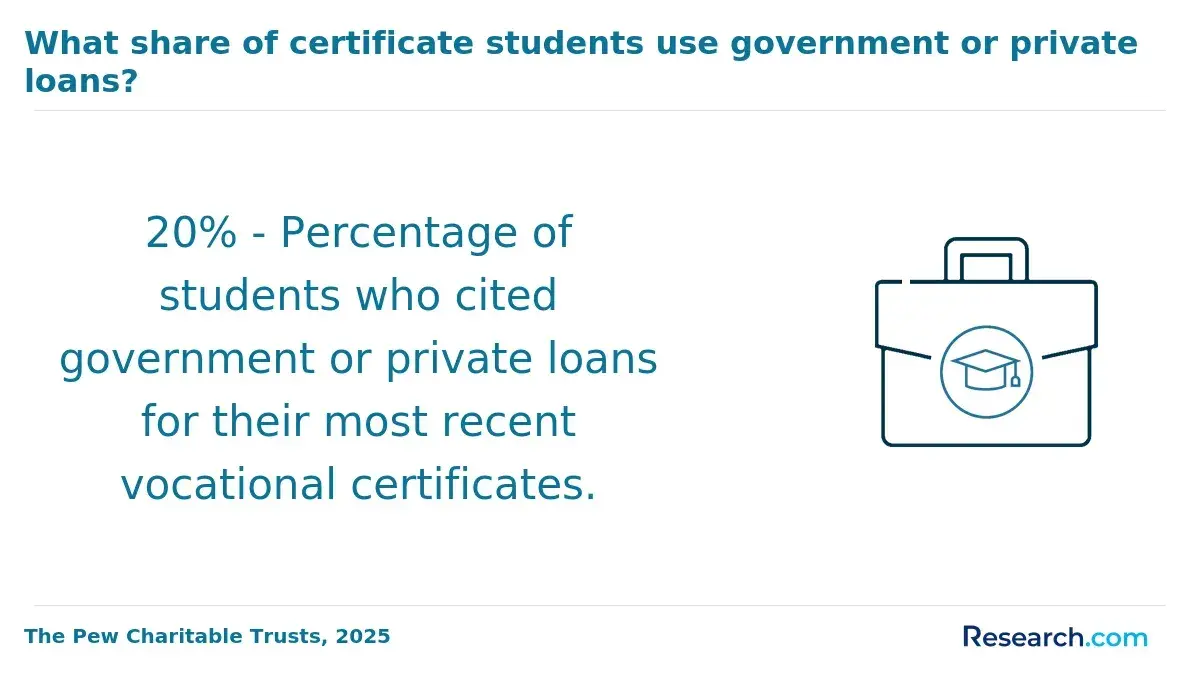
Cost comparisons should cover tuition, technology fees, dissertation continuation fees, residency travel, books, graduation fees, and borrowing costs. The federal graduate loan environment makes this especially important: Direct Unsubsidized Loans for graduate students carry a 7.94% fixed interest rate for 2025-2026, and Grad PLUS Loans carry 8.94%. That means even a moderate tuition difference can become more significant if it is financed over time.
The table below summarizes the main cost-value trade-offs connected to faculty mentorship. Use it to decide whether a higher-cost program offers support that is materially better for your situation.
| Cost factor | Why it matters | Mentorship-related value question |
| Per-credit tuition | Doctoral programs often require numerous credits beyond the master's degree | Does the tuition include structured mentor access, or is faculty interaction confined to courses? |
| Dissertation or continuation fees | Students may pay extra fees if research extends beyond the planned timeline | Does mentoring reduce avoidable delays during proposal, data collection, and revision stages? |
| Residency or travel costs | Some online programs still mandate campus visits or intensive sessions | Do in-person components offer direct research coaching or mainly orientation and networking? |
| Opportunity cost | Working professionals must safeguard time for writing, meetings, and data collection | Does the mentor help build a realistic timeline around employment responsibilities? |
| Career relevance | The degree should support a specific professional goal, not merely add a credential | Can the mentor help translate doctoral work into policy, leadership, or research outputs? |
If cost is the deciding factor, compare mentorship carefully rather than assuming cheaper means weaker or expensive means better. Some of the cheapest online EdD programs may still provide strong dissertation advising, while some higher-cost programs may offer less individualized support than their marketing suggests.
One-on-one mentorship is most beneficial for students whose goals demand specialized research support. Educational policy problems are often complex, data-sensitive, and context-dependent, so individualized faculty guidance can help students steer clear of broad, unfocused, or impractical projects.
The students most likely to gain are those who need close alignment between doctoral research and professional advancement. This includes district administrators studying policy implementation, higher education professionals examining access or retention, nonprofit leaders evaluating programs, and policy analysts who want stronger research credentials.
One-on-one mentorship may be especially helpful for these student profiles:
- Practitioners with a specific policy problem they want to examine in their workplace or professional sector.
- Students who have stepped away from academic research for several years and need support rebuilding scholarly writing and methods skills.
- Professionals seeking leadership roles where a dissertation or applied project could serve as a visible portfolio piece.
- Students whose topics touch on sensitive institutional data, equity concerns, finance, governance, or stakeholder politics.
- Doctoral candidates who work full time and need help arranging research tasks realistically around professional obligations.
Students who may not require a mentorship-heavy program include those who mainly want a structured credential for advancement, already have strong research supervision through their employer, or prefer cohort learning with fixed deadlines. A highly structured cohort model can sometimes prove more effective for students who need external pacing more than customized faculty guidance.
How Should Students Evaluate Faculty Mentorship Before Choosing an Online Educational Policy Doctorate?
The best way to assess mentorship is to ask specific questions before enrolling. Marketing language can make many programs sound alike, but the actual experience depends on advisor assignment, faculty workload, communication norms, research fit, and dissertation procedures.
Before choosing a program, adopt a deliberate verification approach. These steps can help you distinguish genuine one-on-one mentorship from routine advising or broad claims about faculty accessibility:
- Pinpoint three to five faculty members whose expertise aligns with your intended policy area, then read their recent publications, reports, or project descriptions.
- Ask admissions when mentors are assigned, whether students may request a particular advisor, and whether advisor changes are permitted.
- Request specifics on typical meeting frequency during coursework, proposal development, data collection, and dissertation writing.
- Ask how many doctoral students faculty members usually advise and whether advising loads are capped.
- Confirm whether the mentor also serves as dissertation chair or whether a separate chair is assigned later.
- Ask about expected response times for emails, draft feedback, and dissertation revisions.
- Speak with current students or recent alumni about how often they actually meet with faculty and how helpful the feedback is.
- Review dissertation titles or capstone topics from recent graduates to determine whether the program supports work similar to your interests.
- Compare mentorship quality with total cost, program length, flexibility, residency requirements, and career outcomes.
Watch for warning signs. These include vague promises of "personal attention," no named faculty match, unclear dissertation timelines, heavy reliance on nonfaculty student-success coaches, no stated process for mentor changes, and inability to connect applicants with current students or alumni. A strong program should welcome detailed questions because mentorship is a central part of doctoral quality.
Other Things You Should Know About Educational Policy
No. Some educational leadership doctorates may fit superintendent or district-level leadership goals, but licensure requirements differ by state. If superintendent certification is your goal, verify state approval, internship requirements, and administrator credential pathways before enrolling.
An EdD is typically better for practitioners who want to apply research to leadership or policy problems. A PhD is typically better for students aiming for academic, research, or policy institute roles that demand deeper theoretical and methodological training.
Some are fully online, while others require short residencies, intensives, or dissertation-related campus sessions. Always check travel requirements, timing, and added costs because "online" does not always mean no in-person attendance.
Sometimes. Schools may accept limited post-master's doctoral credits, but transfer rules vary widely. Even with transfer credit, dissertation or applied-project requirements usually cannot be bypassed and often determine the actual completion timeline.
- 25 Best Online EdD Programs of 2025 https://www.eddprograms.org/schools/best-online-doctor-of-education-programs/
- Best EdD Programs (On-Campus) - Online EDD Programs https://onlineeddprograms.net/best-edd-programs-on-campus/
- 2025 Most Affordable Online Doctorates in Education https://www.onlineu.com/most-affordable-colleges/education-doctoral-degrees
- Tips for Applying to Doctoral Programs | AASL Knowledge Quest https://knowledgequest.aasl.org/tips-for-applying-to-doctoral-programs/
- What Is Mentoring in Education? Definition, Models, and Examples https://www.mentorcity.com/what-is-mentoring-in-education/
- How to Start a Mentoring Program in 5 Steps https://chronus.com/how-to-start-a-mentoring-program
- Research mentorship for interdisciplinary research students https://riseglobaleducation.com/blogs/research-mentorship-for-interdisciplinary-research-students
- Mentoring sessions – frequency, duration, online meetings. Practical Mentiway Guide. | Mentiway https://mentiway.com/en/mentoring-sessions-frequency-duration-online-meetings-practical-mentiway-guide/
- Faculty-Student Mentoring in Online Higher Education https://www.facultyfocus.com/articles/online-education/online-assessment-grading-and-feedback/faculty-student-mentoring-in-online-higher-education/