2027 Educational Psychology Degree Enrollment Trends by Age Group: Traditional Students vs Adult Learners

Co-Founder and Chief Data Scientist
Educational psychology degree programs reflect distinct enrollment patterns shaped by certification demands and workforce dynamics. Traditional students often align with standard licensure timelines, engaging in full-time study to meet practicum requirements before entering education systems. In contrast, adult learners balance professional shifts and credential upgrades amid rising employer expectations, with 28% of new licenses in educational psychology issued to individuals over 30 in 2022.
This signals a growing emphasis on mid-career specialization tied to evolving educational roles. The predominance of adult enrollees may indicate increasing flexibility in program delivery and signal shifts toward sustaining a workforce responsive to complex, ongoing educational challenges.
Key Things to Know About Educational Psychology Degree Enrollment Trends by Age Group
- Adults comprise over 40% of educational psychology enrollments in 2024, highlighting a tradeoff where practical experience often offsets slower credit accumulation compared to traditional students.
- Employers increasingly value degrees completed by younger enrollees for early-career roles, reflecting a workforce trend favoring foundational skills developed during traditional college age.
- Longer program durations for adult learners frequently increase costs and delay workforce reentry, suggesting timing and access challenges crucial for mid-career professionals considering enrollment.
- Key Things to Know About Educational Psychology Degree Enrollment Trends by Age Group Key Things to Know About Educational Psychology Degree Enrollment Trends by Age Group
- Which Age Groups Represent the Largest Share of Educational Psychology Students? Students by Age Group
- Why Do Traditional Students Choose Educational Psychology Degree Programs? Traditional Students
- Why Do Adult Learners Return to School for a Educational Psychology Degree? Adult Learners
- How Do Academic Goals Vary Between Younger and Older Educational Psychology Students? Academic Goals by Age Group
- How Do Financial Concerns Differ Between Traditional Students and Adult Learners? Financial Concerns by Age Group
- What Challenges Do Adult Learners and Traditional Students Face While Earning a Educational Psychology Degree? Student Challenges by Age Group
- How Does Age Affect Educational Psychology Degree Student Retention? Age and Student Retention
- Which Educational Psychology Specializations Are Most Popular Among Adult Learners? Top Specializations for Adult Learners
- How Does Age Affect Job Opportunities for Educational Psychology Graduates? Impact of Age in Job Opportunities
- What Do Current Educational Psychology Enrollment Trends Reveal About Future Demand? Future Demand
Which Age Groups Represent the Largest Share of Educational Psychology Students?
Educational psychology programs attract students across diverse life phases, but enrollment predominantly clusters within particular age ranges shaped by differences in career timing, financial readiness, and educational pathways. These patterns reflect broader dynamics in workforce entry and higher education accessibility rather than simple academic preferences. Understanding which age groups dominate enrollment reveals how practical demands and structural factors influence student decisions and program formats.
- Ages 18-24: This cohort holds the largest share of educational psychology students, largely due to immediate continuation from undergraduate studies into graduate education. With fewer external responsibilities and streamlined academic paths, traditional college-age students often pursue full-time enrollment, maximizing the value of early career preparation and aligning with overall higher education trends.
- Ages 25-34: Representing a sizable portion of enrollments, this group typically balances work experience and career shifts with educational goals. Motivated by the need for advanced qualifications to access specialized roles, these students often select part-time or hybrid models to accommodate job and family obligations, reflecting a pragmatic approach to professional development.
- Ages 35-44: Adult learners in this range engage with educational psychology programs primarily to facilitate mid-career transitions or skill upgrades. Their participation signals evolving employer expectations for applied expertise, although extended program durations and financial considerations can lengthen time-to-degree and influence enrollment intensity.
- Ages 45 and above: This segment, while smaller, plays a critical role in diversifying delivery modes, such as evening and weekend courses. Often driven by career specialization or second-career interests, these students navigate greater demands on time and resources, underscoring the need for flexible program structures.
Data from the National Center for Education Statistics and the U.S. Department of Education illustrate that while younger students dominate full-time educational psychology degree cohorts, adult learners contribute substantially to the growth of part-time and hybrid program options. This reflects broader workforce realities where integrating education with ongoing employment is essential.
These patterns underscore how enrollment demographics in educational psychology are intertwined with labor market forces and education system accessibility. Younger students gain from longer career trajectories post-degree but less practical experience, whereas adult learners enrich the field with applied insights at the cost of longer academic timelines. These tradeoffs influence how prospective students assess program formats and timing for alignment with their professional aspirations.
Prospective students should consider how factors like career stage, financial capacity, and educational flexibility affect their pathway. Exploring options such as the fastest DNP program and other accelerated or adaptable educational models can support efficient credential attainment without sacrificing employment context.
Why Do Traditional Students Choose Educational Psychology Degree Programs?
Traditional students pursuing educational psychology degrees often select this field because it aligns with both their academic curiosity about human learning and their early career planning focused on education-related professions. These students recognize the degree as a credible signal in education and counseling job markets, which frequently require specific credentials tied to educational psychology. Early exposure to developmental psychology and educational theory through high school or introductory college courses helps clarify their interest, making the degree a logical step toward roles in teaching, school-based counseling, or educational research. According to a 2024 report from the National Center for Education Statistics, around 42% of educational psychology enrollees are traditional students motivated by the specialized knowledge applicable to diverse educational or clinical settings.
Recruitment pathways and guidance counseling significantly influence this enrollment pattern by connecting students with institutions that offer well-structured educational psychology programs tailored to licensure and employment criteria. The perceived stability and demand in school psychology and related fields, underscored by state licensure requirements and growing awareness of mental health needs in schools, reinforce these decisions. Furthermore, peer influence and mentorship during the initial college years often steer students toward programs with clear education-to-career pathways. This dynamic contrasts with adult learners who may prioritize flexibility over early specialization. Acknowledging these enrollment behavior patterns is critical for understanding how younger learners gravitate toward educational psychology degrees and how institutions might tailor program accessibility to support informed career transitions. It is worth noting that students interested in a combined focus on nursing and education pathways may also explore cheapest RN to BSN online programs as alternative routes in health and educational care fields.
Why Do Adult Learners Return to School for a Educational Psychology Degree?
Adult learners pursuing an Educational Psychology degree commonly do so to enhance career trajectories through salary increases, role diversification, or transitioning into specialized positions such as educational assessment or counseling. Unlike traditional students, these individuals often balance professional experience with existing workplace demands, making credential acquisition a strategic investment tied directly to upward mobility or shifting sectors within education and related fields. Data from the National Center for Education Statistics in 2024 highlights that nearly half of graduate-level adult learners pursue degrees explicitly to meet employer expectations for higher qualifications or to open new vocational opportunities.
Beyond these core drivers, factors like employer-sponsored tuition reimbursement and the expansion of flexible online or hybrid programs significantly influence adult learner enrollment decisions. The evolving landscape of educational psychology demands proficiency with contemporary research methods and technology integration, prompting professionals to update skill sets to remain competitive. Additionally, credential inflation in educational and psychological services compels many adults to pursue advanced degrees not merely for knowledge but as formal prerequisites for licensure or consultancy roles, underscoring a pragmatic response to shifting industry standards and workforce certification mandates.
The presence of adult learners also shapes educational institutions' program designs, accelerating the adoption of asynchronous and modular course formats tailored for working students. This shift affects cohort composition, increasing diversity in ages and professional backgrounds, which can enhance peer learning but also necessitate adaptive instructional strategies. The growth in adult enrollment reflects broader labor market trends that prioritize lifelong learning and continuous skill renewal, positioning educational psychology programs not just as academic endeavors but as critical components in sustained professional viability and sector responsiveness.
How Do Academic Goals Vary Between Younger and Older Educational Psychology Students?
Younger educational psychology students often enter their programs with a focus on broad foundational training and an exploratory mindset geared toward establishing academic and professional credentials. Their priorities typically include building core competencies, engaging in research opportunities, and preparing for graduate education or early-career roles where theoretical knowledge and methodological skills are valued. According to a 2024 report by the National Center for Education Statistics, roughly 62% of these students emphasize degree completion as a stepping stone to either advanced studies or entry-level positions in education-related fields, reflecting a planning horizon aligned with traditional career entry pathways.
In contrast, adult learners in educational psychology usually approach their studies with targeted objectives shaped by prior work experience and immediate professional demands. Their academic goals often focus on acquiring specialized skills, fulfilling certification requirements, or facilitating meaningful career transitions within education or allied sectors. The same NCES data indicate that about 58% of adult students enroll to upgrade job-specific competencies or meet licensure standards, underscoring practical considerations and a more strategic alignment between coursework and current employment outcomes. Programs accommodating these learners frequently emphasize flexibility and direct applicability, reflecting distinct career lifecycle priorities compared to their younger counterparts.
An adult learner recalled hesitating for weeks before submitting an application due to uncertainty about balancing work and study commitments. The university offered rolling admissions, which initially created a sense of urgency but also allowed time to gather relevant documents and research program compatibility. Ultimately, delaying the application until documents were fully prepared proved essential, bringing relief when acceptance arrived. This experience highlighted the pragmatic calculus many adult students face, negotiating timing and resource constraints amid fluctuating professional responsibilities as they plan their educational psychology studies.
How Do Financial Concerns Differ Between Traditional Students and Adult Learners?
Traditional students pursuing an educational psychology degree typically depend on a combination of family support, federal financial aid, and student loans to finance their education. Their financial concerns primarily focus on managing tuition costs, with many benefiting from scholarships and parental assistance, which significantly reduces the need for immediate income generation. These students face fewer immediate financial obligations outside of tuition, such as dependents or mortgages, enabling a concentration on educational expenses and long-term debt planning. According to the National Center for Education Statistics, 85% of first-time undergraduates receive financial aid, demonstrating the role of formal assistance in shaping these students' tuition funding differences among educational psychology students by age.
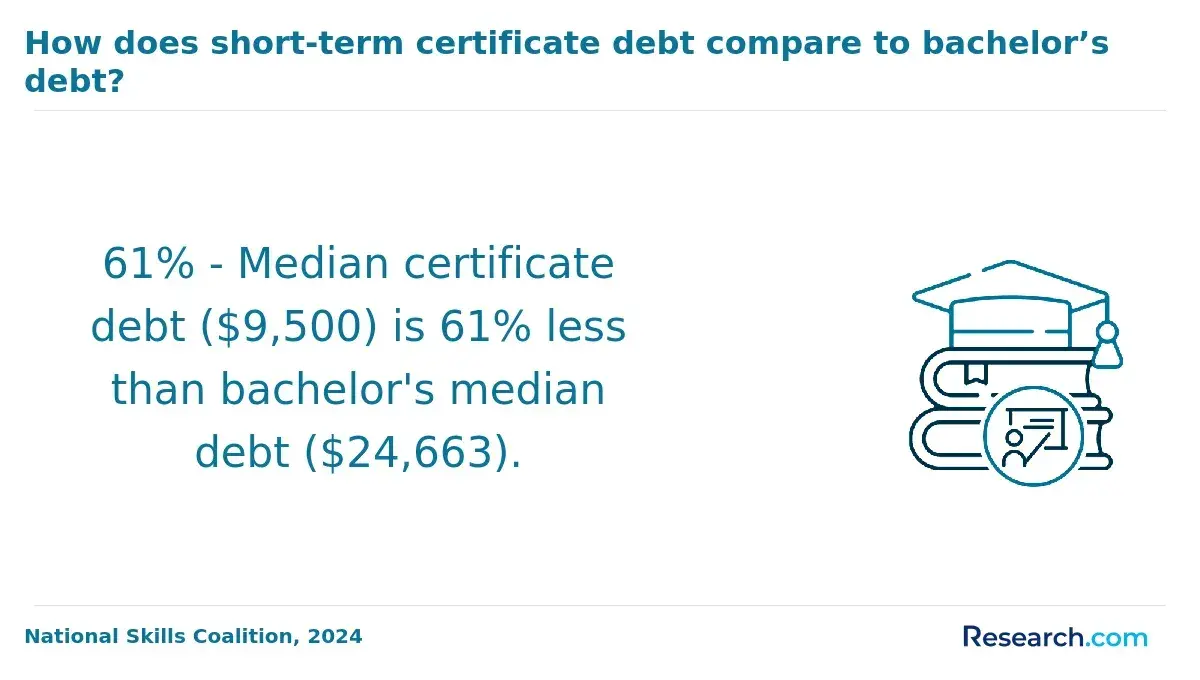
By contrast, adult learners confront more complex financial pressures that extend beyond tuition payments. Many must balance reduced working hours or career interruptions against ongoing family responsibilities, mortgages, and existing debt, creating a pronounced opportunity cost for returning to school. Employer-sponsored tuition assistance and income-driven repayment options provide critical but often limited financial support, influencing these learners' willingness to engage in extended study. Research indicates that 60% of adult learners use personal savings or employment income to fund their education, reflecting a heavier reliance on current earnings relative to traditional students. These competing financial demands require adult learners to weigh the direct costs of degree attainment against foregone wages and the impact on household budgets, underlining the broader financial challenges highlighted in studies of financial challenges faced by traditional versus adult learners.
These financial dynamics significantly influence enrollment decisions and program selection within educational psychology pathways. Adult learners often prioritize flexible scheduling, such as online formats, to accommodate work and family obligations, while traditional students may lean toward campus-based experiences with broader aid eligibility. This divergence affects the return on investment calculations each group performs, factoring in debt tolerance, time to completion, and career applicability differently. For those exploring options, including specialized programs like PharmD online programs, understanding these distinctions helps clarify how financial priorities shape academic paths and workforce integration.
What Challenges Do Adult Learners and Traditional Students Face While Earning a Educational Psychology Degree?
Traditional students in educational psychology programs often struggle with transitioning from the relatively structured environment of high school to the more autonomous demands of higher education. This adjustment includes mastering time management and developing foundational study skills while navigating campus life and social integration, which can significantly impact academic persistence. Financial stress adds another layer of complexity; with average undergraduate debt around $30,000 as reported by the College Board in 2024, managing tuition and living expenses often dictates the pace and feasibility of degree completion. These early-career learners must also balance academic requirements with internships and practicum placements that are critical for employability but can intensify scheduling pressures.
Adult learners face a different constellation of challenges rooted in their life stage and responsibilities. Balancing full-time work, family care duties, and academic commitments requires advanced organizational skills and often leads to delays or interruptions in study, as noted by the Lumina Foundation's 2024 analysis indicating over 55% of adult students pause their educational psychology coursework due to external demands. Additionally, re-engaging with academic expectations and adapting to the hybrid or fully online formats widely adopted in recent years tests technological literacy differently than for their younger counterparts. Financially, while adult learners may benefit from employer tuition assistance or personal savings, these sources frequently fall short compared to federal aid available to traditional students, imposing further constraints on their study plans.
These divergent pressures underscore the need for institutions to tailor support services, such as flexible scheduling, digital skills training, and targeted advising, to the distinct trajectories of both groups. Recognizing how lifecycle factors influence time availability and resource access can help programs better address retention and completion rates in educational psychology. Consequently, effective degree pathways depend on aligning academic structures with the evolving professional and personal realities learners face, ensuring that support mechanisms correspond to their specific challenges rather than assuming a uniform student experience.
How Does Age Affect Educational Psychology Degree Student Retention?
Younger students pursuing educational psychology degrees often encounter retention challenges tied to adjusting to the academic environment and sustaining motivation. Their retention is affected by navigating early collegiate expectations with limited prior experience managing independent learning, time management, and career decision-making pressures. While their full-time status grants better access to campus resources and advising, uncertainty about professional goals can reduce persistence. According to the National Center for Education Statistics in 2024, retention rates for this group average near 80%, reflecting both institutional support and ongoing adjustment hurdles.
In contrast, older students tend to demonstrate clearer educational objectives grounded in work and life experience, which enhances their commitment to degree completion. However, balancing full-time employment and family responsibilities constrains their ability to engage consistently with coursework and campus services, contributing to lower retention rates around 68%. The competing demands on their time coupled with limited flexible scheduling options in many programs require institutions to adapt support systems to maintain these students' enrollment. Their pragmatic approach to education is shaped less by exploratory motives and more by immediate professional applicability and financial considerations.
A graduate recalled applying to an educational psychology program during a particularly stressful period juggling job changes and family logistics. The admissions process used rolling decisions, and waiting for the official offer created tension about whether to delay enrollment or accept other obligations. Ultimately, the candidate chose to hold off on formal application submission until work schedules stabilized, recognizing the importance of adequate preparation to manage coursework alongside personal responsibilities. This strategic timing eased academic persistence later, highlighting how age-related factors influence both entry timing and subsequent retention.
Which Educational Psychology Specializations Are Most Popular Among Adult Learners?
Adult learners in educational psychology degree programs tend to select specializations that offer clear, actionable benefits for their current careers or planned transitions. Unlike younger students focused on foundational roles, working professionals often prioritize tracks that allow them to build on existing experience, enhance marketable skills, and access higher-paying or leadership positions. Programs that integrate practical application, workforce relevance, and flexible learning structures consistently attract this demographic, aligning with the realities of balancing study, employment, and family.
According to data from the National Center for Education Statistics, around 62% of adult learners choose concentrations that directly support mid-career growth or industry shifts. These preferences reflect intentional decisions to upskill in areas with stable demand and pathways to advancement.
- Organizational learning and development: Adult learners gravitate here to leverage their workplace insights for roles in corporate training or talent development. This specialization supports career mobility by strengthening skills that employers increasingly value in optimizing workforce performance and change management.
- Learning technologies: Increasing demand for technology-enhanced education drives interest in this area, especially among those looking to stay current with digital instructional tools. Prior experience combined with new competencies can yield salary improvements and transition opportunities in educational consulting or tech firms.
- Assessment and evaluation: The focus on data-driven decision-making appeals to adults aiming for positions in educational measurement or policy implementation. This specialization aligns with labor market expectations for professionals who can synthesize complex data to inform interventions.
- Special education: This path draws those motivated by stable workforce needs and a growing emphasis on inclusive practice. Professionals with backgrounds in teaching or counseling often choose this route to deepen expertise and qualify for specialist roles.
- Developmental psychology: While more popular among younger students, some adult learners select this specialization when their career goals involve foundational educational roles or school-based services, frequently as part of transitional strategies.
These trends highlight how career-oriented educational psychology degree tracks for mature students reflect nuanced considerations of employability, salary advancement, and practical skill updating. Understanding these patterns helps adult learners make informed decisions about specialization choices that align closely with labor market realities and professional development objectives.
For those exploring salary prospects tied to education and analytical roles, insights from sources such as the sports data analyst salary analyses can shed light on how skill specialization impacts compensation across related fields.
How Does Age Affect Job Opportunities for Educational Psychology Graduates?
Younger educational psychology graduates, typically between 18 and 24 years old, often benefit from more seamless entry into the workforce. Their access to internships, practicum placements, and entry-level roles is generally stronger, as many programs and employers focus on cultivating talent early for long-term retention. This pipeline effect can accelerate early-career positioning and adaptability, with employers valuing the perceived flexibility and trainability of younger candidates. According to the U.S. Bureau of Labor Statistics in 2024, traditional-aged graduates tend to experience faster job placement in educational psychology fields, demonstrating measurable advantages in the initial employment phase for this demographic.
In contrast, adult learners pursuing educational psychology degrees bring diverse prior work experience and transferable skills that shape their employment landscape differently. Their career opportunities often align with roles leveraging practical insight, such as administration or counseling, reflecting clear career transition objectives. However, some employers maintain hesitancies regarding adaptability or long-term availability, affecting hiring timelines. Despite these challenges, adult learners benefit from enhanced networking and clarity of goals within educational psychology, factors increasingly recognized as valuable in specialized settings. These dynamics illustrate the nuanced labor market segmentation impacting career opportunities for adult learners, underscoring the importance of strategic positioning. Those interested in related fields may also explore options like speech pathology degree online for veterans to broaden their professional scope.
What Do Current Educational Psychology Enrollment Trends Reveal About Future Demand?
Rising enrollment trends in educational psychology programs highlight shifting student priorities and evolving perceptions of career utility within the field. A notable 15% increase over three years among adult learners, as reported by the National Center for Education Statistics in 2024, signals growing interest from nontraditional students seeking flexible, applied pathways rather than purely academic tracks. This demographic shift reflects a broader recognition of educational psychology's relevance beyond entry-level roles, emphasizing leadership, interdisciplinary approaches, and specialized skills that accommodate working professionals balancing multiple obligations.
These enrollment patterns align closely with labor market signals where demand extends into education, healthcare, and corporate training sectors emphasizing competency in behavioral assessment and data-driven decision-making. Employers' increasing preference for candidates with practical, hybrid skillsets supports expanded program offerings that integrate online modalities and competency-based progression. Consequently, the growth in adult learner enrollment and the diversification of academic tracks serve as indicators of future workforce shortages and evolving employer requirements, suggesting a sustained expansion of educational psychology programs tailored to real-world demands and specialized career paths.
References:
- What is educational psychology and its importance? | 1Training https://www.1training.org/what-is-educational-psychology-and-its-importance/
- 11 Reasons to Consider Returning to College as an Adult https://www.georgefox.edu/bruin-blog/posts/2021/02/adp-11-reasons/index.html
- 6 Major Reasons Why Adults Go Back to School [Infographic] https://www.columbiasouthern.edu/blog/blog-articles/2019/july/reasons-why-adults-go-back-to-school/
- The State of Psychology Education https://www.parinc.com/learning-center/par-blog/detail/blog/2024/07/09/the-state-of-psychology-education
- How Higher Education Institutions Can Address the Needs of Adult Learners https://www.higheredtoday.org/2022/04/18/how-higher-education-institutions-can-address-the-needs-of-adult-learners/
- Educational psychology - Wikipedia https://en.wikipedia.org/wiki/Educational_psychology
- Home https://www.husson.edu/online/blog/2023/07/why-pursue-a-psychology-degree
- Adult Postsecondary Learners: Reviewing the Data and Evidence https://www.jff.org/idea/adult-learners/
- Solutions to the Three Most Significant Challenges Faced By Non-Traditional Students - The EvoLLLution https://evolllution.com/opinions/solutions-significant-challenges-faced-non-traditional-students
- Grade Retention Facts https://www.caanv.org/grade-retention-facts/
Other Things You Should Know About Educational Psychology
Adult learners overwhelmingly opt for part-time enrollment due to external responsibilities such as work and family, which extends their overall time to degree completion. Traditional students more often enroll full-time, allowing for a quicker program finish but higher short-term workload intensity. Prospective students should weigh whether program pacing aligns with their life circumstances; adult learners may benefit from flexible scheduling but face longer financial and opportunity costs, while traditional students can capitalize on full-time immersion but must manage concentrated academic demands.
Adult learners generally thrive in hybrid or fully online formats that accommodate their schedules and allow integration of practical experience. Traditional students tend to benefit from in-person structures that foster peer interaction and immersive learning. Choosing a program format influences networking opportunities and access to applied learning environments; therefore, students should prioritize delivery modes that align with their preferred engagement style and career goals rather than convenience alone.
In 2027, the demand for online formats is rising significantly among adult learners in educational psychology programs due to their flexibility. Traditional students still prefer in-person formats for a comprehensive campus experience; however, the hybrid model is gaining appeal across both age groups.
Adult learners benefit significantly from institutional supports like career counseling, childcare, and flexible advising because they juggle multiple commitments. Traditional students, while generally more self-directed, gain from mentorship programs and academic enrichment services that accelerate learning and professional connections. For optimal outcomes, adult learners should heavily factor the availability of comprehensive support into their program choice, whereas traditional students might prioritize programs with robust research and internship opportunities.