2027 Business Law Degree Program Availability Report: Which States and Schools Offer the Most Options

Co-Founder and Chief Data Scientist
The concentration of business law degree programs across states reflects deeper regional alignments between legal education and economic specialization. States with diverse commercial hubs and evolving regulatory landscapes tend to host a broader array of such programs, suggesting institutional focus on meeting multifaceted workforce needs. According to the U. S. Bureau of Labor Statistics (2024), legal occupations requiring specialized knowledge in business compliance and corporate governance are expected to grow by 7%, influencing educational investment in areas with pronounced market demand. This interplay highlights how program availability maps onto local economic priorities and signals varied access to specialized legal education nationwide.
This report examines which states and schools offer the greatest number of business law degree options, exploring how these patterns reveal institutional priorities, educational accessibility, and labor market connections within the field.
Key Benefits of States and Schools That Offer the Most Business Law Degree Program Options
- States and schools with diverse business law degree options often require navigating varied curricular structures, which can extend completion time but yield broader legal competency applicable across industries.
- Employers favor graduates from regions offering multiple specialized tracks, as these programs better align skills with niche regulatory and transactional demands in evolving markets.
- A 2024 study shows that program abundance correlates with increased access for nontraditional students, reflecting growing institutional adaptation but also uneven resource distribution impacting affordability.
- Key Benefits of States and Schools That Offer the Most Business Law Degree Program Options Key Benefits
- Which States Offer the Most Business Law Degree Programs? Top States
- Why Do Some States Have More Business Law Programs Than Others? Program Availability
- Which Colleges Offer the Largest Number of Business Law Degree Options? Top Schools
- How Do Online Programs Improve Access in States With Limited Options? Online Program Access
- How Much Does Business Law Program Tuition Vary by State? Tuition Across States
- How Does Business Law Program Demand Affect Admissions Decisions? Program Demand
- How Do Business Law Specialization Options Vary by Region? Specialization Options
- How Does Regional Employer Demand Affect Career Outcomes? Employer Demand
- What Factors Matter Most When Comparing Business Law Programs Across States? Key Comparison Factors
- Which Regions May See the Fastest Growth in Business Law Education? Fastest Growing Region
Which States Offer the Most Business Law Degree Programs?
The geographic concentration of business law degree programs in the United States is closely tied to the density of higher education institutions, economic scale, and the presence of robust legal markets. Regions with diversified industries and strong corporate sectors tend to host more programs due to employer demand for specialized legal professionals. Understanding this dynamic helps clarify why some states offer substantially more business law education options than others.
- California: California's large population and its extensive university system contribute to a high availability of business law programs. The state's economy spans technology, entertainment, and international trade, fostering programs that emphasize corporate and commercial law. Many law schools here integrate practical experiences such as internships with major firms, which enhances student preparedness for competitive markets.
- New York: The state's combination of legal academia and proximity to a globally significant financial sector in New York City underpins its rich offering of business law degrees. Law schools capitalize on corporate partnerships to provide specialized tracks and real-world learning through mentorship and internships. This environment creates pathways aligned with multinational firms and financial institutions, reflecting strong employer expectations.
- Texas: Growth in Texas business law programs corresponds with its economic expansion, especially in energy and regulatory fields. Law schools in Texas often tailor their curricula to regional industry needs, preparing graduates for sector-specific legal challenges. The increasing number of programs supports greater student access and specialized training tailored to metropolitan commercial growth.
States with fewer offerings typically have smaller legal markets and less corporate demand, which constrains the breadth of academic options and experiential learning opportunities. Prospective students focused on wide-ranging business law degree programs should weigh not only program availability but also how local industries and legal ecosystems influence curriculum relevance and post-graduate employment potential.
Although detailed 2024 enrollment data for business law programs reveals these concentration patterns, students also benefit from exploring resources related to affordability and program structure. For example, candidates considering advanced study might consult listings of affordable online PhD programs to assess options outside traditional law degree pathways that could complement their professional goals.
Why Do Some States Have More Business Law Programs Than Others?
The distribution of business law degree programs across U.S. states is largely driven by variations in higher education infrastructure and regional labor market demand. States with denser populations and well-established university systems tend to offer a wider array of business law programs, as institutional capacity supports curriculum development and faculty specialization. This creates a feedback loop where local economies with sizable corporate and legal sectors stimulate demand for graduates trained in legal aspects of business. The uneven availability of business law degree programs by state availability reflects these structural disparities rather than simple institutional choices.
Key factors behind this variation include state funding priorities that influence the scale and scope of law school offerings and the capacity of large research universities to sustain specialized programs. Industry clustering plays a pivotal role-states housing major financial hubs or corporate headquarters foster employer demand for practitioners skilled in regulatory compliance, contracts, and transactions, encouraging program growth. According to a 2024 report from the National Center for Education Statistics, states with complex, diverse economies significantly outperform others in business law program breadth, highlighting how economic diversity and university resources together shape regional differences in business law education access.
These disparities have meaningful implications for student access and workforce development, prompting some prospective students in underserved regions to consider alternatives such as online education. A growing share of programs address this gap through remote and hybrid formats, yet geographic concentration still influences career networking and job placement. For students exploring options, tools like the cheapest online business degree can provide pathways to legal education when regional availability is limited, underscoring how economic and institutional factors continue to shape the evolving landscape of business law education nationally.
Which Colleges Offer the Largest Number of Business Law Degree Options?
The diversity of business law degree options at a college is closely tied to the institution's size, resource base, and academic infrastructure rather than its region or location alone. Larger and research-driven universities commonly develop a variety of specialized tracks, joint degrees, and tailored certificates in business law, supported by extensive faculty expertise and interdisciplinary collaboration. These schools can leverage their scale to offer multiple program delivery methods, including in-person, hybrid, and online formats, addressing different student and workforce needs.
- Flagship state universities: Typically benefiting from broad public funding and comprehensive research mandates, these institutions maintain both law and business schools with substantial faculty depth. Their scale enables the creation of niche areas like corporate compliance, mergers and acquisitions, and international business law, responding to employer demand for specialization. The University of Michigan exemplifies this model by integrating cross-disciplinary resources to expand business law options.
- Research-intensive private universities: These schools often combine high academic standards with strong legal and business faculties, facilitating innovative curriculum designs and joint degree programs. Their strategic focus on experiential learning boosts employability by embedding clinics, externships, and case projects within business law offerings-as seen at institutions like New York University.
- Major public university systems: With the benefit of multiple campuses and administrative support, these systems can decentralize program development while maintaining centralized standards. This structure promotes diverse paths within business law programs across campuses, adapting to regional legal and corporate market needs.
- Comprehensive universities with dual accreditation: Schools that hold accreditation for both law and business education are more likely to offer an extensive catalog of specialized business law degrees and certificates, drawing on interdisciplinary faculty collaboration and industry partnerships. University of California-Berkeley's model is illustrative here, balancing research output and practical legal training.
According to 2024 datasets from national higher education research bodies, institutions combining fully accredited law and business schools report up to 40% more specialized business law program options than schools offering only foundational legal studies. This gap underscores the importance of institutional capacity and strategic resource allocation in expanding academic pathways aligned with evolving employer requirements.
How Do Online Programs Improve Access in States With Limited Options?
States with limited in-person business law degree programs often restrict student access based on geographic and institutional availability. Online business law programs address this constraint by providing enrollment options where local programs are sparse or non-existent, thus mitigating the need for relocation or commuting long distances. According to the National Center for Education Statistics in 2024, over 60% of students living in states with fewer than three traditional business law offerings took at least one online course, underscoring how virtual formats broaden academic reach beyond physical campuses. This shift effectively allows students to pursue business law credentials without surrendering local commitments or incurring additional logistical costs tied to attending a distant university.
The mechanisms enabling this expanded access include asynchronous coursework models that accommodate nontraditional schedules, thereby attracting working professionals and those with domestic responsibilities. Cross-state enrollment permitted by online platforms reduces dependency on in-state institutions and increases competitive institutional presence in underserved areas. Furthermore, institutions leverage digital scalability to extend specialized course offerings and faculty expertise to a geographically diverse student body. Data from recent federal education reports highlights a 25% enrollment surge in states offering online business law options despite traditionally limited brick-and-mortar programs, reflecting how digital delivery reshapes student mobility and enrollment distribution patterns.
Beyond immediate student access, these online programs influence regional workforce dynamics by supplying qualified graduates in areas previously undersupplied with legal education resources. The increased availability catalyzes more balanced educational opportunities across disparate regions, fostering a more equitable talent pipeline for employers statewide and nationally. At the same time, expanding digital footprints create competitive pressures among institutions to innovate and adapt recruitment and curriculum strategies across state lines, which may prompt further program diversification and specialization in business law education.
A recent graduate's experience reflects these dynamics: facing rolling admissions delays from under-resourced state programs, the student considered multiple online business law offerings as a contingency. Their hesitation was partly due to uncertain application timelines and concerns about securing financial aid, yet when a coveted in-person slot required an earlier start than expected, the availability of accredited online alternatives provided a critical fallback. This flexibility allowed them to manage timing and preparation pressures without sacrificing educational goals, illustrating how online programs serve as strategic options amid complex admissions landscapes in states with sparse traditional options.
How Much Does Business Law Program Tuition Vary by State?
Tuition for business law programs varies widely across U.S. states, primarily due to differing public funding levels, institutional types, and residency-based tuition structures. Public universities typically charge lower rates for in-state students, reflecting state subsidies and policy priorities that make education more affordable for residents. Private institutions, conversely, rely more heavily on tuition revenue and often set their prices independently of state funding, leading to significant cost disparities. These variations are neither arbitrary nor solely market-driven but reflect broader higher education financing models and regional policy frameworks that determine institutional pricing strategies and affect accessibility for prospective students.
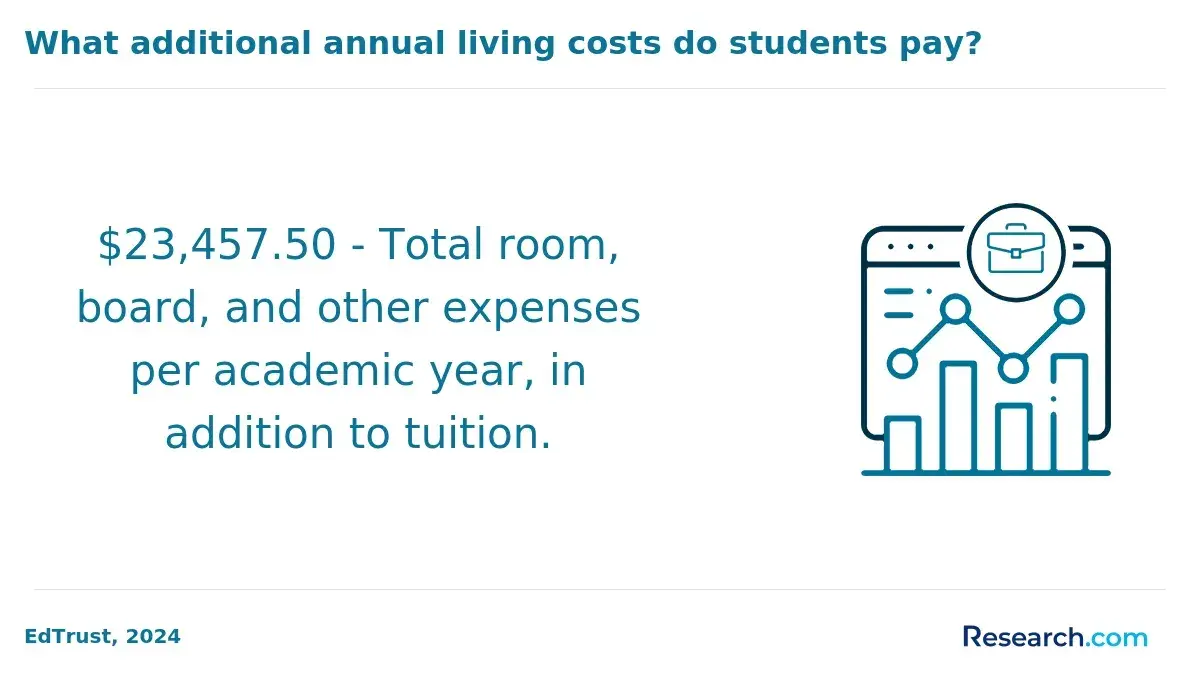
According to recent data from state university systems and educational research sources, in-state tuition for business law degrees at public universities generally falls between $7,000 and $15,000 annually in states such as Texas, Florida, and North Carolina. Out-of-state tuition or private university fees in states with many private institutions, including California and New York, can exceed $30,000 to $50,000 per year. These figures highlight how residency status and institutional funding mechanisms contribute to the average cost of business law degrees across US states, often resulting in out-of-state students facing two to three times higher tuition than in-state counterparts. Understanding these cost structures is essential for evaluating the true financial commitment involved in pursuing a business law program in various regions.
These tuition disparities have practical implications for student mobility and program selection, influencing where students choose to study based on affordability and market access. The cost differences also intersect with regional job markets and employer preferences, especially in legal fields where alumni networks and institutional prestige vary by state. Affordability gaps can impact who can realistically access certain programs, affecting diversity and overall competition within business law education. Prospective students and education analysts benefit from considering these structural tuition variations alongside program availability and outcomes to make well-informed decisions about long-term career viability. For those researching related fields, data about other professional degrees, such as the best online MSW programs, can offer additional insights into how program costs and delivery modes vary across disciplines.
How Does Business Law Program Demand Affect Admissions Decisions?
Rising demand for business law programs intensifies admissions selectivity by compressing available seats among an expanding pool of qualified applicants. This pressure prompts schools to tighten acceptance thresholds, often elevating GPA requirements and emphasizing professional experience or specialized interests aligned with evolving market niches. The competitive landscape especially affects programs in regions with limited options or nationally renowned reputations, where enrollment caps restrict intake despite growing applicant enthusiasm. Consequently, candidates face a more rigorous vetting process aimed at identifying those best suited to meet both academic standards and practical demands of the corporate legal environment.
Underlying this dynamic are finite program capacities shaped by faculty resources, facility constraints, and accreditation mandates that govern cohort sizes and curriculum quality. These structural limits necessitate selective admissions frameworks that balance institutional mission with workforce needs, favoring applicants demonstrating readiness for emerging business law disciplines such as compliance or intellectual property. Moreover, admissions committees increasingly integrate multifaceted evaluations-beyond grades alone-to align candidate profiles with employer expectations in competitive labor markets. This intersection of demand-driven enrollment management and labor market calibration effectively channels student selection toward those poised for professional success within constrained program slots.
As demand escalates, applicants must strategically enhance their profiles, focusing on relevant internships or focused study to navigate high admission barriers. While heightened program stature often accrues with enrollment selectivity, it also risks narrowing access for nontraditional candidates, potentially limiting diversity and broader workforce inclusion. Geographic variations in program density further influence applicant options, with single-program states exhibiting heightened entry thresholds compared to regions offering more diverse business law academic opportunities. These dynamics underscore the complex tradeoffs institutions face between maintaining academic rigor, meeting labor market needs, and preserving inclusivity in admissions.
Reflecting on this interplay, a recent graduate recalled applying during a cycle marked by unusually high demand and staggered admissions decisions. The delay in hearing back created uncertainty, prompting a cautious approach to accepting other offers while intensifying efforts to strengthen their application materials mid-cycle. This experience highlighted the tension between limited program slots and a competitive applicant pool, illustrating the practical challenges candidates encounter when timing and program capacity collectively shape admissions outcomes.
How Do Business Law Specialization Options Vary by Region?
Business law specialization options closely reflect regional economic priorities and the concentration of key industries within states. Areas with robust corporate sectors, notably California, New York, and Texas, tend to offer a wider array of advanced specializations such as corporate governance and securities regulation, driven by the complex regulatory environments and high transactional volumes in those markets. In contrast, regions with economies centered on manufacturing, agriculture, or mid-sized firms often focus their curricula on contract law and employment law, aligning educational offerings with the immediate legal needs of these industries. According to the National Center for Education Statistics' 2024 data, states with significant commercial hubs provide more diverse and targeted programs that directly correlate with local employer demand for specialized legal expertise.
Variations in business law tracks also stem from institutional focus and regional workforce partnerships. Universities in technology-forward states like Washington and Colorado increasingly integrate cyberlaw and data privacy into their programs, reflecting regional innovation ecosystems and emerging regulatory challenges. Meanwhile, colleges in areas lacking large corporate presence typically maintain more generalized courses, which limits graduates' access to specialized practical training valued by employers. These localized differences highlight how program design is shaped not only by economic sectors but also by university research strengths and collaborative opportunities with local legal firms or corporate legal departments seeking candidates with tailored skills.
The regional divergence in specializations carries implications for student decision-making and labor market outcomes. Students targeting metropolitan centers with established commercial activity may gain an edge through programs offering specialized clinics and internships aligned with local employer expectations. Conversely, graduates from areas offering fewer niche options may face constraints in competitive legal markets or need to relocate to access top-tier business law roles. Understanding the regional ecosystem thus becomes critical for prospective students aiming to maximize their employability and long-term career viability within this complex field.
How Does Regional Employer Demand Affect Career Outcomes?
Regional employer demand exerts a strong influence on employment prospects and early career opportunities for graduates of business law degree programs. Areas with dense concentrations of corporate headquarters, financial sectors, or commercial activity naturally generate higher demand for business law expertise, producing a richer hiring environment. Graduates seeking positions in states like California, New York, and Texas often find a wider range of openings and more competitive salary offers compared to those in smaller or less economically diverse regions. This geographic variability means that many prospective students must consider local labor market conditions when evaluating career opportunities after completing their degrees, as regional employer demand for business law graduates can significantly impact job availability and starting salaries.
The relationship between regional employer demand and career outcomes is shaped by several key mechanisms including industry clustering, university-employer linkages, and competitive wage dynamics across markets. Established business hubs tend to benefit from specialized legal hiring ecosystems where firms routinely recruit graduates with niche skills aligned to complex transactions and regulatory environments. Additionally, partnerships between employers and academic programs in these regions enhance access to internships and mentorships, reinforcing localized talent pipelines. Salary premiums commonly seen in these hotspots reflect not only higher living costs but also active competition among firms to secure qualified business law professionals, underscoring how regional concentration aligns workforce supply with demand.
Long-term career trajectories in business law are also influenced by geographic mobility and the expanding availability of remote work arrangements, but regional demand patterns still play a critical role. Graduates willing to relocate to high-demand states can leverage these concentrated job markets for faster advancement and broader professional networks. Conversely, those remaining in lower-demand areas may encounter more limited progression and compensation growth. For students comparing program availability across states, including considerations of salary and local employer partnerships, integrating an understanding of how regional employer demand shapes career opportunities is essential. For related considerations on accessible education options, exploring cheapest online LPC programs offers insight into cost-effective pathways in allied fields.
What Factors Matter Most When Comparing Business Law Programs Across States?
Comparing business law degree programs across states requires evaluating more than just program availability. State-level differences can significantly shape educational access, affordability, specialization options, and post-graduation success. Understanding regional variations in legal market demands and institutional infrastructure is critical for assessing where students can gain the most relevant expertise and career leverage. This analysis addresses how these factors pragmatically influence student outcomes beyond common reputation metrics.
- Program Outcomes and Accreditation: Graduation and bar passage rates provide transparent, measurable indicators of program quality. States with a higher density of ABA-accredited business law programs tend to report a 10% greater average employment rate within nine months of graduation, reflecting stronger academic preparation linked to recognized standards.
- Practical Training Opportunities: States that host schools with integrated internships, externships, or legal clinics aligned with corporate practices better position students for real-world challenges. Practical exposure directly correlates with employer readiness in competitive business law markets.
- Curriculum Breadth and Specialization: Programs offering specialized tracks in areas like mergers and acquisitions, compliance law, or corporate governance build versatility needed for diverse employer expectations. Regional clusters often reflect local legal economies, allowing students to benefit from targeted expertise.
- Cost and Accessibility: Tuition varies widely by state, but the return on investment is best assessed by regional earning potential and market demand for business law professionals. Students should weigh sticker price against the likelihood of career outcomes based on local economic conditions and program quality.
- Institutional Connections and Networking: Proximity to robust business and legal markets enhances internship availability, mentoring, and job placement. State-level legal ecosystems influence these ties, making location a decisive factor for practical career progression.
This evaluation aligns with key considerations for business law program availability by state and how regional factors affect business law degree options. For students exploring blended or remote options related to professional degrees, resources such as can you become an architect online demonstrate how flexibility might integrate with traditional programs in law-adjacent fields, though practical experiential learning remains essential in business law.
Which Regions May See the Fastest Growth in Business Law Education?
Growth in business law education is closely tied to regions where employer demand, population trends, and higher education investments converge. Areas experiencing economic expansion and evolving regulatory environments tend to see quicker program development. Understanding which regions align these factors offers valuable insights for prospective students evaluating where academic options and practical opportunities will expand.
- Southeast: The Southeast, including Sun Belt states like Texas, Florida, and Georgia, is leading growth due to rapid economic diversification and increasing corporate relocations. Regional universities are expanding business law offerings, often integrating compliance and tech law, reflecting employer demand for cross-disciplinary expertise. Students benefit from rising program variety alongside expanding internship and job markets.
- Midwest: Metropolitan hubs such as Chicago and Minneapolis are enhancing educational infrastructure with business law degrees that emphasize interdisciplinary skills. The Midwest's steady economic growth feeds institutional investments, resulting in a 12% rise in new program offerings at southern universities and growing focus on regulatory and technology intersections.
- Southwest: While smaller in scale than the Southeast, the Southwest is seeing gradual increases driven by population growth and business startups needing specialized legal knowledge. Universities here are responding by developing niche business law programs catering to emerging industries.
- Northeast: The Northeast maintains established business law schools with steady enrollments, but growth is moderate due to market saturation and stable regional economies. Opportunities here lean more toward well-established programs with extensive alumni networks rather than rapid expansion.
- Mountain West: Growth is emerging but limited by smaller population centers and less extensive university systems. However, linking business law education with trends in natural resources and technology law creates focused opportunities for specialized students.
References:
- Tuition Costs & Comparison - Massachusetts School of Law https://www.mslaw.edu/tuition-costs-comparison/
- Law firms' preferred universities - Chambers Student Guide https://www.chambersstudent.co.uk/where-to-start/newsletter/law-firms-preferred-universities
- Online Business Law Degree Programs | Colleges of Law https://www.collegesoflaw.edu/business-law-technology-programs/
- LEGAL EDUCATION IN THE BRICS COUNTRIES IN THE CONTEXT OF GLOBALIZATION: A COMPARATIVE ANALYSIS | Vinnichenko | BRICS Law Journal https://www.bricslawjournal.com/jour/article/view/166
- Top 5 States To Start a Business in 2025 https://www.rocketlawyer.com/business-and-contracts/starting-a-business/form-an-llc/legal-guide/top-5-states-to-start-a-business
- Getting into law school just got harder. Here's how you can stand out. https://www.businessinsider.com/law-school-applications-surge-economic-worry-slow-hiring-2025-3
- Which Law Specialization is Right For You? https://www.princetonreview.com/law-school-advice/law-specializations
- Access to Legal Education Expanded Through Increased Distance Learning https://www.lsac.org/blog/access-legal-education-expanded-through-increased-distance-learning
- Business Law degrees https://www.whatuni.com/degree-courses/search
- Europe’s Fastest-Growing Economies Offer a Positive Lesson for Business Students https://www.swissuniversity.com/post/europe-s-fastest-growing-economies-offer-a-positive-lesson-for-business-students
Other Things You Should Know About Business Law
A state with many business law degree options may offer extensive breadth, including niche specializations and interdisciplinary tracks, but this can dilute program depth at some institutions. Students seeking rigorous, in-depth study should prioritize programs with a focused curriculum and strong faculty expertise in core business law topics rather than simply choosing based on quantity. Greater availability means more choice but also requires careful vetting to ensure programs deliver substantive, practical skills valued by employers.
While states with numerous programs widen access, they often include a mix of research-oriented universities and teaching-focused colleges. Students must weigh whether to pursue a top-tier program with potentially higher competition and cost against attending a less prestigious local institution with stronger ties to regional employers. Prioritizing program reputation and employer network strength often outweighs the advantage of multiple local options when long-term employability is the goal.
In 2027, state-specific regulatory frameworks and business trends significantly influence business law program diversity. States with robust financial and corporate sectors often offer varied programs tailored to these industries, enriching the curriculum with practical insights specific to the region's economic landscape.
Hands-on learning, such as clinics, internships, or simulation courses, is crucial in business law to bridge theory and real-world skills. States offering many programs do not uniformly provide robust experiential components, so students should verify these opportunities before enrolling. Prioritizing programs with strong practical training correlates with better employment outcomes, especially in competitive legal markets.