2027 Business Law Affordability by State: Where Students Pay the Most and Least

Co-Founder and Chief Data Scientist
Choosing between a highly ranked business law program with tuition exceeding $50,000 per year and an in-state alternative charging under $15,000 forces many students into difficult financial tradeoffs. Beyond sticker price, a 2024 National Center for Education Statistics report shows that living expenses in certain states can add 30% or more to the total cost of attendance, undermining nominal tuition savings and increasing reliance on borrowing.
This disproportionately affects out-of-state enrollees and those lacking robust financial aid. For budget-conscious students, understanding these nuanced affordability factors is essential to avoid long-term debt burdens and stalled career entry. This article investigates where business law students face the highest and lowest financial barriers by state, offering clarity to help make strategically sound enrollment choices.
Key Things to Know About Business Law Affordability by State
- States with lower tuition often have higher living costs, creating a tradeoff that raises total attendance expenses; prospective students must factor this into budgeting beyond published in-state rates.
- Out-of-state tuition premiums frequently limit workforce mobility post-graduation, as employers favor candidates with regional credentials; this influences long-term employability in state-regulated business law markets.
- Recent 2024 data show declining state funding for legal education increases reliance on scholarships; timing financial aid applications is critical for access to affordable business law pathways.
- Key Things to Know About Business Law Affordability by State Key Things to Know About Business Law Affordability by State
- Which States Have the Most Affordable Business Law Degree Programs? Most Affordable State Programs
- Which States Have the Highest Business Law Degree Costs? Highest State Tuition Costs
- How Much Does a Business Law Degree Cost by State? Degree Costs by State
- Why Does Business Law Affordability Vary So Much Between States? State Affordability Variations
- How Do In-State and Out-of-State Tuition Rates Affect Business Law Affordability? In-State vs. Out-of-State Rates
- How Does the Cost of Living Impact Overall Business Law Affordability by State? Living Costs and Affordability
- Which States Offer the Best Value for a Business Law Degree? Best Value State Degrees
- What Financial Aid and Scholarship Opportunities Can Reduce Business Law Costs? What Financial Aid and Scholarship Opportunities Can Reduce Business Law Costs?
- Are Online Business Law Degree Programs More Affordable Than On-Campus Options? Are Online Business Law Degree Programs More Affordable Than On-Campus Options?
- Is a Business Law Degree Worth the Cost Based on Career Outcomes and ROI? Degree ROI and Outcomes
Which States Have the Most Affordable Business Law Degree Programs?
State-level funding priorities and residency-based tuition structures fundamentally shape the affordability landscape for business law degree programs. For example, in Wyoming, where public institutions benefit from robust state appropriations, resident undergraduate tuition averages around $4,000 annually—less than half the national average—enabling many local students to complete their degrees with manageable debt.
This differs significantly from high-cost states where nonresident tuition premiums and elevated living expenses amplify financial burdens, often forcing out-of-state students to weigh the value of attending flagship universities against less costly alternatives. Such disparities underscore the importance of strategically selecting programs not only by sticker price but also by understanding the impact of in-state status and comprehensive cost-of-attendance on long-term financial outcomes.
These differences influence enrollment patterns, degree completion prospects, and ultimately career flexibility for students pursuing business law. States with streamlined financial aid targeting residents and law-related fields, such as South Dakota, reduce net expenses and debt pressure, which can be a decisive factor for budget-conscious learners. Additionally, the growing availability of online and hybrid pathways further reshapes cost considerations by mitigating housing and commuting expenses, expanding access beyond geographic constraints—a dynamic evident in evolving educational infrastructures.
As prospective students compare business law tuition costs across states, incorporating practical elements like regional cost of living and aid availability is crucial to evaluating real affordability rather than relying on headline tuition alone. That said, for those balancing work and study, options like an online EdD illustrate how flexible delivery can complement cost considerations in pursuit of legal education.
Which States Have the Highest Business Law Degree Costs?
Higher costs for earning a business law degree in certain states often stem from systemic funding limitations and regional economic pressures that extend well beyond tuition rates. In states like California and New York, public funding shortfalls force universities to rely heavily on out-of-state tuition premiums, which can push nonresident students' annual costs above $18,000 just in tuition, according to 2024 IPEDS data.
This combined with some of the nation's most expensive living expenses in metropolitan areas like San Francisco and New York City means students face a financial tradeoff between access to reputable programs and the heightened debt burden caused by elevated housing and daily costs. The prominence of private law schools with tuition above $50,000 annually, often without the cushion of state subsidies, further complicates affordability and can skew a student's decision toward either forgoing certain geographic markets or seeking extensive financial aid.
These cost dynamics shape not only where prospective business law students choose to enroll but also whether they pursue in-person programs or consider online alternatives at more affordable institutions. Residency status becomes a critical factor since nonresident learners shoulder markedly higher tuition, so some students weigh relocation or part-time enrollment options to offset expenses.
Employers in competitive markets still value direct experience and regional networks, adding pressure to attend local institutions despite these financial obstacles. As a result, students must carefully assess whether the professional opportunities and prestige associated with high-cost states justify the financial sacrifices, especially when less costly states might offer comparable foundational training with lower debt exposure.
One recent business law graduate recalled navigating this cost puzzle firsthand: weighing the stark difference between a public university in her home state versus a prestigious private school on the East Coast. Although the privates' program promised access to leading faculty and internship pipelines, she hesitated after calculating the total cost of living and tuition premiums for nonresidents.
She ultimately chose a hybrid approach—enrolling in an in-state school while supplementing with online courses from a higher-ranked program to balance quality and cost. The experience left her cautious about assuming that higher sticker prices automatically translate to better returns, underscoring the necessity of granular budget planning and realistic career outlook assessments before committing financially to a specific state's program.
How Much Does a Business Law Degree Cost by State?
Costs of earning a business law degree differ sharply depending on the state due to distinct public versus private institution pricing, in-state versus out-of-state tuition policies, and variations in state funding for higher education. For instance, attending a public university in California might cost an in-state student roughly $10,000 annually, while the same program at a private university in New York can exceed $50,000, creating vastly different financial commitments. These disparities influence choices about whether to enroll locally, pay higher out-of-state fees, or consider online alternatives to mitigate costs and relocation burdens.
Regional economic factors like housing and living expenses further compound tuition differences, which means a student budgeting for college in Massachusetts must factor in higher day-to-day expenses alongside tuition fees that often surpass $20,000 per year at public institutions. The Integrated Postsecondary Education Data System (IPEDS) recently highlighted that total attendance costs can vary by more than 40% between states.
This necessitates careful financial planning, especially since scholarships and state-specific grants vary widely and can meaningfully impact net costs. Students weighing these factors must also consider long-term debt implications and career entry timing, since higher costs do not always correlate with improved employment prospects or salary outcomes in business law roles.
Ultimately, budget-conscious students might prioritize enrolling in states with subsidized public university tuition and manageable living costs, balancing educational quality against economic realities. Conversely, those targeting prestigious private programs or strategic relocation for particular legal markets should plan for significantly higher expenses. The decision extends beyond tuition alone—state policies on financial aid, program availability, and regional job markets play critical roles in shaping a sustainable education and career pathway in business law.
Why Does Business Law Affordability Vary So Much Between States?
State funding disparities profoundly influence business law tuition differences by state, often outweighing institutional pricing policies. For instance, 2024 data from the National Center for Education Statistics show states like Wyoming and New Mexico allocate over $15,000 more per student annually than states such as Illinois, directly lowering in-state tuition for public universities.
This shapes student decisions, particularly for budget-conscious learners weighing public schooling options. Regions with stronger private law school presences tend to have higher average costs due to limited subsidization, compelling many students to consider out-of-state or online programs instead.
Regional economic conditions and demographic trends also govern pricing dynamics, with urban states like California and New York charging significantly higher rates—over 20% above the national average—to offset elevated faculty salaries and operational expenses. Such factors feed into broader regional cost factors for business law degrees, influencing whether students opt to remain in-state or explore more affordable alternatives elsewhere. Residency tuition policies and targeted scholarship programs further complicate affordability, meaning that state-specific financial aid availability can be as critical as sticker price.
Students navigating these complexities should also consider enrollment shifts, as declining populations may prompt funding cuts that increase per-student costs, while growth states might temporarily raise expenses to scale capacity. Those seeking cost-effective pathways—including evaluating the easiest MSW to get into—will find that understanding these multilayered tradeoffs is essential for long-term educational and career planning.
How Do In-State and Out-of-State Tuition Rates Affect Business Law Affordability?
Residency-based tuition differences critically shape the financial feasibility of pursuing a business law degree, often outweighing other cost factors in educational planning. Public institutions typically offer in-state tuition rates around $10,200 annually, whereas out-of-state students face averages closer to $26,800, per 2024 National Center for Education Statistics data.
This not only pressures many students to prioritize enrollment at institutions within their home state but also influences decisions on relocation and whether investing time in establishing residency for tuition purposes is worthwhile. While reciprocity agreements in specific regions can lower out-of-state costs, such arrangements are fragmented and insufficient to broadly offset these financial burdens, compelling students to weigh the tradeoff between potentially stronger program alignment elsewhere and manageable debt loads.
Private and online programs introduce additional complexity, as they often set uniform tuition rates that remove residency-based price variation but come with their own premium sticker prices. Although private schools may offer scholarships that mitigate net expenses, these opportunities vary widely and lack the predictability of public in-state rates subsidized by state funding.
For budget-conscious students comparing business law programs across state lines, it becomes essential to evaluate not just tuition figures but the interplay of fees, aid, and the long-term value tied to local labor markets. Hence, residency status emerges as a pivotal factor shaping where and how students invest educational resources to balance direct costs against career-relevant outcomes.
One recent graduate shared that despite potential admission to a renowned out-of-state business law program, the student ultimately prioritized an in-state public university after uncovering the stark $15,000 annual tuition gap. Relocating to qualify for in-state status seemed impractical due to strict residency duration requirements and financial uncertainties tied to lost local employment.
The student reflected, "Paying out-of-state rates felt like betting on prestige over practicality, and I wasn't sure it justified the extra debt burden given my regional career goals." This experience highlights the nuanced calculus students face when residency-based tuition structures collide with real-world financial constraints and professional planning.
How Does the Cost of Living Impact Overall Business Law Affordability by State?
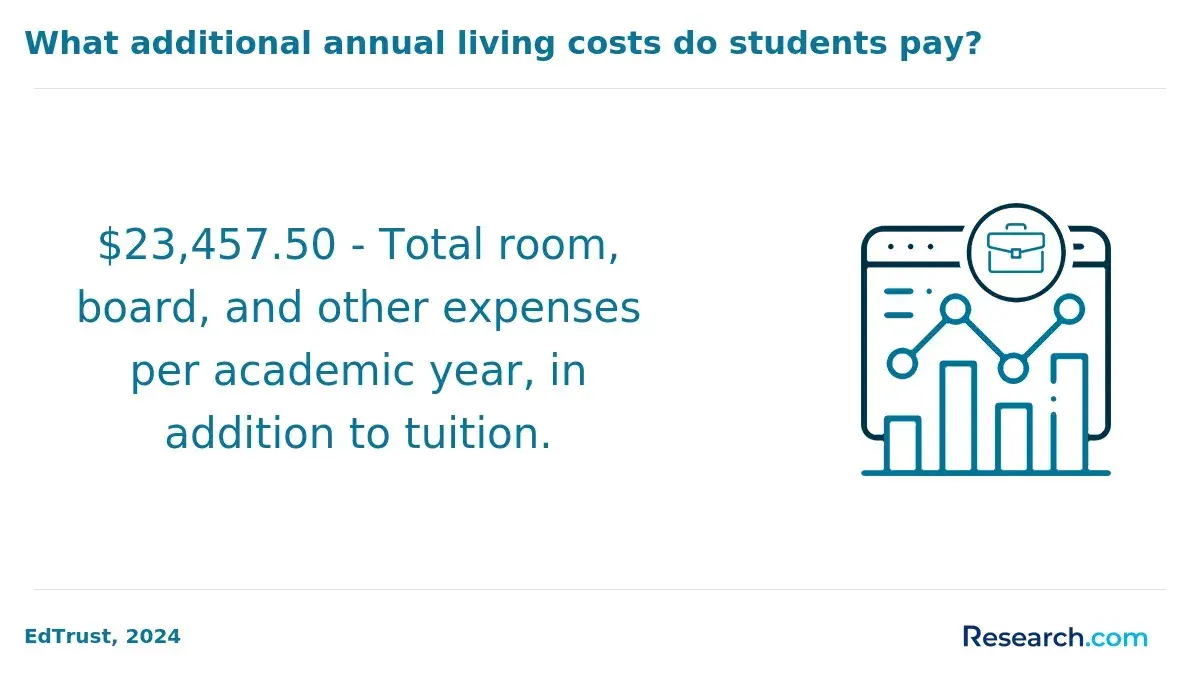
Housing and regional living expenses significantly skew the actual cost of earning a business law degree across states, often outweighing tuition differences. For example, while tuition in California and New York might be comparable to other states, the higher median rents there add thousands to annual costs, forcing students to balance these housing expenses with educational commitments. A student attending law school in Texas' Dallas-Fort Worth area might face steep daily commuting costs due to sprawling geography, unlike peers in smaller Midwest college towns where transportation is less burdensome, highlighting the important tradeoff between living arrangements and commuting expenditures.
Beyond housing and transit, food, healthcare, and utilities compound variations in cost, influencing student budgeting and financial aid planning. States with elevated living expenses like Massachusetts challenge students to anticipate these ancillary costs when assessing business law degree affordability by state. Lower cost-of-living states such as Arkansas and Mississippi reduce the pressure of non-tuition expenses, potentially easing the student debt burden. This dynamic affects enrollment choices, as some may consider online options or residency changes to manage total expenses effectively. Prospective students can benefit from comparing detailed living costs alongside tuition to optimize long-term financial sustainability in their law education.
Those evaluating the impact of regional living expenses on business law education costs should weigh how factors like local wage conditions and healthcare prices contribute to their overall budget. Because these factors influence not only immediate expenses but also post-graduation debt viability and career flexibility, they remain critical in decision-making. For related educational pathways with overlapping cost considerations, exploring a degree in project management may offer additional perspective on balancing specialized program costs and local economic variables.
Which States Offer the Best Value for a Business Law Degree?
States differ significantly in how they balance tuition policies, completion rates, and economic conditions, all of which shape the actual value of a business law degree beyond sticker price. For example, Florida's comparatively low public university tuition, combined with a completion rate near 68% in related programs, offers greater affordability when factoring in the state's moderate cost of living and hiring demand for legal expertise in corporate sectors.
Conversely, while Texas has higher in-state tuition around $8,000, its strong labor market and median salaries exceeding $65,000 five years post-graduation highlight how graduates might recoup investment quicker despite upfront costs. This dynamic illustrates that the cheapest tuition alone does not guarantee the best financial outcomes; factors like degree completion and regional employer demand critically affect return on investment.
Students must also weigh policies such as residency rules and financial aid availability, which vary widely and can alter both eligibility for reduced tuition and net costs. North Carolina, for instance, may have middling tuition rates but counters with higher completion rates and targeted state aid that can significantly improve affordability for qualifying students.
Considering cost of living adjustments alongside institutional support and post-degree earnings is essential, especially for learners considering relocating or online study options where residency status impacts rates. While states with high tuition and living costs such as California may offer strong placement, students prioritizing budget constraints might find more practical value in states where integrated factors—not just price per credit—enable sustainable education financing and employment prospects.
What Financial Aid and Scholarship Opportunities Can Reduce Business Law Costs?
Financial aid mechanisms significantly shape the practical affordability of pursuing a business law degree, yet their impact varies substantially depending on a student's enrollment status, state residency, and institutional choice. For instance, federal Pell Grants average around $6,700 annually but primarily benefit full-time students at public schools, leaving part-time enrollees and those at private or out-of-state institutions with fewer automatic supports.
This often forces students near state borders to weigh the benefits of residency-based aid programs like California's Cal Grant, which can provide up to $9,500 annually, against the limitations of tuition reciprocity and the complexities of meeting differing eligibility criteria across states.
Institutional merit scholarships and employer tuition assistance—both of which have grown by approximately 8% nationwide this year—offer alternative pathways to reduce costs, yet they require strategic planning around maintaining high academic performance or continued employment within sectors valuing business law expertise. Importantly, loan forgiveness programs tied to public service or government roles introduce longer-term financial considerations that are contingent not only on job placement but also institutional affiliations and geographic restrictions.
Students who combine need-based aid, merit awards, and cooperative tuition agreements typically achieve the greatest cost reductions, but understanding the timing, renewal requirements, and interplay of these aids is critical. Overreliance on a single source risks exposure to funding gaps, which can critically affect both the duration and financial feasibility of completing a business law program.
Are Online Business Law Degree Programs More Affordable Than On-Campus Options?
Online business law degree affordability in the United States varies significantly due to complex tuition policies, residency rules, and ancillary costs. While online programs often boast lower sticker prices, real savings depend heavily on state-specific tuition rates and whether institutions charge nonresident or technology fees for distance learners.
For example, a student residing out of state may see reduced savings or even higher costs if an institution applies out-of-state tuition rates to its online programs. This nuance complicates straightforward cost comparisons of online versus on-campus business law programs and underscores the need for a detailed, location-sensitive financial analysis.
Beyond tuition, savings mainly arise from eliminating housing and commuting expenses, although online students face their own technology-related costs. Financial aid availability, especially institutional scholarships, also tends to favor on-campus enrollment, which can diminish the net price advantage of online formats. Employers' perceptions of online versus traditional business law degrees and networking opportunities further factor into the return on investment.
Flexibility offered by online programs allows students to maintain employment, reducing opportunity costs—yet career placement services and local professional connections often remain stronger on campus. Students balancing these variables should weigh immediate affordability against long-term outcomes when selecting their pathway. For those considering accelerated options, investigating the shortest masters program options can provide additional context on expedited degree paths available in legal studies.
Is a Business Law Degree Worth the Cost Based on Career Outcomes and ROI?
The financial viability of pursuing a business law degree hinges heavily on where a student studies and how regional economic conditions shape career outcomes. Graduates from states with higher tuition, such as California and New York, often face elevated debt burdens that can postpone achieving a positive return, even with median early-career salaries around $70,000 nationally as reported in 2024 data from the Georgetown University Center on Education and the Workforce.
In contrast, states like Texas and Florida offer more affordable tuition coupled with stronger graduation rates, creating a noticeably improved balance of debt relative to earning potential, which is a critical consideration for those weighing the cost against career outcomes and earning potential for business law graduates by state.
Assessing ROI requires looking beyond tuition alone to factors like opportunity costs, geographic mobility, and program quality. High borrowing can limit flexibility in choosing career paths or pursuing further credentials, especially in specialized fields where licensing and professional networking significantly impact long-term value. Employment demand projections for legal occupations show moderate growth, but business law expertise specifically often thrives in regions with dense commercial activity and regulatory complexity.
For students mindful of cost and outcome, it's useful to also consider roles like those measured by the child specialist salary benchmark, illustrating how niche legal competencies align with evolving market needs more than generic credential accumulation.
Ultimately, prospective and current students should evaluate business law degree programs via a nuanced lens of affordability, local legal sector strength, and practical access to internships or law-related experiences that enhance employability. This strategic approach helps determine whether tuition costs and debt levels are likely to be offset by future professional opportunities, ensuring the degree's long-term worth aligns with individual career goals and regional workforce realities.
References
- New Rankings Reinforce Connecticut’s Decades-Long Affordability Problem https://www.yankeeinstitute.org/2026/03/02/if-cost-of-living-is-the-top-concern-why-are-lawmakers-raising-costs/
- Simple Business Law Guide | What is Business Law? https://www.pipedrive.com/en/blog/business-law
- Cost of Living Increase & Adjustment (COLA): Impacts & Tips https://unitedwaynca.org/cost-of-living-increase/
- Best California Law Schools that are Affordable | Western State College of Law https://www.wsulaw.edu/news/best-california-law-schools-that-are-affordable/
- Business Law Reform » Pacific Private Sector Development Initiative https://pacificpsdi.org/what-we-do/business-law-reform/
- 10 Most Affordable Master's In Business Law | Grad School Hub https://www.gradschoolhub.com/affordable/online/masters/business-law/
- How Much Does a Law Degree Cost? | SoFi https://www.sofi.com/learn/content/law-degree-cost/
- Business Law: Legal Essentials Every Business Needs to Know https://www.bac.edu.my/bac/business-law-legal-essentials-every-business-needs-to-know/
- Is a bachelor’s in business law right for you? Explore career outcomes https://ema.education/en/blog/is-a-bachelor-s-in-business-law-right-for-you-explore-career-outcomes/
- Basics of Law School Financial Aid | Spivey Consulting https://www.spiveyconsulting.com/blog-post/the-basics-of-law-school-financial-aid
Other Things You Should Know About Business Law
Lower tuition can be tempting, but enrolling in a business law program from a state with less recognition among employers may affect your networking opportunities and job placement. Many states emphasize local internships, externships, and connections that translate into regional job offers. Prioritizing programs with strong statewide employer networks often outweighs saving on tuition alone, as the practical learning and reputation can enhance employability beyond sticker price.
Beyond tuition, states vary in additional credentialing or exam costs required to practice business law, which can inflate the overall investment. In some states, specialized certifications and continuing education are mandatory and often expensive. Factoring these regulatory fees into your budget is essential, particularly since cheaper programs in certain areas might bring higher post-graduation expenses tied to state-specific professional hurdles.
While affordability is significant, overlooking program quality indicators like curriculum rigor and faculty expertise can undermine long-term career advantage. More affordable programs occasionally have fewer practicum options or weaker ties with business communities, which hampers real-world experience. For students aiming at competitive markets, investing more in programs with strong experiential components often leads to better employment returns than choosing purely on cost.
Accelerated programs tend to have higher per-credit costs but allow quicker entry into the workforce, potentially reducing living and ancillary expenses. Conversely, extended timelines lower semester costs but can increase total expenses such as housing, materials, and lost income opportunities. For budget-conscious students, calculating total cost against time-to-employment is critical, with a preference toward programs minimizing debt accumulation while supporting job-readiness.