World Online Ranking of Best Social Sciences and Humanities Scientists - 2026 Report

Co-Founder and Chief Data Scientist
On May 9, 2026, Research.com released the 5th edition of its annual ranking, highlighting the best social sciences and humanities scientists. This initial report aims to spotlight outstanding scholars and quantify the impact of their transformative work across academic disciplines.
This exhaustive report serves as a vital resource for academic institutions, policymakers, and students seeking to identify the foremost experts shaping modern thought. By illuminating these critical contributions, it enables the global academic community to foster new collaborations and track the evolution of societal research.
For the 2026 edition, our analytical team meticulously examined over 7,800 scholar profiles utilizing OpenAlex, CrossRef, and other bibliometric databases. This rigorous vetting process ensures that the final standings accurately reflect the most current and authoritative data available regarding scholarly output.
To be considered for inclusion, researchers must possess a minimum D-index of 30 within their specific academic discipline. Beyond this strict baseline, the ranking actively considers the scholar's overall D-index score, the proportion of their work contributed to the field, and any notable awards they have achieved.
Latest studies in social sciences and humanities research
Recent studies highlight the transformative integration of artificial intelligence into academic environments within the humanities and social sciences. A 2026 study examining student perspectives found that 25.44% of respondents frequently used generative tools to directly enhance their problem-solving and decision-making. Despite these remarkable productivity gains, scholars face significant ethical and practical challenges regarding data privacy and the inconsistent quality of the information generated.
Another recent analysis explored the impact of these generative tools on the development of critical thinking skills among university cohorts. Researchers discovered a significant improvement in the analytical and evaluative reasoning abilities of experimental groups utilizing artificial intelligence compared to traditional instruction methods. Consequently, academics are increasingly advocating for structured literacy programs to balance technological innovation with strict academic integrity protocols.
The key findings for the 5th edition of the best social sciences and humanities scientists ranking
- The United States continues to dominate the academic landscape, maintaining its position as the top country with 453 leading scientists. This ongoing prominence highlights the nation's robust funding and infrastructural support for humanities research.
- The United Kingdom demonstrated the most improvement year-over-year, expanding its representation to 192 scholars to secure second place. This notable growth underscores the region's increasing influence and strategic investments in the social sciences.
- Harvard University retains its definitive status as the top academic institution globally. The university currently hosts 28 of the world's most distinguished researchers in this specialized discipline.
- The top 1% of scientists achieved a staggering average D-index of 148.14. This elite metric vividly illustrates the exceptional caliber and sustained output of the field's leading academics.
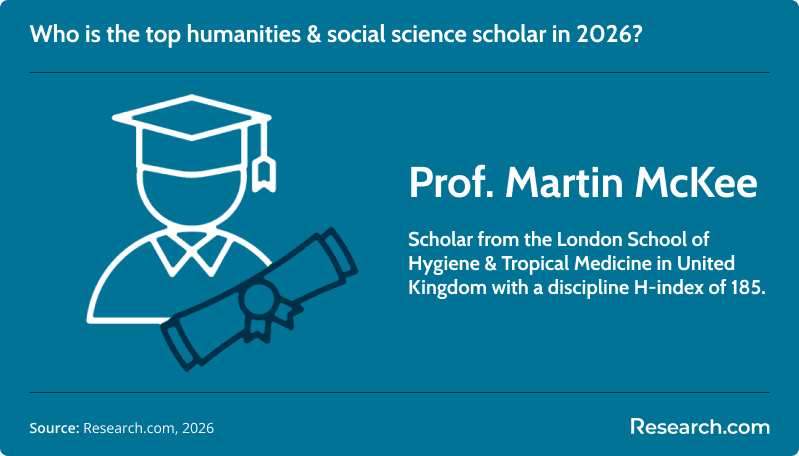
- Professor Martin McKee continues to exemplify the highest standards of academic excellence as the #1-ranked scientist globally. His extensive scholarly contributions consistently define the forward trajectory of modern societal research.
- Nations such as the Netherlands and Australia simultaneously expanded their academic footprints within the global top ten. These positive shifts reflect a steadily diversifying concentration of top-tier research talent worldwide.
The full ranking for the 2026 list of top humanities & social scientists can be found here:
[WORLD’S BEST SOCIAL SCIENCES AND HUMANITIES SCIENTISTS RANKING]
Countries with the highest number of leading social sciences and humanities scientists
The United States remains the undisputed global leader in social sciences and humanities research, currently hosting 453 of the world's top scholars. However, this represents a notable year-over-year decline from the 486 American scientists featured in the previous report. This ongoing downward shift suggests that the historical concentration of elite academics within the United States is gradually dispersing to other competitive nations.
Conversely, the United Kingdom expanded its representation to 192 scholars, securing second place and demonstrating consistent academic growth compared to the prior year (185 scientists). Australia also strengthened its global position, increasing its presence from 74 researchers in the previous edition to 77 top-ranked scientists today.
In the lower half of the top ten, Germany maintains a competitive edge with 24 top-ranked scholars, closely trailed by China’s expanding representation of 15 leading researchers. Finland and South Africa demonstrate significant academic influence by tying for the eighth position, each contributing 13 highly cited scientists to the global ranking. Finally, Spain completes the top ten tier with 10 established scholars, reflecting the rapidly diversifying international demographics of modern academic expertise.
Please note that the country associated with a scientist is based on the affiliated research institution according to MAG, not on their actual nationality.
Institutions with the highest number of leading scientists
Harvard University continues to operate as the world's premier academic institution, maintaining its first-place position with 28 leading scientists. Despite this top ranking, the university experienced a sharp decline from the 35 elite researchers it hosted during the previous year's report. The University of Michigan–Ann Arbor follows closely in second place with 21 scholars, reflecting a minor drop from its previous count of 22.
In contrast to these broader institutional declines, Johns Hopkins University demonstrated remarkable growth by increasing its roster from 14 to 17 top-tier scientists. Meanwhile, the University of California, Los Angeles, saw its presence diminish significantly, dropping from 16 leading researchers to just 11. These internal shifts within the top rankings suggest a highly competitive environment as universities continuously vie to attract and retain elite academic talent.
Outside of North America, premier institutions within the United Kingdom continue to secure top positions on the global stage. The University of Oxford maintained a steady presence with 16 researchers, while University College London holds strong with 15 highly cited scholars. This sustained performance by international universities strongly underscores their critical role in shaping modern social sciences and humanities research.
Advancing social sciences and humanities research through online universities
As the academic landscape rapidly evolves, advancing social sciences and humanities research through online universities requires an increasingly data-driven approach to maintain rigorous educational quality. A comprehensive study published in the peer-reviewed journal Humanities and Social Sciences Communications in December 2024 emphasized the critical need for a nuanced strategy when integrating digital learning modalities within higher education systems. By carefully evaluating how different subjects interact with digital formats, online universities can optimize instructional effectiveness and ensure that future societal researchers receive exceptional academic training.
This evidence suggests that simply transitioning traditional coursework to digital platforms is insufficient for maintaining high academic standards within the social sciences. Consequently, educational administrators must continuously refine their instructional frameworks to directly support complex theoretical research in remote settings. Implementing these targeted, discipline-specific strategies ultimately empowers distance learners to contribute meaningful, high-impact discoveries to the global academic community.
H-index ranking—leaders, averages, and distribution
Professor Martin McKee from the London School of Hygiene & Tropical Medicine in the United Kingdom ranks as the foremost scholar in Europe, holding the #1 global rank with an exceptional D-index of 185.
Representing North America, Dianne Neumark-Sztainer from the University of Minnesota in the United States secures the #2 global spot with a D-index of 159.
In Asia, Chin Chung Tsai of the National Taiwan Normal University in Taiwan represents the region's highest achievement, securing global rank #26 with a D-index of 116.
For South America, Carlos Augusto Monteiro of the Universidade de São Paulo in Brazil leads the continent at global rank #37 with a D-index of 112.
Oceania’s leading researcher is Rod Ellis from Curtin University in Australia, holding a global rank #52 with a D-index of 105.
Finally, Rachel Jewkes of the South African Medical Research Council in South Africa stands as the premier scholar for Africa, placing at global rank #94 with a D-index of 97.
The top 1% of scientists achieved a staggering average D-index of 148.14, compared to an average of 78.0 for the entire ranking.
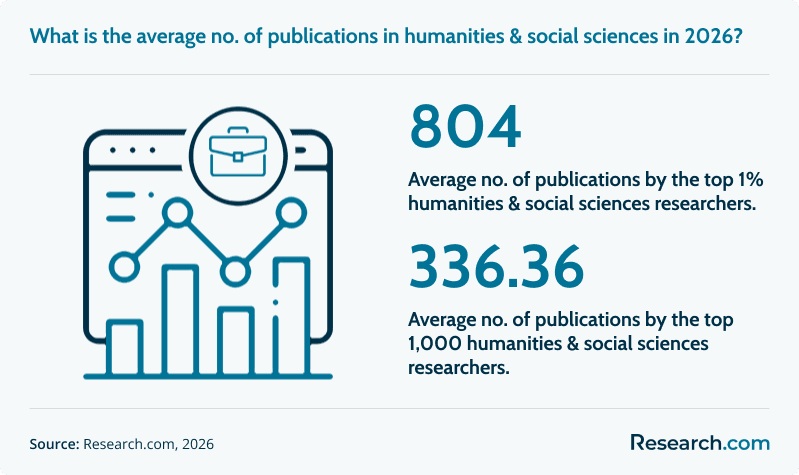
Leading researchers in the top 1% produced an average of 804.0 publications, far outpacing the overall ranking's average of 336.36.
These elite scholars also accumulated an average of 111,668.43 citations, which significantly exceeds the general ranking average of 37,862.64.
You can learn more about the methodology used to create this report here.
About Research.com
All research was coordinated by Imed Bouchrika, Ph.D., a computer scientist with a well-established record of collaboration on a number of international research projects with different partners from the academic community. His role was to make sure all data remained unbiased, accurate, and up-to-date.
Research.com is the number one research portal for science and educational rankings. Our mission is to make it easier for professors, research fellows, and students to progress with their research and find the top experts in a wide range of scientific disciplines. Research.com is also a leading educational platform that helps students find the best colleges, academic opportunities, and career paths.