2027 Women's Health NP Program Guide for Nurses in South Carolina: MSN Options and Clinical Planning
Audited and Verified:
Our Editorial and Data Verification Process
Research.com uses government datasets, official education statistics and primary institutional information to support its career and degree guides. Our review process checks factual accuracy, occupational definitions, source dates and the requirements associated with the credentials discussed.
How This Article Was Fact-Checked
Our editorial team verifies salary estimates, employment projections, education requirements and program information against original data providers and official organizations. Salary figures are checked against the relevant occupational definitions and reporting periods. Information about licensure, accreditation and required in-person training is reviewed separately.
Fact-checked and verified on:

Co-Founder and Chief Data Scientist
For a South Carolina RN, choosing a women's health nurse practitioner (WHNP) program involves more than finding an online MSN. The specialty track must prepare you for WHNP certification, permit clinical training where you live, and fit around supervised placements that may occur during weekday clinic hours.
This guide explains how to evaluate in-state and out-of-state options, plan clinical experiences, and distinguish graduation from certification and South Carolina practice authorization - so you can rule out an unsuitable program before committing time and money.
Key Things You Should Know
- Look for an explicitly named WHNP track; a general MSN or another NP population focus does not establish eligibility for WHNP certification.
- Before enrolling, confirm three separate arrangements: permission to study from South Carolina, program-approved clinical sites and preceptors, and a curriculum aligned with WHNP certification.
- Budget for tuition plus placement-related travel and possible reduced work hours; an online course schedule does not make supervised clinical hours asynchronous.
What Is a Women's Health Nurse Practitioner MSN Program?
A women's health nurse practitioner MSN is a postlicensure graduate program that prepares an RN for advanced assessment, diagnosis, treatment, and preventive care within the WHNP population focus. Typical care includes gynecologic and reproductive health, contraception, pregnancy-related care within the practitioner's preparation and scope, and health needs across the lifespan.
It is not an initial RN program or a nurse-midwifery program; WHNP preparation alone should not be mistaken for preparation to attend births as a certified nurse-midwife.
The relevant award is an MSN with a WHNP track, or another graduate pathway that explicitly prepares graduates for the WHNP certification exam. An RN with an associate degree should check whether a school offers an appropriate bridge and how it awards graduate credit; bridge programs from an ADN to an MSN are not automatically WHNP programs. An already-prepared APRN may instead need a WHNP post-graduate certificate and a school-approved review of prior coursework and clinical competencies.
What Are the Requirements to Become a Women's Health Nurse Practitioner in South Carolina?
The usual sequence is to hold an active RN license, complete a graduate WHNP population-focus program with approved supervised clinical education, qualify for and pass the National Certification Corporation (NCC) WHNP certification examination, and obtain the South Carolina advanced practice authorization required for the intended role.
The South Carolina Board of Nursing - not the school or certifier - determines state practice eligibility. Check its application, license-verification, and practice requirements before choosing a program, especially if your RN license or future clinical practice spans states.
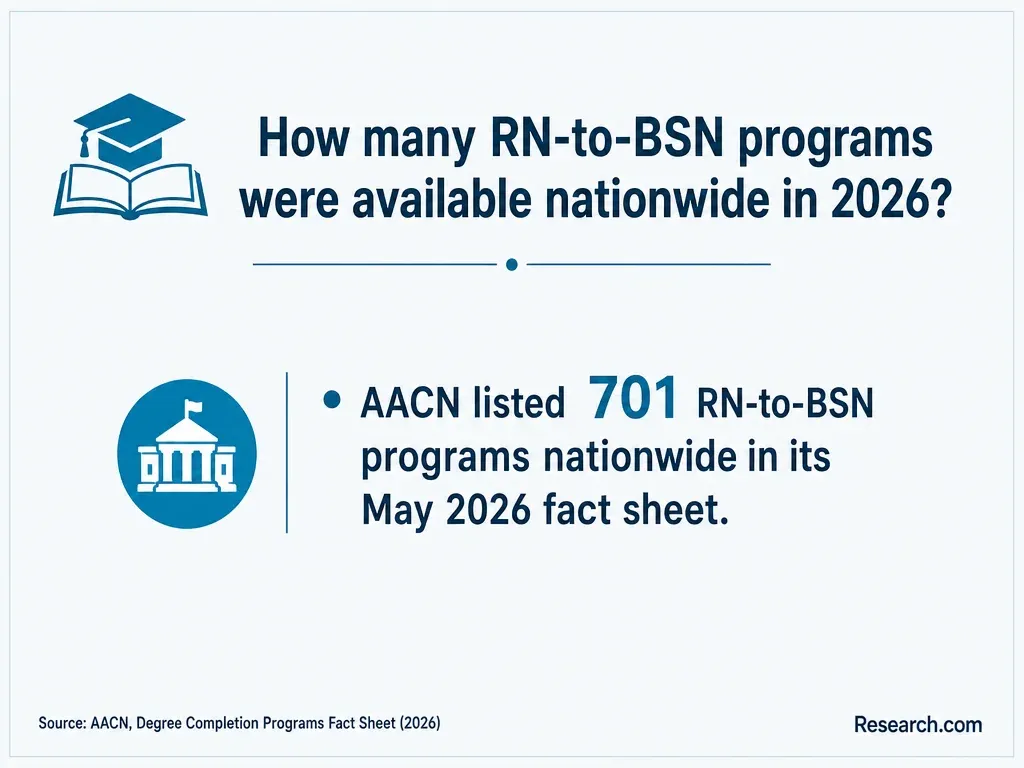
Prior RN experience in obstetrics, gynecology, or ambulatory care can strengthen an application and clinical judgment, but it does not replace WHNP graduate preparation. Likewise, an RN considering BSN completion options for experienced RNs should verify whether a prospective WHNP school requires a BSN or accepts a documented RN-to-MSN route. A BSN-completion course that does not require new clinicals does not remove the supervised clinical requirements of NP preparation.
Which South Carolina Schools Offer Women's Health NP MSN Programs?
Do not assume that a South Carolina nursing school offering other NP specialties also offers a standalone WHNP MSN. Specific in-state WHNP MSN availability, entry terms, and admissions status need confirmation in the institution's current catalog and with its graduate nursing office; a specialty listed on an older webpage may no longer admit students.
Check South Carolina institutions' current offerings, including the Medical University of South Carolina and the University of South Carolina, without treating their other NP tracks as WHNP options.
If no suitable in-state WHNP MSN admits students for your term, compare out-of-state programs that explicitly accept South Carolina residents and approve South Carolina clinical placements. Request written answers about the exact WHNP award, nursing program accreditation, state enrollment authorization, certification preparation, placement responsibilities, and any required travel.
A school's ability to help locate a preceptor matters more than its mailing address; exploring FNP programs with preceptor coordination can illustrate questions to ask, but an FNP placement service is not evidence that WHNP placements are available.
"Online" usually describes where didactic courses occur, not where patient-care competencies are assessed. The practical comparison is the total schedule and geographic reach of each specific WHNP track.
The following distinctions can help you identify which format is feasible before you compare tuition.
| Factor | Mostly online track | Campus-based or hybrid track |
| Coursework | May offer recorded lessons, but live sessions and fixed deadlines can still apply | May provide regular in-person contact but require commuting on set days |
| Clinical training | Still requires approved, supervised patient-care placements | Still requires approved placements; proximity to campus does not guarantee a site |
| Travel | Possible campus intensives, simulation visits, and clinical-site travel | Recurring campus travel plus possible off-campus clinical travel |
| Best fit | RN with an approved local placement plan and a workable clinical schedule | RN who can attend scheduled activities and use nearby faculty or site connections |
Ask for the actual calendar: live class times, campus visits, simulation dates, and expected clinical days. For a working nurse or parent, a weekday preceptor schedule may be the decisive constraint. When comparing postgraduate FNP certificate schedules as an alternative, remember that a shorter certificate in another population focus does not confer WHNP preparation.
WHNP coursework typically builds on advanced pathophysiology, pharmacology, and health assessment, then applies those foundations to reproductive and gynecologic health, preventive care, and management of patients within the specialty's scope. Programs may also teach evidence appraisal, health policy, and interprofessional care. Review the course descriptions and certification alignment rather than assuming similarly named courses cover the same competencies.
Clinical planning should start before acceptance. A proposed site must offer appropriate patient encounters, an eligible preceptor, a school-approved affiliation arrangement, faculty oversight, and a schedule that lets you complete required experiences. Ask which experiences the program expects across gynecologic, reproductive, and pregnancy-related care, and how it handles gaps at a single site.
Your current RN job, simulation time, or previously logged APRN hours count only if the receiving program and relevant credentialing requirements accept them.
Population focus is consequential: shorter psychiatric-mental health NP certificates address a different role and cannot substitute for WHNP coursework or clinical experiences.
WHNP MSN applicants generally need an active RN license and a qualifying prior nursing degree or an explicitly accepted bridge credential. Schools set their own GPA thresholds, prerequisite and statistics policies, experience expectations, recommendation requirements, and interview procedures. Clinical sites may separately require immunizations, background screening, or other onboarding documents after academic admission.
Check eligibility against the track - not just the university's graduate-school requirements. If you have a bachelor's degree outside nursing but are not an RN, this postlicensure route is not initial RN preparation; exploring accessible accelerated BSN pathways may help you investigate an initial nursing route, subject to each school's prerequisites and state licensure rules.
If you are already an RN with a non-nursing bachelor's degree, ask whether the WHNP program accepts your credential and which nursing courses, if any, must be completed first.
Completion time depends on course sequencing, enrollment pace, and clinical-site availability. A working RN may plan around roughly two to three years for many MSN pathways, but that is a planning estimate, not a promise for any WHNP track. A delayed placement or a specialty course offered only once a year can extend graduation substantially.
Do not compare programs using tuition per credit alone. Request a written estimate of required credits and all mandatory fees, then account for books, technology, screening and immunizations, certification and licensing applications, travel to sites or campus, and income lost when clinical days displace paid shifts. When reviewing nurse practitioner education on a budget, filter for confirmed WHNP preparation: a lower-priced NP program in another specialty will not meet this goal.
Three milestones should remain separate: completing the WHNP educational track, earning NCC's Women's Health Care Nurse Practitioner certification after meeting its eligibility and examination requirements, and receiving the South Carolina authorization needed to practice as an APRN. Maintain the underlying RN license as required.
Review NCC's current candidate requirements and the South Carolina Board of Nursing's current APRN application rules before relying on a school's summary; employers may also require credentialing and role-specific onboarding.
A DNP can be a degree pathway to investigate, but its title does not establish WHNP eligibility. Even when comparing short online Doctor of Nursing Practice degrees, confirm that the specific track supplies WHNP population-focus preparation and the required supervised clinical education. A leadership-focused DNP is not a substitute.
South Carolina WHNPs may seek roles in gynecology and obstetrics practices, reproductive-health clinics, community health centers, and other ambulatory services serving patients with women's and reproductive-health needs. Actual duties depend on the employer, patient population, credentialing, and South Carolina practice rules.
A job labeled "women's health" may call for a WHNP, a nurse-midwife, an FNP, or an RN, so read the required credential and responsibilities rather than relying on the title.
Evaluate prospective employers for access to consultation and referral, patient mix, appointment length, documentation workload, and support during the transition from RN to NP practice. For nurses considering a doctoral route alongside clinical work, DNP study options beyond highly selective programs may broaden the education search, but a DNP should be chosen for a defined clinical or professional objective - not as an assumed hiring requirement for every WHNP position.
What Salary and Job Outlook Can Women's Health Nurse Practitioners Expect?
The U.S. Bureau of Labor Statistics reports wages for nurse practitioners as an occupation, not WHNPs as a separate specialty. Its May 2024 national median for nurse practitioners was $129,210. That figure is a dated, nationwide benchmark - not a South Carolina WHNP starting salary or a prediction of what an MSN graduate will earn. Specialty vacancies, region, experience, employer type, and schedule can change an individual offer.
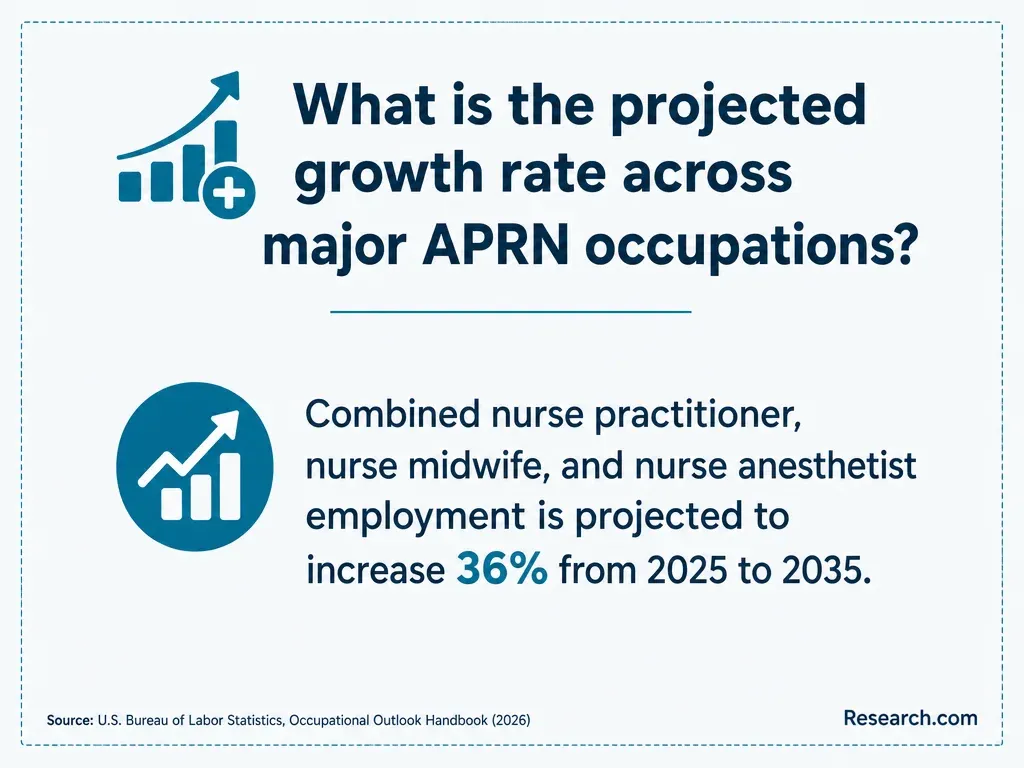
BLS projects substantial growth for nurse practitioner employment nationally, but an occupation-wide projection cannot show how many WHNP positions will open near your preferred South Carolina community. For a useful local test, review current postings for their exact certification requirements and compare likely compensation with the full cost and work-hours impact of school.
Lower-cost master's nursing pathways after a BSN are worth examining only when they lead to the WHNP credential you intend to use.
Other Things You Should Know About Nursing
Possibly, but the program must approve the site, preceptor, patient encounters, supervision, and any arrangement involving your employment duties. Ask before counting on it.
Ask the school how it approves replacements, whether it helps identify another site, and how a placement interruption affects course progression.
Potentially. The school must approve the site and confirm that its enrollment and clinical arrangements meet applicable requirements in the state where you train.
Request WHNP-specific exam results with the reporting year, number of graduates tested, and whether results include first-time or repeat attempts. Results for all NP specialties combined are less informative.
- South Carolina Board of Nursing - SCLLR https://llr.sc.gov/nurse/Online/APRNLEAD.aspx
- South Carolina Board of Nursing, APRN prescriptive authority | sc.gov https://www.llr.sc.gov/nurse/Online/APRNRX.aspx
- Women's Health Nurse Practitioner Graduate Certificate | ASU https://degrees.asu.edu/masters-phd/major/ASU00/NUWHNPGRCT/womens-health-nurse-practitioner-graduate-certificate%3Bjsessionid=A3CABCDB12577A3505ACA06FBFD9FE4A
- Tuition and Aid | University of South Carolina https://sc.edu/admissions-at-sc/tuition-aid/
- Student Compliance & Clinical Placements | MUSC College of Nursing https://nursing.musc.edu/student-life/compliance
- Women's Health Nurse Practitioner | Admissions | SUNY Downstate https://www.downstate.edu/education-training/college-of-nursing/admissions/womens-health-np/index.html
- What is CCNE Accreditation and its Benefits for Aspiring Nurses? | Baylor University Online https://onlinenursing.baylor.edu/news/what-is-ccne-accreditation
- MSN Women's Health/Gender Related Nurse Practitioner | Drexel University Online https://www.online.drexel.edu/online-degrees/nursing-degrees/womenshealthnp/index.aspx