2027 Which Philosophy Degree Careers Offer the Best Return Without Graduate School?

Co-Founder and Chief Data Scientist
Rising education costs force many recent philosophy graduates to question the value of pursuing graduate school. With median starting salaries near $40,000 for bachelor's degree holders in philosophy-related roles, many wonder if further investment in education will truly pay off.
Graduate programs often require significant time and money, increasing student debt and delaying workforce entry. Some career paths in philosophy offer competitive salaries and growth opportunities without advanced degrees. Identifying these roles can help graduates avoid unnecessary costs while ensuring strong return on investment.
This article explores the best philosophy degree careers that provide solid earnings without the need for graduate school.
Key Benefits of Philosophy Degree Careers That Offer the Best Return Without Graduate School
- Philosophy degree careers show early salary growth averaging 5% annually, enhancing long-term return on investment without requiring costly graduate education.
- Stable demand in sectors like policy analysis and ethics compliance supports consistent job security and opportunities for advancement over time.
- Accessible entry-level roles with bachelor's credentials enable quicker workforce entry, reducing debt and increasing lifetime earnings potential.
Which Philosophy Careers Offer the Best Return Without Graduate School?
Evaluating the return on investment (ROI) for philosophy careers without graduate school is essential for making informed decisions about long-term financial and professional outcomes. Data from the National Center for Education Statistics shows that many philosophy bachelor's degree holders have mid-career earnings competitive with or higher than other humanities graduates.
Below are several high-return career paths that usually require only a bachelor's degree, balancing salary potential, career longevity, and advancement opportunities.
- Technical Writer: Philosophy graduates excel as technical writers due to their ability to communicate complex ideas clearly and precisely. This role involves creating manuals, guides, and documentation for diverse fields, offering steady demand and career growth without requiring additional degrees.
- Policy Analyst: With strong skills in ethics and critical thinking, policy analysts evaluate and develop public and private sector policies. This position provides a robust return without the need for graduate school, capitalizing on the analytical strengths honed in philosophy programs.
- Human Resources Specialist: HR specialists benefit from philosophy's focus on ethics and understanding human behavior to manage employee relations and organizational strategy. This career path offers reliable growth opportunities across various industries without requiring advanced academic credentials.
- Market Research Analyst: The analytical and reasoning skills developed in philosophy suit market research analysts well, as they interpret consumer data to guide business decisions. This role typically demands only a bachelor's degree and provides a balanced ROI through salary and career stability.
These pathways prioritize workforce readiness and transferable skills. Long-term career mobility is sustained through practical application. For those eventually seeking higher administrative levels, 1-year PhD programs online, no dissertation offer an efficient route to augment professional expertise while maintaining current employment stability.
What Are the Highest-Paying Philosophy Jobs Without a Master's Degree?
Evaluating earning potential for philosophy graduates without pursuing graduate education is essential for making informed decisions about career paths. According to the U.S. Bureau of Labor Statistics, some roles related to philosophy and critical thinking, like management analysts, earn median annual wages exceeding $80,000 even without an advanced degree.
Below are several well-paying jobs that philosophy bachelor's degree holders can pursue without a master's degree.
- Management Analyst: Earning between $65,000 and $100,000 annually, management analysts evaluate organizational processes and recommend improvements. Philosophy graduates are well-suited for this role due to their strong analytical and problem-solving skills, making it one of the most lucrative options without further study.
- Technical Writer: Typically earning $60,000 to $90,000 per year, technical writers create manuals and documentation for complex topics. Philosophy-trained individuals excel by applying clear communication and critical thinking to translate difficult content effectively.
- Market Research Analyst: With salaries ranging from $55,000 to $85,000 annually, market research analysts analyze market trends to support strategic decisions. The logical reasoning and data evaluation skills developed in a philosophy program enhance suitability for this role.
- Paralegal or Legal Assistant: Earning between $50,000 and $75,000 annually, paralegals assist lawyers through research and documentation. Philosophy graduates bring valuable ethical reasoning and strong analytical abilities to meet the demands of this legal support position.
- Human Resources Specialist: Generally making $55,000 to $80,000 per year, HR specialists manage recruitment and employee relations. The ethical insight and communication strengths from a philosophy background provide an advantage in navigating interpersonal and organizational challenges.
Which Industries Offer High Salaries Without Graduate School?
Industry selection significantly influences salary levels for bachelor's degree holders. Data from the U.S. Bureau of Labor Statistics reveals median wages can vary drastically across sectors, sometimes by more than 100%. Here are several industries known for high earning potential for philosophy graduates without requiring further education.
- Technology and Software Development: Companies in this field value analytical thinking and problem-solving abilities essential to philosophy graduates. While technical skills help, the ability to approach complex challenges logically often leads to salaries exceeding $90,000 annually in many roles.
- Financial Services: This sector, encompassing banking, insurance, and consulting, rewards strong ethical reasoning and analytical expertise. Philosophy graduates here typically earn between $70,000 and $100,000, benefiting from demands for risk assessment and abstract processing skills.
- Government and Public Policy: Roles within government agencies and policy groups rely on ethical judgment and critical thinking. While pay can start modestly, seasoned professionals often see compensation ranging from $60,000 to $90,000.
- Healthcare Administration: Although clinical jobs require advanced education, administrative roles leverage decision-making and organizational strengths. Median salaries in this area tend to approach $70,000, reflecting consistent sector needs.
- Business and Corporate Strategy: This industry depends on analytical insight and ethical considerations, both central to philosophy training. Entry-level salaries generally start near $65,000, with growth tied to performance and experience.
When asked about industries offering strong pay without graduate school, a philosophy degree graduate shared that navigating career choices was initially overwhelming.
He emphasized that 'understanding how diverse industries value critical thinking helped focus my job search.' He recounted negotiating his first salary, noting the challenge of conveying the practical value of a philosophy background. 'It wasn't just about what I studied, but how I applied it to real-world problems.'
This perspective highlights the importance of articulating transferable skills alongside salary expectations in industries open to bachelor's-level candidates.
Choosing entry-level jobs with clear paths for advancement is essential for early career success in philosophy-related fields. The U.S. Bureau of Labor Statistics notes that roles emphasizing analytical and communication skills can experience promotion rates up to 10% within five years. Below are some entry points that combine strong growth prospects with skill development suited for long-term careers.
- Research Analyst: Working primarily in think tanks or policy groups, this role applies philosophical analysis to complex problems. It enhances research and critical argumentation skills, often leading to senior advisory or policy-making roles.
- Editorial Assistant: Employed in media or publishing, this position relies on ethical reasoning and clarity of thought to shape content. Progression can open doors to editorial management or leadership in communications.
- Legal Assistant: Utilizing logic and ethics from philosophy, legal assistants support legal teams and improve their chances to move into specialized or supervisory roles without requiring a law degree.
- Program Coordinator: Common in nonprofit sectors, this role uses critical thinking about social issues to manage initiatives, setting the stage for advancement into senior management or strategic leadership.
- Accelerated Psychology Degree Online Integration: Some philosophy graduates choose to complement their skills by pursuing an accelerated psychology degree online, which broadens their expertise and enhances career flexibility and advancement opportunities.
Building targeted skills is a proven way to increase salary potential for philosophy degree holders, even without advanced degrees. Recent research finds that 67% of employers prioritize candidates' abilities over formal credentials, highlighting the value of skill-driven career growth. Below are key competencies that notably enhance earning power.
- Critical Thinking: Philosophy trains individuals to analyze problems deeply and develop innovative solutions. This skill enhances decision-making quality, leading to greater workplace impact and better compensation due to improved efficiency and strategic insight.
- Clear Communication: The capacity to convey complex ideas persuasively sets philosophy graduates apart. Excelling in this skill fosters collaboration and leadership roles, which often correlate with higher salaries by enabling influence and negotiation.
- Research Proficiency: Effectively gathering and synthesizing diverse information allows for swift, informed choices. This competency supports adaptability and strategic planning, traits that employers reward with premium pay.
- Ethical Judgment: Awareness of moral principles and corporate responsibility enhances trustworthiness and leadership standing. Mastery of ethical decision-making aligns with organizational values, leading to stronger professional reputations and improved earning prospects.
- Adaptability: Philosophy encourages continual learning and flexibility, qualities highly prized in changing work environments. Those who demonstrate this readiness are often considered top performers, justifying competitive compensation.
When asked about what skills increased her salary without pursuing further education, a professional with a philosophy degree shared that mastering communication proved transformative. She recalled, 'Initially, I struggled to express my ideas clearly, which limited my impact.'
Through persistent effort to refine her writing and speaking, she gained confidence and became integral in key discussions. She reflected, 'That shift opened doors to leadership opportunities I hadn't imagined, boosting my earnings significantly.' Her experience underscores how developing versatile soft skills can reshape career trajectories, even without graduate credentials.
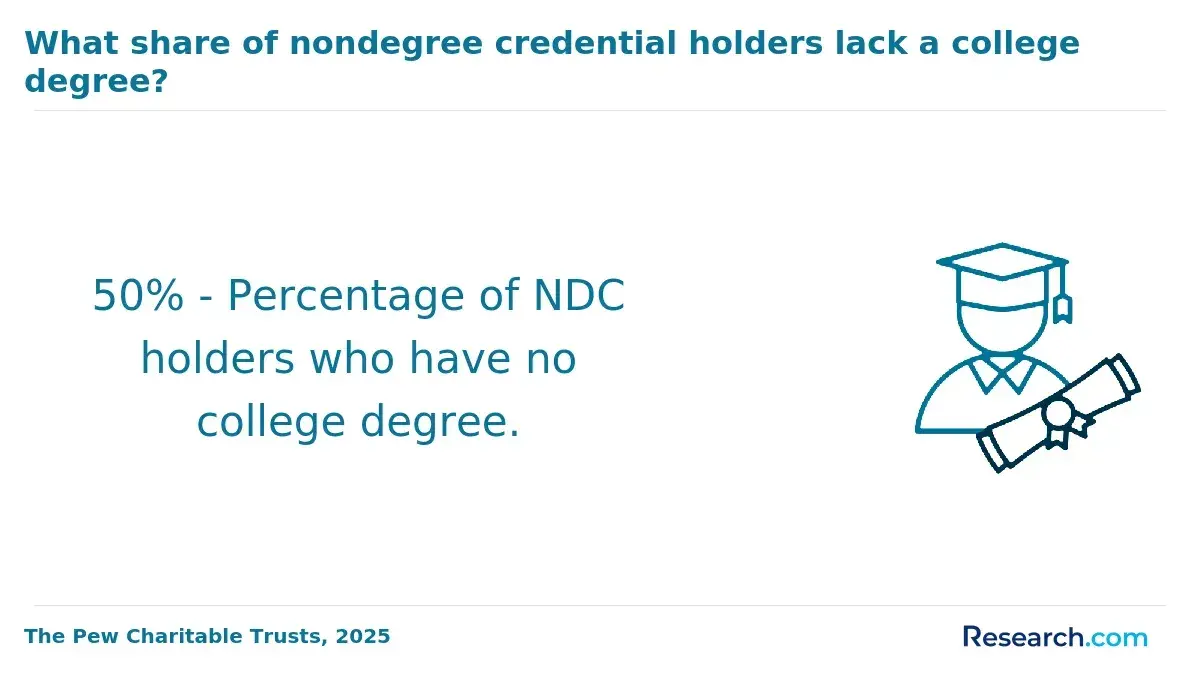
Professional certifications provide targeted proof of skills that can boost credibility and open doors to better career opportunities for philosophy graduates. Research from Credential Engine (2022) reveals that workers holding industry-recognized certificates earn on average 15% more than peers without them.
These certifications offer practical expertise relevant to philosophy-related fields without the time or cost of graduate studies. Below are several respected certifications that can enhance career outcomes for philosophy graduates.
- Certified Ethics Professional (CEP): This certification highlights advanced understanding in ethics, central to philosophy, with applications in areas like corporate governance, healthcare, and public policy. It signals an ability to apply ethical principles effectively within organizational settings.
- Project Management Professional (PMP): Although not exclusive to philosophy, PMP demonstrates leadership and project coordination skills, which philosophy graduates often leverage when moving into roles that require managing diverse teams and complex workflows.
- Certified Data Analyst (CDA): Logic and critical thinking strengths from philosophy translate well into data analysis, where this certification validates abilities to interpret data and support evidence-based decision-making across business and research sectors.
- Professional Mediator Certification: Focused on negotiation and conflict resolution, this credential complements philosophical training in argumentation and ethics, increasing employability in legal, corporate, and community mediation environments.
These certifications help philosophy graduates develop specialized competencies that enhance their marketability and earning potential without pursuing advanced academic degrees.
Professional experience can play a significant role in career advancement, especially in fields related to philosophy, where employers often prioritize demonstrated skills, proven problem-solving, and effective communication over formal academic credentials. On-the-job learning allows candidates to showcase practical application and adaptability, which many employers value more than theoretical knowledge alone.
In several non-academic roles, real-world achievements and a strong performance record can accelerate career growth, sometimes substituting for graduate education. This is particularly true in areas like ethics compliance, public policy, and technical consulting, where practical expertise outweighs formal degrees.
However, relying solely on experience has its limitations. Many employers set graduate credentials as a baseline for higher-level positions, which can slow initial advancement or block entry into specialized roles.
Certain industries require advanced degrees to meet certification standards or to establish credibility, making formal education a necessary step. Experience is most valuable when paired with continuous learning, professional development, and strategic networking, as this combination can unlock senior positions where leadership and proven results matter more than academic titles.
Many philosophy professionals carefully weigh the decision to pursue graduate education due to its considerable impact on career trajectory and earning potential.
Studies indicate that individuals with master's degrees can earn about 20% more than those holding only a bachelor's degree in various fields, including philosophy-related disciplines. Considering these factors, here are some key limitations faced by those who stop at a bachelor's degree in philosophy.
- Slower Advancement: Without graduate education, career progression often slows as many higher-level roles require advanced qualifications or specialized expertise. This can confine professionals to entry-level or mid-level positions longer than their graduate-educated peers.
- Limited Specialized Roles: Certain philosophy career paths, such as ethics consulting, academic research, or policy advising, generally prefer candidates with graduate degrees. This reduces opportunities for bachelor's degree holders to enter these specialized or senior roles.
- Competitive Hiring Disadvantages: Employers frequently use graduate degrees as a screening tool, associating them with deeper skills and commitment. This puts those without graduate credentials at a disadvantage in competitive hiring environments.
- Networking Constraints: Graduate programs often provide access to mentors, internships, and conferences crucial for professional growth. Lacking these opportunities can limit networking and career development for bachelor's degree holders.
- Restricted Academic Positions: Roles involving research, publishing, or university teaching typically require advanced degrees. Students must carefully evaluate how skipping graduate education impacts long-term career goals, especially in philosophy.
Prospective students interested in career paths that deliver strong salary potential without graduate education might also explore alternatives beyond philosophy. For example, programs such as the best online construction management degree offer accelerated paths with promising returns on investment.
Philosophy degree career limitations without graduate school often highlight the trade-offs inherent in these decisions. The impact of skipping graduate education on philosophy careers varies but is an important consideration for those planning their professional future.
Return on investment (ROI) in education compares the costs and time spent earning a degree with the financial outcomes and career opportunities it offers. For a bachelor's in philosophy, the median annual wage is about $58,000 mid-career, a figure competitive with other humanities fields.
Maximizing ROI requires targeted academic and career strategies that elevate earning potential and job prospects without pursuing graduate education.
To improve ROI, consider these actionable strategies:
- Leverage Transferable Skills: Philosophy develops critical thinking, logic, and communication skills highly sought after in business, technology, and legal roles. Emphasizing these abilities to employers can expand career options beyond traditional philosophy roles and enhance how you increase earning potential with a philosophy degree.
- Select Complementary Minors: Pairing philosophy with minors in economics, computer science, or business increases marketability. This combination prepares graduates for data analysis, consulting, or project management roles that offer stronger salary growth and career advancement.
- Gain Industry Experience: Internships in sectors like finance, tech, or government build relevant experience and professional networks. Early exposure to diverse industries strengthens your resume and supports philosophy degree career paths with highest return on investment.
- Build a Professional Brand: Presenting how philosophical training applies to real-world challenges and maintaining an active LinkedIn presence attracts recruiters and opens doors to lucrative opportunities.
- Focus on High-Value Employers: Employers in technology, consulting, and corporate compliance appreciate philosophical skills for ethical decision-making and problem-solving, often providing higher salaries and upward mobility.
For students interested in expanding skillsets beyond philosophy, programs such as the MBA in entrepreneurship can further enhance business acumen and leadership potential, complementing the critical-thinking foundation offered by a philosophy degree.
Deciding whether graduate education is worthwhile for philosophy careers depends largely on professional objectives, industry standards, and potential return on investment. Research indicates that holding a master's or doctoral degree can increase earnings by 20% to 35%, especially within academic and research sectors.
Those considering a philosophy career should weigh these financial benefits against the time and costs involved. This analysis offers insight into when pursuing advanced education makes strategic sense.
Graduate school in philosophy often proves valuable when aiming for specialized roles, leadership positions, or professions that require certifications, such as law or clinical ethics. It also enhances prospects in academic or research-focused careers, where advanced credentials are essential.
Evaluating when to pursue graduate education in philosophy involves understanding these career-specific advantages, as many roles in business or technology reward critical thinking without necessitating further degrees.
For students seeking cost-effective education pathways, exploring options like the cheapest mechanical engineering degree online demonstrates the importance of strategic decision-making about graduate study.
What Graduates Say About Philosophy Degree Careers That Offer the Best Return Without Graduate School
- Robert: "Choosing not to pursue graduate school was a tough decision, but it enabled me to enter the workforce earlier and gain practical experience. I maximized my philosophy degree by focusing on critical thinking and communication skills, which have proven invaluable in consulting and project management roles. The degree sharpened my analytical abilities, making me a problem solver without the burden of additional debt."
- Case: "Reflecting on my path, I realized that a philosophy degree alone opens many doors if you actively develop complementary skills like data analysis and effective writing. Instead of graduate school, I invested time in internships and networking, which helped me land a role in a think tank. Philosophy taught me how to dissect complex ideas, a skill that's highly sought after outside academia."
- Sebastian: "My career trajectory took a nontraditional route after earning a philosophy degree but skipping graduate studies. I leveraged my training in ethics and logic to enter the tech industry, where these skills are surprisingly relevant. Philosophy gave me a unique perspective that enhances my decision-making process and leadership style in a corporate environment."
Other Things You Should Know About Philosophy Degrees
Internships provide practical experience that can significantly boost employability for philosophy graduates. They offer opportunities to apply critical thinking and analytical skills in real-world environments, making candidates more attractive to employers. Internships also help build professional networks that can open doors to higher-paying entry-level positions.
Yes, networking is crucial for philosophy degree holders who do not pursue graduate education. Professional relationships can lead to job referrals, mentorship, and access to unadvertised positions. Engaging with alumni groups, industry events, and online professional platforms can improve career prospects and salary potential.
Project management, data analytics, and user experience certificates can raise hiring odds for philosophy graduates. The PMP requires 36 months of leading projects and 35 hours of training; Google’s Data Analytics certificate takes about 6 months at 10 hours a week. Employers often value these credentials in business and tech roles.
- 8 Great Jobs for Philosophy Majors (and Tips for How to Land One) https://careercenter.emmanuel.edu/blog/2023/11/21/8-great-jobs-for-philosophy-majors-and-tips-for-how-to-land-one/
- Careers of Philosophy Majors - Daily Nous https://dailynous.com/2024/04/23/careers-philosophy-majors-job/
- Jobs for Philosophy Majors: 10+ Careers Using Your Skills | Extern https://www.extern.com/post/jobs-for-philosophy-majors-career-guide
- Thinking about grad school in philosophy? https://usuphilosophy.com/2010/12/13/thinking-about-grad-school-in-philosophy/
- A non-academic career? - The American Philosophical Association https://www.apaonline.org/page/nonacademic
- 16+ Jobs for Philosophy Majors (No Existential Crisis Required) https://www.theforage.com/blog/careers/jobs-for-philosophy-majors