2027 Which Nurse Midwifery Degree Careers Are Most Likely to Be Remote in the Future?

Co-Founder and Chief Data Scientist
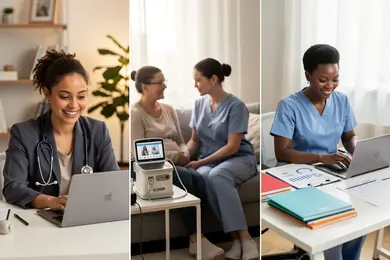
Many nurse midwifery professionals face uncertainty about which career paths will support remote work-especially as healthcare evolves rapidly. Telehealth adoption rates in nurse midwifery are climbing, yet only 27% of midwives currently deliver care remotely, highlighting a gap between technology potential and practical application. Assessing task-level compatibility reveals roles focused on patient education and prenatal consultations adapt best to remote formats. Industry cultures and employer readiness vary widely, often influenced by geographic location and technology infrastructure. Freelance and self-employment models show promise for flexibility but demand advanced tech skills. This article explores data-driven insights and strategies to help nurse midwifery students and professionals identify the most viable remote career trajectories.
Key Things to Know About the Nurse Midwifery Degree Careers Most Likely to Be Remote in the Future
- Remote adoption rates remain low-telehealth midwifery roles require direct patient interaction, limiting full remote possibilities despite growing virtual prenatal consultation opportunities.
- Tasks involving monitoring and education adapt well to telemedicine-technology proficiency and electronic health record systems are critical skills for remote Nurse Midwifery careers.
- Freelance telehealth services and employer telemedicine programs expand geographic reach-long-term trends favor hybrid or partly remote roles, especially in underserved rural markets.
What Does 'Remote Work' Actually Mean for Nurse Midwifery Degree Careers, and Why Does It Matter?
Remote work opportunities for nurse midwifery degree holders in the United States span a spectrum rather than a binary choice. These include fully remote roles-where all responsibilities are performed off-site; hybrid roles-combining scheduled on-site presence with remote duties; and remote-eligible roles-primarily on-site but offering some flexibility for remote tasks. Recognizing this range clarifies realistic expectations for career paths and employer types in nurse midwifery.
Since 2020, data from Pew Research Center, the Stanford Institute for Economic Policy Research, and the BLS American Time Use Survey show significant growth in remote work across many fields. However, nurse midwifery careers involve client-facing interactions that often limit fully remote options. Nonetheless, many administrative, telehealth, and educational functions increasingly support remote or hybrid models, aligning with broader workforce trends that sustain certain remote-compatible tasks more than others.
For nurse midwifery degree holders, geographic flexibility enabled by remote work dramatically expands labor markets beyond local regions, reduces commute burdens, and may improve earnings by connecting practitioners to metropolitan employers regardless of residence. Research links remote work to higher job satisfaction and retention-critical for career longevity and quality of life in this demanding healthcare profession.
Prospective students may also explore the easiest online DNP programs to enhance credentials aligned with remote work access.
- Task-Level Remote Compatibility: Whether core duties-such as patient counseling or documentation-can be performed off-site.
- Employer-Level Remote Adoption: The extent to which healthcare organizations employing nurse midwives have embraced remote or hybrid work policies.
- Structural Constraints: Licensing, regulatory, client-presence requirements, and equipment needs that may mandate on-site work despite employer flexibility.
This framework allows nurse midwifery degree holders to systematically evaluate which specializations and employer environments realistically support remote work, moving beyond anecdotal advice toward evidence-based career planning.
Which Nurse Midwifery Career Paths Have the Highest Remote Work Adoption Rates Today?
Several nurse midwifery career paths have shown notably higher remote or hybrid work adoption rates in the US recently-driven by task compatibility and increased employer acceptance. Multiple authoritative data sources, including the BLS telework supplement, LinkedIn Workforce Insights, Ladders 2024 remote tracking, and Gallup workplace surveys, consistently highlight specific roles leading in remote access.
- Telehealth Nurse Midwives: These professionals conduct virtual prenatal and postpartum consultations, education, and follow-ups via secure video platforms. The reliance on electronic health records (EHR) and digital patient interactions makes telehealth nurse midwives among the highest in durable remote or hybrid work adoption.
- Research Nurse Midwives: Engaged in clinical trials and data analysis, these practitioners work mainly through secure databases and virtual communication. Their data-centric tasks and collaborative nature facilitate steady growth in remote work adoption in academic and research institutions.
- Health Informatics Nurse Midwives: Focused on managing EHR systems and workflow optimization, these roles are computer-intensive. The digital deliverables and employer willingness in tech-forward healthcare environments drive consistently high remote eligibility.
- Consulting Nurse Midwives: Providing expert advice and training to systems or clients, consultants increasingly use virtual platforms. Their service outputs-reports and remote training-support growing hybrid work, especially in regional systems and consulting firms.
- Academic Nurse Midwives: Faculty and educators designing curricula and delivering lectures online have established remote teaching as a long-term feature of the field, supported by academic institutions' remote-friendly policies.
- Case Management Nurse Midwives: Managing patient care plans remotely aligns well with telephonic and video contacts, EHR integration, and outcome-focused roles, resulting in widespread hybrid acceptance in larger healthcare and insurance systems.
These nurse midwifery remote work adoption trends contrast sharply with pre-2020 baselines-telehealth roles, for instance, rarely had remote options until a genuine transformation post-pandemic. Other more procedural or inpatient roles saw only temporary remote adoption, often reverting onsite later.
Factors such as employer size, type, and geography significantly affect remote policies: large healthcare networks, academic centers, and government agencies tend to offer more flexibility than small clinics or private practices. Prospective students and practitioners focusing on remote work should weigh these long-term trends when choosing specializations.
Ultimately, career pathways emphasizing virtual patient interaction, research, advisory roles, or online education combine task-level compatibility with progressive employer remote cultures-maximizing sustained remote work access. For those interested in expanding credentials or exploring flexible options, reviewing online FNP programs can provide pathways aligned with remote work priorities and growth.
Considering nurse midwifery remote work adoption rates in the US, these insights guide decision-making for students and professionals aiming for the highest remote accessibility nurse midwifery careers today.
How Does the Nature of Nurse Midwifery Work Determine Its Remote Compatibility?
Applying the task-level remote work framework reveals distinct nurse midwifery functions compatible with remote settings versus those demanding physical presence. Tasks involving digital deliverables-such as compiling reports, patient education content, and analytics-fit well with remote work and are common among nurse midwives in case management, healthcare policy, or research.
- Virtual Interaction: Telehealth appointments, remote consultations, and virtual support enable nurse midwives specializing in telemedicine and client education to work effectively off-site.
- Data Access: Secure remote access to electronic health records and data review supports roles in public health and quality assurance.
- Supervisory and Advisory: Leadership, mentoring, and advisory tasks can be handled through video conferencing and collaboration tools in administrative or academic roles.
- Research and Knowledge Work: Grant writing, academic research, and content development are especially suitable for remote completion.
Conversely, several critical functions anchor nurse midwifery to physical locations. These include hands-on patient assessments, prenatal visits, labor support, and the use of specialized medical equipment. Regulatory duties requiring on-site inspections and urgent emergency care inherently restrict remote practice.
Additionally, some collaborative clinical tasks may suffer reduced effectiveness when performed remotely.
- Physical Client Care: Direct patient exams and interventions require presence.
- Technology-Dependent Tasks: Use of lab devices cannot be virtualized.
- Compliance Duties: Inspections necessitate on-site verification.
- Urgent Care: Emergency responses demand immediate, in-person action.
- Collaborative Clinical Work: Some team activities remain less effective remotely.
Evaluating the task mix of specific nurse midwifery roles using occupational data, functional analyses, and interviews with remote professionals is essential for gauging genuine remote work potential-helping students and early-career practitioners align their specialization and certification choices with long-term flexibility across various employers and regions.
Lightcast ten-year occupational demand projections combined with World Economic Forum Future of Jobs Report 2023 and LinkedIn Economic Graph data highlight several nurse midwifery specializations with increasing remote work potential. These roles benefit from ongoing digitization, employer cultures embracing remote-first models, and advancements in secure telehealth technologies-ensuring remote work remains a durable option rather than a temporary adjustment.
- Telehealth Midwifery: Fueled by the expansion of telemedicine and virtual prenatal and postnatal care, this area offers asynchronous and synchronous patient engagement with maintained quality. Investment in infrastructure and patient acceptance reinforce remote service delivery growth.
- Midwifery Research and Education: Remote coordination of research, data analysis, and academic teaching suits knowledge-intensive tasks, supported by academic institutions' flexible work cultures.
- Midwifery Health Informatics: Managing electronic health records and digital tools with AI integration demands remote collaboration, making this specialization increasingly compatible with stable remote roles.
However, specializations requiring in-person physical supervision-especially labor and delivery-face challenges to remote growth due to regulatory constraints and hospitals reverting to strict on-site policies. Complex clinical decision-making and patient preferences for face-to-face interactions limit remote feasibility in relationship-centered midwifery roles.
Prospective students and professionals should weigh remote work access alongside unemployment risk and compensation to identify nurse midwifery specializations offering durable remote flexibility and strong career prospects. For roles involving coding or billing within nurse midwifery, consulting a certified coding specialist can provide added guidance on credentialing pathways that support remote opportunities.
Industries leading in remote employment for nurse midwifery graduates share common traits: digitally native operations, cloud-based infrastructures, and results-driven management that support effective virtual collaboration. These environments embrace asynchronous communication and remote client engagement, enabling scalable remote workflows.
- Telehealth and Virtual Care: Rapid expansion in this sector is fueled by platforms enabling remote prenatal consultations, patient education, and follow-up care. Performance is measured through outcomes, making remote roles not only feasible but essential.
- Healthcare Technology and Digital Health Services: Companies producing healthcare software and monitoring devices employ nurse midwifery professionals in clinical advisory, user training, and product testing. Their distributed teams rely on seamless remote collaboration supported by cloud systems.
- Health Insurance and Managed Care: Remote work thrives here due to data-driven decision-making and virtual case management. Roles in utilization review and policy consultation benefit from results-oriented cultures and cloud communication tools, reducing dependence on physical offices.
- Education and Academic Research: The shift to online course delivery and virtual research enables nurse midwifery educators to operate remotely. Digital resource sharing and asynchronous communication facilitate effective distance teaching and collaborative research.
- Public Health and Community Health Organizations: These groups use digital platforms for outreach and program management. Nurse midwifery professionals engaged in policy development, data analysis, and remote client work find hybrid and fully remote options well supported.
Conversely, traditional healthcare environments-such as hospitals, birthing centers, and manufacturing-demand in-person presence due to regulatory, patient contact, and safety requirements. Roles that emphasize face-to-face engagement typically resist remote work.
Yet nurse midwifery graduates can enhance remote access by targeting telehealth program management, quality assurance, and clinical education roles or focusing on employers with robust remote policies. Utilizing job filters and employer remote work benchmarks helps distinguish genuine opportunities from superficial flexibility claims.
Federal agencies expanded telework opportunities for nurse midwifery professionals substantially from 2020 to 2022 due to pandemic-related safety measures and strong digital infrastructure. However, starting in 2023, increasing political and administrative directives have led to reduced remote work options, limiting flexibility for federal nurse midwives.
This shift highlights the need to check specific agency policies rather than assume broad government telework availability.
- Federal Telework Trends: Roles in policy analysis, research, program administration, and compliance within federal agencies saw pronounced telework uptake during the pandemic that has since contracted under return-to-office mandates.
- State Government Variation: State-level remote work policies differ widely; many states support hybrid models especially for administrative and data-centric nurse midwifery roles, while clinical and regulatory functions often require onsite presence.
- Local Government Limits: Local jurisdictions tend to offer the least consistent remote access-budgets, leadership priorities, and the nature of the midwifery tasks strongly influence telework options.
- Role Compatibility: Functions such as compliance review, grant management, and data analysis align well with remote or hybrid models, contrasting with direct clinical care, inspection, and emergency response roles that demand physical presence.
- Private Sector Comparison: Private healthcare employers generally maintain more stable remote work flexibility for nurse midwives involved in research and administrative activities compared to their government counterparts.
- Recommended Approach: Prospective candidates should thoroughly evaluate specific agency telework policies, proactively request telework eligibility information during hiring, and consult federal telework survey data to realistically assess remote work access.
Remote nurse midwifery roles demand strong technology proficiency-a critical qualifier that employers use to assess candidates' readiness for distributed healthcare environments. Analysis of LinkedIn Skills Insights, CompTIA remote work adoption surveys, and Burning Glass Technologies skill data reveals distinct categories of technology competencies crucial in remote nurse midwifery job postings.
- Foundational Tools: Mastery of video conferencing platforms (e.g., Zoom), cloud-based collaboration software (such as Microsoft Teams or Slack), and project management systems underpins effective communication, care coordination, and documentation across remote teams.
- Nurse Midwifery-Specific Competencies: Proficiency with electronic health record (EHR) systems like Epic and Cerner, telehealth platforms tailored to maternal health (such as Teladoc or Amwell), remote patient monitoring devices, and specialized scheduling software signals a candidate's ability to manage clinical workflows remotely while maintaining high-quality patient interactions.
Because remote employers cannot directly observe daily work processes, documented digital fluency acts as a proxy for reliability and productivity. Nurse midwifery graduates without demonstrated remote technology skills and experience with distributed teams may be excluded from remote roles despite strong clinical credentials.
- Key Platforms: Comfort with popular EHR and telehealth systems, plus virtual collaboration tools used in healthcare settings, is essential to secure remote nurse midwifery positions.
- Developing Competency: Technological proficiency can be enhanced through integrating training into academic curricula, obtaining independent certifications in telehealth or digital health management, and engaging in internships or practicums that include remote work components.
- Structured Learning Plan: Formal training ensures compliance and clinical accuracy when using EHR and telehealth platforms. Self-directed practice helps build skills in project management and communication tools. Internships and early-career roles that include remote duties teach professionals how to adapt to distributed healthcare workflows.
- Strategic Preparation: Early career path identification enables tailoring of technology skills before job search-removing barriers and improving competitiveness in the expanding remote healthcare sector.
Geographic location significantly shapes remote work opportunities for nurse midwifery degree graduates in the United States. Data from Lightcast and LinkedIn highlight major metropolitan areas-New York City, San Francisco, and Chicago-as hubs with the highest concentration of remote-eligible nurse midwifery job postings. States like California, New York, and Massachusetts, with advanced telehealth infrastructures, also lead in remote role availability.
However, these markets often present intense competition, potentially limiting access for early-career professionals. Regional variations in telehealth adoption impact nurse midwifery graduates' remote career options, as Southern and Midwestern states display fewer remote postings, narrowing choices for graduates outside high-demand locations.
Despite the promise of remote work, many employers enforce geographic restrictions due to state licensure and tax nexus laws, employment compliance, and time zone alignment preferences, which maintain geographic hiring boundaries. This geographic paradox means nurses' state of residence remains a critical factor for remote work access-even when no physical presence is mandated.
Licensed clinical nurse midwife roles face the strictest constraints, especially in regulated settings like hospitals, insurance companies, and telehealth providers. Client-facing positions must navigate client location-based state regulations, restricting cross-state remote practice, unlike administrative or educational roles that may offer more flexibility.
Graduates should perform a thorough geographic remote work access analysis by using LinkedIn job filters to explore state-specific remote jobs, consulting Flex Index data to identify employers with inclusive remote policies, and reviewing licensure reciprocity agreements. This due diligence ensures realistic planning tailored to individual circumstances.
Recent BLS data shows roughly 12% of nurse midwifery postings now include at least partial remote work, indicating a gradual upward trend.
- Geographic Concentration: Major metros and states with telehealth development host the most remote nurse midwifery jobs.
- Regulatory Restrictions: State licensure and employment laws frequently limit remote roles to within-state practice.
- Specialization Impact: Licensed clinical and client-facing roles encounter more geographic constraints than administrative positions.
- Remote Work Trends: Approximately 12% of nurse midwifery job postings incorporate some remote work, showing slow but steady growth.
For students interested in related fields, exploring options like a sports science degree online may also broaden remote career possibilities.
Certain nurse midwifery careers in the US require on-site presence due to the nature of tasks involved, making remote work largely infeasible. Analyzing these roles using the Dingel-Neiman remote work feasibility index, McKinsey Global Institute task analysis, and BLS telework data reveals which nurse midwifery paths face durable structural barriers to remote work.
These barriers stem not from employer preference alone but from fundamental job requirements, including physical client contact, specialized equipment, and regulatory conditions.
- Clinical Nurse Midwives: Direct patient interaction during prenatal care, labor, delivery, and postpartum visits requires hands-on examinations and use of advanced medical equipment within sterile environments. These roles must be on-site to ensure immediate clinical decisions and emergency interventions.
- Research Nurse Midwives: Laboratory access and handling of clinical trial samples mandate secure facilities and real-time collaboration with research teams, restricting remote execution of core tasks due to equipment and protocol dependencies.
- Government and Defense Nurse Midwives: Positions in federal or military health centers require security clearances and access to restricted areas. Emergency medical duties and disaster preparedness roles inherently demand physical presence on location.
- Emergency Response and Critical Care Nurse Midwives: Urgent scenarios needing rapid delivery assistance and critical interventions cannot be substituted by remote consults-these unpredictable patient needs enforce on-site work.
For prospective students prioritizing remote work, understanding the US nurse midwifery roles least likely to offer remote work is essential. Some practitioners pursue hybrid careers-combining on-site clinical duties with remote consulting, tele-education, writing, or advisory roles-to gain partial remote flexibility. Weighing these realistic remote work ceilings against personal preferences and career goals helps guide specialization choices.
In balancing remote work ambitions and career stability, nurse midwifery students should also consider established paths such as a nurse practitioner course, which may offer different remote work trajectories. Integrating remote work access, compensation, and employment security will empower better decisions for a sustainable career-especially for those facing structurally on-site nurse midwifery careers.
Graduate-level credentials significantly enhance access to remote nurse midwifery positions by positioning practitioners for roles characterized by seniority, autonomy, and specialized expertise. Data from workforce surveys confirm that senior nurse midwifery professionals receive remote work opportunities at higher rates than those at entry-level, underscoring the importance of career stage in remote eligibility.
Advanced degrees accelerate entry into leadership, specialized clinical, administrative, or academic roles-settings that frequently support remote employment due to the independence inherent in these positions.
Key aspects influencing remote access include:
- Seniority and Autonomy: Graduate education fast-tracks advancement into senior or management roles, which often come with more remote work privileges due to greater control over tasks and schedules.
- Credential Types: Professional master's degrees equip nurse midwives for high-responsibility roles likely to offer remote work. Doctoral studies prepare graduates for academia and research positions known for remote flexibility. Specialized graduate certificates help enter niche subspecialties with growing demand for remote practice.
- Indirect Remote Work Benefits: Beyond direct qualification, advanced degrees bolster credentials that validate leadership and expertise-key criteria employers use to assign remote work.
- Alternative Pathways: Building seniority in remote-compatible entry-level roles, developing telehealth technology skills, or targeting organizations with remote-first cultures can provide comparable remote work access without the time and cost of advanced education.
Prospective and early-career nurse midwifery professionals should weigh the investment required for graduate studies against these alternative strategies-aligning their choices with long-term remote work objectives and labor market conditions.
Entry-level nurse midwifery roles offering immediate or near-term remote work typically emerge within organizations that have established digital systems and a strong remote-first culture. These employers apply uniform remote work policies from the start-regardless of an employee's tenure-and rely on clear performance metrics that make remote supervision viable.
- Telehealth Nurse Midwife: Firms in telemedicine widely embrace remote hiring due to robust virtual care platforms and standardized patient protocols, enabling new practitioners to begin working remotely without delay.
- Remote Clinical Educator: Supporting online training and continuing education, these roles belong to digital-native organizations where educational output is measurable without physical oversight, encouraging remote management from early stages.
- Home Health Care Consultant: Nurse midwives providing prenatal and postnatal guidance remotely often join hybrid or fully remote teams. These employers emphasize documented client communication that can be overseen without onsite presence.
Despite the appeal of remote work, early-career nurse midwives should consider potential downsides-reduced access to hands-on mentorship and in-person networking can limit clinical skill acquisition essential for career progression. The absence of traditional onsite collaboration environments may hinder building professional relationships.
A balanced approach involves targeting employers who combine remote access with structured onboarding and routine in-person meetings, fostering professional growth alongside flexible work. Prospective nurse midwives should define clear thresholds for remote engagement aligned with their developmental needs-ensuring their chosen path nurtures both expertise and work-life flexibility effectively.
What Graduates Say About the Nurse Midwifery Degree Careers Most Likely to Be Remote in the Future
- Raphael: "Having completed my nurse midwifery degree, I'm excited about how rapidly remote roles are being adopted in this field - healthcare organizations are increasingly embracing telehealth for prenatal and postnatal care. The need for high technology proficiency is clear, especially with the use of remote monitoring devices and virtual consultations. I truly believe this blend of clinical skill and tech-savviness opens vast opportunities for delivering patient care remotely. "
- Russell: "Reflecting on my journey, one major insight is the varied remote culture across employers - some hospitals and clinics are more progressive, offering flexible telework options, while others still hold traditional models tightly. Task-level compatibility analysis helped me identify which aspects of nurse midwifery, like counseling and patient education, transition well to remote work. It's also worth noting that geographic constraints lessen as virtual care expands, allowing practitioners to serve broader areas without relocation."
- Theo: "Professionally, I found the long-term trajectory for remote work in nurse midwifery to be very promising, especially as freelance and self-employment alternatives grow. The ability to independently manage virtual patient visits and provide comprehensive women's health services remotely is becoming a viable career path. This shift requires continuous learning and adapting to new digital health tools, but it offers unparalleled flexibility without sacrificing quality of care."
Other Things You Should Know About Nurse Midwifery Degrees
Mid-career nurse midwives specializing in telehealth, health education, and community-based care are among the most in-demand. These tracks combine clinical expertise with skills in remote patient management, positioning practitioners to serve broader populations virtually. Specializing in technological proficiency and digital communication tools can also enhance job security and remote work opportunities in these mid-career roles.
Telehealth nurse midwifery roles usually require an active registered nurse license, a graduate nurse-midwifery degree, and national certification from the American Midwifery Certification Board. Nurses must also hold authority to practice in the patient’s state, because telehealth follows state licensing and scope-of-practice rules.
Economic recessions tend to have a limited impact on unemployment rates in nurse midwifery fields due to the essential nature of healthcare services. While elective procedures and non-urgent care might decline, midwifery roles focused on prenatal and postpartum care remain critical and relatively stable. Moreover, remote care capabilities help maintain service delivery during economic downturns, further mitigating risks of unemployment.
- 10 Jobs That Let You Work From Home as a Nurse https://credenzahealth.com/career-advice/10-jobs-that-let-you-work-from-home-as-a-nurse
- New midwives ready to work, but no jobs available despite understaffed services says RCM - Royal College of Midwives https://rcm.org.uk/media-releases/2025/06/new-midwives-ready-to-work-but-no-jobs-available-despite-understaffed-services-says-rcm/
- What Role Does Technology Play in Modern Nursing? | NursingEducation https://nursingeducation.org/insights/technology-in-modern-nursing/
- Artwork of a gum leaf symbolising ‘welcome’ and acknowledging diverse countries, environments, communities, cultures, beliefs, and history. https://www.seek.com.au/remote-area-midwife-jobs
- Is a Remote Nursing Job Right for You? https://nursingcecentral.com/remote-nursing/
- Midwives' competence: is it affected by working in a rural location? https://www.rrh.org.au/journal/article/764/
- Nursing and midwifery - Listening Project: You shared, we listened https://www.gov.scot/publications/listening-project-shared-listened/pages/4/
- Top 5 Places for a Certified Nurse Midwife to Live | PracticeMatch https://www.practicematch.com/advanced-practitioners/articles/top-5-places-for-a-certified-nurse-midwife-to-live.cfm
- Verification Required https://www.healthjobsnationwide.com/blog/nurses/remote-nursing-jobs-actually-pay-well-and-which-ones-dont
- Access to Nursing and Midwifery https://www.learndirect.com/blog/access-to-nursing-and-midwifery