2027 What Do You Learn in a Mechanical Engineering Degree: Curriculum, Skills & Core Competencies

Co-Founder and Chief Data Scientist
Choosing a mechanical engineering degree can be overwhelming due to varied curricula and unclear skill outcomes. Nearly 9% of U. S. engineering graduates start with mechanical engineering, yet many feel underprepared for industry demands. This gap affects career readiness and job placement rates.
Understanding the core subjects, hands-on skills, and competencies essential to this field helps align educational goals with market needs. This article breaks down typical courses, key skills acquired, and critical abilities expected of graduates. It aims to clarify what to expect and how a mechanical engineering degree prepares students for a successful career path.
Key Benefits of a Mechanical Engineering Degree
- The curriculum integrates mathematics, physics, and materials science, providing a foundation for analyzing mechanical systems and designing innovative solutions across industries.
- Students develop practical skills in CAD software, thermodynamics, and manufacturing, essential for real-world engineering challenges and improving product efficiency.
- Core competencies include problem-solving, analytical thinking, and teamwork, with 85% of graduates reporting enhanced employability within engineering and technology sectors.
What Is a Mechanical Engineering Degree?
A mechanical engineering degree is an undergraduate or graduate program focused on the fundamental principles of mechanics, energy, and materials to design, analyze, and manufacture mechanical systems. It falls within the STEM fields and is designed for individuals aiming to apply science and mathematics to solve practical engineering problems. According to the U.S. Bureau of Labor Statistics, mechanical engineering jobs are projected to grow by 6% from 2022 to 2032, reflecting steady demand in emerging technologies such as renewable energy and robotics.
The degree's purpose is to equip students with a strong foundation in physics, thermodynamics, materials science, and mechanical design. The curriculum emphasizes applied science and mathematics to address evolving industry standards. For prospective students seeking a mechanical engineering degree overview, this focus prepares graduates for work across automotive, aerospace, manufacturing, and energy sectors, where interdisciplinary technical expertise is essential.
Mechanical engineering programs are offered through various formats, including traditional on-campus, accelerated tracks, and increasingly online or hybrid models that accommodate working professionals. This flexibility allows students to progress at their own pace while meeting workforce demands. Individuals interested in what you learn in mechanical engineering can expect to gain core competencies that align with industry trends and innovation.
For those exploring flexible learning options, resources like BCBA certification online demonstrate the growing availability and affordability of accredited online programs, reflecting a broader shift toward accessible engineering education.
What Core Courses Are Included in a Mechanical Engineering Degree?
Knowing the core coursework included in a mechanical engineering degree is crucial when evaluating programs as it directly influences the skills and knowledge you will acquire. These fundamental subjects in mechanical engineering degree programs lay the groundwork for both academic success and professional competence.
Below is a breakdown of the essential courses you can expect.
- Statics and Dynamics: These courses introduce the principles of forces and motion, building foundational skills to analyze mechanical systems. Students learn how objects behave under various loads, preparing them for complex engineering problems.
- Thermodynamics: Focused on energy transfer and heat processes, thermodynamics prepares students to understand the workings of engines, HVAC systems, and power plants. Mastery of this subject is vital for roles involving energy efficiency and system design.
- Materials Science: This course explores the properties and behavior of different engineering materials. It equips future engineers to make informed decisions when selecting materials for specific applications, ensuring durability and performance.
- Fluid Mechanics: Covering the behavior of fluids in motion and at rest, fluid mechanics underpins applications ranging from aerodynamics to hydraulics. Understanding this subject enables engineers to design systems involving air and liquid flow.
- Mechanical Design and Manufacturing: These courses develop skills in creating components and understanding manufacturing processes, critical for product development and production efficiency.
- Control Systems and Computer-Aided Design (CAD): These classes ensure familiarity with automation techniques and digital modeling tools, essential for modern engineering workflows.
These core courses align with Accreditation Board for Engineering and Technology (ABET) standards and reflect the demands of industries seeking versatile engineers. For students interested in related fields, exploring accredited online counseling programs may offer complementary skills especially in teamwork and communication, which are vital in all engineering careers.

What Specializations Are Available in a Mechanical Engineering Degree?
Specializing within mechanical engineering helps students customize their studies to align with particular career goals and industry demands. As technology evolves, sectors such as automation and renewable energy are driving steady employment growth, with a 7% increase in mechanical engineer jobs projected from 2022 to 2032 by the U.S. Bureau of Labor Statistics.
Choosing a specialization can enhance skill sets and improve job prospects in competitive fields.
- Thermal and fluid sciences: This area centers on heat transfer, thermodynamics, and fluid mechanics, applying knowledge to energy production, HVAC systems, and automotive technologies. It prepares graduates for roles that optimize efficiency and performance in those industries.
- Manufacturing and materials engineering: Focusing on production methods, materials properties, and quality assurance, this specialization is crucial for aerospace, electronics, and automotive manufacturing sectors seeking innovation and reliability.
- Design and robotics: Emphasizing computer-aided design (CAD), automation, and robotics, it provides expertise for developing advanced industrial automation, aerospace systems, and medical devices, enhancing precision and productivity.
- Mechatronics and control systems: Integrating mechanical engineering with electronics and software, this field supports the creation of intelligent machines and smart manufacturing processes, positioning graduates for emerging technology roles.
- Structural analysis and mechanics: This specialization applies mechanical principles to evaluate and ensure the safety and durability of components and structures, critical for construction, transportation, and defense industries demanding robust design solutions.
Choosing a mechanical engineering degree involves weighing factors like time commitment, cost, and how quickly you want to enter the workforce. Understanding typical program lengths helps students align their educational path with personal and professional goals.
Below is a comparison of common mechanical engineering degree formats and their usual timeframes.
- Traditional Full-Time: Usually completed in four years, this pathway follows a fixed course load each semester, covering core engineering principles and hands-on labs. It's ideal for students who can dedicate themselves fully to their studies without balancing extensive outside obligations.
- Part-Time: Extending to six years or longer, part-time programs offer flexibility for individuals juggling work or family. This slower pace requires careful planning to ensure prerequisites and core courses are taken in sequence.
- Accelerated Programs: Designed to be finished in around three years, these intensive tracks increase coursework and may include summer sessions. They suit highly driven students comfortable with a demanding academic schedule.
- Online Degrees: Offering varied pacing, some online options mirror traditional timelines, while others allow self-paced progress. This format supports learners needing location or time flexibility but demands strong self-motivation and adaptability, especially for practical lab components.
Developing technical expertise is central to mechanical engineering programs, equipping students to meet industry demands and excel in professional roles. With employment in mechanical engineering expected to rise 7% from 2022 to 2032, these skills remain highly sought after across sectors such as aerospace, automotive, and energy.
The following outlines key competencies graduates typically acquire.
- Computer-aided design (CAD): Proficiency in CAD software allows students to create and refine detailed 3D models essential for product development and manufacturing processes.
- Finite element analysis (FEA): This technique helps analyze stress and structural behavior of components, enabling engineers to predict performance and identify potential failures.
- Thermodynamics and fluid mechanics: Knowledge in these areas supports the design of systems like engines, HVAC units, and turbines to optimize efficiency and reliability.
- Programming: Skills in MATLAB or Python facilitate data analysis, simulations, and automation, which are integral to modern engineering workflows.
- Control systems and robotics: Understanding automation principles prepares students to develop and maintain manufacturing processes and robotic applications.
- Materials science: Familiarity with material properties aids in selecting appropriate substances tailored to mechanical requirements and environmental conditions.
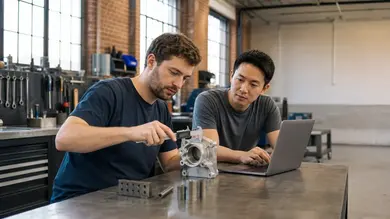
Soft skills play a vital role alongside technical knowledge in mechanical engineering, equipping students to thrive in collaborative and ever-evolving work settings. These interpersonal and cognitive abilities help engineers convey ideas clearly, navigate team dynamics, and adapt to constant changes in technology and industry practices, setting the stage for professional growth.
- Communication: Clear communication ensures engineers can present complex concepts effectively to colleagues, clients, and stakeholders from diverse backgrounds-an essential factor in successful project completion and client relationships.
- Teamwork: Working in groups on design, prototyping, and manufacturing tasks teaches students to cooperate, share tasks, and manage conflicts productively, skills that are highly prized by employers.
- Problem-solving: Engineering challenges and hands-on projects develop the ability to analyze intricate systems, identify issues swiftly, and generate practical, innovative solutions crucial to research and development roles.
- Critical thinking: Students refine their capacity to evaluate information, question assumptions, and make data-driven decisions, which drives efficient solutions and design improvements.
- Adaptability: Facing rapid technological advancements, students cultivate flexibility and a growth mindset, embracing new software, tools, and methods vital for long-term career success.
Roughly 70% of mechanical engineering students in the U.S. engage in internships or cooperative education (co-op) programs as part of their academic journey. These placements are usually temporary, supervised roles within industries like manufacturing, aerospace, automotive, or energy. While some programs offer them as optional experiences, many require at least one to fulfill graduation criteria, emphasizing the value of applying theoretical knowledge in real-world settings. Such opportunities enable students to acquire hands-on skills and gain exposure to workplace dynamics that cannot be fully replicated in classrooms.
Participating in internships or co-ops also facilitates important professional growth by improving communication, teamwork, and problem-solving abilities. These roles provide a chance to work with industry-standard tools and technologies, helping students build technical competence alongside academic learning. Beyond skill development, these experiences are vital for creating networks with industry professionals and potential employers, often paving the way to job offers or mentorship. Overall, internships and co-op programs play a crucial role in preparing mechanical engineering students for a successful transition into their careers.
Professional certifications can significantly complement a mechanical engineering degree by enhancing career readiness and demonstrating specialized expertise. Though some programs may highlight certain skill sets or tools, certifications embedded in mechanical engineering degrees are generally uncommon. Most degree programs focus on foundational knowledge in core principles like thermodynamics and materials science, rather than incorporating formal certification tracks directly within the curriculum. This approach ensures students meet academic and industry standards such as those set by ABET but does not typically include guaranteed certification opportunities during the course of study.
Students interested in mechanical engineering certification programs usually pursue these credentials independently alongside or after their degree. Certifications like Professional Engineer (PE) licensure, Certified Manufacturing Engineer (CMfgE), or software-specific credentials in CAD and finite element analysis offer significant value by validating practical skills and professional competence. These certifications can be strategically integrated into career plans, often through internships or co-op experiences that provide hands-on learning.
Additionally, those exploring advanced education options might consider fields related to leadership, such as a PhD in organizational leadership online, to further strengthen their professional profile.
Exploring common career paths for mechanical engineering graduates can help students align their education with industry demands and personal interests. Mechanical engineering offers steady job growth, with employment projected to increase about 6% from 2022 to 2032, reflecting ongoing technological advancements and infrastructure expansion.
Understanding the typical roles available provides insight into how graduates apply their skills across various sectors.
- Mechanical Engineer: These professionals design, test, and refine mechanical devices and systems such as engines, machinery, and manufacturing equipment. Working in industries like automotive and aerospace, they use their degree knowledge to improve efficiency and functionality.
- Design Engineer: Focused on creating blueprint specifications and prototypes, design engineers develop new mechanical products or components. Their work often involves computer-aided design (CAD) and collaboration with multidisciplinary teams to bring innovative solutions to market.
- Manufacturing Engineer: Specialists in optimizing production processes, manufacturing engineers apply principles from materials science and mechanical engineering to enhance operations, minimize waste, and ensure quality control in factories and plants.
- Systems Analyst: These engineers analyze complex mechanical systems, ensuring proper integration and performance across components. They play vital roles in sectors like robotics, energy, and healthcare equipment by improving system reliability and diagnostics.
- Project Manager: Combining technical expertise with leadership skills, project managers oversee engineering projects from conception through completion. They coordinate teams, manage budgets, and ensure compliance with industry standards, making their role essential in delivering innovative engineering solutions.
The average salary for mechanical engineers tends to reflect the diverse opportunities available, often influenced by industry and specialization. Graduates typically benefit from a solid foundation in mathematics, physics, materials science, and technical communication, allowing them to adapt across various challenges and roles.
For students seeking cost-effective pathways into this versatile field, exploring the cheapest online bachelor's degree options can be a practical first step toward launching a mechanical engineering career.
Knowing the average earnings for mechanical engineering degree holders is essential when evaluating the return on investment of pursuing this field. Mechanical engineering graduate salary in the United States varies with experience, industry, and location, with starting salaries often around $68,000 per year.
Understanding these salary trends helps prospective students make informed decisions about their education and career paths.
- Early-career salaries: Graduates just beginning their careers typically earn near $68,000 annually. These roles often focus on applying foundational engineering skills and supporting projects under supervision, providing essential practical experience.
- Mid-career potential: After five to ten years, salaries can rise to an average of $88,000 per year. This growth reflects increased responsibilities, leadership roles, and more specialized knowledge in areas relevant to mechanical engineering.
- Key influencing factors: Salary differences are shaped by industry sector, location, and certifications. Engineers in aerospace or automotive sectors usually earn more than those in smaller manufacturing or construction industries. Salaries also tend to be higher in states with strong industrial or technological hubs like California, Texas, and Michigan. Additionally, obtaining professional engineering licensure or advanced skills in CAD software or thermodynamics can significantly boost earning potential.
For those considering further education, exploring an affordable online master's degree can enhance career prospects and salary growth in the competitive mechanical engineering field.
What Graduates Say About Their Mechanical Engineering Degree
- Briar: "The mechanical engineering degree provided me with a rigorous foundation in thermodynamics, fluid mechanics, and materials science, which were essential in shaping my analytical thinking. The program's emphasis on hands-on projects helped me develop practical skills that employers highly value. Graduating with this degree has accelerated my career in aerospace engineering, and despite the average cost of attendance being substantial, the investment has truly paid off."
- Jared: "Reflecting on my mechanical engineering studies, I appreciate how the curriculum balanced theory with real-world application, particularly courses in dynamics and control systems. The problem-solving and design competencies I gained remain central to my daily work designing automated manufacturing processes. Although the financial commitment was notable, the degree's impact on opening doors for advancement has made it worthwhile."
- Marlo: "Completing my mechanical engineering degree was a transformative experience that honed my expertise in CAD modeling and heat transfer analysis. The core coursework challenged me to think critically and innovate, skills that are indispensable in my role as a project engineer. Considering the average expenses involved, the degree not only enriched my professional capabilities but also enhanced my confidence in tackling complex engineering challenges. "
Other Things You Should Know About Mechanical Engineering Degrees
In 2027, a mechanical engineering degree curriculum prioritizes competencies in advanced mathematics, thermodynamics, fluid mechanics, and materials science. Students also develop proficiency in computer-aided design (CAD) and acquire strong problem-solving and analytical skills necessary for innovative engineering solutions.
Most ABET-accredited mechanical engineering programs require about 120 to 128 total credit hours, with roughly 12 to 18 credits in design and 6 to 10 credits in laboratory courses. Many curricula also require a capstone design project in the final year.
- What Skills Do You Gain by Pursuing BE Mechanical Engineering? https://ternaengg.ac.in/what-skills-do-you-gain-by-pursuing-be-mechanical-engineering/
- Faculty of Mechanical Engineering https://wm.pwr.edu.pl/en/students/internships
- B.S. in Mechanical Engineering | Sibley School of Mechanical and Aerospace Engineering https://www.engineering.cornell.edu/mae/degree/mechanical-engineering-bs-requirements/
- Why Study Mechanical Engineering? Top 6 Benefits | University of Hartford IPP https://pathways.hartford.edu/blog/why-study-mechanical-engineering
- Essential Technical Skills for a Successful Career as a Mechanical Engineer - IIMT Group of Colleges https://www.iimtindia.net/Blog/successful-career-as-a-mechanical-engineer/
- Soft skills play a critical role for the employment of engineers - World Education Blog https://world-education-blog.org/2025/01/02/soft-skills-play-a-critical-role-for-the-employment-of-engineers/
- Mechanical Engineers https://www.bls.gov/ooh/architecture-and-engineering/mechanical-engineers.htm
- Best Mechanical Courses & Certificates [2026] | Coursera https://www.coursera.org/courses
- Best Certifications for Mechanical Engineers in 2025 (Ranked) https://www.tealhq.com/certifications/mechanical-engineer
- What is Mechanical Engineering? https://www.mtu.edu/mechanical-aerospace/mechanical-engineering/