2027 Online Mechanical Engineering Degree Programs With No Letters of Recommendation Required

Co-Founder and Chief Data Scientist
An online mechanical engineering degree can be difficult to pursue when you do not have recent professors or supervisors available to write recommendations. Programs with no-letter admissions can reduce that barrier while still reviewing transcripts, math preparation, and other evidence of readiness.
This matters in a field with strong employment demand: the U.S. Bureau of Labor Statistics projects 9% growth in mechanical engineering jobs from 2024 to 2034. This guide helps prospective students identify genuinely no-recommendation options, verify accreditation, compare costs, and decide whether an online format supports their engineering goals.
Key Things You Should Know
- "No letters of recommendation required" means an applicant does not need to submit references for admission; it does not mean transcripts, prerequisite courses, GPA standards, essays, or proof of English proficiency are waived.
- For engineering careers that involve licensure or traditional mechanical engineering roles, institutional accreditation and ABET programmatic accreditation matter more than a streamlined application. The Bureau of Labor Statistics projects 9% U.S. job growth for mechanical engineers from 2024 to 2034.
- Compare the total price, required on-campus labs, transfer rules, and degree type before applying. A mechanical engineering technology degree can be valuable, but it is not interchangeable with an ABET-accredited mechanical engineering degree.
Which Online Mechanical Engineering Degree Programs Require No Letters of Recommendation?
A fully online bachelor's degree in mechanical engineering remains less common than online graduate engineering degrees because mechanical engineering curricula include laboratory, design, and hands-on learning requirements.
As a result, applicants should distinguish between an online degree-completion program, a hybrid program with required campus sessions, a mechanical engineering technology program, and an online master's program.
At the undergraduate level, universities commonly use centralized admissions processes that do not request recommendation letters. Arizona State University's online Bachelor of Science in Engineering in Mechanical Engineering and the University of North Dakota's online Bachelor of Science in Mechanical Engineering are examples prospective students can investigate.
Requirements can change by applicant type, term, and residency, so the school's current program-specific application page - not an older blog post or third-party directory - should control.
The comparison below shows why confirming the exact degree and admission route is essential. It is a screening tool, not a substitute for checking the current catalog and application checklist:
| Program type | Where no-letter policies are most common | Important distinction | What to confirm |
| Online bachelor's in mechanical engineering | Centralized first-year or transfer admissions | May include virtual, mailed-kit, partner-site, or short in-person lab work | ABET status, lab format, calculus/physics prerequisites, transfer pathway |
| Online degree-completion bachelor's | Transfer-focused applications | Usually expects substantial lower-division technical coursework | Minimum transferable credits and course equivalencies |
| Online master's in mechanical engineering | Selected professional or coursework-focused programs | Many research-oriented MS programs still require references | Whether the policy applies to the exact concentration and term |
| Mechanical engineering technology degree | Undergraduate and completion programs | Applied technology curriculum may have different licensure implications | Whether ABET accreditation is through EAC or ETAC and whether it fits career goals |
Do not treat "references optional" as identical to "no letters required." Optional means you may submit them, while a waiver may apply only to applicants with a qualifying degree, work history, or internal-transfer status. A true no-letter requirement should be stated in the required-materials list for your specific degree level and applicant category.
Applicants comparing engineering with adjacent technical fields may also find that admissions practices differ by discipline. For example, a guide to the cheapest online masters in artificial intelligence can help illustrate how graduate program costs and application expectations vary, but it should not replace a mechanical engineering curriculum and accreditation review.
What Are the Admission Requirements for Online Mechanical Engineering Degree Programs With No Recommendation Letters?
Admissions without recommendations are streamlined, not automatic. Schools still need evidence that you can succeed in calculus-based engineering coursework and complete design projects in an online setting. Undergraduate applicants are often reviewed through university-wide admission standards, while graduate applicants are reviewed by a department or graduate college.
The most common application materials are summarized below. Exact minimums vary considerably, particularly for graduate applicants and transfer students:
| Applicant type | Common required materials | Engineering-specific evidence often reviewed | Possible additional requirement |
| First-year bachelor's applicant | Application, high school transcript, application fee or waiver | Algebra, trigonometry, precalculus or calculus preparation; physics coursework | Placement testing or proof of English proficiency when applicable |
| Transfer bachelor's applicant | College transcripts and course list | Calculus I-II, calculus-based physics, chemistry, statics, programming, or CAD coursework | Minimum transfer GPA and course-grade thresholds |
| Master's applicant | Application, bachelor's transcript, resume, statement or goals essay | Accredited engineering background, mathematics preparation, relevant technical experience | GRE only if the program requires it; some programs request a portfolio or prerequisite plan |
Before paying an application fee, download or save the current checklist and verify whether it says "letters not required," "references optional," or "letters waived." This protects you from a common mistake: applying to a university based on a general admission page when the mechanical engineering department has additional requirements.
Applicants should also ask whether a stated GPA is a minimum for consideration or a competitive benchmark. A minimum may allow an application to be reviewed, but it does not indicate that every qualified applicant will receive an offer. If you are missing prerequisites, ask whether the school permits conditional admission, bridge courses, or a post-baccalaureate sequence.
Are Online Mechanical Engineering Programs With No Letters of Recommendation Easier to Get Into?
Not necessarily. Eliminating recommendation letters removes one administrative hurdle, especially for working adults, military-affiliated learners, career changers, and students who completed prior education years ago. It does not lower the academic expectations needed to complete an engineering degree.
Mechanical engineering programs must assess whether students can handle quantitative courses, design work, and laboratory requirements. A school may therefore place substantial weight on prior grades in calculus and physics, cumulative GPA, prerequisite completion, and the clarity of an applicant's academic plan. Graduate programs may also prefer applicants with a bachelor's degree in mechanical engineering or a closely related field.
Use this distinction when interpreting an admissions policy:
- Lower application friction: You can submit an application without locating and managing recommenders.
- Separate academic selectivity: The program may still have limited capacity, prerequisite screening, and competitive academic standards.
- Separate completion difficulty: Online delivery does not remove thermodynamics, mechanics of materials, machine design, fluid mechanics, or capstone expectations.
A red flag is any provider that implies that no references means guaranteed admission, guaranteed licensure eligibility, or an engineering job after graduation.
Legitimate institutions explain eligibility standards, credit requirements, and academic policies clearly. Applicants who need substantial math preparation may be better served by completing prerequisites first rather than choosing a program solely because its application is shorter.
Admissions convenience can be useful across fields, but career alignment remains more important. Someone whose goals center on leading technical teams rather than engineering analysis may want to compare a mechanical engineering pathway with the best organizational leadership master's programs online before committing to advanced technical coursework.
Without letters, admissions reviewers generally rely on documents that directly show academic preparation, professional experience, and fit with the program. This can make an application more transparent: you can see the materials being evaluated and address gaps directly rather than relying on a recommender's perspective.
The following materials commonly replace or outweigh recommendation letters in a no-recommendation review:
| Evidence | What it can demonstrate | How an applicant can strengthen it |
| Official transcripts | Academic performance and prerequisite completion | Provide all postsecondary records and explain unusual grading patterns briefly when the application permits |
| Personal statement | Career objectives, preparation, and reasons for choosing the format | Connect specific prior coursework or work projects to the curriculum and desired role |
| Resume | Technical employment, military training, projects, software, and leadership | Use specific tools and outcomes, such as CAD, MATLAB, machining, testing, quality, or maintenance work |
| Prerequisite review | Readiness for upper-division engineering work | Submit course descriptions or syllabi if requested for transfer-equivalency decisions |
| Standardized test or placement result | Quantitative readiness when a school uses it | Confirm whether scores are required, optional, or unavailable for the intended entry term |
For a personal statement, focus on evidence rather than broad claims. A maintenance technician might explain experience interpreting drawings, troubleshooting rotating equipment, or documenting safety procedures; an aspiring design engineer might describe CAD coursework and why additional mechanics and design training is needed. Do not fabricate responsibilities or submit generic text that could fit any institution.
AI tools are changing engineering workflows, including simulation support, documentation, and design iteration. They do not replace the foundational judgment taught through engineering mathematics, material selection, safety analysis, and validation.
Applicants should therefore choose a program that teaches core mechanical engineering competencies rather than assuming that a broad technology credential alone will meet employer expectations.
Legitimacy has two related parts: the institution should hold recognized institutional accreditation, and the engineering program should have the form of programmatic accreditation that matches your goals. For many U.S. mechanical engineering roles, especially paths that may lead toward Professional Engineer licensure, an ABET-accredited program is an important consideration.
Check the degree title carefully. ABET accredits programs, not universities as a whole, and mechanical engineering programs are generally reviewed by the Engineering Accreditation Commission (EAC).
Mechanical engineering technology programs are commonly reviewed through the Engineering Technology Accreditation Commission (ETAC). Neither label is inherently "bad," but the curricula and potential state licensure pathways can differ.
Use these steps before enrolling:
- Match the exact university, degree title, campus or online modality, and program name in the institution's current catalog.
- Confirm institutional accreditation through the university's accreditor listing and the U.S. Department of Education's accreditation resources.
- Search ABET's official directory for the exact program and accreditation commission, then confirm the accreditation period.
- Ask the department how online labs, exams, proctoring, faculty access, and capstone projects work in practice.
- If PE licensure is a goal, contact the engineering licensing board in the state where you expect to seek licensure before enrolling.
A legitimate online program should identify its faculty, curriculum, credit requirements, tuition structure, refund policy, and student-support contacts.
Be cautious when a school uses vague claims about "engineering certification," will not clearly state the awarding institution, or cannot explain how required laboratory outcomes are met. Regional naming conventions have evolved, so focus on recognized institutional accreditation and applicable ABET status rather than marketing language alone.
Engineering applicants who are also comparing lower-cost online degree formats can use resources about the cheapest online college options for broad cost context. Still, a low price does not answer the separate questions of engineering accreditation, lab access, and professional fit.
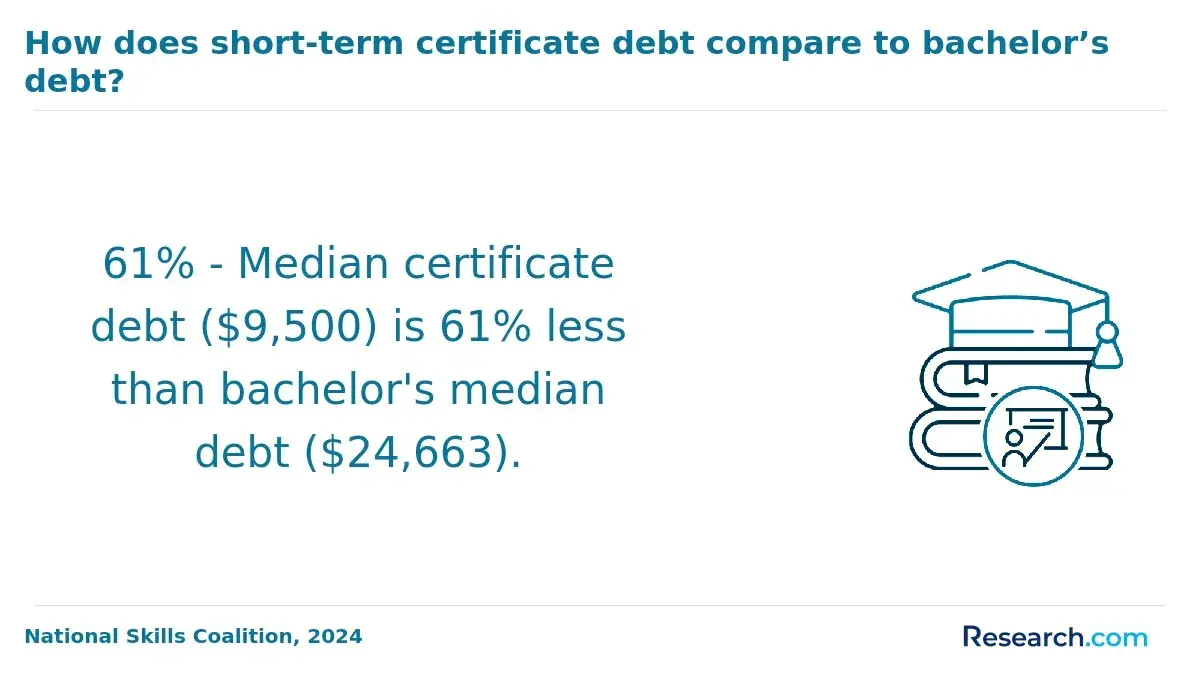
Costs vary more by institution, residency policy, credit load, transfer credits, and required fees than by whether recommendation letters are required. The application policy itself is not a reliable signal of affordability. Mechanical engineering may also include lab kits, software, proctoring, course materials, and travel expenses for any required in-person components.
For perspective on the labor-market side of the investment, the U.S. Bureau of Labor Statistics reported a $102,320 median annual wage for mechanical engineers in May 2024. This is a national occupational median, not a promise for new graduates or graduates of any particular online program. Location, work experience, industry, degree level, and role all affect pay.
Evaluate the full cost of attendance rather than comparing one advertised per-credit figure:
| Cost category | Why it changes the total | Question to ask |
| Tuition per credit | Rates may differ by degree level, residency, or online status | Is the published rate locked for continuing students? |
| Required credits | Transfer and prerequisite gaps can add semesters and tuition | How many credits will the school accept in writing? |
| Engineering course fees | Labs, software, testing, and proctoring can be billed separately | Which fees apply to every mechanical engineering course? |
| Travel and lodging | Hybrid residencies or campus labs may be required | Are campus visits mandatory, and how often? |
| Opportunity cost | Reduced work hours can affect finances even when tuition is manageable | Can the course sequence be completed part-time? |
Request a written estimate for your expected course load and ask whether it includes all mandatory charges. Avoid making an enrollment decision based only on the first term's price. A cheaper program that accepts few credits or requires repeated travel can cost more overall than a higher-priced program with a clear transfer pathway.
Yes. Streamlined admissions does not generally prevent a student from seeking federal financial aid, scholarships, employer tuition assistance, veterans' education benefits, or payment plans. Eligibility depends on the school's participation in aid programs, the student's enrollment and financial circumstances, satisfactory academic progress, and the credential's eligibility - not on whether letters of recommendation were required.
Students seeking federal aid should complete the Free Application for Federal Student Aid for the relevant award year and confirm the school's federal school code.
The maximum Federal Pell Grant for the 2025-26 award year is $7,395 for eligible students, but an individual award depends on financial circumstances, enrollment intensity, and other federal rules. Graduate students are not eligible for Pell Grants, although they may have other federal loan options if eligible.
Before accepting aid, compare the following sources and conditions because they can affect the amount you must borrow:
- Federal grants and scholarships, which generally do not require repayment when eligibility conditions are met.
- Federal student loans, which have borrowing limits, interest, fees, and repayment obligations.
- Employer tuition assistance, which may require continued employment or grade thresholds.
- Military and veterans' benefits, which require program approval and benefit-specific eligibility checks.
- Institutional scholarships, which may use GPA, major, transfer status, or enrollment criteria even when the admission application has no references.
Ask the financial aid office whether online students pay the same fees as campus students and whether all required labs are covered by the cost-of-attendance budget.
If you are evaluating professional doctorates in another field alongside engineering, information on the cheapest online EdD programs may help with general borrowing comparisons, but aid eligibility and professional outcomes must be assessed separately for each credential.
Completion time depends primarily on degree level, prior credits, prerequisite gaps, and whether the program follows a fixed sequence. The lack of recommendation letters affects the application process, not the number of credits or academic standards required for graduation.
A traditional bachelor's degree commonly requires about four years of full-time study from the first term. A transfer or degree-completion pathway may take less time when the school accepts applicable general education, math, science, and engineering credits.
An online master's degree often takes roughly one to three years depending on whether students study full time or part time, though a thesis, capstone, or prerequisite courses can extend that timeline.
This comparison highlights the scheduling questions that matter most:
| Pathway | Typical pacing factors | Potential timeline issue |
| First bachelor's degree | Sequential calculus, physics, and engineering courses | A failed or unavailable prerequisite can delay later courses |
| Transfer bachelor's or completion degree | Number and quality of accepted credits | Credits may transfer as electives rather than major requirements |
| Coursework-focused master's | Courses taken per term and prior engineering preparation | Bridge courses may be needed for applicants from adjacent majors |
| Hybrid online program | Residency and laboratory schedule | Required travel dates may constrain working students |
Ask for a term-by-term plan before enrolling. In particular, verify how often required courses are offered, whether summer enrollment is available, whether a capstone has prerequisites, and whether online students can pause enrollment without losing progress. Programs marketed as asynchronous may still have weekly deadlines, group projects, proctored exams, or scheduled laboratory sessions.
Many online bachelor's programs accept transfer credit, but mechanical engineering is one of the fields where course matching matters most. A calculus course, physics sequence, statics class, or manufacturing lab may need to match required learning outcomes before it can satisfy a major requirement. Graduate programs may accept limited graduate transfer credit, subject to grade, recency, and residency rules.
Students should submit official transcripts early and request a preliminary transfer evaluation whenever available. Do not assume that a course with a similar title will fulfill the equivalent requirement. Keep syllabi, lab outlines, textbooks, and detailed course descriptions, especially for technical courses completed at another college or through military education.
These questions help reveal whether a transfer pathway is practical rather than merely possible:
- How many total credits, lower-division credits, and upper-division engineering credits can transfer?
- Which prior courses satisfy calculus, physics, mechanics, programming, CAD, materials, and laboratory requirements?
- What minimum grade is required for a technical course to transfer?
- Will transfer credits count toward the major, general education, or only unrestricted electives?
- Can the school provide a written degree audit before you commit to enrollment?
Transfer-friendly admissions can especially help adults returning to school after earning credits in a different field. For comparison, a bachelor in human services may have a very different transfer pattern because it typically does not require the same sequenced calculus and engineering-science courses. Use the mechanical engineering department's evaluation, not a general transfer estimator, for your final decision.
How Should You Compare Online Mechanical Engineering Degree Programs That Do Not Require Letters of Recommendation?
The best no-recommendation program is not simply the one with the fewest application items. It is the program whose accreditation, curriculum, delivery format, cost, transfer policy, and career relevance fit your situation.
This is particularly important for students who want product-design, manufacturing, energy, aerospace, HVAC, robotics, testing, or maintenance-engineering work.
Use the following comparison framework after identifying programs that genuinely do not require recommendation letters:
| Comparison factor | Why it matters | Strong sign | Warning sign |
| Degree and accreditation | Affects employer confidence and possible licensure planning | Exact degree title and ABET status are clearly published | Vague accreditation claims or unclear awarding institution |
| Curriculum | Determines technical preparation | Detailed courses in mechanics, thermal-fluids, design, materials, and capstone work | Course list lacks core engineering science or design content |
| Online laboratory model | Engineering learning includes experimentation and validation | Clear explanation of lab access, equipment, safety, and assessment | No explanation of how labs are completed |
| Admission policy | Prevents application surprises | Program-specific checklist explicitly says recommendations are not required | Only a general university page addresses references |
| Total price | Influences debt and return on investment | Written estimate includes mandatory fees and travel expectations | Tuition is advertised without required-fee details |
| Student support | Supports persistence in a demanding online sequence | Access to advising, tutoring, faculty office hours, career services, and technical support | Sales-focused contact with limited academic answers |
A practical application plan is to narrow your list to three to five schools, then contact each admissions office with the same short set of questions. Ask whether references are required for your entry term, whether your prerequisites meet admission standards, whether any campus visits are mandatory, how transfer credit will be evaluated, and whether the exact online program is ABET accredited. Save answers in writing.
Mechanical engineering can lead to work involving machines, systems, manufacturing processes, thermal systems, materials, and product development. The BLS median wage and projected growth figures are useful context, but your own return on investment will depend on completion, location, prior experience, employer demand, and the role you pursue.
Applicants who lack the required math and science background should consider a preparatory sequence or an alternative technical pathway rather than rushing into a program that does not match their readiness.
Other Things You Should Know About Mechanical Engineering
Yes, provided you meet the program's academic requirements. No-letter admissions can be especially helpful when former instructors are difficult to contact. Expect to submit transcripts and, in many cases, evidence of calculus, physics, and other prerequisite coursework.
Only if the application system or department permits optional materials. Unrequested letters may not be reviewed, so ask admissions before sending them. Put your effort into required materials first, especially transcripts, prerequisite documentation, and a focused statement.
Requirements can change by term, applicant type, degree level, or curriculum revision. Verify the checklist shortly before applying and confirm that it applies to the exact online mechanical engineering degree, not a different engineering major or campus program.
Employers generally focus on the awarding institution, accreditation, technical skills, project experience, and ability to perform the role. Be prepared to explain your coursework, labs, design projects, software skills, and any relevant work experience. For licensure-oriented goals, check program accreditation and state board requirements early.
- Graduate Without an ABET Engineering Degree https://www.illinoisengineer.com/graduate-without-abet-engineering-degree.html
- Best Online Engineering Schools in Texas (TX) - Accredited Schools https://www.onlineengineeringprograms.com/usa/texas
- College Graduation Rates and How ACE Compares | ACE Blog https://ace.edu/blog/college-graduation-rates-and-how-ace-compares/
- Criteria for Accrediting Engineering Programs, 2025 - 2026 - ABET https://www.abet.org/accreditation/accreditation-criteria/criteria-for-accrediting-engineering-programs-2025-2026/
- IDEA Tuition and Cost - IDEA - An Online Higher Education Alliance https://www.idea.edu/students/cost
- 2025 Most Affordable Bachelor's in Engineering Online https://www.onlineu.com/most-affordable-colleges/engineering-degrees