2026 What Can You Do with a Community Health Doctorate? Careers, Salaries, Academic Roles, and Industry Paths

Co-Founder and Chief Data Scientist
A Community Health doctorate is best understood as a career accelerator for professionals who want to lead population health strategy, research, policy, or large-scale prevention programs. The timing matters: the U. S. Bureau of Labor Statistics projects 23% growth for medical and health services managers from 2024 to 2034, far faster than average. This guide explains what the degree can lead to, how employers view online doctorates, where salaries tend to be strongest, and how to decide whether the credential fits your career goals.
Key Things to Know About Online Community Health Doctorate Career Outcomes
- A Community Health doctorate is most useful for senior roles in public health leadership, applied research, program evaluation, health equity strategy, academia, consulting, and population health management rather than entry-level community outreach roles.
- Because federal salary data does not track "Community Health doctorate holders" as a separate category, the best salary benchmarks are role-based: BLS 2024 median pay was $117,960 for medical and health services managers and $83,980 for epidemiologists.
- Online Community Health doctorates can be respected when the university is institutionally accredited, the program has credible public health alignment, and the student produces a rigorous dissertation, capstone, portfolio, or applied research project relevant to employer needs.
What skills do you gain from Community Health doctorate degrees?
A Community Health doctorate develops advanced expertise in improving health outcomes across communities, organizations, and populations. Unlike a general master's degree, a doctorate usually expects you to design evidence-based interventions, evaluate complex systems, lead multidisciplinary teams, and translate research into policy or practice.
The skills below matter because employers hiring at the doctoral level usually want proof that you can solve ambiguous problems, not just understand public health concepts.
| Skill area | What it helps you do | Career relevance |
| Program evaluation | Measure whether health programs work, identify weak points, and recommend improvements | Useful for nonprofit directors, health department leaders, grant-funded program managers, and consultants |
| Biostatistics and epidemiologic reasoning | Interpret disease trends, risk factors, and intervention outcomes | Important for epidemiology, population health analytics, and applied research roles |
| Health equity and social determinants analysis | Connect health outcomes to housing, income, education, access, environment, and policy | Valuable in community health planning, government agencies, foundations, and hospital community benefit work |
| Leadership and systems thinking | Coordinate budgets, teams, stakeholders, compliance demands, and long-term strategy | Supports advancement into director, vice president, chief health officer, or public health administrator roles |
| Policy translation | Turn research findings into recommendations that decision-makers can use | Relevant to advocacy organizations, public agencies, think tanks, and legislative support roles |
| Data governance and informatics awareness | Use health data responsibly while considering privacy, quality, interoperability, and bias | Increasingly important as AI, dashboards, and predictive analytics influence public health decisions |
One current trend is the growing overlap between community health, informatics, and AI-supported decision-making. Doctoral students who understand both community needs and data systems may be better positioned for population health analytics, quality improvement, and health equity measurement roles; students who want a more data-focused route may also compare options such as a health information management degree online before committing to a doctorate.
Common mistakes include choosing a doctoral program that is too theoretical for an applied leadership goal, underestimating the quantitative workload, or assuming that the degree alone will create career mobility. The stronger approach is to align every major assignment, practicum, dissertation, or capstone with the role you want after graduation.
What specializations can you pursue within Community Health doctorate degrees?
Community Health doctorate programs often sit within public health, health sciences, health education, preventive care, population health, or behavioral health departments. Specializations matter because they shape your dissertation topic, professional network, internship options, and the job titles that make the most sense after graduation.
The table below summarizes common specialization paths and the career outcomes they tend to support. Use it to compare flexibility against depth: broad specializations are safer for career pivots, while niche specializations can be powerful when they match a clear labor-market need.
| Specialization | Best fit | Potential career paths |
| Health promotion and disease prevention | Students who want to design prevention programs at the community, employer, school, or health-system level | Health promotion director, wellness strategy leader, prevention program evaluator |
| Health equity and community-based research | Students focused on disparities, underserved communities, participatory research, or place-based interventions | Health equity director, community research lead, foundation program officer |
| Epidemiology or applied population health | Students who want stronger quantitative training and disease surveillance skills | Epidemiologist, population health analyst, public health intelligence lead |
| Global or environmental community health | Students interested in climate, environmental exposures, disaster response, or cross-border health issues | Environmental health strategist, emergency preparedness leader, global health program director |
| Maternal, child, and family health | Students focused on reproductive health, child development, family support systems, or early-life outcomes | Maternal and child health director, policy analyst, nonprofit executive |
| Nutrition and community wellness | Students interested in food access, chronic disease prevention, school nutrition, or community-based nutrition policy | Community nutrition program director, wellness policy consultant, food systems advocate |
Nutrition-related specialization can be valuable, but it should be chosen with care. If your goal is credentialing, dietetics, or a narrower nutrition career rather than doctoral-level community health leadership, researching a lower-cost option such as the cheapest online master's in nutrition may be a better first step.
As a rule, choose a general Community Health track if you want broad leadership mobility across agencies, nonprofits, universities, and health systems. Choose a niche specialization when you already know the population, policy area, or intervention type you want to own professionally.
Are online Community Health doctorate programs respected by employers?
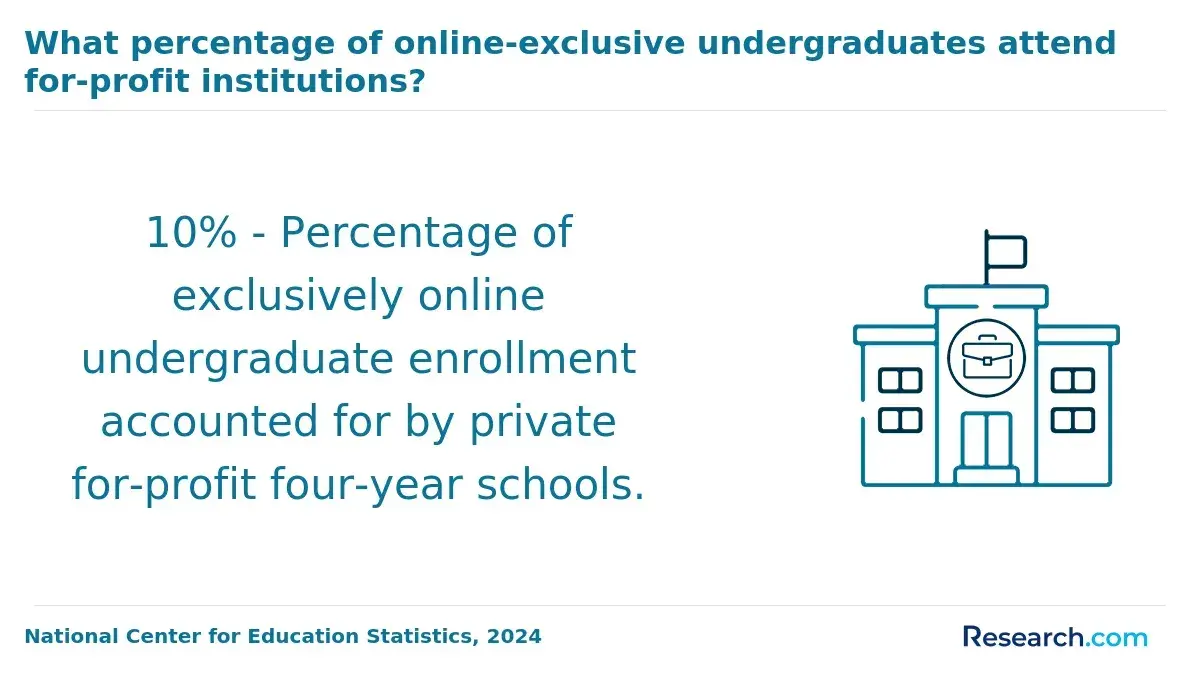
Online Community Health doctorates can be respected by employers, but the word "online" is not what determines credibility. Employers usually care more about institutional accreditation, program rigor, faculty expertise, research expectations, applied experience, and whether your doctoral work connects to real community health problems.
Online education is now mainstream in graduate study. NC-SARA's 2024 reporting showed that U.S. institutions participating in interstate distance education continued to serve millions of students through online formats, which means employers are increasingly used to seeing online credentials on resumes. The key question is whether the program has enough structure, mentorship, and applied learning to support doctoral-level outcomes.
The comparison below can help you decide whether an online or hybrid format better matches your work style and career goals.
| Format | Strengths | Trade-offs | Best fit |
| Fully online | Most flexible for working professionals and students outside major metro areas | Requires strong self-direction and intentional networking | Experienced professionals who already have access to a workplace, community site, or data source for applied projects |
| Hybrid | Combines online coursework with residencies, labs, intensives, or in-person collaboration | Travel and scheduling can add cost and complexity | Students who want stronger faculty contact, cohort connection, or structured research support |
| Campus-based | Often provides easier access to research centers, assistantships, and faculty labs | Less flexible for full-time professionals and may require relocation | Students pursuing traditional academic or research-intensive pathways |
Accreditation deserves special attention. At minimum, the university should be institutionally accredited by a recognized accreditor; for public health-oriented degrees, look for alignment with recognized public health standards and, where relevant, Council on Education for Public Health accreditation at the school or program level.
Applicants who are not ready for doctoral-level research may be better served by a master's first. For example, someone building foundational public health training could compare the easiest MPH online programs to get into before applying to a Community Health doctorate.
What industries value professionals with Community Health doctorate degrees?
Community Health doctorate holders are valued in sectors where population-level decision-making, evidence-based programming, grant funding, policy interpretation, and health outcomes measurement are central to the work. The strongest fit is usually not a single industry but an intersection: healthcare plus analytics, nonprofit leadership plus evaluation, or public health policy plus community engagement.
The table below shows where the degree tends to have the most relevance and how demand differs by sector.
| Industry or sector | Why the doctorate is valued | Example roles |
| Healthcare systems and hospitals | Hospitals need leaders who can connect community benefit, prevention, population health, quality improvement, and patient outcomes | Director of population health, community benefit director, health equity executive |
| Government public health agencies | Agencies need expertise in surveillance, preparedness, policy, epidemiology, and program evaluation | Public health administrator, epidemiology director, policy advisor |
| Universities and research centers | Academic settings value research design, teaching ability, publication potential, and grant development | Faculty member, research scientist, center director |
| Nonprofits and foundations | Funders and service organizations need leaders who can evaluate impact and scale effective interventions | Executive director, program officer, evaluation director |
| Consulting and professional services | Clients need help with needs assessments, equity audits, program design, grant evaluation, and implementation strategy | Public health consultant, evaluation consultant, health strategy advisor |
| Employers, insurers, and managed care organizations | Organizations use prevention and population health strategies to manage risk, improve outcomes, and reduce avoidable utilization | Population health strategist, wellness analytics lead, social determinants program director |
Demand is especially strong where organizations must show measurable outcomes. BLS projections for medical and health services managers show 23% growth from 2024 to 2034, which indicates strong demand for leaders who can manage health programs, teams, compliance, and performance improvement. For Community Health doctorate holders, this supports the value of combining leadership training with measurable program outcomes.
Some students enter community health through nutrition, wellness, or prevention before moving toward doctoral work. If speed to an initial credential matters more than doctoral research, an accelerated nutrition degree online may fit an earlier career stage better than a doctorate.
What executive or leadership roles can Community Health doctorate degrees qualify you for?
A Community Health doctorate can support executive or leadership roles when it is paired with relevant experience. The degree may help you compete for senior positions that require strategic planning, evidence-based decision-making, stakeholder leadership, grant oversight, policy interpretation, and the ability to defend decisions with data.
The roles below are not automatic outcomes of the degree, but they show where doctoral-level community health expertise can be especially useful.
| Leadership role | Typical setting | How the doctorate helps | Salary context |
| Director of population health | Hospitals, health systems, managed care, accountable care organizations | Connects prevention, analytics, care coordination, and community partnerships | Often benchmarked against medical and health services management roles; BLS 2024 median pay was $117,960 |
| Chief health equity officer | Health systems, universities, government agencies, foundations | Supports equity strategy, measurement, policy implementation, and organizational change | Pay varies widely by organization size and executive scope |
| Public health administrator | Local, state, tribal, or federal health agencies | Strengthens program oversight, emergency preparedness, policy planning, and interagency coordination | Often tied to public-sector pay bands and leadership experience |
| Executive director of a health nonprofit | Community organizations, advocacy groups, disease-specific nonprofits | Helps with grant strategy, impact evaluation, board communication, and program scaling | Highly dependent on budget size, funding mix, and geography |
| Director of research or evaluation | Universities, foundations, consulting firms, nonprofits | Builds credibility in study design, outcomes measurement, and funder reporting | Can be competitive when tied to grants, contracts, or institutional leadership |
The highest-paying paths are often in healthcare systems, managed care, consulting, and executive administration because these roles connect health outcomes to budgets, compliance, risk, and organizational performance. Public-sector and nonprofit roles may pay less than corporate healthcare roles, but they can offer mission alignment, pension benefits, public service loan forgiveness eligibility in qualifying settings, and stronger connection to community impact.
The biggest mistake is assuming the doctorate substitutes for management experience. If your target is an executive role, build a portfolio that shows budget responsibility, staff supervision, board or stakeholder presentations, grant outcomes, and measurable program improvements.
Are there academic careers available for Community Health doctorate holders?
Yes, academic careers are available for Community Health doctorate holders, especially for those who earn a research-oriented PhD or complete a rigorous applied doctorate with publications, teaching experience, and a strong dissertation or capstone. Academic roles can include teaching, research, curriculum leadership, student mentoring, grant development, and community-engaged scholarship.
The academic path is attractive if you want to generate knowledge, train future practitioners, and build a research agenda. It is less ideal if your main goal is rapid income growth or if you prefer operational leadership over writing, publishing, and grant competition.
The table below compares common academic roles and how they differ in expectations.
| Academic role | Main responsibilities | Best fit | Salary context |
| Tenure-track faculty member | Research, teaching, service, publications, grants, student advising | PhD graduates or research-heavy doctorate holders with publication potential | BLS 2024 median pay for postsecondary health specialties teachers was $105,650 |
| Clinical or practice faculty | Teaching, field supervision, curriculum development, applied projects | Experienced public health practitioners who want to teach without a research-intensive agenda | Often varies by contract type and institution |
| Research scientist | Study design, data analysis, manuscripts, grant-funded projects | Students with strong methods training and a focused research area | Often tied to grant funding, institution type, and research productivity |
| Program director or department chair | Academic administration, accreditation support, faculty coordination, curriculum quality | Experienced educators with leadership and accreditation experience | May include administrative stipends or higher salary bands |
Academic hiring can be competitive, and institutional priorities vary. A doctorate from a respected program helps, but publication record, teaching evaluations, methods expertise, professional network, and fit with a department's needs often matter just as much.
If academia is your goal, ask programs about doctoral teaching opportunities, dissertation mentorship, research assistantships, publication support, conference funding, and faculty placement outcomes before enrolling.
Are there consulting opportunities for Community Health doctorate holders?
Consulting can be a strong path for Community Health doctorate holders because many organizations need specialized expertise but cannot justify hiring a full-time doctoral-level evaluator, strategist, or researcher. Consultants may work with health departments, foundations, hospital systems, nonprofits, schools, employers, and grant-funded coalitions.
Consulting works best when your doctorate gives you a clearly marketable method, population focus, or problem-solving niche. Common consulting services include the following:
- Community health needs assessments for hospitals, counties, coalitions, and nonprofit networks
- Program evaluation for grant-funded prevention, equity, maternal health, nutrition, behavioral health, or chronic disease initiatives
- Health equity audits, implementation plans, and outcome dashboards
- Training for community health workers, nonprofit staff, public health teams, or healthcare partners
- Grant writing, logic model design, performance measurement, and funder reporting
- Strategic planning for population health, community benefit, emergency preparedness, or prevention programs
The consulting path can pay well when you have a strong network, a specialized reputation, and repeat clients. It can also be unstable if you dislike business development, proposal writing, pricing, contracting, and managing uneven income.
Use the comparison below to decide whether consulting or a full-time leadership role better matches your risk tolerance and work style.
| Path | Advantages | Challenges | Best fit |
| Independent consulting | High autonomy, flexible client mix, potential for premium project rates | Income variability, sales responsibility, limited benefits unless self-funded | Experienced professionals with a clear niche and strong network |
| Consulting firm | Structured projects, team support, broader client exposure | Travel, deadlines, utilization targets, less control over assignments | Doctorate holders who like fast-paced applied problem solving |
| Full-time leadership role | Stable salary, benefits, organizational influence, long-term strategy ownership | Less flexibility, internal politics, slower change cycles | Professionals who want sustained authority inside one organization |
A common mistake is launching a consulting business with only a degree and no defined buyer. Before choosing this path, identify who pays for your expertise, what problem you solve, what deliverable you provide, and what evidence proves your value.
What nonprofit or public sector roles are open to Community Health doctorate holders?
Community Health doctorate holders can be strong candidates for nonprofit and public-sector roles that require advanced program leadership, research translation, evaluation, and policy judgment. These roles may not always pay as much as corporate healthcare leadership, but they often provide mission alignment and direct influence on community outcomes.
The strongest public-service opportunities usually involve managing complex programs or advising decision-makers rather than performing front-line outreach. Examples include the following:
- Local or state public health director roles focused on prevention, emergency preparedness, surveillance, health promotion, or community partnerships
- Health policy advisor positions supporting legislation, agency planning, Medicaid programs, or public health funding decisions
- Foundation program officer roles that evaluate proposals, fund community interventions, and measure impact
- Nonprofit executive roles overseeing staff, grants, partnerships, strategic plans, and board communication
- Tribal, rural, or community-based health leadership roles focused on culturally responsive interventions and access barriers
- Federal contractor or research organization roles supporting public health agencies with evaluation, technical assistance, and implementation
Salary varies considerably by funding source, geography, and organizational size. BLS 2024 data placed median pay for social and community service managers at $78,240, which can be a useful benchmark for nonprofit management roles, although doctoral-level leaders in larger organizations may be paid differently.
Nonprofit and public-sector work makes sense if your main motivation is population impact, policy change, or service to specific communities. It may be less attractive if your top priority is maximizing compensation quickly, unless you are targeting senior government leadership, large foundations, major health systems, or national organizations.
How do Community Health doctorate degrees impact long-term earning potential?
A Community Health doctorate can improve long-term earning potential, but the effect depends heavily on role, sector, geography, prior experience, and whether the degree moves you into leadership, academia, consulting, or research. The credential is usually most financially valuable when it helps you qualify for roles with budget authority, strategic responsibility, faculty rank, grant leadership, or specialized consulting revenue.
National education-level data provides useful context, though it does not isolate community health. BLS 2024 education-pay data reported median weekly earnings of $2,083 for doctoral degree holders and $1,840 for master's degree holders across all fields. That gap suggests a doctoral premium at the broad labor-market level, but it should not be treated as a guaranteed return for any single program or career path.
Cost is the other side of the ROI question. There is no federal average cost specifically for Community Health doctorates, so the most transparent benchmark is graduate tuition and required fees by institution type from NCES data released in 2024.
| Institution type | Average graduate tuition and required fees | How to interpret it |
| Public institutions | $12,596 per academic year | Often lower for in-state students, but doctoral fees, residencies, and dissertation credits can add costs |
| Private nonprofit institutions | $29,931 per academic year | May offer strong networks or specialized faculty, but aid and employer support are important to compare |
| Private for-profit institutions | $14,161 per academic year | Price alone is not enough; carefully evaluate accreditation, outcomes, student support, and reputation |
Completion time also affects cost and opportunity cost. Professional doctorates may take about three to five years, while research-focused PhD programs can take longer depending on dissertation scope, funding, and whether the student studies part time. National doctoral completion data specific to Community Health is limited, but longstanding graduate education research shows doctoral attrition is real, so applicants should ask each program for its own completion rates, median time to degree, and dissertation support structure.
To improve the financial case for the degree, prioritize programs that align with your target role, offer employer-compatible scheduling, provide strong dissertation mentorship, and allow you to use workplace problems as applied research projects. Also compare tuition, fees, residencies, travel, lost work hours, books, software, and whether your employer offers tuition assistance.
How can you assess if a doctorate degree in Community Health is aligned with your career goals?
The best way to assess fit is to start with the role you want, not the degree title. A Community Health doctorate is usually worth considering if your target career requires advanced research credibility, senior leadership authority, university teaching eligibility, high-level evaluation skills, or specialized policy expertise.
Use the following steps to decide whether the degree is aligned with your goals:
- Write down three target job titles you want within five to ten years, then review actual job postings to see whether a doctorate is required, preferred, or unnecessary.
- Identify whether you need a PhD-style research pathway, a DrPH-style applied leadership pathway, or another health sciences doctorate with community health relevance.
- Compare faculty expertise with your intended dissertation or capstone topic, because poor mentor fit can delay completion.
- Check institutional accreditation and, when relevant, public health accreditation or professional recognition connected to your field.
- Ask programs for completion rates, median time to degree, dissertation support, student publication opportunities, career services, and alumni outcomes.
- Calculate total cost beyond tuition, including fees, residencies, technology, travel, books, reduced work hours, and loan interest.
- Confirm whether the online or hybrid format gives you enough networking, applied fieldwork, and faculty interaction for your career path.
The table below highlights common red flags that should make you slow down before enrolling.
| Red flag | Why it matters | Better approach |
| You cannot name the role the doctorate is supposed to help you reach | The degree may become an expensive credential without a clear labor-market purpose | Start with job postings and informational interviews |
| The program has limited information about dissertation support | Weak advising can increase time to completion and frustration | Ask about committee formation, proposal timelines, writing support, and completion data |
| The specialization is based only on personal interest | Interest matters, but career outcomes differ by niche | Validate demand through job postings, salary benchmarks, and employer conversations |
| The program's online format has little interaction | Doctoral work requires mentorship, feedback, and professional network building | Look for residencies, synchronous seminars, research groups, and faculty access |
| The cost requires heavy borrowing without a salary strategy | Debt can limit career flexibility, especially in nonprofit or public-sector roles | Compare lower-cost programs, employer support, assistantships, and public-service pathways |
The degree is most aligned when it solves a specific career problem: you need doctoral credibility for research, senior strategy, academic work, consulting authority, or complex program leadership. It is less aligned when you mainly want a general promotion, are unsure of your field, or have not yet built enough professional experience to benefit from doctoral-level training.
Other Things You Should Know About Community Health
Yes, doctorate holders may generally use the academic title "Dr." in appropriate professional and educational contexts. However, they should avoid implying that they are licensed physicians or clinical providers unless they also hold the required clinical license.
Usually no. Community Health doctorates are generally nonclinical degrees and do not, by themselves, qualify graduates for medical, nursing, counseling, dietetics, or other regulated clinical licenses. Licensure rules depend on the profession and state.
A PhD is usually better for research-intensive academic careers, while a DrPH or applied doctorate is often better for senior practice, policy, and leadership roles. The better choice depends on whether you want to produce original research or lead applied public health change.
Many programs prefer applicants with public health, healthcare, nonprofit, policy, research, or community program experience. Experience helps you choose a stronger dissertation topic and makes the degree more valuable because you can connect doctoral work to real organizational problems.
References
- What careers are there in public health? https://www.rsph.org.uk/qualifications-training/career-development/what-careers-are-there-in-public-health/
- Careers in Community Health - MPH Online https://www.mphonline.org/community-health-jobs/
- Explore Public Health Careers - Public Health https://www.publichealthonline.org/careers/
- Careers in healthcare and public health - MSc/PhD Advice 19405 https://www.postgraduatestudentships.co.uk/advice/careers-in-healthcare-and-public-health/19405
- Public Health Career Salaries: What to Expect Across Roles https://www.scuhs.edu/bshs-article/public-health-career-salaries-what-to-expect-across-roles/
- Careers https://www.publichealthdegrees.org/careers/
- Why Public Health is the Ideal Career Path for Gen Z - Reach Out https://we-reachout.org/why-public-health-is-the-ideal-career-path-for-gen-z/
- Exploring Diverse Careers in Health Education and Promotion https://www.nchec.org/news/posts/exploring-diverse-careers-in-health-education-and-promotion