2027 Speech Recognition Evaluation Capstones: What to Look for in a Data Science Master's

Co-Founder and Chief Data Scientist
A speech recognition evaluation capstone can be strong evidence of data science skill - or little more than a demonstration of an existing tool. For prospective master's students interested in speech AI, the difference matters when comparing programs. This guide explains what a credible project should measure, which courses and resources make it feasible, and what to verify before paying for a degree. You can use those criteria to judge whether a program offers a realistic path to the portfolio work you want.
Key Things You Should Know
- Look for capstones that compare recognizers on appropriate speech data, report error rates by relevant speaker or recording conditions, and document reproducible methods - not just a working transcription demo.
- Confirm that students can access suitable recordings, annotations, computing resources, and an advisor with relevant expertise; a capstone requirement alone does not establish speech-project support.
- Compare the full program cost with the project opportunity you will actually receive. The Bureau of Labor Statistics reports a $120,230 median annual wage for data scientists in May 2025, but that occupation-wide figure is not a salary forecast for capstone graduates.
What is a speech recognition evaluation capstone in a data science master's program?
It is a culminating project that tests how well an automatic speech recognition (ASR) system converts audio into text for a defined use case. A student might compare models for noisy customer-service calls, examine errors in dictated notes, or test whether performance changes across recording devices. The central deliverable is a defensible evaluation: what was tested, against which reference transcripts, under what conditions, and with what limitations.
Building a new recognizer is optional. For many data science students, a careful comparison of existing systems - with sound experimental design and error analysis - is more valuable than a novel model trained on unsuitable data. A strong project connects its findings to a decision, such as whether a system is reliable enough to assist human transcription.
Do not assume that a master's program offers speech-specific capstones because it teaches machine learning or allows independent projects. If you would rather study model development broadly than investigate evaluation in depth, you can explore artificial intelligence degrees online alongside data science programs. For either path, ask to see recent project topics and confirm that a speech evaluation proposal would be permitted.
What skills should a speech recognition capstone demonstrate?
The best projects show that a student can make valid comparisons, not simply call an ASR application programming interface. That requires statistical reasoning, audio-data handling, programming, and communication with the people who would use the transcripts.
When reviewing sample capstones or planning your own, look for evidence across the full workflow:
- Problem framing: A defined audience, recording setting, language variety, and acceptable types of error.
- Data practice: Documented permissions, reference-transcript quality, consistent train-and-test separation, and controls against using the same recordings for tuning and final evaluation.
- Technical execution: Repeatable audio preparation, model configuration, scoring code, and version information.
- Analysis: Results broken down by meaningful conditions, with uncertainty or small-sample limitations acknowledged.
- Communication: Examples of consequential mistakes, an explanation of trade-offs, and a recommendation stakeholders can act on.
A project that shows only an overall accuracy claim is a weak portfolio signal: an interviewer cannot tell whether the student understood the recordings, checked the reference text, or investigated where the system fails. Students targeting research-heavy roles may also want experimental model adaptation; students targeting applied evaluation roles can demonstrate depth without it.
How do you evaluate speech recognition capstone project quality?
Judge the project by whether another analyst could understand its conclusion and test its limits. A polished interface or a low error rate on an easy dataset is not, by itself, proof of rigorous work.
These questions make it easier to distinguish a substantive evaluation from a demo:
- Is the comparison fair? Check whether systems received the same test audio, transcription rules, and scoring procedure.
- Is the test set relevant? A result on clean read speech may say little about overlapping speakers, background noise, or specialized vocabulary.
- Are errors examined? Look for examples and category-level findings, not just a single aggregate score.
- Can the work be repeated? Seek documented dataset versions, preprocessing, model settings, and scoring scripts, even when recordings cannot be shared publicly.
- Is the conclusion appropriately limited? The recommendation should account for sample size, privacy restrictions, and the cost of errors in the intended use.
A common mistake is choosing the system with the best overall score without checking whether it fails on the utterances that matter most. In a human-review workflow, for example, missing a critical term may matter more than several punctuation differences. Ask programs whether capstone grading rewards this kind of analysis or primarily rewards a functioning product.
What coursework prepares students for speech recognition capstone projects?
Statistics and experimental design provide the foundation: students need to interpret comparisons, sampling bias, and uncertainty. Machine learning and natural language processing help them understand model behavior and text outputs. Courses in signal processing, speech technology, or audio machine learning add valuable depth, but their availability varies by program.
Check course descriptions and recent syllabi rather than relying on titles. A natural language processing course may mention speech briefly, while an audio-focused elective may teach feature extraction and recognition evaluation directly. Also check when courses run: an elective offered after the capstone deadline will not prepare you for the project.
The intended domain can change the best preparation. Someone evaluating clinical dictation, for instance, also needs a way to study sensitive-data handling and domain terminology; a generic speech course does not settle those issues. Students with that goal can compare AI master's options for healthcare, then verify whether any shortlisted program actually permits a supervised speech project with appropriate data access.
What datasets and benchmarks should speech recognition projects use?
Use data that can answer the project's question. LibriSpeech is a recognized benchmark built from read audiobooks and can support a reproducible baseline, but success on read speech does not establish performance on meetings, calls, or dictation. For an applied capstone, a benchmark is most useful alongside a properly obtained test set resembling the intended setting.
The following distinction matters when assessing a proposed dataset. It describes what each source can establish, not a ranking of datasets.
| Dataset type | What it can show | Key limitation |
| Established public speech benchmark | How a system compares under a documented test setup | Its speech style and recording conditions may differ from the intended use |
| Purpose-collected or licensed recordings | How systems behave in a relevant setting | Access, consent, annotation quality, and sharing restrictions may constrain the work |
| Synthetic or heavily altered audio | How results change under controlled distortions | Artificial conditions may not represent real users or environments |
For any dataset, verify permitted use, speaker and recording characteristics, transcript conventions, and whether a model may already have encountered the test material during development. Avoid claiming a general result about accents or populations from a small, unrepresentative sample.
How should capstones measure speech recognition model performance?
Word error rate (WER) is a standard starting measure: it counts substitutions, deletions, and insertions relative to the number of words in a reference transcript. A lower WER generally means fewer word-level differences under the chosen scoring rules. It does not, however, tell a reader whether the errors are consequential for the task.
Scoring needs consistent treatment of capitalization, punctuation, numbers, and disfluencies. Otherwise, systems may appear different partly because their output formatting differs. Reference transcripts also deserve review: disputed or inconsistent labels can make a precise-looking score misleading.
Pair the aggregate score with findings that match the use case. These may include error rates for noisy versus quiet recordings, examples of missed names or terms, processing time, and the amount of human correction needed. Report how many recordings support each comparison and avoid treating a small difference as meaningful without examining variation. If a vendor model can change over time, record the model version or evaluation date so the result remains interpretable.
Do online data science master's programs offer equivalent capstone experiences?
They can, but delivery format alone does not establish equivalence. An online student can run rigorous speech evaluations remotely; the practical questions are whether the program provides timely advising, approved data access, computing resources, and a workable process for team projects or restricted recordings.
Ask how capstone supervision operates, whether meetings are scheduled or flexible, who approves external datasets, and whether students can pursue a self-proposed topic. A program with a fixed menu of sponsor projects may be a good fit if one matches speech evaluation, but a poor fit if none do. Likewise, a flexible independent project is less helpful without relevant faculty feedback.
If price is driving the online choice, compare low-cost online AI master's programs with data science options on both total cost and project support. A cheaper degree is not automatically better value if the speech work you want requires resources or supervision you would have to arrange yourself.
What accreditation should you verify for a data science master's program?
Verify that the university holds institutional accreditation from an accreditor recognized by the U.S. Department of Education, using the accreditor's or department's current records. Check the institution awarding the degree, especially when courses or marketing involve a separate platform. Accreditation is an institutional safeguard; it does not certify that a particular capstone has strong speech-data supervision.
Then review the official catalog for the degree and capstone requirements. Confirm whether the project is mandatory, optional, or replaceable by coursework, and whether proposal approval or an external sponsor is required. These details matter more to a speech-focused applicant than an unsupported claim that a program is "industry aligned."
What are the admission requirements, costs, and completion times?
These vary by institution and enrollment pace, so use each program's current admissions page, catalog, and tuition schedule rather than a general master's-degree estimate. Quantitative preparation and programming ability may matter for completing an ASR evaluation, but do not assume they are formal admission prerequisites unless the program says so.
Before applying, collect comparable answers from each school:
- Admission: Required prior courses or experience, evidence accepted for those requirements, and any application materials or deadlines.
- Project sequence: When a student can propose a topic, how advisors are assigned, and whether relevant electives are available beforehand.
- Total cost: Tuition for the required credits, mandatory fees, and any likely charges for computing, software, or travel.
- Time commitment: Expected course load, capstone duration, scheduling rules, and the maximum time allowed to finish.
If application writing time is a concern, application essay policies for online machine learning master's degrees offer a useful comparison point; confirm the policy for the specific program and application cycle. Do not let a convenient application process outweigh a poor capstone fit.
What careers and salaries can speech recognition data science graduates expect?
A strong evaluation capstone can provide portfolio evidence for applied data science, machine learning evaluation, speech technology, and language-technology roles. Its value depends on the work demonstrated and the employer's needs; the degree or project alone does not qualify someone for every speech-engineering position.
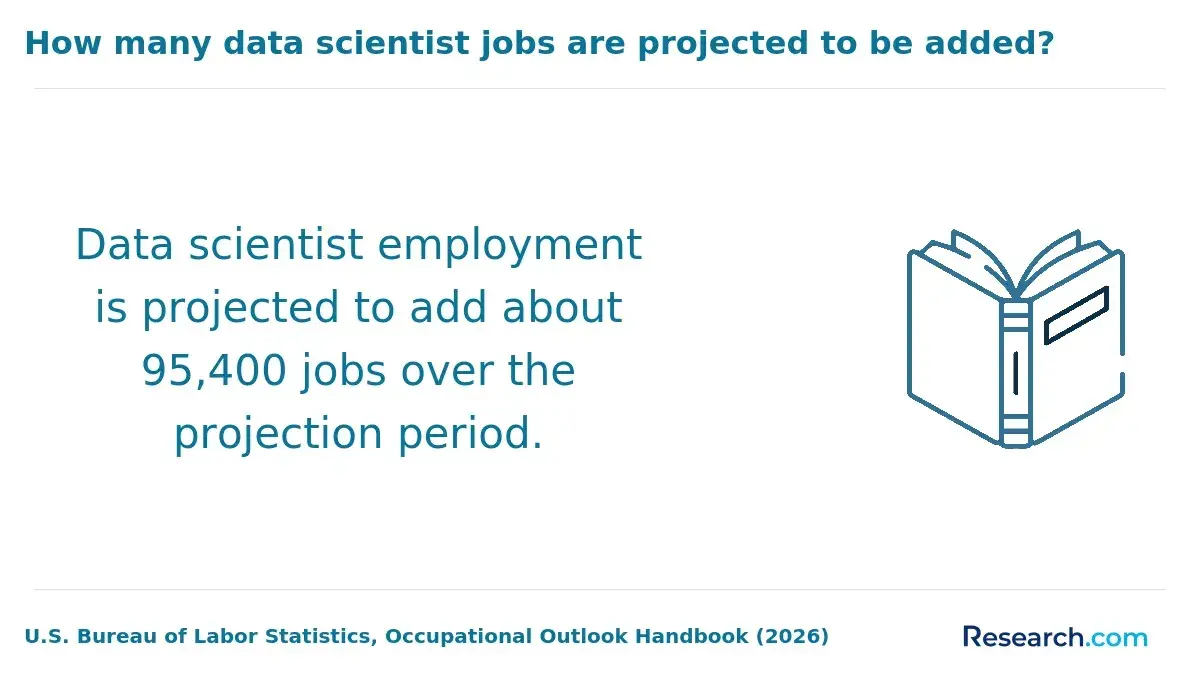
The U.S. Bureau of Labor Statistics projects 35% employment growth for data scientists from 2025 to 2035. That occupation-wide projection signals demand for data science skills, not a forecast of speech-specific openings or an individual graduate's prospects. Likewise, the BLS May 2025 median wage of $120,230 covers data scientists across experience levels and industries, not starting salaries after a master's.
Compare job descriptions with your capstone plan. If target roles emphasize production speech systems, seek opportunities to address implementation and monitoring as well as evaluation. If they emphasize research, look for stronger experimental depth. For broader context, pay comparisons for graduates entering data science industries can help frame questions about sector differences, but location, prior experience, employer, and role remain essential when evaluating an offer.
Other Things You Should Know About Data Science
Yes, if the program permits it. Clearly identify what you contributed - such as test design, scoring, analysis, or implementation - rather than presenting the pretrained model as your own invention.
Document your individual responsibilities and keep evidence of your contributions. Check the program's rules before assuming a shared project meets its capstone requirement.
Only if its permissions allow it. You may be able to publish methods, code, and suitably aggregated findings while keeping recordings and identifiable transcripts private; confirm the applicable agreements first.
Set transcription rules before scoring and document how disagreements are resolved. Include uncertain examples in the limitations rather than treating every reference transcript as unquestionably correct.
References
- Designing effective capstone experiences and projects... - PMC https://pmc.ncbi.nlm.nih.gov/articles/PMC7861568/
- CDC Program Evaluation Framework, 2024 | MMWR https://www.cdc.gov/mmwr/volumes/73/rr/rr7306a1.htm
- MSDS Capstone Projects - College of Information Science https://infosci.arizona.edu/ms-data-science/capstone-projects
- Capstone Projects - UVA School of Data Science https://datascience.virginia.edu/degrees/info/capstone-projects
- Capstone Project - Master of Data Science https://mds.ics.uci.edu/capstone-project/
- Proposal & Capstone Examples | MNR | USU https://qanr.usu.edu/mnr/proposal-examples
- Evaluating an automatic speech recognition service | Amazon Web Services, Inc. https://aws.amazon.com/blogs/machine-learning/evaluating-an-automatic-speech-recognition-service/
- How to evaluate medical speech-to-text (ASR): WER, CER, and clinical benchmarks | Guides | Corti https://corti.ai/guides/how-to-evaluate-automatic-speech-recognition
- Dataset Explorer | dataprovenance.org https://www.dataprovenance.org/data-provenance-explorer/dataset-explorer
- Humanizing Word Error Rate for ASR Transcript Readability and Accessibility - Apple Machine Learning Research https://machinelearning.apple.com/research/humanizing-wer