2027 Return on Investment of an Online Criminology Bachelor's Degree: Salary vs Cost

Co-Founder and Chief Data Scientist
Imagine a mid-career professional with a non-related bachelor's degree contemplating an online criminology bachelor's degree to shift into criminal justice. The challenge lies in balancing tuition costs with potential salary gains in a competitive job market. Recent data suggests graduates with an online criminology degree can see a 15% higher median salary compared to those with only a high school diploma.
However, tuition fees and opportunity costs often cloud the financial benefits. This article analyzes the salary prospects versus education expenses of an online criminology bachelor's degree-offering clear insights to help readers assess the true return on investment of this academic path.
Key Things to Know About the Return on Investment of an Online Criminology Bachelor's Degree
- Average tuition for online criminology bachelor's degrees ranges from $10,000 to $25,000, significantly lower than many traditional programs, improving affordability for budget-conscious students.
- Graduates report median salaries around $50,000 annually-15% higher than those without degrees-highlighting stronger earning potential and quicker salary growth in criminal justice roles.
- Non-financial benefits include enhanced job security, access to leadership positions, and ongoing professional development that supports long-term career advancement within law enforcement and related fields.
What Is the True Cost of Earning an Online Criminology Bachelor's Degree From Enrollment to Graduation?
Direct and indirect costs combine to define the actual cost of earning an online Criminology bachelor's degree beyond just tuition alone. According to data from IPEDS and the National Center for Education Statistics, many students benefit from financial aid, paying significantly less than the sticker price. Evaluating the total expenses for online criminology bachelor's program completion helps students create realistic budgets and better understand their investment.
- Tuition Costs: Published tuition rates generally range from $15,000 to $40,000 for the full degree at public and private institutions, but net prices after scholarships and grants often lower this by 20 to 50 percent based on individual aid packages.
- Technology Fees: Most online programs charge annual fees between $100 and $600 to cover software, virtual platforms, and tech support essential for remote learning.
- Textbooks and Course Materials: Required criminology textbooks, case studies, and digital resources typically cost between $1,200 and $2,000 over the degree duration, though options like used or e-textbooks may help reduce expenses.
- Proctoring and Exam Fees: Online proctoring services to ensure academic integrity may add $50 to $150 per exam, with total fees ranging from $300 to $900 depending on the program's assessment structure.
When combining tuition, fees, books, and exam costs, the comprehensive out-of-pocket total for an online Criminology bachelor's degree tends to fall between $18,000 and $45,000 after aid. Prospective students can use this range as a foundation for comparing potential return on investment by weighing these expenses against salary data and career advancement opportunities in criminology. For those exploring similar degree paths, resources such as BCBA programs online offer additional insights into affordable program options and cost management strategies.
How Does the Starting Salary for Criminology Bachelor's Degree Graduates Compare to the Total Cost of the Degree?
Graduates holding a bachelor's degree in criminology typically find employment as probation officers, detectives, or criminal investigators. According to the Bureau of Labor Statistics (BLS), entry-level probation officers and correctional treatment specialists earn a median annual salary around $53,000, while detectives and criminal investigators tend to start closer to $60,000. Comparing these salaries against the average total cost of an online criminology bachelor's degree-which can range from $15,000 at low-cost, aid-supported programs to as much as $60,000 at more expensive institutions-illuminates the financial trade-offs involved.
In best-case financial scenarios, where tuition is minimized through scholarships or aid to about $15,000, it takes only about 3 to 4 months of a starting salary to cover the total cost of the degree. In contrast, worst-case scenarios with total expenses near $60,000 require 12 to 14 months of entry-level income for graduates to break even. This comparison highlights that starting salary alone provides a partial picture of the true return on investment in online criminology bachelor's degree programs.
Over time, salary growth-projected at 3% to 5% annually in criminal justice fields by BLS data-can improve this outlook considerably. Graduates often increase earning potential through experience, advanced certifications, or promotions. For those exploring further education, programs like an accelerated social work degree can also complement criminology skills, broadening career options and enhancing long-term financial and professional returns.
- Starting Salaries Vary: Entry-level criminology graduates can expect salaries between $53,000 and $60,000 annually depending on their chosen career path.
- Cost Range of Degree: Online bachelor's degrees in criminology typically cost between $15,000 and $60,000, influenced by tuition rates and available financial aid.
- Payback Period: Degree costs can be covered within 3 to 4 months in ideal circumstances, while less aided cases may require over a year of entry-level salary to break even.
- Salary Growth Matters: Projected annual wage increases of 3% to 5% substantially reduce the effective payback period over time.
- Beyond Finances: Graduates gain valuable career advancement, job security, and professional development opportunities that add non-financial benefits to their investment.
What Is the Average Return on Investment (ROI) for an Online Criminology Bachelor's Degree Over a 10-Year Career?
Return on investment (ROI) in higher education measures the difference between the total cost of earning a degree and the additional income a graduate earns over about 10 years compared to someone with only a high school diploma or associate degree in the same field. According to research from the Georgetown University Center on Education and the Workforce and PayScale's College ROI Report, completing a bachelor's degree generally leads to a positive ROI within a decade, though results differ by discipline.
For online criminology bachelor's degrees, median starting wages for related roles-such as criminal justice specialists or probation officers-hover around $47,000 annually based on Bureau of Labor Statistics data. Assuming a 3% yearly increase in salary with experience, total earnings over 10 years can reach approximately $540,000. Considering the average cost of these programs ranges from $30,000 to $40,000, graduates see a significant net financial gain relative to non-degree holders.
The typical ROI for bachelor's degree holders nationwide is close to $400,000 above earnings by non-degree peers over a 10-year span. Criminology graduates often surpass this benchmark, driven by steady job demand and career advancement opportunities in justice and public safety sectors.
- Clear Definition: ROI calculates the extra income earned over 10 years from a degree, subtracting tuition and fees, providing a monetary value of educational investment.
- Salary Benchmark: Entry-level criminology jobs start near $47,000 annually, with expected salary growth reflecting skill and experience.
- Cost Factors: Total program expenses average between $30,000 and $40,000, offering an affordable path compared to traditional degrees.
- Long-Term Gains: With consistent 3% annual wage increases, cumulative 10-year earnings exceed half a million dollars, yielding favorable ROI after deducting costs.
- Comparison to National Average: ROI from criminology bachelor's degrees outpaces the $400,000 national average, highlighting strong returns in this field.
- Non-Financial Benefits: Degree holders often find greater job security, career mobility, and access to professional development, enhancing overall investment value.
A professional who pursued an online criminology bachelor's degree after evaluating the program's cost against potential ROI shared his experience. "I spent months comparing costs, job prospects, and salary growth to ensure I wasn't just spending money but investing in a career," he explained. Balancing work and studies was challenging, but staying focused helped him complete the degree on time. He emphasized that understanding the program's affordability and realistic salary expectations gave him confidence during the process, commenting, "Knowing the ROI upfront helped me commit fully and navigate setbacks without losing sight of my goals."
Tuition rates for online criminology programs can vary considerably among public, private, and for‑profit institutions. Public universities typically offer the most affordable tuition—especially for in‑state students—while private and for‑profit schools often charge higher rates but may provide additional flexibility or student support services. Comparing these differences helps prospective students assess cost, financial aid options, and overall value when choosing an online criminology degree.
- Public Universities: Public institutions offer some of the most affordable online criminology bachelor tuition comparison options, especially for in-state students, with annual costs usually between $6,000 and $10,000. Many now provide flat-rate pricing for online learners, making tuition predictable and competitive, even for out-of-state students.
- Private Nonprofit Colleges: These schools tend to charge significantly higher tuition, ranging from $20,000 to $35,000 per year. However, they often deliver better academic support, more robust career services, and higher graduation rates, which can enhance long-term career prospects and earning potential.
For-Profit Colleges: For-profit institutions may appear affordable upfront, with fees roughly between $15,000 and $25,000 annually. Despite this, data from IPEDS reveal their graduation rates lag behind other sectors, accompanied by increased student loan defaults, raising concerns about their overall value and recognition by employers.
When evaluating average tuition rates for online criminology programs by school type, the lowest sticker price doesn't always translate to the best return on investment. While for-profits might seem cost-effective initially, their poorer outcomes may limit career advancement. Conversely, public universities often provide a sensible balance of cost and quality, especially in-state.
It is crucial to consider non-financial rewards such as job security and professional growth alongside tuition. For those seeking cost-effective credentials, exploring options like bookkeeping certification online can also complement career goals.
Criminology bachelor’s degree holders can generally expect steady long‑term salary growth over a 20‑ to 30‑year career. As professionals gain experience, take on specialized roles (such as in law enforcement analysis, corrections management, or criminal justice policy), or pursue advanced education, their earning potential often increases. Additionally, ongoing demand for expertise in public safety and justice systems can support continued career advancement and higher earnings over time.
- Early Career Growth: Typically, graduates begin with salaries between $40,000 and $50,000 during their first five years, focusing on building essential skills and earning certifications that help them secure steady pay increases.
- Mid-Career Acceleration: Around the decade mark, professionals often advance into specialized or supervisory positions like criminal analysts or detectives. Median salaries tend to jump to the $60,000-$75,000 range, frequently fueled by additional education such as master's degrees or professional training.
- Advanced Career Milestones: After 15 years, many reach leadership roles or senior analytic positions within law enforcement or security agencies. Salary growth typically surpasses 4% annually, resulting in earnings from $80,000 to over $100,000, reflecting higher responsibilities and expertise.
- Cumulative Earnings Premium: Over 25 to 30 years, bachelor's degree holders in criminology can expect to earn more than $500,000 extra in total wages compared to those without a degree, thanks to higher starting pay and accelerated salary growth linked to career advancement.
Professional Development Impact: Long-term wage increases are also supported by job stability and opportunities in specialized roles. Pursuing certifications or advanced degrees further enhances earning potential and career durability.
One professional who built her career after completing an online criminology bachelor's degree shared that balancing work, family, and studies was challenging but rewarding. She recalled feeling uncertain at times, yet completing the program boosted her confidence and opened doors to leadership roles that may have otherwise been inaccessible. "It wasn't just about the degree-it was about gaining a deeper understanding of the field and demonstrating commitment," she reflected, emphasizing how those qualities helped accelerate her salary growth and job security over time.
Factors such as career objectives, budget, and time horizon play critical roles in deciding between an online criminology bachelor's degree, associate degree, or professional certificate. Data from the Bureau of Labor Statistics, National Center for Education Statistics, and Lumina Foundation provide insight into each option's cost and earning potential.
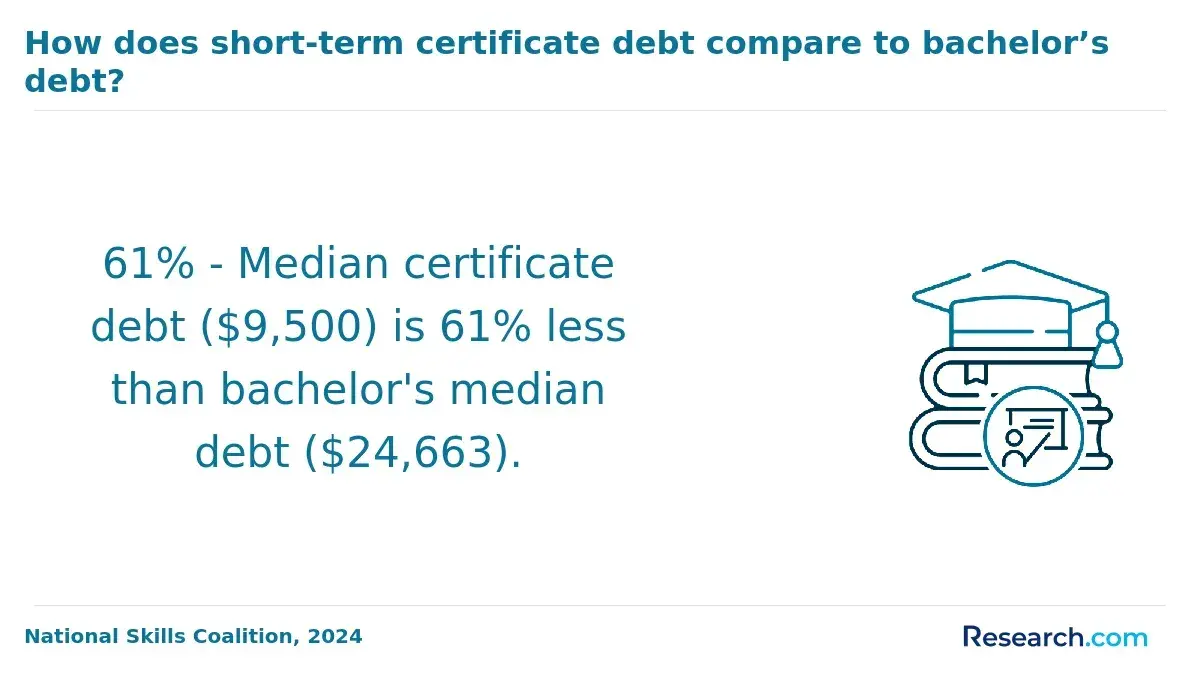
- Cost Efficiency: Certificates usually cost under $5,000 and require less time, while associate degrees typically range from $10,000 to $15,000. Online bachelor's degrees tend to be pricier, averaging between $40,000 and $60,000 in total tuition.
- Median Salary: Certificate holders in criminology-related fields can expect median earnings around $35,000 to $45,000 annually. Those with associate degrees typically earn $40,000 to $50,000. Bachelor's degree graduates often see higher wages, generally falling between $55,000 and $70,000, reflecting expanded responsibilities.
- Short-Term ROI: For individuals seeking quick workforce entry or managing limited finances, certificates or associate degrees offer faster paths to jobs with lower debt, enabling quicker recouping of education costs.
- Long-Term ROI: Bachelor's degrees usually provide greater long-term financial benefits through access to management, federal, or policy roles. Over the span of 10 to 20 years, the wage advantage tends to surpass the initial tuition gap.
- Non-Financial Benefits: Bachelor's degree holders benefit from increased job security, eligibility for advancement, and better access to professional growth resources. In contrast, certificates and associate degrees may limit upward mobility without further education.
- Decision Framework:
- Candidates prioritizing rapid employment and low upfront costs may find certificates or associate degrees ideal.
- Those targeting supervisory positions or long-term career progression, with the ability to invest time and money now, often achieve better ROI through bachelor's degrees.
Choosing the right credential requires weighing salary prospects against personal financial capacity and career goals to optimize both cost-effectiveness and professional development.
Students pursuing an online criminology bachelor's degree often consider which specialization will yield the best financial return after graduation. Analyzing Bureau of Labor Statistics (BLS) data reveals clear salary differences tied to concentration tracks, helping students optimize their time-to-investment return.
- Cybersecurity and Digital Forensics: This specialization offers the highest median salaries, often exceeding $100,000 for roles such as information security analysts. The rapid growth in demand for cybercrime experts and digital asset protectors means graduates earn more than generalist criminology majors.
- Additional certifications, like Certified Information Systems Security Professional (CISSP), increase educational costs but improve job prospects and salary potential.
- Forensic Psychology: Graduates enter fields like criminal profiling or victim advocacy with median wages between $60,000 and $85,000-higher than average criminology salaries.
- Advanced licensure or graduate degrees are sometimes required, adding to the total investment but enhancing career advancement.
- Law Enforcement Leadership and Administration: This track prepares students for supervisory roles in police or federal agencies, delivering median earnings typically between $80,000 and $95,000. Rank and experience heavily influence earning growth.
- Leadership certifications may help but are not mandatory, making this a potentially efficient pathway for career advancement.
- Criminal Justice Policy and Research: Graduates tend to earn $55,000 to $75,000 working in government or nonprofit sectors. Though salaries are more modest, careers in this field offer stability and advancement with experience.
Comparatively, generalist criminology graduates earn median salaries ranging from $45,000 to $60,000. Specializing, particularly in cybersecurity or law enforcement leadership, offers a distinct salary premium that can better justify additional certification costs or extended education time. For students on a tight budget or working professionals, aligning specialization choices with existing skills or experience can reduce total expenses and optimize earning potential.
Employer tuition reimbursement programs provide a critical financial advantage by covering substantial tuition expenses for online criminology bachelor's degree students. Under IRS Section 127, employers may offer up to $5,250 annually in tax-free educational assistance. This benefit helps working students drastically reduce their out-of-pocket costs while continuing their careers. According to the Society for Human Resource Management (SHRM), about 60% of U.S. employers have offered some form of tuition assistance recently, demonstrating a strong commitment to employee education benefits.
Combining employer tuition reimbursement with federal and institutional financial aid lowers the net tuition cost significantly. Grants and scholarships reduce expenses without requiring repayment, and subsidized federal loans provide lower interest rates and deferred payments during enrollment. These resources together can make pursuing an online criminology bachelor's degree much more affordable for students on tight budgets.
In practice, a student's annual tuition might be $15,000. If the employer reimburses $5,250 and the student obtains $3,000 in federal grants and scholarships, the remaining $6,750 can be covered by a subsidized federal loan, reducing the effective cost by over 50%. Such financial strategies empower students to manage costs efficiently and support continuous career advancement. Employer tuition reimbursement for online criminology degrees can thus be a game-changer for many learners. Additionally, those comparing programs should explore related options, including a 1 year online master's in human resources, which can complement career goals post-bachelor's.
- Employer Tuition Assistance: Many employers provide tuition benefits under IRS Section 127, offering up to $5,250 in tax-free aid annually to reduce education expenses for working students.
- Federal and Institutional Aid: Grants, scholarships, and subsidized loans significantly lower net tuition costs, often covering a major portion of total expenses.
- Prevalence of Benefits: SHRM reports that approximately 60% of U.S. employers offer tuition reimbursement, increasing educational opportunities for employees.
- Combined Financial Support: Using both employer assistance and federal aid can cut degree costs by more than half compared to sticker prices.
- Worked Example: For a $15,000 yearly tuition, a student can reduce net costs to about $6,750 after $5,250 in employer benefits and $3,000 in grants.
Regional accreditation evaluates entire institutions, ensuring they meet comprehensive quality standards, while programmatic accreditation focuses on specific criminology programs, verifying specialized curricula and faculty expertise. Employers rely heavily on these distinctions when assessing candidates' qualifications.
Surveys from the National Association of Colleges and Employers (NACE) and the Society for Human Resource Management (SHRM) indicate hiring managers favor degrees from regionally accredited schools, associating them with rigorous training and trustworthy education. Graduates from only nationally accredited or unaccredited programs often face skepticism, making it harder to secure competitive jobs and negotiate higher salaries.
Attending a program without proper accreditation can also restrict access to essential licensure exams, admissions to graduate programs, and eligibility for government or healthcare positions. This limitation can hinder career advancement and earning potential significantly. Prospective students should verify both institutional and programmatic accreditation through the U.S. Department of Education's database and the Council for Higher Education Accreditation (CHEA) to ensure their chosen school meets recognized standards before enrolling.
- Regional Versus Programmatic Accreditation: Regional accreditation certifies overall institutional excellence, while programmatic accreditation focuses on criminology-specific academic quality and faculty credentials.
- Employer Preferences and Salary Impact: Hiring managers prioritize regionally accredited degrees, viewing them as more credible, which positively influences job offers and negotiating power.
- Licensure And Career Limitations: Graduates from non- or nationally accredited programs may be ineligible for key licensure exams, advanced degrees, or government roles, reducing career opportunities.
- Verification Tools: The U.S. Department of Education and CHEA provide reliable sources to confirm a program's accreditation status before enrollment.
Graduates with an online criminology bachelor's degree often begin their careers in roles characterized by different salary levels and industry settings, influencing the return on investment of their education. Common entry-level positions include:
- Correctional Officer: Median starting salaries typically range from $35,000 to $45,000, with government agencies like state and federal correctional facilities offering the best pay.
- Probation Officer: Entry pay usually falls between $40,000 and $50,000, predominantly within government and social service organizations.
- Crime Analyst: These roles offer initial salaries from $45,000 to $55,000, especially in law enforcement and intelligence agencies.
- Forensic Science Technician: Starting compensation tends to be $45,000 to $60,000, often provided by healthcare and governmental forensic laboratories.
- Victim Advocate: Typical salaries range near $37,000 to $47,000, mainly in non-profit and government-supported programs.
- Security Consultant: Initial pay lies between $40,000 and $55,000, with higher earnings common in private security and tech sectors.
- Juvenile Justice Specialist: Salaries generally span $38,000 to $48,000 within governmental or social work agencies.
- Legal Assistant/Paralegal: Starting wages are around $40,000 to $50,000, frequently available in law firms and corporate legal departments.
Internships, professional certifications such as Certified Criminal Justice Professional (CCJP), and focused study areas like cybersecurity or forensic psychology can boost starting salaries by 15% or more. Jobs in government and healthcare tend to offer steadier benefits and somewhat higher pay compared to non-profit or private security roles. Recognizing these differences helps graduates prioritize positions that speed tuition repayment and maximize immediate financial returns.
What Graduates Say About the Return on Investment of Their Online Criminology Bachelor's Degree
- Kayden: "Choosing the online criminology bachelor's degree was a deliberate decision based on weighing the return on investment against the tuition cost. The flexibility allowed me to work full-time while earning my degree, which minimized lost income and maximized my financial stability. Beyond the monetary aspect, I gained valuable skills that opened doors to career advancement and gave me a sense of job security I hadn't experienced before."
- Cannon: "Reflecting on my experience, the ROI of the online criminology degree goes far beyond just salary increases-it was about professional growth and personal fulfillment. The degree positioned me for leadership opportunities that require advanced knowledge and critical thinking. I now feel equipped to navigate complex challenges in the field while also enjoying greater confidence and recognition among my peers."
- Nolan: "Pursuing the online criminology bachelor's degree transformed my career trajectory in ways I hadn't fully anticipated. Financially, the program was affordable and led to a solid pay raise shortly after graduation. More importantly, it provided me with essential expertise and credibility that boosted my professional reputation and expanded my network in the criminal justice community."
Other Things You Should Know About Criminology Degrees
The time needed to recoup the investment in an online Criminology bachelor's degree varies but typically ranges from 3 to 7 years. This depends on factors such as tuition cost, post-graduation salary increases, and job placement rates. Graduates who secure positions in law enforcement or federal agencies often see a quicker return due to higher starting salaries compared to some local or state government roles.
Geographic location significantly impacts salary outcomes for Criminology graduates since wages tend to be higher in metropolitan areas and regions with higher living costs. Industry sectors such as federal law enforcement or private security offer better pay compared to local government or social services roles. Understanding regional job markets and industries is crucial when evaluating the financial returns from this degree.
Federal aid can lower out-of-pocket cost through the FAFSA. Eligible students may receive Pell Grants, Direct Subsidized and Unsubsidized Loans, and, if qualified, Federal Work-Study. The U.S. Department of Education sets annual loan limits, and accredited schools must participate to offer these funds.
- Tuition Reimbursement: How Do Employers Benefit from It? | KBI Benefits https://www.kbibenefits.com/tuition-reimbursement-benefits
- Is College Worth it? | Return on Investment Analysis of College Degree https://educationdata.org/college-degree-roi
- Return on Investment for a College Degree in Criminal Justice ROI or a College Degree in Criminal Justice https://www.criminaljusticeprograms.com/articles/return-on-investment-for-a-college-degree-in-criminal-justice/
- 2025 Criminalistics and Criminal Science Tuition - Online https://www.collegetuitioncompare.com/amp/majors/43.0402/criminalistics-and-criminal-science/
- Criminal Justice Salary Guide | All Criminal Justice Schools https://www.allcriminaljusticeschools.com/criminal-justice/criminal-justice-salaries/
- Online Bachelor of Criminology - Criminology Careers https://online.ben.edu/programs/undergraduate/criminology-bachelors/careers/
- The Employability of Criminology Graduates from Academic Year 2019 to 2023: A Tracer Study https://www.academia.edu/124823942/The_Employability_of_Criminology_Graduates_from_Academic_Year_2019_to_2023_A_Tracer_Study
- Top Reasons to Get an Online Bachelor’s in Criminal Justice https://www.criminaljustice.com/resources/why-get-an-online-bachelors-in-criminal-justice/