2027 Regional vs National Accreditation for Online Addiction Psychology Bachelor's Degrees

Co-Founder and Chief Data Scientist
Imagine a working adult seeking an online addiction psychology bachelor's degree who worries about how their chosen program's accreditation might affect future opportunities. They consider regional accreditation's broad acceptance by employers and graduate schools, but wonder if national accreditation's flexible admissions and scheduling better suit their current lives.
This tension is critical because 61% of online addiction psychology graduates find careers requiring recognized credentials within two years. Understanding the differences between regional and national accreditation is essential for evaluating credit transfers, academic standards, and career prospects.
This article will clarify these distinctions to help students make informed decisions about their education path.
Key Benefits of Regional vs National Accreditation for Online Addiction Psychology Bachelor's Degrees
- Regional accreditation offers stronger recognition and credibility among employers and graduate schools compared to national accreditation, which is often viewed as less rigorous.
- Credits from regionally accredited online addiction psychology programs typically transfer more easily and are preferred for graduate school eligibility, benefiting long-term academic progress.
- National accreditation may better serve working adults seeking quicker certification paths, while regional accreditation supports students aiming for comprehensive education and broader career flexibility.
What Is the Difference Between Regional and National Accreditation for an Online Addiction Psychology Bachelor's Degree?
Regional accreditation is awarded by agencies that oversee colleges and universities within specific geographic areas of the United States. These accreditors emphasize rigorous academic standards, comprehensive evaluations of faculty qualifications, curriculum quality, and research activity.
In contrast, national accreditation typically focuses on institutions providing vocational, technical, or career-specific education and is less geographically bound, with standards tailored to their professional programs.
For students pursuing an online addiction psychology bachelor's degree, over 70% enroll in regionally accredited institutions, reflecting the broad recognition and quality assurance this type of accreditation offers.
Understanding the difference between regional and national accreditation of online addiction psychology bachelor's degree programs helps clarify institutional expectations and standards.
The practical implications of regional versus national accreditation are significant for students, especially regarding credit transfer and professional recognition. Credits earned at regionally accredited schools are widely accepted and easily transferable to other colleges and universities, making them preferable for those planning to continue graduate studies or switch institutions.
Conversely, credits from nationally accredited schools may face challenges when transferring to regionally accredited institutions, which can affect academic progression. Employers and graduate programs often regard degrees from regionally accredited institutions more favorably.
Those exploring online addiction psychology bachelor's degrees should also consider resources like an online AI degree for insight into accreditation's role in educational quality and recognition.
Which Agencies Provide Regional Accreditation for Online Addiction Psychology Bachelor's Degrees?
Regional accreditation in the United States is granted by a limited number of recognized agencies that rigorously evaluate colleges and universities based on academic quality and institutional standards. Approximately 99% of degree-granting institutions with regional accreditation meet these strict criteria.
This form of accreditation is central to the reputation of online addiction psychology bachelor's degree programs and influences factors like credit transfer and graduate school eligibility.
The main regional accreditation bodies for online addiction psychology bachelor's degrees include:
- The Middle States Commission on Higher Education (MSCHE): Covers institutions primarily in Delaware, the District of Columbia, Maryland, New Jersey, New York, Pennsylvania, and Puerto Rico. MSCHE evaluates academic quality and institutional effectiveness for member colleges in this region.
- The New England Commission of Higher Education (NECHE): Accredits schools in Connecticut, Maine, Massachusetts, New Hampshire, Rhode Island, and Vermont. NECHE ensures that programs, including online addiction psychology, meet their rigorous academic standards.
- The Higher Learning Commission (HLC): Oversees accreditation in central U.S. regions, covering Arkansas, Arizona, Colorado, Iowa, Illinois, Indiana, Kansas, Michigan, Minnesota, Missouri, Nebraska, New Mexico, North Dakota, Ohio, Oklahoma, South Dakota, Wisconsin, and West Virginia. HLC accredits many institutions offering online degrees.
- The Southern Association of Colleges and Schools Commission on Colleges (SACSCOC): Serves colleges in Alabama, Florida, Georgia, Kentucky, Louisiana, Mississippi, North Carolina, South Carolina, Tennessee, Texas, and Virginia. SACSCOC's accreditation backs academic quality for numerous online addiction psychology programs.
- The Western Association of Schools and Colleges, Senior College and University Commission (WSCUC): Accredits institutions in California, Hawaii, and Pacific territories. WSCUC supports consistent academic standards for traditional and online education alike.
For detailed insights into related mental health programs, prospective students may find it helpful to explore options like an online master's degree in marriage and family therapy as well, which shares overlapping accreditation considerations.
What Are the Main National Accrediting Bodies for Online Addiction Psychology Bachelor's Degree Programs?
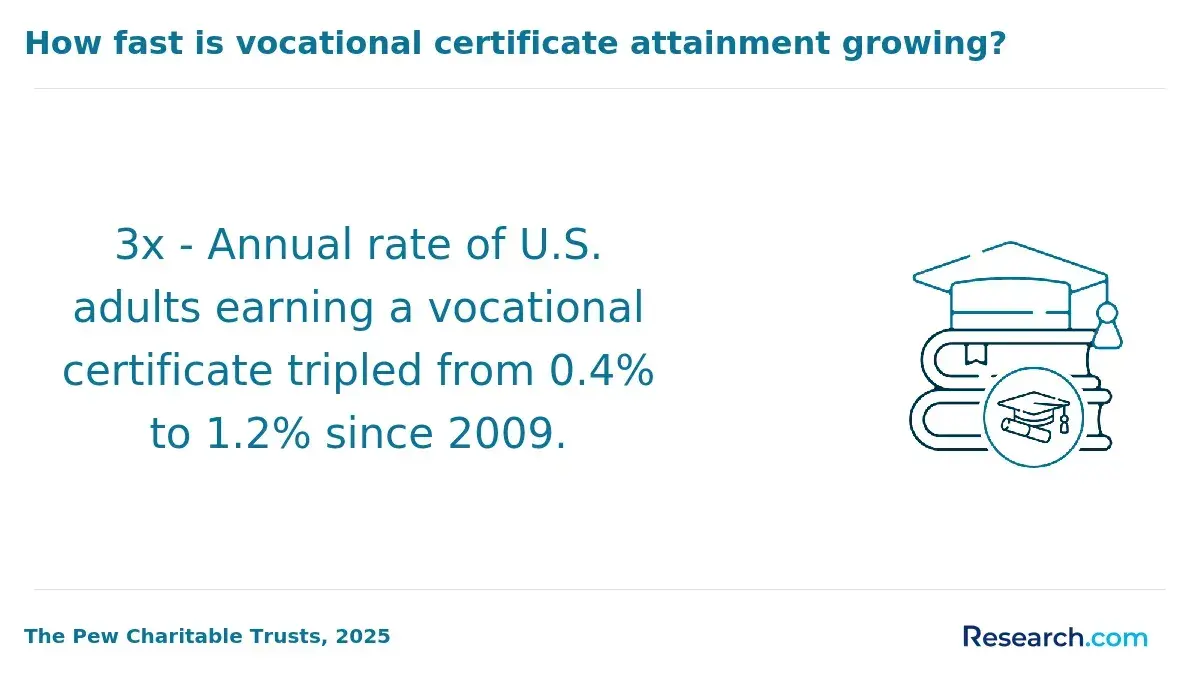
National accreditation is generally awarded by organizations that oversee career-focused, technical, or specialized schools across the United States. These agencies typically evaluate institutions such as vocational schools, online colleges, and professional training programs.
According to the U.S. Department of Education, national accreditation accounts for a smaller share of postsecondary institutions but is recognized for its focus on practical skills and workforce readiness.
Several key national accreditors play a significant role in overseeing online addiction psychology bachelor's degree programs:
- The Accrediting Commission of Career Schools and Colleges (ACCSC): ACCSC accredits private institutions with career-oriented programs, including many that offer online addiction psychology and counseling degrees aimed at preparing students for immediate employment.
- The Distance Education Accrediting Commission (DEAC): DEAC specializes in accrediting institutions providing primarily distance education, ensuring quality standards for online colleges offering addiction psychology and behavioral health programs.
- The National Accrediting Commission of Career Arts & Sciences (NACCAS): Although NACCAS mainly accredits cosmetology and related fields, it occasionally accredits technical programs that include addiction psychology training within broader allied health courses.
- The Council on Occupational Education (COE): COE focuses on accrediting occupational and technical schools with career-centered programs, some of which provide addiction psychology and counseling education designed to meet labor market needs.
How Do Admission Requirements Vary by Accreditation Type for an Online Addiction Psychology Bachelor's Degree?
Admission into regionally accredited online addiction psychology bachelor's programs usually requires a high school diploma or equivalent and submission of official transcripts.
Applicants often must provide standardized test scores like the SAT or ACT along with personal statements and letters of recommendation. Some schools may also conduct interviews to evaluate candidates' suitability and motivation.
These programs tend to be more selective, reflecting their emphasis on academic rigor and consistent standards. Industry data shows that many regionally accredited programs have acceptance rates below 60%, highlighting the competitive nature of their admissions.
In contrast, nationally accredited programs typically offer more accessible entry points, prioritizing flexibility for a diverse range of students. Standardized testing may be optional or waived, and applicants with GEDs or alternative educational backgrounds often qualify.
These programs sometimes require fewer application materials, such as essays or recommendations, to reduce barriers for non-traditional students or those re-entering education. This approach offers greater adaptability in application processes, though specific requirements can vary by institution. The focus here leans toward widening participation rather than strict selectivity.
When I spoke with a graduate of an online addiction psychology bachelor's program, she shared how the admission process felt less daunting at her nationally accredited school. She recalled worrying initially about submitting her application with only a GED and some work experience, but the program's flexible criteria allowed her to move forward with confidence.
"They didn't make me jump through unnecessary hoops," she explained, "which helped me focus on my studies rather than stressing over paperwork." Her experience highlights how accreditation type can shape the admissions journey in meaningful ways.
How Does Online Addiction Psychology Bachelor's Degree Tuition Differ by Accreditation Type?
Tuition for online addiction psychology bachelor's degree programs often varies according to accreditation type, along with factors like institutional structure and course design. Studies show that tuition costs at regionally accredited institutions typically exceed those at nationally accredited schools. This reflects multiple price and value considerations across higher education programs.
- Pricing Models: Regionally accredited programs usually incorporate most fees within the tuition rate, offering a bundled cost. Nationally accredited schools often charge separate fees for technology or course materials, affecting the final expenses.
- Cost Ranges: Tuition at regionally accredited programs generally ranges between $15,000 and $40,000 for a bachelor's degree. In contrast, nationally accredited options tend to be lower, often falling between $10,000 and $25,000.
- Value Considerations: Higher costs at regionally accredited schools may reflect broader academic resources and the ease of credit transfer, which can benefit students long-term. Nationally accredited programs focus more on streamlined, career-centered curricula with quicker affordability.
- Accreditation Impact: The cost differences between regionally and nationally accredited online addiction psychology degrees also parallel distinctions in institutional reputation and academic recognition.
- Program Design: Some students researching affordability might compare these tuition patterns with those in other fields, like a game design degree online, to gauge cost-effectiveness.
Can I Get Financial Aid for Both Types of Accredited Online Addiction Psychology Bachelor's Degrees?
Financial aid availability for online addiction psychology bachelor's degrees depends largely on the institution's accreditation and participation in federal and state aid programs. Most undergraduate students in the U.S.-over 85% according to recent data-rely on some form of financial assistance to help fund their education.
The differences between regional and national accreditation play a significant role in what types of aid students can access.
- Federal Aid: Pell Grants and federal student loans are typically accessible to students at regionally accredited institutions. Nationally accredited schools may have limited or no eligibility for certain federal programs, restricting students' access to these funds.
- State Financial Assistance: State-based aid generally favors students enrolled in regionally accredited programs, although specific eligibility requirements vary by state. Some nationally accredited schools might be excluded if they lack appropriate state authorization.
- Private Scholarships: Many scholarships are open to students from both accreditation types, but preference is often given to applicants from regionally accredited schools due to perceptions of academic rigor.
- Work-Study Programs: Federal work-study opportunities are usually offered through regionally accredited institutions, making these positions less available to students at nationally accredited programs.
- Employer Tuition Reimbursement: Policies here vary widely, but employers often prioritize degrees from regionally accredited schools when verifying education for reimbursement eligibility.
Can I Transfer Credits From a Nationally Accredited to a Regionally Accredited Online Addiction Psychology Bachelor's Degree?
Transferring credits from a nationally accredited to a regionally accredited online addiction psychology bachelor's degree program can be complex due to differing accreditation standards and institutional policies.
Typically, regionally accredited schools exercise more caution when accepting credits from nationally accredited programs, often requiring a close match in course equivalency and curriculum rigor for credits to be accepted. Institutional policies vary, with some colleges limiting the number of transferable credits or classifying transferred courses as electives rather than core requirements.
A common practice is that students face additional evaluations or must complete extra coursework to meet the higher academic criteria set by regional institutions. These factors collectively impact the ease and extent to which credits successfully transfer between the two accreditation types.
When asked about his experience, a student currently enrolled in an online addiction psychology bachelor's degree shared that the transfer process felt "lengthy and somewhat frustrating," as he had to submit detailed syllabi and course descriptions for multiple classes.
He noted, "They really wanted to ensure the content matched their standards, which meant I couldn't transfer everything." Despite the challenges, he appreciated the guidance provided by the registrar's office and found that staying organized and proactive helped him navigate the process.
He described the experience as a valuable lesson in understanding how accreditation affects academic pathways and emphasized the importance of early communication with prospective schools.
Does Accreditation Type Affect Job Opportunities After an Online Addiction Psychology Bachelor's Degree?
Accreditation type can influence how employers perceive online addiction psychology bachelor's degrees, varying by industry standards and hiring practices. Over 85% of employers prefer candidates with degrees from regionally accredited institutions, reflecting confidence in their academic quality and rigor.
This trend underscores the importance of accreditation in shaping job prospects in addiction psychology and related fields. Here are several factors to consider:
- Employer Preference: Regional accreditation is widely seen as the gold standard, especially in clinical and counseling settings. Employers often view degrees from regionally accredited schools more favorably due to their alignment with accepted academic benchmarks and state licensure requirements.
- Industry Expectations: Some addiction psychology roles, particularly those requiring state certification or direct patient interaction, demand degrees from regionally accredited institutions. This aligns with regulatory standards that prioritize academic rigor and consistency.
- Hiring Filters: Many employers use accreditation type as an initial filter during candidate selection. Degrees from nationally accredited schools, often affiliated with for-profit or vocational institutions, may be viewed as less rigorous, potentially impacting competitiveness in certain job markets.
- Role-Specific Requirements: Despite accreditation differences, some organizations place higher value on practical skills and experience. Government or nonprofit agencies may enforce strict accreditation rules, while private sector employers sometimes retain more flexible hiring standards.
- Career Advancement: Accreditation also influences opportunities for career growth and graduate study, with regionally accredited degrees generally preferred. Understanding the impact of regional versus national accreditation on addiction psychology job prospects helps students make informed decisions about their educational paths.
For those interested in related fields, exploring high paying certificate jobs can provide additional career options beyond a traditional degree.
Will Accreditation Affect Eligibility for Advanced Degrees After an Online Addiction Psychology Bachelor's Degree?
Accreditation type is a significant factor influencing eligibility for advanced degrees after completing an online addiction psychology bachelor's degree. Graduate schools emphasize accreditation during admissions, with approximately 80% of programs preferring degrees from regionally accredited institutions.
Below are several factors that affect advanced degree eligibility:
- Regional Accreditation: Often seen as the gold standard, regional accreditation generally ensures smoother credit transfer and broader acceptance in graduate admissions. Many addiction psychology master's and doctoral programs prioritize degrees from regionally accredited schools when evaluating eligibility.
- National Accreditation: Though valid, national accreditation may face more scrutiny by admissions committees. Some graduate programs limit credit transfer or require additional coursework from nationally accredited institutions, which can affect eligibility for advanced addiction psychology degrees.
- Institutional Policies: Policies vary widely among graduate schools; some strictly accept credits only from regionally accredited institutions. This variability means prospective students should carefully research the accreditation preferences of their target programs to avoid eligibility issues.
- Credit Evaluation: The type of accreditation influences how graduate schools assess undergraduate coursework. Regional accreditation typically facilitates credit recognition, whereas national accreditation may trigger more detailed evaluations or restrictions, impacting progression toward advanced degrees.
To explore which programs and pathways offer the most valuable masters degrees, thorough research aligned with accreditation preferences is essential.
How Do I Choose Between Regional vs National Accreditation for an Online Addiction Psychology Bachelor's Degree?
Students weighing regional versus national accreditation for an online addiction psychology bachelor's degree should consider factors like institutional prestige, academic rigor, and program flexibility.
Regional accreditation is widely respected and typically recognized by employers and graduate schools nationwide, which often leads to smoother credit transfers and better options for advanced degrees. National accreditation tends to be granted to career-oriented or specialized schools that may offer more adaptable schedules, appealing to those juggling work or personal commitments.
Yet, credits from nationally accredited programs might face limits when transferred to regionally accredited institutions. Research indicates that about 60% of students prioritize accreditation type as a crucial element in their college selection process.
To make an informed choice, students should first verify the accreditation status of any school through official sources like the U.S. Department of Education or the Council for Higher Education Accreditation. Reviewing transfer credit policies is essential to understand how easily credits can move between institutions, particularly if switching schools or pursuing graduate study is a possibility.
Students should align their selection with long-term objectives, especially if licensure or graduate education is anticipated, since many professional pathways prefer degrees from regionally accredited institutions.
Thoroughly evaluating both accreditation types alongside personal goals helps ensure the program chosen offers relevant opportunities and academic value.
What Graduates Say About Regional vs National Accreditation for Online Addiction Psychology Bachelor's Degrees
- Prue: "I chose a regionally accredited online addiction psychology bachelor's program because I wanted the assurance that my degree would be widely recognized and respected by employers. The flexibility of online classes allowed me to balance work and study, though I sometimes missed the face-to-face interaction. Ultimately, earning a regionally accredited degree opened doors to advanced certification opportunities and helped me establish a credible professional foundation."
- Piper: "Reflecting on my experience, I appreciated how the nationally accredited program provided a comprehensive curriculum tailored for practical application in addiction psychology. The online format meant I could access diverse resources and expert faculty from afar, even if it lacked some campus community benefits. This accreditation definitely strengthened my resume and gave me confidence when entering clinical roles."
- Phoebe: "As a working professional, pursuing a regionally accredited online addiction psychology bachelor's degree was a strategic decision aimed at career advancement. The balance between credibility and convenience was key, although navigating different program standards required careful research. Today, I see the career boost this accredited online degree gave me in leadership roles within mental health services."
Other Things You Should Know About Addiction Psychology Degrees
Yes, credits and degrees from regionally accredited online addiction psychology programs are generally more recognized by employers, especially those in healthcare and counseling fields. Regional accreditation signals adherence to rigorous academic standards, which can enhance a graduate's credibility when seeking employment.
Graduate programs in psychology often prefer applicants from regionally accredited institutions. Regional accreditation is typically seen as more rigorous, ensuring that the educational quality meets higher standards, therefore offering better preparation for advanced study in addiction psychology in 2027.
Some continuing education providers and professional organizations in the addiction psychology field recognize credits only from regionally accredited programs. Graduates from nationally accredited schools might face limitations in accessing certain professional development opportunities.
References
- Regional vs National Accreditation: What This Means for You https://www.uopeople.edu/blog/regional-vs-national-accreditation-whats-the-difference/
- Bachelor of Science in Psychology in Addictions (Online Degree) | Kaplan University https://www.university-directory.eu/js/jredirect.php
- Psychology Accreditation: What you need to know https://www.onlinepsychologydegrees.com/articles/accreditation/
- Is There Special Accreditation for Schools With an Online Psychology Program? https://www.onlinepsychologydegree.info/faq/is-there-special-accreditation-for-schools-with-an-online-psychology-program/
- Understanding the Difference Between Regional and National Accreditation https://www.qahe.org/article/understanding-the-difference-between-regional-and-national-accreditation/
- Why Psychology School Accreditation Matters | All Psychology Schools https://www.allpsychologyschools.com/psychology-grad-school-admissions/accreditation/
- Addiction Psychotherapy - KUL with accreditation https://www.kul.pl/addiction-psychotherapy-kul-with-accreditation,art_104835.html
- Online Addiction Counseling Bachelor's Degrees - BS in Counseling https://addiction-counselor.org/degrees/online-bachelors/
- Why it Matters https://ps.sckans.edu/news/view/109/
- Finding Your Accredited Online Psychology Degree: 6 Key Steps https://localsecrets.co/article/6-key-steps-to-finding-an-accredited-online-psychology-degree