2027 Questions to Ask Before Accepting a Infection Prevention Nurse Position
Audited and Verified:
Our Editorial and Data Verification Process
Research.com uses government datasets, official education statistics and primary institutional information to support its career and degree guides. Our review process checks factual accuracy, occupational definitions, source dates and the requirements associated with the credentials discussed.
How This Article Was Fact-Checked
Our editorial team verifies salary estimates, employment projections, education requirements and program information against original data providers and official organizations. Salary figures are checked against the relevant occupational definitions and reporting periods. Information about licensure, accreditation and required in-person training is reviewed separately.
Fact-checked and verified on:

Co-Founder and Chief Data Scientist
An infection prevention nurse offer can look like a welcome move away from bedside shifts, but the job may also involve outbreak response, complex surveillance data, and difficult conversations about unsafe practices. If you are an RN considering the transition, the title alone will not tell you whether the position is adequately staffed or whether you will receive the training to do it well.
This guide explains what to ask about credentials, assignments, reporting, compensation, and leadership support so you can judge the actual job - not just its description.
Key Things You Should Know
- Ask which units, facilities, and infection measures you will own, and who validates the data before it is reported.
- Confirm whether an active RN license and infection prevention certification are required at hire, preferred, or expected later; these are separate credentials.
- Get the orientation plan, staffing support, after-hours expectations, and compensation terms in writing before accepting.
What Does an Infection Prevention Nurse Do?
An infection prevention nurse helps a healthcare organization detect, investigate, and reduce infections associated with care. The work commonly combines review of clinical and laboratory records, surveillance using defined criteria, staff education, observation of practices, policy review, and collaboration during suspected outbreaks. Depending on the setting, the nurse may also prepare reports for leaders or public health agencies. Nurses interested in advancing into this specialty can also explore graduate nursing routes for associate-degree nurses to understand potential educational pathways toward advanced roles in infection prevention.
This is not simply a desk job or an extension of bedside nursing. An infection preventionist must understand how care is delivered, distinguish a reportable event from a positive test result, communicate findings without assigning blame, and escalate urgent risks through established channels. Ask how much time the position allocates to rounding, data work, education, and incident response: the balance determines which skills you will use every day.
What Qualifications Are Required for an Infection Prevention Nurse Position?
Start with the posting's minimum qualifications, then ask the hiring manager which are firm requirements. Employers may seek an RN with experience in acute care, long-term care, quality, occupational health, or public health. Familiarity with microbiology, electronic health records, surveillance definitions, data analysis, teaching, and interdisciplinary communication can also matter. Requirements vary with the setting and the duties assigned.
Clinical experience helps you recognize workflows and gain credibility, but it does not by itself establish surveillance competence. If you are moving into the specialty, ask how the employer will assess and teach skills you have not used, particularly applying infection definitions and investigating clusters. An additional nursing degree is not automatically necessary. For an RN weighing general degree completion against job-specific preparation, exploring RN-to-BSN nontraditional clinical formats addresses a different decision from learning infection prevention practice.
What Questions Should You Ask Before Accepting the Job?
Ask for answers tied to the position you would actually hold, not just the department's mission. These questions expose the biggest differences between an achievable transition and a role with unclear authority or insufficient support:
- Scope: Which facilities, units, patient populations, and surveillance measures would I own, and what work belongs to other team members?
- Preparation: Who will train me, review my early determinations, and decide when I can work independently?
- Authority: How are urgent concerns escalated, and who can approve changes to practice or resources?
- Capacity: How many infection prevention staff support this work, and what happens when someone is absent or an outbreak adds work?
- Accountability: Which reports and deadlines are mine, and who checks data quality before submission?
- Terms: What after-hours duties, pay provisions, certification expectations, and education benefits are included in the offer?
Request the job description, reporting structure, and orientation outline before making a decision. If responsibilities differ between interviewers, ask them to resolve the discrepancy in writing. Graduate education can support a longer-term career plan - ADN-to-MSN degree progression is one possible route for eligible nurses - but it should not be used to compensate for missing onboarding or authority in this job.
If the employer is hiring an infection prevention nurse, an active RN license is commonly a condition of employment. Confirm the exact license requirement, including the state in which you will work, any multistate-license provisions that apply, and whether uninterrupted licensure is a condition of continued employment. A nursing degree or an RN license in another jurisdiction does not, by itself, settle authorization for this particular role. Nurses planning further education while working in infection prevention may also consider online DNP timelines for working nurses when evaluating long-term academic and career goals.
Infection prevention programs may also employ professionals from microbiology, epidemiology, or public health backgrounds under different job titles. Ask which duties specifically require an RN and whether the position includes nursing assessments, occupational health responsibilities, or other activities governed by nursing scope and employer policy. If you are not yet licensed, get a written answer about whether the employer will consider you after licensure rather than assuming a degree-completion or graduate program meets the requirement.
Ask the employer to name the credential, its awarding body, and the deadline. The Certification Board of Infection Control and Epidemiology (CBIC) offers the Certification in Infection Control (CIC) credential and the Associate - Infection Prevention and Control (a-IPC) credential. They have different purposes and eligibility rules; neither is an RN license or a substitute for employer competency assessment. Nurses considering further education can also research MSN pathways that accept ADN-prepared nurses to identify graduate study options that align with their existing qualifications and long-term career goals. Verify the applicable CBIC requirements before committing to an exam timeline.
A useful offer distinguishes certification at hire from an expectation to earn it after gaining experience. Ask whether the employer pays exam and renewal costs, provides study time, offers mentorship, and adjusts expectations while you build qualifying knowledge. Be cautious if an entry-level hire is expected to pass an exam quickly while independently managing a large program with little supervision.
The surveillance assignment determines much of the work. An acute-care hospital may track events such as central line-associated bloodstream infections, catheter-associated urinary tract infections, surgical site infections, and selected laboratory-identified events. A long-term care or ambulatory employer may have a different mix of risks, definitions, and reporting obligations. Nurses interested in advancing into management or executive roles may also explore online DNP leadership pathways for graduate nurses as part of their long-term professional development. Ask which measures apply to the facility rather than assuming every infection preventionist monitors the same list.
Clarify how cases are found, classified, and checked. For measures reported through the CDC's National Healthcare Safety Network (NHSN), defined criteria and accurate denominator data matter; a positive culture alone does not necessarily establish a reportable healthcare-associated infection. Ask who supplies device days or procedure data, who reviews disputed cases, and who owns external submissions. These answers reveal whether you will inherit a functioning surveillance process or be expected to build one while meeting existing deadlines.
A facility count alone is a poor workload measure. One position may cover a single hospital with several intensive care units and surgery programs; another may span multiple smaller sites. Compare the assigned populations, required surveillance, outbreak coverage, education duties, construction or environmental consultations, and committee work. Nurses considering further education can also review online BSN completion clinical policies to understand how clinical learning requirements may fit alongside their professional responsibilities. Then ask how the workload changes when vacancies or emergencies occur.
Find out whether you will have access to microbiology results, the electronic health record, surveillance software, data analysts, employee health, and clinical and laboratory partners. Ask who handles after-hours calls, how often they occur, and whether you must be on site during outbreaks. Finally, identify every reporting audience - facility leaders, quality committees, public health authorities, or others - and the person who validates results. If the employer cannot explain the work or its support, negotiate a narrower scope or a phased start before accepting.
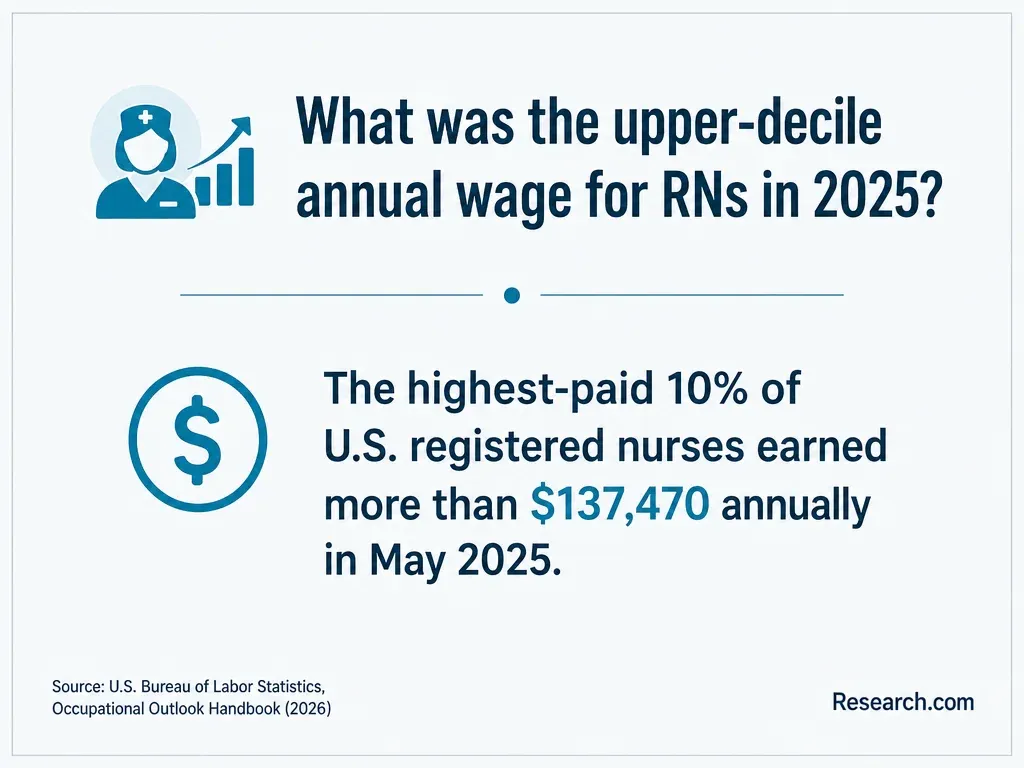
Request the salary range for this specific position and compare the total offer with your current job: base pay, exempt or nonexempt status, call compensation, retirement benefits, paid time off, education funding, and commuting or multi-site travel costs. An occupation-wide registered nurse wage figure is not a reliable estimate for a particular infection prevention offer; location, employer, seniority, and assigned responsibility all affect pay.
Ask what progression looks like after you become proficient: senior infection preventionist, program lead, manager, or a related quality role may be possibilities, but titles and openings depend on the employer. Find out whether advancement requires a credential, leadership experience, or a degree, and whether pay changes with added responsibility. If you are considering graduate study for that longer-term goal, planning the cost of a BSN-to-MSN transition is a separate financial choice; do not count a hypothetical future promotion as part of today's offer.
A credible transition plan names a mentor, specifies supervised work, and explains how competence will be assessed. Ask whether you can observe case reviews, practice applying surveillance definitions with feedback, learn the facility's reporting systems, and shadow clinical and laboratory partners. Clarify which responsibilities you will take on during orientation and which remain with an experienced colleague until you are ready.
Also ask about protected time and funding for infection prevention courses, professional meetings, certification preparation, and continuing education. Get the reimbursement policy, repayment conditions, and scheduling provisions in writing. If you plan to pursue an advanced nursing degree later, include budget planning for BSN-to-MSN study in your professional development discussions to assess tuition costs, employer assistance, and scheduling options. Targeted training and mentorship may be more useful for this role than an unrelated graduate degree, particularly if the immediate gap is surveillance or outbreak-response experience.
How Can You Evaluate the Employer's Infection Prevention Program?
Look beyond a statement that patient safety is a priority. Ask to meet the person who would supervise you and, if possible, an infection prevention colleague and a clinical partner. Their accounts should agree on how concerns are raised, how disagreements over case definitions are resolved, and whether leaders act on findings. You can also ask about recent program priorities and what resources were provided to address them, without requesting confidential patient information.
Strong signs include defined responsibilities, access to reliable data, a process for validating reports, a realistic orientation plan, and leaders who can explain how the team responds when prevention work identifies a problem. Nurses planning to advance their education may also research affordable online BSN-to-MSN bridge programs when evaluating long-term career development options. Warning signs include persistent vacancies without adjusted scope, pressure to change results without a documented rationale, or expectations to report independently before training. Before accepting, compare the written offer with what you learned in interviews and request clarification on any material gap.
Other Things You Should Know About Nursing
Some data review and meetings may be remote, but rounding, observations, education, and outbreak response can require on-site work. Confirm the actual schedule and travel expectations for the specific job.
Use the applicable policy and evidence, listen for workflow barriers, and involve the appropriate clinical leader when a change needs authority or resources. Ask during interviews how the employer handles disagreements.
The role often requires approved access for surveillance and investigation. Access must follow the employer's privacy, security, and minimum-necessary policies; it is not permission to use records for unrelated purposes.
Infection prevention experience does not prevent a return, but a bedside employer may require refresher training and competency validation, especially after a long period away from direct care. Maintaining an active RN license is only one part of readiness.
- NHSN | cdc.gov https://www.cdc.gov/nhsn/index.html
- National Healthcare Safety Network (NHSN) | wisconsin.gov https://www.dhs.wisconsin.gov/hai/nhsn.htm
- .33 Infection Prevention and Control Program. | Library of Maryland Regulations https://regs.maryland.gov/us/md/exec/comar/10.07.02.33
- Outbreak Preparedness and Response | shea-online.org https://shea-online.org/outbreak-preparedness-response/
- Understanding the NHSN and NHSN Reporting Requirements - Propelus https://propelus.com/resources/article/nhsn-reporting
- Outbreak Investigation and Response Policy | ucsfmedicalcenter.org https://infectioncontrol.ucsfmedicalcenter.org/document/outbreak-investigation-and-response-policy