2027 Questions to Ask Before Accepting a Hospital-at-Home Nurse Position
Audited and Verified:
Our Editorial and Data Verification Process
Research.com uses government datasets, official education statistics and primary institutional information to support its career and degree guides. Our review process checks factual accuracy, occupational definitions, source dates and the requirements associated with the credentials discussed.
How This Article Was Fact-Checked
Our editorial team verifies salary estimates, employment projections, education requirements and program information against original data providers and official organizations. Salary figures are checked against the relevant occupational definitions and reporting periods. Information about licensure, accreditation and required in-person training is reviewed separately.
Fact-checked and verified on:

Co-Founder and Chief Data Scientist
A hospital-at-home offer can look like a welcome change from bedside nursing, but the work may still involve hospital-level acuity, without a unit down the hall. For an RN considering the move, the deciding factors are how the program selects patients, supports nurses in the field, responds to emergencies, and pays for travel and on-call time. This guide gives you questions to take to the interview and a way to judge whether the employer's answers match your experience, safety needs, and career goals.
Key Things You Should Know
- Ask who is clinically responsible when a patient deteriorates at home, how quickly help can arrive, and whether an RN can reach a decision-maker at any hour the program operates.
- Compare offers using at least three figures: base pay, compensation for travel or on-call time, and expected miles or visits per shift. An RN occupation-wide wage is not a hospital-at-home pay rate.
- Confirm that orientation includes observed home visits and documented competencies for the actual patients and equipment you will manage; an RN license or prior bedside experience alone does not establish field readiness.
What is a hospital-at-home nurse, and how does the role differ from home health nursing?
A hospital-at-home nurse helps deliver an organized episode of acute care to a patient in their residence instead of an inpatient room. Depending on the program, the RN may make in-person visits, monitor patients remotely, coordinate medications and diagnostics, or work from a virtual command center. The model depends on timely communication with prescribers, other clinicians, and emergency services; it is not simply an inpatient assignment moved to another address.
The distinction from home health matters when assessing whether your experience fits the job. These are typical differences, not universal rules; ask each employer for its admission criteria and service plan.
| Feature | Hospital-at-home | Home health |
| Usual care episode | Short-term acute treatment intended to substitute for an inpatient stay | Intermittent skilled care, rehabilitation, or monitoring in the home |
| Clinical focus | Frequent assessment, treatment changes, and rapid escalation when needed | Care under a home health plan, often including recovery support and teaching |
| Support to verify | Command-center coverage, urgent response, diagnostics, and transfer arrangements | Agency supervision, visit coordination, and escalation under its care model |
Ask whether the opening is for field visits, virtual nursing, or a hybrid role. If you are exploring nursing from a different profession, entry-level nursing degree comparisons address the separate step of becoming eligible for RN licensure; they do not qualify someone to take an acute-care RN assignment independently.
What education and nursing license do hospital-at-home nurses need?
For an RN hospital-at-home position, expect the employer to require an active RN license that authorizes practice where the patient is located. Employers may accept an ADN, diploma, or BSN, or may prefer or require a BSN for a particular position. The job posting - not the care model alone - determines its degree preference. Graduation and NCLEX passage are distinct from holding an active license.
Ask the recruiter which states you will serve, how the employer verifies practice authority for both in-person and virtual work, and whether any multistate license privilege applies to your circumstances. If you still need initial RN preparation, comparing entry barriers at nursing schools is a different decision from evaluating this job offer. An APRN credential is not ordinarily a substitute for clarifying the license and duties of an advertised RN position.
What experience and certifications do employers require for hospital-at-home nurses?
Many employers seek RNs who can recognize deterioration, prioritize independently between visits, communicate clearly by phone or video, and manage acute-care treatments within policy. Medical-surgical, emergency, critical-care, home-based, and care-coordination experience may each help, but none proves competence with a particular program's equipment or escalation process. Ask which experience is required, which is preferred, and whether the employer hires less-experienced RNs into a supervised transition program.
Confirm required life-support training and any specialty certification by its exact name and deadline. A credential can strengthen an application, but it does not replace employer-validated skills. Similarly, understanding clinical expectations in BSN completion may help an ADN-prepared RN assess further education, but completing a BSN does not substitute for observed acute home-care competency.
Ask for examples of diagnoses accepted by the program, exclusion criteria, the treatments nurses actually perform, and the expected visit frequency. Duties might include assessment, medication administration, specimen collection, patient and caregiver teaching, documentation, and coordination of equipment or transport. A virtual RN's responsibilities may differ substantially from those of a field RN.
The most revealing question is: "What happens when a patient no longer meets the criteria for care at home?" Request the written escalation pathway, including who makes the transfer decision, who stays in contact with the patient, and how emergency services receive the handoff. Ask how the team accounts for caregiver availability, language access, home conditions, and patients who cannot use monitoring technology reliably.
Behavioral health needs can complicate an acute-care episode, but treating them does not turn an RN role into advanced psychiatric practice. If that is your longer-term goal, examine accelerated psychiatric NP certificate options against their actual eligibility and supervised preparation requirements rather than assuming this job provides an NP qualification.
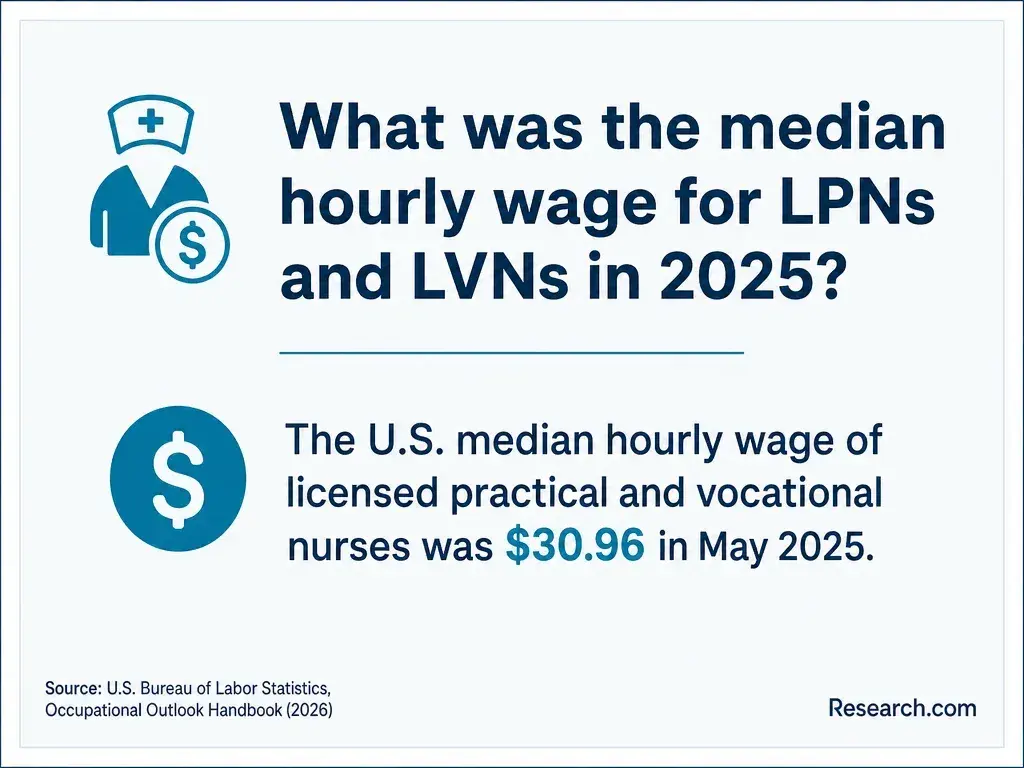
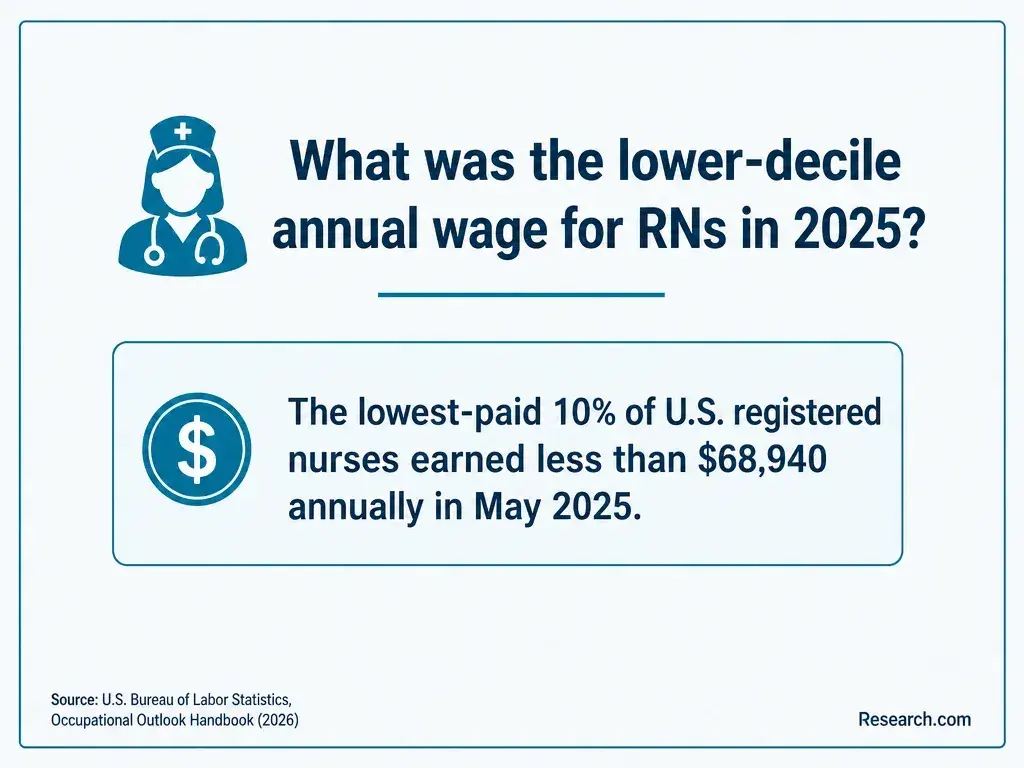
There is no single national wage for "hospital-at-home nurse" that reliably predicts an offer. U.S. Bureau of Labor Statistics registered nurse wages describe the broader RN occupation, not this program, shift, or territory. Compare the employer's written terms with local RN alternatives, especially if a higher base rate comes with substantial driving or unpaid availability.
Request an itemized offer covering base hourly pay, differentials, overtime eligibility, on-call and callback pay, paid travel time, mileage or vehicle arrangements, parking, phone or data costs, health coverage, retirement contributions, and paid leave. For a realistic comparison, calculate compensation against all expected working time - not just minutes inside patients' homes - and ask for the typical range of visits and miles per shift.
If tuition assistance is part of the offer, get the annual cap, eligible programs, grade rules, and repayment conditions in writing. BSN-to-MSN tuition comparisons can help assess a future education expense, but a graduate degree should not be treated as a guaranteed pay increase in this RN role.
Schedules vary: a job may involve set shifts, rotating weekends, evening visits, on-call coverage, or a mix of field and virtual work. Ask for a sample roster showing the first and last assignment, territory boundaries, average driving time, documentation time, and how late admissions or unplanned transfers affect the end of a shift. A nominally predictable schedule can become difficult if coverage depends on a large geographic area.
For personal safety, ask how the employer screens homes, handles pets and weapons concerns, uses check-in procedures, responds when a nurse feels unsafe, and supports staff after an incident. Confirm who provides and maintains equipment and what the nurse should do if connectivity or a device fails. These should be operational policies, not expectations that an individual nurse will improvise alone.
If you plan to study while working, compare actual weekend and on-call obligations with your course calendar. Even 12-month family NP study schedules may include fixed clinical and live-learning commitments; a job described as "flexible" does not necessarily accommodate them.
The role can develop assessment, escalation, patient education, interdisciplinary coordination, and remote-monitoring skills. Those strengths may support later applications in acute care, ambulatory care, care management, quality improvement, or virtual nursing. Advancement depends on documented responsibilities and openings, however - not on the job title alone.
Ask whether the employer offers preceptor roles, charge or clinical-lead positions, quality projects, continuing education, and a clear process for promotion. Request the qualifications and pay range for the next role you would realistically pursue. If your goal is systems leadership rather than advanced clinical practice, nonclinical DNP specialization options may be worth comparing later; an additional degree is unnecessary merely to establish that you can succeed in this RN job.
Hospital-at-home programs create opportunities for RNs, but demand for this exact job title is not measured separately in standard RN employment projections. Broad RN growth figures cannot tell you whether a local program will expand, maintain its census, or continue hiring. Program availability can also depend on payer arrangements and applicable regulatory authority.
Ask how long the program has operated, its recent patient volume, whether the vacancy replaces a departing nurse or adds capacity, and what happens to employees if enrollment falls. These answers are more useful for judging a specific offer than a national RN outlook figure. For an ADN-prepared RN considering longer-term mobility, MSN pathways that accept ADN-prepared nurses are an education option to evaluate separately - not evidence that this employer requires an MSN or that demand for its positions is growing.
Ask the hiring manager to describe the first independent assignment, not just the length of orientation. A strong answer identifies the preceptor, supervised field visits, equipment training, competency checks, and a plan if the nurse needs more time. It also explains who can give clinical direction when the assigned nurse is in a home or a virtual monitor flags a concern.
These questions expose the support behind a staffing promise:
- How many patients can one RN be responsible for at once, and how are travel time and patient acuity reflected in assignments?
- Who answers urgent clinical calls during each shift, and what is the backup if that person is unavailable?
- Who trains and troubleshoots monitoring devices, the EHR, connectivity, and medication workflows?
- How are competencies documented, and who decides when a new hire is ready for independent visits?
Do not confuse employer orientation with graduate clinical placement. If you later pursue an NP degree, exploring FNP programs with preceptor coordination addresses a separate, school-approved training requirement; routine RN employment does not automatically count toward it.
How can you evaluate a reputable hospital-at-home nursing employer?
Request a job description and written policies that match what interviewers say. A reputable employer should be able to identify its clinical leadership, patient-selection process, coverage and escalation arrangements, field-safety procedures, orientation standards, and the entity responsible for the patient's care. Ask to speak with a current field RN and, if applicable, a virtual RN about how the program works on a difficult shift.
Before accepting, compare the written offer, a sample schedule, and the escalation policy. Pause if the employer cannot explain who responds to deterioration, expects unsupported independent work before competency assessment, or leaves travel compensation and on-call expectations vague. If education benefits influence your choice, verify what the employer will actually reimburse; online PMHNP tuition and fee considerations, for example, would matter only if that separate pathway fits your goals and qualifies under the policy.
Other Things You Should Know About Nursing
Some do, while others work remotely or split time between field and virtual assignments. Confirm the proportion of each before accepting.
Technology needs vary by program. Ask who checks connectivity, supplies devices, teaches their use, and arranges an alternative when monitoring fails.
Family or caregivers may help with agreed-upon daily tasks, but the employer should explain what support is required for admission and which clinical duties remain with licensed staff.
Follow applicable law and employer policy, communicate the concern promptly, and request the safety or reassignment procedure. Ask for that procedure before a problem occurs.
- An overview of Hospital-at-home versus other models of care | nih.gov https://pmc.ncbi.nlm.nih.gov/articles/PMC11702468/
- Safety Strategies for Care in the Home - Safer Healthcare - NCBI https://www.ncbi.nlm.nih.gov/books/NBK481879/
- Travel Time | dol.gov https://www.dol.gov/general/topic/workhours/traveltime
- Publication 463 (2025), Travel, Gift, and Car Expenses | Internal Revenue Service https://www.irs.gov/publications/p463
- Remote Patient Monitoring | PSNet https://psnet.ahrq.gov/perspective/remote-patient-monitoring
- Top 23 Questions Nurses Should Ask During a Job Interview | HPU Online https://online.hpu.edu/blog/23-questions-to-ask-interviewer-nursing
- Clinic vs. Hospital Settings: Differences in Nurse Roles | AdventHealth University https://www.ahu.edu/blog/clinic-vs-hospital
- Beneficiary Protections Expanded in Revised Home Health Conditions of Participation - Center for Medicare Advocacy https://medicareadvocacy.org/beneficiary-protections-expanded-in-revised-home-health-conditions-of-participation/
- What Are the Home Health Care Eligibility Criteria? | Amedisys https://resources.amedisys.com/what-are-the-home-health-eligibility-criteria
- Who Qualifies for Home Health Care? (Medicare Rules) | Central Coast VNA & Hospice https://ccvna.com/qualifying-for-home-health-care/