2027 Questions to Ask Before Accepting a Forensic Correctional Nurse Position
Audited and Verified:
Our Editorial and Data Verification Process
Research.com uses government datasets, official education statistics and primary institutional information to support its career and degree guides. Our review process checks factual accuracy, occupational definitions, source dates and the requirements associated with the credentials discussed.
How This Article Was Fact-Checked
Our editorial team verifies salary estimates, employment projections, education requirements and program information against original data providers and official organizations. Salary figures are checked against the relevant occupational definitions and reporting periods. Information about licensure, accreditation and required in-person training is reviewed separately.
Fact-checked and verified on:

Co-Founder and Chief Data Scientist
A forensic correctional nurse offer can look like a familiar nursing job until you examine who controls access to patients, how emergencies are handled, and whether the position actually involves forensic evidence.
This guide is for licensed nurses considering a jail, prison, or detention-facility role - and for nursing students planning toward one. It identifies the questions to ask about scope, staffing, safety, supervision, pay, and preparation so you can compare the written offer with the work you will be expected to do.
Key Things You Should Know
- Ask whether "forensic" means evidence collection, injury documentation, or simply nursing care in a correctional setting; the job title alone does not define your duties.
- Before accepting, verify three separate requirements: the appropriate nursing license, the employer's hiring criteria, and documented competency for the duties you will perform.
- Get written answers about patient access, emergency response, custody coordination, orientation, staffing, and compensation; these can matter more to job fit than an additional degree.
What does a forensic correctional nurse do?
Correctional nurses provide care to people held in jails, prisons, or other detention settings. Depending on the facility, the work may include intake screening, medication administration, chronic-disease management, withdrawal assessment, triage, behavioral-health coordination, and emergency response. Forensic duties may additionally involve documenting injuries or collecting evidence under an approved protocol. Some employers use the term broadly without assigning those duties.
Ask the hiring manager: "Which tasks in this position are forensic, who authorizes them, and what training and equipment will I receive?" Request the job description and relevant protocols. If evidence collection is expected, clarify consent, chain of custody, documentation, and access to a qualified examiner. Nursing care, custody decisions, and evidence handling have different responsibilities; a nurse should not have to infer those boundaries during an incident.
Behavioral-health needs can be prominent, but a correctional RN is not automatically a psychiatric nurse practitioner. If your goal is psychiatric diagnosis and treatment rather than RN-level care coordination, psychiatric nurse practitioner study on a budget addresses a separate, regulated career path.
What education and nursing license are required for correctional nursing?
Many correctional nursing positions require an active RN license; some employ LPNs/LVNs for duties within their state-defined scope and facility policies. Check the posting for the required license, the state where you will practice, and any experience requirement. A nursing degree alone does not authorize practice: graduates of prelicensure RN programs must meet state requirements and obtain an RN license, generally including passage of the NCLEX-RN.
Ask whether the role expects independent triage, charge responsibilities, or clinical decisions beyond your present experience. Also ask who provides clinical consultation when a prescriber is off-site. An LPN/LVN considering RN-level openings can compare accelerated LPN-to-RN bridge programs, but must verify the actual program length, state approval, clinical requirements, and eligibility for RN licensure.
Is correctional nursing certification required for forensic nurse positions?
There is no single certification that qualifies a nurse for every job labeled "forensic correctional nurse." An employer may prefer correctional-health, forensic-nursing, or sexual-assault-examiner training, while another may require only the appropriate license and successful onboarding. Ask for the exact credential name and issuing organization, whether it is required at hire or later, who pays for it, and whether the facility provides the practice experience needed to qualify.
Certification does not expand nursing scope or replace training in facility procedures. Nor does a graduate degree serve as a correctional-nursing credential: online DNP completion time options may interest nurses pursuing advanced education, but a DNP is not a prerequisite for this RN job. If the employer expects evidence collection, ask what supervised competency assessment follows any course or certificate.
For an RN position, an approved prelicensure ADN/ASN or BSN pathway can lead toward initial RN licensure; the employer decides whether it requires or prefers a BSN. A BSN may support later applications for leadership or public-health-oriented roles, but it cannot replace experience in assessment, de-escalation, and emergency escalation. For a nurse who already holds the required license, targeted training and a supported transition may be more useful than another degree.
Ask, "Would my current education meet this position's requirements, and what would another degree change here?" That question is particularly important before pursuing nursing master's bridges for ADN graduates: graduate study may fit a defined leadership or advanced-practice goal, but it is not the default route into correctional bedside nursing.
If you still need an RN license, compare programs by approval and clinical access before comparing convenience. Online coursework does not eliminate in-person skills assessment, simulation, or supervised clinical placements. A campus-based program may make lab attendance simpler; a hybrid program may reduce classroom travel while leaving clinical schedules largely fixed.
The distinction is especially consequential if you intend to work while studying. Ask each program where clinical placements occur, who arranges them, when labs meet, and whether it enrolls students in your state. Comparing online prelicensure nursing pathways is a starting point, not a substitute for checking the specific program's state-board status, eligibility, and attendance requirements.
Foundational RN preparation covers assessment, pharmacology, clinical judgment, documentation, and supervised patient care. For a correctional position, ask how orientation applies those skills to intake screening, withdrawal and suicide-risk escalation, medication continuity, infection prevention, emergencies, and communication across clinical and custody teams. A course transcript cannot establish readiness to handle those situations alone.
Request the orientation schedule and ask who precepts you, which competencies are observed, how your assignment grows, and what happens if you need more supervised time. If the employer expects advanced psychiatric assessment or prescribing, that is a different role requiring appropriate APRN preparation and authorization. Comparing shorter MSN-PMHNP routes is relevant only if that separate career goal is yours; speed does not replace required supervised preparation.
If you already hold the license specified in the offer, nursing-school admission is usually not the immediate hiring decision. Ask the employer instead about license verification, background screening, references, and any facility-specific clearance. A person entering nursing must separately check each program's prerequisites, admission standards, and clinical-placement conditions; admission to a school is not the same as admission to its nursing sequence.
Career changers with a non-nursing bachelor's degree should confirm which sciences and labs count, grade and course-age rules, and whether a program prepares them for initial RN licensure. Shorter graduate-entry nursing programs may be worth comparing with ADN and accelerated BSN routes, but a non-nursing degree does not itself meet nursing licensure requirements.
For an already-licensed applicant, the immediate investment is more likely to be onboarding time, travel, and any required training than a new degree. If you are not yet licensed, total time depends on prerequisites, course sequencing, clinical availability, graduation, and the licensure process. Compare a school's full cost of attendance - including fees, equipment, travel, and time away from paid work - rather than tuition alone.
Ask the employer whether orientation is paid, whether required certifications and renewals are reimbursed, and whether education assistance requires a service commitment or repayment if you leave. An LPN/LVN assessing shorter practical nursing study pathways should note that LPN/LVN education leads toward a different license and may not meet an RN job posting's requirement.
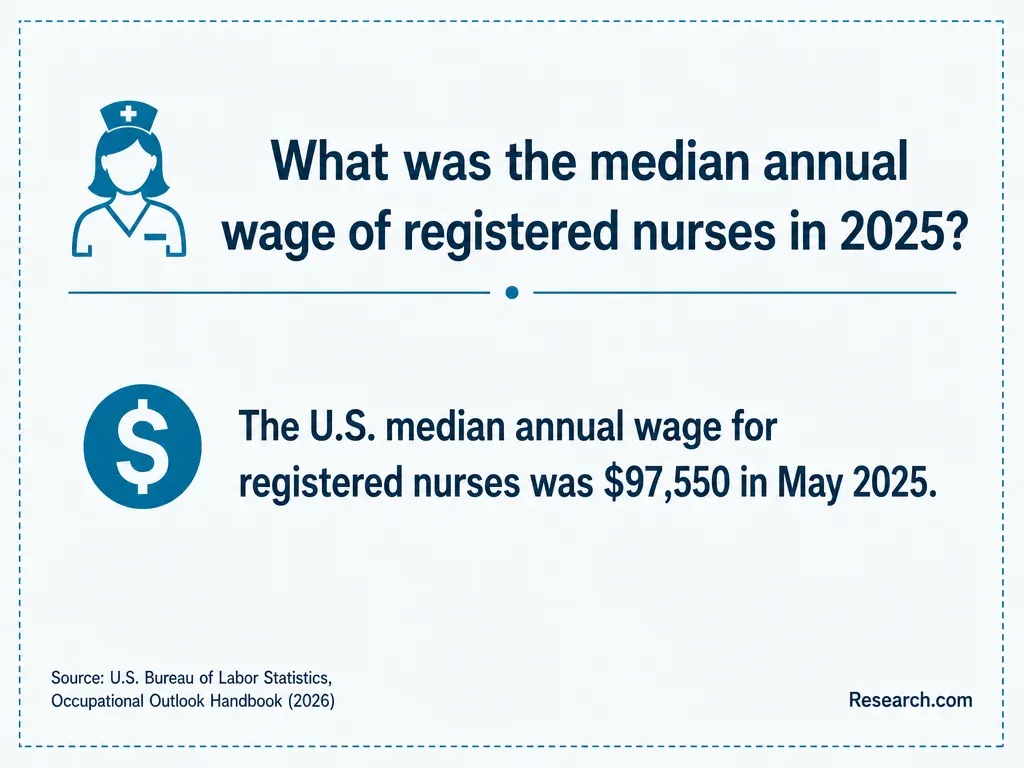
There is no single national wage figure that reliably describes jobs titled "forensic correctional nurse." U.S. Bureau of Labor Statistics RN wage data describe registered nurses across settings, not this specialty or a particular offer. Compare the written offer's base rate with shift differentials, overtime rules, on-call expectations, benefits, retirement provisions, and the hours actually guaranteed. Confirm whether the employer is a public agency or a contracted healthcare company; that distinction can affect benefits, reporting lines, and advancement.
Potential next roles include experienced correctional RN, charge nurse, nurse educator, or manager, depending on the employer and your qualifications. Ask what positions have actually been filled internally and what they require. If a documented leadership goal calls for graduate study, cost-focused MSN pathways for bachelor's-prepared nurses can inform that later decision - not the value of today's offer.
How strong is demand for correctional nurses, and how should you choose a program?
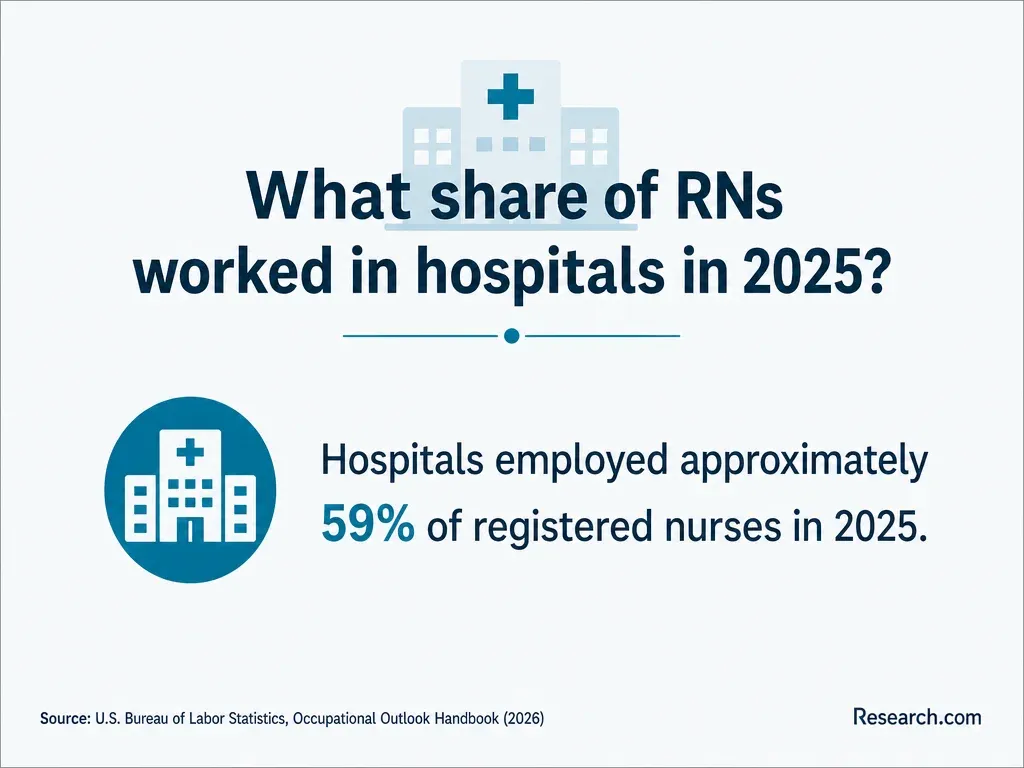
Broad RN employment projections do not show how many correctional openings exist in your area or whether a particular facility can retain staff. Ask why this vacancy is open, how long positions remain unfilled, whether agency nurses cover gaps, and how staffing changes your assignment. If answers are vague, request a conversation with a current nurse and a walk-through of the clinical work area before accepting.
Use the following questions to test whether the offer is safe and workable, then compare the answers with the written job description and offer.
- What is the usual assignment by shift, and who covers intake, medication rounds, emergencies, and breaks?
- How does a nurse obtain timely access to a patient, a prescriber, emergency transport, and an interpreter when needed?
- Which decisions belong to clinical staff versus custody staff, and how are disagreements escalated and documented?
- How long is supervised orientation, what must I demonstrate before working independently, and who supports me afterward?
- Which duties, shifts, locations, and pay provisions are guaranteed in writing - and which may change?
If you need education to qualify, choose a program that fits the required license and your state's rules, not one chosen solely for a forensic-sounding course title. Advanced practice is a separate decision: cost comparisons across online NP pathways are useful only if an NP role is your intended destination. For an RN offer, clear scope, competent onboarding, and adequate clinical support are more immediate tests.
Other Things You Should Know About Nursing
Yes. Ask the recruiter to arrange a conversation with a nurse who works your proposed shift. Questions about daily workflow and support are easier to evaluate through a peer conversation than a job posting.
Yes, if the employer permits it. A visit can clarify the distance between care areas, where supplies are kept, and how nurses communicate, though security rules may limit access.
No. Benefits depend on the hiring entity and position. Request the benefits summary and determine whether you would be employed by a government agency or a private contractor.
Ask for the revised duties, reporting structure, schedule, and compensation in writing before accepting. If the changes add responsibilities you are not prepared or authorized to perform, seek clarification before committing.
- eCFR:: 42 CFR Part 2 -- Confidentiality of Substance Use Disorder Patient Records https://www.ecfr.gov/current/title-42/chapter-I/subchapter-A/part-2
- Refusal of Care - StatPearls - NCBI Bookshelf https://www.ncbi.nlm.nih.gov/books/NBK560886/
- Workplace violence in healthcare settings: The risk factors, implications and collaborative preventive measures - PMC https://pmc.ncbi.nlm.nih.gov/articles/PMC9206999/
- The Health Care Industry and Calculating Overtime Pay | dol.gov https://www.dol.gov/agencies/whd/fact-sheets/54-healthcare-overtime
- Informed Consent FAQs | hhs.gov https://www.hhs.gov/ohrp/regulations-and-policy/guidance/faq/informed-consent/index.html
- Nurse - Explore Healthcare Careers | Mayo Clinic College of Medicine and Science https://college.mayo.edu/academics/explore-health-care-careers/careers-a-z/nurse/
- Cal. Code Regs. Tit. 22, § 70217 - Nursing Service Staff - LII | LII / Legal Information Institute https://www.law.cornell.edu/regulations/california/Cal-Code-Regs-Tit-22-SS-70217
- How to Become a Forensic Nurse | Goodwin University https://www.goodwin.edu/enews/how-to-become-a-forensic-nurse/
- Informed Consent in Health Care | Practical Law The Journal https://www.reuters.com/practical-law-the-journal/legalindustry/informed-consent-health-care-2026-02-01/