2027 Quality Improvement for Nursing Students: Background Knowledge and Readiness Questions
Audited and Verified:
Our Editorial and Data Verification Process
Research.com uses government datasets, official education statistics and primary institutional information to support its career and degree guides. Our review process checks factual accuracy, occupational definitions, source dates and the requirements associated with the credentials discussed.
How This Article Was Fact-Checked
Our editorial team verifies salary estimates, employment projections, education requirements and program information against original data providers and official organizations. Salary figures are checked against the relevant occupational definitions and reporting periods. Information about licensure, accreditation and required in-person training is reviewed separately.
Fact-checked and verified on:

Co-Founder and Chief Data Scientist
A nursing quality improvement assignment can sound straightforward until you have to choose a safety problem, measure a process, and work within a clinical site's rules. If you are preparing for nursing school or an early clinical project, the most useful question is not whether you already know how to run a project. It is whether you have the foundations and support to learn safely.
This guide explains what quality improvement involves, how to assess your readiness, and which program questions matter before you enroll or commit to a project.
Key Things You Should Know
- Quality improvement examines a local care process; a credible student project identifies a baseline, a process measure, an outcome measure, and a way to watch for unintended effects.
- Plan-Do-Study-Act has four stages, but completing a cycle does not prove that an intervention improved patient outcomes. Faculty and clinical-site oversight determine what a student may implement or report.
- Before enrolling, verify three separate requirements: admission to the nursing track, access to supervised clinical learning, and whether the program supports the quality improvement work you want to do.
What Is Quality Improvement in Nursing Education?
Quality improvement (QI) is the systematic study and refinement of a care process in a particular setting. Nursing students might examine how a unit communicates fall-risk precautions at handoff or how a clinic documents follow-up appointments. The aim is to make a defined process safer, more reliable, or more effective - not to claim that one classroom exercise establishes a general clinical finding.
Students commonly learn to state a problem, examine existing workflow, choose a feasible measure, test a change, and review what happened. Plan-Do-Study-Act, or PDSA, organizes a small test into planning, carrying it out, studying the observations, and deciding what to adapt next. A process measure might show whether a handoff checklist was completed; an outcome measure might track the event the team hopes to reduce. A balancing measure watches for a possible downside, such as added documentation time.
QI is related to, but distinct from, evidence-based practice and research. Evidence-based practice applies relevant evidence with clinical expertise and patient needs. QI tests how a change works in a local system. Research may be designed to produce generalizable knowledge. A project's label does not settle its oversight requirements: the school and clinical organization must determine permissions, data access, and whether formal ethics or institutional review is needed.
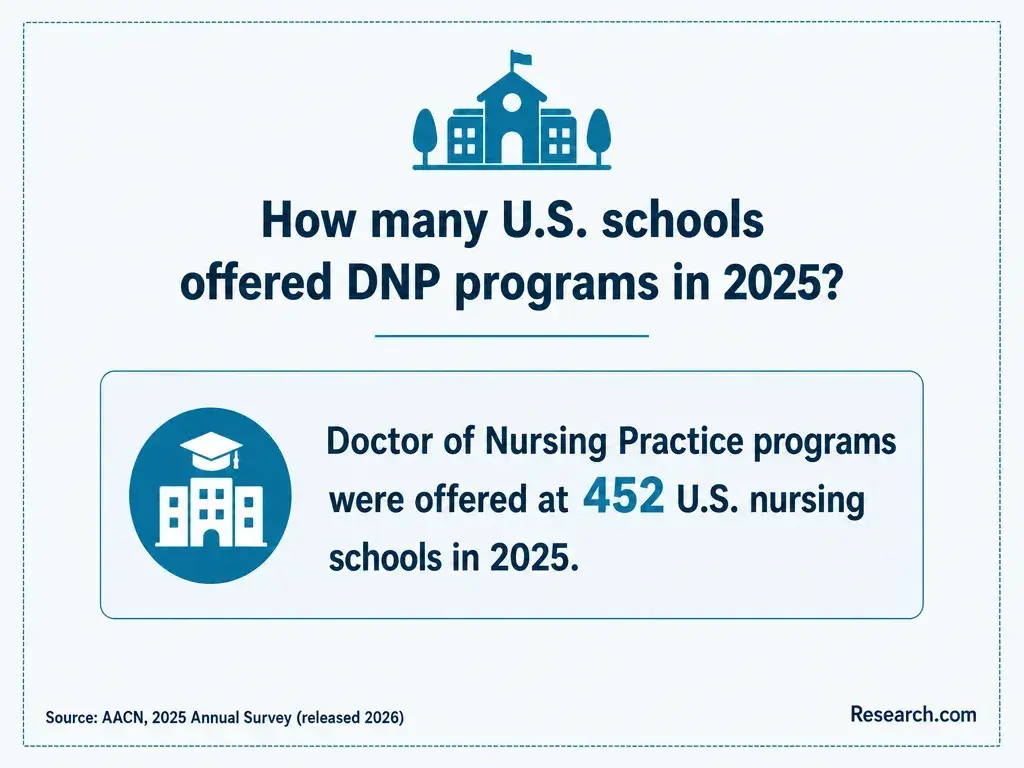
A DNP may include a substantial practice-improvement project, but an undergraduate student does not need a doctorate to learn QI methods. Students considering later doctoral study can examine DNP study options beyond highly selective programs while checking each program's actual project and practice requirements.
Why Is Background Knowledge Important for Nursing Students?
QI measures are only useful when students understand what they represent clinically. A missed documentation field, for example, could reflect an omitted action, a workflow problem, or incomplete charting. Knowledge of assessment, patient safety, clinical judgment, and documentation helps students avoid treating those possibilities as interchangeable.
The table shows how several foundations support a modest student project. It also shows why access to a metric is not the same as permission to interpret it independently.
| Background knowledge | How it helps with QI | Question to ask before using data |
| Clinical concepts and scope | Connects a proposed change to safe, supervised care | Does the intervention require a licensed clinician's decision or approval? |
| Workflow and documentation | Clarifies where a process begins, who performs it, and where it is recorded | Could a charting change alter the measure without changing care? |
| Basic measurement | Helps define a numerator, denominator, time period, and baseline | Are observations collected consistently enough to compare? |
| Ethics and privacy | Limits data use to an approved purpose and audience | What information may be accessed, retained, or presented? |
Experience from another discipline - such as statistics, project management, or public health - can help with measurement and teamwork. It does not replace nursing assessment or supervised clinical practice. That distinction also matters later in specialty education: nurses exploring accelerated FNP certificate admissions and requirements should check how a program evaluates prior graduate coursework and clinical preparation, not assume that QI experience fills a population-specific clinical gap.
What Readiness Questions Should Nursing Students Ask Before Enrolling?
Readiness has two parts: what you can bring to the program and what the program can actually provide. Ask for written answers about scheduling, supervision, and project expectations rather than relying on a description of the degree as "flexible" or "hands-on."
Use these questions in an admissions conversation or while comparing course plans. The answers can reveal a mismatch before you commit tuition or arrange work and caregiving schedules.
- Foundations: Which sciences, statistics courses, or introductory nursing courses must I complete before I encounter QI coursework?
- Clinical context: When will I observe real workflows under supervision, and how will classroom or simulation exercises connect to those experiences?
- Project access: Does the program arrange approved sites and faculty oversight, or must I secure a site? What happens if a site cannot share data?
- Time: When do labs, clinical shifts, group meetings, and project milestones occur, and which commitments cannot be moved?
- Evaluation: Am I assessed on a proposal, a tested change, the quality of my analysis, or a documented outcome?
A short advertised timeline deserves particular scrutiny when it includes advanced clinical preparation. For example, 12-month FNP coursework and clinical expectations may help an already-licensed nurse ask whether required placements and study time fit alongside a QI project. Speed alone is not evidence of readiness.
If your immediate goal is to learn QI, choose a pathway based first on the nursing role you intend to hold. A degree is not required merely to understand PDSA or help an approved team review a workflow. Initial nursing practice, however, requires an appropriate education and state licensure pathway.
This comparison separates routes into nursing from routes intended for an existing RN. It helps prevent a QI interest from driving an unnecessary or ineligible degree choice.
| Pathway | Typical entrant and purpose | QI relevance and limit |
| Prelicensure ADN/ASN or BSN | Student seeking initial RN preparation | May introduce safety and QI alongside supervised care; graduation alone does not confer an RN license. |
| RN-to-BSN | Already-licensed RN completing a bachelor's degree | May offer more focused population health, evidence appraisal, or QI coursework; it is not an initial RN route. |
| MSN in leadership, education, or informatics | Usually an RN preparing for a defined non-APRN function | Can support improvement work in that function; a non-APRN MSN does not qualify someone as a nurse practitioner. |
| Practice-focused DNP | Nurse pursuing advanced practice or systems-level practice preparation, depending on the track | Often involves a substantial practice project; verify the track's separate clinical and credential implications. |
An RN with an associate degree who wants graduate-level leadership work can investigate bridge programs from an ADN to an MSN. Compare the credential awarded, undergraduate requirements, time away from work, and the exact MSN track. If a workplace QI course or employer-supported project meets the goal, another degree may not be necessary.
For a student who wants to practice nursing, a program's QI courses matter only if the overall pathway also meets the relevant educational and regulatory requirements. Institutional accreditation concerns the school; nursing program accreditation, where applicable, concerns a particular nursing program; and state board approval concerns the board's requirements for nursing education and examination eligibility. These are different checks.
Ask the school for its exact nursing program name and accreditation status, then confirm initial-licensure requirements with the board of nursing in the state where you plan to apply. Also confirm whether the program can enroll you and arrange clinical learning in your location. Completing a program, qualifying to take the NCLEX, passing it, and receiving a license are separate steps.
The same principle applies to later specialty study. An RN comparing PMHNP certificate completion timelines must separately verify the certificate's population-focus preparation, certification eligibility, state APRN requirements, and clinical arrangements. A QI project or a certificate title cannot substitute for those checks.
Prelicensure students generally build from sciences and health assessment toward pharmacology, clinical judgment, communication, and supervised patient care. Programs vary in sequencing, but quality and safety should become more concrete as students learn to recognize risks, document accurately, escalate concerns, and evaluate whether a care process is working.
QI teaching may appear as a dedicated course, a simulation debrief, a clinical assignment, or a project. A student might first identify where handoff information is lost in a simulated scenario, then learn how a supervised team defines and reviews a real-world measure. Simulation is valuable preparation, but participation does not establish independent clinical competence or authorize a student to change a site's practice.
Graduate specialty curricula add role- and population-specific learning rather than simply more general QI. For example, nurses weighing MSN-PMHNP program length comparisons should examine psychiatric clinical preparation and supervised experiences as well as any systems-improvement coursework. QI skill does not replace specialty assessment competence.
Online coursework can support QI learning: students can review evidence, discuss workflow maps, and analyze de-identified measures remotely when the school and site permit it. Yet an online label says little about the timing of supervised clinical experiences, simulation labs, campus visits, or group projects.
Before enrolling, request a term-by-term schedule showing synchronous sessions, in-person requirements, placement responsibility, and the rules for completing a project at your workplace. Working students should ask whether an employer site must approve the project and whether the school will accept that site. If access is denied, find out whether an approved alternative is available; do not assume a proposed project can be completed with patient records you encounter at work.
These questions also matter when comparing online DNP program length comparisons. A shorter course sequence may still require substantial practice activities, site coordination, and project revisions. The workable program is the one whose actual requirements fit your available time and approved access.
Admissions requirements depend on the entry point. A prelicensure program may evaluate science prerequisites and labs, grades, entrance testing, and eligibility for clinical placement. An RN-to-BSN program generally requires an RN license; a graduate track may also require a particular degree, experience, or specialty preparation. Admission to a university does not necessarily mean admission to its nursing major.
Ask each program which courses must be finished before application, how long science credits remain acceptable, whether labs must use a particular format, and when background-check or health-documentation requirements apply. If an entrance exam is a concern, compare the school's published policy rather than assuming every applicant must take the same test. Guides to entrance exam policies for nursing applicants can help identify questions, but the program controls its requirements for your entry term.
You usually do not need a completed QI project to enter prelicensure nursing education. If a program asks for prior work or a project proposal, describe your actual role and access accurately. Interest in improving care is a sound starting point; invented outcomes or assumed access to clinical data are not.
There is no single useful price or completion time for "a nursing program." Total cost depends on the route, accepted credits, enrollment pace, fees, and time away from paid work. A QI course may fit within an existing degree, while a separate graduate program can add a much larger commitment without being necessary for an entry-level improvement goal.
Build a program-specific estimate from the school's published charges and your likely schedule. Include tuition and required fees, books or software, equipment, background checks, travel to labs and clinical sites, and any additional term needed if courses or placements are delayed. For a project-based program, ask whether continuing enrollment is required while approvals, implementation, or revisions are pending.
Already-licensed nurses considering graduate study can use BSN-to-MSN tuition comparisons as a starting point, then request a written estimate for their actual track and credits. Compare that total with a QI course, employer training, or a supervised workplace project if the goal does not require a new degree.
What Careers, Salaries, and Job Outlook Follow a Nursing Degree?
QI is a responsibility within many nursing jobs, not a license or a guaranteed job title. A newly licensed RN may help report safety concerns and follow approved improvement processes while developing clinical judgment through orientation. Experienced nurses may contribute to unit councils, staff education, informatics, quality departments, or leadership teams. Those roles can require demonstrated practice experience, data skills, and employer-specific qualifications beyond a degree.
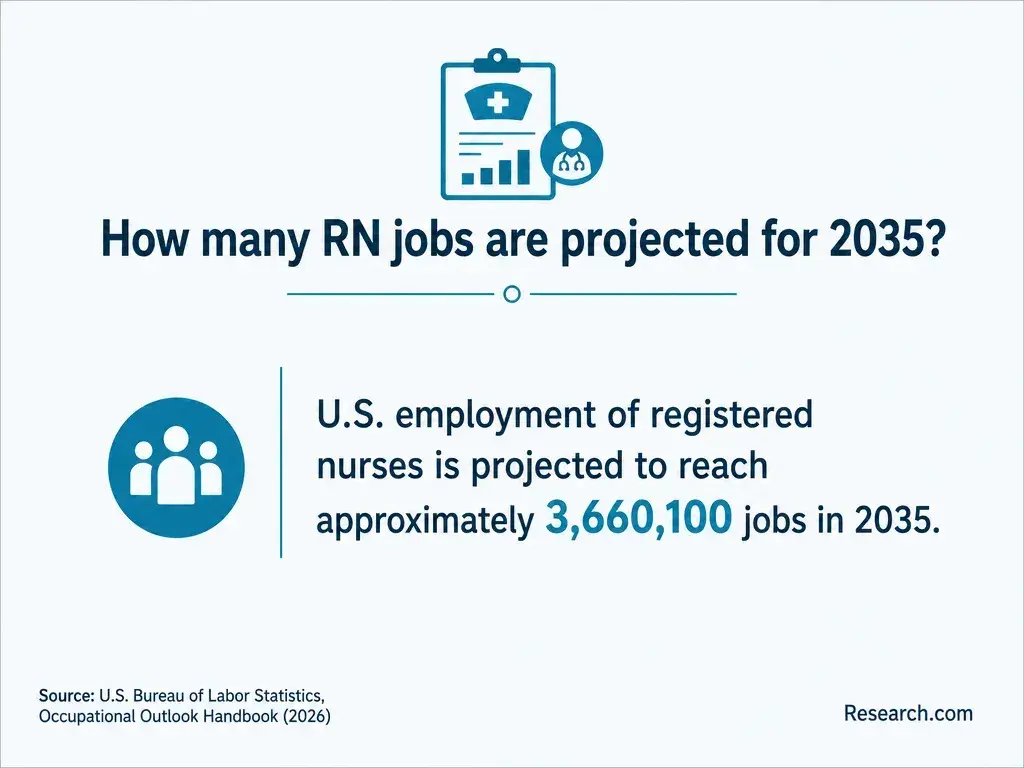
Salary comparisons should start with the occupation and job offer, not the project you completed in school. The U.S. Bureau of Labor Statistics reports wages and employment projections by occupation, such as registered nurse, rather than by ADN, BSN, or QI-course completion. Its occupation-wide figures do not predict a new graduate's pay, a specialty offer, or a promotion. When comparing opportunities, check the latest occupational data alongside local job postings, shift expectations, and the experience required.
If the intended role is advanced practice, evaluate its separate education and licensing requirements before comparing pay with the cost of training. Cost-focused nurse practitioner study options may inform that financial comparison, but a nurse practitioner degree is not a prerequisite for most RN-level QI participation. Your next step is to match a specific role to its required credential, then ask employers what improvement experience they value.
Other Things You Should Know About Nursing
Yes, if you label it accurately - for example, as a proposal, workflow analysis, or project in progress. State your own contribution without claiming implementation or patient results you have not documented.
Tell your faculty supervisor promptly. They may approve a different measure, an authorized de-identified dataset, a simulation-based exercise, or another site. Do not copy records or collect patient information without permission.
Not automatically. The nursing program and any relevant regulator or certifying body decide which activities and supervision count toward a particular requirement. Get confirmation before recording hours.
Discuss a suitable process measure with your supervisor, such as whether an approved safety step occurred when indicated. Report the observation period and limitations; do not infer a reduction in rare patient events from a small student project.
- How to Measure and Interpret Quality Improvement Data - PMC https://pmc.ncbi.nlm.nih.gov/articles/PMC4858492/
- Interprofessional Education in a Simulation Setting - NCBI - NIH https://www.ncbi.nlm.nih.gov/books/NBK557471/
- Ways to Approach the Quality Improvement Process | Agency for Healthcare Research and Quality https://www.ahrq.gov/cahps/quality-improvement/improvement-guide/4-approach-qi-process/index.html
- When Do They Require IRB Review? | bu.edu https://wwwapp.bumc.bu.edu/ocr/ClinicalResearchNewsletter/article.aspx
- 6.1 Quality Improvement Process - Leading Change in Health Systems: Strategies for RN-BSN Students https://pressbooks.uwf.edu/nursingleadership/chapter/test-1/
- Evidence-Based Practice, Quality Improvement, and Research | mssm.edu https://researchroadmap.mssm.edu/other-research/cnri/ebp-qi-research/
- QI Project vs Resesarch - OU Office of Compliance https://compliance.ouhsc.edu/offices/human-research-participant-protection/ouhsc-institutional-review-board/researcher-toolkit/qi-project-vs-research
- PDSA Cycles: Improvement and Implementation - NIRN https://nirn.fpg.unc.edu/blog/pdsa-cycles-improvement-and-implementation/