2027 Progressive Care, Step-Down, and Intermediate Care Units: Terminology for Nursing Applicants
Audited and Verified:
Our Editorial and Data Verification Process
Research.com uses government datasets, official education statistics and primary institutional information to support its career and degree guides. Our review process checks factual accuracy, occupational definitions, source dates and the requirements associated with the credentials discussed.
How This Article Was Fact-Checked
Our editorial team verifies salary estimates, employment projections, education requirements and program information against original data providers and official organizations. Salary figures are checked against the relevant occupational definitions and reporting periods. Information about licensure, accreditation and required in-person training is reviewed separately.
Fact-checked and verified on:

Co-Founder and Chief Data Scientist
A job posting may call a unit "progressive care," "step-down," or "intermediate care" without explaining which patients its nurses actually treat. For nursing students, new graduates, and RNs considering a transfer, that ambiguity affects preparation, orientation, and workplace fit. This guide explains how the terms overlap, how these units compare with ICU and medical-surgical care, and what education and experience employers may expect. Most importantly, it shows you which questions to ask before choosing a program or accepting a position.
Key Things You Should Know
- These names overlap, but they are not standardized: A progressive care unit (PCU) generally cares for patients needing more monitoring or intervention than a typical medical-surgical unit provides, but less than a particular hospital's ICU.
- There is no separate PCU nursing license: Bedside roles generally require an RN license, followed by unit-specific orientation and competency checks; an ADN commonly takes about two years and a traditional BSN about four years of full-time study, though actual timelines vary.
- Compare the work, not the sign on the door: Ask about patient populations, monitoring, permitted therapies, typical assignments, escalation support, and new-hire training. PCCN is an optional specialty certification, not a substitute for licensure or orientation.
What are progressive care, step-down, and intermediate care units?
Progressive care describes hospital care for patients whose needs fall between those of a general inpatient floor and an ICU. Step-down often suggests that patients are moving from intensive care toward a lower level of monitoring, but a step-down unit may also admit patients whose condition has become more complex elsewhere. Intermediate care is another name hospitals use for this middle level of care.
These are operational labels, not nationally uniform patient categories. One hospital's PCU may specialize in cardiac monitoring; another may care for postsurgical patients or people with complex respiratory needs. "Telemetry" refers to a type of monitoring and may describe a PCU, a medical-surgical unit, or beds within either. For an applicant, the unit's admission criteria and nursing responsibilities are more informative than its name.
These labels describe a workplace, not a degree track. Even direct-entry MSN coursework and clinical requirements must be assessed as preparation for initial RN practice - not as a separate qualification for a step-down unit.
How do progressive care units differ from intensive care and medical-surgical units?
The distinction is chiefly the level of monitoring, the interventions the hospital permits on the unit, and the support available when a patient deteriorates. Boundaries vary by facility and patient population, so no single nurse-to-patient ratio or equipment list defines every PCU.
This comparison helps applicants interpret unit descriptions without assuming that similarly named units offer the same experience.
| Setting | Typical emphasis | Question to ask the employer |
| Medical-surgical | Inpatient care for a broad range of conditions; monitoring and acuity vary | Which patients or therapies require transfer to a higher level of care? |
| Progressive care or step-down | Closer observation and more frequent reassessment for patients whose needs exceed the unit's general-floor capabilities | Which monitors, infusions, respiratory supports, and patient conditions are permitted here? |
| Intensive care | Care for critically ill patients requiring intensive monitoring and interventions | What training is required before managing the unit's highest-acuity assignments? |
A PCU can be an appealing bridge toward critical care, but time on a step-down unit does not automatically establish ICU competence. Likewise, an online practice doctorate for MSN-prepared nurses serves a different educational purpose; it does not replace supervised preparation for either bedside setting.
What do progressive care nurses do in step-down units?
Progressive care RNs assess patients, recognize changes in condition, administer prescribed treatments, coordinate with the care team, document care, educate patients and families, and prepare patients for transfer or discharge. Depending on the unit, their work may involve cardiac monitoring, complex medication administration, respiratory assessment, or postoperative observation. The permitted tasks and required competencies are set by the nurse's scope of practice and the employer's policies - not by the words "step-down" on a job posting.
For a new graduate, the central challenge is moving from recognizing a finding in class or simulation to identifying a meaningful change during a busy shift and escalating it appropriately. Ask how preceptors supervise that progression, how assignments change during orientation, and who responds when a patient needs care beyond the unit's capabilities.
Bedside progressive care should not be confused with the independent assessment and treatment responsibilities of an advanced practice role. For example, one-year FNP admission requirements concern a different career pathway and do not define PCU nursing duties.
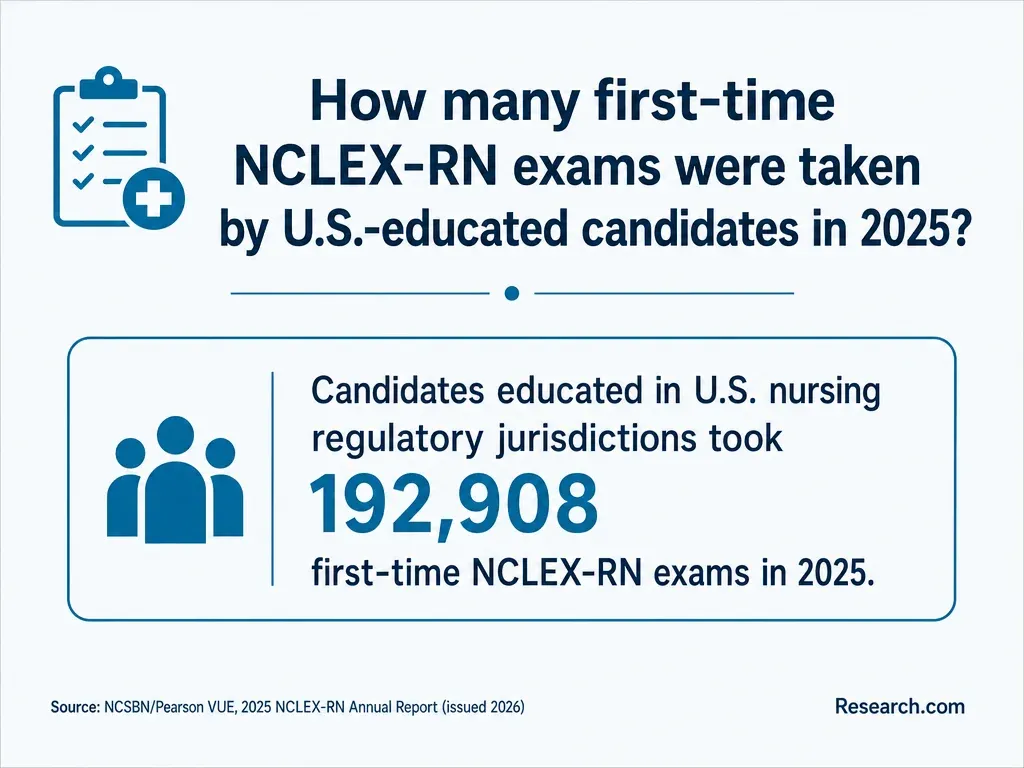
For an RN position, the usual starting point is completion of an eligible prelicensure nursing program, followed by meeting the state board of nursing's requirements for RN licensure, including the NCLEX-RN. Graduation, eligibility to take the exam, passing it, and holding an active license are distinct steps. An employer may also require basic life support, additional resuscitation training, or completion of unit-specific education.
PCU jobs do not have a separate state license. Employers may accept ADN- or BSN-prepared RNs, prefer a BSN, or specify prior acute-care experience; applicants should check the actual posting. New-graduate openings depend especially on whether the hospital offers a structured specialty orientation or residency. A nursing student's clinical rotation can demonstrate interest, but it does not establish independent competence with the unit's patients or equipment.
An RN considering later advanced practice study should evaluate that goal separately. Lower-tuition advanced practice nursing programs may be relevant to an eventual NP role, but NP education is not required to work as a progressive care RN.
The useful question is which route gets you eligible for an RN license and competitive for the hospitals where you want to work. None awards a special "progressive care nurse" license.
The routes below differ primarily by your starting education and whether you already hold an RN license.
| Pathway | Who it fits | Relevance to a PCU job |
| Prelicensure ADN or BSN | Applicants seeking initial RN preparation | Can lead to RN licensure eligibility when the program meets applicable requirements; employer degree preferences vary |
| Accelerated BSN | Applicants with a prior bachelor's degree who meet program prerequisites | Offers another prelicensure route, often with an intensive schedule |
| RN-to-BSN | Already-licensed RNs | Supports degree completion but is not initial RN preparation or a substitute for PCU orientation |
If you already hold an RN license, a full new degree may be unnecessary for a PCU transfer; relevant experience and a strong transition program may matter more. An ADN-prepared RN planning a different long-term role can also examine MSN pathways that accept ADN-prepared nurses, while checking whether the added degree actually serves that goal.
Foundational nursing study in health assessment, pathophysiology, pharmacology, and adult health provides the basis for recognizing changes in patient condition. Clinical rotations and simulation offer supervised opportunities to practice prioritization, medication safety, communication, documentation, and escalation. Exposure to cardiac or respiratory concepts can be valuable, but no course title guarantees readiness for a particular PCU assignment.
After hiring, applicants should expect the employer to teach and assess its own workflows: monitoring systems, permitted therapies, handoffs, rapid-response procedures, and documentation standards. Ask whether orientation includes a consistent preceptor, observed skill checks, and a process for extending training when needed. Simulation supports learning, but it does not replace employer validation of bedside performance.
Choose courses for the role you intend to enter. Psychiatric MSN study with condensed timelines, for instance, addresses a different advanced practice goal rather than the immediate clinical preparation needed for step-down nursing.
No. PCCN is a specialty certification awarded by AACN Certification Corporation for eligible nurses caring for acutely ill adult patients. It is distinct from RN licensure, a school-issued certificate, and an employer's competency sign-off. Hospitals may value or encourage it, but an applicant should not assume it is required for an entry-level PCU job.
PCCN eligibility includes specified nursing practice experience and other requirements that applicants should confirm in the certifier's current handbook before counting hours or paying an exam fee. If you are new to progressive care, prioritize licensure, supervised orientation, and documented experience first. If you are already practicing, compare the credential's eligibility, renewal obligations, employer recognition, and any available exam reimbursement with your career goals.
PCCN is not an advanced practice credential. Similarly, shorter routes to a DNP degree should be considered only for a separate role or educational objective - not as a way to obtain PCCN eligibility.
There is generally no standalone degree program that must be completed to become a progressive care RN. A traditional full-time ADN is often planned around two academic years and a traditional BSN around four, but prerequisites, admission cycles, clinical scheduling, transfer credits, and part-time enrollment can change the total time. An already-licensed RN may instead need employer orientation rather than another degree.
No single defensible price represents "PCU training." Compare each school's published tuition and fees with books, supplies, background checks, clinical travel, and potential lost earnings. For a job transition, ask the employer whether orientation is paid and whether it covers required courses or certification exams. Do not pay for an advanced degree solely because a PCU posting mentions specialty experience.
If graduate education serves a later goal, a BSN-to-MSN program affordability guide can inform that separate cost comparison; its prices should not be mistaken for the cost of entering progressive care nursing.
Hospitals may advertise these positions as progressive care RN, step-down RN, intermediate care RN, cardiac step-down RN, or telemetry RN. Search several titles, then read the patient population and duties: identical titles can cover different levels of acuity and support.
The U.S. Bureau of Labor Statistics reports wages and employment projections for registered nurses, not a separate progressive care occupation. Its RN figures can provide broad labor-market context, but they cannot establish a PCU salary or predict an individual offer. Compare local postings and ask about base pay, night or weekend differentials, experience credit, benefits, and any required on-call work. A higher rate may not offset an orientation or staffing arrangement that is a poor fit for an early-career nurse.
PCU experience can support later applications to other acute-care roles, but transitions still require the receiving unit's training. An RN weighing a longer-term move to psychiatric advanced practice can compare affordable online psychiatric nurse practitioner programs separately from PCU job offers and wages.
How can applicants choose an accredited progressive care nursing program?
First, clarify what you are choosing: a prelicensure nursing program or an employer's PCU transition program. A PCU is a workplace specialty, so a school need not advertise a progressive care degree to prepare an applicant for RN licensure.
For initial education, verify the institution's accreditation, the nursing program's applicable accreditation, and its state board approval or recognition for the jurisdiction where you plan to seek licensure. These are different checks. Ask the school about actual clinical placements, completion and NCLEX outcomes with their reporting periods, and whether local hospitals consider its graduates for new-graduate step-down roles.
For a job offer, compare the unit's patient mix and permitted therapies with its orientation plan. Ask who assigns and evaluates preceptors, how competency is documented, what escalation support is available, and whether new hires can request more supervised time. A degree program's clinical placement arrangements should not be confused with later graduate plans such as planning family NP study around clinical placement policies; those serve different credentials and clinical objectives.
Other Things You Should Know About Nursing
No. Telemetry describes cardiac monitoring; hospitals may use it on units with different patient acuity and nursing responsibilities. Check the posting's patient and therapy details.
Some hospitals hire new graduates into these units with structured orientation. Ask about preceptor support and how responsibility increases before accepting an offer.
No. It can provide relevant acute-care experience, but an ICU employer will assess your experience and require training for its patient population and interventions.
No. A post-anesthesia care unit (PACU) focuses on recovery after anesthesia. A PCU generally provides ongoing inpatient care for patients needing an intermediate level of monitoring.
- The Role of Stepdown Beds in Hospital Care - PMC - NIH https://pmc.ncbi.nlm.nih.gov/articles/PMC4315815/
- PROGRESSIVE CARE UNIT C5F-PCU | ca.gov https://www.cdph.ca.gov/Programs/CHCQ/LCP/CalHealthFind/_vti_bin/HFCISService.svc/DownloadProgFlexDocByID
- Nursing Practice FAQ - Texas Board of Nursing - Texas.gov https://www.bon.texas.gov/faq_nursing_practice.asp.html
- What Is Progressive Care Nursing? | Walden University https://www.waldenu.edu/online-bachelors-programs/bachelor-of-science-in-nursing/resource/what-is-progressive-care-nursing
- 8 Nursing Certifications for RNs | fortis.edu https://www.fortis.edu/blog/nursing/8-nursing-certifications-for-rns.html
- Top 23 Questions Nurses Should Ask During a Job Interview | HPU Online https://online.hpu.edu/blog/23-questions-to-ask-interviewer-nursing
- Essential Skills for Nurses | What Employers Look For | St. Catherine's https://nursing.stkate.edu/essential-skills-for-nurses/
- What is a step-down nurse? | Shiftmed Blog https://www.shiftmed.com/professionals/blog/what-is-a-step-down-nurse/
- Progressive Care Staffing Standards Published | AACN https://www.aacn.org/newsroom/progressive-care-staffing-standards-published
- What is a Progressive Care Unit? | nurse.com https://www.nurse.com/nursing-resources/definitions/what-is-a-progressive-care-unit/