2027 PhD vs Professional Doctorate in General Psychology: Key Differences, Careers, and Salary Outcomes

Co-Founder and Chief Data Scientist
Choosing between a PhD and a professional doctorate in General Psychology is really a choice between producing new research and applying psychological science in professional settings. The decision matters because the U. S. Bureau of Labor Statistics reports a May 2024 median annual wage of $94,310 for psychologists, but salary outcomes vary sharply by role, industry, licensure, and experience. This guide is for prospective doctoral students comparing research, academic, leadership, consulting, and applied psychology careers. You will learn how the degrees differ in curriculum, time, cost, funding, career fit, and return on investment.
Key Things You Should Know
- A PhD in General Psychology is usually the better fit for students who want research, teaching, publishing, data analysis, or academic careers; a professional doctorate is usually better aligned with applied leadership, consulting, program evaluation, and practice-oriented roles.
- Salary depends more on occupation and setting than degree label: BLS May 2024 data places the median annual wage for psychologists at $94,310, while some management, industrial-organizational, and postsecondary roles report different medians.
- PhD programs are more likely to offer assistantships or tuition remission, while professional doctorates are often self-funded; federal graduate loan rates for 2024-25 were 8.08% for Direct Unsubsidized Loans and 9.08% for Grad PLUS Loans.
What Is the Difference Between a PhD and a Professional Doctorate in General Psychology?
A PhD in General Psychology is a research doctorate. Its main purpose is to train students to ask original questions, design studies, analyze data, publish findings, and contribute new knowledge to psychology. It is often the stronger path for students who want faculty positions, research scientist roles, policy research, assessment development, or doctoral-level work in behavioral science.
A professional doctorate in General Psychology is typically practice-oriented. Depending on the school, it may be a PsyD, EdD, or another applied doctoral credential focused on using psychological theory and evidence to solve organizational, educational, community, health, or human-services problems. It may include applied research, but the goal is usually professional problem-solving rather than building a long-term academic research agenda.
The most important distinction is not prestige; it is fit. A PhD asks, "What new knowledge can I produce?" A professional doctorate asks, "How can I apply psychological knowledge to improve decisions, programs, teams, or services?"
This comparison shows how the two paths differ in the areas that usually matter most when choosing a doctorate.
| Factor | PhD in General Psychology | Professional Doctorate in General Psychology |
| Primary focus | Original research, theory, methods, publication | Applied practice, leadership, consulting, program improvement |
| Best fit | Future researchers, professors, research directors, policy analysts | Working professionals, applied leaders, consultants, administrators |
| Signature requirement | Dissertation based on original research | Applied dissertation, doctoral project, or capstone, depending on program |
| Funding pattern | More likely to include assistantships or tuition remission, especially full-time campus programs | More likely to be tuition-driven and designed for working adults |
| Career signal | Strong signal for research depth and academic preparation | Strong signal for applied expertise and advanced professional practice |
| Licensure relevance | Only licensure-aligned if the program meets health-service psychology requirements | Only licensure-aligned if the program meets health-service psychology requirements |
One common mistake is assuming that any doctorate in psychology leads to psychologist licensure. A general psychology doctorate may not qualify you for clinical, counseling, or school psychologist licensure unless it includes the required accreditation, supervised training, internship, and state-specific coursework.
How Do PhD and Professional Doctorate Curricula, Research, and Capstone Requirements Differ in General Psychology?
Curriculum is where the difference becomes practical. PhD students usually spend more time on research design, statistics, measurement, theory building, and scholarly writing. Professional doctorate students usually spend more time connecting psychology to workplace, educational, community, or organizational problems.
The table below summarizes the academic work readers should compare before choosing a program. It is especially useful because different universities use similar degree names while requiring very different research and applied projects.
| Program component | PhD pathway | Professional doctorate pathway |
| Core psychology courses | Advanced theory, cognition, social psychology, development, biological bases, learning, personality | Advanced theory plus applied courses in leadership, consultation, program design, assessment, or organizational behavior |
| Research methods | Heavy emphasis on quantitative, qualitative, experimental, and mixed-methods research | Emphasis on applied inquiry, evaluation methods, evidence-based decision-making, and practitioner research |
| Statistics | Often multiple advanced courses, including multivariate analysis or psychometrics | Usually enough to evaluate evidence and conduct applied projects, though depth varies widely |
| Teaching preparation | More common through teaching assistantships, pedagogy seminars, or undergraduate instruction | May be available, but it is usually not the central training model |
| Final project | Original dissertation intended to contribute to scholarship | Applied dissertation, capstone, or doctoral project aimed at solving a real-world problem |
A dissertation is usually longer, more theory-driven, and more closely tied to scholarly publication. A capstone or applied doctoral project may still require rigorous evidence, but it is usually judged by its usefulness to a professional setting, such as improving a training program, evaluating a behavioral intervention, or redesigning an assessment process.
Before enrolling, ask programs to show you recent dissertation or capstone titles. This gives you a clearer view of whether students are doing work that resembles your own goals.
- If you want to publish in peer-reviewed journals, teach research methods, or compete for tenure-track roles, look for a PhD with faculty whose research matches your interests.
- If you want to lead programs, consult with organizations, evaluate services, or apply psychological science in an existing career, look for a professional doctorate with strong applied project support.
- If you may want licensure later, do not rely on the words "psychology doctorate" alone; verify accreditation, internship expectations, supervised hours, and state board rules before applying.
What Are the Admissions Requirements for a PhD vs Professional Doctorate in General Psychology?
Admissions requirements overlap, but the way committees evaluate applicants can differ. PhD admissions often prioritize research potential and faculty fit, while professional doctorate admissions may place more weight on professional experience, applied goals, leadership background, and readiness for doctoral-level writing.
The table below shows the most common admissions elements and how they are typically interpreted by each pathway. Requirements vary by school, so applicants should always confirm current admissions policies directly with the program.
| Requirement | PhD in General Psychology | Professional Doctorate in General Psychology |
| Prior degree | Bachelor's or master's, depending on program structure | Often bachelor's or master's; many programs are designed for master's-prepared professionals |
| Academic background | Psychology coursework, statistics, research methods, and strong GPA | Psychology or related social science background; applied experience may help |
| Research experience | Highly valued; lab work, thesis, posters, publications, or data experience can matter | Helpful but may be less central than professional goals and applied experience |
| Professional experience | Useful, but not always required | Often valuable, especially for leadership, consulting, education, or human-services tracks |
| Statement of purpose | Should identify research interests, faculty fit, and long-term scholarly goals | Should connect doctoral study to a practical problem, population, setting, or career outcome |
| GRE | Many programs are test-optional, but policies vary | Often test-optional, especially in adult-focused and online formats |
Applicants who are not yet ready for doctoral admission can strengthen their profile through research experience, graduate statistics coursework, or a focused master's degree. For example, students interested in assessment, crime, and behavior may compare forensic psychology master's programs before deciding whether a doctorate is necessary for their long-term goals.
A strong application should make the degree choice look intentional rather than exploratory. Admissions committees want to see that you understand what the doctorate is designed to do.
- Identify your target role first, such as professor, research scientist, consultant, program director, or licensed psychologist.
- List the credentials normally expected for that role, including degree type, accreditation, supervised experience, and licensure if applicable.
- Choose programs whose curriculum, faculty, project model, and graduate outcomes match that role.
- Ask whether recent graduates entered the kinds of jobs you want, not just whether the program sounds broadly relevant.
How Long Does a PhD vs Professional Doctorate in General Psychology Take, and Can You Work While Studying?
A PhD in General Psychology often requires full-time study and can take several years because students complete advanced coursework, research apprenticeships, comprehensive exams, a dissertation proposal, data collection, analysis, and defense. Professional doctorate programs may be structured for working adults, especially when offered online or in hybrid formats, but they still require sustained reading, writing, applied research, and faculty feedback.
Time-to-degree depends on whether you enter with a bachelor's or master's degree, whether credits transfer, whether the program is full-time or part-time, and how quickly you finish the dissertation or capstone. The final project often creates the biggest timeline uncertainty.
The table below gives a practical planning view rather than a promise. Use it to estimate workload and opportunity cost before committing to either path.
| Planning factor | PhD pathway | Professional doctorate pathway |
| Typical study rhythm | Often full-time, cohort-based, research-intensive | Often part-time or flexible, especially for working professionals |
| Work compatibility | Harder to combine with full-time work if assistantships, labs, teaching, or residency are required | More likely to accommodate employment, though weekly workload can still be heavy |
| Main timeline risk | Dissertation scope, data access, faculty availability, publication expectations | Capstone approval, applied site access, project implementation, writing pace |
| Opportunity cost | Higher if you leave the workforce for full-time doctoral study | Lower if you keep earning, but tuition may be higher and funding less common |
Working while studying is more realistic in many professional doctorate programs, but it is not effortless. A doctoral course load can compete with work deadlines, family responsibilities, and capstone milestones. Students who underestimate the writing load often extend their timeline and increase total cost.
Before applying, ask these workload questions so you can compare programs honestly.
- How many hours per week do successful students usually spend on coursework and research?
- Are synchronous meetings required, and are they offered outside standard work hours?
- How many residencies, internships, labs, or campus visits are required?
- What percentage of students finish the dissertation or capstone on the expected timeline?
- Can students pause enrollment without losing funding, faculty supervision, or catalog-year protections?
How Much Does a PhD vs Professional Doctorate in General Psychology Cost, and Which Offers Better Funding?
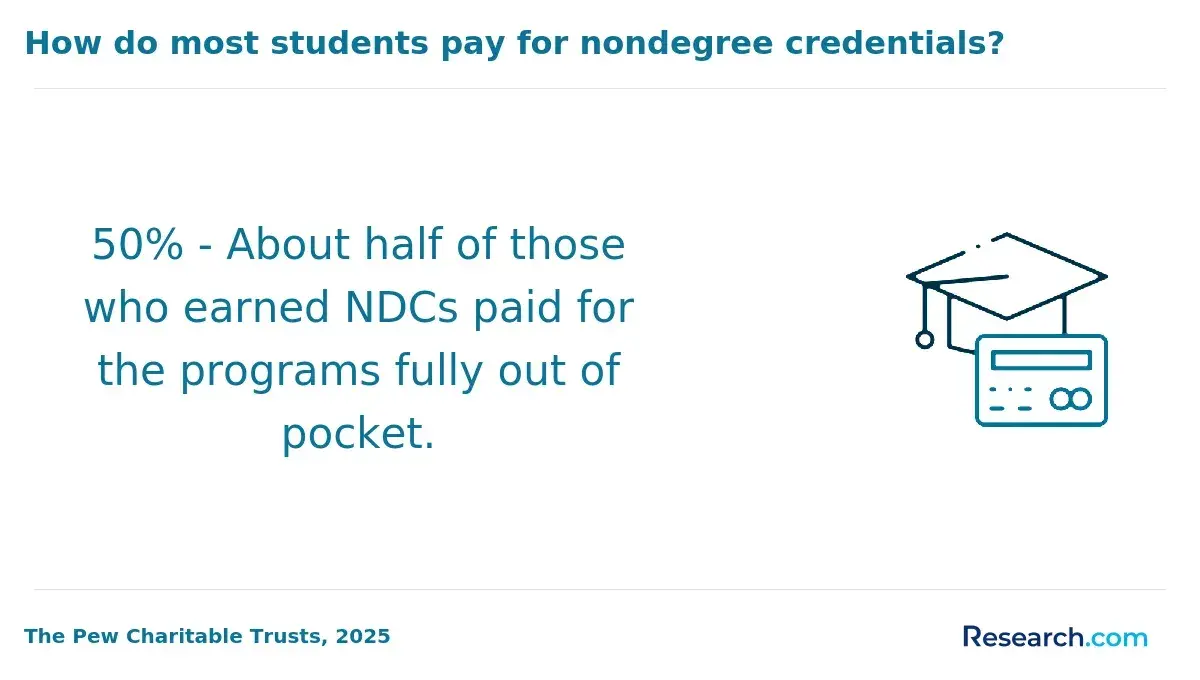
Cost is one of the biggest differences between the two pathways. PhD programs, especially full-time campus-based programs, are more likely to offer teaching or research assistantships, stipends, tuition remission, or grant-funded support. Professional doctorates are often designed around tuition revenue and working-adult enrollment, so students may rely more heavily on employer assistance, savings, or federal loans.
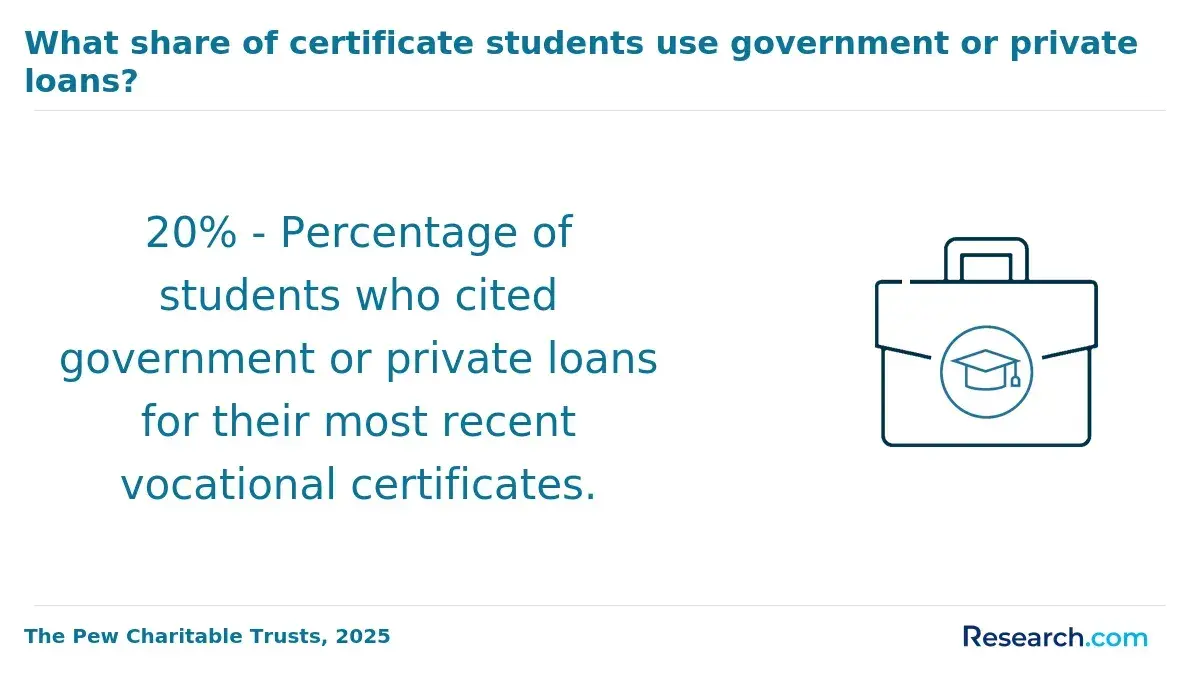
Federal borrowing costs also matter. For 2024-25, Federal Student Aid listed 8.08% for Direct Unsubsidized Loans for graduate and professional students and 9.08% for Grad PLUS Loans. That means a self-funded doctorate can become significantly more expensive over time if interest accrues while the student is still enrolled.
The table below explains the major cost categories to compare. It is more useful than comparing tuition alone because doctoral costs include time, travel, research expenses, and lost earnings.
| Cost factor | PhD pathway | Professional doctorate pathway |
| Tuition | May be waived or reduced in funded programs; unfunded programs can still be costly | Often charged per credit or term, with fewer full-funding options |
| Living expenses | May be difficult if the stipend is modest and full-time work is discouraged | May be easier to manage if the student remains employed |
| Research costs | Software, participant recruitment, conference travel, data collection, transcription | Applied site costs, project tools, travel, software, professional memberships |
| Opportunity cost | Can be high if leaving full-time employment | Can be lower if continuing employment, but workload may slow career progression temporarily |
| Funding sources | Assistantships, fellowships, grants, tuition remission, teaching | Employer tuition benefits, scholarships, payment plans, federal loans |
The better financial option depends on your funding package, not the degree name. A fully funded PhD may have a lower direct cost but a higher opportunity cost if you reduce employment. A professional doctorate may allow continued earnings but can be expensive if tuition is high and funding is limited.
Use this sequence to evaluate return on investment before enrolling.
- Calculate total tuition and required fees for the entire program, not just the first year.
- Add books, technology, residencies, travel, research tools, and dissertation or capstone costs.
- Estimate income lost if you must reduce work hours or leave your job.
- Subtract guaranteed funding, employer reimbursement, assistantships, and scholarships.
- Compare the remaining cost with realistic salary outcomes for your target occupation and region.
- Ask whether graduates in your intended career path report promotions, job changes, publications, or licensure progress after completing the degree.
What Careers Can You Pursue With a PhD vs Professional Doctorate in General Psychology?
Both degrees can support advanced careers, but they tend to point toward different professional identities. A PhD is commonly associated with research, teaching, and scholarly leadership. A professional doctorate is commonly associated with applied leadership, consulting, assessment, program evaluation, and organizational improvement.
Career options in general psychology are broad because the degree can connect to education, business, health systems, government, nonprofit work, user research, human resources, and behavioral science. However, some roles require additional licensure, postdoctoral experience, or specialized training beyond a general psychology doctorate.
The table below summarizes common career directions and which doctorate is usually the stronger fit. It does not mean employers will require only one degree type; it shows how each pathway usually aligns with the work.
| Career direction | Typical responsibilities | Stronger fit | Important caveat |
| University faculty member | Teach courses, publish research, mentor students, serve on committees | PhD | Tenure-track roles are competitive and often require publications |
| Research scientist | Design studies, analyze data, write reports, manage grants or research teams | PhD | Methodological depth and publication record matter |
| Program evaluator | Assess whether programs work, measure outcomes, recommend improvements | Either | Strong statistics and applied methods are valuable |
| Organizational consultant | Improve leadership, teams, training, selection, engagement, or culture | Professional doctorate or PhD | Business experience and measurable outcomes can matter as much as the degree |
| Behavioral science specialist | Use psychology to improve policy, products, health communication, or decision-making | Either | Data, experimentation, and communication skills are essential |
| Clinical, counseling, or school psychologist | Assess, diagnose, treat, or support clients or students | Only if licensure-aligned | A general psychology doctorate alone may not meet licensure requirements |
Some students use master's-level preparation to test a specialty before committing to a doctorate. If your interests lean toward assessment and treatment, comparing an online clinical psychology masters may help clarify whether you need a licensure-focused clinical route instead of a general psychology doctorate.
Employers increasingly value doctoral graduates who can translate evidence into decisions. That means technical skills matter alongside the credential.
- Research design and statistical analysis for roles involving studies, evaluation, assessment, or data interpretation.
- Scholarly writing and presentation skills for academic, policy, consulting, and executive audiences.
- Ethics and cultural competence for any role involving people, organizations, communities, or sensitive data.
- Program evaluation and measurement skills for nonprofit, education, health, and government settings.
- Leadership and stakeholder communication for applied doctorate graduates moving into senior roles.
Which Pays More: a PhD or Professional Doctorate in General Psychology?
Neither degree automatically pays more. Salary depends on the occupation, industry, location, experience, licensure, management responsibility, publication record, and whether the role is academic, clinical, corporate, government, or nonprofit. The degree can open doors, but the job function usually drives compensation.
BLS May 2024 wage data is useful because it separates psychology-related occupations rather than treating every doctorate holder as one group. The table below shows selected U.S. roles that may be relevant to doctoral-level psychology graduates, although not all require a doctorate.
| Occupation | May 2024 median annual wage | Degree pathway connection | How to interpret the figure |
| Psychologists, all other | $117,580 | Often relevant to doctoral-level research, applied, government, or specialized psychology roles | This category is broad and may include varied settings and responsibilities |
| Industrial-organizational psychologists | $147,420 | Relevant to applied research, workplace assessment, consulting, and organizational strategy | Roles may require strong quantitative and business skills; some positions accept master's-level preparation |
| Clinical and counseling psychologists | $96,100 | Relevant only when the doctorate meets licensure and supervised training requirements | A general psychology doctorate may not qualify for these roles without a licensure-aligned program |
| Psychology teachers, postsecondary | $82,140 | Commonly aligned with PhD training and academic publication | Pay varies by institution type, rank, contract length, and tenure status |
| Human resources managers | $140,030 | Relevant to applied psychology, leadership, training, assessment, and organizational consulting | Management experience and business results may outweigh degree title |
The strongest salary case for a PhD usually appears when the student targets research-intensive, academic, psychometric, government, or high-level behavioral science roles. The strongest salary case for a professional doctorate usually appears when the student is already in a field where the doctorate supports advancement into senior leadership, consulting, administration, or specialized applied expertise.
Salary comparisons can be misleading in forensic, clinical, or child-focused psychology because specialization and licensure matter. For example, readers researching how much do forensic psychologists make should compare the actual role, such as evaluator, consultant, researcher, or licensed clinician, rather than assuming a general psychology doctorate leads to one fixed salary.
A practical way to compare salary outcomes is to work backward from the job postings you want. Look for required degree, preferred specialization, license language, years of experience, methods skills, salary range, and whether the employer values publications, applied projects, or management experience.
What Is the Job Outlook for PhD and Professional Doctorate Graduates in General Psychology?
The job outlook for doctoral-level psychology graduates is generally positive but uneven by specialty. BLS employment projections for 2024 to 2034 show psychologist employment growing 6%, which is faster than the average for all occupations. For readers, this means the field is expanding, but competition can still be strong for faculty jobs, funded research positions, and desirable clinical or consulting roles.
Demand is being shaped by several current trends. Employers want people who can interpret behavioral data, evaluate programs, support workforce well-being, design evidence-based interventions, and explain human behavior in technology-rich environments. AI is also changing the field by increasing demand for professionals who understand human judgment, bias, assessment, ethics, and data interpretation.
The table below highlights where demand may differ for PhD and professional doctorate graduates. It can help you decide whether your preferred job market rewards research depth, applied leadership, or both.
| Market area | Why demand exists | Degree fit | What strengthens employability |
| Higher education | Need for instructors, researchers, mentors, and curriculum leaders | PhD is usually stronger | Publications, teaching record, grants, research specialization |
| Behavioral and social science research | Organizations need evidence on behavior, learning, health, work, and decision-making | PhD or research-heavy professional doctorate | Statistics, research design, data tools, writing samples |
| Workplace and organizational consulting | Employers need help with retention, leadership, assessment, training, and culture | Either, often professional doctorate for applied leaders | Business experience, measurable outcomes, assessment knowledge |
| Education and child-serving systems | Schools and agencies need expertise in learning, development, behavior, and evaluation | Either, depending on role | Developmental knowledge, evaluation skills, state credential awareness |
| Health and human services administration | Programs need evaluation, quality improvement, staff training, and behavioral expertise | Professional doctorate or applied PhD | Leadership, ethics, program evaluation, interdisciplinary communication |
Students interested in developmental or school-adjacent careers should be careful to distinguish general psychology from licensure or specialist preparation. Exploring child psychology master's programs can be a useful step before choosing a doctoral path focused on children, adolescents, or families.
The best job outlook belongs to candidates who combine doctoral study with marketable evidence: publications, applied projects, evaluation reports, data portfolios, teaching experience, consulting results, supervised clinical hours when required, or leadership achievements.
How Do Accreditation, Licensure, and Employer Recognition Differ for PhD vs Professional Doctorate in General Psychology?
Accreditation, licensure, and employer recognition can determine whether your doctorate actually supports your intended career. Institutional accreditation matters for federal financial aid, transferability, employer recognition, and academic credibility. Programmatic accreditation matters most when the doctorate is intended to lead to regulated practice, such as clinical, counseling, or school psychology.
A general psychology doctorate is often not designed for psychologist licensure. If your goal is to diagnose, treat, provide psychotherapy, conduct court-ordered evaluations, or work independently as a licensed psychologist, you need to verify that the program meets your state's requirements before enrolling. Requirements commonly include specific coursework, practicum, internship, supervised postdoctoral hours, exams, and board approval.
The table below separates the recognition issues that applicants often confuse. This distinction can prevent expensive mistakes.
| Issue | Why it matters | What to verify |
| Institutional accreditation | Supports legitimacy of the university and access to federal aid | Recognized accreditor, school standing, program location, modality rules |
| Programmatic accreditation | May be required or strongly preferred for licensure-focused psychology careers | Whether the specific doctoral program is accredited for the intended practice area |
| State licensure alignment | Licensure is controlled by state boards, not by degree title alone | Coursework, supervised hours, internship, exams, residency, degree type |
| Employer recognition | Employers may prefer certain degrees for research, faculty, leadership, or clinical roles | Job postings, alumni outcomes, faculty networks, internship partnerships |
| Online or hybrid format | Some roles or boards may scrutinize supervised training and residency components | Residency requirements, practicum placement support, state authorization |
Employer recognition also depends on context. A PhD may carry more weight in academic hiring because it signals research training. A professional doctorate may be highly respected in applied settings when it is connected to strong professional experience, measurable projects, and leadership outcomes.
Use this checklist before applying to avoid accreditation and licensure red flags.
- Confirm that the university is institutionally accredited by a recognized accreditor.
- Ask whether the specific doctoral program is designed for licensure or non-licensure outcomes.
- Check your state psychology board's written requirements instead of relying only on admissions claims.
- Ask how the program supports practicum, internship, supervision, or applied project placements if those are required for your goal.
- Review recent graduate outcomes by role, not just broad employment claims.
- Be cautious of programs that imply you can become a licensed psychologist without clearly explaining accreditation, supervised hours, and state approval.
Is a PhD or Professional Doctorate in General Psychology Worth It for Your Career Goals?
A PhD or professional doctorate in General Psychology can be worth it when the credential directly supports a career goal that truly requires doctoral-level expertise. It is less likely to be worth it if you choose the degree mainly for status, assume it will automatically raise your salary, or enroll without checking licensure and funding details.
Choose a PhD if your long-term goal depends on research credibility. This includes tenure-track teaching, academic publishing, research leadership, psychometrics, policy research, advanced data-driven behavioral science, or doctoral-level roles where original scholarship is central.
Choose a professional doctorate if your goal is to apply psychology at a higher level in a professional setting. This may include consulting, program evaluation, organizational leadership, education leadership, human-services administration, workforce development, or applied behavioral strategy.
The table below summarizes which path is likely to fit different priorities. Use it as a decision filter, not as a universal rule.
| Your priority | Better-fitting path | Why |
| I want to become a professor or publish original research | PhD | Research training, dissertation, faculty mentorship, and publication expectations align with academic hiring |
| I want to keep working while earning a doctorate | Professional doctorate | Many programs are structured for working adults, though workload remains demanding |
| I need the lowest possible direct tuition cost | Often PhD | Funded PhD programs may offer tuition remission and stipends, but admission can be highly competitive |
| I want applied leadership or consulting roles | Professional doctorate or applied PhD | Employers may value practical projects, leadership history, and evidence of outcomes |
| I want psychologist licensure | Licensure-aligned doctorate only | Degree title is less important than accreditation, supervised training, internship, and state board approval |
| I am unsure about my specialty | Wait or pursue targeted experience first | A doctorate is too costly and time-intensive to use as career exploration |
The biggest red flags are not always obvious. Many students make expensive decisions because they compare degree titles instead of outcomes.
- Assuming a PhD is always more valuable than a professional doctorate instead of asking which one fits the target job.
- Choosing a general psychology doctorate when the desired role actually requires clinical, counseling, school, or specialty licensure.
- Comparing tuition only and ignoring fees, travel, interest, lost earnings, and dissertation delays.
- Expecting a doctorate to guarantee higher pay without checking salary ranges for specific occupations and regions.
- Ignoring faculty fit, capstone support, data access, internship expectations, or graduate placement history.
- Choosing an online program without verifying state authorization, residency rules, and employer acceptance.
A smart next step is to create a one-page decision matrix with your target job, required credential, expected total cost, funding, time commitment, licensure status, and evidence of graduate outcomes. If the program cannot clearly connect to your target career, it may not be the right investment yet.
Other Things You Should Know About General Psychology
Not automatically. In most states, the title "psychologist" is regulated. You generally need to meet state licensure requirements, which may include an approved doctoral program, supervised experience, internship, exams, and board approval.
No. The challenge is different. A PhD is usually more research-intensive, while a professional doctorate often requires applying evidence to complex real-world problems while balancing work, writing, and project deadlines.
Possibly, especially at some teaching-focused colleges, online programs, or professional schools. However, tenure-track university roles often prefer or require a PhD, publications, and a strong research agenda.
It can help if you need stronger psychology coursework, research experience, specialization, or career clarity. A master's may also help you decide whether doctoral study is necessary for your target role.
References
- PsyD vs. PhD in Psychology https://onlinecounselingprograms.com/mental-health-careers/how-to-become-psychologist/psyd-vs-phd-in-psychology/
- Doctorate in Psychology | Psychology Degree Guide https://psychologydegreeguide.org/degree/doctorate-degree/
- What Do Psychologists Earn? Highest Paying Psychology Jobs | Walbrook https://www.walbrook.ac.uk/subjects/psychology/psychologist-salaries-highest-paying-jobs/
- What Is A Psy.D. Vs. Ph.D. In Psychology? | Psychology.org https://www.psychology.org/resources/differences-between-psyd-and-phd-in-psychology/
- General Requirements https://abpp.org/application-information/general-requirements/
- PhD vs. Professional Doctorate: Is there a difference? https://www.applykite.com/blog/phd-guide-phd-vs-postdoc
- How long is a PhD program: Duration and key factors https://vinuni.edu.vn/how-long-is-a-phd-program/
- How Long Does It Take to Get a PhD After a Master's Degree? https://streamlinedai.app/blog/how-long-phd-after-masters
- PhD in Clinical Psychology vs. PsyD: Which Doctoral Degree Is Right for You? https://paloaltou.edu/resources/blog/phd-clinical-psychology-vs-psyd-which-doctoral-degree-right-you