
2027 PhD vs Professional Doctorate in Curriculum & Instruction: Key Differences, Careers, and Salary Outcomes

Co-Founder and Chief Data Scientist
Choosing between a PhD and a professional doctorate in Curriculum & Instruction is really a career-direction decision. The Bureau of Labor Statistics reported a May 2024 median wage of $74,720 for instructional coordinators, but doctoral paths can also lead toward professor, research, district leadership, policy, or learning design roles. This guide is for educators, curriculum specialists, and academic leaders comparing research-focused and practice-focused doctorates. You will learn how the degrees differ in coursework, dissertation or capstone expectations, funding, time commitment, career options, and salary context so you can choose the better fit.
Key Things You Should Know
- A PhD in Curriculum & Instruction is usually best for people who want to produce original research, teach future educators, publish scholarship, or compete for tenure-track faculty and education research roles.
- A professional doctorate, commonly an EdD in Curriculum & Instruction or Educational Leadership with a curriculum concentration, is usually best for experienced practitioners who want to solve applied problems in schools, districts, higher education, nonprofits, or learning organizations.
- Salary depends more on occupation and setting than degree label: BLS May 2024 median pay was $74,720 for instructional coordinators, $83,980 for postsecondary teachers overall, and $127,090 for training and development managers.
What Is the Difference Between a PhD and a Professional Doctorate in Curriculum & Instruction?
The main difference is purpose. A PhD in Curriculum & Instruction is a research doctorate designed to prepare scholars who study teaching, learning, curriculum theory, assessment, equity, teacher education, and instructional policy. A professional doctorate is an applied doctorate designed to help experienced educators use research to improve practice in real organizations.
In the U.S., the most common professional doctorate in this field is the EdD, though some universities use titles such as Doctor of Education in Curriculum and Teaching, Doctor of Education in Curriculum and Instruction, or Doctor of Education in Educational Practice. The degree title matters less than the program's design, faculty expertise, accreditation, research expectations, and career outcomes.
The comparison below summarizes the practical decision points most applicants should review before choosing a doctoral pathway.
| Comparison point | PhD in Curriculum & Instruction | Professional doctorate in Curriculum & Instruction |
| Primary purpose | Create original research and contribute to academic knowledge | Apply research to improve curriculum, instruction, assessment, or leadership practice |
| Best fit | Aspiring professors, researchers, policy analysts, and scholars | Curriculum directors, school or district leaders, instructional designers, consultants, and senior practitioners |
| Typical final project | Traditional dissertation based on original research | Dissertation in practice, applied capstone, improvement study, or action research project |
| Program culture | Research apprenticeship, faculty mentorship, theory, methods, publication | Cohort model, leadership practice, applied inquiry, workplace problem-solving |
| Funding pattern | More likely to offer assistantships or tuition remission, especially full-time on campus | More often self-funded or employer-supported, especially for part-time and online students |
| Career signal | Signals preparation for research, scholarship, and university teaching | Signals advanced professional expertise and evidence-based leadership practice |
A helpful shortcut is to ask whether you want your doctoral work to be judged mainly by its contribution to scholarship or by its usefulness in changing practice. The PhD is usually stronger for academic research careers; the professional doctorate is usually stronger for working educators who want to stay close to schools, districts, or learning organizations.
How Do PhD and Professional Doctorate Curricula, Research, and Capstone Requirements Differ in Curriculum & Instruction?
Both doctorate types cover advanced curriculum design, learning theory, assessment, equity, policy, and research methods. The difference is the depth and purpose of the research training. PhD students typically prepare to design studies that can be published and generalized; professional doctorate students typically prepare to use research to diagnose and improve a specific educational problem.
Curriculum varies by university, but most programs include a recognizable set of doctoral components. This table shows how those components usually differ by degree type.
| Program component | PhD emphasis | Professional doctorate emphasis |
| Research methods | Advanced qualitative, quantitative, mixed-methods, measurement, and sometimes statistics sequences | Applied research, program evaluation, action research, improvement science, and data-informed decision-making |
| Theory | Deep engagement with curriculum theory, learning sciences, sociocultural theory, policy theory, and scholarly debates | Theory used as a framework for solving workplace or system-level instructional problems |
| Residency or seminar work | Often includes research seminars, teaching apprenticeships, colloquia, and publication-oriented mentoring | Often includes cohort seminars, leadership labs, applied problem-of-practice studios, or short residencies |
| Comprehensive exams | May test research literature, theory, methods, and field specialization | May test professional knowledge, applied inquiry, leadership, and evidence-based decision-making |
| Final doctoral project | Original dissertation intended to advance knowledge in the field | Applied dissertation, capstone, or dissertation in practice designed to improve a real educational setting |
The dissertation-versus-capstone distinction is one of the most important decision points. A PhD dissertation might examine how teachers interpret culturally responsive curriculum reforms across multiple districts. A professional doctorate capstone might redesign a district's literacy intervention process, evaluate implementation data, and recommend a scalable improvement plan.
Before applying, compare the final project requirements closely. The names can be misleading, so focus on what students actually produce and how the project is evaluated.
- Choose a PhD-style dissertation if you want to build a research agenda, publish in academic journals, teach research methods, or apply for faculty positions.
- Choose an applied capstone or dissertation in practice if you want to solve a defined instructional, curricular, equity, assessment, or leadership problem in a school, district, university, company, or nonprofit setting.
- Be cautious with programs that describe a "dissertation" but provide little detail about faculty advising, research design support, data access, ethics review, or completion milestones.
What Are the Admissions Requirements for a PhD vs Professional Doctorate in Curriculum & Instruction?
Admissions requirements overlap, but selection priorities differ. PhD admissions committees usually look for research fit, scholarly potential, writing ability, and alignment with faculty expertise. Professional doctorate committees usually look for meaningful professional experience, leadership potential, and a strong problem of practice.
The following table explains the admissions factors that commonly separate the two pathways.
| Requirement | PhD in Curriculum & Instruction | Professional doctorate in Curriculum & Instruction |
| Prior degree | Usually a master's degree in education or a related field; some programs admit strong bachelor's-level applicants into longer doctoral tracks | Usually a master's degree in education, leadership, curriculum, teaching, instructional design, or a related field |
| Professional experience | Helpful but not always required; research experience may matter more | Often expected, especially for cohort-based EdD programs designed for working professionals |
| Writing sample | Often heavily weighted because it demonstrates scholarly readiness | Often used to evaluate professional reasoning, evidence use, and communication skills |
| Statement of purpose | Should identify research interests, faculty fit, and possible scholarly questions | Should identify a practice problem, leadership goals, and the setting where the work may apply |
| GRE | Many education doctorates are test-optional, but policies vary by university | Often test-optional, especially in practitioner-oriented programs |
| Licensure | Usually not required unless tied to a specialized pathway | May be relevant if the program is connected to superintendent, principal, or administrative licensure |
Applicants should not treat the PhD as simply "more academic" and the professional doctorate as "easier." Both require advanced writing, research literacy, and persistence. The better question is whether your application tells a coherent story for the degree type you are pursuing.
Use this admissions checklist to evaluate fit before you spend time and money applying.
- Identify whether your goal is scholarship, faculty work, applied leadership, curriculum administration, or learning-system improvement.
- Review faculty profiles and recent dissertation or capstone titles to see whether the program supports your interests.
- Ask whether students are admitted to work with a specific advisor, a research group, or a cohort model.
- Confirm whether the program expects you to bring access to a school, district, organization, or dataset for applied research.
- Check whether licensure-related coursework is included, optional, or not available.
How Long Does a PhD vs Professional Doctorate in Curriculum & Instruction Take, and Can You Work While Studying?
A PhD in Curriculum & Instruction commonly takes about four to seven years, depending on funding, research design, dissertation progress, and whether the student attends full time. A professional doctorate often takes about three to five years, especially when designed for part-time working educators, but timelines still vary by credit load and capstone complexity.
Time-to-degree matters because it affects opportunity cost. A funded PhD may reduce tuition burden but require full-time enrollment, assistantship duties, and limited outside work. A professional doctorate may allow continued employment, but the student may pay more out of pocket and carry a heavy workload for several years.
The table below compares the practical time and workload differences that often affect adult students and working educators.
| Factor | PhD pathway | Professional doctorate pathway |
| Common enrollment pattern | Full-time study is common in funded research programs | Part-time, online, hybrid, weekend, or cohort formats are common |
| Work compatibility | Possible, but full-time outside work can slow dissertation progress and may conflict with assistantship expectations | Often designed for full-time educators, administrators, and learning professionals |
| Biggest timeline risk | Dissertation scope, data collection delays, publication expectations, or advisor mismatch | Balancing job demands with capstone milestones, organizational access, and implementation timelines |
| Best scheduling fit | Students who can prioritize research training and academic apprenticeship | Professionals who need a structured path while continuing their careers |
If you plan to work while studying, do not rely only on the advertised program length. Ask how many students finish on time and what happens when a job change, school leadership transition, or data-access issue affects the dissertation or capstone.
- For PhD applicants, ask how assistantship hours, teaching assignments, conference travel, and dissertation expectations affect weekly workload.
- For professional doctorate applicants, ask whether coursework is asynchronous, synchronous, hybrid, or residency-based and how group projects are scheduled.
- For both pathways, ask whether students can pause enrollment, change research sites, or extend the final project without major financial penalties.
How Much Does a PhD vs Professional Doctorate in Curriculum & Instruction Cost, and Which Offers Better Funding?
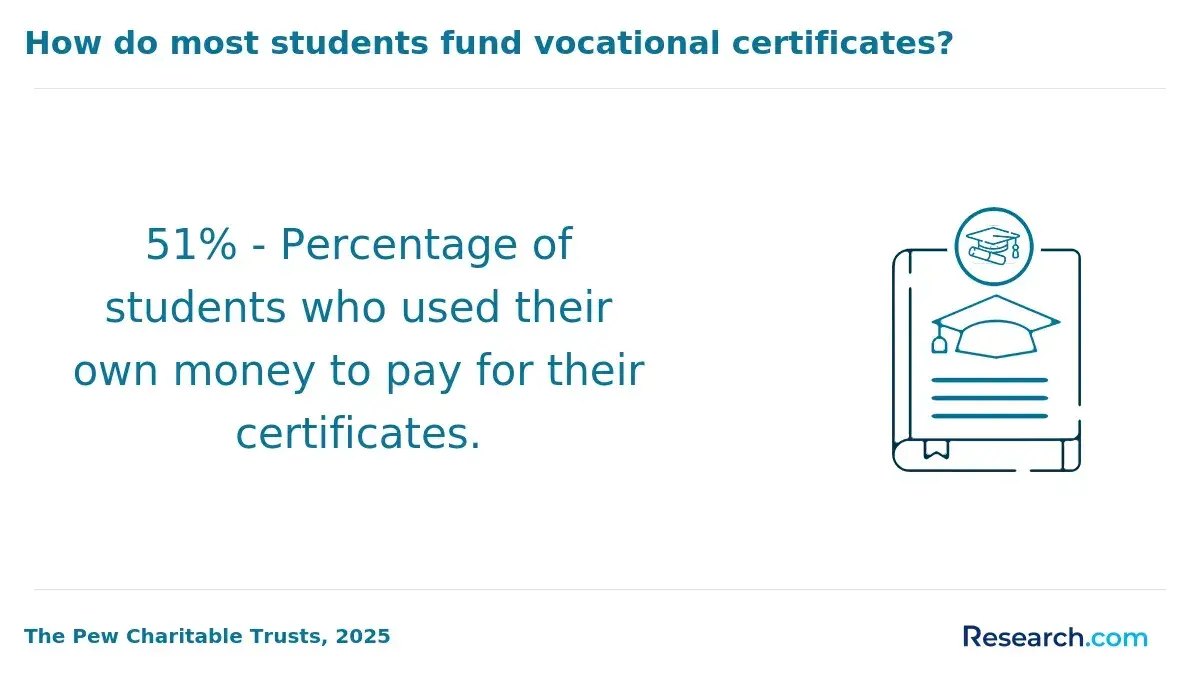
Cost can be the deciding factor. PhD programs, especially at research universities, are more likely to offer assistantships, fellowships, tuition remission, or stipends to full-time students. Professional doctorates—as well as other flexible graduate programs like an online masters in finance—are more often priced for working adults and may rely on personal funds, employer tuition benefits, scholarships, federal loans, or payment plans.
One current federal aid benchmark is the graduate Direct Unsubsidized Loan annual limit of $20,500. That figure is important because many doctoral students whose tuition and living costs exceed that amount may need savings, employer support, scholarships, assistantship funding, or Graduate PLUS loans to cover the remaining cost of attendance.
When comparing programs, look beyond tuition per credit. A lower published tuition rate may not be cheaper if the program requires more credits, travel, residencies, dissertation continuation fees, technology fees, or unpaid time away from work.
- Tuition and required fees by credit hour or semester
- Total credits required after transfer or master's-level credit review
- Residency, travel, lodging, parking, technology, and course-material costs
- Dissertation or capstone continuation fees if the final project takes longer than expected
- Lost income or reduced work hours for full-time study, internships, research travel, or assistantship restrictions
- Employer tuition reimbursement limits, service commitments, or repayment clauses if you leave your job
The funding comparison is not simply "PhD is cheaper" or "EdD is more expensive." A fully funded PhD can be financially attractive, but it may delay full-time career advancement. A professional doctorate can have a higher sticker price, but keeping a full-time salary may make the total trade-off more manageable for some students.
| Funding factor | PhD in Curriculum & Instruction | Professional doctorate in Curriculum & Instruction |
| Assistantships | More common, especially in full-time campus programs | Less common, though some programs offer limited scholarships or graduate employment |
| Tuition remission | More likely when tied to assistantships or fellowships | Less common; discounts may be available for partner districts or alumni |
| Employer support | Possible but less central to many PhD models | Often important for working educators and administrators |
| Federal loans | Available to eligible students, but borrowing depends on cost of attendance and aid package | Common financing source for self-funded doctoral students |
| Financial risk | Lower tuition risk when funded, but higher opportunity-cost risk if full-time study reduces earnings | Higher tuition exposure in some programs, but lower income-interruption risk if the student remains employed |
Avoid the common mistake of comparing only annual tuition. The better comparison is total net cost, debt at graduation, years of reduced income, and whether the degree is needed for your target role.
What Careers Can You Pursue With a PhD vs Professional Doctorate in Curriculum & Instruction?
Both degrees can support advanced education careers, but they send different signals. The PhD points most directly toward research, university teaching, scholarly publishing, and policy analysis. The professional doctorate points most directly toward applied leadership, curriculum improvement, instructional systems, and senior practitioner roles.
The degree alone rarely determines career access. Employers also evaluate teaching experience, leadership history, publications, research methods skills, licensure, grant experience, technology skills, and evidence of measurable impact.
This table links common career paths to the doctorate type that often aligns best with the role's expectations.
| Career path | Typical responsibilities | Often stronger fit |
| Tenure-track professor in curriculum studies or teacher education | Teach graduate courses, publish research, advise doctoral students, secure grants, serve on committees | PhD |
| Education researcher or policy analyst | Design studies, analyze data, evaluate programs, write reports, advise agencies or organizations | PhD, though an applied doctorate can fit some evaluation roles |
| Curriculum director or instructional coordinator | Lead curriculum adoption, align standards, coach educators, evaluate instructional programs | Professional doctorate, though a PhD can also qualify |
| District or school system leader | Guide instructional strategy, lead improvement initiatives, supervise academic programs | Professional doctorate, especially with required administrative licensure |
| Higher education administrator | Lead academic programs, assessment, faculty development, student learning initiatives, or accreditation work | Either, depending on research versus administrative focus |
| Learning and development leader | Design workforce learning systems, evaluate training, lead instructional design teams | Professional doctorate, especially with learning technology or adult learning experience |
| Consultant in curriculum, assessment, equity, or learning design | Advise schools, districts, publishers, nonprofits, or education companies | Either, depending on client needs and evidence of expertise |
Current hiring trends make skill alignment especially important. AI-assisted lesson planning, learning analytics, digital curriculum platforms, competency-based education, and assessment reform have increased demand for leaders who can evaluate tools critically rather than adopt them because they are new. Doctoral students who combine curriculum expertise with data literacy, evaluation design, and ethical technology use may be more competitive across school and non-school settings.
To choose the stronger career path, map the doctorate to the work you want to do every week.
- Choose a PhD if your ideal week includes reading research, designing studies, writing articles, presenting at conferences, mentoring graduate students, and competing for academic or research roles.
- Choose a professional doctorate if your ideal week includes leading curriculum teams, solving implementation problems, coaching educators, evaluating programs, managing change, and improving student or organizational outcomes.
- Consider either pathway if you want consulting, higher education administration, assessment leadership, or education nonprofit work, but verify which credentials employers in your target niche prefer.
Which Pays More: a PhD or Professional Doctorate in Curriculum & Instruction?
Neither doctorate automatically pays more. Salary outcomes depend on the job, sector, location, experience, leadership scope, collective bargaining agreements, institutional type, and whether the role rewards research productivity or administrative responsibility.
BLS May 2024 wage data shows why occupation matters more than degree title. Training and development managers had a median annual wage of $127,090, which was higher than the median for postsecondary teachers overall at $83,980 and instructional coordinators at $74,720. For readers, the takeaway is not that one path is "better," but that leadership, management scope, industry, and institutional setting can change pay more than the doctoral label itself.
The table below gives a practical salary-context view for common doctorate-related roles. These are occupational medians, not guaranteed earnings for doctorate holders.
| Role category | Relevant BLS May 2024 median wage | Degree fit and salary interpretation |
| Instructional coordinators | $74,720 | Often aligned with professional doctorate graduates in curriculum leadership; pay varies by district, state, and bargaining structure |
| Postsecondary teachers overall | $83,980 | Often aligned with PhD graduates pursuing faculty roles; salaries vary widely by discipline, institution type, rank, and tenure status |
| Education administrators, kindergarten through secondary | $104,070 | May fit professional doctorate graduates with administrative credentials and leadership experience |
| Postsecondary education administrators | $103,960 | Can fit either doctorate, especially for academic affairs, assessment, faculty development, and program leadership roles |
| Training and development managers | $127,090 | May fit curriculum professionals moving into corporate, nonprofit, healthcare, government, or workforce learning leadership |
When estimating return on investment, avoid comparing your current salary with a national median and assuming the degree will close the gap. A better approach is to identify target job postings, required credentials, preferred qualifications, internal promotion rules, and local salary schedules.
- List three roles you want within five to seven years after graduation.
- Check whether those roles require a doctorate, prefer a doctorate, or mainly require licensure and leadership experience.
- Compare local salary ranges, not only national averages.
- Estimate total net program cost, including debt, interest, fees, travel, and lost income.
- Ask whether the degree creates access to roles you could not realistically obtain with a master's degree or a foundational credential like a project manager bachelor degree plus experience.
What Is the Job Outlook for PhD and Professional Doctorate Graduates in Curriculum & Instruction?
The job outlook is mixed because Curriculum & Instruction doctorates lead to several labor markets rather than one occupation. University faculty roles can be competitive, especially tenure-track positions. Applied leadership roles—or non-academic leadership paths supported by credentials like an online MBA in operations management—may be more accessible for candidates with strong school, district, instructional design, assessment, or organizational experience.
BLS projections for 2024 to 2034 show moderate demand in several related areas, with postsecondary teachers projected to grow faster than the average for all occupations and instructional coordinators projected to grow more slowly. This matters because a PhD may align with a growing but highly competitive academic market, while a professional doctorate may align with applied roles that depend heavily on local budgets, district priorities, and leadership openings.
Several trends now influence both paths. Schools and higher education institutions are under pressure to demonstrate learning outcomes, use evidence-based interventions, respond to teacher shortages, evaluate digital tools, and improve equity in curriculum access. At the same time, AI-enabled content generation has made curriculum expertise more important, not less, because organizations need leaders who can judge quality, bias, accessibility, alignment, and assessment validity.
To improve career resilience, doctoral students should build skills that travel across roles and sectors.
- Advanced research literacy, including the ability to evaluate claims about curriculum products, AI tools, and intervention programs
- Data analysis and program evaluation skills that support evidence-based decision-making
- Change management and adult learning skills for coaching teachers, faculty, or workplace learning teams
- Equity-centered curriculum design and assessment knowledge
- Clear writing for scholarly, executive, policy, and practitioner audiences
The strongest candidates usually connect doctoral work to a visible portfolio: publications, conference presentations, program evaluations, curriculum redesign projects, grant work, assessment reports, or documented improvement initiatives.
How Do Accreditation, Licensure, and Employer Recognition Differ for PhD vs Professional Doctorate in Curriculum & Instruction?
Accreditation and licensure are separate issues. Institutional accreditation affects federal financial aid eligibility, transferability, employer recognition, and general academic legitimacy. Licensure affects whether you can hold certain regulated roles, such as principal, superintendent, or other administrative positions, depending on state rules.
For both a PhD and a professional doctorate, start by confirming that the university holds recognized institutional accreditation. Then check whether the specific education unit or licensure pathway has any state approval or specialized accreditation relevant to your career goal. Curriculum & Instruction doctorates do not automatically grant teacher, principal, or superintendent licensure.
The table below clarifies what to verify before enrolling.
| Issue | Why it matters | What to ask |
| Institutional accreditation | Supports legitimacy, federal aid eligibility, and broad employer recognition | Is the university accredited by a recognized institutional accreditor? |
| State approval for licensure | Required for some administrative or specialist credentials | Does this program meet requirements in the state where I plan to work? |
| Specialized education accreditation | May matter for employer confidence, school partnerships, or educator preparation pathways | Is the education school or relevant program reviewed by a specialized accreditor or state agency? |
| Program title and transcript wording | Employers may interpret PhD, EdD, and concentration titles differently | What exact degree and concentration will appear on the transcript? |
| Online or hybrid format | Usually acceptable when accredited, but some employers value residencies, fieldwork, or local networks | How are advising, research supervision, field projects, and professional networking delivered? |
Employer recognition varies by setting. Universities hiring tenure-track faculty may prefer or require a PhD or a doctorate with a strong research record. Districts and education organizations may value an EdD highly when it is paired with leadership results, licensure, and evidence of applied impact.
Red flags include vague accreditation claims, unclear licensure language, limited dissertation advising information, no public faculty credentials, and promises of quick salary increases. A reputable program should be willing to explain completion expectations, costs, accreditation status, licensure alignment, and graduate outcomes without pressure.
Is a PhD or Professional Doctorate in Curriculum & Instruction Worth It for Your Career Goals?
A doctorate in Curriculum & Instruction can be worth it when the degree is clearly connected to a career goal that requires or strongly values doctoral-level expertise. It may not be worth it if you mainly want a pay raise that your employer does not offer, if your target role requires licensure rather than a doctorate, or if the program cost would create debt that your likely career path cannot support.
The best choice depends on what you want the doctorate to help you do. Use the following framework to make the decision more concrete.
- Choose a PhD if your long-term goal is university faculty work, education research, scholarly publishing, grant-funded research, or policy analysis requiring advanced methodology.
- Choose a professional doctorate if your goal is district curriculum leadership, school system improvement, instructional design leadership, education consulting, higher education administration, or applied program evaluation—or if a business-focused executive path like an online masters in finance aligns better with your leadership goals.
- Pause before applying if you are unsure whether your target jobs require a doctorate, if you have not compared total costs, or if the program cannot show clear advising and completion support.
Common mistakes can make either degree less valuable. Applicants often assume the PhD is always more prestigious, the EdD is always easier, online programs are automatically less respected, or the highest tuition signals the strongest network. None of those assumptions is reliable on its own.
A better decision comes from asking specific questions before enrollment.
- What jobs have recent graduates obtained, and how closely do those jobs match my goals?
- Who would advise my dissertation or capstone, and what expertise do they have in my topic?
- What are the total costs through graduation, including fees, residencies, continuation credits, and likely borrowing?
- How many students finish the program, and what support exists when final projects stall?
- Will the program meet any state licensure or employer credential requirements I need?
- Can I produce work during the program that strengthens my portfolio, such as publications, evaluations, curriculum products, conference presentations, or leadership evidence?
In short, the PhD is the stronger investment for research-centered careers, while the professional doctorate is often the stronger investment for applied leadership careers. The right answer is the degree that matches your target role, preferred type of work, funding plan, and tolerance for time and debt.
Other Things You Should Know About Curriculum & Instruction
Yes. Many professional doctorates and some PhD programs offer online or hybrid formats. The key is to verify accreditation, advising quality, research support, residency requirements, and whether the format fits your career goals.
Not always. Many programs admit applicants from teaching, instructional design, higher education, nonprofit, training, or policy backgrounds. However, licensure may be required for specific school leadership roles, and requirements vary by state.
It can, especially for practitioner-focused, adjunct, clinical, or leadership programs. Tenure-track research faculty roles are more likely to prefer candidates with a strong research record, and in many cases a PhD is the more direct preparation.
Sometimes, but it depends on the university. Credits may not transfer cleanly because research sequences, residency rules, and final project requirements differ. Ask programs to review your transcript before assuming a switch will save time or money.
References
- Curriculum and Instruction https://www.albany.edu/education/programs/phd-curriculum-and-instruction
- Decoding the Differences: PhD in Education Vs Professional Doctorate in Education https://www.asiancollegeofteachers.ac/blog/18-Decoding-the-Differences-PhD-in-Education-Vs-Professional-Doctorate-in-Education-blog.php
- Benefits of Getting a Doctorate in Curriculum and Instruction - Graduate Programs for Educators https://www.graduateprogram.org/blog/benefits-of-getting-a-doctorate-in-curriculum-and-instruction/
- Exploring PhD Completion Rates: How Many Finish on Time? https://wallyboston.com/phd-completion-rates/
- PhD Student Salary Guide (2026) https://www.applykite.com/blog/phd-student-salary
- What Can You Do with a PhD in Education https://aituedu.org/what-can-you-do-with-a-phd-in-education/
- EdD vs PhD: What’s the Difference in Education Fields | USAHS https://www.usa.edu/blog/phd-vs-edd/
- Master's vs PhD/Doctorate Degrees - Key Differences - Wordvice https://wordvice.com/blog/masters-vs-phd-doctorate-degrees-key-differences/
- How to Get a Doctorate Degree in Education: A Complete Guide https://henryharvin.ae/blog/doctorate-degree-in-education/
- Determining your Readiness for a Doctoral Program https://stevenbaule.net/determining-your-readiness-for-a-doctoral-program/


