2027 Patient Readmission Prediction Capstones: What to Look for in a Data Science Master's

Co-Founder and Chief Data Scientist
A patient readmission prediction capstone can demonstrate more than modeling skill - but only if a master's program gives students a workable path to healthcare data, sound evaluation, and clinical context. This guide is for prospective data science students who want to build that kind of project, not merely take a healthcare elective. It explains what a credible capstone should contain and how to assess whether a program can support one before you enroll.
Key Things You Should Know
- Prioritize programs that permit a substantial capstone and can explain how students obtain appropriate data and healthcare-domain guidance; a healthcare course alone does not establish either.
- A strong project defines the readmission outcome and prediction time, prevents data leakage, tests performance on later patients, and examines calibration and subgroup results - not just accuracy.
- Data scientist employment is projected to grow 35% from 2025 to 2035, according to the U.S. Bureau of Labor Statistics (BLS), but that occupation-wide forecast does not establish demand for readmission specialists or predict an individual graduate's outcome.
What makes patient readmission prediction a strong data science capstone topic?
The topic has a defined decision point: at discharge, which patients might need additional follow-up? It requires students to connect statistical work to a plausible care-team action, while confronting incomplete records, differences between patient groups, and the consequences of false alerts. That combination makes it a stronger demonstration of healthcare data science than a model built solely to maximize a leaderboard score.
It is also a demanding choice. A hospital's electronic health record may not capture a readmission to another hospital, and a prediction is not evidence that an intervention will prevent one. Choose this topic if you want to demonstrate careful problem formulation and evaluation. If your prospective program offers neither usable data nor knowledgeable supervision, a different healthcare capstone may produce a more defensible portfolio piece.
What should a patient readmission prediction capstone project include?
The project should begin with a precise question, such as predicting an unplanned readmission within 30 days of discharge. Students must specify which discharges qualify, when predictions are made, which information exists at that moment, and how planned admissions or missing follow-up are handled. Otherwise, an apparently impressive result may not represent a usable discharge-time model.
A proposal should make the following deliverables explicit so an advisor can assess both technical quality and clinical relevance:
- Data permissions and provenance: Document access rules, permitted uses, patient-level privacy protections, missingness, and whether readmissions outside the available records can be observed.
- Reproducible baseline and model: Compare an interpretable baseline with any more complex approach, and retain code, feature definitions, and an environment specification that others can inspect within data-use restrictions.
- Leakage-resistant evaluation: Separate training from testing by time where feasible; prevent the same patient's records or post-discharge information from contaminating the test.
- Decision-relevant results: Report discrimination, calibration, and performance across relevant patient groups; explain the workload and missed cases at a proposed alert threshold.
- Implementation limits: State who might act on an alert, what validation would be required before use, and why a retrospective capstone is not a clinically approved tool.
Ask whether the program provides guidance on the ethical and operational use of models, rather than treating privacy as a final-slide disclaimer. Students comparing adjacent options can also examine AI master's curricula with ethical decision-making, while checking that any prospective curriculum addresses healthcare data specifically.
Which data science master's programs offer healthcare-focused capstone opportunities?
Look for programs that explicitly document a capstone, practicum, or independently supervised project and permit healthcare problems. A healthcare analytics concentration may be helpful, but its name does not establish that students can obtain patient data or choose readmission prediction. No particular institution's access to a readmission capstone should be assumed without its current project rules and data arrangements.
Program descriptions can be sorted into three useful categories: an open-topic capstone that allows a student to propose the project; a healthcare-partner practicum whose available projects depend on the partner; and a fixed-project program where students may have little topic choice. Ask for recent project examples, the approval process, available datasets, and whether a healthcare advisor can supervise the work. If the answer depends entirely on finding your own hospital partner, treat that as a substantial feasibility risk.
A broader artificial intelligence degree selection online comparison may help identify alternative programs, but an AI degree title is not evidence of healthcare partnerships or capstone flexibility. Check those features directly in each program's current catalog and with its project coordinator.
What coursework prepares students for readmission prediction projects?
Statistical learning, probability, data management, and programming provide the foundation. For this topic, courses in longitudinal or healthcare data, model evaluation, privacy, and responsible AI are particularly valuable. Clinical informatics instruction can help students understand what a discharge record represents and why an administratively available variable may not be available when the prediction is needed.
Examine assignments, not just course titles. A useful sequence lets students build data pipelines, handle missing or repeated patient records, evaluate predictions on data collected later, and communicate limitations to a nontechnical audience. Advanced modeling electives are less useful for this capstone if the program never teaches validation or data governance.
Applicants who need additional programming or mathematics preparation can investigate AI graduate admission through foundation courses. Foundation coursework may improve readiness, but only the individual data science program can confirm whether it satisfies a formal prerequisite.
How do online and campus-based data science master's programs compare?
Format matters chiefly because it can affect supervision, collaboration, and access - not because one format inherently produces a better model. This comparison identifies what to verify for a healthcare capstone rather than assuming every program in a format works alike.
| Capstone consideration | Online program | Campus-based program |
| Advisor and team access | May rely on scheduled remote meetings and distributed teamwork | May offer in-person meetings and local collaboration |
| Healthcare partnerships | May use remote partners or approved datasets; access must be confirmed | May offer local partners; a nearby hospital does not guarantee a student project |
| Work and scheduling | May suit employed students if meetings and project deadlines are manageable | May suit students who can attend in person and use campus resources |
For either format, ask whether remote students receive the same capstone approval, secure-data access, and advisor support as students on campus. Choose based on the actual project arrangements and your schedule, not the delivery label.
What admission requirements apply to healthcare data science master's programs?
Requirements vary by institution. Applicants should check the current admissions page for degree, mathematics, programming, test, and application-material requirements rather than assuming healthcare experience is mandatory - or sufficient on its own. Experience with clinical operations can strengthen a project proposal, but it does not replace quantitative preparation when a program requires it.
If you lack healthcare experience, explain how you will learn the domain and seek appropriate supervision. If you come from healthcare, show evidence that you can code, reason statistically, and evaluate a model. Before applying, ask whether students can propose their own capstone, when proposals are approved, and whether admission to a concentration changes access to healthcare projects.
How much do data science master's programs cost and how long do they take?
There is no reliable single price or duration for a readmission-focused path: tuition, required credits, pace, and project terms vary by program. Compare a current school-issued estimate for your residency and enrollment status with the time you can realistically devote to a substantial capstone. A shorter advertised completion time may leave less room to secure data or obtain project approval.
Request an itemized estimate so the programs you compare include the same kinds of costs:
- Tuition for all required credits, including any capstone credits
- Mandatory university and program fees
- Potential extra-term tuition if data access or project approval delays completion
- Travel or campus-attendance costs, if required
Employer assistance and financial aid may change your net cost, but eligibility and award amounts require individual verification. Online artificial intelligence master's value comparisons can offer a comparison framework; do not substitute an AI program's listed price or earnings discussion for a current, complete data science program estimate.
What accreditation should a healthcare data science master's program have?
Verify that the university holds recognized institutional accreditation. Then assess the master's program on its actual curriculum and capstone support; an institution's accreditation does not certify that its students can access clinical data or build a readmission model.
Check the institution's current accreditation status through the accreditor or an official U.S. government listing, and ask the school about any additional approvals relevant to your enrollment location. Do not mistake an employer partnership, a healthcare concentration, or a certificate badge for institutional accreditation.
What careers and salaries can patient readmission analytics support?
A carefully documented capstone can support applications for healthcare data scientist, clinical analytics, or health-system quality analytics roles. Its strongest portfolio value is evidence that you can define a clinical prediction problem, work within data restrictions, and explain a model's limits. Employers may still expect experience with their data systems and collaboration practices.
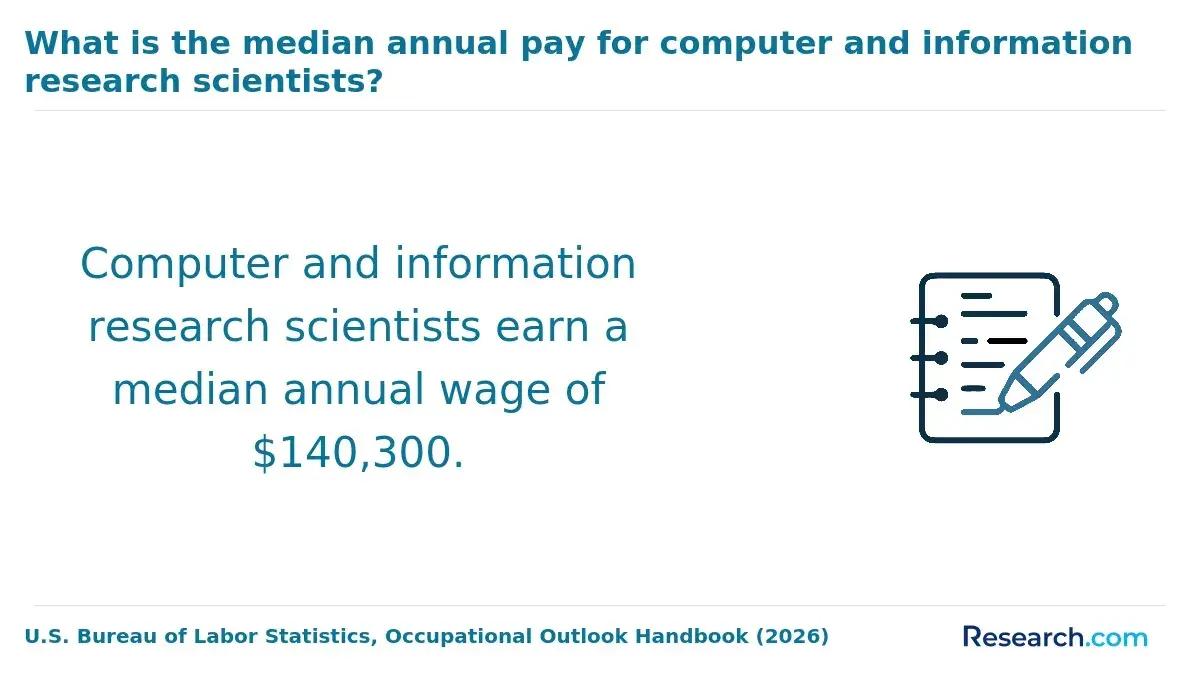
The BLS reports a $120,230 median annual wage for U.S. data scientists in May 2025. That is an occupation-wide median, not a salary estimate for healthcare specialists or new master's graduates. When judging whether the degree is worth its cost, compare roles you could plausibly pursue given your prior experience and location; a data science graduate salary guide by industry can provide additional context, but it cannot predict your offer or establish that the degree caused a salary change.
What job outlook and certifications apply to healthcare data scientists?
The BLS projects about 24,800 data scientist openings per year, on average, from 2025 to 2035 across U.S. industries. This suggests a broader market for the occupation, not a count of healthcare readmission jobs. A capstone is most transferable when it demonstrates methods useful beyond one hospital's dataset.
There is no universal certification that qualifies someone to build clinical prediction models. Employer preferences vary, and a certificate cannot replace evidence of data handling, validation, and responsible communication. If a job posting names a platform or credential, weigh its value against the time needed to complete a rigorous capstone and verify whether the employer actually requires it.
Other Things You Should Know About Data Science
Often you can discuss your methods and results, but your data-use agreement controls what you may share. Get approval before publishing code, sample records, figures, or model artifacts that could reveal protected information.
No. Deployment requires further validation, workflow review, privacy and security review, and monitoring. A retrospective result does not show that acting on alerts improves patient outcomes.
Possibly. Ask whether the program allows external co-advisors and who retains academic responsibility for grading, data permissions, and project scope.
Ask an advisor whether an approved public or synthetic dataset can support a clearly limited research question. Do not represent a classroom dataset as evidence that a model will perform in a live hospital.
References
- How CMS Measures the "30-Day All Cause Rehospitalization Rate" on the Hospital Compare Web Site https://www.ahrq.gov/patient-safety/settings/hospital/red/toolkit/redtool-30day.html
- Developing clinical prediction models: a step-by-step guide | nih.gov https://pmc.ncbi.nlm.nih.gov/articles/PMC11369751/
- Hosp. Readmission Reduction | cms.gov https://www.cms.gov/medicare/quality/value-based-programs/hospital-readmissions
- Understanding Item Analyses | Trends and Issues in Higher Ed https://www.washington.edu/assessment/scanning-scoring/scoring/reports/item-analysis/
- What is Data Leakage in Machine Learning? | IBM https://www.ibm.com/think/topics/data-leakage-machine-learning