2027 Outpatient Mental Health Nurse Workday: Patient Mix, Responsibilities, and Teamwork
Audited and Verified:
Our Editorial and Data Verification Process
Research.com uses government datasets, official education statistics and primary institutional information to support its career and degree guides. Our review process checks factual accuracy, occupational definitions, source dates and the requirements associated with the credentials discussed.
How This Article Was Fact-Checked
Our editorial team verifies salary estimates, employment projections, education requirements and program information against original data providers and official organizations. Salary figures are checked against the relevant occupational definitions and reporting periods. Information about licensure, accreditation and required in-person training is reviewed separately.
Fact-checked and verified on:

Co-Founder and Chief Data Scientist
Outpatient mental health nursing can look appealing if you want sustained patient relationships without working on an inpatient unit. But a clinic day is not simply a series of scheduled check-ins: medication follow-up, urgent calls, care coordination, and risk assessment may compete for attention. This guide is for nursing students and RNs considering the role. It shows how the workday changes across settings, what preparation employers may expect, and which questions to ask before choosing a program or accepting a job.
Key Things You Should Know
- An outpatient nurse's day typically combines scheduled visits with telephone triage, medication-related work, documentation, and unexpected safety concerns; a full appointment schedule does not capture the whole workload.
- Patient mix varies substantially: one clinic may emphasize depression and anxiety, while another serves people with serious mental illness, substance use disorders, or complex medical needs.
- An RN role generally requires an active RN license, not an MSN or nurse practitioner credential. An ADN commonly takes about two years of full-time nursing study and a traditional BSN about four years, though prerequisites and individual timelines vary.
What does an outpatient mental health nurse do during a typical workday?
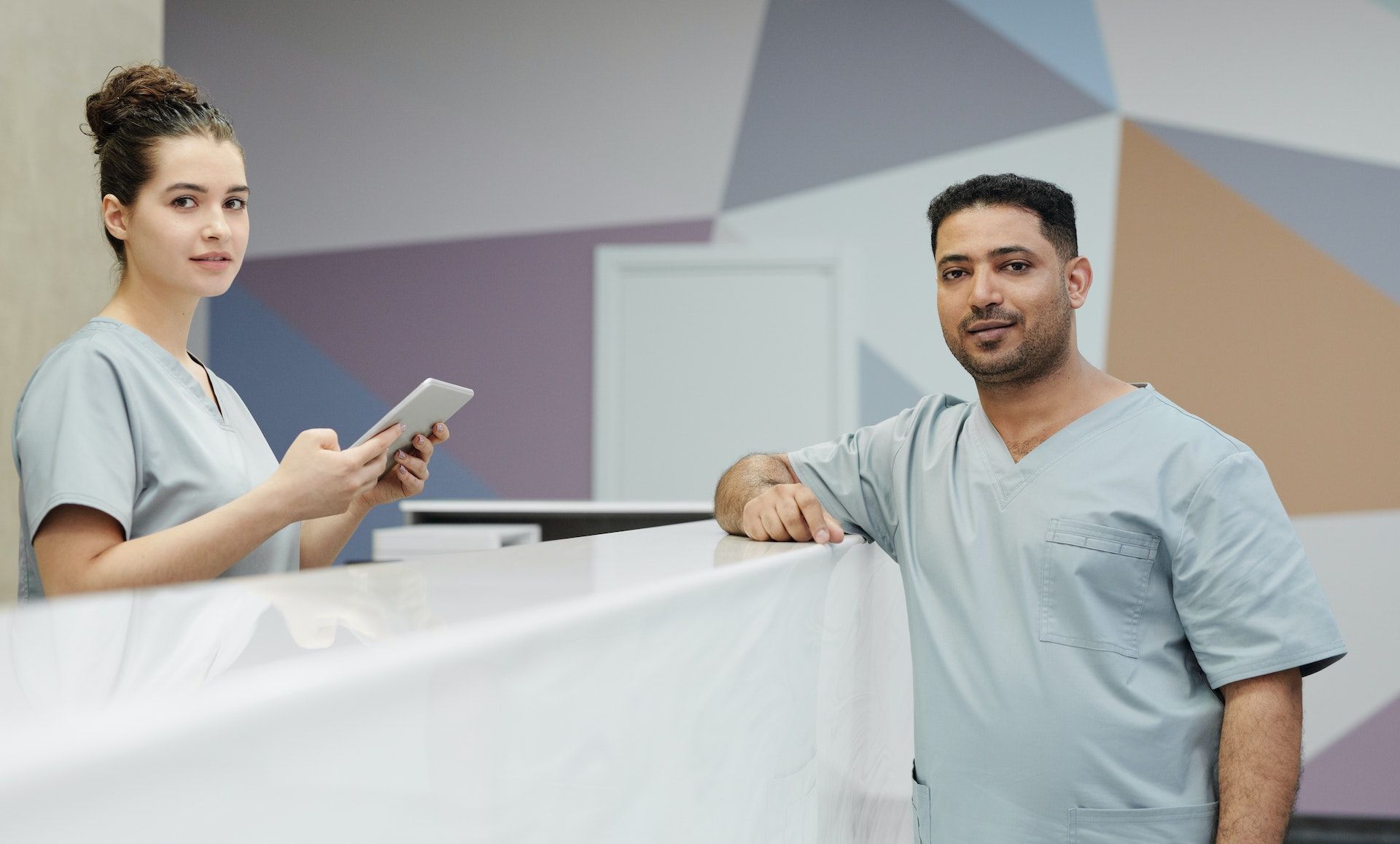
An outpatient mental health nurse provides nursing care to people who generally live at home and visit a clinic, community program, or other ambulatory service rather than staying overnight. The schedule depends on the setting: a psychiatric medication clinic, community mental health center, intensive outpatient program, and integrated primary care practice organize nursing work differently.
In an illustrative clinic day, an RN reviews messages and the appointment list before visits begin, flags patients needing timely follow-up, and coordinates with the prescribing clinician. During scheduled encounters, the nurse may gather symptom and medication information, assess physical concerns within the role, provide education, and arrange referrals. Between visits come calls about side effects, missed appointments, or worsening symptoms. The day often ends with documentation, handoffs, and follow-up arrangements. This is an example of workflow, not a standard staffing model or fixed patient count.
The defining challenge is switching safely between planned care and unplanned needs. A reported change in suicide risk, for example, takes priority over routine paperwork and calls for assessment, immediate escalation, and the organization's emergency procedures. Nurses interested primarily in graduate-level organizational projects should distinguish this direct-care work from post-master's DNP programs without traditional clinical rotations; a DNP is not required for a typical outpatient RN position.
Which patients do outpatient mental health nurses commonly care for?
Patients may be receiving care for depression, anxiety, bipolar disorder, schizophrenia-spectrum conditions, trauma-related symptoms, substance use disorders, or more than one condition. Some need short-term follow-up; others benefit from ongoing medication monitoring and coordination with housing, transportation, or social services. Medical conditions, pregnancy, age, language access, and family support can also shape a visit.
The clinic's population matters more than its job title. A community mental health center may see more people with persistent illness and barriers to care; a private specialty practice may focus on medication follow-up; an integrated clinic may coordinate closely with primary care for physical and behavioral health needs. Ask an employer which ages and conditions its service accepts and how it handles patients whose needs exceed routine outpatient care.
Primary care and mental health teams often share patients, but their advanced practice roles are not interchangeable. Accelerated FNP education comparisons concern family primary care preparation, not a shortcut to psychiatric-mental health nurse practitioner practice.
What responsibilities do outpatient mental health nurses handle?
Responsibilities depend on the nurse's license, employer, standing orders, and state scope-of-practice rules. An RN may assess and document symptoms and safety concerns, monitor responses to treatment, administer ordered medications where the service provides them, teach patients what to report, and coordinate follow-up. Telephone or portal triage requires especially clear documentation: the team needs to know what the patient reported, what the nurse assessed, whom the nurse notified, and what happened next.
Outpatient nurses also help patients navigate practical obstacles to treatment, such as difficulty obtaining medication or reaching appointments. They do not independently diagnose psychiatric disorders or prescribe solely by virtue of holding an RN license. Psychotherapy is a separate service requiring appropriate qualifications and authorization.
If advanced assessment or prescribing is the goal, evaluate a qualifying psychiatric-mental health NP pathway rather than assuming short online psychiatric nursing certificates expand an RN's legal scope. A certificate's title alone does not establish NP certification or state authorization.
The nurse often connects what a patient reports between appointments with the clinician responsible for the treatment plan. A useful handoff conveys the concern, relevant assessment findings, timing, actions already taken, and what decision is needed. Depending on the clinic, partners may include psychiatrists, psychiatric-mental health NPs, therapists, primary care clinicians, social workers, pharmacists, peer specialists, and crisis services.
Good teamwork includes knowing who covers urgent questions when the usual prescriber is unavailable. It also means confirming that referrals were received rather than treating a sent message as completed care. Information sharing must follow privacy rules and organizational policy, particularly when family members or outside agencies are involved.
For an RN considering a different advanced practice role, family nurse practitioner programs with placement services address an education-planning issue, not a requirement for collaborating with primary care colleagues. Team experience can inform a career choice, but it does not replace specialty-specific supervised preparation.
For an outpatient RN job, the usual starting point is graduation from a nursing program that supports RN licensure eligibility, followed by meeting state board requirements and obtaining an active RN license. ADN/ASN and BSN programs can both lead toward initial RN licensure; individual employers may prefer a BSN or relevant experience. A postlicensure RN-to-BSN program assumes the student is already an RN and does not serve as initial RN preparation.
An LPN/LVN may work in some outpatient services, but responsibilities and supervision differ by state and employer. A new RN should look for structured psychiatric orientation, supervised risk-assessment practice, medication-workflow training, and a clear escalation process. Graduation and licensure establish entry to practice, not immediate independent competence in every specialty task.
Experienced ADN-prepared RNs considering later graduate study can compare ADN-to-MSN education pathways. An MSN is not necessary just to work as an outpatient psychiatric RN; its value depends on the specific future role and track.
Psychiatric-mental health nursing courses provide a foundation in therapeutic communication, common conditions, safety assessment, and treatment approaches. Pharmacology helps students understand medication classes and monitoring concerns; health assessment and pathophysiology support recognition of physical problems that may affect mental health care. Community or population health, substance use content, and care coordination are especially relevant when patients need support beyond the clinic visit.
Course titles alone do not show readiness. Compare programs' supervised clinical exposure, simulation, evaluation of communication and clinical judgment, and opportunities to work with outpatient or community populations. Ask how students practice escalating a changing safety concern and receiving feedback; a classroom scenario is valuable preparation but not a substitute for employer orientation and assessed performance.
Graduate curricula have a different purpose. Accelerated postgraduate family NP certificates prepare for a family NP focus when their requirements are met; they should not be mistaken for psychiatric-mental health NP education or routine RN specialty training.
An outpatient RN needs an active RN license valid for the jurisdiction and work performed. State boards determine licensure; employers determine job qualifications and verify competencies. Some positions require additional training for particular medications, crisis procedures, or equipment. These workplace requirements do not themselves create a new professional license.
Specialty certification can demonstrate experience and knowledge when a nurse meets the certifying organization's current eligibility rules, but it is not generally the entry credential for every outpatient RN job. Check the exact credential and employer posting before paying for preparation. Psychiatric-mental health NP practice is different: it requires appropriate graduate or postgraduate population-focused preparation, applicable national certification, and state APRN authorization.
When comparing PMHNP education costs and program choices, verify the actual track, supervised clinical arrangements, certification eligibility, and state requirements. Neither a program listing nor an RN specialty certificate grants prescribing authority.
A traditional ADN commonly involves about two years of full-time nursing study, while a traditional BSN commonly takes about four years. Prerequisites, admission timing, clinical placement availability, part-time attendance, and a prior degree can change the total time. Already-licensed RNs considering outpatient work may need targeted training and orientation rather than another degree.
There is no reliable single tuition figure for this career path: public and private schools charge differently, and advertised tuition may omit substantial expenses. For a realistic comparison, request each program's published charges and estimate the following costs alongside them.
- Required fees, books, equipment, health and background requirements, examination, and licensure expenses.
- Travel to labs and clinical sites, any required campus visits, and childcare or reduced earnings during scheduled training.
- Additional terms that could result from prerequisite sequencing or limited clinical availability.
Compare the total path to the RN license, not tuition alone. If the intended job is an RN position, cost-focused nurse practitioner study options answer a different financial question and should not be added to the budget unless advanced practice is an actual goal.
Online coursework can reduce commuting, but an initial-licensure nursing program still requires approved hands-on learning and supervised clinical experiences. Campus and hybrid programs may make scheduled labs and peer practice easier to access; online-heavy formats may offer more flexibility for lectures while leaving clinical schedules largely fixed. Neither format guarantees an outpatient mental health placement.
Before enrolling, confirm with the school where labs and clinical experiences occur, who arranges sites, whether placements are available in your location, and whether the program meets the requirements relevant to your intended licensing state. Check state board approval or recognition and applicable nursing program accreditation separately; general institutional accreditation answers a different question.
For someone considering practical nursing first, LPN education options with distance coursework are a distinct pathway, not an online route to an RN license. Compare the actual license and outpatient duties you want before choosing the shorter-sounding option.
What are outpatient mental health nurse salaries and job prospects?
The U.S. Bureau of Labor Statistics reports wages and employment projections for registered nurses as an occupation, not a separate nationwide category of outpatient mental health nurses. Its RN figures are useful for broad labor-market context, but they cannot predict an offer from a particular mental health clinic. Pay depends on location, employer, experience, hours, and whether the job includes on-call or other duties.
Compare actual postings and offers using more than base salary. Ask about the scheduled caseload, volume of triage messages, staffing during absences, crisis coverage, orientation, benefits, and opportunities for experienced nurses to develop specialized skills. A clinic with a manageable visit schedule may still have a heavy between-visit workload.
If advancement means leadership or practice improvement rather than an NP role, exploring faster online DNP routes may be a later consideration. First establish whether the target position actually requires that degree; outpatient RN experience and focused professional development may be the more direct next step.
Other Things You Should Know About Nursing
Some employers offer remote telephone or video-based nursing duties. Confirm the required work location, technology, supervision, and authorization to practice for the patient's location; "remote" does not mean unrestricted interstate practice.
Some clinics run mainly during business hours, while crisis-connected services and intensive programs may require evenings, weekends, or on-call coverage. Ask for the actual schedule and coverage expectations in writing.
It may involve fewer inpatient-unit demands, but urgent calls, safety concerns, and large follow-up queues create different pressures. Staffing and escalation support matter more than the setting label alone.
Ask how many visits and messages nurses typically manage, who responds to urgent concerns, what orientation includes, and how the team covers absent clinicians. The answers reveal more about the workday than the job title does.
- APRN Practice FAQ - Texas Board of Nursing https://www.bon.texas.gov/faq_practice_aprn.asp.html
- Psychiatric Emergencies: Assessing and Managing Suicidal Ideation - PMC https://pmc.ncbi.nlm.nih.gov/articles/PMC5777328/
- Supporting the Health and Professional Well-Being of Nurses | nih.gov https://www.ncbi.nlm.nih.gov/books/NBK573902/
- Electronic Health Records and Their Benefits | ONC https://healthit.gov/health-it-basics/benefits-ehrs/
- VA Mental Health Services | Veterans Affairs https://www.va.gov/health-care/health-needs-conditions/mental-health/
- Triage Nursing - an overview | ScienceDirect Topics https://www.sciencedirect.com/topics/nursing-and-health-professions/triage-nursing
- Tips for Suicide Assessment and Prevention for Nurses | Regis College Online https://online.regiscollege.edu/blog/tips-suicide-assessment-prevention-nurses-know
- What Is the Difference Between Psychologists, Psychiatrists and Social Workers? | apa.org https://www.apa.org/ptsd-guideline/patients-and-families/psychotherapy-professionals
- Types of Mental Health Professionals | nami.org https://www.nami.org/treatments-and-approaches/types-of-mental-health-professionals/
- PMHNP Specialties: Sub-Specialty Comparison & Niche Guide | NursePractitionerOnline.com https://www.nursepractitioneronline.com/articles/pmhnp-sub-specialties-and-patient-populations/