2027 Online Youth and Family Ministry Master's Programs With University Scholarships: Awards, Eligibility & Tuition After Aid

Co-Founder and Chief Data Scientist
University scholarships can reduce the price of an online Youth and Family Ministry master's, but awards, enrollment rules, and renewal terms vary substantially by school. For context, College Board reports average 2024-25 published graduate tuition and fees of $12,596 at public four-year institutions and $29,931 at private nonprofit institutions.
This guide is for prospective ministry leaders, church staff, and working adults who need to compare funding before enrolling. Learn where to look for institutional aid, how to estimate tuition after awards, and how to build a funding plan that limits avoidable borrowing.
Key Things to Know About Youth and Family Ministry Master's Programs with Scholarships
- Online students may qualify for university-funded merit scholarships, need-based grants, denominational awards, and employer tuition assistance, but program-specific eligibility must be confirmed in writing.
- Using the 2024-25 national graduate tuition benchmarks of $12,596 at public institutions and $29,931 at private nonprofit institutions helps applicants recognize why even partial awards can materially change borrowing needs.
- Choose programs by comparing total tuition, mandatory fees, scholarship renewal conditions, enrollment requirements, and the realistic net price - not by comparing advertised scholarship amounts alone.
What online Youth and Family Ministry master's programs offer university scholarships?
Online programs titled exactly "Youth and Family Ministry" are less common than broader master's programs in ministry, Christian ministry, practical theology, or youth ministry with related concentrations. Schools may offer scholarships to students in these programs through graduate admissions, institutional aid offices, seminary funds, denominational partners, or church-affiliation programs rather than through an award labeled specifically for youth ministry.
Examples worth investigating include online ministry graduate programs at institutions such as Liberty University, Grand Canyon University, Southeastern Baptist Theological Seminary, and other accredited theological schools that list graduate scholarships or tuition-support opportunities. Availability can change by term, residency status, degree track, and enrollment intensity, so applicants should ask whether the award applies to the exact online program and start term.
The comparison below shows what to verify before treating a university as a scholarship option. It is more useful than assuming that a school's general scholarship page applies to every online graduate student.
| Program feature to confirm | Why it matters | Question for the financial aid office |
| Exact degree and concentration | Some awards exclude particular online or graduate programs. | Does this scholarship apply to my online Youth and Family Ministry-related master's program? |
| Enrollment requirement | Award eligibility may require full-time, half-time, or continuous enrollment. | How many credits per term must I take to receive and renew it? |
| Award source | University, department, denomination, or donor funds can have different rules. | Is the award automatic, competitive, or separately applied for? |
| Online participation | Distance learners may have different institutional-award access. | Are online students funded on the same terms as campus students? |
| Stacking policy | One institutional award can reduce another. | Can this scholarship be combined with grants, church support, and employer reimbursement? |
Applicants comparing ministry preparation with management-oriented graduate study can also examine how cost comparisons are presented in affordable MBA programs. The subject area differs, but the same discipline - comparing total required credits, aid restrictions, and net cost - applies.
Prioritize schools that will provide a written estimate showing tuition, institutional aid, fees, and the conditions attached to each award. A vague statement that "scholarships are available" is not enough to make a reliable enrollment decision.
What is the average tuition for Youth and Family Ministry master's programs before aid?
There is no national tuition average published specifically for online Youth and Family Ministry master's degrees, so applicants should use broader graduate tuition data as a benchmark and calculate each program's full price individually.
College Board's 2024-25 average published graduate tuition and fees were $12,596 at public four-year institutions and $29,931 at private nonprofit institutions. A ministry program may fall above or below those figures depending on credit requirements, institutional mission, delivery format, and whether tuition is charged per credit or per term.
Before aid, the most reliable estimate is the program's per-credit tuition multiplied by required credits, plus mandatory fees. Do not assume the catalog tuition is the final bill: technology, graduation, course-material, residency, and distance-learning charges may change the total.
This example illustrates the difference between advertised tuition and a planning estimate. It is a calculation method, not a quote for any particular university.
| Cost component | Example calculation | Planning purpose |
| Tuition | Required credits × published per-credit rate | Estimates the primary program charge. |
| Required institutional fees | Term fees × expected number of terms | Prevents underestimating billed expenses. |
| Books, materials, and technology | School estimate or recent course costs | Captures expenses scholarships may not cover. |
| Less gift aid | Scholarships and grants that do not require repayment | Produces an estimated tuition-and-fee net price. |
| Remaining balance | Net price minus employer or church support | Shows the amount potentially paid from savings, income, or loans. |
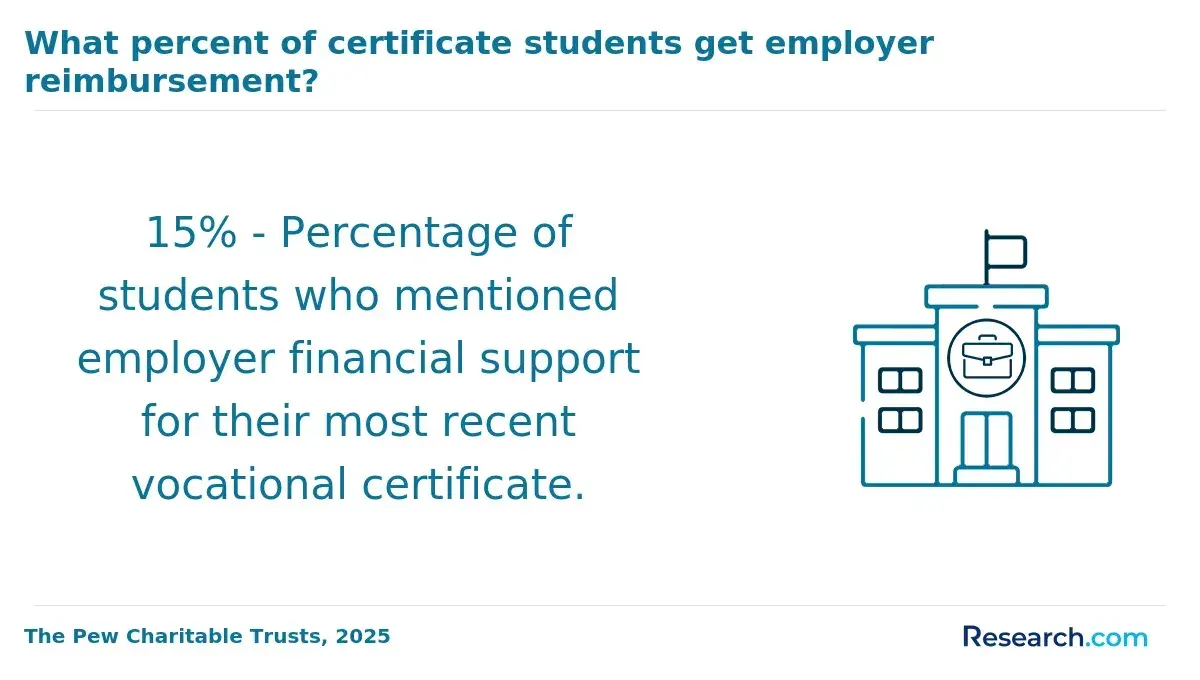
Working professionals should also compare employer benefits before accepting loans. Some employers may reimburse job-related graduate study, subject to internal approval and grade rules; obtain that approval before enrolling or paying tuition.
Program pace matters financially. A faster schedule can shorten the time to completion, but it can also make it harder to maintain work hours or meet reimbursement rules. Readers considering a compressed format in another discipline can see comparable pacing trade-offs in accelerated business degree online options.
What types of financial aid and scholarships are available for Youth and Family Ministry master's programs?
Financial aid for a Youth and Family Ministry master's generally falls into gift aid, employment-related support, and borrowing. Gift aid is usually the first priority because it does not need to be repaid, while loans should be evaluated against the graduate's likely repayment capacity and ministry career goals.
The main funding categories below have different selection criteria and restrictions. Understanding the distinction helps applicants direct their effort toward awards they can realistically receive.
| Funding type | Typical basis | Repayment requirement | Best use |
| University merit scholarship | Academic record, leadership, ministry experience, or admissions profile | No | Applicants with strong grades or documented leadership. |
| Need-based institutional grant | Demonstrated financial need under the school's process | No | Students whose financial circumstances meet institutional criteria. |
| Departmental or donor scholarship | Program fit, service commitment, denomination, or essay quality | No | Applicants able to show alignment with the award's purpose. |
| Church or denominational support | Membership, ministry role, endorsement, or service agreement | Usually no, but terms vary | Active church staff and denominationally affiliated applicants. |
| Employer tuition assistance | Employer policy, job relevance, continued employment, and grades | Usually no, but repayment clauses may apply | Working professionals whose ministry studies support their role. |
| Federal Direct Unsubsidized or Grad PLUS Loans | FAFSA eligibility and federal requirements | Yes | Funding remaining costs after gift aid and payment planning. |
Complete the FAFSA when the institution participates in federal student aid, even if you expect to receive a merit award. Some schools use FAFSA information for need-based institutional decisions, and federal graduate borrowing eligibility is generally determined through that process.
Applicants whose work involves counseling-adjacent family services may also be comparing professional pathways. Career exploration resources such as jobs with a master's in forensic psychology can help distinguish degree-specific career expectations, but they should not be used to assume comparable scholarship eligibility across programs.
How much do Youth and Family Ministry master's scholarships typically cover?
Scholarship coverage ranges from a small one-time credit to a renewable award that offsets a meaningful share of tuition. Institutions do not use a uniform coverage scale, and many graduate awards are not published as a percentage of the full degree cost. The award letter - not a general scholarship description - determines how much aid actually applies.
For planning, separate the award amount from the expenses it covers. A scholarship applied only to tuition may still leave fees, books, travel for any required intensive, and living costs unpaid.
| Coverage pattern | What it may reduce | Key trade-off |
| One-time scholarship | A single term's tuition or a fixed account credit | Useful upfront, but it may not lower the total program cost substantially. |
| Annual renewable award | Tuition across more than one academic year | Potentially stronger value, but continuation depends on renewal conditions. |
| Per-credit or tuition-discount award | Published tuition for eligible credits | Can be predictable, though excluded fees may remain. |
| Full-tuition scholarship | Eligible tuition up to stated limits | Rare and often highly competitive; it may not include non-tuition costs. |
Estimate tuition after aid by subtracting confirmed, nonrepayable awards from tuition and required fees. Treat competitive awards, outside scholarships, and employer reimbursement as unconfirmed until written approval is issued. This conservative approach prevents a student from building a budget around funding that may not arrive.
Students who need flexibility because of full-time work should be especially careful with conditional awards. online eMBA programs illustrate a common graduate-study principle: convenience-oriented formats can have distinct pricing and aid structures, so confirm the net cost for the exact delivery format rather than relying on a campus estimate.
Who is eligible for Youth and Family Ministry master's scholarships?
Eligibility depends on the individual scholarship. Graduate ministry awards commonly consider admission to an eligible degree, academic performance, financial need, leadership or service history, denominational connection, and enrollment level. Online enrollment alone does not automatically disqualify a student, but it can affect access to certain campus-funded awards.
Review the requirements in categories so that you do not spend time on an award with a nonnegotiable condition you cannot meet.
- Academic eligibility: Minimum undergraduate GPA, satisfactory academic progress, and sometimes standardized admission criteria where applicable.
- Program eligibility: Admission to a designated master's program, concentration, campus, or online modality.
- Financial eligibility: FAFSA completion or institutional financial-need documentation for need-based funds.
- Affiliation eligibility: Church membership, denominational endorsement, ministry employment, veteran status, or other donor-defined affiliation.
- Enrollment eligibility: A required number of credits, continuous registration, or a deadline tied to a particular entry term.
Applicants with strong ministry experience but modest undergraduate grades should prioritize service-based, church-sponsored, employer-sponsored, and need-based funding in addition to merit awards. Applicants with strong academics should still apply broadly; a high GPA may meet a minimum requirement but does not ensure selection when scholarship funds are limited.
Ask whether an award is available to part-time students. Many online ministry students balance church employment and family responsibilities, and a full-time enrollment requirement can make an otherwise attractive scholarship impractical.
What is the application process for Youth and Family Ministry master's scholarships?
The most effective scholarship process starts before submitting the degree application. Some institutional awards are automatic upon admission, while others require separate forms and earlier deadlines. A tracking system is essential because missing a scholarship deadline can eliminate eligibility even when the applicant is admitted.
Use the following sequence to create a complete application file and preserve evidence of what each school promised.
- Request the program's current tuition sheet, scholarship list, online-student eligibility policy, and deadline calendar.
- Apply for admission early enough to meet scholarship review dates and submit the FAFSA when applicable.
- Prepare transcripts, résumé, ministry-service record, recommendation letters, financial documents, and any required church or denominational endorsement.
- Tailor each essay to the award's stated purpose by connecting your youth and family ministry goals to specific community needs and prior service.
- Keep copies of submitted materials and confirm receipt through the applicant portal or financial aid office.
- Compare written aid offers using the same assumptions for credits, fees, program length, and renewal conditions.
- Ask for reconsideration if your circumstances changed or another documented offer materially improves your ability to enroll.
A financial aid appeal is not a demand for more money. It is a request for review supported by new facts, such as a change in household income, unexpected caregiving costs, loss of employment, or a competing aid offer. Ask the school what documentation it accepts and whether an appeal affects the enrollment deposit timeline.
Applicants pursuing creative leadership or communication work alongside ministry may see different scholarship structures in MFA online programs. Do not transfer assumptions from another field, but use the same practice of documenting the full cost and all award conditions.
Do online Youth and Family Ministry students qualify for the same aid as on-campus students?
Online Youth and Family Ministry students may qualify for many of the same federal aid programs and some institutional scholarships as campus students, provided the school, program, and student meet applicable eligibility rules. However, "online" is not a guarantee of identical funding. Certain donor awards, assistantships, residence-linked grants, or campus engagement scholarships may be restricted to students who attend in person.
The deciding factor is usually the written terms of each award. Compare these issues before choosing between online and campus enrollment:
- Whether the online degree is eligible for federal student aid and institutional graduate aid.
- Whether the scholarship requires campus attendance, a residency component, or participation in a specific cohort.
- Whether part-time online enrollment changes award amounts or loan eligibility.
- Whether online fees, required intensives, and technology expenses are covered by the scholarship.
- Whether assistantships are available remotely and whether their workload is realistic alongside ministry employment.
Do not rely solely on a program representative's verbal estimate. Request an itemized written financial aid offer and compare it with the school's cost of attendance. If an online scholarship is described as a "tuition discount," ask whether it is renewable and whether it applies before or after other institutional grants.
Can Youth and Family Ministry master's students combine multiple scholarships and grants?
Students can often combine multiple scholarships and grants, but stacking is controlled by institutional policy and the terms of each award. A university may permit an outside church scholarship and employer reimbursement while reducing a separate institutional grant. Federal rules and a school's cost-of-attendance calculation can also limit total aid.
Combining smaller awards can be a sound strategy because it reduces dependence on a single competitive scholarship. The trade-off is administrative complexity: each source may have different disbursement dates, enrollment rules, reporting requirements, and tax implications.
Before accepting funding from several sources, confirm these points with the financial aid office:
- Whether outside scholarships must be reported and whether they reduce university grants, loans, or work-study first.
- Whether church support is paid to the student or directly to the university and when it will post to the account.
- Whether employer reimbursement arrives after grades are issued, creating a temporary payment gap.
- Whether any award requires the student to decline another institutional scholarship.
- Whether the combined aid exceeds billed charges or the school's cost-of-attendance limit.
Accept grants and scholarships first, then evaluate employer or church support, payment plans, savings, and only then borrowing. This order generally minimizes interest-bearing debt, although students should consider whether an employer agreement includes a repayment obligation if they leave the organization.
What are the requirements to maintain scholarship status in Youth and Family Ministry master's programs?
Maintaining scholarship status usually requires satisfactory academic progress, continued enrollment in an eligible program, and compliance with any award-specific terms. The exact GPA, credit-load, and renewal review schedule differ by institution. A scholarship that is renewable "for the duration of the program" may still be canceled if the student falls below a required academic standard or changes enrollment status.
Common renewal conditions include maintaining the required cumulative GPA, completing attempted credits at an acceptable pace, remaining in the original eligible program, meeting conduct standards, and filing a renewal application or FAFSA by the stated deadline. Ministry- or donor-funded awards may also require ongoing church involvement, progress reports, or acknowledgment communications.
Students can reduce the risk of losing aid by treating scholarship rules as part of their academic plan. Keep the award letter, review the student account after every disbursement, and contact financial aid before withdrawing from a class, taking a leave, or reducing credits. Those actions can affect both the current term's aid and future eligibility.
A common mistake is assuming a scholarship renews automatically because it appeared on the first award letter. Confirm whether renewal is automatic, competitive each year, or dependent on available funds. If a personal emergency affects academic performance, ask promptly about an appeal process and the documentation required.
What tips can help Youth and Family Ministry master's students secure more scholarship funding?
Strong scholarship applications connect evidence to the funder's purpose. For Youth and Family Ministry applicants, that evidence may include sustained volunteer work, paid ministry leadership, family outreach initiatives, mentoring, program development, academic achievement, and a concrete plan for using the degree in a community or church setting.
The following practices improve the quality and completeness of a funding search without implying that any award is guaranteed.
- Apply to university, department, church, denominational, community foundation, and employer sources rather than relying on one scholarship.
- Ask each school for a complete list of graduate and online-only awards, including funds that require a separate application.
- Use a spreadsheet to record eligibility, documents, submission dates, decision dates, renewal rules, and contact names.
- Request recommendation letters early and provide recommenders with the scholarship purpose, your résumé, and a clear submission deadline.
- Write specific essays that show measurable service and realistic ministry goals instead of repeating a general calling statement.
- Calculate net price with fees and likely non-tuition expenses before deciding that an award makes a program affordable.
- Ask your employer and church about tuition support before enrollment, since approval may be required in advance.
Prioritize scholarships that are renewable, applicable to your actual online enrollment level, and compatible with other aid. A smaller renewable award with transparent terms can be more valuable than a larger one-time award that leaves later terms largely unfunded.
Finally, compare degree cost with your expected role, schedule, and support network. The best choice is usually the accredited program that fits your ministry goals and has the lowest manageable net cost under documented, realistic aid assumptions - not necessarily the school advertising the largest headline scholarship.
Other Things You Should Know About Youth and Family Ministry
They may be, if the institution and specific program participate in federal student aid and the student meets federal eligibility requirements. File the FAFSA and verify program eligibility directly with the school's financial aid office.
Yes, some churches offer tuition assistance, reimbursement, professional-development budgets, or designated scholarships. Ask whether support is taxable, whether it is paid directly to the school, and whether continued employment or service is required.
Compare the written net price for the entire degree, including fees and renewal conditions. A scholarship is valuable only if it is likely to continue and the remaining balance is manageable.
Ask what charges it covers, whether it is renewable, the GPA and enrollment requirements, whether it can be combined with outside aid, when funds disburse, and what happens if you withdraw or change to part-time enrollment.
References
- Scholarships, Grants, and Discounts | Denver Seminary https://denverseminary.edu/admission-aid/financial-aid/scholarships-grants-and-discounts/
- Dual Level Youth and Family Ministry (BS) + MA Religion - Cairn University https://cairn.edu/youth-and-family-ministry-bs-mar-dual-level-program/
- Assemblies of God Theological Seminary Scholarships - Evangel University https://www.evangel.edu/future-students/office-of-admissions/financial-aid-and-scholarships/assemblies-of-god-theological-seminary-scholarships/
- How America Pays for College 2025 https://www.salliemae.com/about/leading-research/how-america-pays-for-college/
- Making Christian Education Affordable: Scholarship and Aid Options https://evcsonline.com/blog/making-christian-education-affordable-scholarship-and-aid-options
- Graduate Ministry Programs | Master's in Youth Ministry https://ministryleadership.org/masters-in-youth-ministry/
- Best Online Master of Divinity (MDiv) Programs - TheologyDegree.org https://www.theologydegree.org/online/mdiv/
- Student Scholarship Program - Disciples Home Missions https://www.discipleshomemissions.org/vocational-support/scholarships/
- Top 60 Christian Scholarships to Apply for in December 2025 https://bold.org/scholarships/by-type/christian-scholarships/
- Master of Arts in Youth and Family Ministry | Howard Payne University https://www.hputx.edu/academics/schools/school-of-christian-studies/graduate-programs/ma-youth-ministry/