
2027 Online vs On-Campus Strategic Management Doctorate Programs: Cost, Flexibility, and Employer Perception

Co-Founder and Chief Data Scientist
Your main decision is not simply online or on campus; it is which Strategic Management doctorate format fits your budget, work schedule, research goals, and target employers. NCES data released in 2024 show more than 1 million U. S. graduate students enrolled exclusively in distance education, making online doctoral study a mainstream option rather than a niche path. This guide is for working managers, consultants, executives, aspiring faculty, and research-focused business professionals who want to compare cost, flexibility, and employer outlook before enrolling.
Key Things to Know About Online vs On-Campus Strategic Management Doctorate Programs
- Online Strategic Management doctorates usually offer the strongest schedule flexibility, but many still require synchronous seminars, residencies, research milestones, or live dissertation meetings.
- Published tuition is only part of the decision: College Board's 2024 graduate pricing data places average annual graduate tuition and fees at roughly $12,000 for public institutions and near $30,000 for private nonprofit institutions, before living, travel, and opportunity costs.
- Employers generally focus more on accreditation, university reputation, research quality, leadership experience, and job fit than on delivery format, but academic hiring can still favor candidates with strong faculty mentorship, publications, and conference visibility.
What are the key differences between online vs on-campus Strategic Management doctorate programs?
Online and on-campus Strategic Management doctorate programs can lead to similar credentials, but the student experience differs in how coursework is delivered, how networking happens, how quickly students move through milestones, and how much relocation or travel is required. Strategic Management is the study of how organizations build competitive advantage, make long-term decisions, allocate resources, respond to market change, and lead transformation.
Most doctoral options fall into two broad categories: a research-oriented PhD in management, strategy, or business administration, and a practice-oriented DBA with a strategy, leadership, or management concentration. A PhD is usually better aligned with academic research and faculty careers, while a DBA is often designed for senior professionals who want to apply research to organizational problems. Readers still building foundational business knowledge may also want to compare an online business degree before committing to doctoral-level study.
The table below summarizes the practical differences that most affect cost, time, and career fit. Use it as a first-pass filter before comparing individual curricula.
| Comparison point | Online Strategic Management doctorate | On-campus Strategic Management doctorate | Why it matters |
| Course delivery | Asynchronous modules, live virtual seminars, or hybrid residencies | In-person seminars, research workshops, and campus-based meetings | Delivery affects weekly routine and access to faculty |
| Student profile | Often working professionals, executives, consultants, or remote learners | Often full-time doctoral students, research assistants, or aspiring academics | Peer network may differ by career stage |
| Funding structure | More commonly tuition-based, sometimes employer-funded | Research PhDs may offer assistantships, stipends, or tuition waivers | Sticker price can mislead if funding differs |
| Networking | Virtual cohorts, residencies, online research groups, professional networks | Daily faculty contact, campus events, research seminars, informal mentoring | Networking affects academic and executive opportunities |
| Best fit | Students who need geographic flexibility and plan to remain employed | Students seeking intensive research immersion or academic placement | Format should match your end goal, not just your schedule |
An online format makes sense if you cannot relocate, need to keep earning income, or plan to use your current workplace as a research setting. An on-campus format may be stronger if you want a tenure-track path, need close daily access to research faculty, or want to join a highly active academic strategy department.
Are online Strategic Management doctorate programs as rigorous as on-campus programs?
An online Strategic Management doctorate can be as rigorous as an on-campus program when it has the same accreditation, faculty expectations, research methods training, dissertation standards, and admissions selectivity. Rigor is not determined by whether lectures happen in a classroom or online; it is determined by the level of scholarship students must produce and the support systems that help them finish.
The most important quality signal is institutional and programmatic credibility. Regional institutional accreditation is essential in the U.S. business school context, and business-specific accreditation such as AACSB, ACBSP, or IACBE can provide additional assurance, depending on the program's goals and employer market.
Use the following checks to evaluate rigor before you apply. They help you distinguish a flexible doctoral program from a weak one.
- Confirm that online and on-campus students earn the same degree title from the same accredited institution, not a differently branded credential with weaker recognition.
- Review the research methods sequence, including quantitative methods, qualitative methods, strategic management theory, organizational analysis, and dissertation design.
- Ask whether doctoral faculty are active researchers or senior practitioners with relevant publications, grants, consulting records, or executive experience.
- Look for required milestones such as comprehensive exams, dissertation proposal defense, institutional review board approval, and final defense.
- Request recent completion data, average time to candidacy, dissertation chair assignment timelines, and attrition patterns for the specific format you are considering.
Be cautious with programs that advertise a doctorate as quick, easy, or mostly self-paced without explaining dissertation supervision. Doctoral rigor should feel manageable with the right support, but it should not feel casual.
How does scheduling flexibility differ between online and on-campus Strategic Management doctorate programs?
Scheduling flexibility is usually the clearest advantage of an online Strategic Management doctorate, but flexibility varies widely. Some programs are fully asynchronous, some require weekly evening classes, and others use a hybrid model with short campus residencies. On-campus programs usually offer less geographic flexibility but more predictable immersion in seminars, research meetings, and faculty-led projects.
NCES distance education data released in 2024 show that large-scale online graduate enrollment is now normal in U.S. higher education. For doctoral students, that matters because universities have stronger incentives to build remote advising, virtual libraries, online research software access, and digital collaboration into graduate programs.
The table below compares common scheduling models. It can help you identify whether "online" really means flexible enough for your work and family obligations.
| Format | Typical schedule | Flexibility level | Best for |
| Fully asynchronous online | Recorded modules, weekly deadlines, independent research work | High | Working professionals with irregular schedules |
| Synchronous online | Live evening or weekend seminars with online assignments | Moderate | Students who want structure without relocating |
| Hybrid online | Online coursework plus required residencies or intensive sessions | Moderate | Students who want remote study with periodic networking |
| Traditional on campus | In-person seminars, daytime research meetings, campus events | Lower | Students who can study full time or relocate |
If your career already involves complex scheduling, operations, or executive decision-making, compare program calendars with the same discipline you would use to evaluate workload capacity in a management role. Professionals exploring adjacent graduate paths, such as an MBA operations management online, may already recognize how much format design affects persistence and learning quality.
A common mistake is assuming asynchronous means easier. In reality, asynchronous doctoral study requires strong self-management because no one is forcing you to attend class at the same time each week. Before enrolling, ask for a sample term calendar and calculate whether you can consistently reserve time for reading, data analysis, writing, faculty meetings, and peer discussion.
Fieldwork in Strategic Management doctoral programs usually means applied research in organizations, consulting-based projects, interviews with executives, archival company analysis, case study development, survey research, or data collection tied to strategic decision-making. Unlike clinical doctorates, these programs usually do not have state-mandated practicum hours, but they may require direct access to organizations or leaders.
Online programs often allow students to conduct fieldwork in their own workplace, industry network, or local region. On-campus programs may connect students to faculty research projects, corporate partners, research centers, or university-sponsored consulting labs.
The table below explains how in-person requirements can differ. This is especially important for students comparing online programs that still include travel.
| Requirement | Online format | On-campus format | Decision impact |
| Residencies | May be none, optional, or required for several days per year | Usually replaced by regular campus attendance | Travel costs can change the true price of an online program |
| Applied research site | Often student-arranged through employer or professional network | May be faculty-arranged or connected to campus research partnerships | Access to data can affect dissertation feasibility |
| Faculty supervision | Virtual advising, video meetings, online research reviews | In-person advising, lab meetings, seminars, informal office visits | Support style should match your learning habits |
| Professional networking | Online cohorts, conferences, industry contacts, residencies | Campus seminars, faculty introductions, visiting scholars, alumni events | Networking format can affect career mobility |
Before choosing a format, ask how students secure research sites, whether employer-based research is allowed, and what happens if your organization will not approve data collection. This is one of the most overlooked risk points in applied strategy doctorates.
The dissertation process is similar in principle across online and on-campus Strategic Management doctorates: students identify a research problem, review the literature, design a methodology, collect or analyze data, defend a proposal, complete the study, and defend the final dissertation. The difference is how support is delivered and how visible your progress is to faculty.
Online students often rely on scheduled virtual chair meetings, learning management systems, online writing centers, and digital research tools. On-campus students may have easier access to informal feedback, research colloquia, faculty office hours, and peer writing groups. Neither format is automatically better; the stronger option is the one with clearer dissertation infrastructure.
Use this sequence to evaluate dissertation support before accepting admission. These steps can help you avoid programs that leave students isolated after coursework.
- Ask when students are assigned a dissertation chair and whether that assignment happens before or after comprehensive exams.
- Request the average time from coursework completion to proposal defense for students in your intended format.
- Confirm whether the program provides structured dissertation seminars, writing milestones, research design reviews, and statistics or qualitative analysis support.
- Ask how often students meet with chairs and committee members during the proposal and final dissertation stages.
- Review recent dissertation titles to see whether faculty support topics in strategy, innovation, competitive advantage, organizational change, corporate governance, or executive decision-making.
A major red flag is a program with attractive coursework but vague dissertation advising. For many doctoral students, the hard part is not finishing classes; it is moving from a broad strategy interest to a defensible study with accessible data and a responsive committee.
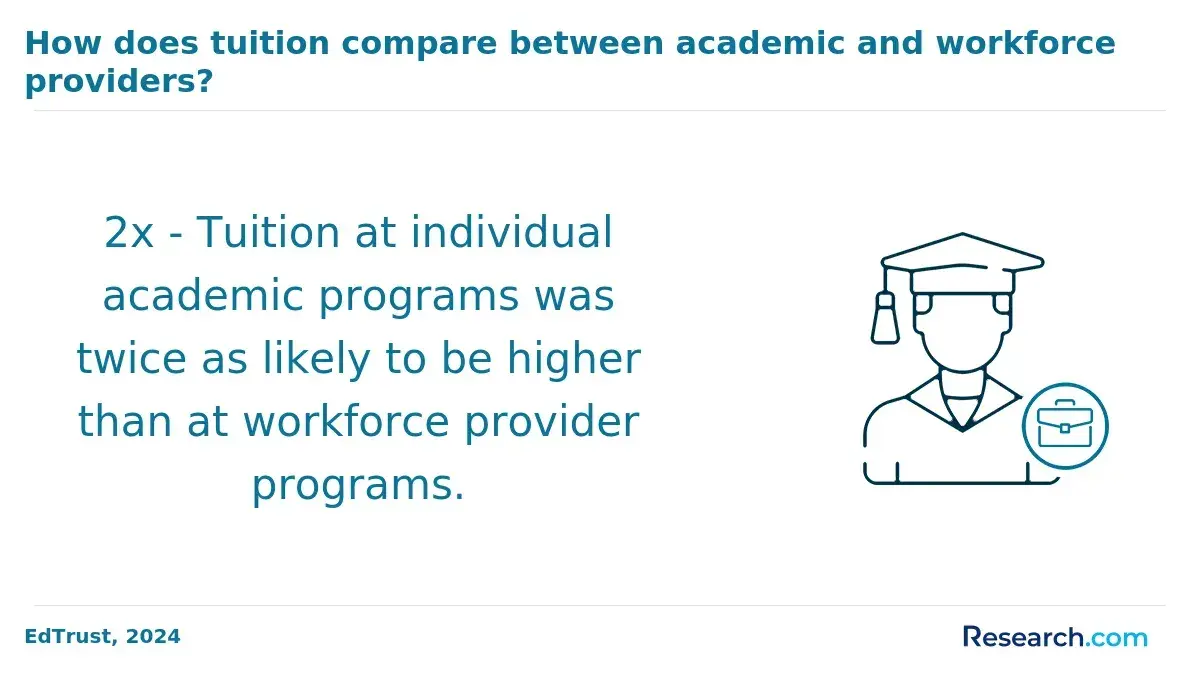
Tuition rates for online and on-campus Strategic Management doctorates are difficult to compare nationally because U.S. datasets do not isolate this exact field and format. Publicly available graduate tuition data can still give you a useful baseline: College Board's 2024 pricing data places average annual graduate tuition and required fees at roughly $12,000 for public institutions and near $30,000 for private nonprofit institutions. Doctoral business programs can fall below or above those averages depending on credit load, residency structure, and funding.
Online programs commonly charge per credit and may use the same rate for in-state and out-of-state students. On-campus public universities may charge different in-state and out-of-state rates, while research-focused PhD programs may offset tuition through assistantships or fellowships. That means the cheaper format on paper is not always cheaper after aid.
The table below shows how tuition structures usually differ. It is not a price quote; it is a framework for reading official program cost pages accurately.
| Cost feature | Online doctorate | On-campus doctorate | What to verify |
| Tuition basis | Often per credit or per term | Often per credit, per term, or covered through funding in some PhD programs | Total credits required and whether dissertation credits cost extra |
| Residency rate | May use one national online rate | May differ for in-state and out-of-state students at public universities | Whether relocation changes tuition classification |
| Fees | Technology, online platform, library, graduation, residency fees | Campus, student activity, health, library, lab, and facility fees | Mandatory fees by term, not just tuition |
| Funding | Employer tuition assistance, federal aid, scholarships, payment plans | Assistantships, tuition waivers, fellowships, grants, federal aid | Whether funding is guaranteed and renewable |
When comparing offers, create a total tuition estimate using required credits, not advertised per-credit rates alone. Then subtract only confirmed grants, waivers, or employer benefits, not funding you hope to receive later.
Cost of attendance includes more than tuition. It may include fees, books, software, travel, residencies, conference participation, living expenses, health insurance, childcare, commuting, relocation, and lost income. For Strategic Management doctoral students, the largest hidden cost is often time away from paid work or senior-level career advancement.
Online students may save on relocation and commuting, but they can still pay for residencies, technology, data tools, professional memberships, and research travel. On-campus students may receive stronger funding in research PhD programs, but they may also face relocation costs and lower income if they leave full-time employment.
The table below separates tuition from other expenses so you can compare formats more realistically. It is especially useful if one program looks cheaper at first glance.
| Expense category | Online student impact | On-campus student impact | Planning note |
| Relocation | Usually avoidable | Often required for full-time programs | Relocation can erase tuition savings |
| Travel | Residencies, conferences, dissertation data collection | Daily commuting, conferences, field research | Ask for required residency dates before enrolling |
| Income | Often maintained through continued employment | May decrease if studying full time | Opportunity cost can exceed direct program charges |
| Technology | Reliable computer, webcam, software, internet, analytics tools | Software, research tools, campus technology fees | Doctoral research may require paid tools |
| Networking | May require paid travel to conferences or residencies | More campus-based events included in normal attendance | Budget for visibility in your target career market |
A practical cost comparison should include both cash expenses and career trade-offs. For example, an online DBA with higher tuition may be financially rational if it allows you to keep a full-time executive salary, while a funded on-campus PhD may be better if your goal is academic research and you can accept several years of lower earnings.
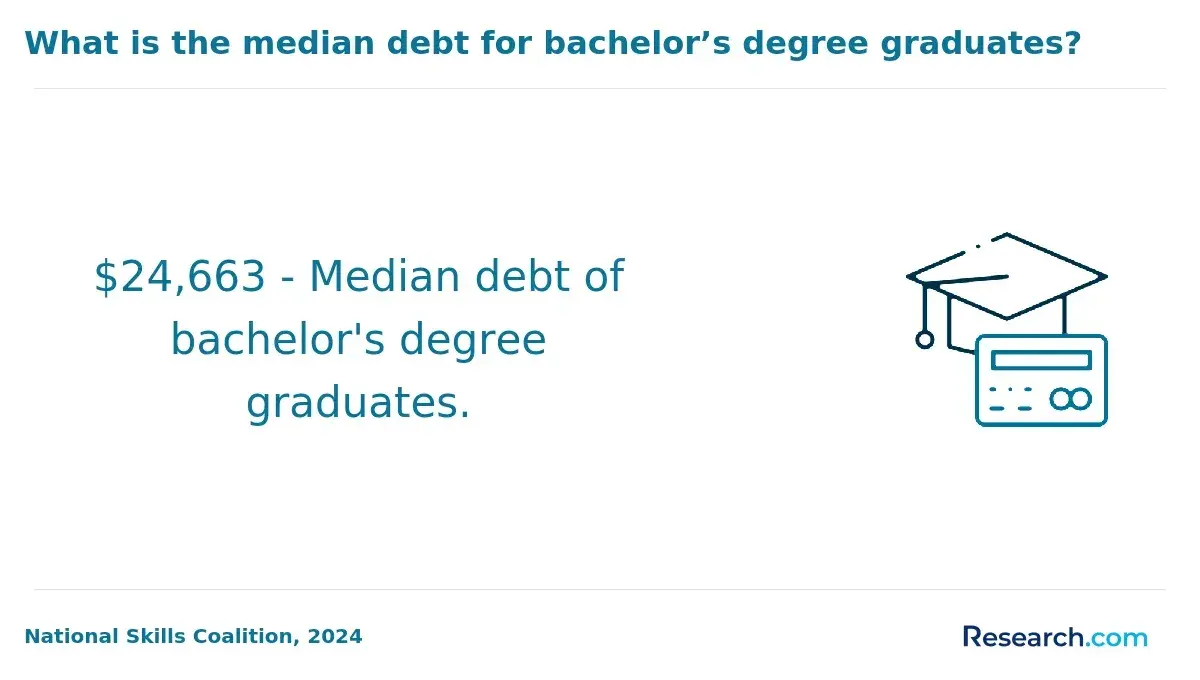
Avoid the mistake of comparing only annual tuition. Instead, ask each program for a full cost-of-attendance estimate, required residency expenses, average borrowing levels if available, and whether doctoral students commonly receive renewable aid. National debt data can be useful context, but the most relevant borrowing figure is the median debt for graduates of the exact program you are considering, which may be available through federal program disclosures or the institution's financial aid office.
Employer perception of online versus on-campus Strategic Management doctorates has become more nuanced. Many employers now view online graduate credentials as acceptable when the university is accredited, the curriculum is rigorous, and the graduate can demonstrate strategic leadership, research ability, and measurable business impact. However, perceptions can differ by employer type.
Corporate employers, consulting firms, nonprofit organizations, and government agencies often focus on whether the doctorate strengthens problem-solving, evidence-based decision-making, change leadership, and executive credibility. Academic employers usually scrutinize research output, teaching experience, faculty recommendations, conference participation, and publication potential more heavily than format alone. Professionals considering leadership-focused doctoral paths may also compare a doctorate in organizational leadership online if their target roles emphasize organizational change more than competitive strategy research.
The table below summarizes how different employer audiences may interpret the credential. Use it to align program format with the market you plan to enter.
| Employer or career market | What they usually value most | Online credential risk | On-campus credential risk |
| Corporate strategy and leadership | Executive record, strategic results, applied research, communication | Weak brand or unclear applied value | Strong theory but limited workplace application |
| Consulting | Credibility, frameworks, industry expertise, client-ready insights | Limited network if program lacks residencies or alumni engagement | Less flexibility to keep consulting experience active |
| Higher education faculty | Research fit, publications, teaching, recommendations, doctoral mentorship | Less access to research seminars if poorly designed | May still be less competitive without publications |
| Government or nonprofit leadership | Policy analysis, organizational strategy, change management, evidence use | Need to prove rigor and accreditation | May require relocation or career interruption |
The best way to assess perception is to investigate your actual target market. Review job postings, faculty profiles, executive biographies, and alumni outcomes. If employers in your niche routinely hire graduates from online or hybrid doctoral programs, format is less likely to be a barrier. If your goal is a research-intensive faculty role, prioritize dissertation quality, faculty reputation, and publication opportunities.
Program format can affect job prospects indirectly, but it rarely acts alone. The stronger predictors are accreditation, university reputation, faculty mentorship, dissertation relevance, professional experience, research productivity, and how well the program connects you to your intended labor market.
BLS May 2024 data reported median annual pay of $101,190 for management analysts and about $97,000 for postsecondary business teachers. These figures are not doctoral-format outcomes, but they show the kinds of professional and academic markets where advanced strategy expertise may be relevant. No credible national dataset publicly separates salary outcomes for online versus on-campus Strategic Management doctorate graduates, so readers should avoid programs that imply format alone will produce a specific salary.
The table below shows how format may shape career preparation. It can help you identify which experiences you need to build while enrolled.
| Career goal | Online format advantage | On-campus format advantage | What matters more than format |
| Executive leadership | Continue working while applying research to current organization | Access to campus executive programs and alumni events | Leadership record and measurable strategic impact |
| Consulting | Maintain client work while developing doctoral expertise | Build academic credibility through faculty networks | Industry specialization and publishable insights |
| Tenure-track faculty | Possible if research support and publications are strong | More direct immersion in research culture | Publications, research fit, teaching, recommendations |
| Applied research or policy | Use local organizations as research sites | Join grant-funded or center-based projects | Methods training and evidence of research competence |
Online study may improve job continuity because students can keep working, but it can also reduce spontaneous networking if the program lacks live interaction. On-campus study may improve research visibility, but it may interrupt career momentum if you leave a strong professional role. The right choice depends on which opportunity cost is lower for your goal.
How do you choose between online and on-campus Strategic Management doctorate programs?
Choose between online and on-campus Strategic Management doctorate programs by working backward from your career goal. If you want to become a research professor, prioritize faculty fit, research seminars, publication support, and doctoral funding. If you want executive advancement, consulting credibility, or applied organizational impact, prioritize schedule compatibility, applied dissertation options, employer tuition benefits, and access to real organizational data.
Applicants who are not ready for a doctorate may benefit from a stepping-stone graduate degree in leadership, organizational change, or management. For example, comparing the best organizational development master's programs online can help clarify whether your goals require doctoral research or a more practice-focused master's pathway.
Use the following decision process to build a shortlist. It turns a broad format choice into a practical enrollment decision.
- Define your primary outcome: tenure-track faculty role, executive advancement, consulting, applied research, nonprofit leadership, or policy work.
- Separate must-have constraints from preferences, including relocation, work schedule, family obligations, employer support, and travel tolerance.
- Confirm accreditation, degree title, faculty qualifications, dissertation requirements, and whether online and on-campus students receive comparable academic support.
- Calculate total cost of attendance for the entire program, including fees, residencies, software, conferences, lost income, and loan interest if you borrow.
- Ask for program-specific evidence: completion patterns, dissertation timelines, alumni roles, assistantship availability, publication support, and career services.
- Interview admissions staff, faculty, current students, and alumni before making a deposit.
Watch for warning signs regardless of format. Be careful with programs that lack transparent accreditation, provide little information about dissertation chairs, advertise unrealistic completion timelines, avoid publishing faculty credentials, or cannot explain how students secure research sites. A convenient program is not automatically a good investment; it must also support the career outcome you are paying for.
The simplest rule is this: choose online if flexibility protects your income and gives you access to relevant research settings; choose on campus if immersion, funding, faculty access, and academic placement matter more than location flexibility. If neither format clearly supports your goal, pause before enrolling and reassess whether a doctorate is the right investment.
Other Things You Should Know About Strategic Management
They can, but differences depend on the school. Both formats may require a master's degree, transcripts, recommendations, statement of purpose, resume, writing sample, and sometimes standardized test scores. Online DBA programs may place more emphasis on professional experience, while research PhD programs may emphasize academic preparation and research fit.
A PhD is usually better for research-intensive academic careers, while a DBA is often better for experienced professionals who want to apply research to executive, consulting, or organizational strategy problems. The better choice depends on whether your main goal is producing academic research or solving applied business problems.
Some programs allow limited doctoral transfer credits, but policies vary widely. Schools may restrict transfer credits by age, grade, accreditation, course level, or relevance to the doctoral curriculum. Always get transfer approval in writing before enrolling.
Not automatically. A low-cost program can be a good choice if it is accredited, academically rigorous, and well supported. However, weak dissertation advising, poor faculty fit, limited alumni outcomes, or unclear research requirements can make a cheaper program more expensive in the long run.
- Online Doctorate vs Traditional PhD: 7 Reasons to Choose Online in 2026 https://tmguni.com/top-7-reasons-to-choose-an-online-doctorate-over-a-traditional-on-campus-phd-in-2026/
- Online vs Traditional PhD Programs: 2026 Comparison Guide https://streamlinedai.app/blog/online-schools-phd
- Executive Double Degree DBA Strategic Management (Online) - Paris School of Management (PSM) https://www.psm-paris.fr/en/executive-double-degree-dba-strategic-management-online/
- How Much Does a PhD Cost https://aituedu.org/how-much-does-a-phd-cost/
- Can you get a PhD in one year? - Swiss School of Business Research https://ssbr-edu.ch/can-you-get-a-phd-in-one-year/
- How Long a Doctorate Degree Takes: Fast and Slow Doctoral Programs https://www.phds.me/ask-the-expert/how-many-years-is-a-doctorate-degree/
- Wittenborg Tuition & Fees - all programmes https://www.wittenborg.eu/wittenborg-tuition-fees.htm
- Doctorate in Strategic Management and Lead... | Swiss Online Business School https://www.sdbs.ch/doctorate-in-strategic-management-and-lead
- How Employers View Online Degrees: Interviews with Nine Hiring Executives https://www.onlineeducation.com/features/how-employers-view-online-degrees
- MBA Fees in the USA: Financial Guide for Students - MBA & Beyond https://www.mbaandbeyond.com/blog/mba-fees-in-the-usa


