
2027 Online vs On-Campus Psychiatric Mental Health Nurse Practitioner Doctorate Programs: Cost, Flexibility, and Employer Perception

Co-Founder and Chief Data Scientist
The real decision is not whether a Psychiatric Mental Health Nurse Practitioner doctorate is "online" or "on campus"; it is whether the format supports your clinical hours, budget, work schedule, and career goals. Demand makes the choice timely: the U. S. Bureau of Labor Statistics projects nurse practitioner employment to grow 46% from 2023 to 2033. This guide is for nurses comparing PMHNP doctoral options and explains how to evaluate cost, flexibility, fieldwork, dissertation or DNP project support, and employer perception before enrolling.
Key Things to Know About Online vs On-Campus Psychiatric Mental Health Nurse Practitioner Doctorate Programs
- Accredited online and on-campus PMHNP doctorate programs are generally judged by the same core standards: graduate nursing accreditation, advanced practice preparation, supervised clinical practice, faculty qualifications, and eligibility alignment with PMHNP certification and state licensure rules.
- Online study often lowers relocation and commuting costs, but it does not eliminate clinical placement, residency, technology, travel, or university fees; published U.S. PMHNP doctoral tuition commonly varies more by institution than by delivery format.
- Employers usually focus more on accreditation, certification eligibility, clinical competence, prescribing readiness, and supervised psychiatric experience than whether coursework was delivered online or in person, especially as distance learning has become common in graduate education.
What are the key differences between online vs on-campus Psychiatric Mental Health Nurse Practitioner doctorate programs?
Online and on-campus Psychiatric Mental Health Nurse Practitioner doctorate programs usually lead to the same broad goal: doctoral-level preparation for advanced psychiatric-mental health nursing practice. The format mainly changes how you attend class, interact with faculty, complete intensives, arrange clinical experiences, and manage your week.
The most important comparison is not "which format is better?" but "which format gives me the strongest path to licensure, certification readiness, clinical growth, and completion?" The table below summarizes the differences students should examine before applying.
| Comparison factor | Online PMHNP doctorate | On-campus PMHNP doctorate | What it means for your decision |
| Course delivery | Mostly online, often asynchronous or blended with live sessions | Scheduled in-person classes, labs, seminars, and campus-based activities | Online favors working nurses; on-campus favors students who want regular face-to-face structure. |
| Clinical requirements | Usually completed near the student's location if approved by the school | Often tied to university-affiliated clinics, hospitals, or regional partners | Online students must verify placement support early; on-campus students may benefit from established local networks. |
| Residencies or intensives | May require short campus visits, simulation days, OSCEs, or skills intensives | Usually embedded into the normal campus schedule | "Online" does not always mean fully remote. |
| Peer networking | Built through virtual cohorts, discussion boards, video meetings, and residencies | Built through campus classes, faculty offices, clinical sites, and local professional events | On-campus may feel more immediate; online networking requires more initiative. |
| Best fit | Licensed nurses who need flexibility, cannot relocate, or plan to keep working | Students who prefer fixed schedules, close faculty access, and campus-based clinical ecosystems | The stronger choice depends on your work-life constraints and learning style. |
Admissions requirements may be similar across formats, but delivery can affect your readiness. A student who is disciplined, comfortable with digital learning, and already connected to psychiatric clinical sites may thrive online.
A student who needs frequent in-person accountability, wants campus research engagement, or is changing specialties with limited psychiatric exposure may prefer on-campus study.
If you are still comparing broader graduate nursing pathways before narrowing to a doctoral PMHNP route, reviewing affordable online nurse practitioner programs can help you understand how online NP pricing and format differences appear across specialties.
Are online Psychiatric Mental Health Nurse Practitioner doctorate programs as rigorous as on-campus programs?
Accredited online PMHNP doctorate programs can be as rigorous as on-campus programs when they use the same learning outcomes, qualified faculty, clinical hour expectations, assessment standards, and certification-focused curriculum.
Rigor is not determined by the classroom location; it is determined by accreditation, faculty oversight, psychiatric clinical exposure, evaluation methods, and whether the program prepares graduates for advanced practice responsibilities.
A useful way to evaluate rigor is to look at what the program requires students to prove. Strong programs, regardless of format, typically include advanced psychopharmacology, psychotherapy modalities, diagnosis and management of psychiatric disorders, health policy, evidence-based practice, leadership, population health, and supervised PMHNP clinical experiences.
Use the following quality checks when comparing academic rigor because they reveal whether the program has substance beyond flexible delivery.
- Confirm institutional accreditation and nursing program accreditation through a recognized U.S. accreditor such as CCNE or ACEN.
- Ask whether online and on-campus students complete the same PMHNP specialty courses, clinical expectations, faculty evaluations, and final practice project requirements.
- Review board certification pass-rate disclosures if the school publishes them, but remember that not all schools report them in the same way.
- Ask how students are evaluated in psychiatric assessment, medication management, safety planning, therapeutic communication, and differential diagnosis.
- Check whether faculty include actively licensed PMHNPs or psychiatric nursing experts with current clinical or scholarly experience.
One limitation is that national data sources do not usually separate PMHNP doctoral outcomes by online versus on-campus format. That means students should not assume quality based on marketing language. Instead, compare measurable program features: accreditation, clinical supervision, faculty availability, student support, completion expectations, and certification alignment.
How does scheduling flexibility differ between online and on-campus Psychiatric Mental Health Nurse Practitioner doctorate programs?
Scheduling flexibility is often the biggest practical difference between online and on-campus PMHNP doctorate programs. Online programs may offer asynchronous lectures, evening live sessions, part-time pacing, or cohort models designed for nurses who remain employed. On-campus programs usually require fixed class times, campus attendance, and greater alignment with the university calendar.
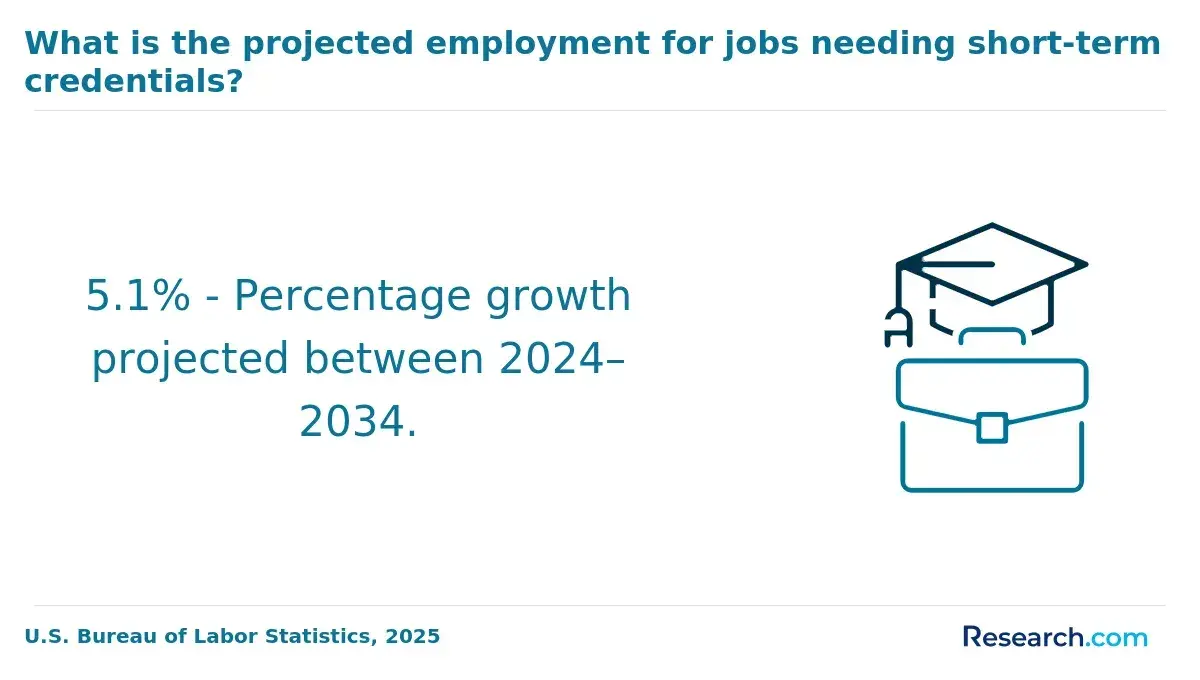
Federal distance education data helps explain why flexibility has become central to program choice. The National Center for Education Statistics reported in its 2024 distance education analysis that more than half of U.S. postsecondary students took at least one distance education course in fall 2022.
That broader shift does not prove online PMHNP doctorates are easier, but it shows why universities increasingly design graduate programs for students who need flexible access. The table below compares common scheduling patterns. Use it to estimate whether the format fits your work schedule before you apply.
| Scheduling feature | Online format | On-campus format | Decision impact |
| Weekly class attendance | May include asynchronous modules and occasional live sessions | Usually requires scheduled campus attendance | Online works better for rotating shifts; on-campus works better for students who want fixed structure. |
| Part-time options | Common in working-professional programs | Available at some schools, but may be less flexible | Part-time pacing can reduce weekly pressure but extends time to completion. |
| Clinical scheduling | Often arranged around approved local preceptors | Often coordinated through regional partners or campus networks | Clinical availability may matter more than lecture flexibility. |
| Residency days | May require travel for short intensives | Built into the local campus experience | Online students should budget time off and travel funds. |
| Faculty access | Virtual office hours, email, learning platform, video advising | In-person office hours plus digital communication | Either can work if response times and advising systems are strong. |
The common mistake is assuming online means self-paced. Many online PMHNP doctorates are not open-ended; they still use weekly deadlines, group work, clinical documentation, live check-ins, and project milestones. If your work schedule changes frequently, ask admissions whether students can switch from full-time to part-time status without delaying clinical sequencing.
Fieldwork is where the format difference becomes most concrete. PMHNP doctoral students must complete supervised clinical experiences that build competence in psychiatric assessment, diagnosis, psychotherapy, medication management, interprofessional collaboration, and care planning. These experiences cannot be replaced by online coursework alone.
Many DNP pathways are built around the national expectation of at least 1,000 post-baccalaureate practice hours for doctoral nursing preparation, though exact clinical hour calculations depend on prior education, specialty track, school policy, certification eligibility, and state rules. For students, the key question is not whether fieldwork exists; it is who helps secure it and where it can be completed.
Before committing to a format, ask specific questions about clinical placement because this is one of the most common sources of stress for PMHNP students.
- Does the school secure psychiatric clinical placements, or are students expected to identify and propose their own preceptors?
- Are telepsychiatry, outpatient psychiatry, inpatient behavioral health, substance use treatment, child and adolescent psychiatry, or community mental health sites accepted?
- Can clinical hours be completed in your state, and does the school have authorization to place students there?
- How does the program vet preceptors for psychiatric expertise, licensure, availability, and evaluation quality?
- What happens if a clinical site cancels, a preceptor leaves, or a student cannot find a required specialty placement?
Online programs can be excellent for students who already have local psychiatric networks or live far from a campus. However, they can be risky if placement support is weak.
On-campus programs may provide stronger access to regional sites, but they can limit students who cannot relocate or commute. If clinical placement quality is uncertain, the convenience of the format should not outweigh the risk.
Students who want to prioritize placement support may benefit from comparing the best PMHNP programs online with close attention to how each school describes clinical coordination, state authorization, and preceptor assistance.
In PMHNP doctoral education, the final scholarly requirement is often a DNP project rather than a traditional dissertation. PhD programs usually require a research dissertation, while DNP programs typically require an evidence-based practice, quality improvement, systems leadership, or clinical practice project.
Some schools may still use the word "dissertation" broadly, so applicants should clarify the exact requirement. The process can differ by format mainly in how advising, collaboration, data access, and project implementation are supported.
Online students may meet advisors by video and implement projects in their workplace or local clinical setting. On-campus students may have easier access to faculty labs, university health systems, or local project partners.
The table below shows how the final doctoral project experience often differs by delivery model. It can help you decide which environment gives you better support for completion.
| Project factor | Online PMHNP doctorate | On-campus PMHNP doctorate | Why it matters |
| Advisor meetings | Usually virtual, scheduled through video or learning platforms | May include in-person meetings and campus research events | Virtual advising works well only when expectations and response times are clear. |
| Project site | Often a student's employer, local clinic, or approved practice setting | Often a university-affiliated or regional practice setting | Your access to data and leadership support can determine project feasibility. |
| Peer feedback | Online seminars, discussion boards, project workshops | Campus seminars, peer cohorts, faculty presentations | Students who need live accountability may prefer on-campus structure. |
| Research resources | Digital library access, remote librarian support, virtual writing services | Digital resources plus physical campus access | Online students should verify remote access to statistics, writing, and library help. |
| Completion risks | Isolation, weak advisor contact, local project barriers | Commute burden, rigid scheduling, limited site flexibility | Both formats require a strong project timeline and faculty support. |
A common mistake is choosing a program without asking how many students complete the project on time. National public data does not consistently report DNP project completion or attrition by PMHNP format, so applicants should ask each school for its own completion data, leave-of-absence policy, project timeline, and advisor assignment process.
Tuition comparisons are more complicated than many applicants expect. Some universities charge the same graduate nursing tuition for online and campus students, while others use separate online tuition, distance learning fees, clinical course fees, or nonresident rates. The biggest price differences often come from public versus private tuition policy, residency status, credit load, and whether the student enters with a BSN or MSN.
There is no single federal source that publishes average PMHNP doctorate tuition by online versus on-campus format. Based on published U.S. graduate nursing tuition schedules for PMHNP doctoral pathways, applicants commonly see tuition presented in the following ways:
- Online PMHNP doctorate tuition may be charged per credit and can be lower than campus nonresident tuition when schools use a flat online rate.
- On-campus public university tuition may be less expensive for in-state students but significantly higher for out-of-state students.
- Private nonprofit and private for-profit institutions may charge one graduate nursing rate regardless of student location.
- Post-master's DNP routes generally require fewer credits than BSN-to-DNP routes, which can make total tuition much lower even if the per-credit rate is similar.
- Clinical, simulation, background check, liability insurance, technology, and graduation fees can narrow the apparent tuition gap.
For a realistic comparison, calculate total tuition using the exact credit count for your entry point. Do not compare a 35-credit post-master's DNP with a 75-credit BSN-to-DNP and treat them as equivalent investments.
If you are looking for lower-barrier entry options before committing to a doctorate, an easiest NP program comparison can help you understand how admissions flexibility, prerequisites, and program structure differ across nurse practitioner pathways.
Cost of attendance includes more than tuition. Online students may save on relocation, commuting, parking, and some campus living costs, but they may pay technology fees, travel for intensives, local clinical compliance costs, and unpaid time away from work. On-campus students may have more predictable access to campus services but often face commuting, housing, parking, and schedule-related employment trade-offs.
The table below separates tuition from the other costs that can change the real price of a PMHNP doctoral program. This matters because the least expensive per-credit option is not always the lowest-cost path to completion.
| Cost category | Online student considerations | On-campus student considerations | How to compare |
| Tuition | May use flat online rate or standard graduate nursing rate | May vary by in-state, out-of-state, or private tuition policy | Multiply per-credit tuition by required credits for your entry route. |
| Fees | Technology, distance education, clinical tracking, proctoring | Campus, student services, lab, simulation, parking | Request a full fee schedule, not just tuition. |
| Travel | Residencies, intensives, clinical site visits if required | Routine commuting or relocation | Estimate travel by semester, not just annually. |
| Clinical compliance | Background checks, immunizations, drug screening, liability insurance, state-specific documentation | Similar requirements, often coordinated locally | Ask whether costs are included in fees or paid separately. |
| Lost earnings | May be lower if the student continues working | May be higher if class and clinical schedules reduce work hours | Include reduced shifts, unpaid clinical time, and project workload. |
Recent federal student debt tools, including College Scorecard program-level debt data, can help applicants evaluate borrowing at the institution and program level. However, national public datasets do not reliably isolate average debt for PMHNP doctoral graduates by online versus on-campus format, so students should use school-specific financial aid disclosures and ask for typical borrowing ranges among recent graduates in the same track.
A practical way to avoid underestimating cost is to build a two-column budget. Put the online program in one column and the on-campus program in the other, then include tuition, fees, travel, residency lodging, clinical compliance, textbooks, software, childcare, reduced work hours, and loan interest. The better financial choice is the one you can complete without taking on avoidable risk, not simply the one with the lowest advertised tuition.
PMHNP employers generally care most about whether the graduate is prepared, licensed, certified, and clinically competent. In hiring, the program's accreditation, the applicant's RN and APRN licensure status, PMHNP certification eligibility, supervised psychiatric experience, references, and interview performance usually matter more than whether didactic courses were online or on campus.
The labor market context is favorable for qualified nurse practitioners, but it should not be interpreted as a guarantee for every graduate or every location.
The U.S. Bureau of Labor Statistics reported a median annual wage of $129,210 for nurse practitioners in May 2024. That figure reflects nurse practitioners broadly, not only PMHNPs, and compensation can vary by state, setting, experience, and prescriptive authority rules.
Employers may be especially cautious when a program has weak clinical placement support, unclear accreditation, limited psychiatric specialty depth, or heavy reliance on students finding their own preceptors with little oversight.
In contrast, a well-structured online PMHNP doctorate from an accredited institution can be viewed positively when the graduate can clearly document strong clinical preparation.
When you talk with employers, recruiters, or preceptors, ask questions that reveal how credentials are evaluated in your target market.
- Do you require graduation from a specific type of accredited PMHNP program?
- Do you treat online and on-campus degrees differently if certification and licensure requirements are met?
- Which clinical settings or patient populations make a new PMHNP applicant more competitive?
- Do you prefer applicants with psychotherapy training, inpatient experience, telepsychiatry exposure, or substance use treatment experience?
- Are doctoral-prepared PMHNPs considered differently for leadership, faculty, quality improvement, or administrative roles?
If compensation is a major factor in your decision, review current psychiatric nurse practitioner salary patterns by state rather than relying on national figures alone.
Program format can affect job prospects indirectly, but it usually does not do so by the word "online" appearing on a transcript. The bigger issue is whether the format helps you build the experiences employers value: high-quality psychiatric clinical hours, strong preceptor evaluations, certification readiness, confidence with prescribing, crisis assessment skills, interprofessional collaboration, and professional references.
Online programs may help job prospects when they allow students to remain employed in behavioral health settings while earning the doctorate. That can preserve income, deepen local networks, and create project opportunities tied to real clinical systems.
On-campus programs may help students who want direct access to faculty mentors, academic medical centers, research teams, teaching opportunities, or local employer pipelines.
Use this decision logic when evaluating career impact because it connects format to actual employability.
- Identify your target role: outpatient PMHNP, inpatient psychiatric provider, telepsychiatry clinician, addiction treatment provider, faculty member, administrator, or clinical leader.
- List the experiences that role requires, including patient populations, medication management exposure, psychotherapy experience, crisis care, and leadership work.
- Compare whether the online or on-campus format gives you better access to those experiences.
- Ask each program where recent PMHNP graduates work and whether outcomes are reported separately for online and campus cohorts.
- Choose the format that strengthens your clinical profile, not only the one that is easiest to attend.
The main red flag is a program that markets convenience but cannot explain clinical placement, certification alignment, state authorization, faculty support, or graduate outcomes. A flexible program that leaves you unsupported can harm completion and career readiness. A less flexible program that gives you stronger psychiatric training may be the better investment if you can manage the schedule.
How do you choose between online and on-campus Psychiatric Mental Health Nurse Practitioner doctorate programs?
Choosing between online and on-campus PMHNP doctorate programs should start with your constraints and end with evidence. The right format is the one you can afford, complete, and use to reach your intended clinical or leadership role. Convenience matters, but it should not be the only deciding factor.
A strong comparison process should include both personal fit and program quality. Use the steps below to build a shortlist without being distracted by marketing claims.
- Confirm that each program is institutionally accredited and that the nursing program holds recognized accreditation appropriate for graduate nursing education.
- Verify that the PMHNP pathway aligns with certification eligibility and state licensure expectations where you plan to practice.
- Calculate total cost of attendance, including tuition, fees, travel, clinical compliance, reduced work hours, and loan interest.
- Ask for written details on clinical placement support, preceptor approval, state authorization, and what happens if a site falls through.
- Compare weekly scheduling demands, residency dates, synchronous class requirements, and part-time options.
- Evaluate faculty access, advising structure, DNP project support, writing help, library access, and student success services.
- Request outcomes information such as completion patterns, certification preparation support, and recent graduate employment settings.
- Talk with at least one employer, PMHNP preceptor, or hiring manager in your target region about how they view the programs you are considering.
Online programs often make sense for experienced nurses who need to keep working, cannot relocate, already have access to psychiatric clinical networks, and can manage independent study.
On-campus programs often make sense for students who want structured face-to-face learning, campus-based mentorship, easier access to regional clinical partners, or deeper involvement in academic and research communities.
Avoid programs with unclear accreditation, vague clinical placement policies, hidden fees, no state authorization clarity, weak faculty access, unrealistic completion promises, or pressure-heavy admissions tactics.
Regardless of format, a PMHNP doctorate is a major investment. The best choice is the program that gives you the clearest path to clinical competence, credentialing, completion, and sustainable career growth.
Other Things You Should Know About Psychiatric Mental Health Nurse Practitioner
Some programs advertise mostly online coursework, but PMHNP doctoral education still requires supervised clinical experiences and may include campus intensives, simulations, skills assessments, or residencies. Always ask for the in-person schedule before enrolling.
Many universities do not list delivery format on the diploma, but policies vary. If this matters to you, ask the registrar what appears on the diploma and transcript before applying.
A DNP is typically designed for advanced clinical practice, leadership, and evidence-based practice improvement. A PhD is usually designed for research and academic scholarship. For PMHNP clinical practice, applicants commonly compare DNP pathways, but the right choice depends on career goals.
Not necessarily. Online programs may be flexible in delivery, but reputable programs still review licensure, GPA, prior nursing education, clinical background, references, statements of purpose, and fit for advanced psychiatric practice.
- Top Online PMHNP Programs 2026 (Comprehensive Rankings) https://www.npschools.com/rankings/all-online-pmhnp-programs
- MSN in Psychiatric Mental Health Nurse Practitioner https://www.unthealth.edu/college-of-nursing/msn-in-psychiatric-mental-health-nurse-practitioner.html
- Can You Earn a DNP Online? | All Nursing Schools https://www.allnursingschools.com/dnp/online-or-on-campus/
- MSN Psychiatric-Mental Health NP (PMHNP) Online | WCU https://westcoastuniversity.edu/online-programs/msn/pmhnp
- MSN-PMHNP https://stmary.edu/pmhnp.html
- 2025 Most Affordable Online Nurse Practitioner Programs https://www.onlineu.com/most-affordable-colleges/nurse-practitioner-masters-degrees


