2027 Online vs On-Campus Nurse Leadership Doctorate Programs: Cost, Flexibility, and Employer Perception

Co-Founder and Chief Data Scientist
The real decision is not whether a Nurse Leadership doctorate sounds valuable; it is whether the format fits your work life, budget, and career target. BLS reported a May 2024 median pay of $117,960 for medical and health services managers, a common leadership pathway for doctoral-prepared nurses. This guide is for nurses comparing online and on-campus doctoral study. You will learn how tuition, total cost, scheduling, fieldwork, dissertation support, and employer perception differ so you can choose the format that best supports your goals.
Key Things to Know About Online vs On-Campus Nurse Leadership Doctorate Programs
- Online and on-campus Nurse Leadership doctorates can be equally credible when they share the same institutional accreditation, nursing accreditation, faculty standards, practicum expectations, and doctoral project or dissertation requirements.
- Cost differences usually come from fees, travel, relocation, parking, housing, technology, and lost work time; a 40-credit program changes by $8,000 for every $200 difference in per-credit tuition before indirect costs are counted.
- BLS projects 29% growth for medical and health services managers from 2023 to 2033, so employers are likely to focus more on leadership experience, outcomes, accreditation, and doctoral work quality than on course delivery format alone.
What are the key differences between online vs on-campus Nurse Leadership doctorate programs?
Online and on-campus Nurse Leadership doctorate programs usually differ less in curriculum goals than in delivery, schedule control, networking style, and access to campus-based resources. A Nurse Leadership doctorate may be a DNP with an executive leadership, health systems leadership, or organizational leadership focus, or it may be a PhD in nursing with research centered on leadership, policy, workforce, quality, or systems change.
The most useful comparison is not "online versus campus" in the abstract. It is whether the format gives you the right combination of access, structure, mentorship, clinical or organizational placement support, and professional visibility for your next role. Nurses still deciding between leadership and advanced practice pathways may also want to compare related options such as online nurse practitioner programs before committing to a leadership doctorate.
The table below summarizes the practical differences that most often affect student experience and return on investment.
| Comparison factor | Online Nurse Leadership doctorate | On-campus Nurse Leadership doctorate |
| Course delivery | Usually asynchronous or hybrid, with live sessions in some courses | Scheduled in-person classes, seminars, labs, or intensives |
| Best fit | Working nurses, executives, managers, rural students, and students unable to relocate | Students who want regular face-to-face faculty contact, campus networking, and local research access |
| Networking | Often cohort-based online, with virtual advising and occasional residencies | More informal contact through campus events, faculty offices, research groups, and local health-system partnerships |
| Fieldwork | Often completed near the student's home or workplace, subject to approval | Often tied to campus partners, nearby health systems, or faculty-led initiatives |
| Cost drivers | Technology fees, residency travel, proctoring fees, and possible employer-sponsored tuition | Campus fees, commuting, parking, relocation, housing, and reduced work hours |
| Accountability style | Requires strong self-management and comfort with digital collaboration | Provides more fixed structure and frequent in-person accountability |
Online makes the most sense when you need geographic flexibility and can manage independent doctoral work. On-campus makes more sense when you benefit from physical proximity to faculty, research teams, and regional healthcare leadership networks.
Are online Nurse Leadership doctorate programs as rigorous as on-campus programs?
Yes, they can be, but rigor depends on accreditation, faculty expectations, assessment design, practicum standards, and doctoral project oversight rather than the format itself. A strong online program should require graduate-level research appraisal, systems leadership, finance, ethics, quality improvement, policy analysis, and evidence-based change work comparable to the campus version.
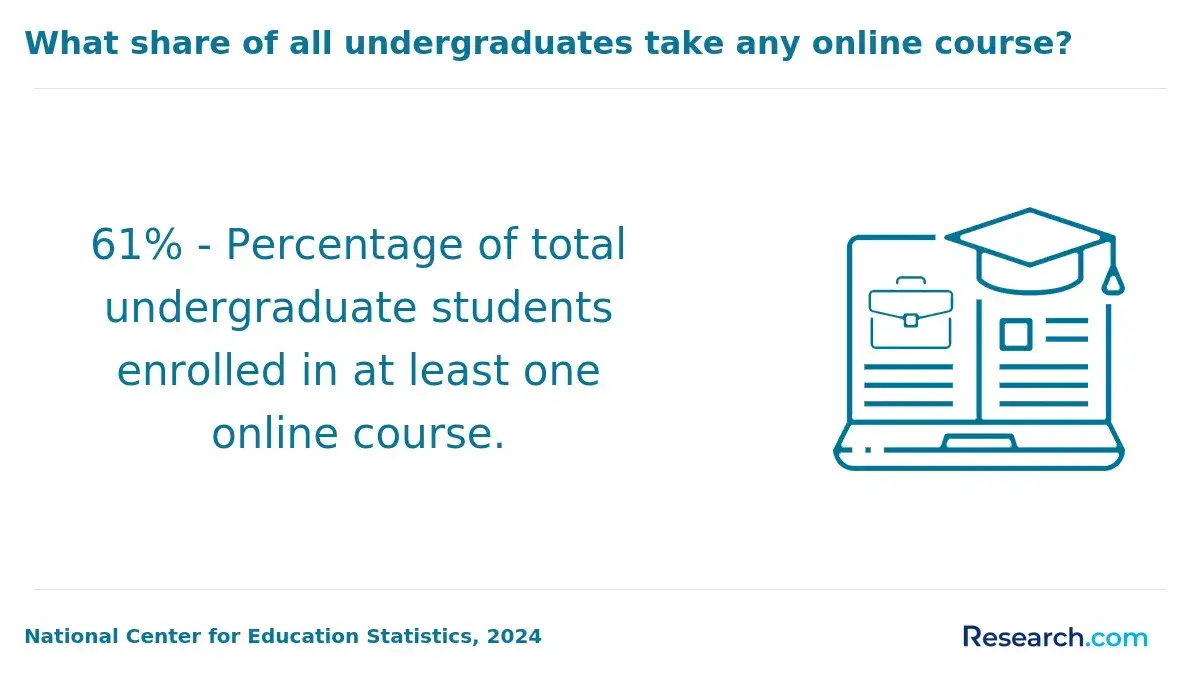
NCES distance education data published in 2024 shows that online learning remains a mainstream part of U.S. postbaccalaureate education, not a fringe option. For doctoral nursing students, that matters because many programs are now designed around working professionals rather than traditional full-time residential students.
Use the following checks to judge rigor before applying. These details tell you whether the online or campus label reflects convenience or genuine doctoral quality.
- Confirm that the institution is regionally or institutionally accredited and that the nursing program holds relevant professional accreditation, such as CCNE or ACEN when applicable.
- Ask whether online and on-campus students complete the same credit requirements, scholarly project or dissertation milestones, practicum expectations, and final defense process.
- Review faculty credentials in nurse leadership, health systems, policy, quality improvement, informatics, executive practice, or nursing research.
- Look for transparent doctoral progression requirements, including proposal approval, committee review, IRB or quality-improvement review when required, and final dissemination standards.
- Ask for recent completion timelines and attrition information by format, because national public datasets do not reliably separate Nurse Leadership doctoral completion rates by online versus on-campus delivery.
A warning sign is a program that markets flexibility but gives vague answers about faculty mentorship, project review, practicum approval, or student outcomes. Flexibility should not mean reduced expectations.
How does scheduling flexibility differ between online and on-campus Nurse Leadership doctorate programs?
Scheduling is often the biggest reason nurses choose online doctoral study. Online Nurse Leadership programs commonly use asynchronous weekly modules, evening live sessions, compressed intensives, or hybrid residencies. On-campus programs usually require attendance at specific times, which can be easier for students who want a predictable routine but harder for nurses with rotating shifts, executive responsibilities, or family obligations.
The table below compares common scheduling models. Use it to match program structure with your real weekly availability, not your ideal availability.
| Format model | Typical schedule pattern | Flexibility level | Best for |
| Fully asynchronous online | Weekly deadlines with no required class meeting time | High | Self-directed nurses with unpredictable work schedules |
| Synchronous online | Live evening or weekend sessions through video | Moderate | Students who want structure without commuting |
| Hybrid online | Online coursework plus required campus intensives or residencies | Moderate | Students who want flexibility plus periodic face-to-face networking |
| Traditional on-campus | Scheduled in-person seminars, advising, and campus activities | Lower | Students who can commute or relocate and prefer fixed academic routines |
| Executive weekend format | Monthly or periodic campus sessions with online work between meetings | Moderate | Managers and executives who can plan travel in advance |
Do not assume online automatically means easier. Many online doctoral students underestimate the time required for reading, writing, leadership analysis, practicum coordination, and committee feedback. A realistic plan often requires protected study blocks several days each week.
Fieldwork in a Nurse Leadership doctorate is usually less about bedside clinical hours and more about leadership practice, systems improvement, organizational assessment, policy, quality, finance, population outcomes, or executive change management. DNP leadership programs commonly require practice hours tied to a scholarly project, while PhD programs may involve research practica, teaching, data collection, or funded project participation.
Online students often complete fieldwork in their home region, sometimes at their current employer, if the site and preceptor meet program standards. On-campus students may have easier access to university-affiliated hospitals, research centers, policy offices, simulation centers, or faculty-established partnerships.
Before choosing a format, verify how the program handles placement responsibility. These questions can prevent delays after enrollment.
- Does the school place students, approve student-identified sites, or require students to secure their own preceptors?
- Can you complete leadership practicum hours at your current workplace, and what safeguards prevent conflicts of interest?
- Are there state authorization limits that affect online fieldwork in your state?
- How early are practicum sites approved, and who intervenes if a site falls through?
- Are travel, immunization, background check, drug screening, malpractice insurance, or onboarding costs included in the estimated cost of attendance?
The strongest online programs are clear about site approval and state eligibility before admission. The strongest campus programs are clear about whether their local partnerships are guaranteed opportunities or simply possible options.
The dissertation or doctoral project process depends more on degree type than on format. A PhD in nursing typically requires an original research dissertation. A DNP leadership program usually requires a scholarly project that applies evidence to improve practice, systems, policy, quality, safety, or organizational outcomes.
Online students usually complete proposal development, committee meetings, data discussions, and final defenses through digital platforms. On-campus students may have more spontaneous access to faculty offices, writing groups, research seminars, and peer meetings. However, a well-designed online program can provide strong dissertation or project support if it offers structured milestones and responsive advising.
Use these signs to evaluate support before you enroll. Dissertation and project delays are one of the most expensive risks in doctoral education.
- The program publishes a clear sequence for topic approval, committee formation, proposal review, data or implementation approval, final defense, and dissemination.
- Students receive writing support specific to doctoral nursing, evidence appraisal, statistics, qualitative methods, implementation science, or quality improvement.
- Faculty have expertise that matches your leadership interest, such as workforce retention, executive leadership, health equity, informatics, finance, patient safety, or policy.
- The program explains how often students meet with chairs or advisors and what happens if faculty availability changes.
- Recent students can describe predictable feedback timelines rather than long periods of silence.
If your goal is executive leadership, a DNP project tied to measurable organizational change may be more directly useful. If your goal is academia, research leadership, or a tenure-track pathway, a PhD dissertation may fit better.
There is no single federal average tuition rate that cleanly separates online Nurse Leadership doctorates from on-campus ones. Schools price doctoral nursing programs by credit, semester, residency, campus status, residency status, or cohort model, so the most accurate comparison is program by program.
That said, online programs are not always cheaper. Some universities charge the same doctoral nursing tuition regardless of format, some charge online students a separate e-learning rate, and some add distance-learning fees. Students comparing research-focused options may also want to review cheapest online nursing PhD programs to understand how tuition can vary across doctoral pathways.
The table below shows how tuition structures commonly differ. It is designed to help you identify what to ask for, not to replace a school's official tuition page.
| Tuition factor | Online programs | On-campus programs | Why it matters |
| Per-credit tuition | May be a flat online rate or the same as campus tuition | May differ for in-state and out-of-state students | A small per-credit difference becomes significant across 35 to 60 credits |
| Residency status | Some schools waive out-of-state differences for online students | Public universities often charge higher nonresident tuition | Nonresident pricing can change the value of relocating versus studying online |
| Program fees | Technology, platform, proctoring, distance-learning, or residency fees | Campus, student activity, health, lab, facility, or parking fees | Fees can narrow or erase tuition savings |
| Credit load | Often part-time friendly, which spreads payments over more terms | May encourage full-time enrollment in some doctoral pathways | Pacing affects cash flow, loan use, and ability to keep working |
| Assistantships | Less common in practice-focused online programs | More accessible in research-intensive campus PhD programs | Assistantships can reduce net cost but may require campus presence |
A practical way to compare tuition is to calculate total required credits multiplied by per-credit tuition, then add mandatory fees and expected residency costs. Do not compare only the advertised per-credit rate.
Cost of attendance includes more than tuition. It may include fees, books, technology, travel, room and board, health insurance, licensure-related documentation, background checks, practicum onboarding, and the income you may lose if you reduce work hours.
Federal Student Aid sets the graduate Direct Unsubsidized Loan annual limit at $20,500 for eligible students, according to current aid rules. That matters because many doctoral nursing students need to plan for a gap between allowable unsubsidized borrowing, total cost, employer reimbursement, savings, scholarships, assistantships, or Grad PLUS borrowing.
The table below shows which costs are more likely to affect each format. Use it to create a realistic budget before choosing a program.
| Cost category | More common online cost issue | More common on-campus cost issue |
| Travel | Airfare, lodging, and meals for required residencies or intensives | Daily commuting, parking, transit, or relocation |
| Work disruption | Usually lower if coursework is asynchronous, but deadlines can still affect shifts | May be higher if class times conflict with work schedules |
| Technology | Reliable computer, webcam, software, high-speed internet, and testing tools | Usually lower, though campus systems may still require devices and software |
| Housing | Usually not required except during residencies | May be significant if relocation is necessary |
| Professional costs | Virtual conference fees, project tools, and local site requirements | Campus events, local conferences, and research-related expenses |
The common mistake is assuming the cheaper tuition rate creates the cheaper degree. A higher-tuition online program may cost less overall if it lets you remain employed full time, avoid relocation, and complete fieldwork locally. A campus PhD may cost less if it includes a funded assistantship, tuition remission, or research stipend.
Most healthcare employers care first about accreditation, role readiness, leadership record, communication skills, project outcomes, and whether the doctorate came from a reputable institution. The diploma usually does not state "online," and many universities use the same transcript language for online and campus students, but you should confirm that with the school.
Employer perception is improving because online graduate education has become common among working clinicians and healthcare managers. Still, perception varies by employer type. Academic research roles may place more weight on dissertation depth, publications, methods training, and faculty reputation. Health-system leadership roles may place more weight on executive experience, measurable outcomes, financial acumen, and the ability to lead change.
The table below shows how different employers may evaluate the credential. This can help you choose the format that supports your target role.
| Employer setting | What employers often examine | Format implication |
| Hospitals and health systems | Leadership experience, quality outcomes, project impact, change management, and accreditation | Online can work well if the student applies coursework directly to organizational problems |
| Academic nursing programs | Doctoral degree type, teaching experience, research or scholarship, publications, and faculty references | Campus PhD programs may offer stronger research immersion, while online doctorates need strong scholarly support |
| Policy and nonprofit organizations | Systems thinking, population health, advocacy, data interpretation, and stakeholder communication | Either format can fit if practicum and project work align with policy or systems goals |
| Consulting and quality improvement roles | Measurable results, analytics, implementation experience, and executive presence | Format matters less than documented project outcomes and professional portfolio quality |
When you speak with admissions, ask whether alumni from both formats have moved into the kinds of roles you want. Employer comfort with online credentials is strongest when the program can show credible outcomes without overpromising jobs or salaries.
Program format can affect job prospects indirectly, but it rarely acts alone. What usually matters is the match between your doctorate, your prior nursing experience, your leadership portfolio, your practicum or dissertation topic, your network, and the hiring requirements of your target role.
BLS projects 29% employment growth for medical and health services managers from 2023 to 2033, much faster than the average for all occupations. This does not mean a Nurse Leadership doctorate guarantees advancement, but it does suggest that healthcare organizations will continue needing leaders who can manage quality, workforce, compliance, operations, and systems change.
Online programs may improve job prospects for nurses who can keep working while applying doctoral learning in real time. On-campus programs may improve job prospects for students who benefit from research assistantships, faculty introductions, teaching opportunities, or local executive networks. If you are comparing leadership with specialized practice roles, reviewing data such as psychiatric nurse practitioner salary information can help you understand how role choice may affect compensation more than format choice.
Format is most likely to matter in these situations. Consider them carefully before enrolling.
- If you want a tenure-track or research-intensive faculty role, a PhD with strong methods training, publications, and faculty mentorship may carry more weight than an online DNP leadership credential.
- If you want executive health-system leadership, a DNP or leadership-focused doctorate with a strong organizational project may be more relevant than a dissertation that does not connect to operations or outcomes.
- If you need to remain employed, an online program may help you preserve income, seniority, and leadership momentum while studying.
- If your target employer values local reputation, an on-campus program connected to that health system may offer useful visibility and networking.
The best question is not "Which format gets more jobs?" It is "Which format helps me produce the evidence, relationships, and experience my next employer will value?"
How do you choose between online and on-campus Nurse Leadership doctorate programs?
Choose the format by working backward from your career goal, budget, schedule, and learning style. A strong online program is not a consolation prize, and a campus program is not automatically more prestigious. The right program is the one that you can complete, afford, and use credibly in your intended career setting.
Use this decision process to build a shortlist. It will help you compare programs on evidence rather than marketing language.
- Define your target outcome: executive leadership, nursing faculty, policy, quality improvement, consulting, research, or advanced systems practice.
- Choose the right doctorate type first: DNP for practice and systems leadership, PhD for research and academic scholarship, or another doctorate only if it aligns with employer expectations.
- Verify accreditation, state authorization, practicum eligibility, and whether the online and campus transcripts are treated the same.
- Calculate total cost of attendance, including tuition, fees, travel, residency lodging, technology, work reduction, assistantship availability, and employer reimbursement rules.
- Compare dissertation or project support by reviewing faculty fit, committee process, milestone timelines, writing resources, and completion data.
- Ask employers, mentors, or hiring managers in your target field how they evaluate online doctorates from the schools you are considering.
- Choose the schedule you can sustain for several years, not the schedule that looks easiest during the first term.
Common red flags apply to both formats. Be cautious if a program avoids questions about accreditation, publishes unclear tuition, refuses to explain practicum placement responsibility, has little faculty expertise in nurse leadership, promises career outcomes it cannot document, or describes the doctoral project process only in vague terms.
If you are still early in your nursing education planning and comparing advanced practice versus leadership pathways, resources on the easiest NP program options may help you clarify whether you want a practice-provider route before pursuing a leadership doctorate.
A simple rule works well: choose online if you need location flexibility and can manage independent doctoral work; choose on-campus if you need structured in-person engagement, local networks, or research immersion. Choose neither if the program lacks transparency, accreditation, or support.
Other Things You Should Know About Nurse Leadership
Usually, no. Many universities issue the same diploma for online and on-campus students, but policies vary. Ask the registrar whether the transcript or diploma identifies delivery format before enrolling.
Often, admissions requirements are similar, including an accredited nursing degree, active RN license, graduate GPA, resume, references, statement of purpose, and sometimes an interview. Some programs may require a master's degree, leadership experience, statistics, or specific clinical credentials.
Sometimes, but doctoral transfer credit is usually limited. Schools may restrict transfer credits by age, grade, accreditation, course equivalency, and whether the credits were used toward another degree.
Not always. A shorter program may be valuable if it recognizes prior graduate preparation and maintains strong doctoral standards. It is a concern if it cuts essential leadership, methods, practicum, or project support.
- Doctor of Nursing Practice (DNP) Program https://www.creighton.edu/academics/programs/doctor-nursing-practice-dnp
- 2025 Most Affordable Online Doctorates in Education https://www.onlineu.com/most-affordable-colleges/education-doctoral-degrees
- AACN Fact Sheet - DNP https://www.aacnnursing.org/news-data/fact-sheets/dnp-fact-sheet
- Top 50 Most Affordable Online Nursing Administration Degrees (MSN) - Healthcare Administration Degree Programs https://www.healthcare-administration-degree.net/best/affordable-online-nursing-administration-degrees-msn/
- Best Online Ph.D. Nursing Programs for 2026 | Ranked https://www.nurseeducator.com/degrees/phd/
- Your Guide to Online PhD Nursing Programs: What They Are, What to Expect, and How to Choose the Right One – FRESHRN https://www.freshrn.com/online-phd-nursing-programs/
- Why More Nurses Are Choosing Online Doctor of Nursing Programs to Advance Their Careers https://collegelife.co/magazine/online-doctor-of-nursing-programs
- Online Doctor of Nursing Practice (DNP) | DNP Degree | University of Phoenix https://www.phoenix.edu/online-nursing-degrees/nursing-practice-doctoral-degree.html
- The Best Value DNP Degree Programs for 2025 https://www.doctorofnursingpracticednp.org/the-best-value-dnp-degree-programs/
- Can You Earn a DNP Online? | All Nursing Schools https://www.allnursingschools.com/dnp/online-or-on-campus/